A luxury watch should not feel separate from the way you dress. The best ones become part of your style almost without effort. They suit the clothes you already wear, the places you actually go, and the version of yourself you feel most comfortable presenting.
That sounds obvious, but it is where many people make the wrong choice. They buy the watch they think they should want, rather than the one that fits their life. A watch can have the right brand name, the right movement and the right reputation, but if it never feels natural with your wardrobe, it will spend more time in a drawer than on your wrist.
Choosing well is not about following a trend or buying the loudest piece in the room. It is about understanding proportion, materials, colour, lifestyle and how a watch behaves as part of a complete outfit.
A good luxury watch should not need a special occasion to make sense. It should work on an ordinary day, with ordinary clothes, and still feel like something worth owning.
Start With How You Actually Dress
Before looking at brands, movements or case materials, look at your wardrobe.
Not the wardrobe you imagine having one day, but the one you actually live in.
If you wear tailoring, shirts, wool coats and smarter shoes most of the time, a slimmer watch with cleaner lines may be the better fit. A polished bezel, leather strap, simple dial or integrated bracelet can work well because the rest of the outfit already carries structure.
If your style is more casual, with denim, knitwear, overshirts, trainers, chore jackets or technical outerwear, a sport watch may feel more natural. Steel cases, stronger bezels, chronograph layouts and bolder dials often sit better with clothes that have texture and weight.
This is why copying someone else’s watch rarely works. A watch that looks effortless on one person can look completely wrong on another because the clothes around it are different.
The right watch should feel like an extension of your wardrobe, not a separate statement fighting for attention.
Think About Proportion First
Case size is one of the most important parts of choosing a watch, but it is often misunderstood.
People tend to focus on diameter alone. A 40mm watch sounds moderate, while a 44mm watch sounds large. In reality, the way a watch wears depends on more than the number on paper.
Lug-to-lug length, case thickness, bezel design, dial size and strap shape all affect how a watch sits on the wrist. A 42mm watch with short curved lugs may wear better than a 39mm watch with long flat ones. A slim case can feel elegant even when the diameter is generous. A thick case can feel bulky even if the width looks manageable.
This matters because proportion changes the way a watch works with clothes.
A larger watch can look excellent with relaxed tailoring, denim, knitwear and outerwear, but it may struggle under a cuff. A smaller, slimmer watch works beautifully with formal clothing but may feel too restrained with heavier casual pieces.
Before choosing a watch, think about whether you want it to sit quietly within your outfit or become a visible part of it. Neither answer is wrong.
Match The Watch To The Mood Of Your Wardrobe
Every watch has a mood. Some are clean, quiet and precise. Some are technical and purposeful. Others are bold, expressive and built around presence.
A simple three-hand watch often works best with a minimal wardrobe. If you favour neutral colours, clean silhouettes and understated pieces, a watch with a restrained dial and slim profile will usually make sense.
A chronograph brings more movement. Sub-dials, pushers and timing scales create energy across the dial, which makes the watch feel more dynamic. This works well with casual jackets, leather trainers, denim, overshirts and modern outerwear.
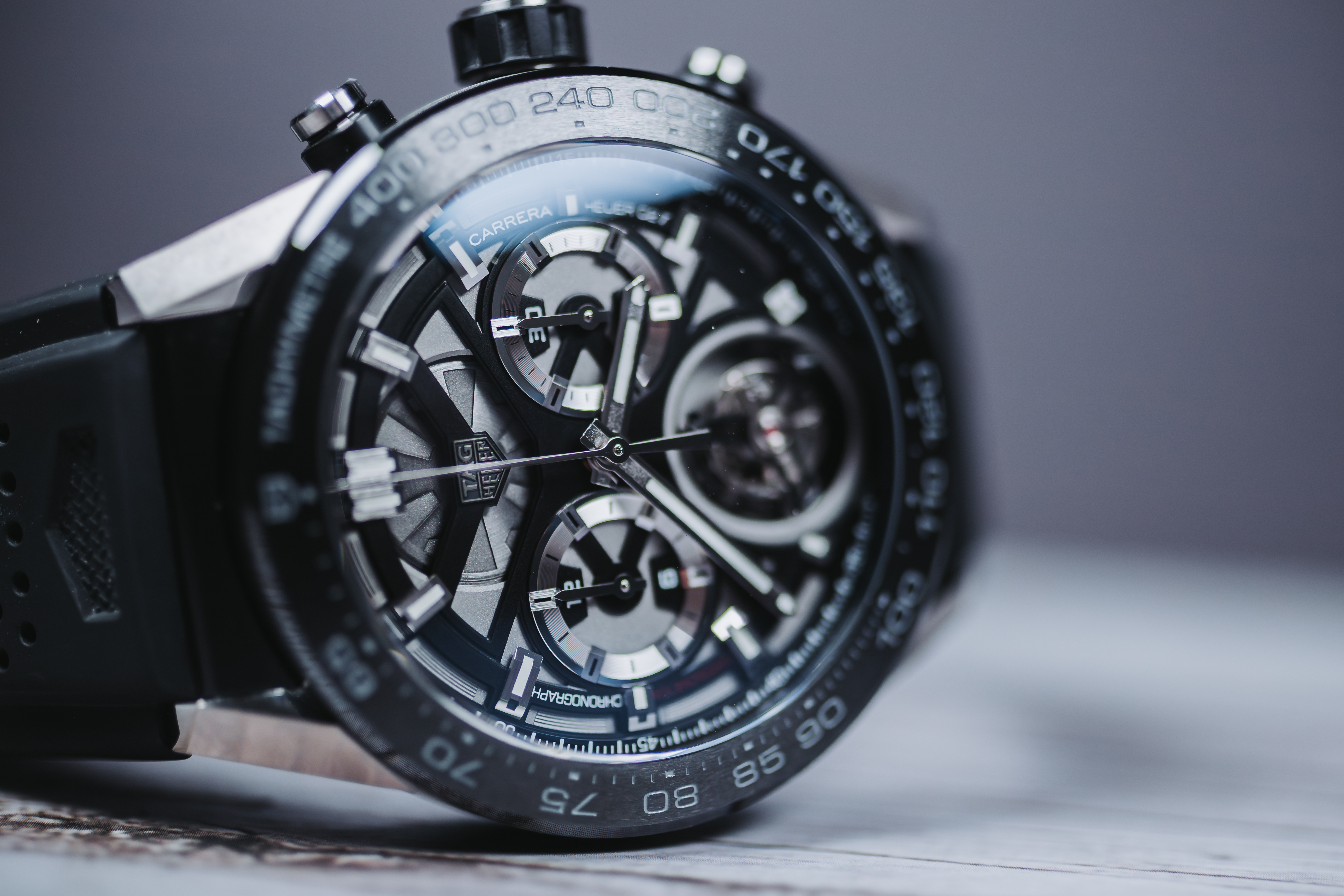
That is where TAG Heuer chronographs have a clear place. The brand’s strongest designs are closely tied to motorsport, but they do not need to be worn in a literal racing context. A good TAG Heuer chronograph adds pace and structure to an outfit. It can make simple clothes feel sharper without becoming overly formal.
The key is to let the watch do one job well. If the dial is busy, keep the rest of the outfit clean. If the outfit is already patterned or heavily layered, a simpler watch may work better.
Use Metal Colour Carefully
Metal choice has a bigger effect than many people realise.
Steel is the most versatile. It works with almost everything, from casual clothes to smarter outfits, and it rarely looks out of place. For most people choosing one watch to wear often, steel is the safest and most practical starting point.
Gold has warmth and presence. It can look excellent, but it changes the tone of an outfit quickly. Yellow gold feels more traditional and dressy. Rose gold is often softer and easier to wear, especially with earth tones, navy, cream, brown and darker tailoring.
Two-tone watches are more divisive, but they can be very effective when styled well. They often suit people who already wear mixed metals or warmer colours. The mistake is treating two-tone as neutral. It is not. It has a point of view.
Titanium is useful when comfort matters. It is lighter than steel and often feels more modern, particularly on sport watches. The slightly darker tone can also work well with casual clothes.
The best metal is not the most expensive one. It is the one that suits the clothes, jewellery and colours you already wear.
Dial Colour Should Work With Your Wardrobe
Dial colour is where personality enters the decision. Black is versatile, sharp and easy to wear. It gives a watch clarity and often makes it feel more technical.
Blue is nearly as versatile, but slightly softer. It works particularly well with navy, grey, denim, white shirts and casual tailoring.
White or silver dials feel cleaner and more open. They can make a watch look dressier, especially when paired with polished details or a leather strap.
Green, burgundy, brown and other warmer dial colours can be excellent, but they are less universal. They work best when they connect to colours already present in your wardrobe.
If you wear mostly black, grey, navy and white, a bright or unusual dial may become a deliberate focal point. That can work, but it should be intentional.
A useful test is simple: imagine the watch with the clothes you wear three days a week. If it only works with one outfit, it may not be the right everyday choice.
When A Bold Watch Works
Some watches are designed to be noticed. That is not a flaw. The challenge is knowing how to wear them.
A bold watch usually works best when the outfit gives it space. Plain T-shirts, linen shirts, knitwear, denim, field jackets, overshirts and simple leather accessories can all support a strong watch without competing with it.
This is one reason the Luminor and Radiomir remain so distinctive. Panerai’s appeal is built around shape, clarity and presence. The cushion-style case, clean dial and recognisable crown guard on the Luminor create a look that does not need much else around it.
A Panerai can look forced with clothing that is already loud or heavily styled. With simpler clothes, it often makes complete sense. It brings character to an outfit without needing pattern, colour or extra decoration.
The lesson is useful beyond Panerai. If the watch is bold, let the rest of the outfit breathe.
Aviation Watches Suit Texture And Confidence
Some watches carry a more technical kind of presence. Aviation-inspired pieces often have detailed dials, larger cases, rotating bezels and a more instrument-led feel. They tend not to disappear quietly, but that can be exactly the appeal.
This is where Breitling watches work well. A model like the Navitimer brings detail, history and confidence to the wrist. It is not a minimal watch, and it should not be styled like one.
Aviation watches often suit clothing with texture: suede jackets, wool coats, denim, boots, heavy cotton shirts and structured outerwear. These pieces can carry the visual weight of a more detailed dial.
They also work well for people who prefer watches that feel purposeful. A Breitling does not usually give the impression of jewellery first. It feels like an object designed around function, even when worn as part of everyday style.
That distinction matters. Some wardrobes need polish. Others need substance.
Strap Choice Changes Everything
A strap can completely change how a watch works. A steel bracelet is usually the most versatile option. It feels practical, durable and suitable for daily wear. It can move from casual clothing to smarter settings without much effort.
Leather softens a watch. Brown leather feels relaxed and warm. Black leather usually feels sharper and more formal. Suede can make a watch feel more casual and textured, particularly with autumn and winter clothing.
Rubber is practical and comfortable, especially for travel, sport watches and warmer weather. It leans casual, but on the right watch it can still look considered.
Fabric straps can be useful for summer or travel, though they often make a luxury watch feel more informal.
If a watch feels almost right but not quite, the strap may be the issue. Sometimes the difference between a watch that sits in a box and one that gets worn constantly is simply changing how it meets the wrist.
Why Pre-Owned Opens Up More Style Options
The pre-owned market is especially useful when choosing a watch around personal style.
New retail shows what brands are currently producing. Pre-owned gives access to discontinued references, older case sizes, unusual dial colours, previous bracelet designs and models that may feel more individual than current stock.
This matters because style is rarely about owning the newest thing. It is about finding the right thing.
A carefully chosen pre-owned watch can also feel easier to wear. It may already have a little character. It may feel less precious than something brand new from a boutique. That can make the owner more likely to actually use it, which is when a watch starts to become part of personal style.
Independent specialists such as MVS Watches have helped make this part of the market easier to navigate, particularly for buyers looking for authenticated examples from brands such as TAG Heuer, Breitling and Panerai.
That matters because condition, originality and fit are just as important as the name on the dial. A watch can be desirable in theory and still be wrong for the person buying it.
The Watch Should Fit Your Life, Not The Other Way Around
A luxury watch is still an object of design, engineering and craft, but it is also something you wear. That means it has to work in real life.
If you spend most days in relaxed clothing, a delicate dress watch may not be the most useful choice. If your wardrobe is formal and understated, a large technical chronograph may feel out of place. If you travel often, comfort, durability and water resistance may matter more than a rare dial colour.
The right watch should reduce friction. It should be easy to put on, easy to pair with clothes and easy to enjoy.
A watch that only works in one carefully arranged setting may be beautiful, but it may not be the best watch for you.
Final Thoughts
Choosing a luxury watch is partly about taste, partly about practicality and partly about honesty. You need to know how you dress. You need to understand what feels natural on your wrist. You need to decide whether you want the watch to be quiet, technical, bold or versatile.
The best choice is not always the rarest, newest or most expensive. It is the one that fits your wardrobe so well that you stop thinking about whether it works.
That is when a watch becomes more than an accessory. It becomes part of how you dress, how you move through the day and how your personal style quietly takes shape.


A luxury watch should not feel separate from the way you dress. The best ones become part of your style almost without effort. They suit the clothes you already wear, the places you actually go, and the version of yourself you feel most comfortable presenting.
That sounds obvious, but it is where many people make the wrong choice. They buy the watch they think they should want, rather than the one that fits their life. A watch can have the right brand name, the right movement and the right reputation, but if it never feels natural with your wardrobe, it will spend more time in a drawer than on your wrist.
Choosing well is not about following a trend or buying the loudest piece in the room. It is about understanding proportion, materials, colour, lifestyle and how a watch behaves as part of a complete outfit.
A good luxury watch should not need a special occasion to make sense. It should work on an ordinary day, with ordinary clothes, and still feel like something worth owning.
Start With How You Actually Dress
Before looking at brands, movements or case materials, look at your wardrobe.
Not the wardrobe you imagine having one day, but the one you actually live in.
If you wear tailoring, shirts, wool coats and smarter shoes most of the time, a slimmer watch with cleaner lines may be the better fit. A polished bezel, leather strap, simple dial or integrated bracelet can work well because the rest of the outfit already carries structure.
If your style is more casual, with denim, knitwear, overshirts, trainers, chore jackets or technical outerwear, a sport watch may feel more natural. Steel cases, stronger bezels, chronograph layouts and bolder dials often sit better with clothes that have texture and weight.
This is why copying someone else’s watch rarely works. A watch that looks effortless on one person can look completely wrong on another because the clothes around it are different.
The right watch should feel like an extension of your wardrobe, not a separate statement fighting for attention.
Think About Proportion First
Case size is one of the most important parts of choosing a watch, but it is often misunderstood.
People tend to focus on diameter alone. A 40mm watch sounds moderate, while a 44mm watch sounds large. In reality, the way a watch wears depends on more than the number on paper.
Lug-to-lug length, case thickness, bezel design, dial size and strap shape all affect how a watch sits on the wrist. A 42mm watch with short curved lugs may wear better than a 39mm watch with long flat ones. A slim case can feel elegant even when the diameter is generous. A thick case can feel bulky even if the width looks manageable.
This matters because proportion changes the way a watch works with clothes.
A larger watch can look excellent with relaxed tailoring, denim, knitwear and outerwear, but it may struggle under a cuff. A smaller, slimmer watch works beautifully with formal clothing but may feel too restrained with heavier casual pieces.
Before choosing a watch, think about whether you want it to sit quietly within your outfit or become a visible part of it. Neither answer is wrong.
Match The Watch To The Mood Of Your Wardrobe
Every watch has a mood. Some are clean, quiet and precise. Some are technical and purposeful. Others are bold, expressive and built around presence.
A simple three-hand watch often works best with a minimal wardrobe. If you favour neutral colours, clean silhouettes and understated pieces, a watch with a restrained dial and slim profile will usually make sense.
A chronograph brings more movement. Sub-dials, pushers and timing scales create energy across the dial, which makes the watch feel more dynamic. This works well with casual jackets, leather trainers, denim, overshirts and modern outerwear.
That is where TAG Heuer chronographs have a clear place. The brand’s strongest designs are closely tied to motorsport, but they do not need to be worn in a literal racing context. A good TAG Heuer chronograph adds pace and structure to an outfit. It can make simple clothes feel sharper without becoming overly formal.
The key is to let the watch do one job well. If the dial is busy, keep the rest of the outfit clean. If the outfit is already patterned or heavily layered, a simpler watch may work better.
Use Metal Colour Carefully
Metal choice has a bigger effect than many people realise.
Steel is the most versatile. It works with almost everything, from casual clothes to smarter outfits, and it rarely looks out of place. For most people choosing one watch to wear often, steel is the safest and most practical starting point.
Gold has warmth and presence. It can look excellent, but it changes the tone of an outfit quickly. Yellow gold feels more traditional and dressy. Rose gold is often softer and easier to wear, especially with earth tones, navy, cream, brown and darker tailoring.
Two-tone watches are more divisive, but they can be very effective when styled well. They often suit people who already wear mixed metals or warmer colours. The mistake is treating two-tone as neutral. It is not. It has a point of view.
Titanium is useful when comfort matters. It is lighter than steel and often feels more modern, particularly on sport watches. The slightly darker tone can also work well with casual clothes.
The best metal is not the most expensive one. It is the one that suits the clothes, jewellery and colours you already wear.
Dial Colour Should Work With Your Wardrobe
Dial colour is where personality enters the decision. Black is versatile, sharp and easy to wear. It gives a watch clarity and often makes it feel more technical.
Blue is nearly as versatile, but slightly softer. It works particularly well with navy, grey, denim, white shirts and casual tailoring.
White or silver dials feel cleaner and more open. They can make a watch look dressier, especially when paired with polished details or a leather strap.
Green, burgundy, brown and other warmer dial colours can be excellent, but they are less universal. They work best when they connect to colours already present in your wardrobe.
If you wear mostly black, grey, navy and white, a bright or unusual dial may become a deliberate focal point. That can work, but it should be intentional.
A useful test is simple: imagine the watch with the clothes you wear three days a week. If it only works with one outfit, it may not be the right everyday choice.
When A Bold Watch Works
Some watches are designed to be noticed. That is not a flaw. The challenge is knowing how to wear them.
A bold watch usually works best when the outfit gives it space. Plain T-shirts, linen shirts, knitwear, denim, field jackets, overshirts and simple leather accessories can all support a strong watch without competing with it.
This is one reason the Luminor and Radiomir remain so distinctive. Panerai’s appeal is built around shape, clarity and presence. The cushion-style case, clean dial and recognisable crown guard on the Luminor create a look that does not need much else around it.
A Panerai can look forced with clothing that is already loud or heavily styled. With simpler clothes, it often makes complete sense. It brings character to an outfit without needing pattern, colour or extra decoration.
The lesson is useful beyond Panerai. If the watch is bold, let the rest of the outfit breathe.
Aviation Watches Suit Texture And Confidence
Some watches carry a more technical kind of presence. Aviation-inspired pieces often have detailed dials, larger cases, rotating bezels and a more instrument-led feel. They tend not to disappear quietly, but that can be exactly the appeal.
This is where Breitling watches work well. A model like the Navitimer brings detail, history and confidence to the wrist. It is not a minimal watch, and it should not be styled like one.
Aviation watches often suit clothing with texture: suede jackets, wool coats, denim, boots, heavy cotton shirts and structured outerwear. These pieces can carry the visual weight of a more detailed dial.
They also work well for people who prefer watches that feel purposeful. A Breitling does not usually give the impression of jewellery first. It feels like an object designed around function, even when worn as part of everyday style.
That distinction matters. Some wardrobes need polish. Others need substance.
Strap Choice Changes Everything
A strap can completely change how a watch works. A steel bracelet is usually the most versatile option. It feels practical, durable and suitable for daily wear. It can move from casual clothing to smarter settings without much effort.
Leather softens a watch. Brown leather feels relaxed and warm. Black leather usually feels sharper and more formal. Suede can make a watch feel more casual and textured, particularly with autumn and winter clothing.
Rubber is practical and comfortable, especially for travel, sport watches and warmer weather. It leans casual, but on the right watch it can still look considered.
Fabric straps can be useful for summer or travel, though they often make a luxury watch feel more informal.
If a watch feels almost right but not quite, the strap may be the issue. Sometimes the difference between a watch that sits in a box and one that gets worn constantly is simply changing how it meets the wrist.
Why Pre-Owned Opens Up More Style Options
The pre-owned market is especially useful when choosing a watch around personal style.
New retail shows what brands are currently producing. Pre-owned gives access to discontinued references, older case sizes, unusual dial colours, previous bracelet designs and models that may feel more individual than current stock.
This matters because style is rarely about owning the newest thing. It is about finding the right thing.
A carefully chosen pre-owned watch can also feel easier to wear. It may already have a little character. It may feel less precious than something brand new from a boutique. That can make the owner more likely to actually use it, which is when a watch starts to become part of personal style.
Independent specialists such as MVS Watches have helped make this part of the market easier to navigate, particularly for buyers looking for authenticated examples from brands such as TAG Heuer, Breitling and Panerai.
That matters because condition, originality and fit are just as important as the name on the dial. A watch can be desirable in theory and still be wrong for the person buying it.
The Watch Should Fit Your Life, Not The Other Way Around
A luxury watch is still an object of design, engineering and craft, but it is also something you wear. That means it has to work in real life.
If you spend most days in relaxed clothing, a delicate dress watch may not be the most useful choice. If your wardrobe is formal and understated, a large technical chronograph may feel out of place. If you travel often, comfort, durability and water resistance may matter more than a rare dial colour.
The right watch should reduce friction. It should be easy to put on, easy to pair with clothes and easy to enjoy.
A watch that only works in one carefully arranged setting may be beautiful, but it may not be the best watch for you.
Final Thoughts
Choosing a luxury watch is partly about taste, partly about practicality and partly about honesty. You need to know how you dress. You need to understand what feels natural on your wrist. You need to decide whether you want the watch to be quiet, technical, bold or versatile.
The best choice is not always the rarest, newest or most expensive. It is the one that fits your wardrobe so well that you stop thinking about whether it works.
That is when a watch becomes more than an accessory. It becomes part of how you dress, how you move through the day and how your personal style quietly takes shape.
Share this:
Like this: