A bedroom rarely stays as neat as it looks on the day the last picture is hung. Life fills it with laundry, half-read books, tangled charger cords, and the occasional spill that nobody planned for. The rooms that hold up over time are the ones built with that reality in mind from the start.
Good design here is less about a flawless surface and more about a space that keeps functioning when the day gets away from you. When a bedroom is planned around how people actually live, mess becomes a passing state instead of a constant source of stress.
Planning Around the Way You Actually Live
Every bedroom carries a set of habits that show up whether or not the design accounts for them. Clothes land on the chair, keys collect on the dresser, and the nightstand slowly gathers whatever the day leaves behind. A room that fights these patterns creates friction, while a room that anticipates them tends to stay usable. The first step is watching your own routine honestly and letting the layout answer it.
Rare emergencies deserve a place in that thinking too. A bedroom fire can start from a frayed lamp cord or an overloaded outlet, and the smoke and soot it leaves behind settle into mattresses, clothing, and every soft surface in the room. Left untreated, that residue turns acidic and unsafe, and the odor works its way permanently into fabrics. The solution here is hiring a professional fire damage restoration company that helps remove the residue, deodorize the contents, and return the space to a clean and safe condition. Trained crews assess which belongings can be saved and restore the room so it is genuinely livable again.
Storage That Absorbs the Chaos
Most of what looks like mess is really just homeless stuff. When everything has a spot within easy reach, a cluttered room resets in minutes rather than hours. Storage does the quiet work of keeping a bedroom functional, so it deserves more attention than it usually gets.
Closed storage hides the disorder you would rather not manage every day. Deep drawers under the bed swallow off-season clothing and spare bedding without demanding a tidy fold. A dresser with generous compartments keeps the folding pile from migrating onto flat surfaces. The goal is capacity that outpaces your clutter, so there is always somewhere to put the thing you are holding.
Open shelving earns its place for the items you reach for constantly, though it works best in small doses. A single shelf for current reading or a tray for daily essentials keeps useful things visible without turning the whole wall into a display that needs dusting. Balance the hidden and the visible so the room reads as calm even on a busy morning.
Choosing Surfaces and Fabrics That Forgive
The materials in a bedroom decide how a room ages under daily use. Delicate finishes look striking in a showroom and punish you the first time a coffee cup leaves a ring. Durable choices carry the same beauty while shrugging off the small accidents that come with real living.
Bedding in washable, mid-tone fabrics hides the occasional stain and returns to the bed clean without special handling. A rug with pattern and texture disguises footprints, and the odd dropped snack far better than a flat pale weave. Wood and laminate surfaces with a matte seal resist water marks and wipe clean with little effort. When the materials expect a little wear, you spend far less energy protecting them and far more simply enjoying the room.
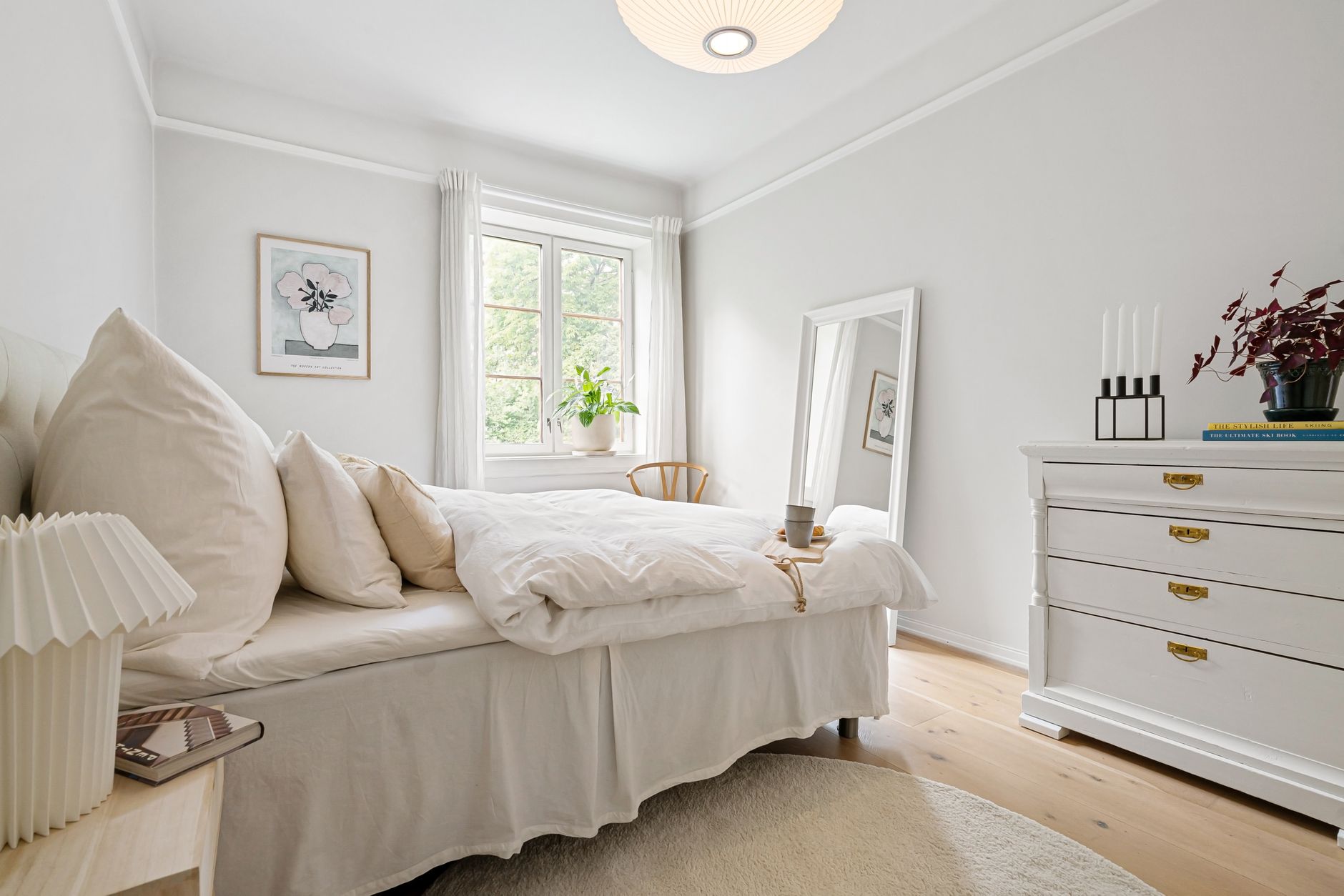
Photo by Rodrigo Neto
Lighting That Adapts to the Moment
A bedroom serves many moods across a single day, and one bright ceiling fixture cannot meet all of them. Layered lighting lets the room shift from an early scramble to a slow wind-down without any redecorating. The right mix makes even a disordered space feel intentional and calm.
Start with a soft general light for the whole room, then add focused sources where you actually do things. A bedside lamp supports reading without waking a partner, and a small light near a dresser or mirror handles the practical tasks. Dimmable options give you control over the tone, so late nights stay gentle and busy mornings get the brightness they need. Lighting you can adjust means the room flatters itself even when the floor has not been cleared.
Leaving Room to Breathe
An overfilled bedroom magnifies every bit of clutter, while a room with deliberate empty space absorbs it gracefully. Negative space is not wasted space. It is the margin that keeps a busy room from tipping into chaos. Planning for a little openness is one of the most forgiving choices a design can make.
Resist the urge to fill every corner with furniture and every wall with decoration. A clear stretch of floor gives a stray pile of laundry somewhere to sit temporarily without swallowing the room. A mostly bare surface offers a landing spot for the day’s odds and ends that can be cleared in seconds. When a room has breathing room designed into it, the ordinary mess of living never quite takes over.
Building in Easy Reset Points
The difference between a room that recovers quickly and one that spirals is usually a few small systems. Reset points are the spots and habits that let you return a space to order almost automatically. Designing them in means tidying takes a moment instead of an afternoon.
A basket by the door catches the clothes that are not dirty but not quite ready to hang. A single tray on the dresser contains the small items that otherwise scatter across every surface. A hook on the back of the door holds tomorrow’s outfit or today’s discarded one. These modest touches give the room a natural way to snap back, so the mess of real life stays temporary, and the bedroom keeps working exactly as you need it to.


A bedroom rarely stays as neat as it looks on the day the last picture is hung. Life fills it with laundry, half-read books, tangled charger cords, and the occasional spill that nobody planned for. The rooms that hold up over time are the ones built with that reality in mind from the start.
Good design here is less about a flawless surface and more about a space that keeps functioning when the day gets away from you. When a bedroom is planned around how people actually live, mess becomes a passing state instead of a constant source of stress.
Planning Around the Way You Actually Live
Every bedroom carries a set of habits that show up whether or not the design accounts for them. Clothes land on the chair, keys collect on the dresser, and the nightstand slowly gathers whatever the day leaves behind. A room that fights these patterns creates friction, while a room that anticipates them tends to stay usable. The first step is watching your own routine honestly and letting the layout answer it.
Rare emergencies deserve a place in that thinking too. A bedroom fire can start from a frayed lamp cord or an overloaded outlet, and the smoke and soot it leaves behind settle into mattresses, clothing, and every soft surface in the room. Left untreated, that residue turns acidic and unsafe, and the odor works its way permanently into fabrics. The solution here is hiring a professional fire damage restoration company that helps remove the residue, deodorize the contents, and return the space to a clean and safe condition. Trained crews assess which belongings can be saved and restore the room so it is genuinely livable again.
Storage That Absorbs the Chaos
Most of what looks like mess is really just homeless stuff. When everything has a spot within easy reach, a cluttered room resets in minutes rather than hours. Storage does the quiet work of keeping a bedroom functional, so it deserves more attention than it usually gets.
Closed storage hides the disorder you would rather not manage every day. Deep drawers under the bed swallow off-season clothing and spare bedding without demanding a tidy fold. A dresser with generous compartments keeps the folding pile from migrating onto flat surfaces. The goal is capacity that outpaces your clutter, so there is always somewhere to put the thing you are holding.
Open shelving earns its place for the items you reach for constantly, though it works best in small doses. A single shelf for current reading or a tray for daily essentials keeps useful things visible without turning the whole wall into a display that needs dusting. Balance the hidden and the visible so the room reads as calm even on a busy morning.
Choosing Surfaces and Fabrics That Forgive
The materials in a bedroom decide how a room ages under daily use. Delicate finishes look striking in a showroom and punish you the first time a coffee cup leaves a ring. Durable choices carry the same beauty while shrugging off the small accidents that come with real living.
Bedding in washable, mid-tone fabrics hides the occasional stain and returns to the bed clean without special handling. A rug with pattern and texture disguises footprints, and the odd dropped snack far better than a flat pale weave. Wood and laminate surfaces with a matte seal resist water marks and wipe clean with little effort. When the materials expect a little wear, you spend far less energy protecting them and far more simply enjoying the room.
Lighting That Adapts to the Moment
A bedroom serves many moods across a single day, and one bright ceiling fixture cannot meet all of them. Layered lighting lets the room shift from an early scramble to a slow wind-down without any redecorating. The right mix makes even a disordered space feel intentional and calm.
Start with a soft general light for the whole room, then add focused sources where you actually do things. A bedside lamp supports reading without waking a partner, and a small light near a dresser or mirror handles the practical tasks. Dimmable options give you control over the tone, so late nights stay gentle and busy mornings get the brightness they need. Lighting you can adjust means the room flatters itself even when the floor has not been cleared.
Leaving Room to Breathe
An overfilled bedroom magnifies every bit of clutter, while a room with deliberate empty space absorbs it gracefully. Negative space is not wasted space. It is the margin that keeps a busy room from tipping into chaos. Planning for a little openness is one of the most forgiving choices a design can make.
Resist the urge to fill every corner with furniture and every wall with decoration. A clear stretch of floor gives a stray pile of laundry somewhere to sit temporarily without swallowing the room. A mostly bare surface offers a landing spot for the day’s odds and ends that can be cleared in seconds. When a room has breathing room designed into it, the ordinary mess of living never quite takes over.
Building in Easy Reset Points
The difference between a room that recovers quickly and one that spirals is usually a few small systems. Reset points are the spots and habits that let you return a space to order almost automatically. Designing them in means tidying takes a moment instead of an afternoon.
A basket by the door catches the clothes that are not dirty but not quite ready to hang. A single tray on the dresser contains the small items that otherwise scatter across every surface. A hook on the back of the door holds tomorrow’s outfit or today’s discarded one. These modest touches give the room a natural way to snap back, so the mess of real life stays temporary, and the bedroom keeps working exactly as you need it to.
Share this:
Like this: