Choosing curtains can seem like a small decorating decision until you see how much they can influence the look and feel of an entire room. In an Australian home, they need to work with more than just the windows; wall colours, flooring, furniture, lighting, and natural sunlight can all affect whether a particular curtain feels like it truly belongs.
The good news is that you don’t need to match every element perfectly. The goal is to find colours, fabrics, textures, and patterns that complement what you already have. Whether your style is contemporary, coastal, traditional, or eclectic, a few thoughtful choices can help your curtains feel like a natural part of the room rather than an afterthought.
Start With the Style You Already Have
Before choosing a curtain colour or fabric, look at the room as a whole. Ask what style it naturally leans towards, clean and contemporary, warm and traditional, relaxed and coastal, or somewhere between. You don’t need a strict category, just an honest read on the visual qualities already present.
Contemporary rooms suit simple fabrics and understated colours, since curtains need to support the restraint the space is built around. Traditional spaces accommodate fuller curtains and richer textures, echoing their considered detailing. Coastal interiors suit lightweight fabrics and soft, natural colours, while eclectic rooms handle more pattern without feeling out of place.
Use Your Existing Colour Palette
Curtains don’t need to match your walls exactly. Instead, look at the colours already present in the room and choose a shade that complements them.
Warm interiors: Timber, beige, and earthy accessories pair naturally with warm neutrals.
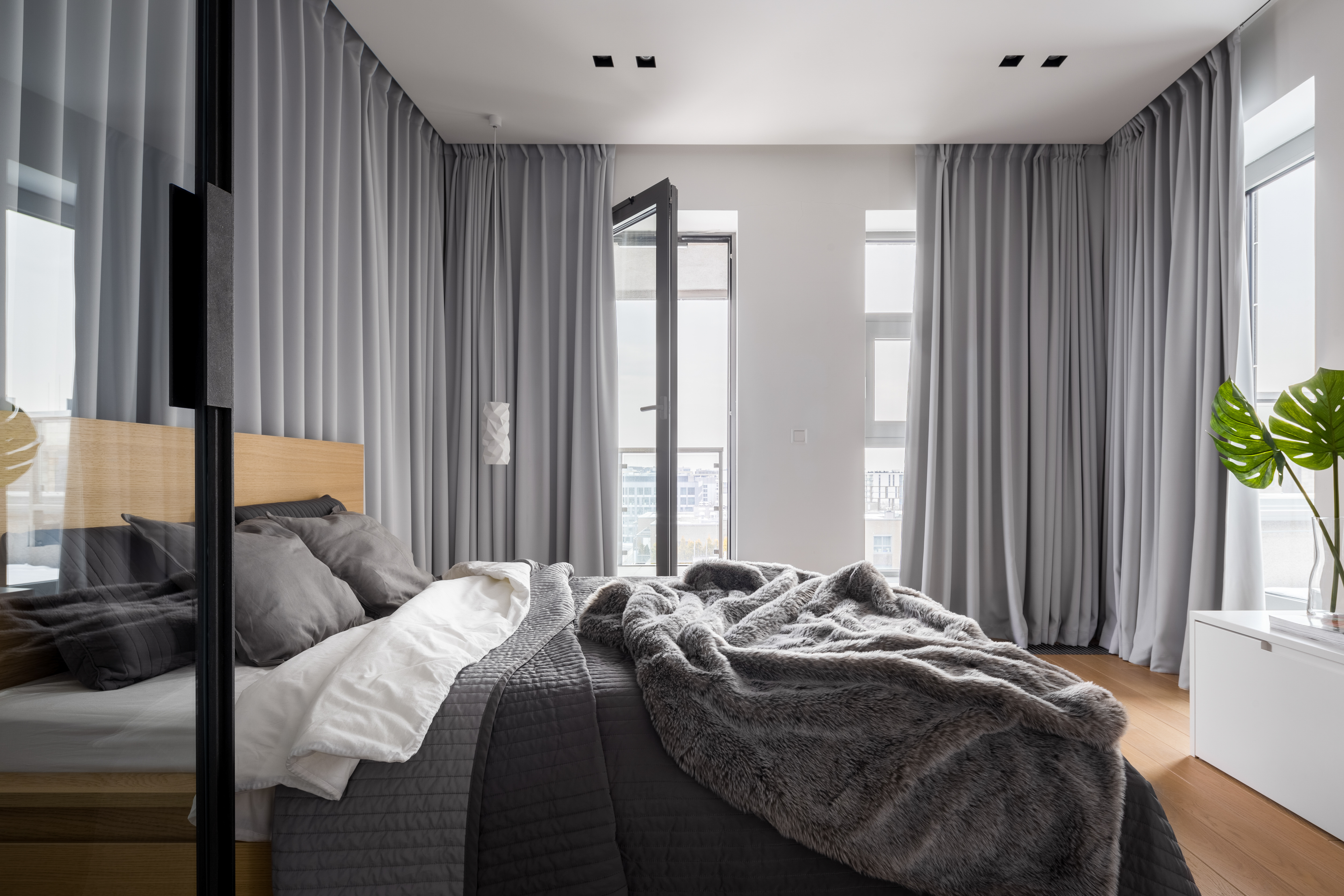
Cooler interiors: White, grey, and cooler tones work well with soft grey, off-white, or muted shades.
Colourful rooms: Pick up a secondary colour already used in cushions, artwork, or accessories.
Neutral spaces: Use curtains to introduce a subtle contrast without making them the dominant feature.
The aim is to create a sense of connection rather than an exact colour match. A curtain that sits naturally within the existing palette will usually feel more considered and cohesive.
Think About Texture, Not Just Colour
Two curtains in the same colour can look completely different depending on fabric, so texture deserves as much thought as colour. This matters most when a room already leans neutral, since a textured linen-look curtain adds interest without another colour to balance. Heavier fabrics create a formal, cosy atmosphere, lightweight materials feel relaxed and airy.
Think about the textures already present, timber, rugs, upholstery, cushions, metal finishes, before choosing a fabric. Curtains should add another layer rather than simply repeating what’s already there.
Consider the Amount of Natural Light
Natural light should factor into the decision, not arrive as an afterthought. A room with limited daylight benefits from lighter curtains, while rooms getting strong afternoon sun may need more substantial coverings for privacy and heat control.
This isn’t purely aesthetic. According to the Australian Government’s energy efficiency guidance, windows can account for up to 40% of a home’s heating energy loss, and close-fitting curtains that reach the floor, wrap to the wall, and use a block-out lining genuinely improve thermal performance.
Use Patterns Carefully
Patterned curtains can add personality and visual interest, but they should still feel connected to the rest of the room.
Already have bold patterns? Choose simpler curtains to keep the space balanced.
Working with a neutral room? A subtle pattern can add character without overwhelming the space.
Mixing different patterns? Look for shared colours, shapes, or tones rather than matching them exactly.
Want a softer look? Choose understated prints that complement your existing furniture and accessories.
The goal is not to make every pattern match perfectly, but to create enough visual connection for the room to feel cohesive. A little coordination can make patterned curtains feel intentional rather than out of place.
Photo by Yaroslav Shuraev
Think About the Room’s Function
A curtain that looks perfect in one room may not work as well in another because each space has different practical needs:
Bedrooms: Prioritise privacy and light control for a more comfortable environment.
Living rooms: Balance natural light, privacy, and overall style.
Home offices: Consider glare control, especially if you work on screens.
Dining rooms: Focus on a polished look that complements the furniture and atmosphere.
Children’s rooms: Choose practical, durable options that are easy to maintain.
The best curtains are not just the ones that look good; they are the ones that work naturally with how each room is used. Keeping both style and practicality in mind can help you create window treatments that feel intentional while making everyday living more comfortable.
Look at the Whole Home
Even though curtains are chosen room by room, consider your home’s overall flow rather than treating each window in isolation. You don’t need identical curtains everywhere, but related colours, fabrics, or hanging styles create continuity from one space to the next.
You might use different curtain colours in different bedrooms while keeping the same fabric texture or hardware style throughout. Exploring My Direct Blinds’ curtain range by room can also help you compare different styles and think about how they might work throughout your home. This can make it easier to choose curtains that suit each room individually while still maintaining a consistent look across the home.
Order Samples Before Making the Final Choice
One of the easiest mistakes is choosing curtains from only an online image. Colours look different depending on screen settings and the surfaces in your home, and a fabric that reads warm beige online might look cooler against your actual walls.
If samples are available, place them in the room at different times of day, direct sunlight, morning, evening, and against your walls and furniture. This simple step prevents an expensive mismatch once the curtains are hung.
Conclusion
Matching curtains with your home’s existing style is less about finding an exact match and more about creating visual balance. Consider your colour palette, furniture, textures, room proportions, natural light, and practical needs before choosing a fabric. The right curtains should feel connected to the room without disappearing into it. By looking at the whole space, checking fabric samples, and thinking about how the curtains will actually be used, you can choose window treatments that feel intentional and naturally suited to your home.


Choosing curtains can seem like a small decorating decision until you see how much they can influence the look and feel of an entire room. In an Australian home, they need to work with more than just the windows; wall colours, flooring, furniture, lighting, and natural sunlight can all affect whether a particular curtain feels like it truly belongs.
The good news is that you don’t need to match every element perfectly. The goal is to find colours, fabrics, textures, and patterns that complement what you already have. Whether your style is contemporary, coastal, traditional, or eclectic, a few thoughtful choices can help your curtains feel like a natural part of the room rather than an afterthought.
Start With the Style You Already Have
Before choosing a curtain colour or fabric, look at the room as a whole. Ask what style it naturally leans towards, clean and contemporary, warm and traditional, relaxed and coastal, or somewhere between. You don’t need a strict category, just an honest read on the visual qualities already present.
Contemporary rooms suit simple fabrics and understated colours, since curtains need to support the restraint the space is built around. Traditional spaces accommodate fuller curtains and richer textures, echoing their considered detailing. Coastal interiors suit lightweight fabrics and soft, natural colours, while eclectic rooms handle more pattern without feeling out of place.
Use Your Existing Colour Palette
Curtains don’t need to match your walls exactly. Instead, look at the colours already present in the room and choose a shade that complements them.
The aim is to create a sense of connection rather than an exact colour match. A curtain that sits naturally within the existing palette will usually feel more considered and cohesive.
Think About Texture, Not Just Colour
Two curtains in the same colour can look completely different depending on fabric, so texture deserves as much thought as colour. This matters most when a room already leans neutral, since a textured linen-look curtain adds interest without another colour to balance. Heavier fabrics create a formal, cosy atmosphere, lightweight materials feel relaxed and airy.
Think about the textures already present, timber, rugs, upholstery, cushions, metal finishes, before choosing a fabric. Curtains should add another layer rather than simply repeating what’s already there.
Consider the Amount of Natural Light
Natural light should factor into the decision, not arrive as an afterthought. A room with limited daylight benefits from lighter curtains, while rooms getting strong afternoon sun may need more substantial coverings for privacy and heat control.
This isn’t purely aesthetic. According to the Australian Government’s energy efficiency guidance, windows can account for up to 40% of a home’s heating energy loss, and close-fitting curtains that reach the floor, wrap to the wall, and use a block-out lining genuinely improve thermal performance.
Use Patterns Carefully
Patterned curtains can add personality and visual interest, but they should still feel connected to the rest of the room.
The goal is not to make every pattern match perfectly, but to create enough visual connection for the room to feel cohesive. A little coordination can make patterned curtains feel intentional rather than out of place.
Think About the Room’s Function
A curtain that looks perfect in one room may not work as well in another because each space has different practical needs:
The best curtains are not just the ones that look good; they are the ones that work naturally with how each room is used. Keeping both style and practicality in mind can help you create window treatments that feel intentional while making everyday living more comfortable.
Look at the Whole Home
Even though curtains are chosen room by room, consider your home’s overall flow rather than treating each window in isolation. You don’t need identical curtains everywhere, but related colours, fabrics, or hanging styles create continuity from one space to the next.
You might use different curtain colours in different bedrooms while keeping the same fabric texture or hardware style throughout. Exploring My Direct Blinds’ curtain range by room can also help you compare different styles and think about how they might work throughout your home. This can make it easier to choose curtains that suit each room individually while still maintaining a consistent look across the home.
Order Samples Before Making the Final Choice
One of the easiest mistakes is choosing curtains from only an online image. Colours look different depending on screen settings and the surfaces in your home, and a fabric that reads warm beige online might look cooler against your actual walls.
If samples are available, place them in the room at different times of day, direct sunlight, morning, evening, and against your walls and furniture. This simple step prevents an expensive mismatch once the curtains are hung.
Conclusion
Matching curtains with your home’s existing style is less about finding an exact match and more about creating visual balance. Consider your colour palette, furniture, textures, room proportions, natural light, and practical needs before choosing a fabric. The right curtains should feel connected to the room without disappearing into it. By looking at the whole space, checking fabric samples, and thinking about how the curtains will actually be used, you can choose window treatments that feel intentional and naturally suited to your home.
Share this:
Like this: