An overseas wedding can make for the kind of memories that refuse to fit neatly into a suitcase:
A handwritten menu from a family-run restaurant, sand in the hem of a dress, a camera roll full of relatives meeting for the first time.
With that all being said, for a US citizen who has married a non-US spouse abroad and plans to live together in America, there is one less romantic item worth packing carefully too:
The paperwork.
Getting married overseas does not automatically give a spouse the right to live in the United States. It can, however, be the first step toward a U.S. spousal visa application. The easiest time to gather some of the most useful records is while the wedding is still fresh, local offices are within reach, and you have not yet scattered back across borders.
First, be clear about what you have come home with
A destination wedding can be a legal marriage, a symbolic celebration, or, quite often, a mix of both. Before taking the immigration process into consideration, couples need to understand which part of their trip stands as the legal record.
A beautiful ceremony is not always a legal marriage
A wedding held at a vineyard in Tuscany, on a beach in Mexico, or in a family church in another country may be deeply meaningful, but that does not necessarily mean it created a legal marriage recognised for immigration purposes.
In some destinations, foreign couples have to
Meet local residency rules
Provide particular affidavits
Complete a civil registration before or after the ceremony.
In others, couples choose to complete the legal marriage at home and hold the celebration abroad.
Now, neither approach is inherently better, but the distinction matters. If the plan is eventually to pursue a US spousal visa, make sure you know whether (and where) the marriage was legally registered.
Order the right certificate before leaving
Once the legal marriage has been registered, ask the issuing authority for the official marriage certificate and, where available, a few certified copies. A decorative certificate from the venue or officiant may be lovely for the album, but it may not be the government-issued document needed later.
This is also a good moment to look closely at names, dates, and places of birth. A missing middle name or a slightly different spelling can be manageable, but it is far easier to query an error while you are still in the country where the record was created. If either partner has been married before, keep:
Relevant divorce records
Annulment records
Or death records
Start a post-wedding document folder
No one wants to spend the morning after a wedding sorting files. Still, a simple folder (digital, physical, or both) can spare a couple a great deal of scrambling later.
Keep the legal records together
Start with:
Official marriage certificate
Certified copies
Any translations obtained for it
Copies of passports
Name-change records if relevant
Proof that prior marriages ended legally.
Different countries issue civil records differently, and US visa processing uses country-specific document rules. The point is not to guess every future requirement while on honeymoon, but rather to leave with clean copies of the documents that are hardest to replace from another continent.
A practical approach is to scan everything in colour, label each file clearly, and store it securely:
“Marriage certificate: original language,”
“Marriage certificate – English translation,”
“Divorce decree – 2019”
These will be much more useful later than a camera roll image called “IMG_4837.”
Photo by Josh Withers
Keep evidence of the life you are building, not just the wedding
A marriage certificate shows that a marriage took place. A future spousal-visa case may also require evidence that the relationship is genuine and ongoing.
This simply means keeping the ordinary traces of a shared life readily available:
Travel itineraries
Records of visits
Correspondence while apart
Joint travel bookings
Shared leases or bills where applicable
Financial planning, insurance or beneficiary information
Meaningful moments with one another’s friends and families.
For couples who will spend time in different countries after the wedding, a short relationship timeline can be especially helpful. It can quietly explain the basics: where you met, when you travelled together, when you married, where each partner lived, and what the plan is for living together in the US.
Wedding photos help when they tell a story
Photos from the wedding are worth keeping, particularly images that show both families, long-standing friends, or people who have been part of the relationship from the beginning. They add warmth and context to a petition that might otherwise be mostly forms and certificates.
But photos alone are not a relationship. A dozen posed shots in front of a flower wall say far less than a natural collection showing a couple’s real life over time. Think less “perfect evidence” and more “an honest record.” The most convincing story is usually the one no one had to manufacture.
The overlooked folder: plans for returning to the United States
This is the part many overseas couples do not consider. If the US citizen has been living abroad with their new spouse, planning the move back to America can matter just as much as preserving the marriage paperwork.
A joint sponsor does not solve every issue
The US citizen spouse may need to show that the United States is, or will become again, their home base for sponsorship purposes. This is often referred to as US domicile.
Income and domicile are related, but different questions. A joint sponsor may help where income is insufficient, but it does not remove the need for the petitioning spouse to address their own US domicile. Couples who have spent years abroad should not leave this until the final weeks before an interview.
Make moves, not just promises
The best preparation is usually the most practical.
Not every couple will have every document, and the right evidence depends on their circumstances. What matters is that the return to the US looks like a real, organised next chapter, not an idea introduced only when a form asks for it.
Treat the document folder like good travel planning
The aim is not to travel with a briefcase of originals at all times, but rather:
Know what belongs in your carry-on
Know what should be securely backed up
Know what should be left alone until it is actually needed.
Keep originals safe and scans accessible
Original civil documents are extremely valuable, so store them safely and make clear digital copies for reference. When the time comes to submit documents during the visa process, follow the instructions from the relevant US authorities and the consular post carefully. Do not send original civil documents simply because you have them.
Translations also deserve attention. A translation may be needed depending on the document’s language and the country where the visa application will be processed. Keep the original-language document and its translation together so there is no confusion later.
Do not collect time-sensitive documents too early
Some documents are best obtained closer to the point when they are requested. Police certificates, medical examinations, financial records, and certain other documents can have validity limits or changing requirements.
The post-wedding priority is the durable material: the legal marriage record, identity documents, relationship history, and evidence of a genuine plan to live together. Save the changing requirements for the stage when you are ready to file and can check the latest official guidance.
After the wedding, the route is usually a spousal visa, not a fiancé visa
Once a couple is legally married, they are generally looking at the spouse route, often discussed as the IR-1 or CR-1 immigrant-visa process. The US citizen typically begins by filing a family petition, after which the case moves through further document collection and consular processing.
This is where it differs from a prospective marriage visa
A prospective marriage, or K-1 visa, is for couples who are not yet married and plan to marry in the United States. It is a different route with a different starting point.
For couples who have already completed a legal wedding abroad, the central question is no longer “how do we get married in the US?” It becomes “how do we preserve the correct records and prepare for life there together?” That distinction is worth understanding before booking flights, changing names, or beginning a relocation.
Know when to ask for tailored advice
Some cases deserve individual legal guidance from the start:
Previous marriages
Unusual local marriage rules
Name discrepancies
Long periods spent abroad
Immigration history
Questions about where the couple will live
If you have had a spouse visa refused, tailored advice can also help clarify what happened and what options may be available next.
There is no prize for trying to solve a complicated cross-border case from a wedding-planning checklist. The best use of this list is to arrive at the next step organised, informed, and with the documents that are hardest to recreate already in hand.
Save the paperwork, but also save the story
The official marriage certificate may be the document that starts the process, but it is rarely the whole story. For international couples, the months after an overseas wedding can involve flights, farewells, new jobs, a move, and the complicated work of combining two lives across borders.
Keep the paperwork. Keep the practical evidence of the move home. And keep the ordinary pieces of your relationship that show why the move matters in the first place.


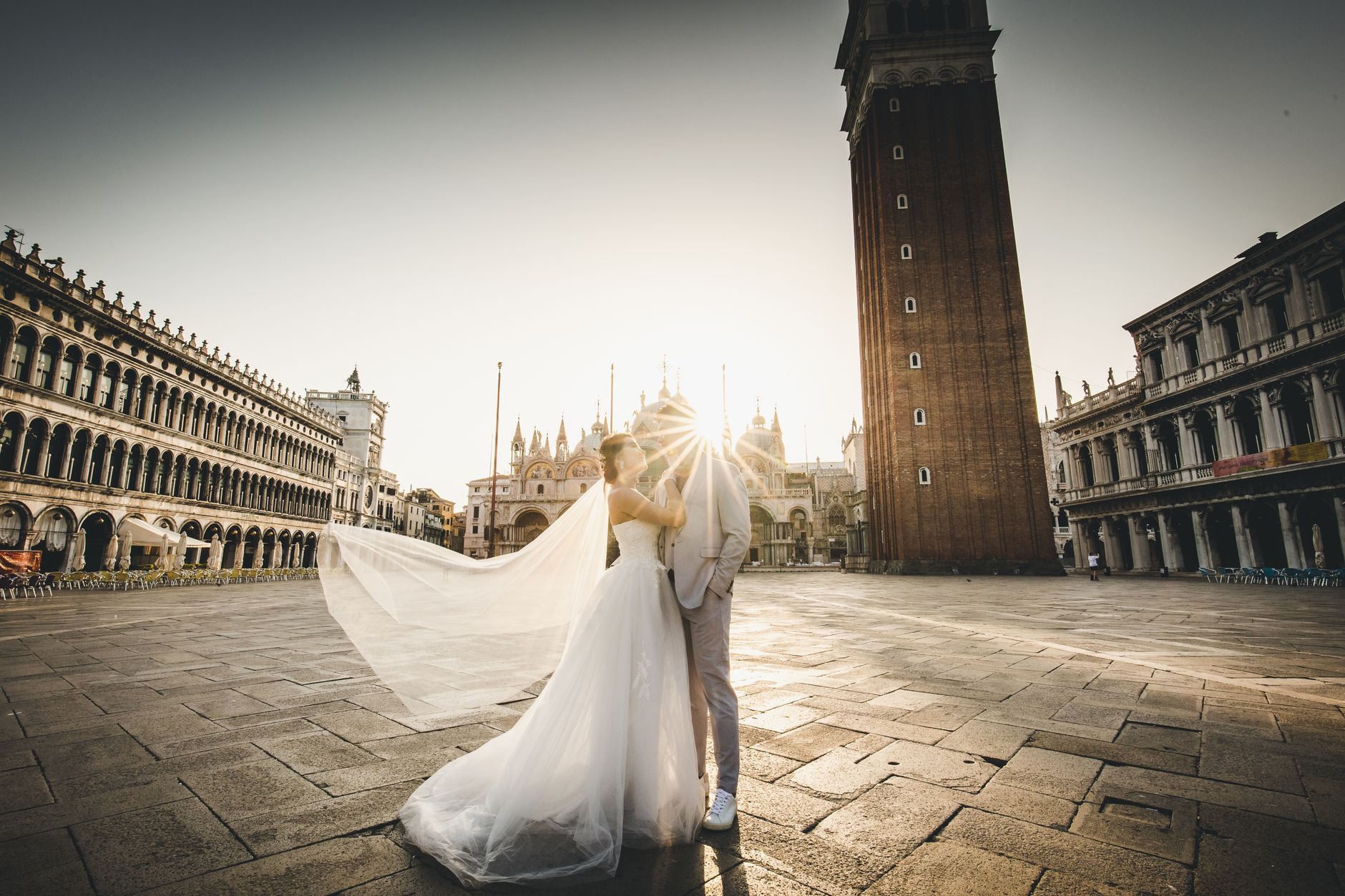
An overseas wedding can make for the kind of memories that refuse to fit neatly into a suitcase:
A handwritten menu from a family-run restaurant, sand in the hem of a dress, a camera roll full of relatives meeting for the first time.
With that all being said, for a US citizen who has married a non-US spouse abroad and plans to live together in America, there is one less romantic item worth packing carefully too:
The paperwork.
Getting married overseas does not automatically give a spouse the right to live in the United States. It can, however, be the first step toward a U.S. spousal visa application. The easiest time to gather some of the most useful records is while the wedding is still fresh, local offices are within reach, and you have not yet scattered back across borders.
First, be clear about what you have come home with
A destination wedding can be a legal marriage, a symbolic celebration, or, quite often, a mix of both. Before taking the immigration process into consideration, couples need to understand which part of their trip stands as the legal record.
A beautiful ceremony is not always a legal marriage
A wedding held at a vineyard in Tuscany, on a beach in Mexico, or in a family church in another country may be deeply meaningful, but that does not necessarily mean it created a legal marriage recognised for immigration purposes.
In some destinations, foreign couples have to
In others, couples choose to complete the legal marriage at home and hold the celebration abroad.
Now, neither approach is inherently better, but the distinction matters. If the plan is eventually to pursue a US spousal visa, make sure you know whether (and where) the marriage was legally registered.
Order the right certificate before leaving
Once the legal marriage has been registered, ask the issuing authority for the official marriage certificate and, where available, a few certified copies. A decorative certificate from the venue or officiant may be lovely for the album, but it may not be the government-issued document needed later.
This is also a good moment to look closely at names, dates, and places of birth. A missing middle name or a slightly different spelling can be manageable, but it is far easier to query an error while you are still in the country where the record was created. If either partner has been married before, keep:
Start a post-wedding document folder
No one wants to spend the morning after a wedding sorting files. Still, a simple folder (digital, physical, or both) can spare a couple a great deal of scrambling later.
Keep the legal records together
Start with:
Different countries issue civil records differently, and US visa processing uses country-specific document rules. The point is not to guess every future requirement while on honeymoon, but rather to leave with clean copies of the documents that are hardest to replace from another continent.
A practical approach is to scan everything in colour, label each file clearly, and store it securely:
These will be much more useful later than a camera roll image called “IMG_4837.”
Keep evidence of the life you are building, not just the wedding
A marriage certificate shows that a marriage took place. A future spousal-visa case may also require evidence that the relationship is genuine and ongoing.
This simply means keeping the ordinary traces of a shared life readily available:
For couples who will spend time in different countries after the wedding, a short relationship timeline can be especially helpful. It can quietly explain the basics: where you met, when you travelled together, when you married, where each partner lived, and what the plan is for living together in the US.
Wedding photos help when they tell a story
Photos from the wedding are worth keeping, particularly images that show both families, long-standing friends, or people who have been part of the relationship from the beginning. They add warmth and context to a petition that might otherwise be mostly forms and certificates.
But photos alone are not a relationship. A dozen posed shots in front of a flower wall say far less than a natural collection showing a couple’s real life over time. Think less “perfect evidence” and more “an honest record.” The most convincing story is usually the one no one had to manufacture.
The overlooked folder: plans for returning to the United States
This is the part many overseas couples do not consider. If the US citizen has been living abroad with their new spouse, planning the move back to America can matter just as much as preserving the marriage paperwork.
A joint sponsor does not solve every issue
The US citizen spouse may need to show that the United States is, or will become again, their home base for sponsorship purposes. This is often referred to as US domicile.
Income and domicile are related, but different questions. A joint sponsor may help where income is insufficient, but it does not remove the need for the petitioning spouse to address their own US domicile. Couples who have spent years abroad should not leave this until the final weeks before an interview.
Make moves, not just promises
The best preparation is usually the most practical.
Keep records of:
Not every couple will have every document, and the right evidence depends on their circumstances. What matters is that the return to the US looks like a real, organised next chapter, not an idea introduced only when a form asks for it.
Treat the document folder like good travel planning
The aim is not to travel with a briefcase of originals at all times, but rather:
Keep originals safe and scans accessible
Original civil documents are extremely valuable, so store them safely and make clear digital copies for reference. When the time comes to submit documents during the visa process, follow the instructions from the relevant US authorities and the consular post carefully. Do not send original civil documents simply because you have them.
Translations also deserve attention. A translation may be needed depending on the document’s language and the country where the visa application will be processed. Keep the original-language document and its translation together so there is no confusion later.
Do not collect time-sensitive documents too early
Some documents are best obtained closer to the point when they are requested. Police certificates, medical examinations, financial records, and certain other documents can have validity limits or changing requirements.
The post-wedding priority is the durable material: the legal marriage record, identity documents, relationship history, and evidence of a genuine plan to live together. Save the changing requirements for the stage when you are ready to file and can check the latest official guidance.
After the wedding, the route is usually a spousal visa, not a fiancé visa
Once a couple is legally married, they are generally looking at the spouse route, often discussed as the IR-1 or CR-1 immigrant-visa process. The US citizen typically begins by filing a family petition, after which the case moves through further document collection and consular processing.
This is where it differs from a prospective marriage visa
A prospective marriage, or K-1 visa, is for couples who are not yet married and plan to marry in the United States. It is a different route with a different starting point.
For couples who have already completed a legal wedding abroad, the central question is no longer “how do we get married in the US?” It becomes “how do we preserve the correct records and prepare for life there together?” That distinction is worth understanding before booking flights, changing names, or beginning a relocation.
Know when to ask for tailored advice
Some cases deserve individual legal guidance from the start:
If you have had a spouse visa refused, tailored advice can also help clarify what happened and what options may be available next.
There is no prize for trying to solve a complicated cross-border case from a wedding-planning checklist. The best use of this list is to arrive at the next step organised, informed, and with the documents that are hardest to recreate already in hand.
Save the paperwork, but also save the story
The official marriage certificate may be the document that starts the process, but it is rarely the whole story. For international couples, the months after an overseas wedding can involve flights, farewells, new jobs, a move, and the complicated work of combining two lives across borders.
Keep the paperwork. Keep the practical evidence of the move home. And keep the ordinary pieces of your relationship that show why the move matters in the first place.
Share this:
Like this: