Montenegro is one of those rare European destinations where the landscape changes dramatically within a single day. You can wake up beside the Adriatic, wander through a centuries-old stone town before lunch, drive into the mountains in the afternoon and end the day beside a dark-blue alpine lake or a roaring river canyon.
That contrast is what makes Montenegro so compelling.
The country may be small, but its landscapes are anything but. The Bay of Kotor is framed by enormous limestone mountains, Budva brings beaches and summer energy, Lake Skadar offers quiet water and bird-filled wetlands, while the north opens into a completely different world of forests, peaks, canyons and national parks.
Montenegro is also a destination that rewards travellers who leave room for spontaneity. The most memorable moments may not be the famous viewpoints or postcard towns, but a roadside restaurant, a quiet swimming spot, a mountain road or a tiny village you had never planned to visit.
If you are looking for a European escape that combines the Adriatic with mountains, history, food and adventure, Montenegro deserves far more than a quick stop on a Balkan itinerary.
Why Visit Montenegro?
Montenegro brings together several different types of holiday in one remarkably compact country.
You can spend your morning swimming in the Adriatic and your afternoon hiking through a national park. You can explore Venetian architecture in Kotor one day and sleep in a mountain town surrounded by pine forests the next.
The country is particularly appealing for travellers who enjoy:
Dramatic coastlines
Historic old towns
Scenic road trips
Mountain landscapes
Beaches and swimming
Hiking and outdoor adventures
Local seafood and Balkan cuisine
Small towns and villages
National parks
Slow travel
Photography
European destinations that feel less predictable
Montenegro’s tourism landscape is broadly divided between its Adriatic coast, the Bay of Kotor, the Lake Skadar and central regions, and the mountainous north around Durmitor and the Tara Canyon. The country’s tourism strategy specifically highlights the way its coast and mountains can be experienced together.
That is perhaps Montenegro’s greatest advantage.
You do not have to choose between a beach holiday and an adventure holiday.
You can have both.
Where Is Montenegro?
Montenegro sits on the Adriatic coast of the Balkans, bordered by Croatia, Bosnia and Herzegovina, Serbia, Kosovo and Albania.
Its coastline is relatively short compared with countries such as Croatia, but it is intensely varied.
The Bay of Kotor cuts deep into the mountains, creating a dramatic landscape that almost feels like a Norwegian fjord transplanted into the Mediterranean.
Further south, the coast becomes more open and beach-focused around Budva, Bar and Ulcinj.
Inland, the scenery changes completely.
Forested mountains, deep valleys, rivers, glacial lakes and dramatic canyons create a destination that feels worlds away from the beach resorts.
This combination means Montenegro works beautifully as both a standalone trip and as part of a wider Balkan adventure.
For another nearby destination where mountains meet a spectacular Mediterranean coastline, our Albanian Riviera travel guide is a natural companion to a Montenegro itinerary.
Kotor: The Place You Should Not Rush
Photo by Dusan Stupar
Kotor is Montenegro’s most famous destination for good reason.
The old town sits at the innermost point of the Bay of Kotor, surrounded by steep mountains that rise dramatically from the water.
Inside the medieval walls, narrow stone streets twist between churches, small squares, cafés and historic buildings.
It is beautiful, but Kotor is best experienced slowly.
Explore Kotor Old Town
Start early in the morning before the streets become busy.
Wander without a strict route and look beyond the main squares. Some of the most atmospheric parts of Kotor are found in the narrow lanes where laundry hangs above stone doorways and small cafés spill onto quiet corners.
The architecture reflects centuries of Venetian influence alongside the city’s broader Balkan and Mediterranean history.
Allow time for a long lunch rather than treating Kotor as a quick sightseeing stop.
Climb the Kotor Fortress
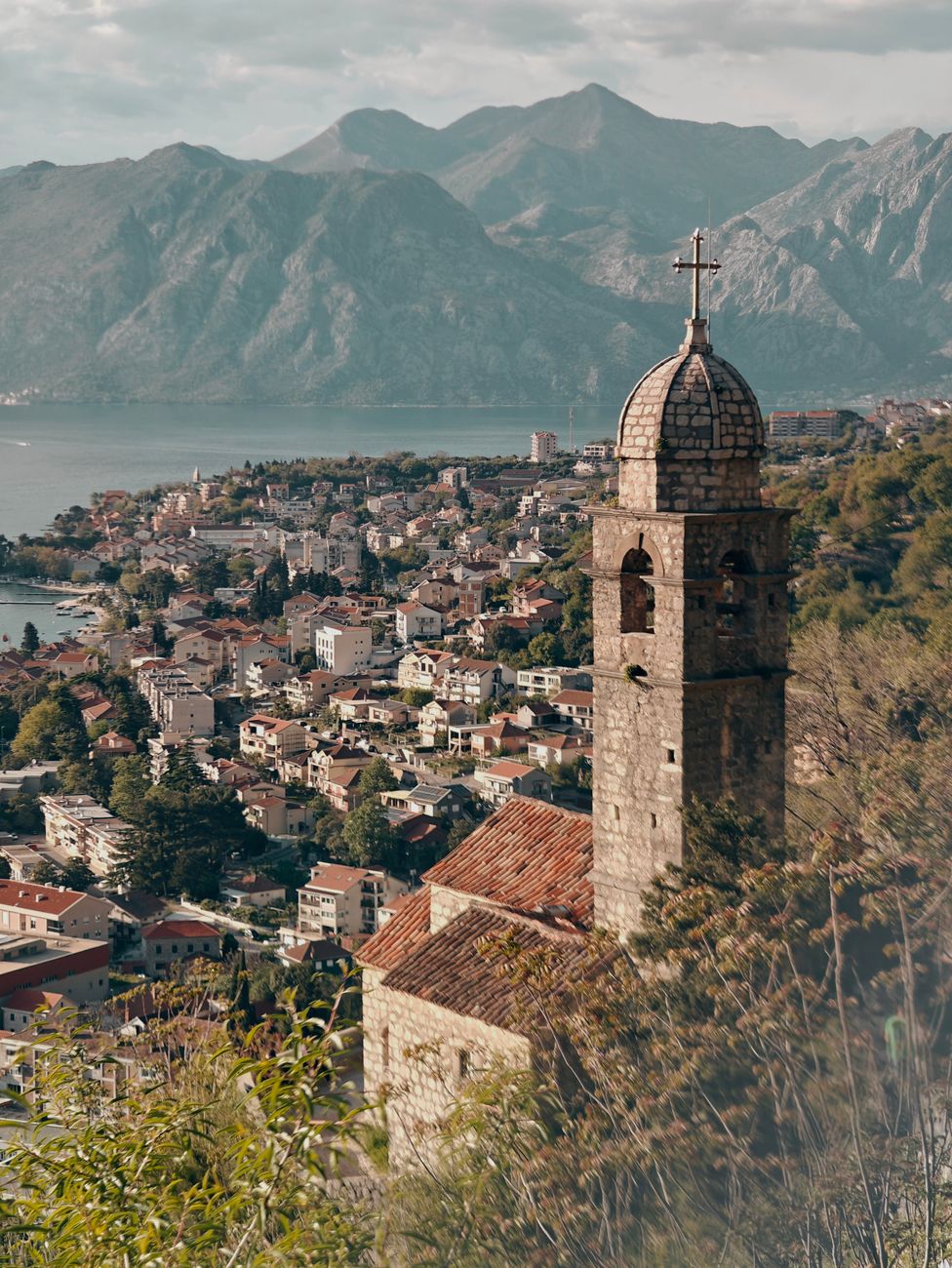
For the best perspective of the Bay of Kotor, climb towards the fortress above the old town.
The route is steep and can be hot in summer, but the view becomes increasingly spectacular as you gain elevation.
From above, the old town looks tiny against the enormous mountains and deep blue water of the bay.
Go early in the day if possible, particularly during the warmer months.
Take a Boat Trip
The bay looks completely different from the water.
A boat trip gives you another perspective on the mountain walls, coastal villages and small islands scattered across the bay.
It is also an easy way to visit places that would otherwise require more driving.
Perast: A Smaller, Quieter Bay Escape
Just outside Kotor, Perast is one of the most beautiful small towns in Montenegro.
Its waterfront is lined with stone buildings, historic churches and elegant old residences, with the mountains rising immediately behind them.
Perast is much smaller than Kotor, which makes it perfect for a slower afternoon.
Walk along the waterfront, stop for lunch and take a boat towards the famous Our Lady of the Rocks island.
The town is particularly atmospheric later in the afternoon when the day-trip crowds begin to disappear.
Budva: Beaches, Old Town and Summer Energy
Photo by Julien Goettelmann Photo by Kadir Alkn
Budva offers a completely different side of Montenegro.
It is one of the country’s main seaside resorts, known for beaches, restaurants, nightlife and its historic old town.
The old town is surrounded by stone walls and filled with narrow streets, small squares and historic buildings.
Outside the walls, the atmosphere becomes more contemporary, with beach clubs, restaurants and waterfront promenades.
Budva Old Town
Spend some time inside the old town before heading to the beach.
The compact streets are easy to explore on foot, and the combination of stone architecture and bright Adriatic light makes the area particularly photogenic.
Sveti Stefan
Sveti Stefan is one of Montenegro’s most recognisable coastal views.
The tiny fortified island is connected to the mainland by a narrow causeway, creating a scene that looks almost unreal from the surrounding viewpoints.
Even if you do not stay here, stopping to see the view is worthwhile.
The wider area is also known for beautiful beaches and clear water.
Herceg Novi: Montenegro’s Garden City
Herceg Novi sits near the entrance to the Bay of Kotor and is known for its greenery, stairways, old stone buildings and Mediterranean atmosphere.
It is a good alternative to Kotor if you want somewhere slightly less concentrated.
The town has a slower rhythm, with cafés, waterfront walks and plenty of places to stop for a swim.
Spend time exploring the old town, then follow the promenade along the coast.
Herceg Novi is also a useful base for exploring the western part of the bay.
The Bay of Kotor Road Trip
One of the best ways to experience Montenegro is to drive around the Bay of Kotor rather than simply staying in one town.
The route connects dramatic mountain scenery with small villages, waterfront restaurants, historic churches and swimming spots.
Stop whenever the scenery catches your attention.
This is not a road trip where you need to cover enormous distances.
The joy is in the short stops.
A coffee overlooking the water.
A swim from a quiet jetty.
A seafood lunch.
A tiny church surrounded by mountains.
A viewpoint you had not marked on your map.
The Bay of Kotor rewards this kind of unhurried exploration.
Lake Skadar: Montenegro’s Quieter Side
Leave the coast behind and the landscape changes almost immediately.
Lake Skadar is the largest lake in Southern Europe and stretches across the border between Montenegro and Albania.
The Montenegrin side is known for wetlands, dramatic mountains, small villages and abundant birdlife.
It is one of the best places in the country for travellers who want to slow down.
Take a Boat Trip on Lake Skadar
A boat trip is one of the most enjoyable ways to experience the lake.
The water opens into wide landscapes surrounded by mountains, reeds and small islands.
Depending on the season and route, you may also see a variety of birdlife.
Visit Virpazar
Virpazar is a small settlement and one of the main gateways to Lake Skadar.
It is an easy place to stop for lunch, arrange a boat trip or simply enjoy the slower pace of the lake region.
The village is particularly charming outside the busiest part of the day.
Explore the Wine Country
The area around Lake Skadar is also associated with Montenegro’s wine production.
Visit local wineries and try regional varieties alongside traditional food.
This is a very different experience from the polished restaurant scene around the coast and offers a more intimate look at Montenegro.
Durmitor National Park: Montenegro’s Wild Heart
Photo by Masha Mirra
For many travellers, northern Montenegro is where the country becomes truly unforgettable.
Durmitor National Park is a dramatic mountain landscape of limestone peaks, forests, alpine meadows, glacial lakes and deep valleys.
The park is part of the UNESCO-listed Natural and Cultural Heritage of the Durmitor region.
It is the place to come for hiking, mountain scenery and outdoor adventure.
Žabljak
Žabljak is the main base for exploring Durmitor.
The town sits high in the mountains and has a very different atmosphere from the Adriatic coast.
Stay here for several nights if hiking is a priority.
Black Lake
Crno Jezero, or Black Lake, is one of Durmitor’s most famous sights.
Surrounded by forest and mountains, it is an easy introduction to the landscape.
The area around the lake is ideal for a peaceful walk, particularly when the surrounding peaks are reflected in the water.
Hiking in Durmitor
Durmitor has hiking routes ranging from relatively easy walks to demanding mountain adventures.
If you are planning longer hikes, check weather conditions and local trail information before setting out.
Mountain weather can change quickly, and the terrain should not be underestimated.
Tara Canyon: Montenegro’s Great Adventure
The Tara River has carved one of Europe’s most dramatic canyons through the mountains.
The Tara Canyon is particularly famous for rafting, making it one of Montenegro’s best destinations for adventure travellers.
White-Water Rafting
Rafting on the Tara is an experience for travellers who want something more active than sightseeing.
The river cuts through steep forested landscapes, with dramatic rock formations and mountain scenery surrounding the route.
The experience varies depending on the season and water conditions, so choose an established local operator and follow safety advice.
Đurđevića Tara Bridge
The famous bridge over the Tara Canyon is one of the country’s most recognisable landmarks.
Standing above the canyon gives you an immediate sense of its scale.
For travellers who are not rafting, the bridge and surrounding viewpoints provide an easy way to experience the landscape.
Lovćen National Park and Cetinje
Between the coast and Montenegro’s interior lies another important landscape, Lovćen National Park.
The mountain is closely connected to Montenegro’s history and national identity.
Nearby Cetinje was the country’s historic royal capital and remains an important cultural centre.
The combination of mountain scenery, historic buildings and traditional architecture makes this a worthwhile addition to a wider Montenegro itinerary.
Ulcinj: A Different Kind of Adriatic Coast
Further south, Montenegro’s coastline becomes more diverse.
Ulcinj has a stronger eastern Mediterranean influence and a distinct cultural identity shaped by centuries of different traditions.
The town is known for its old fortress, long beaches and laid-back atmosphere.
Velika Plaža
Velika Plaža is one of Montenegro’s most famous sandy beaches.
It is very different from the rocky and pebbly coastline found around much of the Bay of Kotor and Budva.
If long beach walks and open space are more appealing to you than small coves, Ulcinj is worth considering.
Ada Bojana
At the southern end of the country, Ada Bojana sits where the Bojana River meets the Adriatic.
The area has a relaxed, alternative atmosphere and is known for its beach restaurants, wooden riverside structures and long sandy beach.
It is one of the more unusual places to experience Montenegro’s coast.
What to Eat in Montenegro
Montenegrin food reflects the country’s geography.
Along the coast, seafood and Mediterranean ingredients dominate.
In the mountains, dishes become heartier, with grilled meats, cheese, potatoes and slow-cooked meals.
Njeguški Pršut
Njeguški pršut is one of Montenegro’s best-known cured meats.
It is traditionally associated with the mountain village of Njeguši and is often served alongside local cheese and bread.
Fresh Seafood
Along the Adriatic, look for grilled fish, prawns, mussels, octopus and other seafood.
The simplest preparations are often the best.
Fresh fish grilled with olive oil, lemon and herbs makes an ideal Montenegro lunch.
Kačamak
Kačamak is a traditional mountain dish made with potatoes, cornmeal and dairy products.
It is hearty, rustic and particularly suited to cooler weather in the north.
Lamb
Lamb features heavily in traditional Montenegrin cuisine.
You may find it roasted, grilled or prepared in regional dishes.
Local Cheese
Montenegro produces a variety of cheeses, often served with cured meat, bread and vegetables.
Try them as part of a traditional breakfast or a relaxed mountain lunch.
If you enjoy planning trips around local food as much as scenery, our Sifnos Greece travel guide is another beautiful example of how food, landscape and local culture can shape an entire European escape.
Where to Stay in Montenegro
Montenegro has accommodation for almost every style of traveller, but choosing the right base can make a big difference.
Stay in Kotor for History and Atmosphere
Choose Kotor if you want historic streets, restaurants, the bay and easy access to day trips.
It is particularly good for first-time visitors.
Stay in Perast for Romance
Perast is ideal for couples and travellers who want a quieter waterfront setting.
It is small, atmospheric and beautifully positioned.
Stay in Budva for Beaches and Nightlife
Budva works well if you want easy beach access, restaurants and a lively summer atmosphere.
Stay in Herceg Novi for a Slower Coastal Escape
Herceg Novi is a good option if you want the bay without staying directly in Kotor.
Stay in Žabljak for Mountains
If hiking and nature are the focus, stay in Žabljak and give yourself several days to explore Durmitor.
How to Get Around Montenegro
A rental car is one of the best ways to experience Montenegro.
The country is small enough that driving between regions is practical, but the roads can be winding and mountainous.
Allow more time than the map might suggest.
The journey itself is often part of the experience.
A coastal drive can take you past dramatic cliffs, small beaches and mountain villages, while an inland route can suddenly open into a vast valley.
Public transport connects major towns, but having your own car gives you considerably more flexibility, particularly if you want to combine the coast with Durmitor or Lake Skadar.
The Best Time to Visit Montenegro
Late Spring
May and early June can be wonderful for travellers who want warm weather without the height of summer crowds.
The mountains are green, the coast is beginning to come alive and hiking conditions can be excellent.
Summer
July and August are the busiest months, particularly around Kotor and Budva.
The Adriatic is warm, beach life is in full swing and evenings are lively.
If you visit during peak summer, book accommodation ahead and start sightseeing early.
Early Autumn
September is one of the most appealing times to visit.
The sea remains warm, temperatures are often more comfortable and some of the intense summer crowds begin to disappear.
For a destination that combines coast and mountains, this can be an especially rewarding period.
Winter
Winter transforms northern Montenegro into a snowy mountain destination.
Durmitor and Žabljak become attractive for winter sports and alpine scenery, while the coast is much quieter.
It is a completely different experience from summer Montenegro.
How Long Do You Need in Montenegro?
Four to Five Days
Focus on the Bay of Kotor.
Spend time in Kotor and Perast, take a boat trip and add Budva or Herceg Novi.
Seven Days
A week allows you to combine the coast with Lake Skadar or Durmitor.
This is a good length for a first trip.
Ten to Fourteen Days
With more time, you can explore the coast, Lake Skadar, Lovćen, Durmitor, Tara Canyon and the southern beaches around Ulcinj.
You will also have enough flexibility to slow down rather than constantly change hotels.
A Suggested Seven-Day Montenegro Itinerary
Day 1: Kotor
Arrive in Kotor, explore the old town and have dinner inside the historic centre.
Day 2: Kotor Bay
Take a boat trip or drive around the bay.
Visit Perast and spend the afternoon beside the water.
Day 3: Budva and Sveti Stefan
Head towards Budva.
Explore the old town, swim and visit the Sveti Stefan viewpoint.
Day 4: Lake Skadar
Drive inland and spend the day around Lake Skadar.
Take a boat trip from Virpazar and enjoy a long local lunch.
Day 5: Žabljak
Head north towards Durmitor.
The scenery changes dramatically as you leave the coast behind.
Day 6: Durmitor and Tara Canyon
Spend the day exploring Black Lake, mountain viewpoints and the Tara Canyon.
Add rafting if conditions and your itinerary allow.
Day 7: Return
Depending on your departure point, either return towards the coast or continue your Balkan journey into a neighbouring country.
What to Pack for Montenegro
Montenegro requires a slightly more versatile suitcase than a traditional beach holiday.
Bring:
Comfortable walking shoes
Lightweight layers
Swimwear
Sun protection
Lightweight waterproof jacket
Comfortable daypack
Breathable clothing
Warm layer for mountain areas
Hiking shoes if visiting Durmitor
Reusable water bottle
Small waterproof bag for boat trips
If you are combining the coast and mountains, do not pack exclusively for summer.
Mountain evenings can be considerably cooler than the Adriatic coast.
Montenegro for Adventure Travellers
Montenegro is one of Europe’s best destinations for travellers who want to stay active.
Hiking, rafting, kayaking, canyoning, mountain biking and boat trips are all possible depending on the season and location.
The country’s compact geography makes it particularly appealing.
You can spend a morning hiking in the mountains and be back beside the sea within a relatively short journey.
Montenegro is at its best when you stop trying to see everything.
Spend three nights in one coastal town instead of moving every day.
Have coffee overlooking the bay.
Take the long way through the mountains.
Stop for lunch somewhere without checking reviews first.
Swim somewhere you discover on the road.
The country is small enough to make spontaneous detours possible, and those unplanned moments can become the memories you remember most.
Is Montenegro Expensive?
Montenegro can offer good value compared with some of Europe’s more established Mediterranean destinations, although prices vary considerably between the coast, mountain regions, peak summer and quieter seasons.
Kotor and Budva can become noticeably more expensive during summer, while smaller inland destinations can offer a more affordable experience.
Travelling outside the busiest summer weeks, staying slightly outside major tourist centres and eating at local restaurants can help keep costs manageable.
Is Montenegro Good for Families?
Yes.
Families can combine easy beach days with boat trips, historic towns and outdoor adventures.
The coast offers plenty of swimming opportunities, while the country’s mountain regions provide a completely different experience for older children and teenagers.
The important thing is to avoid packing too much into each day.
Montenegro’s winding roads and mountainous terrain mean that a slower itinerary is generally more enjoyable.
Is Montenegro Good for Couples?
Montenegro is particularly appealing for couples.
A few nights in Perast, sunset beside the Bay of Kotor, a private boat trip, a mountain lodge in Durmitor or a long seafood dinner in a coastal village can easily form the basis of a romantic escape.
The combination of dramatic scenery and relatively short travel distances makes it possible to create a trip that feels varied without becoming exhausting.
Frequently Asked Questions
Is Montenegro worth visiting?
Absolutely. Montenegro combines dramatic Adriatic coastline, historic towns, mountain landscapes, national parks, beaches, local food and outdoor adventures in a remarkably compact country.
How many days do you need in Montenegro?
Seven days is a good starting point for combining the Bay of Kotor with another region. Ten to fourteen days allows for a much slower trip covering the coast, Lake Skadar and the mountains.
What is the most beautiful place in Montenegro?
Kotor and the Bay of Kotor are among the country’s most spectacular destinations, but Durmitor, Lake Skadar, Perast and the southern coastline offer completely different kinds of beauty.
Is Kotor or Budva better?
Kotor is better for history, atmosphere, architecture and dramatic mountain scenery. Budva is better suited to travellers prioritising beaches, nightlife and a livelier resort atmosphere.
Do you need a car in Montenegro?
You can visit the main coastal towns without one, but a rental car is extremely useful if you want to explore Lake Skadar, Durmitor, Tara Canyon, smaller villages and scenic mountain roads.
What food should you try in Montenegro?
Try Njeguški pršut, local cheeses, fresh Adriatic seafood, kačamak and traditional lamb dishes.
Can you visit Montenegro and Albania together?
Yes. The two countries are geographically close and can work very well as part of a longer Balkan itinerary, particularly if you want to combine Montenegro’s dramatic mountains and Bay of Kotor with the beaches of Albania’s southern coast.
What is the best month to visit Montenegro?
September is one of the best all-round choices for travellers who want warm coastal weather with somewhat fewer crowds, while late spring is excellent for combining sightseeing and hiking.
Is Montenegro good for a road trip?
Very much so. The country’s dramatic changes in scenery, compact size and winding coastal and mountain roads make it particularly rewarding for road trips.
Where to Next?
If Montenegro has sparked an interest in the Adriatic, continue south with The Ultimate Andalusia Travel Guide, Best Places to Visit, Stay and Eat. Southern Spain offers a completely different landscape, but the combination of historic towns, Mediterranean beaches, regional food and scenic drives makes it a natural next destination for curious travellers.
For a completely different European island escape, explore Sifnos Greece, 2025 Travel Guide, where quiet beaches, whitewashed villages, hiking trails and one of Greece’s most appealing food cultures create a slower Cycladic experience.
And if you want to compare Montenegro with some of Europe’s most beautiful coastal destinations, read 5 of the Most Beautiful Places to Visit in Europe This Summer, featuring destinations ranging from the Amalfi Coast and Balearic Islands to the Cinque Terre.


Montenegro is one of those rare European destinations where the landscape changes dramatically within a single day. You can wake up beside the Adriatic, wander through a centuries-old stone town before lunch, drive into the mountains in the afternoon and end the day beside a dark-blue alpine lake or a roaring river canyon.
That contrast is what makes Montenegro so compelling.
The country may be small, but its landscapes are anything but. The Bay of Kotor is framed by enormous limestone mountains, Budva brings beaches and summer energy, Lake Skadar offers quiet water and bird-filled wetlands, while the north opens into a completely different world of forests, peaks, canyons and national parks.
Montenegro is also a destination that rewards travellers who leave room for spontaneity. The most memorable moments may not be the famous viewpoints or postcard towns, but a roadside restaurant, a quiet swimming spot, a mountain road or a tiny village you had never planned to visit.
If you are looking for a European escape that combines the Adriatic with mountains, history, food and adventure, Montenegro deserves far more than a quick stop on a Balkan itinerary.
Why Visit Montenegro?
Montenegro brings together several different types of holiday in one remarkably compact country.
You can spend your morning swimming in the Adriatic and your afternoon hiking through a national park. You can explore Venetian architecture in Kotor one day and sleep in a mountain town surrounded by pine forests the next.
The country is particularly appealing for travellers who enjoy:
Montenegro’s tourism landscape is broadly divided between its Adriatic coast, the Bay of Kotor, the Lake Skadar and central regions, and the mountainous north around Durmitor and the Tara Canyon. The country’s tourism strategy specifically highlights the way its coast and mountains can be experienced together.
That is perhaps Montenegro’s greatest advantage.
You do not have to choose between a beach holiday and an adventure holiday.
You can have both.
Where Is Montenegro?
Montenegro sits on the Adriatic coast of the Balkans, bordered by Croatia, Bosnia and Herzegovina, Serbia, Kosovo and Albania.
Its coastline is relatively short compared with countries such as Croatia, but it is intensely varied.
The Bay of Kotor cuts deep into the mountains, creating a dramatic landscape that almost feels like a Norwegian fjord transplanted into the Mediterranean.
Further south, the coast becomes more open and beach-focused around Budva, Bar and Ulcinj.
Inland, the scenery changes completely.
Forested mountains, deep valleys, rivers, glacial lakes and dramatic canyons create a destination that feels worlds away from the beach resorts.
This combination means Montenegro works beautifully as both a standalone trip and as part of a wider Balkan adventure.
For another nearby destination where mountains meet a spectacular Mediterranean coastline, our Albanian Riviera travel guide is a natural companion to a Montenegro itinerary.
Kotor: The Place You Should Not Rush
Kotor is Montenegro’s most famous destination for good reason.
The old town sits at the innermost point of the Bay of Kotor, surrounded by steep mountains that rise dramatically from the water.
Inside the medieval walls, narrow stone streets twist between churches, small squares, cafés and historic buildings.
It is beautiful, but Kotor is best experienced slowly.
Explore Kotor Old Town
Start early in the morning before the streets become busy.
Wander without a strict route and look beyond the main squares. Some of the most atmospheric parts of Kotor are found in the narrow lanes where laundry hangs above stone doorways and small cafés spill onto quiet corners.
The architecture reflects centuries of Venetian influence alongside the city’s broader Balkan and Mediterranean history.
Allow time for a long lunch rather than treating Kotor as a quick sightseeing stop.
Climb the Kotor Fortress
For the best perspective of the Bay of Kotor, climb towards the fortress above the old town.
The route is steep and can be hot in summer, but the view becomes increasingly spectacular as you gain elevation.
From above, the old town looks tiny against the enormous mountains and deep blue water of the bay.
Go early in the day if possible, particularly during the warmer months.
Take a Boat Trip
The bay looks completely different from the water.
A boat trip gives you another perspective on the mountain walls, coastal villages and small islands scattered across the bay.
It is also an easy way to visit places that would otherwise require more driving.
Perast: A Smaller, Quieter Bay Escape
Just outside Kotor, Perast is one of the most beautiful small towns in Montenegro.
Its waterfront is lined with stone buildings, historic churches and elegant old residences, with the mountains rising immediately behind them.
Perast is much smaller than Kotor, which makes it perfect for a slower afternoon.
Walk along the waterfront, stop for lunch and take a boat towards the famous Our Lady of the Rocks island.
The town is particularly atmospheric later in the afternoon when the day-trip crowds begin to disappear.
Budva: Beaches, Old Town and Summer Energy
Budva offers a completely different side of Montenegro.
It is one of the country’s main seaside resorts, known for beaches, restaurants, nightlife and its historic old town.
The old town is surrounded by stone walls and filled with narrow streets, small squares and historic buildings.
Outside the walls, the atmosphere becomes more contemporary, with beach clubs, restaurants and waterfront promenades.
Budva Old Town
Spend some time inside the old town before heading to the beach.
The compact streets are easy to explore on foot, and the combination of stone architecture and bright Adriatic light makes the area particularly photogenic.
Sveti Stefan
Sveti Stefan is one of Montenegro’s most recognisable coastal views.
The tiny fortified island is connected to the mainland by a narrow causeway, creating a scene that looks almost unreal from the surrounding viewpoints.
Even if you do not stay here, stopping to see the view is worthwhile.
The wider area is also known for beautiful beaches and clear water.
Herceg Novi: Montenegro’s Garden City
Herceg Novi sits near the entrance to the Bay of Kotor and is known for its greenery, stairways, old stone buildings and Mediterranean atmosphere.
It is a good alternative to Kotor if you want somewhere slightly less concentrated.
The town has a slower rhythm, with cafés, waterfront walks and plenty of places to stop for a swim.
Spend time exploring the old town, then follow the promenade along the coast.
Herceg Novi is also a useful base for exploring the western part of the bay.
The Bay of Kotor Road Trip
One of the best ways to experience Montenegro is to drive around the Bay of Kotor rather than simply staying in one town.
The route connects dramatic mountain scenery with small villages, waterfront restaurants, historic churches and swimming spots.
Stop whenever the scenery catches your attention.
This is not a road trip where you need to cover enormous distances.
The joy is in the short stops.
A coffee overlooking the water.
A swim from a quiet jetty.
A seafood lunch.
A tiny church surrounded by mountains.
A viewpoint you had not marked on your map.
The Bay of Kotor rewards this kind of unhurried exploration.
Lake Skadar: Montenegro’s Quieter Side
Leave the coast behind and the landscape changes almost immediately.
Lake Skadar is the largest lake in Southern Europe and stretches across the border between Montenegro and Albania.
The Montenegrin side is known for wetlands, dramatic mountains, small villages and abundant birdlife.
It is one of the best places in the country for travellers who want to slow down.
Take a Boat Trip on Lake Skadar
A boat trip is one of the most enjoyable ways to experience the lake.
The water opens into wide landscapes surrounded by mountains, reeds and small islands.
Depending on the season and route, you may also see a variety of birdlife.
Visit Virpazar
Virpazar is a small settlement and one of the main gateways to Lake Skadar.
It is an easy place to stop for lunch, arrange a boat trip or simply enjoy the slower pace of the lake region.
The village is particularly charming outside the busiest part of the day.
Explore the Wine Country
The area around Lake Skadar is also associated with Montenegro’s wine production.
Visit local wineries and try regional varieties alongside traditional food.
This is a very different experience from the polished restaurant scene around the coast and offers a more intimate look at Montenegro.
Durmitor National Park: Montenegro’s Wild Heart
For many travellers, northern Montenegro is where the country becomes truly unforgettable.
Durmitor National Park is a dramatic mountain landscape of limestone peaks, forests, alpine meadows, glacial lakes and deep valleys.
The park is part of the UNESCO-listed Natural and Cultural Heritage of the Durmitor region.
It is the place to come for hiking, mountain scenery and outdoor adventure.
Žabljak
Žabljak is the main base for exploring Durmitor.
The town sits high in the mountains and has a very different atmosphere from the Adriatic coast.
Stay here for several nights if hiking is a priority.
Black Lake
Crno Jezero, or Black Lake, is one of Durmitor’s most famous sights.
Surrounded by forest and mountains, it is an easy introduction to the landscape.
The area around the lake is ideal for a peaceful walk, particularly when the surrounding peaks are reflected in the water.
Hiking in Durmitor
Durmitor has hiking routes ranging from relatively easy walks to demanding mountain adventures.
If you are planning longer hikes, check weather conditions and local trail information before setting out.
Mountain weather can change quickly, and the terrain should not be underestimated.
Tara Canyon: Montenegro’s Great Adventure
The Tara River has carved one of Europe’s most dramatic canyons through the mountains.
The Tara Canyon is particularly famous for rafting, making it one of Montenegro’s best destinations for adventure travellers.
White-Water Rafting
Rafting on the Tara is an experience for travellers who want something more active than sightseeing.
The river cuts through steep forested landscapes, with dramatic rock formations and mountain scenery surrounding the route.
The experience varies depending on the season and water conditions, so choose an established local operator and follow safety advice.
Đurđevića Tara Bridge
The famous bridge over the Tara Canyon is one of the country’s most recognisable landmarks.
Standing above the canyon gives you an immediate sense of its scale.
For travellers who are not rafting, the bridge and surrounding viewpoints provide an easy way to experience the landscape.
Lovćen National Park and Cetinje
Between the coast and Montenegro’s interior lies another important landscape, Lovćen National Park.
The mountain is closely connected to Montenegro’s history and national identity.
Nearby Cetinje was the country’s historic royal capital and remains an important cultural centre.
The combination of mountain scenery, historic buildings and traditional architecture makes this a worthwhile addition to a wider Montenegro itinerary.
Ulcinj: A Different Kind of Adriatic Coast
Further south, Montenegro’s coastline becomes more diverse.
Ulcinj has a stronger eastern Mediterranean influence and a distinct cultural identity shaped by centuries of different traditions.
The town is known for its old fortress, long beaches and laid-back atmosphere.
Velika Plaža
Velika Plaža is one of Montenegro’s most famous sandy beaches.
It is very different from the rocky and pebbly coastline found around much of the Bay of Kotor and Budva.
If long beach walks and open space are more appealing to you than small coves, Ulcinj is worth considering.
Ada Bojana
At the southern end of the country, Ada Bojana sits where the Bojana River meets the Adriatic.
The area has a relaxed, alternative atmosphere and is known for its beach restaurants, wooden riverside structures and long sandy beach.
It is one of the more unusual places to experience Montenegro’s coast.
What to Eat in Montenegro
Montenegrin food reflects the country’s geography.
Along the coast, seafood and Mediterranean ingredients dominate.
In the mountains, dishes become heartier, with grilled meats, cheese, potatoes and slow-cooked meals.
Njeguški Pršut
Njeguški pršut is one of Montenegro’s best-known cured meats.
It is traditionally associated with the mountain village of Njeguši and is often served alongside local cheese and bread.
Fresh Seafood
Along the Adriatic, look for grilled fish, prawns, mussels, octopus and other seafood.
The simplest preparations are often the best.
Fresh fish grilled with olive oil, lemon and herbs makes an ideal Montenegro lunch.
Kačamak
Kačamak is a traditional mountain dish made with potatoes, cornmeal and dairy products.
It is hearty, rustic and particularly suited to cooler weather in the north.
Lamb
Lamb features heavily in traditional Montenegrin cuisine.
You may find it roasted, grilled or prepared in regional dishes.
Local Cheese
Montenegro produces a variety of cheeses, often served with cured meat, bread and vegetables.
Try them as part of a traditional breakfast or a relaxed mountain lunch.
If you enjoy planning trips around local food as much as scenery, our Sifnos Greece travel guide is another beautiful example of how food, landscape and local culture can shape an entire European escape.
Where to Stay in Montenegro
Montenegro has accommodation for almost every style of traveller, but choosing the right base can make a big difference.
Stay in Kotor for History and Atmosphere
Choose Kotor if you want historic streets, restaurants, the bay and easy access to day trips.
It is particularly good for first-time visitors.
Stay in Perast for Romance
Perast is ideal for couples and travellers who want a quieter waterfront setting.
It is small, atmospheric and beautifully positioned.
Stay in Budva for Beaches and Nightlife
Budva works well if you want easy beach access, restaurants and a lively summer atmosphere.
Stay in Herceg Novi for a Slower Coastal Escape
Herceg Novi is a good option if you want the bay without staying directly in Kotor.
Stay in Žabljak for Mountains
If hiking and nature are the focus, stay in Žabljak and give yourself several days to explore Durmitor.
How to Get Around Montenegro
A rental car is one of the best ways to experience Montenegro.
The country is small enough that driving between regions is practical, but the roads can be winding and mountainous.
Allow more time than the map might suggest.
The journey itself is often part of the experience.
A coastal drive can take you past dramatic cliffs, small beaches and mountain villages, while an inland route can suddenly open into a vast valley.
Public transport connects major towns, but having your own car gives you considerably more flexibility, particularly if you want to combine the coast with Durmitor or Lake Skadar.
The Best Time to Visit Montenegro
Late Spring
May and early June can be wonderful for travellers who want warm weather without the height of summer crowds.
The mountains are green, the coast is beginning to come alive and hiking conditions can be excellent.
Summer
July and August are the busiest months, particularly around Kotor and Budva.
The Adriatic is warm, beach life is in full swing and evenings are lively.
If you visit during peak summer, book accommodation ahead and start sightseeing early.
Early Autumn
September is one of the most appealing times to visit.
The sea remains warm, temperatures are often more comfortable and some of the intense summer crowds begin to disappear.
For a destination that combines coast and mountains, this can be an especially rewarding period.
Winter
Winter transforms northern Montenegro into a snowy mountain destination.
Durmitor and Žabljak become attractive for winter sports and alpine scenery, while the coast is much quieter.
It is a completely different experience from summer Montenegro.
How Long Do You Need in Montenegro?
Four to Five Days
Focus on the Bay of Kotor.
Spend time in Kotor and Perast, take a boat trip and add Budva or Herceg Novi.
Seven Days
A week allows you to combine the coast with Lake Skadar or Durmitor.
This is a good length for a first trip.
Ten to Fourteen Days
With more time, you can explore the coast, Lake Skadar, Lovćen, Durmitor, Tara Canyon and the southern beaches around Ulcinj.
You will also have enough flexibility to slow down rather than constantly change hotels.
A Suggested Seven-Day Montenegro Itinerary
Day 1: Kotor
Arrive in Kotor, explore the old town and have dinner inside the historic centre.
Day 2: Kotor Bay
Take a boat trip or drive around the bay.
Visit Perast and spend the afternoon beside the water.
Day 3: Budva and Sveti Stefan
Head towards Budva.
Explore the old town, swim and visit the Sveti Stefan viewpoint.
Day 4: Lake Skadar
Drive inland and spend the day around Lake Skadar.
Take a boat trip from Virpazar and enjoy a long local lunch.
Day 5: Žabljak
Head north towards Durmitor.
The scenery changes dramatically as you leave the coast behind.
Day 6: Durmitor and Tara Canyon
Spend the day exploring Black Lake, mountain viewpoints and the Tara Canyon.
Add rafting if conditions and your itinerary allow.
Day 7: Return
Depending on your departure point, either return towards the coast or continue your Balkan journey into a neighbouring country.
What to Pack for Montenegro
Montenegro requires a slightly more versatile suitcase than a traditional beach holiday.
Bring:
If you are combining the coast and mountains, do not pack exclusively for summer.
Mountain evenings can be considerably cooler than the Adriatic coast.
Montenegro for Adventure Travellers
Montenegro is one of Europe’s best destinations for travellers who want to stay active.
Hiking, rafting, kayaking, canyoning, mountain biking and boat trips are all possible depending on the season and location.
The country’s compact geography makes it particularly appealing.
You can spend a morning hiking in the mountains and be back beside the sea within a relatively short journey.
For more inspiration on active travel, our guide to Top 5 Walking Experiences, From Sri Lanka’s Tea Valleys to Peru’s Inca Trail explores destinations where walking becomes part of the travel experience rather than simply a way of getting around.
Montenegro for Slow Travel
Montenegro is at its best when you stop trying to see everything.
Spend three nights in one coastal town instead of moving every day.
Have coffee overlooking the bay.
Take the long way through the mountains.
Stop for lunch somewhere without checking reviews first.
Swim somewhere you discover on the road.
The country is small enough to make spontaneous detours possible, and those unplanned moments can become the memories you remember most.
Is Montenegro Expensive?
Montenegro can offer good value compared with some of Europe’s more established Mediterranean destinations, although prices vary considerably between the coast, mountain regions, peak summer and quieter seasons.
Kotor and Budva can become noticeably more expensive during summer, while smaller inland destinations can offer a more affordable experience.
Travelling outside the busiest summer weeks, staying slightly outside major tourist centres and eating at local restaurants can help keep costs manageable.
Is Montenegro Good for Families?
Yes.
Families can combine easy beach days with boat trips, historic towns and outdoor adventures.
The coast offers plenty of swimming opportunities, while the country’s mountain regions provide a completely different experience for older children and teenagers.
The important thing is to avoid packing too much into each day.
Montenegro’s winding roads and mountainous terrain mean that a slower itinerary is generally more enjoyable.
Is Montenegro Good for Couples?
Montenegro is particularly appealing for couples.
A few nights in Perast, sunset beside the Bay of Kotor, a private boat trip, a mountain lodge in Durmitor or a long seafood dinner in a coastal village can easily form the basis of a romantic escape.
The combination of dramatic scenery and relatively short travel distances makes it possible to create a trip that feels varied without becoming exhausting.
Frequently Asked Questions
Is Montenegro worth visiting?
Absolutely. Montenegro combines dramatic Adriatic coastline, historic towns, mountain landscapes, national parks, beaches, local food and outdoor adventures in a remarkably compact country.
How many days do you need in Montenegro?
Seven days is a good starting point for combining the Bay of Kotor with another region. Ten to fourteen days allows for a much slower trip covering the coast, Lake Skadar and the mountains.
What is the most beautiful place in Montenegro?
Kotor and the Bay of Kotor are among the country’s most spectacular destinations, but Durmitor, Lake Skadar, Perast and the southern coastline offer completely different kinds of beauty.
Is Kotor or Budva better?
Kotor is better for history, atmosphere, architecture and dramatic mountain scenery. Budva is better suited to travellers prioritising beaches, nightlife and a livelier resort atmosphere.
Do you need a car in Montenegro?
You can visit the main coastal towns without one, but a rental car is extremely useful if you want to explore Lake Skadar, Durmitor, Tara Canyon, smaller villages and scenic mountain roads.
What food should you try in Montenegro?
Try Njeguški pršut, local cheeses, fresh Adriatic seafood, kačamak and traditional lamb dishes.
Can you visit Montenegro and Albania together?
Yes. The two countries are geographically close and can work very well as part of a longer Balkan itinerary, particularly if you want to combine Montenegro’s dramatic mountains and Bay of Kotor with the beaches of Albania’s southern coast.
What is the best month to visit Montenegro?
September is one of the best all-round choices for travellers who want warm coastal weather with somewhat fewer crowds, while late spring is excellent for combining sightseeing and hiking.
Is Montenegro good for a road trip?
Very much so. The country’s dramatic changes in scenery, compact size and winding coastal and mountain roads make it particularly rewarding for road trips.
Where to Next?
If Montenegro has sparked an interest in the Adriatic, continue south with The Ultimate Andalusia Travel Guide, Best Places to Visit, Stay and Eat. Southern Spain offers a completely different landscape, but the combination of historic towns, Mediterranean beaches, regional food and scenic drives makes it a natural next destination for curious travellers.
For another perspective on the Mediterranean, explore The Ultimate Mediterranean Summer, 5 Spots You Can’t Miss, which looks at several destinations where food, coastline, culture and summer travel come together.
If you want to stay closer to the Adriatic, read 3 Reasons Why Croatia Should Be Your Next Family Holiday Destination, with ideas for combining Croatian beaches, islands, national parks and summer experiences.
For a completely different European island escape, explore Sifnos Greece, 2025 Travel Guide, where quiet beaches, whitewashed villages, hiking trails and one of Greece’s most appealing food cultures create a slower Cycladic experience.
And if you want to compare Montenegro with some of Europe’s most beautiful coastal destinations, read 5 of the Most Beautiful Places to Visit in Europe This Summer, featuring destinations ranging from the Amalfi Coast and Balearic Islands to the Cinque Terre.
Share this:
Like this: