There are places that feel beautiful. And then there are places that make you feel very small in the best possible way. Patagonia is one of them.
Stretching across the southern reaches of Argentina and Chile. Patagonia is a vast land of jagged mountains. Glaciers. Turquoise lakes. windswept grasslands and remote forests. It is a destination where the landscape feels almost impossibly large and where every journey seems to lead towards another extraordinary view.
This is not a place you visit simply to tick off attractions. Patagonia invites you to slow down. To walk further. To watch clouds move across mountains and to stand quietly in front of ice that has existed for thousands of years.
For hikers. photographers. wildlife lovers. road trippers and anyone who feels happiest when surrounded by wild landscapes. Patagonia can be the kind of journey you remember for the rest of your life.
Why Patagonia Belongs on Your Travel List
Photo by Marek Piwnicki
Patagonia has a rare ability to make adventure feel completely natural. One morning you might be hiking beneath the dramatic peaks of Fitz Roy. The next you could be watching an enormous glacier calve into a turquoise lake. Further south. forests give way to windswept landscapes and the feeling that you have reached the edge of the world.
The region is shared by Argentina and Chile. which means there is an enormous amount to explore and no single itinerary can cover everything. That is part of its appeal.
Patagonia rewards curiosity. You do not need to see every famous viewpoint to have an extraordinary trip. Sometimes the most memorable moments are the quiet ones between destinations.
Patagonia sits in the Southern Hemisphere. so its seasons are the opposite of those in Europe and North America.
For many travellers. late spring through early autumn is the most practical period for exploring the region. Argentina’s tourism authority recommends November to March for outdoor activities and trekking. while Chile Travel identifies October to March as the main season for Patagonia when temperatures are generally milder and more trails and tourist services are available.
Summer brings longer days and better conditions for hiking. but it is also the busiest period. The shoulder seasons can be quieter and incredibly beautiful. especially when autumn colours begin appearing across forests and valleys.
Winter transforms Patagonia completely. Snow covers the mountains and many trekking routes become more challenging. but destinations such as Bariloche and other ski areas become attractive for winter travellers.
The most important thing to remember is that Patagonia’s weather can change quickly. Even during summer. Wind. rain and cold can arrive unexpectedly.
Start in El Calafate
El Calafate is one of the most important gateways to Argentine Patagonia and an excellent starting point for exploring the region’s glaciers.
The town sits beside Lake Argentino and is surrounded by the immense landscapes of Santa Cruz Province. From here. you can travel into Los Glaciares National Park and experience one of Patagonia’s most extraordinary natural wonders.
El Calafate itself is pleasant to explore between excursions. with restaurants. cafés and shops making it an easy place to settle into the rhythm of southern Argentina.
But the real reason travellers come here is waiting beyond the town.
Stand Before Perito Moreno Glacier
Photo by Luciano Corrêa Teixeira
Few experiences in Patagonia compare with seeing Perito Moreno Glacier for the first time.
The glacier stretches across the landscape like an enormous frozen river. Its blue and white ice rises above the waters of Lago Argentino and occasionally sends enormous pieces crashing into the lake with a sound that echoes across the valley.
One of the best ways to experience it is from the network of walkways overlooking the glacier. Different levels and viewpoints allow you to see the ice from several angles and give you the chance to stay long enough to witness its constantly changing surface.
You can also experience the glacier from the water or take part in guided trekking experiences on the ice.
Do not rush this visit. Stand quietly. Watch the ice. Listen for the distant crack and wait.
Sometimes nature creates its own spectacle.
Discover El Chaltén
Photo by Ema Reynares Photo by Ema Reynares
If Patagonia has a hiking capital. El Chaltén is a strong contender. This small mountain town sits beneath some of the region’s most recognisable peaks and provides access to trails leading towards Fitz Roy and Cerro Torre. Argentina’s tourism authority describes El Chaltén as the country’s trekking capital and recommends several routes around the surrounding mountains and lagoons.
The landscape changes as you walk. Forest paths lead towards open valleys. Rivers cut through the mountains and eventually the enormous granite peaks appear above the horizon.
Some trails are long and demanding. Others can be completed in a day. The important thing is to choose according to your experience and the weather rather than trying to prove how far you can walk.
Hike to Laguna de los Tres
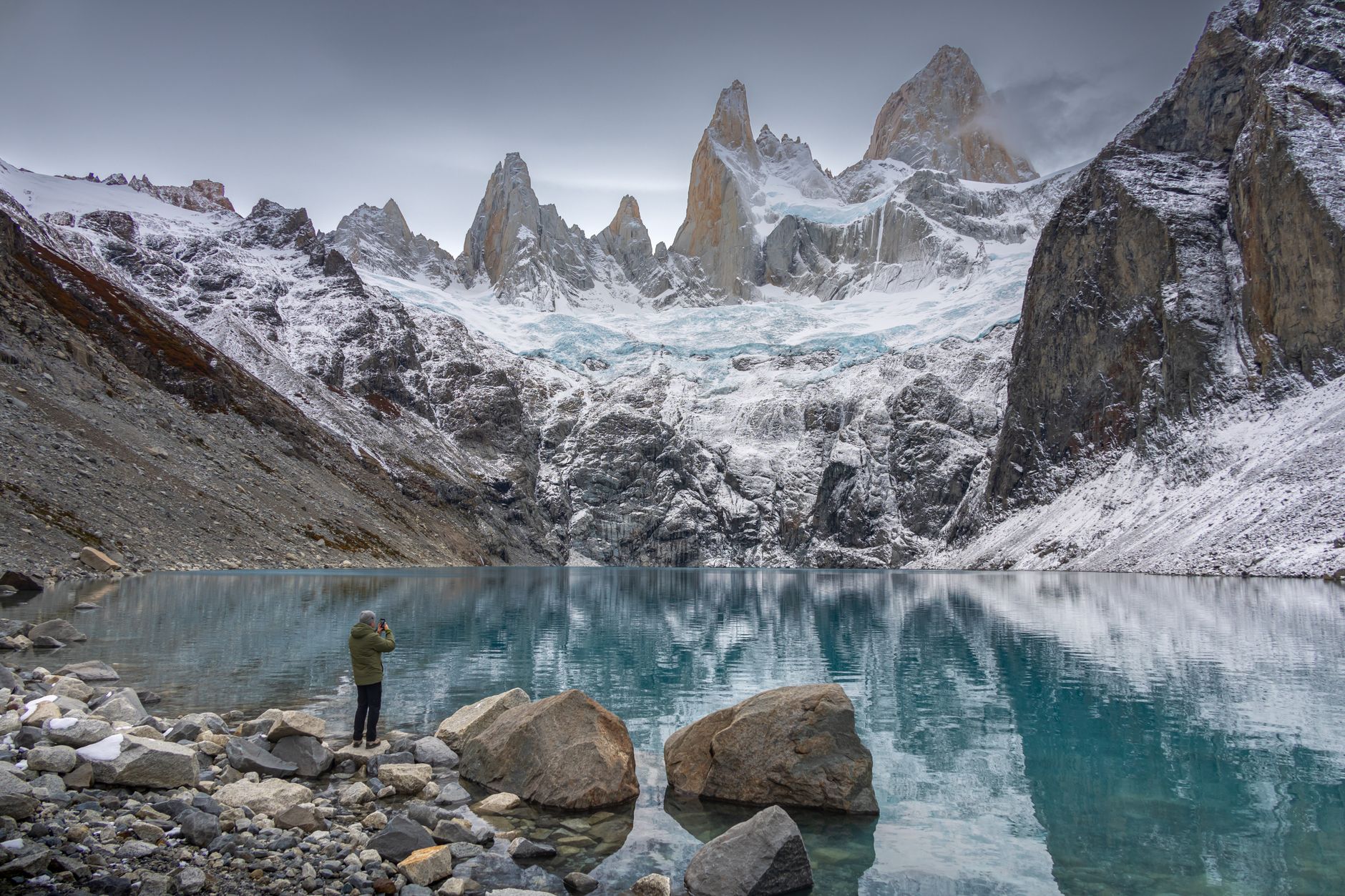
For many travellers. Laguna de los Tres is the hike they remember most.
The trail leads through forests and open landscapes before arriving at a dramatic viewpoint facing Fitz Roy. When the weather is clear. the mountain rises above the turquoise lagoon in a scene that looks almost unreal.
It is a challenging day for many hikers. so start early. Carry enough water and food and give yourself plenty of time.
And if clouds arrive. do not assume the experience is ruined. Patagonia has a habit of revealing itself slowly.
Experience Torres del Paine
Photo by Suegoro Sone Scassi-Buffa
Cross into Chile and the landscape becomes even more dramatic.
Torres del Paine National Park is one of the great icons of Chilean Patagonia. The park combines enormous granite peaks with lakes. forests. glaciers and the vast landscapes of the Southern Patagonian Ice Field. Chile Travel describes it as a protected wilderness area where mountains. forests. steppe and ancient ice come together.
The park offers everything from shorter walks to multi-day trekking routes. It is possible to spend days exploring the landscape and still feel as though you have only scratched the surface.
The famous Torres rise dramatically above the surrounding landscape and have become one of Patagonia’s most recognisable sights.
But do not focus only on the postcard view. The quiet lakes. windswept trails and changing light can be just as memorable.
Explore Grey Glacier
Grey Glacier is another extraordinary part of Torres del Paine.
The glacier flows into Grey Lake. creating a landscape of blue ice. dark water and mountains that seem to stretch endlessly into the distance.
You can experience the area through hiking. boat trips and other guided excursions depending on conditions and the season.
There is something deeply humbling about seeing a glacier at this scale. You are looking at a landscape that operates on a timescale completely different from our own.
Travel Through the Patagonian Steppe
Not every Patagonia experience involves mountains.
The Patagonian steppe is vast. open and wonderfully stark. Long roads disappear towards distant horizons while grasslands and rocky landscapes stretch beneath enormous skies.
This is where a road trip becomes particularly rewarding.
You can drive for hours with little around you except mountains in the distance. wildlife and the occasional estancia. The emptiness is not boring. It is the attraction.
For travellers who enjoy getting away from crowded tourist routes. this can be one of the most beautiful parts of Patagonia.
Follow the Legendary Route 40
Argentina’s Route 40 is one of the great road journeys of South America.
The route runs through enormous stretches of the country and becomes particularly dramatic in Patagonia. where mountains. lakes and steppe create an unforgettable backdrop.
You do not have to drive the entire route to experience its magic.
Choose a section that fits your itinerary and allow yourself time for unexpected stops. A viewpoint. a roadside café. a small town or a landscape that makes you pull over simply because you cannot believe what you are seeing.
The road is part of the adventure.
Meet Patagonia’s Wildlife
Photo by William Warby
Patagonia is home to an incredible variety of wildlife.
Depending on where you travel. you may encounter guanacos. Andean condors. foxes. rheas and other native species. Coastal areas bring opportunities to see penguins. sea lions. whales and other marine wildlife.
The key is patience.
Wildlife rarely appears on command. Sometimes you will spend an hour watching a landscape before suddenly noticing movement in the distance.
For more inspiration on combining wildlife with unforgettable adventures. explore The Top 5 Wildlife and Luxury Adventures Around the World. Patagonia is exactly the kind of destination where wild experiences and beautiful accommodation can complement each other.
Visit Patagonia National Park
If you want to venture beyond Patagonia’s better-known icons. Argentina’s Patagonia National Park offers something quieter.
Located in Santa Cruz Province. the park protects a landscape of volcanic formations. plateaus. grasslands. wetlands and valleys. It is also home to the endangered hooded grebe and provides access to the remarkable Cueva de las Manos. a site known for its ancient rock art.
The park is remote and access can be difficult. which makes preparation particularly important.
But that remoteness is exactly what makes it special.
Experience Ushuaia and Tierra del Fuego
Photo by Pedro Massochin Medeiros
Further south. the landscape changes again.
Ushuaia sits on the Beagle Channel and is famous for its position at the southern end of the continent. From here. travellers can explore Tierra del Fuego National Park. sail through the Beagle Channel or venture into landscapes of forests. mountains and water.
Boat trips offer opportunities to see marine wildlife including sea lions and seabirds. while the national park provides hiking and scenic drives.
Tierra del Fuego feels like a fitting final chapter to a Patagonian journey.
The world seems to become quieter as you move south.
What to Eat in Patagonia
Patagonian food is shaped by the landscape and climate.
You will find hearty dishes designed for cold weather and long days outdoors. Lamb is particularly associated with the region and is often cooked slowly over an open fire.
Fresh trout is another popular choice. especially around the lakes and rivers.
And then there is Argentine wine.
After a long day of hiking. sitting down to a warm meal with a glass of wine can feel like the perfect reward.
Do not overlook the smaller cafés and bakeries either. They are ideal places to warm up with coffee. pastries or something sweet between adventures.
Where to Stay in Patagonia
Patagonia offers everything from simple hostels and mountain lodges to beautiful boutique hotels and luxury wilderness stays.
In El Calafate. staying near the town centre makes it easy to access restaurants and glacier excursions.
In El Chaltén. choose somewhere within easy reach of the town and trailheads so you can start hiking without complicated transfers.
Around Torres del Paine. staying inside or near the national park can completely change the experience. You wake up surrounded by mountains rather than spending hours travelling into the landscape.
For something more distinctive. consider an estancia. Chile Travel highlights traditional Patagonian ranches where visitors can experience local culture alongside horseback riding. mountain adventures and beautiful wilderness settings.
Getting Around Patagonia
Patagonia is enormous. So planning your transport carefully is essential.
Flying is often the easiest way to cover long distances between major destinations. Once you arrive. buses. transfers. rental cars and organised excursions can help you explore the surrounding areas.
A rental car is particularly appealing if you want to experience Patagonia as a road trip. It gives you freedom to stop whenever the landscape demands your attention.
Just remember that distances are large and some roads can be remote.
Build extra time into your itinerary. Patagonia is not somewhere you want to spend your entire holiday watching the clock.
A 10 Day Patagonia Itinerary
Days 1 to 2: El Calafate
Arrive in El Calafate and settle into the slower rhythm of Patagonia. Spend your first day exploring the town before preparing for your glacier adventure.
Day 3: Perito Moreno Glacier
Dedicate an entire day to Los Glaciares National Park and Perito Moreno Glacier. Take your time with the viewpoints and consider adding a boat trip if conditions allow.
Days 4 to 6: El Chaltén
Travel to El Chaltén and spend several days hiking. Choose trails according to your fitness and the weather. Laguna de los Tres and Laguna Torre are among the classic experiences.
Days 7 to 9: Torres del Paine
Cross into Chile and spend several days exploring Torres del Paine. Even if you are not completing a multi-day trek. the park offers extraordinary day walks and scenic experiences.
Day 10: Puerto Natales or Punta Arenas
Finish your journey in Puerto Natales or continue towards Punta Arenas depending on your onward travel plans.
If you have two weeks or more. slow the itinerary down rather than simply adding destinations. Patagonia becomes much more rewarding when you give each landscape time to breathe.
What to Pack for Patagonia
Packing for Patagonia is less about fashion and more about being prepared.
The weather can change rapidly. Even during the warmer months. Strong winds. rain and sudden temperature drops are possible. Chile Travel specifically recommends layers. waterproof wind protection. trekking shoes and sun protection for Torres del Paine.
Bring a waterproof outer layer. warm mid layers. comfortable hiking trousers and sturdy walking shoes.
A hat. gloves. sunglasses and sunscreen are also essential.
Pack a small daypack for hikes and keep a reusable water bottle with you.
Most importantly. pack layers rather than one enormous heavy coat. You will be much more comfortable when you can adjust your clothing throughout the day.
How to Travel Responsibly in Patagonia
Patagonia’s beauty comes with a responsibility to protect it.
Stay on marked trails. Carry your rubbish out and follow all park regulations. Never approach or feed wildlife and avoid leaving anything behind in remote landscapes.
The region’s fragile ecosystems can be affected by tourism. especially in popular parks such as Torres del Paine.
Choose responsible accommodation and tour operators where possible and respect local communities and protected areas.
The goal is to experience Patagonia without leaving a mark on it.
Patagonia for Different Types of Travellers
For Hikers
Base yourself in El Chaltén and Torres del Paine. These areas offer some of the most spectacular trekking landscapes in the region.
For Road Trippers
Choose a section of Route 40 or explore Patagonia by rental car. The journey between destinations can be as memorable as the destinations themselves.
For Wildlife Lovers
Look towards the coast and protected areas where penguins. whales. sea lions and native land animals can be found.
For Couples
Combine beautiful lodges. scenic drives. glacier experiences and slow evenings over Argentine wine.
For Adventure Travellers
Trekking. kayaking. rafting. horseback riding and glacier experiences provide plenty of opportunities to get outside.
If you are wondering what kind of traveller you are. take the What Type of Traveller Are You? quiz before planning your itinerary.
The Magic of Patagonia
Patagonia is not a destination that gives everything away immediately.
The mountains can disappear behind clouds. The wind can change without warning. A trail can feel endless before suddenly opening onto a view that makes every step worthwhile.
That is part of the magic.
Patagonia teaches you to accept the weather. To appreciate the journey and to stop expecting nature to perform on schedule.
Sometimes the mountain appears.
Sometimes it does not.
Either way. you were there.
The Wrap
Patagonia is wild in a way that is becoming increasingly difficult to find.
It is a place of enormous skies. ancient glaciers. granite peaks. silent forests and roads that seem to disappear into nowhere. It can challenge you physically and surprise you emotionally.
Come for Fitz Roy. Torres del Paine and Perito Moreno Glacier.
Stay for the quiet mornings. the windswept roads. the tiny mountain towns and the feeling of standing somewhere that feels almost untouched.
And when you finally leave. you may find yourself looking back at the photographs and wondering how somewhere so vast could ever have felt real.
That is Patagonia.
FAQs
What is the best time to visit Patagonia?
For trekking and outdoor adventures. late spring through summer and into early autumn are generally the most practical months. Argentina recommends November to March for many outdoor activities while Chile Travel identifies October to March as the main Patagonia travel season.
How many days do you need in Patagonia?
Ten days is enough for a focused first trip combining El Calafate. El Chaltén and Torres del Paine. Two to three weeks is better if you want to travel more slowly or include additional destinations.
Is Patagonia expensive?
Patagonia can be expensive because of its remote location and the cost of transport between destinations. However. accommodation. food and activities are available across different budgets.
Is Patagonia suitable for first time hikers?
Yes. You do not need to be an experienced mountaineer to enjoy Patagonia. Many destinations offer trails of different lengths and difficulty levels. Always check current conditions and choose routes appropriate for your experience.
Is Patagonia better in Argentina or Chile?
Neither is simply better. They offer different experiences. Argentine Patagonia is home to destinations such as El Calafate and El Chaltén while Chilean Patagonia is famous for Torres del Paine and its dramatic fjords and wilderness.
Combining both can create an extraordinary journey.
What should you wear in Patagonia?
Layers are essential. Bring warm clothing. waterproof outer layers. sturdy walking shoes and protection from wind and sun. Weather can change quickly so it is important to be prepared even during summer.
Can you visit Patagonia without hiking?
Absolutely. You can experience glaciers by boat. explore scenic roads. take wildlife tours. visit towns and estancias or simply enjoy the landscapes from viewpoints.
Is Patagonia good for a road trip?
Yes. Road trips are one of the most rewarding ways to experience the region because the landscapes between destinations are part of the adventure. Just allow plenty of time because distances are considerable.
For another unforgettable adventure. explore The Ultimate Guide to Cold Climate Adventures for inspiration from Patagonia’s icy landscapes to other remarkable destinations where embracing the cold becomes part of the experience.
And if you want to discover which kind of adventure truly suits you. take What Type of Traveller Are You? and see where your travel personality might take you next.


There are places that feel beautiful. And then there are places that make you feel very small in the best possible way. Patagonia is one of them.
Stretching across the southern reaches of Argentina and Chile. Patagonia is a vast land of jagged mountains. Glaciers. Turquoise lakes. windswept grasslands and remote forests. It is a destination where the landscape feels almost impossibly large and where every journey seems to lead towards another extraordinary view.
This is not a place you visit simply to tick off attractions. Patagonia invites you to slow down. To walk further. To watch clouds move across mountains and to stand quietly in front of ice that has existed for thousands of years.
For hikers. photographers. wildlife lovers. road trippers and anyone who feels happiest when surrounded by wild landscapes. Patagonia can be the kind of journey you remember for the rest of your life.
Why Patagonia Belongs on Your Travel List
Patagonia has a rare ability to make adventure feel completely natural. One morning you might be hiking beneath the dramatic peaks of Fitz Roy. The next you could be watching an enormous glacier calve into a turquoise lake. Further south. forests give way to windswept landscapes and the feeling that you have reached the edge of the world.
The region is shared by Argentina and Chile. which means there is an enormous amount to explore and no single itinerary can cover everything. That is part of its appeal.
Patagonia rewards curiosity. You do not need to see every famous viewpoint to have an extraordinary trip. Sometimes the most memorable moments are the quiet ones between destinations.
If your idea of a perfect holiday involves adventure and spectacular landscapes. our guide to Get Fit and Explore: 8 Amazing Destinations for Adventure Travellers includes Patagonia among its recommendations for active travel.
When Is the Best Time to Visit Patagonia?
Patagonia sits in the Southern Hemisphere. so its seasons are the opposite of those in Europe and North America.
For many travellers. late spring through early autumn is the most practical period for exploring the region. Argentina’s tourism authority recommends November to March for outdoor activities and trekking. while Chile Travel identifies October to March as the main season for Patagonia when temperatures are generally milder and more trails and tourist services are available.
Summer brings longer days and better conditions for hiking. but it is also the busiest period. The shoulder seasons can be quieter and incredibly beautiful. especially when autumn colours begin appearing across forests and valleys.
Winter transforms Patagonia completely. Snow covers the mountains and many trekking routes become more challenging. but destinations such as Bariloche and other ski areas become attractive for winter travellers.
The most important thing to remember is that Patagonia’s weather can change quickly. Even during summer. Wind. rain and cold can arrive unexpectedly.
Start in El Calafate
El Calafate is one of the most important gateways to Argentine Patagonia and an excellent starting point for exploring the region’s glaciers.
The town sits beside Lake Argentino and is surrounded by the immense landscapes of Santa Cruz Province. From here. you can travel into Los Glaciares National Park and experience one of Patagonia’s most extraordinary natural wonders.
El Calafate itself is pleasant to explore between excursions. with restaurants. cafés and shops making it an easy place to settle into the rhythm of southern Argentina.
But the real reason travellers come here is waiting beyond the town.
Stand Before Perito Moreno Glacier
Few experiences in Patagonia compare with seeing Perito Moreno Glacier for the first time.
The glacier stretches across the landscape like an enormous frozen river. Its blue and white ice rises above the waters of Lago Argentino and occasionally sends enormous pieces crashing into the lake with a sound that echoes across the valley.
One of the best ways to experience it is from the network of walkways overlooking the glacier. Different levels and viewpoints allow you to see the ice from several angles and give you the chance to stay long enough to witness its constantly changing surface.
You can also experience the glacier from the water or take part in guided trekking experiences on the ice.
Do not rush this visit. Stand quietly. Watch the ice. Listen for the distant crack and wait.
Sometimes nature creates its own spectacle.
Discover El Chaltén
If Patagonia has a hiking capital. El Chaltén is a strong contender. This small mountain town sits beneath some of the region’s most recognisable peaks and provides access to trails leading towards Fitz Roy and Cerro Torre. Argentina’s tourism authority describes El Chaltén as the country’s trekking capital and recommends several routes around the surrounding mountains and lagoons.
The landscape changes as you walk. Forest paths lead towards open valleys. Rivers cut through the mountains and eventually the enormous granite peaks appear above the horizon.
Some trails are long and demanding. Others can be completed in a day. The important thing is to choose according to your experience and the weather rather than trying to prove how far you can walk.
Hike to Laguna de los Tres
For many travellers. Laguna de los Tres is the hike they remember most.
The trail leads through forests and open landscapes before arriving at a dramatic viewpoint facing Fitz Roy. When the weather is clear. the mountain rises above the turquoise lagoon in a scene that looks almost unreal.
It is a challenging day for many hikers. so start early. Carry enough water and food and give yourself plenty of time.
And if clouds arrive. do not assume the experience is ruined. Patagonia has a habit of revealing itself slowly.
Experience Torres del Paine
Cross into Chile and the landscape becomes even more dramatic.
Torres del Paine National Park is one of the great icons of Chilean Patagonia. The park combines enormous granite peaks with lakes. forests. glaciers and the vast landscapes of the Southern Patagonian Ice Field. Chile Travel describes it as a protected wilderness area where mountains. forests. steppe and ancient ice come together.
The park offers everything from shorter walks to multi-day trekking routes. It is possible to spend days exploring the landscape and still feel as though you have only scratched the surface.
The famous Torres rise dramatically above the surrounding landscape and have become one of Patagonia’s most recognisable sights.
But do not focus only on the postcard view. The quiet lakes. windswept trails and changing light can be just as memorable.
Explore Grey Glacier
Grey Glacier is another extraordinary part of Torres del Paine.
The glacier flows into Grey Lake. creating a landscape of blue ice. dark water and mountains that seem to stretch endlessly into the distance.
You can experience the area through hiking. boat trips and other guided excursions depending on conditions and the season.
There is something deeply humbling about seeing a glacier at this scale. You are looking at a landscape that operates on a timescale completely different from our own.
Travel Through the Patagonian Steppe
Not every Patagonia experience involves mountains.
The Patagonian steppe is vast. open and wonderfully stark. Long roads disappear towards distant horizons while grasslands and rocky landscapes stretch beneath enormous skies.
This is where a road trip becomes particularly rewarding.
You can drive for hours with little around you except mountains in the distance. wildlife and the occasional estancia. The emptiness is not boring. It is the attraction.
For travellers who enjoy getting away from crowded tourist routes. this can be one of the most beautiful parts of Patagonia.
Follow the Legendary Route 40
Argentina’s Route 40 is one of the great road journeys of South America.
The route runs through enormous stretches of the country and becomes particularly dramatic in Patagonia. where mountains. lakes and steppe create an unforgettable backdrop.
You do not have to drive the entire route to experience its magic.
Choose a section that fits your itinerary and allow yourself time for unexpected stops. A viewpoint. a roadside café. a small town or a landscape that makes you pull over simply because you cannot believe what you are seeing.
The road is part of the adventure.
Meet Patagonia’s Wildlife
Patagonia is home to an incredible variety of wildlife.
Depending on where you travel. you may encounter guanacos. Andean condors. foxes. rheas and other native species. Coastal areas bring opportunities to see penguins. sea lions. whales and other marine wildlife.
The key is patience.
Wildlife rarely appears on command. Sometimes you will spend an hour watching a landscape before suddenly noticing movement in the distance.
For more inspiration on combining wildlife with unforgettable adventures. explore The Top 5 Wildlife and Luxury Adventures Around the World. Patagonia is exactly the kind of destination where wild experiences and beautiful accommodation can complement each other.
Visit Patagonia National Park
If you want to venture beyond Patagonia’s better-known icons. Argentina’s Patagonia National Park offers something quieter.
Located in Santa Cruz Province. the park protects a landscape of volcanic formations. plateaus. grasslands. wetlands and valleys. It is also home to the endangered hooded grebe and provides access to the remarkable Cueva de las Manos. a site known for its ancient rock art.
The park is remote and access can be difficult. which makes preparation particularly important.
But that remoteness is exactly what makes it special.
Experience Ushuaia and Tierra del Fuego
Further south. the landscape changes again.
Ushuaia sits on the Beagle Channel and is famous for its position at the southern end of the continent. From here. travellers can explore Tierra del Fuego National Park. sail through the Beagle Channel or venture into landscapes of forests. mountains and water.
Boat trips offer opportunities to see marine wildlife including sea lions and seabirds. while the national park provides hiking and scenic drives.
Tierra del Fuego feels like a fitting final chapter to a Patagonian journey.
The world seems to become quieter as you move south.
What to Eat in Patagonia
Patagonian food is shaped by the landscape and climate.
You will find hearty dishes designed for cold weather and long days outdoors. Lamb is particularly associated with the region and is often cooked slowly over an open fire.
Fresh trout is another popular choice. especially around the lakes and rivers.
And then there is Argentine wine.
After a long day of hiking. sitting down to a warm meal with a glass of wine can feel like the perfect reward.
Do not overlook the smaller cafés and bakeries either. They are ideal places to warm up with coffee. pastries or something sweet between adventures.
Where to Stay in Patagonia
Patagonia offers everything from simple hostels and mountain lodges to beautiful boutique hotels and luxury wilderness stays.
In El Calafate. staying near the town centre makes it easy to access restaurants and glacier excursions.
In El Chaltén. choose somewhere within easy reach of the town and trailheads so you can start hiking without complicated transfers.
Around Torres del Paine. staying inside or near the national park can completely change the experience. You wake up surrounded by mountains rather than spending hours travelling into the landscape.
For something more distinctive. consider an estancia. Chile Travel highlights traditional Patagonian ranches where visitors can experience local culture alongside horseback riding. mountain adventures and beautiful wilderness settings.
Getting Around Patagonia
Patagonia is enormous. So planning your transport carefully is essential.
Flying is often the easiest way to cover long distances between major destinations. Once you arrive. buses. transfers. rental cars and organised excursions can help you explore the surrounding areas.
A rental car is particularly appealing if you want to experience Patagonia as a road trip. It gives you freedom to stop whenever the landscape demands your attention.
Just remember that distances are large and some roads can be remote.
Build extra time into your itinerary. Patagonia is not somewhere you want to spend your entire holiday watching the clock.
A 10 Day Patagonia Itinerary
Days 1 to 2: El Calafate
Arrive in El Calafate and settle into the slower rhythm of Patagonia. Spend your first day exploring the town before preparing for your glacier adventure.
Day 3: Perito Moreno Glacier
Dedicate an entire day to Los Glaciares National Park and Perito Moreno Glacier. Take your time with the viewpoints and consider adding a boat trip if conditions allow.
Days 4 to 6: El Chaltén
Travel to El Chaltén and spend several days hiking. Choose trails according to your fitness and the weather. Laguna de los Tres and Laguna Torre are among the classic experiences.
Days 7 to 9: Torres del Paine
Cross into Chile and spend several days exploring Torres del Paine. Even if you are not completing a multi-day trek. the park offers extraordinary day walks and scenic experiences.
Day 10: Puerto Natales or Punta Arenas
Finish your journey in Puerto Natales or continue towards Punta Arenas depending on your onward travel plans.
If you have two weeks or more. slow the itinerary down rather than simply adding destinations. Patagonia becomes much more rewarding when you give each landscape time to breathe.
What to Pack for Patagonia
Packing for Patagonia is less about fashion and more about being prepared.
The weather can change rapidly. Even during the warmer months. Strong winds. rain and sudden temperature drops are possible. Chile Travel specifically recommends layers. waterproof wind protection. trekking shoes and sun protection for Torres del Paine.
Bring a waterproof outer layer. warm mid layers. comfortable hiking trousers and sturdy walking shoes.
A hat. gloves. sunglasses and sunscreen are also essential.
Pack a small daypack for hikes and keep a reusable water bottle with you.
Most importantly. pack layers rather than one enormous heavy coat. You will be much more comfortable when you can adjust your clothing throughout the day.
How to Travel Responsibly in Patagonia
Patagonia’s beauty comes with a responsibility to protect it.
Stay on marked trails. Carry your rubbish out and follow all park regulations. Never approach or feed wildlife and avoid leaving anything behind in remote landscapes.
The region’s fragile ecosystems can be affected by tourism. especially in popular parks such as Torres del Paine.
Choose responsible accommodation and tour operators where possible and respect local communities and protected areas.
The goal is to experience Patagonia without leaving a mark on it.
Patagonia for Different Types of Travellers
For Hikers
Base yourself in El Chaltén and Torres del Paine. These areas offer some of the most spectacular trekking landscapes in the region.
For Road Trippers
Choose a section of Route 40 or explore Patagonia by rental car. The journey between destinations can be as memorable as the destinations themselves.
For Wildlife Lovers
Look towards the coast and protected areas where penguins. whales. sea lions and native land animals can be found.
For Couples
Combine beautiful lodges. scenic drives. glacier experiences and slow evenings over Argentine wine.
For Adventure Travellers
Trekking. kayaking. rafting. horseback riding and glacier experiences provide plenty of opportunities to get outside.
If you are wondering what kind of traveller you are. take the What Type of Traveller Are You? quiz before planning your itinerary.
The Magic of Patagonia
Patagonia is not a destination that gives everything away immediately.
The mountains can disappear behind clouds. The wind can change without warning. A trail can feel endless before suddenly opening onto a view that makes every step worthwhile.
That is part of the magic.
Patagonia teaches you to accept the weather. To appreciate the journey and to stop expecting nature to perform on schedule.
Sometimes the mountain appears.
Sometimes it does not.
Either way. you were there.
The Wrap
Patagonia is wild in a way that is becoming increasingly difficult to find.
It is a place of enormous skies. ancient glaciers. granite peaks. silent forests and roads that seem to disappear into nowhere. It can challenge you physically and surprise you emotionally.
Come for Fitz Roy. Torres del Paine and Perito Moreno Glacier.
Stay for the quiet mornings. the windswept roads. the tiny mountain towns and the feeling of standing somewhere that feels almost untouched.
And when you finally leave. you may find yourself looking back at the photographs and wondering how somewhere so vast could ever have felt real.
That is Patagonia.
FAQs
What is the best time to visit Patagonia?
For trekking and outdoor adventures. late spring through summer and into early autumn are generally the most practical months. Argentina recommends November to March for many outdoor activities while Chile Travel identifies October to March as the main Patagonia travel season.
How many days do you need in Patagonia?
Ten days is enough for a focused first trip combining El Calafate. El Chaltén and Torres del Paine. Two to three weeks is better if you want to travel more slowly or include additional destinations.
Is Patagonia expensive?
Patagonia can be expensive because of its remote location and the cost of transport between destinations. However. accommodation. food and activities are available across different budgets.
Is Patagonia suitable for first time hikers?
Yes. You do not need to be an experienced mountaineer to enjoy Patagonia. Many destinations offer trails of different lengths and difficulty levels. Always check current conditions and choose routes appropriate for your experience.
Is Patagonia better in Argentina or Chile?
Neither is simply better. They offer different experiences. Argentine Patagonia is home to destinations such as El Calafate and El Chaltén while Chilean Patagonia is famous for Torres del Paine and its dramatic fjords and wilderness.
Combining both can create an extraordinary journey.
What should you wear in Patagonia?
Layers are essential. Bring warm clothing. waterproof outer layers. sturdy walking shoes and protection from wind and sun. Weather can change quickly so it is important to be prepared even during summer.
Can you visit Patagonia without hiking?
Absolutely. You can experience glaciers by boat. explore scenic roads. take wildlife tours. visit towns and estancias or simply enjoy the landscapes from viewpoints.
Is Patagonia good for a road trip?
Yes. Road trips are one of the most rewarding ways to experience the region because the landscapes between destinations are part of the adventure. Just allow plenty of time because distances are considerable.
Where to Next?
If Patagonia has awakened your appetite for wild landscapes. continue your journey with How to Visit Antarctica: The Ultimate Travel Guide to Antarctica and discover another extraordinary corner of the southern world.
For another unforgettable adventure. explore The Ultimate Guide to Cold Climate Adventures for inspiration from Patagonia’s icy landscapes to other remarkable destinations where embracing the cold becomes part of the experience.
If wildlife is what draws you towards remote destinations. discover How the Galapagos Islands Inspire Adventure and Discovery for a completely different kind of wild escape.
For more extraordinary experiences to add to your bucket list. read 13 Ultimate Bucket List Experiences to Do Before You Die and start thinking beyond the usual holiday.
And if you want to discover which kind of adventure truly suits you. take What Type of Traveller Are You? and see where your travel personality might take you next.
Share this:
Like this: