There are places you visit for a holiday, and then there are places that seem to stay with you. Sicily is the second kind.
It is the smell of citrus trees warming in the afternoon sun. The sound of scooters weaving through narrow streets. A table crowded with pasta, seafood and cannoli. Ancient Greek ruins glowing against a Mediterranean sunset. A fishing village waking slowly beside turquoise water. And, always in the distance, the unmistakable presence of Mount Etna.
Sicily is Italy, but it has its own rhythm.
The island has been shaped by Greeks, Romans, Arabs, Normans and Spanish rulers, and every layer has left something behind. You see it in the architecture, taste it in the food and feel it in the character of its cities and villages.
The coastline is spectacular, but Sicily is far more than a beach destination. Inland hill towns, vineyards, archaeological sites, volcanic landscapes and lively markets give the island an incredible sense of variety.
This Sicily travel guide will take you from Palermo to Taormina, Mount Etna to Syracuse, ancient Agrigento to the beaches of Cefalù, with practical advice on where to go, what to eat, when to visit and how to experience the island at its best.
Why Visit Sicily?
Sicily has almost everything you could want from an Italian escape.
There are beaches for slow summer days, historic cities for wandering, ancient ruins for history lovers, mountains for adventure and a food culture that deserves an entire trip of its own.
Sicily is perfect for travellers who love:
Mediterranean beaches
Ancient history
Italian food
Road trips
Charming towns
Volcanic landscapes
Wine and local produce
Architecture
Slow travel
Island escapes
Photography
Outdoor adventures
What makes Sicily particularly special is how quickly the scenery changes.
You can spend breakfast in a busy Palermo market, drive through mountain landscapes by lunchtime and finish the afternoon beside the sea.
And because the island is large, there is always another corner to discover.
Palermo: Start With the Heart of Sicily
Photo by Dmitry Romanoff
Palermo is often the first stop for travellers arriving in Sicily, and it is an excellent introduction to the island. It is energetic, slightly chaotic, deeply historic and full of personality. Do not try to make Palermo perfectly orderly in your mind. Let it unfold.
Explore Palermo’s Historic Centre
The historic centre is a wonderful place to walk.
Churches, palaces, markets and small streets sit almost on top of each other, creating a city that feels layered rather than carefully arranged.
Walk between Quattro Canti and Piazza Pretoria, then continue towards the cathedral and surrounding neighbourhoods.
Look upwards as you walk.
Some of the most beautiful details are found on balconies, doorways and faded façades.
Visit Palermo’s Markets
Food is at the heart of Palermo’s identity. Ballarò, Capo and Vucciria offer a chance to see the city’s everyday food culture up close. Expect colourful fruit and vegetables, seafood, spices, cheese, bread and plenty of ready-to-eat snacks.
Try panelle, arancine and other Sicilian street food as you explore.
Palermo Cathedral is one of the city’s most impressive landmarks. Its architecture reflects the many cultures that have influenced Sicily, creating a fascinating mixture of styles. Give yourself time to appreciate the exterior before heading inside.
If Palermo feels energetic, Cefalù offers a slower pace.
The small coastal town is known for its medieval streets, sandy beach and beautiful position between the mountains and the sea.
Wander the Old Town
Cefalù’s historic centre is made for walking. Narrow streets open onto small squares, cafés and local shops. The town is particularly beautiful in the early morning before the main crowds arrive.
Relax on the Beach
Cefalù’s long sandy beach makes it an easy addition to a summer itinerary. Spend the morning exploring the old town and the afternoon swimming in the Mediterranean.
Climb La Rocca
For one of the best views over Cefalù, climb La Rocca above the town. The walk can be challenging in the heat, so start early and bring water. The reward is a panoramic view over the rooftops, coastline and surrounding landscape.
Taormina: Sicily’s Classic Beauty
Photo by Alexandra Holbea Photo by Anna Holodna
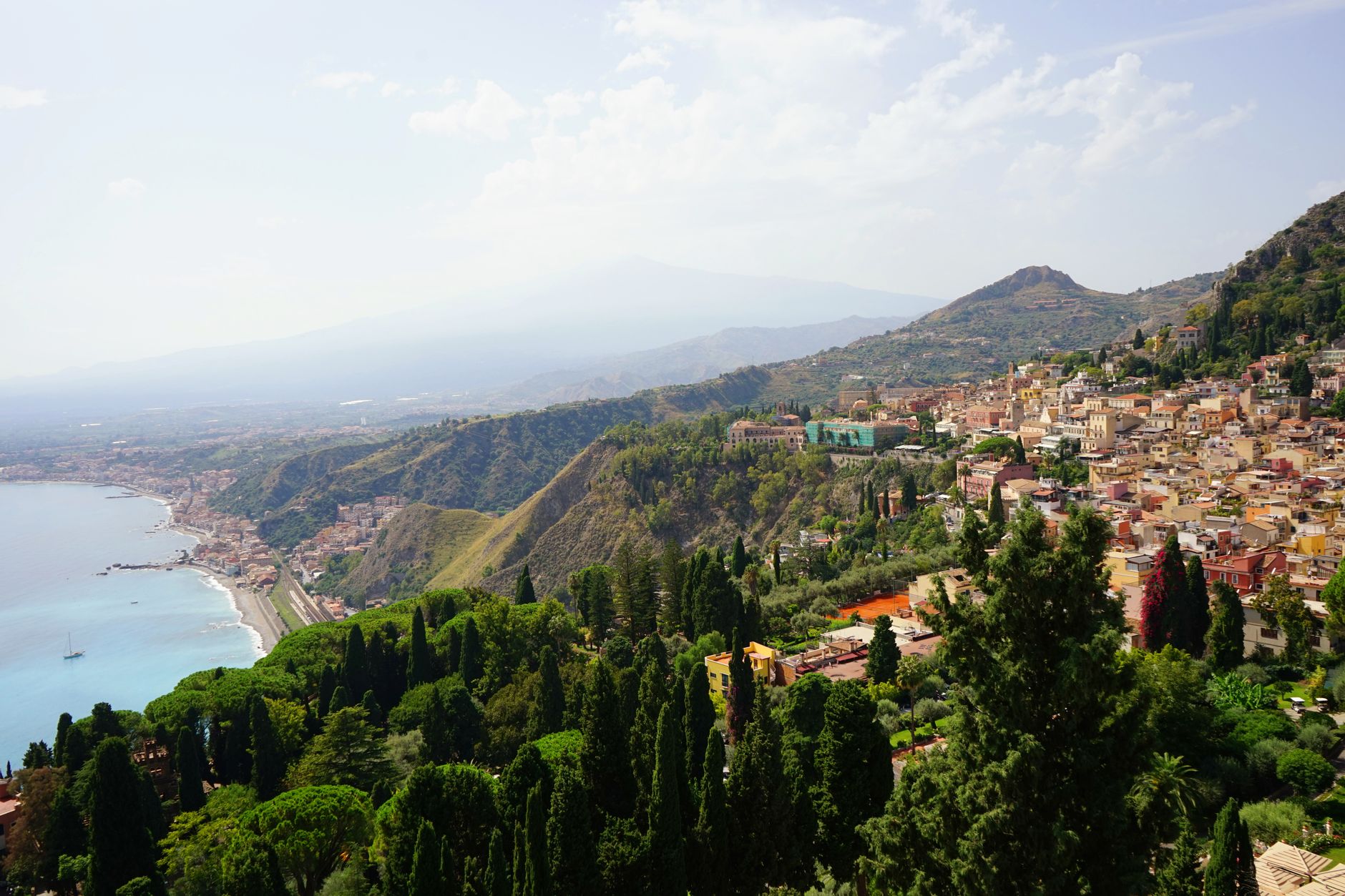
Taormina is one of Sicily’s most famous destinations, and its popularity is easy to understand.
Perched high above the Ionian Sea, the town combines historic streets, elegant buildings, dramatic views and one of Italy’s most spectacular ancient theatres.
Explore Corso Umberto
The main pedestrian street runs through the heart of Taormina. It is lined with boutiques, restaurants, cafés and historic buildings. Rather than rushing from one attraction to another, spend some time enjoying the atmosphere. Stop for coffee. Browse the shops. Find a quiet side street. Then continue.
Visit the Ancient Theatre
The Teatro Antico di Taormina is one of Sicily’s most extraordinary sights.
The ancient Greek theatre sits dramatically above the coastline with Mount Etna often visible in the distance.
It is worth visiting even if ancient history is not usually your main travel interest.
The setting alone is unforgettable.
Isola Bella
Below Taormina, Isola Bella is a small island and nature reserve surrounded by clear Mediterranean water.
The beach area can become busy during summer, so arrive early if you want a more peaceful experience.
Mount Etna: Meet Sicily’s Volcano
Photo by Timo Volz
Mount Etna is more than a dramatic backdrop. It is one of the defining forces of the island. The volcano dominates eastern Sicily and has shaped the surrounding landscape, agriculture and culture for centuries.
Depending on conditions and the season, visitors can explore sections of Etna through hiking trails, guided excursions and cable cars.
Always follow local guidance because volcanic conditions can change.
Visit the Villages Around Etna
One of the best ways to experience Etna is not simply to climb it. Explore the towns and villages around its slopes. The volcanic soil is remarkably fertile, producing grapes, citrus fruits, olives and other crops. The result is one of Sicily’s most interesting food and wine regions.
Try Etna Wine
The vineyards around Mount Etna have become increasingly well known for wines shaped by the volcanic landscape.
A winery visit can be an excellent way to experience the region more slowly.
Syracuse combines archaeological history with beautiful coastal scenery. The city was one of the most important centres of the ancient Greek world, and its historic heart remains one of Sicily’s most atmospheric places.
Explore Ortigia
Ortigia is the historic island at the heart of Syracuse. Its narrow streets, elegant buildings, small piazzas and waterfront make it ideal for wandering. The best moments often happen when you stop following a map.
Piazza del Duomo
The Piazza del Duomo is one of Ortigia’s most beautiful spaces. The surrounding Baroque architecture creates an atmosphere that feels grand without losing the charm of a small Italian town. Sit at a café and watch the square change throughout the day.
Visit the Ancient Theatre
The archaeological park of Syracuse contains one of Sicily’s most significant ancient Greek theatres.
Allow several hours if you want to explore the wider archaeological area.
Noto and Sicily’s Baroque Towns
Noto is famous for its golden Baroque architecture.
The city was rebuilt following the devastating earthquake of 1693, resulting in the elegant streets and buildings that visitors see today.
Walk along Corso Vittorio Emanuele and look for the intricate balconies, churches and ornate façades.
The light in the late afternoon is particularly beautiful. Noto also makes a wonderful base for exploring southeastern Sicily.
Ragusa and Modica
Ragusa and Modica are two more towns worth adding if you want to explore Sicily beyond the major cities.
Ragusa is divided into an upper and lower town, with Ragusa Ibla providing some of the island’s most atmospheric streets.
Modica is famous for its architecture and distinctive style of chocolate.
Spend time walking rather than simply stopping for photographs.
The pleasure of these towns is in the details.
A staircase.
A church façade.
A tiny bakery.
A quiet balcony.
A table in a sunlit piazza.
Agrigento and the Valley of the Temples
For history lovers, Agrigento is essential.
The Valley of the Temples contains some of Sicily’s most impressive ancient Greek ruins.
The temples rise above the surrounding landscape, creating a remarkable combination of archaeology and scenery.
Visit Around Sunset
If possible, time your visit for late afternoon.
The warm light makes the stone glow, and the surrounding landscape becomes particularly atmospheric. Allow enough time to walk between the main monuments.Comfortable shoes and water are essential, especially during warmer months.
The Aeolian Islands
If you have extra time, consider extending your trip to the Aeolian Islands.
The volcanic islands offer a slower version of Sicily, with beaches, hiking, fishing villages and beautiful coastal landscapes.
Lipari is a practical base for exploring.
Stromboli is famous for its active volcano.
Salina is known for its greener landscapes and relaxed atmosphere.
The islands are particularly appealing if you want to spend a few days away from Sicily’s busier cities.
Sicily’s Beaches
Sicily has no shortage of beautiful beaches. Some are long and sandy. Others are tucked beneath cliffs or surrounded by rocky landscapes.
San Vito Lo Capo
Located in northwestern Sicily, San Vito Lo Capo is known for its pale sand and clear turquoise water. It is one of the island’s most popular beach destinations.
Cefalù
Cefalù combines an excellent beach with a beautiful historic town, making it ideal for travellers who want more than just swimming.
Isola Bella
The small beach near Taormina is surrounded by dramatic scenery and clear water.
Arrive early during busy periods.
Scopello
The coastline around Scopello offers beautiful views, rocky coves and a more dramatic landscape.
Sicily’s beaches are part of the reason the island remains such a popular Mediterranean escape, with Eat Live Escape previously highlighting the coastline as one of the major reasons to visit.
What to Eat in Sicily
Photo by Natalia Sevruk
You could plan an entire trip around Sicilian food.
The island’s cuisine reflects centuries of different cultural influences, including Greek, Arab, Norman and Spanish traditions.
Arancine
These fried rice balls are one of Sicily’s most famous street foods.
They are commonly filled with ragù, cheese or other combinations.
Try them from a busy local bakery or market stall.
Pasta alla Norma
This classic Sicilian pasta combines eggplant, tomato, basil and salted ricotta.
It is simple, comforting and deeply connected to Catania.
Pasta con le Sarde
A traditional Sicilian pasta made with sardines, wild fennel and other ingredients.
It is a wonderful example of Sicily’s distinctive combination of Mediterranean and Middle Eastern influences.
Cannoli
No trip to Sicily is complete without trying cannoli.
The crisp pastry shells filled with sweet ricotta are best enjoyed fresh.
Granita and Brioche
Especially popular for breakfast during warmer months, Sicilian granita is often served with a soft brioche.
Try almond, lemon or coffee flavours.
Almond Sweets
Sicily is famous for its almonds and marzipan-style sweets.
Look for colourful traditional pastries in local bakeries.
Sicily’s Markets and Street Food
Markets are among the best places to understand how Sicilians eat.
Palermo’s markets are the obvious starting point, but smaller towns also have local food stalls and produce markets.
Look for:
Fresh seafood
Citrus fruit
Olives
Cheese
Bread
Panelle
Arancine
Seasonal vegetables
Almond sweets
Do not worry about eating perfectly.
Follow the smells.
Look for busy stalls.
Order something you cannot pronounce.
That is often how the best food memories begin.
Where to Stay in Sicily
Sicily is large enough that staying in one place for the entire trip is not always practical.
Instead, consider choosing two or three bases.
Palermo
Best for history, markets and exploring western Sicily.
Taormina
Ideal for dramatic scenery, beaches and eastern Sicily.
Syracuse
Excellent for history, food and exploring southeastern Sicily.
Cefalù
Perfect for combining a beach stay with a historic town.
Agrigento
Useful for exploring the Valley of the Temples and southern Sicily.
Etna Villages
Ideal for wine, hiking and a slower rural experience.
Staying in different types of accommodation can also make the trip more memorable.
Try a historic hotel in Palermo, a boutique stay in Ortigia and a countryside agriturismo near Etna.
How to Get Around Sicily
Sicily can be explored by public transport, but a car gives you significantly more flexibility.
By Car
A rental car is particularly useful if you want to visit small towns, beaches, vineyards and rural areas.
Driving in historic centres can be difficult, so check restricted traffic zones before entering.
By Train
Trains connect major cities and can be a comfortable way to travel between places such as Palermo, Catania, Messina and Syracuse.
By Bus
Buses can reach destinations that are not well connected by train.
Check schedules in advance, particularly outside major cities.
By Ferry
Ferries are essential if you are travelling to the Aeolian Islands or other offshore destinations.
The Best Time to Visit Sicily
Spring
April through June is an excellent time to visit.
Temperatures are generally comfortable, landscapes are vibrant and the island has not yet reached peak summer intensity.
Summer
July and August bring long, hot days and excellent beach weather. They are also the busiest months. If visiting in summer, book accommodation and transport well ahead.
Autumn
September and October can be wonderful. The sea remains warm, temperatures become more comfortable and the island starts to feel less crowded.
Winter
Winter is quieter and can be surprisingly appealing for city breaks and cultural travel. Beach weather is not guaranteed, but archaeological sites, markets and cities can be much more peaceful.
How Long Do You Need in Sicily?
Five Days
Focus on one part of the island. A Palermo and Cefalù combination works well.
Seven Days
Choose either western or eastern Sicily rather than trying to see everything.
Ten Days
Ten days allows you to combine several major destinations without rushing.
Two Weeks
Two weeks is ideal for a broader road trip covering Palermo, Cefalù, Taormina, Etna, Syracuse, Noto and Agrigento.
If you want to include the Aeolian Islands, add several extra days.
A Suggested 10-Day Sicily Itinerary
Days 1 to 3: Palermo
Explore the historic centre, markets and surrounding attractions.
Take your time with the food.
Day 4: Cefalù
Travel to Cefalù and spend the day exploring the old town and beach.
Days 5 and 6: Taormina
Explore the historic centre, ancient theatre and coastline.
Day 7: Mount Etna
Take a guided excursion or explore the villages and vineyards around the volcano.
Days 8 and 9: Syracuse
Stay in Ortigia and explore the historic centre, archaeological sites and nearby towns.
Day 10: Noto or Agrigento
Depending on your departure point, spend the final day exploring one of southeastern Sicily’s beautiful Baroque towns or the Valley of the Temples.
Sicily Road Trips
A road trip is one of the best ways to experience Sicily.
The island rewards travellers who leave room for spontaneous stops.
A roadside café.
A small hilltop town.
A vineyard.
A beach you had never heard of.
A bakery filled with locals.
Do not make every day about reaching the next destination.
The roads between places are part of the experience.
Sicily for Couples
Sicily is naturally romantic.
Imagine staying in a small hotel overlooking the sea, sharing a long dinner in Ortigia or watching Mount Etna turn pink in the evening light.
For couples, a slower itinerary works beautifully.
Spend fewer nights changing hotels and more time enjoying each destination.
A few days in Taormina followed by Ortigia and an Etna wine stay could make an especially memorable escape.
Sicily for Families
Sicily can be an excellent family destination.
Children can enjoy:
Beaches
Boat trips
Ancient ruins
Markets
Gelato
Volcano adventures
Island excursions
Choose accommodation with easy access to restaurants and beaches, and avoid changing bases too frequently.
Sicily for Food Lovers
Food deserves to be part of your itinerary rather than something squeezed between sightseeing.
Book a cooking class.
Visit a market.
Eat street food.
Try local wines.
Stop at bakeries.
Ask locals what is in season.
And leave room for dessert.
Sicily’s food culture is one of the clearest ways to understand its history.
What to Pack for Sicily
Your packing list will depend on the season and itinerary, but useful essentials include:
Comfortable walking shoes
Lightweight clothing
Sun protection
Swimsuit
Light jacket
Reusable water bottle
Small day bag
Comfortable evening outfit
Hat
Hiking shoes if visiting Etna
Layers for spring and autumn
If you are visiting churches and religious sites, pack something that covers your shoulders and knees.
Is Sicily Expensive?
Sicily can suit a wide range of budgets.
Luxury hotels and popular coastal towns can become expensive during summer, while smaller towns and local accommodation can offer better value.
Food can also be surprisingly affordable, particularly if you eat at markets, bakeries and family-run restaurants.
One of the best things about Sicily is that some of its most memorable experiences cost very little.
A walk through an old town.
A swim in the sea.
A market breakfast.
A sunset over the coast.
A cone of gelato.
Sicily Travel Tips
Start Early
Popular attractions become much busier later in the day, especially during summer.
Book Popular Stays Early
Taormina and other famous coastal destinations can fill quickly during peak season.
Carry Cash
Smaller businesses may not always accept cards.
Learn a Few Italian Words
Even basic Italian can make interactions warmer.
Slow Down
Do not try to see the entire island in one week.
Sicily rewards a slower pace.
Frequently Asked Questions
Is Sicily worth visiting?
Absolutely. Sicily combines beaches, ancient history, beautiful towns, volcanic landscapes, exceptional food and a distinctive culture that feels different from mainland Italy.
How many days do you need in Sicily?
Seven days is enough for one region, while ten to fourteen days is better for a broader trip around the island.
What is the best time to visit Sicily?
Spring and early autumn are excellent for comfortable temperatures and sightseeing. Summer is ideal for beaches but is also the busiest period.
Is Sicily good for a road trip?
Yes. A road trip gives you the flexibility to explore smaller towns, beaches, vineyards and rural areas that can be difficult to reach by public transport.
What are the best places to visit in Sicily?
Palermo, Taormina, Cefalù, Syracuse, Noto, Ragusa, Mount Etna and Agrigento are among the island’s highlights.
Is Mount Etna worth visiting?
Yes. Whether you hike, take a guided excursion or simply explore the surrounding villages and vineyards, Etna offers a completely different side of Sicily.
What food should you try in Sicily?
Try arancine, pasta alla Norma, pasta con le sarde, cannoli, granita, brioche and local seafood.
Can you visit Sicily without a car?
Yes, particularly if you focus on major cities connected by trains and buses. A car becomes more useful if you want to explore rural areas and smaller coastal towns.
Is Sicily expensive?
It can be, particularly in popular destinations during summer, but local restaurants, markets and smaller towns can offer excellent value.
Which is better, Palermo or Taormina?
They offer completely different experiences. Palermo is better for markets, history and urban culture, while Taormina is ideal for dramatic scenery, beaches and a more polished coastal atmosphere.
How long should you spend in Taormina?
Two to three nights is a good starting point, particularly if you want to explore the ancient theatre, coastline and surrounding area.
Can you swim in Sicily?
Yes. Sicily has many beautiful beaches and swimming spots, particularly from late spring through early autumn.
Where to Next?
If Sicily has you dreaming of another Italian escape filled with beautiful coastlines and long lunches, continue with Eat Live Escape’s The Ultimate Travel Guide to Puglia, Italy. Puglia offers a slower side of southern Italy, with whitewashed towns, olive groves, turquoise water and a wonderfully relaxed rhythm.
For a completely different Italian experience, head north with Travel Guide to the Cinque Terre, Italy, where five colourful villages cling to the rugged Ligurian coastline and walking trails connect dramatic sea views with centuries-old communities.
If Sicily’s ancient history has inspired you to explore Italy’s capital, read How to Plan the Perfect Rome Vacation, a practical guide to making the most of Rome’s ruins, neighbourhoods, food and legendary landmarks.
For another Italian city built around water, discover Insider Tips for Experiencing Venice Without the Crowds. It is a useful next stop for travellers who love historic streets, atmospheric architecture and discovering quieter corners away from the busiest sights.


There are places you visit for a holiday, and then there are places that seem to stay with you. Sicily is the second kind.
It is the smell of citrus trees warming in the afternoon sun. The sound of scooters weaving through narrow streets. A table crowded with pasta, seafood and cannoli. Ancient Greek ruins glowing against a Mediterranean sunset. A fishing village waking slowly beside turquoise water. And, always in the distance, the unmistakable presence of Mount Etna.
Sicily is Italy, but it has its own rhythm.
The island has been shaped by Greeks, Romans, Arabs, Normans and Spanish rulers, and every layer has left something behind. You see it in the architecture, taste it in the food and feel it in the character of its cities and villages.
The coastline is spectacular, but Sicily is far more than a beach destination. Inland hill towns, vineyards, archaeological sites, volcanic landscapes and lively markets give the island an incredible sense of variety.
This Sicily travel guide will take you from Palermo to Taormina, Mount Etna to Syracuse, ancient Agrigento to the beaches of Cefalù, with practical advice on where to go, what to eat, when to visit and how to experience the island at its best.
Why Visit Sicily?
Sicily has almost everything you could want from an Italian escape.
There are beaches for slow summer days, historic cities for wandering, ancient ruins for history lovers, mountains for adventure and a food culture that deserves an entire trip of its own.
Sicily is perfect for travellers who love:
What makes Sicily particularly special is how quickly the scenery changes.
You can spend breakfast in a busy Palermo market, drive through mountain landscapes by lunchtime and finish the afternoon beside the sea.
And because the island is large, there is always another corner to discover.
Palermo: Start With the Heart of Sicily
Palermo is often the first stop for travellers arriving in Sicily, and it is an excellent introduction to the island. It is energetic, slightly chaotic, deeply historic and full of personality. Do not try to make Palermo perfectly orderly in your mind. Let it unfold.
Explore Palermo’s Historic Centre
The historic centre is a wonderful place to walk.
Churches, palaces, markets and small streets sit almost on top of each other, creating a city that feels layered rather than carefully arranged.
Walk between Quattro Canti and Piazza Pretoria, then continue towards the cathedral and surrounding neighbourhoods.
Look upwards as you walk.
Some of the most beautiful details are found on balconies, doorways and faded façades.
Visit Palermo’s Markets
Food is at the heart of Palermo’s identity. Ballarò, Capo and Vucciria offer a chance to see the city’s everyday food culture up close. Expect colourful fruit and vegetables, seafood, spices, cheese, bread and plenty of ready-to-eat snacks.
Try panelle, arancine and other Sicilian street food as you explore.
Eat Live Escape’s guide to Beyond the Coast: The Ultimate Guide to Exploring Sicily also explores Palermo’s markets, Sicilian food culture and the island’s lesser-known corners.
Palermo Cathedral
Palermo Cathedral is one of the city’s most impressive landmarks. Its architecture reflects the many cultures that have influenced Sicily, creating a fascinating mixture of styles. Give yourself time to appreciate the exterior before heading inside.
Cefalù: A Beautiful Coastal Escape
If Palermo feels energetic, Cefalù offers a slower pace.
The small coastal town is known for its medieval streets, sandy beach and beautiful position between the mountains and the sea.
Wander the Old Town
Cefalù’s historic centre is made for walking. Narrow streets open onto small squares, cafés and local shops. The town is particularly beautiful in the early morning before the main crowds arrive.
Relax on the Beach
Cefalù’s long sandy beach makes it an easy addition to a summer itinerary. Spend the morning exploring the old town and the afternoon swimming in the Mediterranean.
Climb La Rocca
For one of the best views over Cefalù, climb La Rocca above the town. The walk can be challenging in the heat, so start early and bring water. The reward is a panoramic view over the rooftops, coastline and surrounding landscape.
Taormina: Sicily’s Classic Beauty
Taormina is one of Sicily’s most famous destinations, and its popularity is easy to understand.
Perched high above the Ionian Sea, the town combines historic streets, elegant buildings, dramatic views and one of Italy’s most spectacular ancient theatres.
Explore Corso Umberto
The main pedestrian street runs through the heart of Taormina. It is lined with boutiques, restaurants, cafés and historic buildings. Rather than rushing from one attraction to another, spend some time enjoying the atmosphere. Stop for coffee. Browse the shops. Find a quiet side street. Then continue.
Visit the Ancient Theatre
The Teatro Antico di Taormina is one of Sicily’s most extraordinary sights.
The ancient Greek theatre sits dramatically above the coastline with Mount Etna often visible in the distance.
It is worth visiting even if ancient history is not usually your main travel interest.
The setting alone is unforgettable.
Isola Bella
Below Taormina, Isola Bella is a small island and nature reserve surrounded by clear Mediterranean water.
The beach area can become busy during summer, so arrive early if you want a more peaceful experience.
Mount Etna: Meet Sicily’s Volcano
Mount Etna is more than a dramatic backdrop. It is one of the defining forces of the island. The volcano dominates eastern Sicily and has shaped the surrounding landscape, agriculture and culture for centuries.
For a deeper look at the region, explore our guide to Exploring Mount Etna and Surrounding Villages to Make the Most of Your Trip.
Explore the Volcano
Depending on conditions and the season, visitors can explore sections of Etna through hiking trails, guided excursions and cable cars.
Always follow local guidance because volcanic conditions can change.
Visit the Villages Around Etna
One of the best ways to experience Etna is not simply to climb it. Explore the towns and villages around its slopes. The volcanic soil is remarkably fertile, producing grapes, citrus fruits, olives and other crops. The result is one of Sicily’s most interesting food and wine regions.
Try Etna Wine
The vineyards around Mount Etna have become increasingly well known for wines shaped by the volcanic landscape.
A winery visit can be an excellent way to experience the region more slowly.
Syracuse: Ancient History by the Sea
Syracuse combines archaeological history with beautiful coastal scenery. The city was one of the most important centres of the ancient Greek world, and its historic heart remains one of Sicily’s most atmospheric places.
Explore Ortigia
Ortigia is the historic island at the heart of Syracuse. Its narrow streets, elegant buildings, small piazzas and waterfront make it ideal for wandering. The best moments often happen when you stop following a map.
Piazza del Duomo
The Piazza del Duomo is one of Ortigia’s most beautiful spaces. The surrounding Baroque architecture creates an atmosphere that feels grand without losing the charm of a small Italian town. Sit at a café and watch the square change throughout the day.
Visit the Ancient Theatre
The archaeological park of Syracuse contains one of Sicily’s most significant ancient Greek theatres.
Allow several hours if you want to explore the wider archaeological area.
Noto and Sicily’s Baroque Towns
Noto is famous for its golden Baroque architecture.
The city was rebuilt following the devastating earthquake of 1693, resulting in the elegant streets and buildings that visitors see today.
Walk along Corso Vittorio Emanuele and look for the intricate balconies, churches and ornate façades.
The light in the late afternoon is particularly beautiful. Noto also makes a wonderful base for exploring southeastern Sicily.
Ragusa and Modica
Ragusa and Modica are two more towns worth adding if you want to explore Sicily beyond the major cities.
Ragusa is divided into an upper and lower town, with Ragusa Ibla providing some of the island’s most atmospheric streets.
Modica is famous for its architecture and distinctive style of chocolate.
Spend time walking rather than simply stopping for photographs.
The pleasure of these towns is in the details.
A staircase.
A church façade.
A tiny bakery.
A quiet balcony.
A table in a sunlit piazza.
Agrigento and the Valley of the Temples
For history lovers, Agrigento is essential.
The Valley of the Temples contains some of Sicily’s most impressive ancient Greek ruins.
The temples rise above the surrounding landscape, creating a remarkable combination of archaeology and scenery.
Visit Around Sunset
If possible, time your visit for late afternoon.
The warm light makes the stone glow, and the surrounding landscape becomes particularly atmospheric. Allow enough time to walk between the main monuments.Comfortable shoes and water are essential, especially during warmer months.
The Aeolian Islands
If you have extra time, consider extending your trip to the Aeolian Islands.
The volcanic islands offer a slower version of Sicily, with beaches, hiking, fishing villages and beautiful coastal landscapes.
Lipari is a practical base for exploring.
Stromboli is famous for its active volcano.
Salina is known for its greener landscapes and relaxed atmosphere.
The islands are particularly appealing if you want to spend a few days away from Sicily’s busier cities.
Sicily’s Beaches
Sicily has no shortage of beautiful beaches. Some are long and sandy. Others are tucked beneath cliffs or surrounded by rocky landscapes.
San Vito Lo Capo
Located in northwestern Sicily, San Vito Lo Capo is known for its pale sand and clear turquoise water. It is one of the island’s most popular beach destinations.
Cefalù
Cefalù combines an excellent beach with a beautiful historic town, making it ideal for travellers who want more than just swimming.
Isola Bella
The small beach near Taormina is surrounded by dramatic scenery and clear water.
Arrive early during busy periods.
Scopello
The coastline around Scopello offers beautiful views, rocky coves and a more dramatic landscape.
Sicily’s beaches are part of the reason the island remains such a popular Mediterranean escape, with Eat Live Escape previously highlighting the coastline as one of the major reasons to visit.
What to Eat in Sicily
You could plan an entire trip around Sicilian food.
The island’s cuisine reflects centuries of different cultural influences, including Greek, Arab, Norman and Spanish traditions.
Arancine
These fried rice balls are one of Sicily’s most famous street foods.
They are commonly filled with ragù, cheese or other combinations.
Try them from a busy local bakery or market stall.
Pasta alla Norma
This classic Sicilian pasta combines eggplant, tomato, basil and salted ricotta.
It is simple, comforting and deeply connected to Catania.
Pasta con le Sarde
A traditional Sicilian pasta made with sardines, wild fennel and other ingredients.
It is a wonderful example of Sicily’s distinctive combination of Mediterranean and Middle Eastern influences.
Cannoli
No trip to Sicily is complete without trying cannoli.
The crisp pastry shells filled with sweet ricotta are best enjoyed fresh.
Granita and Brioche
Especially popular for breakfast during warmer months, Sicilian granita is often served with a soft brioche.
Try almond, lemon or coffee flavours.
Almond Sweets
Sicily is famous for its almonds and marzipan-style sweets.
Look for colourful traditional pastries in local bakeries.
Sicily’s Markets and Street Food
Markets are among the best places to understand how Sicilians eat.
Palermo’s markets are the obvious starting point, but smaller towns also have local food stalls and produce markets.
Look for:
Do not worry about eating perfectly.
Follow the smells.
Look for busy stalls.
Order something you cannot pronounce.
That is often how the best food memories begin.
Where to Stay in Sicily
Sicily is large enough that staying in one place for the entire trip is not always practical.
Instead, consider choosing two or three bases.
Palermo
Best for history, markets and exploring western Sicily.
Taormina
Ideal for dramatic scenery, beaches and eastern Sicily.
Syracuse
Excellent for history, food and exploring southeastern Sicily.
Cefalù
Perfect for combining a beach stay with a historic town.
Agrigento
Useful for exploring the Valley of the Temples and southern Sicily.
Etna Villages
Ideal for wine, hiking and a slower rural experience.
Staying in different types of accommodation can also make the trip more memorable.
Try a historic hotel in Palermo, a boutique stay in Ortigia and a countryside agriturismo near Etna.
How to Get Around Sicily
Sicily can be explored by public transport, but a car gives you significantly more flexibility.
By Car
A rental car is particularly useful if you want to visit small towns, beaches, vineyards and rural areas.
Driving in historic centres can be difficult, so check restricted traffic zones before entering.
By Train
Trains connect major cities and can be a comfortable way to travel between places such as Palermo, Catania, Messina and Syracuse.
By Bus
Buses can reach destinations that are not well connected by train.
Check schedules in advance, particularly outside major cities.
By Ferry
Ferries are essential if you are travelling to the Aeolian Islands or other offshore destinations.
The Best Time to Visit Sicily
Spring
April through June is an excellent time to visit.
Temperatures are generally comfortable, landscapes are vibrant and the island has not yet reached peak summer intensity.
Summer
July and August bring long, hot days and excellent beach weather. They are also the busiest months. If visiting in summer, book accommodation and transport well ahead.
Autumn
September and October can be wonderful. The sea remains warm, temperatures become more comfortable and the island starts to feel less crowded.
Winter
Winter is quieter and can be surprisingly appealing for city breaks and cultural travel. Beach weather is not guaranteed, but archaeological sites, markets and cities can be much more peaceful.
How Long Do You Need in Sicily?
Five Days
Focus on one part of the island. A Palermo and Cefalù combination works well.
Seven Days
Choose either western or eastern Sicily rather than trying to see everything.
Ten Days
Ten days allows you to combine several major destinations without rushing.
Two Weeks
Two weeks is ideal for a broader road trip covering Palermo, Cefalù, Taormina, Etna, Syracuse, Noto and Agrigento.
If you want to include the Aeolian Islands, add several extra days.
A Suggested 10-Day Sicily Itinerary
Days 1 to 3: Palermo
Explore the historic centre, markets and surrounding attractions.
Take your time with the food.
Day 4: Cefalù
Travel to Cefalù and spend the day exploring the old town and beach.
Days 5 and 6: Taormina
Explore the historic centre, ancient theatre and coastline.
Day 7: Mount Etna
Take a guided excursion or explore the villages and vineyards around the volcano.
Days 8 and 9: Syracuse
Stay in Ortigia and explore the historic centre, archaeological sites and nearby towns.
Day 10: Noto or Agrigento
Depending on your departure point, spend the final day exploring one of southeastern Sicily’s beautiful Baroque towns or the Valley of the Temples.
Sicily Road Trips
A road trip is one of the best ways to experience Sicily.
The island rewards travellers who leave room for spontaneous stops.
A roadside café.
A small hilltop town.
A vineyard.
A beach you had never heard of.
A bakery filled with locals.
Do not make every day about reaching the next destination.
The roads between places are part of the experience.
Sicily for Couples
Sicily is naturally romantic.
Imagine staying in a small hotel overlooking the sea, sharing a long dinner in Ortigia or watching Mount Etna turn pink in the evening light.
For couples, a slower itinerary works beautifully.
Spend fewer nights changing hotels and more time enjoying each destination.
A few days in Taormina followed by Ortigia and an Etna wine stay could make an especially memorable escape.
Sicily for Families
Sicily can be an excellent family destination.
Children can enjoy:
Choose accommodation with easy access to restaurants and beaches, and avoid changing bases too frequently.
Sicily for Food Lovers
Food deserves to be part of your itinerary rather than something squeezed between sightseeing.
Book a cooking class.
Visit a market.
Eat street food.
Try local wines.
Stop at bakeries.
Ask locals what is in season.
And leave room for dessert.
Sicily’s food culture is one of the clearest ways to understand its history.
What to Pack for Sicily
Your packing list will depend on the season and itinerary, but useful essentials include:
If you are visiting churches and religious sites, pack something that covers your shoulders and knees.
Is Sicily Expensive?
Sicily can suit a wide range of budgets.
Luxury hotels and popular coastal towns can become expensive during summer, while smaller towns and local accommodation can offer better value.
Food can also be surprisingly affordable, particularly if you eat at markets, bakeries and family-run restaurants.
One of the best things about Sicily is that some of its most memorable experiences cost very little.
A walk through an old town.
A swim in the sea.
A market breakfast.
A sunset over the coast.
A cone of gelato.
Sicily Travel Tips
Start Early
Popular attractions become much busier later in the day, especially during summer.
Book Popular Stays Early
Taormina and other famous coastal destinations can fill quickly during peak season.
Carry Cash
Smaller businesses may not always accept cards.
Learn a Few Italian Words
Even basic Italian can make interactions warmer.
Slow Down
Do not try to see the entire island in one week.
Sicily rewards a slower pace.
Frequently Asked Questions
Is Sicily worth visiting?
Absolutely. Sicily combines beaches, ancient history, beautiful towns, volcanic landscapes, exceptional food and a distinctive culture that feels different from mainland Italy.
How many days do you need in Sicily?
Seven days is enough for one region, while ten to fourteen days is better for a broader trip around the island.
What is the best time to visit Sicily?
Spring and early autumn are excellent for comfortable temperatures and sightseeing. Summer is ideal for beaches but is also the busiest period.
Is Sicily good for a road trip?
Yes. A road trip gives you the flexibility to explore smaller towns, beaches, vineyards and rural areas that can be difficult to reach by public transport.
What are the best places to visit in Sicily?
Palermo, Taormina, Cefalù, Syracuse, Noto, Ragusa, Mount Etna and Agrigento are among the island’s highlights.
Is Mount Etna worth visiting?
Yes. Whether you hike, take a guided excursion or simply explore the surrounding villages and vineyards, Etna offers a completely different side of Sicily.
What food should you try in Sicily?
Try arancine, pasta alla Norma, pasta con le sarde, cannoli, granita, brioche and local seafood.
Can you visit Sicily without a car?
Yes, particularly if you focus on major cities connected by trains and buses. A car becomes more useful if you want to explore rural areas and smaller coastal towns.
Is Sicily expensive?
It can be, particularly in popular destinations during summer, but local restaurants, markets and smaller towns can offer excellent value.
Which is better, Palermo or Taormina?
They offer completely different experiences. Palermo is better for markets, history and urban culture, while Taormina is ideal for dramatic scenery, beaches and a more polished coastal atmosphere.
How long should you spend in Taormina?
Two to three nights is a good starting point, particularly if you want to explore the ancient theatre, coastline and surrounding area.
Can you swim in Sicily?
Yes. Sicily has many beautiful beaches and swimming spots, particularly from late spring through early autumn.
Where to Next?
If Sicily has you dreaming of another Italian escape filled with beautiful coastlines and long lunches, continue with Eat Live Escape’s The Ultimate Travel Guide to Puglia, Italy. Puglia offers a slower side of southern Italy, with whitewashed towns, olive groves, turquoise water and a wonderfully relaxed rhythm.
For a completely different Italian experience, head north with Travel Guide to the Cinque Terre, Italy, where five colourful villages cling to the rugged Ligurian coastline and walking trails connect dramatic sea views with centuries-old communities.
If Sicily’s ancient history has inspired you to explore Italy’s capital, read How to Plan the Perfect Rome Vacation, a practical guide to making the most of Rome’s ruins, neighbourhoods, food and legendary landmarks.
For another Italian city built around water, discover Insider Tips for Experiencing Venice Without the Crowds. It is a useful next stop for travellers who love historic streets, atmospheric architecture and discovering quieter corners away from the busiest sights.
And if what you really want after Sicily is another spectacular Mediterranean coastline, explore Experience the Magic of the Amalfi Coast: From Beautiful Beaches to Classic Italian Food, where dramatic cliffs, colourful towns and classic Italian food create another unforgettable version of la dolce vita.
Share this:
Like this: