Crispy, sticky, sweet and spicy, this vegan Korean fried tofu is the kind of dish that disappears almost as quickly as it hits the table. Inspired by dakgangjeong, the much-loved Korean fried chicken dish, this plant-based version swaps chicken for bite-sized pieces of tofu, fried until golden and crunchy, then tossed through a glossy gochujang sauce.
This recipe is an edited extract from Vegan Asian Street Food by Yang Liu, published by Hardie Grant Books, and it captures everything we love about street food: big flavour, satisfying texture and that irresistible balance of heat, sweetness, salt and crunch.
The tofu is first marinated in plant-based milk, salt and pepper, then coated in cornflour or wheat starch before being fried until crisp. For extra crunch, it is fried a second time, just like traditional dakgangjeong. The sauce brings together garlic, tomato sauce, sugar, gochujang, soy sauce and chilli flakes, creating a sticky coating that clings beautifully to every golden cube.
Serve it hot, scattered with toasted sesame seeds, as a snack, starter or casual dinner with rice, pickles, cucumber salad or stir-fried greens. It is the perfect recipe for anyone craving Korean fried chicken flavours in a vegan-friendly way, with all the crunch and none of the meat.
Why You’ll Love This Vegan Korean Fried Tofu
This dish is everything good tofu should be: crisp on the outside, tender in the middle and packed with flavour. The double-frying method gives the tofu a crunchy shell, while the sticky gochujang sauce adds heat, sweetness and savoury depth.
It is also a brilliant recipe for entertaining. Serve it in small bowls with toothpicks for a street-food-style snack, pile it onto rice for a satisfying dinner, or make it part of a larger vegan Asian-inspired feast. If you have ever thought tofu was bland, this recipe will change your mind.
Tips for Making the Best Crispy Korean Tofu
Use firm tofu rather than silken tofu, so it holds its shape while frying.
Cut the tofu into even pieces so they cook at the same rate.
Do not skip the cornflour or wheat starch coating, as this is what gives the tofu its crisp exterior.
Make sure the oil is hot before frying. If the oil is too cool, the tofu will absorb too much oil and become heavy.
Fry the tofu twice for the best crunch. The first fry cooks and firms the tofu, while the second fry makes it extra crisp.
Toss the tofu quickly through the sauce just before serving, so it stays glossy and crunchy.
This is the vegan version of the very popular Korean fried chicken (dakgangjeong). The crispy, bite-sized tofu is deep-fried then coated in a sweet and spicy sauce to create an addictive dish that has multiple layers of flavours and textures.
Dakgangjeong is usually fried twice to achieve an extra-crispy texture, making it very crunchy on the outside and juicy on the inside. At street stalls, batches are fried and then served in small cups or paper cones to make it easy to eat while exploring a busy market or strolling around the city.
Ingredients (serves 2)
500 g (17²⁄₃ oz) tofu, diced about 1.5 cm (½ in) wide
½ teaspoon salt
½ teaspoon ground black pepper
200 ml (7 fl oz) plant-based milk
1 tablespoon garlic powder
5 garlic cloves, minced
3 tablespoons tomato sauce (ketchup)
1½ tablespoons sugar
1 tablespoon gochujang (Korean chilli paste)
2 tablespoons soy sauce
1 tablespoon chilli flakes
150 g (5½ oz) cornflour (cornstarch) or wheat starch
1 teaspoon baking powder
500 ml (17 fl oz/2 cups) canola (rapeseed) oil
1 tablespoon toasted sesame seeds
Method
Marinate the tofu with salt, black pepper and milk for 30 minutes.
Meanwhile, in a bowl, mix the garlic powder and minced garlic, tomato sauce, sugar, gochujang, soy sauce, chilli flakes and 75 ml (2½ fl oz) of water.
In a separate bowl, mix the cornflour or wheat starch and baking powder.
Remove the tofu from the marinade and coat the pieces well with the flour mixture.
Heat the oil in a large saucepan over a medium–high heat. To check whether the oil is hot enough for deep-frying, hold a wooden chopstick in the oil. If it is immediately surrounded by tiny bubbles, the oil is ready to use.
Deep-fry the tofu for 3–5 minutes, until it is golden on the outside. Remove from the oil using a slotted spoon and drain on paper towel. To obtain extra crispiness, wait for 1 minute, then fry the tofu again for 1 minute.
Heat the sauce in a saucepan over medium heat. When it begins to bubble, add the tofu and quickly mix until it is evenly coated. Top with sesame seeds to serve.
This is an edited extract from Vegan Asian Street Food by Yang Liu, published by Hardie Grant Books. Available in stores from the 24th of November. Photography by Katharina Pinczolits.
FAQs
What is dakgangjeong?
Dakgangjeong is a popular Korean fried chicken dish made with crispy bite-sized pieces of chicken coated in a sweet, spicy and sticky sauce. This vegan version uses tofu instead of chicken while keeping the same delicious balance of crunch, heat and sweetness.
Is this Korean fried tofu vegan?
Yes, this version is vegan. It uses tofu, plant-based milk, cornflour or wheat starch, gochujang, soy sauce, garlic and chilli flakes to create a plant-based version of Korean fried chicken.
What type of tofu is best for this recipe?
Firm tofu is best because it holds its shape during marinating, coating and deep-frying. Extra-firm tofu can also work well. Avoid silken tofu, as it is too delicate for this recipe.
Do I need to press the tofu first?
If your tofu is very watery, pressing it gently before marinating will help improve the texture. Patting it dry before coating also helps the starch stick better and creates a crispier finish.
Why is the tofu fried twice?
Double-frying helps create a crunchier texture. The first fry cooks and firms the tofu, while the second fry makes the outside extra crisp, which is one of the signature features of dakgangjeong-style dishes.
Can I make this recipe without deep-frying?
Deep-frying gives the crispiest result, but you could try shallow-frying the tofu in a generous amount of oil. The texture may be slightly less crunchy, but it will still be delicious once coated in the sweet and spicy sauce.
Is gochujang spicy?
Gochujang is a Korean chilli paste with heat, sweetness and savoury depth. It is spicy, but also rich and slightly sweet. If you prefer a milder dish, reduce the chilli flakes or use a little less gochujang.
Can I make this recipe gluten-free?
It can be made gluten-free if you use cornflour rather than wheat starch and choose a gluten-free soy sauce or tamari. Always check the label on your gochujang, as some brands may contain wheat.
What can I serve with vegan Korean fried tofu?
Serve it with steamed rice, cucumber salad, kimchi, pickled vegetables, stir-fried greens or lettuce cups. It also works beautifully as part of a snack-style spread with scallion pancakes, noodles and fresh salads.
Can I make Korean fried tofu ahead of time?
This dish is best served straight after cooking, while the tofu is still crisp. You can prepare the sauce ahead of time and cut or marinate the tofu in advance, but fry and coat it just before serving.
How do I keep the tofu crispy?
For the crispiest result, drain the tofu well after frying, do the second fry just before serving, and toss it through the sauce quickly. Once coated, the tofu will gradually soften, so it is best eaten fresh.
Can I use the sauce on other vegetables?
Yes. The sweet and spicy gochujang sauce would also be delicious with cauliflower, mushrooms, eggplant, broccoli or crispy potatoes.
This is an edited extract from Vegan Asian Street Food by Yang Liu, published by Hardie Grant Books. Available in stores from the 24th of November. Photography by Katharina Pinczolits.
What to Eat Next
If you loved this vegan Korean fried tofu, keep the street-food feast going with more bold, flavour-packed recipes from eat.live.escape.
For another recipe from Vegan Asian Street Food by Yang Liu, try these Scallion Pancakes, Cong You Bing. They are crispy, flaky, savoury and perfect for serving alongside sticky tofu.
If you are craving noodles, this Char Kway Teow Recipe brings smoky, hawker-style flavour to the table and would make a delicious pairing for an Asian-inspired dinner spread.
For a warming bowl with tofu and plenty of comfort, try this Pho-nomenal Plant-Based Pho. It is nourishing, fragrant and ideal when you want something lighter but still full of flavour.
If you love Japanese-style street food, this Japanese Okonomiyaki Recipe is another brilliant recipe to make at home, with crisp edges, a soft centre and plenty of savoury flavour.
To set the mood for a relaxed dinner at home, explore interiors inspiration at ele HOME. And for effortless outfit ideas to take you from kitchen to casual entertaining, visit eleSTYLED.


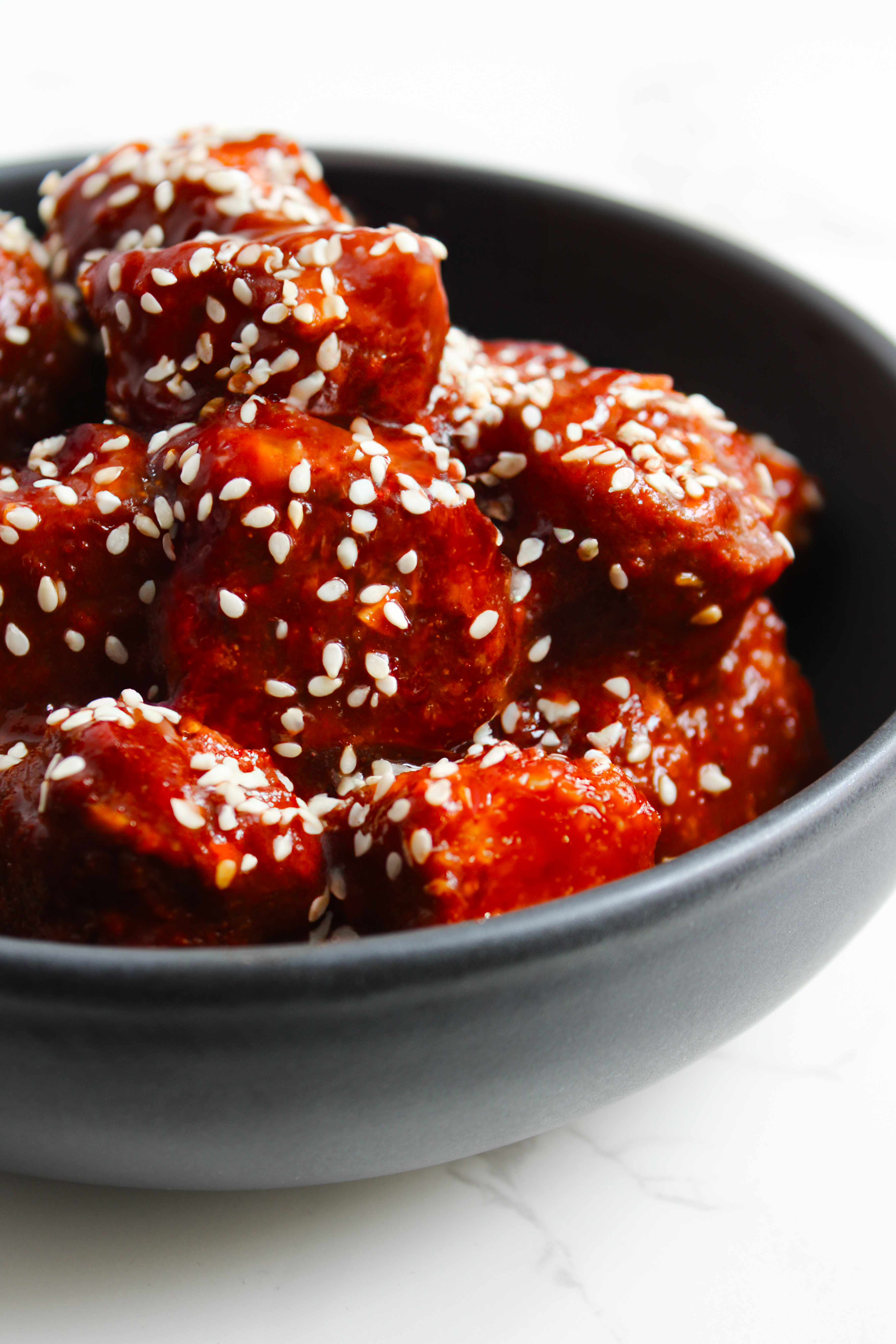
Crispy, sticky, sweet and spicy, this vegan Korean fried tofu is the kind of dish that disappears almost as quickly as it hits the table. Inspired by dakgangjeong, the much-loved Korean fried chicken dish, this plant-based version swaps chicken for bite-sized pieces of tofu, fried until golden and crunchy, then tossed through a glossy gochujang sauce.
This recipe is an edited extract from Vegan Asian Street Food by Yang Liu, published by Hardie Grant Books, and it captures everything we love about street food: big flavour, satisfying texture and that irresistible balance of heat, sweetness, salt and crunch.
The tofu is first marinated in plant-based milk, salt and pepper, then coated in cornflour or wheat starch before being fried until crisp. For extra crunch, it is fried a second time, just like traditional dakgangjeong. The sauce brings together garlic, tomato sauce, sugar, gochujang, soy sauce and chilli flakes, creating a sticky coating that clings beautifully to every golden cube.
Serve it hot, scattered with toasted sesame seeds, as a snack, starter or casual dinner with rice, pickles, cucumber salad or stir-fried greens. It is the perfect recipe for anyone craving Korean fried chicken flavours in a vegan-friendly way, with all the crunch and none of the meat.
Why You’ll Love This Vegan Korean Fried Tofu
This dish is everything good tofu should be: crisp on the outside, tender in the middle and packed with flavour. The double-frying method gives the tofu a crunchy shell, while the sticky gochujang sauce adds heat, sweetness and savoury depth.
It is also a brilliant recipe for entertaining. Serve it in small bowls with toothpicks for a street-food-style snack, pile it onto rice for a satisfying dinner, or make it part of a larger vegan Asian-inspired feast. If you have ever thought tofu was bland, this recipe will change your mind.
Tips for Making the Best Crispy Korean Tofu
Use firm tofu rather than silken tofu, so it holds its shape while frying.
Cut the tofu into even pieces so they cook at the same rate.
Do not skip the cornflour or wheat starch coating, as this is what gives the tofu its crisp exterior.
Make sure the oil is hot before frying. If the oil is too cool, the tofu will absorb too much oil and become heavy.
Fry the tofu twice for the best crunch. The first fry cooks and firms the tofu, while the second fry makes it extra crisp.
Toss the tofu quickly through the sauce just before serving, so it stays glossy and crunchy.
This is the vegan version of the very popular Korean fried chicken (dakgangjeong). The crispy, bite-sized tofu is deep-fried then coated in a sweet and spicy sauce to create an addictive dish that has multiple layers of flavours and textures.
Dakgangjeong is usually fried twice to achieve an extra-crispy texture, making it very crunchy on the outside and juicy on the inside. At street stalls, batches are fried and then served in small cups or paper cones to make it easy to eat while exploring a busy market or strolling around the city.
Ingredients (serves 2)
500 g (17²⁄₃ oz) tofu, diced about 1.5 cm (½ in) wide
½ teaspoon salt
½ teaspoon ground black pepper
200 ml (7 fl oz) plant-based milk
1 tablespoon garlic powder
5 garlic cloves, minced
3 tablespoons tomato sauce (ketchup)
1½ tablespoons sugar
1 tablespoon gochujang (Korean chilli paste)
2 tablespoons soy sauce
1 tablespoon chilli flakes
150 g (5½ oz) cornflour (cornstarch) or wheat starch
1 teaspoon baking powder
500 ml (17 fl oz/2 cups) canola (rapeseed) oil
1 tablespoon toasted sesame seeds
Method
Marinate the tofu with salt, black pepper and milk for 30 minutes.
Meanwhile, in a bowl, mix the garlic powder and minced garlic, tomato sauce, sugar, gochujang, soy sauce, chilli flakes and 75 ml (2½ fl oz) of water.
In a separate bowl, mix the cornflour or wheat starch and baking powder.
Remove the tofu from the marinade and coat the pieces well with the flour mixture.
Heat the oil in a large saucepan over a medium–high heat. To check whether the oil is hot enough for deep-frying, hold a wooden chopstick in the oil. If it is immediately surrounded by tiny bubbles, the oil is ready to use.
Deep-fry the tofu for 3–5 minutes, until it is golden on the outside. Remove from the oil using a slotted spoon and drain on paper towel. To obtain extra crispiness, wait for 1 minute, then fry the tofu again for 1 minute.
Heat the sauce in a saucepan over medium heat. When it begins to bubble, add the tofu and quickly mix until it is evenly coated. Top with sesame seeds to serve.
FAQs
What is dakgangjeong?
Dakgangjeong is a popular Korean fried chicken dish made with crispy bite-sized pieces of chicken coated in a sweet, spicy and sticky sauce. This vegan version uses tofu instead of chicken while keeping the same delicious balance of crunch, heat and sweetness.
Is this Korean fried tofu vegan?
Yes, this version is vegan. It uses tofu, plant-based milk, cornflour or wheat starch, gochujang, soy sauce, garlic and chilli flakes to create a plant-based version of Korean fried chicken.
What type of tofu is best for this recipe?
Firm tofu is best because it holds its shape during marinating, coating and deep-frying. Extra-firm tofu can also work well. Avoid silken tofu, as it is too delicate for this recipe.
Do I need to press the tofu first?
If your tofu is very watery, pressing it gently before marinating will help improve the texture. Patting it dry before coating also helps the starch stick better and creates a crispier finish.
Why is the tofu fried twice?
Double-frying helps create a crunchier texture. The first fry cooks and firms the tofu, while the second fry makes the outside extra crisp, which is one of the signature features of dakgangjeong-style dishes.
Can I make this recipe without deep-frying?
Deep-frying gives the crispiest result, but you could try shallow-frying the tofu in a generous amount of oil. The texture may be slightly less crunchy, but it will still be delicious once coated in the sweet and spicy sauce.
Is gochujang spicy?
Gochujang is a Korean chilli paste with heat, sweetness and savoury depth. It is spicy, but also rich and slightly sweet. If you prefer a milder dish, reduce the chilli flakes or use a little less gochujang.
Can I make this recipe gluten-free?
It can be made gluten-free if you use cornflour rather than wheat starch and choose a gluten-free soy sauce or tamari. Always check the label on your gochujang, as some brands may contain wheat.
What can I serve with vegan Korean fried tofu?
Serve it with steamed rice, cucumber salad, kimchi, pickled vegetables, stir-fried greens or lettuce cups. It also works beautifully as part of a snack-style spread with scallion pancakes, noodles and fresh salads.
Can I make Korean fried tofu ahead of time?
This dish is best served straight after cooking, while the tofu is still crisp. You can prepare the sauce ahead of time and cut or marinate the tofu in advance, but fry and coat it just before serving.
How do I keep the tofu crispy?
For the crispiest result, drain the tofu well after frying, do the second fry just before serving, and toss it through the sauce quickly. Once coated, the tofu will gradually soften, so it is best eaten fresh.
Can I use the sauce on other vegetables?
Yes. The sweet and spicy gochujang sauce would also be delicious with cauliflower, mushrooms, eggplant, broccoli or crispy potatoes.
What to Eat Next
If you loved this vegan Korean fried tofu, keep the street-food feast going with more bold, flavour-packed recipes from eat.live.escape.
For another recipe from Vegan Asian Street Food by Yang Liu, try these Scallion Pancakes, Cong You Bing. They are crispy, flaky, savoury and perfect for serving alongside sticky tofu.
For a fresh, colourful plant-based dish with plenty of texture, make this Authentic Indonesian Gado-Gado Salad with Spicy Peanut Sauce. It is packed with vegetables, tofu, eggs and a rich peanut dressing.
If you are craving noodles, this Char Kway Teow Recipe brings smoky, hawker-style flavour to the table and would make a delicious pairing for an Asian-inspired dinner spread.
For a warming bowl with tofu and plenty of comfort, try this Pho-nomenal Plant-Based Pho. It is nourishing, fragrant and ideal when you want something lighter but still full of flavour.
If you love Japanese-style street food, this Japanese Okonomiyaki Recipe is another brilliant recipe to make at home, with crisp edges, a soft centre and plenty of savoury flavour.
For a non-vegan but deeply comforting Asian-inspired dish, try this Comforting Chicken Soto with Turmeric and Lemongrass, a fragrant Indonesian soup with warmth, spice and freshness.
To set the mood for a relaxed dinner at home, explore interiors inspiration at ele HOME. And for effortless outfit ideas to take you from kitchen to casual entertaining, visit eleSTYLED.
Share this:
Like this: