The queue starts on the Operngasse side of the Staatsoper, under the overhang at the corner nearest the Albertina, beside a small sign that says Stehplätze. Eighty minutes before curtain, the window opens. If you are there forty minutes before that, with a paperback and a scarf you do not mind parting with for three hours, you will spend somewhere between thirteen and eighteen euros — 2026 prices — on an evening that people in the boxes above you paid ten times more for. That is the single best thing about Vienna in December, and it has nothing to do with the thing Vienna in December is famous for.
Standing Room Is Not a Consolation Prize
Understand first that there are two ways to get a standing ticket. A quota goes on sale online from 10am on the day of the performance, which is convenient and, on a popular night, gone quickly. The rest are sold only at the dedicated standing-room window, in cash-friendly fashion, starting eighty minutes before the performance begins. One ticket per person, so everyone in your party has to stand in the line. You can step out for coffee while you are still on the street, but once the queue has moved indoors, stay in it.
Three areas, three prices, and the cheapest is not the bargain it looks like:
Stehparterre — around €18 in the 2026 season. Ground level, dead centre, just above the height of the stage. This is the one to ask for.
Galerie — around €15. Very high up, a long climb, excellent for sound and for watching the conductor’s hands.
Balkon — around €13. Cheapest, and the side positions can mean a sliver of stage and a long evening on your feet.
When you reach the window, say the area you want. Then move past the cloakroom, into the house, into whichever line the ushers point you towards. Roughly fifty minutes to an hour before the start, they let the standing lines in, and this is the part nobody tells you. Places are not assigned. Each spot is defined by its own little subtitle screen on the rail in front of you, and you claim it by tying your scarf or a handkerchief around the bar beneath that screen. Then you are free to go and look at the ceiling, or buy a coffee, or stand outside in the cold. The cloth holds your place, and moving someone else’s is not done. Arrive late, skip the ritual, and you are left with whatever nobody wanted: a pillar, a corner, a view of half a soprano.
Dress is not the problem people expect. Nobody in standing is in black tie. Wear what you would wear to dinner, in shoes you can stand in for three hours and twenty minutes of Wagner.
The Market Everyone Photographs, and the Ones Worth the Evening
Rathausplatz is the picture you have already seen: the city hall lit up like a cathedral, a hundred-odd stalls, a skating path winding through the park behind it. It is genuinely a spectacle and it is also where most visitors spend their only market evening, which means punsch at tourist speed and a crowd that moves like a river. Go, take the photograph, ride the ice once — the Vienna Ice World runs from mid-November into early January, daily until late — and then go somewhere else to actually drink something.
Where locals go instead, and why:
Spittelberg — not a square but a grid of narrow Biedermeier lanes in the 7th district, stalls squeezed between buildings. Best atmosphere in the city, worst for pushchairs.
Karlsplatz (Art Advent) — juried crafts, organic food, straw for the children to climb in, the Karlskirche floodlit behind it. Opens at midday and closes early, around 8pm, so it is an afternoon market.
Am Hof — smaller, more design-led, deep in the First District and easy to combine with Freyung a two-minute walk away.
Schönbrunn — the longest-running of them, open from early November until Epiphany, which makes it the one still standing when everything else has packed up on 23 December.
Belvedere — a courtyard market between two baroque wings, open into the last days of December.
For the 2026 season the city’s tourist board lists most of the central markets opening in the second week of November and closing on 23 December, with Rathausplatz running to 26 December, Belvedere to 31 December and Schönbrunn to 6 January 2027. Dates in Vienna are typically mid-November to Christmas, but they shift by a day or two each year, so confirm the ones you are building a day around before you travel. One practical note: punsch mugs carry a deposit of a few euros, refunded when you return them, and almost nobody tells you that at the stall.
One Day Out of the City
Three or four days in and you will want a horizon. Most of the planning that goes into leaving Vienna for a day comes down to a single choice – train or car – and the honest answer changes with the direction you pick.
Bratislava is the easy one: regional trains from Wien Hauptbahnhof take about an hour, run roughly hourly, and single fares run around €13–15 in 2026, with a combined return-plus-city-transport ticket the better value. Melk is also about an hour direct, and its abbey library on a grey afternoon justifies the trip. The Wachau — the Danube between Melk and Krems — is where the choice bites: trains serve the valley and you can break the journey at Dürnstein or Spitz, but the river boats run a seasonal timetable, so do not assume one sails in December. Lake Neusiedl is under an hour east and empty in winter. The Vienna Woods and the spa towns along their edge are the one case where a car genuinely wins: the villages are strung out and the buses serve commuters.
The Afternoons Are Very Short
The earliest sunset of the year here falls around 4pm in the second week of December, and the solstice leaves barely eight and a half hours of daylight. Plan around it: outdoor things in the morning, interiors after lunch.
The Kunsthistorisches Museum is the wet-afternoon answer: open daily 10am to 6pm, late on Thursdays until 9pm, adult admission around €22–24 in 2026, with timed entry slots to book online. Thursday evening in the Bruegel room, the building half-empty, is one of the quietest luxuries here. Then the coffee houses, where the point is that nobody hurries you: Sperl, with its billiard tables and 1880 fittings, is the benchmark; Jelinek off Mariahilfer Strasse has a wood-burning stove, free newspapers and nine tables; Hawelka is cramped and the Buchteln arrive late. Café Central has been under renovation in 2026, so check it has reopened.
Two more. The Naschmarkt in winter loses the tourists and keeps the traders, with stalls open early to late on weekdays and closing mid-afternoon on Saturday, which is also flea-market day. And the Zentralfriedhof in fog is extraordinary — Beethoven, Brahms and Schubert in one plot — but the winter gates shut at 5pm from early November, so go after lunch, not later.
Photo by Ejov Igor
Things People Ask About a December Trip
Can you get an opera ticket on the day without queuing?
Sometimes. A share of standing tickets goes online at 10am on the day, and seated returns appear irregularly. On a December weekend with a famous name singing, assume you will be at the standing window.
Is it worth going between Christmas and New Year?
Yes, but it is a different city. Most central markets close on 23 December, while Schönbrunn, Belvedere and Rathausplatz carry on and concerts take over. Confirm hours for 24, 25 and 31 December, shortened nearly everywhere.
How cold does it get?
Cold enough for a proper coat and a hat, rarely cold enough to stop you walking. The problem is damp rather than deep frost, so waterproof shoes matter more than thermals.
Before You Go
Buy a 72-hour transit pass on arrival and stop thinking about tickets. Pack the scarf you are willing to leave on a brass rail, and a second for your neck. Check market dates, museum slots and gate times before committing an afternoon, because December hours here are shorter and fussier than usual. And accept the dark — the city was built for lamplight, and it looks better at five in the afternoon than at noon.


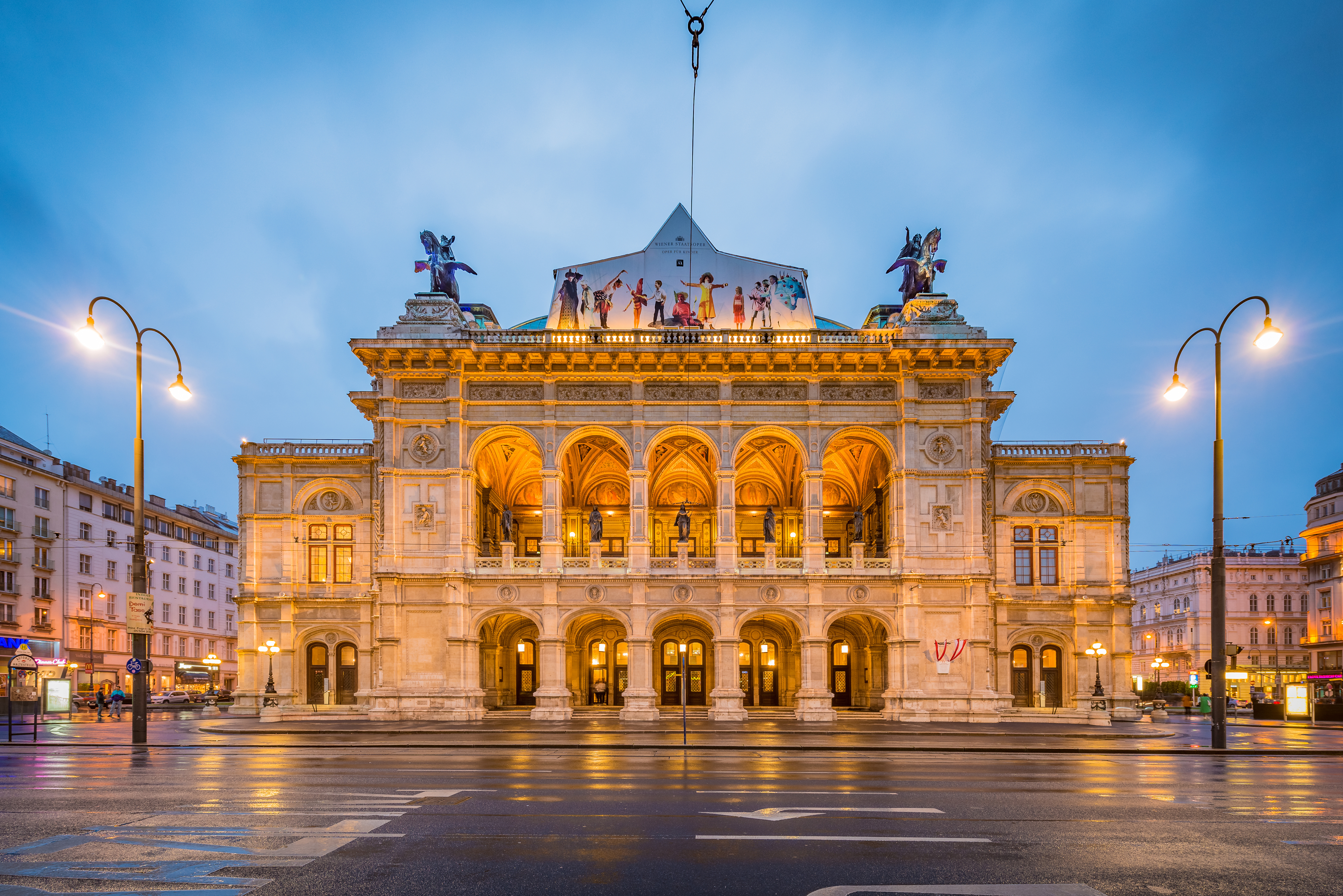
The queue starts on the Operngasse side of the Staatsoper, under the overhang at the corner nearest the Albertina, beside a small sign that says Stehplätze. Eighty minutes before curtain, the window opens. If you are there forty minutes before that, with a paperback and a scarf you do not mind parting with for three hours, you will spend somewhere between thirteen and eighteen euros — 2026 prices — on an evening that people in the boxes above you paid ten times more for. That is the single best thing about Vienna in December, and it has nothing to do with the thing Vienna in December is famous for.
Standing Room Is Not a Consolation Prize
Understand first that there are two ways to get a standing ticket. A quota goes on sale online from 10am on the day of the performance, which is convenient and, on a popular night, gone quickly. The rest are sold only at the dedicated standing-room window, in cash-friendly fashion, starting eighty minutes before the performance begins. One ticket per person, so everyone in your party has to stand in the line. You can step out for coffee while you are still on the street, but once the queue has moved indoors, stay in it.
Three areas, three prices, and the cheapest is not the bargain it looks like:
When you reach the window, say the area you want. Then move past the cloakroom, into the house, into whichever line the ushers point you towards. Roughly fifty minutes to an hour before the start, they let the standing lines in, and this is the part nobody tells you. Places are not assigned. Each spot is defined by its own little subtitle screen on the rail in front of you, and you claim it by tying your scarf or a handkerchief around the bar beneath that screen. Then you are free to go and look at the ceiling, or buy a coffee, or stand outside in the cold. The cloth holds your place, and moving someone else’s is not done. Arrive late, skip the ritual, and you are left with whatever nobody wanted: a pillar, a corner, a view of half a soprano.
Dress is not the problem people expect. Nobody in standing is in black tie. Wear what you would wear to dinner, in shoes you can stand in for three hours and twenty minutes of Wagner.
The Market Everyone Photographs, and the Ones Worth the Evening
Rathausplatz is the picture you have already seen: the city hall lit up like a cathedral, a hundred-odd stalls, a skating path winding through the park behind it. It is genuinely a spectacle and it is also where most visitors spend their only market evening, which means punsch at tourist speed and a crowd that moves like a river. Go, take the photograph, ride the ice once — the Vienna Ice World runs from mid-November into early January, daily until late — and then go somewhere else to actually drink something.
Where locals go instead, and why:
For the 2026 season the city’s tourist board lists most of the central markets opening in the second week of November and closing on 23 December, with Rathausplatz running to 26 December, Belvedere to 31 December and Schönbrunn to 6 January 2027. Dates in Vienna are typically mid-November to Christmas, but they shift by a day or two each year, so confirm the ones you are building a day around before you travel. One practical note: punsch mugs carry a deposit of a few euros, refunded when you return them, and almost nobody tells you that at the stall.
One Day Out of the City
Three or four days in and you will want a horizon. Most of the planning that goes into leaving Vienna for a day comes down to a single choice – train or car – and the honest answer changes with the direction you pick.
Bratislava is the easy one: regional trains from Wien Hauptbahnhof take about an hour, run roughly hourly, and single fares run around €13–15 in 2026, with a combined return-plus-city-transport ticket the better value. Melk is also about an hour direct, and its abbey library on a grey afternoon justifies the trip. The Wachau — the Danube between Melk and Krems — is where the choice bites: trains serve the valley and you can break the journey at Dürnstein or Spitz, but the river boats run a seasonal timetable, so do not assume one sails in December. Lake Neusiedl is under an hour east and empty in winter. The Vienna Woods and the spa towns along their edge are the one case where a car genuinely wins: the villages are strung out and the buses serve commuters.
The Afternoons Are Very Short
The earliest sunset of the year here falls around 4pm in the second week of December, and the solstice leaves barely eight and a half hours of daylight. Plan around it: outdoor things in the morning, interiors after lunch.
The Kunsthistorisches Museum is the wet-afternoon answer: open daily 10am to 6pm, late on Thursdays until 9pm, adult admission around €22–24 in 2026, with timed entry slots to book online. Thursday evening in the Bruegel room, the building half-empty, is one of the quietest luxuries here. Then the coffee houses, where the point is that nobody hurries you: Sperl, with its billiard tables and 1880 fittings, is the benchmark; Jelinek off Mariahilfer Strasse has a wood-burning stove, free newspapers and nine tables; Hawelka is cramped and the Buchteln arrive late. Café Central has been under renovation in 2026, so check it has reopened.
Two more. The Naschmarkt in winter loses the tourists and keeps the traders, with stalls open early to late on weekdays and closing mid-afternoon on Saturday, which is also flea-market day. And the Zentralfriedhof in fog is extraordinary — Beethoven, Brahms and Schubert in one plot — but the winter gates shut at 5pm from early November, so go after lunch, not later.
Things People Ask About a December Trip
Can you get an opera ticket on the day without queuing?
Sometimes. A share of standing tickets goes online at 10am on the day, and seated returns appear irregularly. On a December weekend with a famous name singing, assume you will be at the standing window.
Is it worth going between Christmas and New Year?
Yes, but it is a different city. Most central markets close on 23 December, while Schönbrunn, Belvedere and Rathausplatz carry on and concerts take over. Confirm hours for 24, 25 and 31 December, shortened nearly everywhere.
How cold does it get?
Cold enough for a proper coat and a hat, rarely cold enough to stop you walking. The problem is damp rather than deep frost, so waterproof shoes matter more than thermals.
Before You Go
Buy a 72-hour transit pass on arrival and stop thinking about tickets. Pack the scarf you are willing to leave on a brass rail, and a second for your neck. Check market dates, museum slots and gate times before committing an afternoon, because December hours here are shorter and fussier than usual. And accept the dark — the city was built for lamplight, and it looks better at five in the afternoon than at noon.
Share this:
Like this: