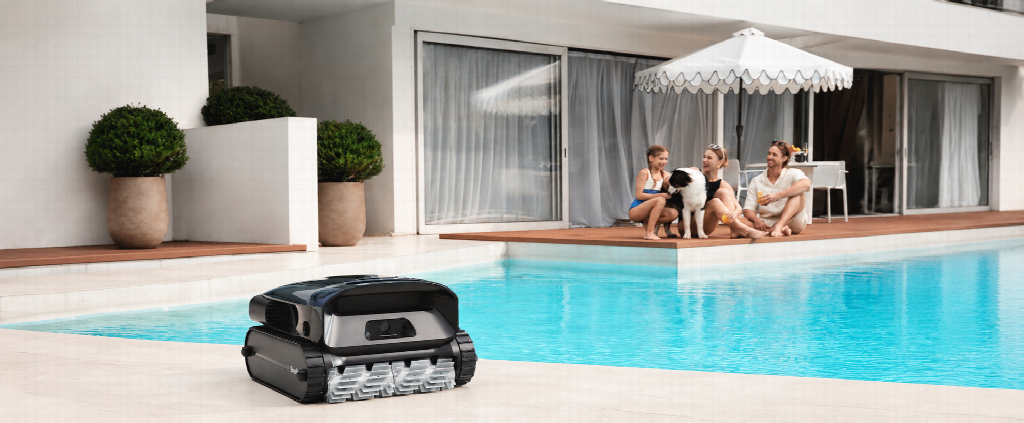
A robotic pool cleaner can be appealing when weekend maintenance starts taking more time than swimming. But the right model depends on more than a discount, battery size or the word “smart” on the box. Australian pools differ in shape, surface, debris and exposure to trees and summer storms. Some need reliable floor cleaning; others have awkward benches or floating leaves that basic robots cannot handle. Before comparing machines, homeowners should examine their pool, understand the main cleaner types and identify features likely to save actual work. This guide focuses on those decisions rather than ranking brands by marketing claims.
Begin with your pool, not the product listing
Write down the pool’s length, width, approximate area, maximum and minimum depth, and surface material. Note steps, tanning ledges, slopes, skimmer locations, ladders and unusually narrow corners. Take photographs if you are comparing specifications online. A machine described as suitable for “most pools” may still exclude your shallowest ledge.
Observe where debris accumulates. Pools beneath trees can receive floating leaves and seed pods; an exposed paved area may introduce sand or dust. A wall that regularly develops a waterline ring presents a different problem from a flat floor that collects sediment. The right cleaner is designed to address your recurring mess, not necessarily the one with the longest feature list.
Think about where you will store and charge the cleaner, how far it must be carried, and who will empty the basket. For buyers with back or mobility concerns, a convenient retrieval mechanism and manageable wet lifting weight could make more difference than extra app features.
Understand the three broad types of automatic pool cleaner
Suction-side cleaners
Suction-side cleaners connect to the pool’s suction system, often through a skimmer or dedicated port. They use water movement from the pool pump to collect dirt. Their appeal can be a relatively simple design, though performance depends partly on the pool’s hydraulic setup and suitable hose routing. Debris may place additional demand on the filtration system.
Pressure-side cleaners
Pressure-side models use water pressure, sometimes with a booster pump, to move and collect debris into a bag. They may suit certain pools with heavier leaves, but installation details and additional pump requirements should be checked carefully. Running cost depends on the actual equipment and operating schedule rather than the category name alone.
Robotic pool cleaners
Robotic cleaners use onboard drives, brushes and filter baskets and operate independently of the pool’s main suction circuit. Corded models draw electricity through a compatible power unit, while cordless models rely on a rechargeable battery. Both still require routine filter cleaning and occasional manual attention. A robotic pool cleaner is attractive for homeowners seeking less hands-on brushing and vacuuming, but it is not a replacement for filtration or disinfection.
Corded or cordless: a practical comparison
A corded cleaner may avoid battery charging between cycles, but the power unit must be positioned safely and the cable needs proper handling. Cordless models remove a trailing operating cable from the water, making setup and storage more convenient for some households. Their runtime, charging time and ability to complete a cleaning mode in one charge should be assessed against pool size and debris load.
Cordless does not mean maintenance-free, and corded does not automatically mean more powerful. Cleaning ability is affected by brush design, filtration, navigation, suction and the selected mode. Before buying, ask how many cycles are needed to clean your actual pool and whether the machine can complete its intended tasks without intervention.
In Australia, a locally supported cordless robotic pool cleaner may be worth comparing against established corded options when access to the pool is awkward or cable handling is inconvenient. Check the precise warranty, charger requirements and retailer support rather than assuming every online listing offers the same local service.
Which cleaning zones matter most?
Floor cleaning
This is the baseline for most owners. Check how the robot picks up leaves versus finer material, how often the filter needs rinsing, and whether it has difficulty with slopes or floor drains. An advertised suction figure alone cannot predict how much debris remains after a cycle.
Walls and waterline
Some robots climb walls but do not perform dedicated waterline cleaning. Read the exact feature description: tiles and surface grime can require deliberate brushing at the waterline. Pool finish and wall transition angles may influence traction.
Steps, ledges and the surface
Wide submerged ledges are different from narrow stair treads. A robot designed for shallow platforms may specify minimum water depth and usable dimensions. Likewise, underwater cleaning does not automatically collect leaves floating on top. Assess these as separate capabilities, not assume them from a claim of “full pool coverage”.
For example, Beatbot’s Australian collection lists models with different zone coverage. Its Sora 30 is marketed for floor, shallow areas, walls and waterline; Sora 70 adds advertised active water-surface collection. These are product-page claims, not independent comparative test results. The distinction illustrates why matching cleaning zones to the pool is more useful than choosing by model name alone.
What to look for beyond smart-feature labels
Navigation systems may use orientation sensors, motor feedback or obstacle sensing to help direct movement. A robot that navigates effectively should spend less time trapped in awkward areas and have a better opportunity to reach neglected sections. But a manufacturer saying “smart navigation” does not establish complete mapping or perfect coverage. Look for credible tests on a pool with a similar shape to yours.
Filtration matters just as much. Large leaf loads demand sufficient basket capacity, while very fine particles require suitable filter media. Consider how easily filters are accessed and washed. A cleaner with excellent route planning and a constantly blocked basket will still create avoidable work.
An app may help select cleaning modes or check status, but Bluetooth and Wi-Fi behave differently around water. Some app functions only work when the cleaner reaches the surface. Confirm exactly which controls work during a cleaning cycle rather than assuming a phone can steer a submerged device anywhere in the pool.
Seven questions to ask before paying
1. Does the manufacturer explicitly support my pool’s surface, size and depth range?
2. Will it clean the places that currently require the most manual work?
3. Is surface cleaning included, or is the machine only designed for underwater debris?
4. Can the cleaner handle the dimensions of my steps or shallow bench?
5. How are filters emptied, cleaned and replaced, and are replacement parts available locally?
6. What is the actual warranty process in Australia, including freight and service arrangements?
7. What happens when the cycle ends: must I reach down, lift it with a hook or use a parking feature?
Consider two distinct pools: a compact rectangular pool with little leaf fall, where dependable floor cleaning and easy filter rinsing could be enough; and a pool beneath gum trees with a broad shallow ledge, where floating-leaf collection and minimum ledge depth become more important. The right equipment depends on which of those problems actually occurs.
How to interpret reviews without being misled
Prioritise reviews that describe the test conditions. A useful account names the pool type, its size, cleaning modes, starting debris, runtime and missed areas. It should describe how the basket performed and whether the robot reached difficult steps or corners. Photographs and repeat tests are helpful, although no single test can predict every pool.
Be cautious when a review states that a device achieved “100% coverage” without defining the measurement. Similarly, “up to” battery-life claims are often tied to particular modes and conditions. Test results from a small, clean pool may have limited relevance to a large pool exposed to falling leaves.
A comparison should separate verified specifications from the reviewer’s observations. Sensor counts, suction ratings and app functions may be documented by manufacturers; cleaning performance needs actual evaluation. Neither a high price nor a low price guarantees suitability.
Budget for ownership, not just purchase price
The amount shown at checkout is only one part of the decision. Filters, brushes and other wearable parts can need replacement. Cordless owners should consider battery care and eventual battery service, subject to the manufacturer’s terms. Electricity use also matters where relevant, although a universal saving cannot be claimed without measuring actual operating conditions.
Count actual chores instead of assuming a time saving. For seven days, log how often you vacuum, skim, brush the waterline and empty baskets. Compare that log with the manufacturer’s post-cycle requirements for lifting, draining, filter washing and charging. A cleaner that tackles the most frequent task may justify its place even without a headline cost-saving claim.
Create a comparison sheet with columns for purchase price in AUD, included filter and accessories, supported cleaning zones, warranty provider, replacement-filter availability and return conditions. Enter only prices and terms confirmed on the day you compare models. Leave unknown details blank rather than assuming a cheaper overseas listing includes the same Australian support.
What a robot will not fix
Automatic pool cleaners remove debris and scrub some surfaces; they do not establish safe chlorine and pH levels. Australian public-health advice emphasises filtration, disinfection and regular chemical checks. A pool can look clean while its water is unsuitable for swimming.
Persistent green water, algae or cloudiness calls for appropriate water-quality testing and treatment. The robot may assist with physical cleanup, but it cannot substitute for correct circulation, sanitisation or professional diagnosis when needed. Electrical work and unsafe equipment repairs should be handled by licensed professionals.
Frequently Asked Questions
Are cordless robotic pool cleaners worth buying in Australia?
They can be a practical choice if cable-free handling and the available cleaning modes suit your pool. Compare battery performance, retrieval, compatibility and local warranty support against corded alternatives before deciding.
Do all robotic pool cleaners clean walls and waterlines?
No. Floor cleaning, wall climbing and dedicated waterline cleaning are separate functions. Always inspect the manufacturer’s zone-by-zone specifications.
Can robotic cleaners work in saltwater pools?
Some can, subject to stated salinity limits and care instructions. Check the exact model’s restrictions rather than assuming all units are safe in every saltwater pool.
Will a robotic pool cleaner clean swimming pool steps?
Not necessarily. Shallow depth and narrow width frequently limit performance. Measure the steps and compare the dimensions with the device’s minimum operating requirements.
Can a robot replace pool chemicals and the filter pump?
No. Robotic cleaning addresses physical debris; safe pool operation still requires filtration, circulation, disinfection and water testing.
Choose for the pool you have
The smartest purchase begins with a simple inventory: pool dimensions, debris type, difficult cleaning zones and the amount of manual effort you want to reduce. Use those facts to narrow the field before comparing advertised technology. A well-matched cleaner should make routine physical cleaning easier, but it will always remain one component of responsible pool ownership.


A robotic pool cleaner can be appealing when weekend maintenance starts taking more time than swimming. But the right model depends on more than a discount, battery size or the word “smart” on the box. Australian pools differ in shape, surface, debris and exposure to trees and summer storms. Some need reliable floor cleaning; others have awkward benches or floating leaves that basic robots cannot handle. Before comparing machines, homeowners should examine their pool, understand the main cleaner types and identify features likely to save actual work. This guide focuses on those decisions rather than ranking brands by marketing claims.
Begin with your pool, not the product listing
Write down the pool’s length, width, approximate area, maximum and minimum depth, and surface material. Note steps, tanning ledges, slopes, skimmer locations, ladders and unusually narrow corners. Take photographs if you are comparing specifications online. A machine described as suitable for “most pools” may still exclude your shallowest ledge.
Observe where debris accumulates. Pools beneath trees can receive floating leaves and seed pods; an exposed paved area may introduce sand or dust. A wall that regularly develops a waterline ring presents a different problem from a flat floor that collects sediment. The right cleaner is designed to address your recurring mess, not necessarily the one with the longest feature list.
Think about where you will store and charge the cleaner, how far it must be carried, and who will empty the basket. For buyers with back or mobility concerns, a convenient retrieval mechanism and manageable wet lifting weight could make more difference than extra app features.
Understand the three broad types of automatic pool cleaner
Suction-side cleaners
Suction-side cleaners connect to the pool’s suction system, often through a skimmer or dedicated port. They use water movement from the pool pump to collect dirt. Their appeal can be a relatively simple design, though performance depends partly on the pool’s hydraulic setup and suitable hose routing. Debris may place additional demand on the filtration system.
Pressure-side cleaners
Pressure-side models use water pressure, sometimes with a booster pump, to move and collect debris into a bag. They may suit certain pools with heavier leaves, but installation details and additional pump requirements should be checked carefully. Running cost depends on the actual equipment and operating schedule rather than the category name alone.
Robotic pool cleaners
Robotic cleaners use onboard drives, brushes and filter baskets and operate independently of the pool’s main suction circuit. Corded models draw electricity through a compatible power unit, while cordless models rely on a rechargeable battery. Both still require routine filter cleaning and occasional manual attention. A robotic pool cleaner is attractive for homeowners seeking less hands-on brushing and vacuuming, but it is not a replacement for filtration or disinfection.
Corded or cordless: a practical comparison
A corded cleaner may avoid battery charging between cycles, but the power unit must be positioned safely and the cable needs proper handling. Cordless models remove a trailing operating cable from the water, making setup and storage more convenient for some households. Their runtime, charging time and ability to complete a cleaning mode in one charge should be assessed against pool size and debris load.
Cordless does not mean maintenance-free, and corded does not automatically mean more powerful. Cleaning ability is affected by brush design, filtration, navigation, suction and the selected mode. Before buying, ask how many cycles are needed to clean your actual pool and whether the machine can complete its intended tasks without intervention.
In Australia, a locally supported cordless robotic pool cleaner may be worth comparing against established corded options when access to the pool is awkward or cable handling is inconvenient. Check the precise warranty, charger requirements and retailer support rather than assuming every online listing offers the same local service.
Which cleaning zones matter most?
Floor cleaning
This is the baseline for most owners. Check how the robot picks up leaves versus finer material, how often the filter needs rinsing, and whether it has difficulty with slopes or floor drains. An advertised suction figure alone cannot predict how much debris remains after a cycle.
Walls and waterline
Some robots climb walls but do not perform dedicated waterline cleaning. Read the exact feature description: tiles and surface grime can require deliberate brushing at the waterline. Pool finish and wall transition angles may influence traction.
Steps, ledges and the surface
Wide submerged ledges are different from narrow stair treads. A robot designed for shallow platforms may specify minimum water depth and usable dimensions. Likewise, underwater cleaning does not automatically collect leaves floating on top. Assess these as separate capabilities, not assume them from a claim of “full pool coverage”.
For example, Beatbot’s Australian collection lists models with different zone coverage. Its Sora 30 is marketed for floor, shallow areas, walls and waterline; Sora 70 adds advertised active water-surface collection. These are product-page claims, not independent comparative test results. The distinction illustrates why matching cleaning zones to the pool is more useful than choosing by model name alone.
What to look for beyond smart-feature labels
Navigation systems may use orientation sensors, motor feedback or obstacle sensing to help direct movement. A robot that navigates effectively should spend less time trapped in awkward areas and have a better opportunity to reach neglected sections. But a manufacturer saying “smart navigation” does not establish complete mapping or perfect coverage. Look for credible tests on a pool with a similar shape to yours.
Filtration matters just as much. Large leaf loads demand sufficient basket capacity, while very fine particles require suitable filter media. Consider how easily filters are accessed and washed. A cleaner with excellent route planning and a constantly blocked basket will still create avoidable work.
An app may help select cleaning modes or check status, but Bluetooth and Wi-Fi behave differently around water. Some app functions only work when the cleaner reaches the surface. Confirm exactly which controls work during a cleaning cycle rather than assuming a phone can steer a submerged device anywhere in the pool.
Seven questions to ask before paying
1. Does the manufacturer explicitly support my pool’s surface, size and depth range?
2. Will it clean the places that currently require the most manual work?
3. Is surface cleaning included, or is the machine only designed for underwater debris?
4. Can the cleaner handle the dimensions of my steps or shallow bench?
5. How are filters emptied, cleaned and replaced, and are replacement parts available locally?
6. What is the actual warranty process in Australia, including freight and service arrangements?
7. What happens when the cycle ends: must I reach down, lift it with a hook or use a parking feature?
Consider two distinct pools: a compact rectangular pool with little leaf fall, where dependable floor cleaning and easy filter rinsing could be enough; and a pool beneath gum trees with a broad shallow ledge, where floating-leaf collection and minimum ledge depth become more important. The right equipment depends on which of those problems actually occurs.
How to interpret reviews without being misled
Prioritise reviews that describe the test conditions. A useful account names the pool type, its size, cleaning modes, starting debris, runtime and missed areas. It should describe how the basket performed and whether the robot reached difficult steps or corners. Photographs and repeat tests are helpful, although no single test can predict every pool.
Be cautious when a review states that a device achieved “100% coverage” without defining the measurement. Similarly, “up to” battery-life claims are often tied to particular modes and conditions. Test results from a small, clean pool may have limited relevance to a large pool exposed to falling leaves.
A comparison should separate verified specifications from the reviewer’s observations. Sensor counts, suction ratings and app functions may be documented by manufacturers; cleaning performance needs actual evaluation. Neither a high price nor a low price guarantees suitability.
Budget for ownership, not just purchase price
The amount shown at checkout is only one part of the decision. Filters, brushes and other wearable parts can need replacement. Cordless owners should consider battery care and eventual battery service, subject to the manufacturer’s terms. Electricity use also matters where relevant, although a universal saving cannot be claimed without measuring actual operating conditions.
Count actual chores instead of assuming a time saving. For seven days, log how often you vacuum, skim, brush the waterline and empty baskets. Compare that log with the manufacturer’s post-cycle requirements for lifting, draining, filter washing and charging. A cleaner that tackles the most frequent task may justify its place even without a headline cost-saving claim.
Create a comparison sheet with columns for purchase price in AUD, included filter and accessories, supported cleaning zones, warranty provider, replacement-filter availability and return conditions. Enter only prices and terms confirmed on the day you compare models. Leave unknown details blank rather than assuming a cheaper overseas listing includes the same Australian support.
What a robot will not fix
Automatic pool cleaners remove debris and scrub some surfaces; they do not establish safe chlorine and pH levels. Australian public-health advice emphasises filtration, disinfection and regular chemical checks. A pool can look clean while its water is unsuitable for swimming.
Persistent green water, algae or cloudiness calls for appropriate water-quality testing and treatment. The robot may assist with physical cleanup, but it cannot substitute for correct circulation, sanitisation or professional diagnosis when needed. Electrical work and unsafe equipment repairs should be handled by licensed professionals.
Frequently Asked Questions
Are cordless robotic pool cleaners worth buying in Australia?
They can be a practical choice if cable-free handling and the available cleaning modes suit your pool. Compare battery performance, retrieval, compatibility and local warranty support against corded alternatives before deciding.
Do all robotic pool cleaners clean walls and waterlines?
No. Floor cleaning, wall climbing and dedicated waterline cleaning are separate functions. Always inspect the manufacturer’s zone-by-zone specifications.
Can robotic cleaners work in saltwater pools?
Some can, subject to stated salinity limits and care instructions. Check the exact model’s restrictions rather than assuming all units are safe in every saltwater pool.
Will a robotic pool cleaner clean swimming pool steps?
Not necessarily. Shallow depth and narrow width frequently limit performance. Measure the steps and compare the dimensions with the device’s minimum operating requirements.
Can a robot replace pool chemicals and the filter pump?
No. Robotic cleaning addresses physical debris; safe pool operation still requires filtration, circulation, disinfection and water testing.
Choose for the pool you have
The smartest purchase begins with a simple inventory: pool dimensions, debris type, difficult cleaning zones and the amount of manual effort you want to reduce. Use those facts to narrow the field before comparing advertised technology. A well-matched cleaner should make routine physical cleaning easier, but it will always remain one component of responsible pool ownership.
Share this:
Like this: