Buying a boat without thinking carefully about the trailer is a bit like buying a house without thinking about the driveway. The boat gets most of the attention and most of the budget, and the trailer is treated as an afterthought. Then the practical reality of launching, retrieving, and transporting that boat reveals just how consequential the trailer decision actually was.
Here’s what experienced boat owners know about trailers that first-time buyers often learn the hard way.
Why the Right Trailer Matters More Than People Expect
A boat trailer isn’t just a transport platform. It’s a piece of safety-critical equipment that holds a heavy, expensive asset at highway speed, positions it correctly for launching, and supports its weight during storage. When the trailer is right for the boat, everything works smoothly. When it isn’t, the consequences range from inconvenient to genuinely dangerous.
Trailer failure at speed is a road safety hazard. A trailer that doesn’t position the boat correctly for launching makes ramp work frustrating and can damage the hull over time. A trailer that doesn’t support the hull correctly during storage causes structural distortion.
Getting this decision right is worth the time and research it requires.
Matching the Trailer to the Boat
The fundamental requirement is that the trailer is built for the specific weight and hull form of the boat it carries. This is more nuanced than simply checking the weight rating.
Key matching considerations include:
Gross trailer weight rating (GTWR). The trailer’s rated capacity must exceed the total weight of the boat, engine, fuel, and all gear. Building in margin beyond the minimum rated capacity is advisable rather than running at the limit.
Hull support configuration. Different hull types require different support systems. V-hull boats typically use roller systems or a combination of rollers and bunks. Flat-bottomed hulls need full bunk support. Centre console and pontoon boats have specific support requirements. A trailer specified for the wrong hull type causes both launch problems and long-term hull damage.
Frame length and beam width. The trailer frame needs to match the boat’s length and beam within appropriate tolerances. A frame that’s too short leaves the boat unsupported at bow or stern. One that’s too narrow or wide doesn’t position the hull correctly on the support system.
Axle configuration. The number of axles and their placement relative to the boat’s centre of gravity affects both the trailer’s dynamic stability at speed and its weight distribution on the tow vehicle’s hitch.
Choosing the right boat trailer involves more than selecting a model with sufficient towing capacity. Hull geometry, axle placement, braking systems, and support configuration all influence how safely the boat travels and how well the hull is protected over time.
Companies such as Pharo Marine, which work across both boats and trailers, reflect the broader industry emphasis on properly matched towing and transport setups rather than one-size-fits-all solutions.
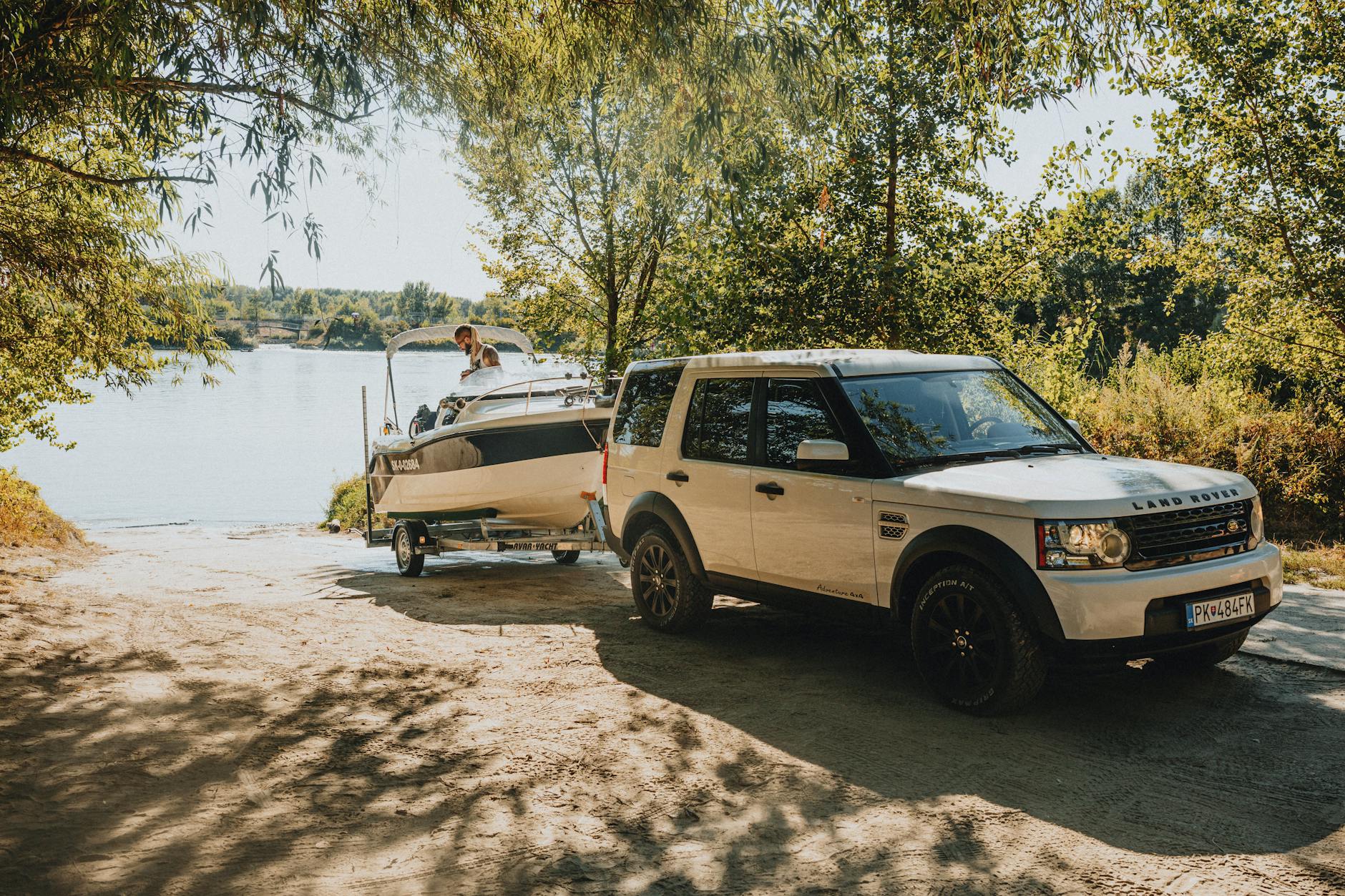
Photo by David Guerrero
Tow Vehicle Compatibility
The trailer also needs to be compatible with the tow vehicle, not just the boat. Mismatches between trailer requirements and tow vehicle capability create handling problems that significantly affect safety.
The tow vehicle considerations that matter:
Towing capacity must exceed the loaded trailer weight with appropriate margin
Tongue weight capacity of the tow vehicle’s hitch must be compatible with the trailer’s tongue weight
Brake controller compatibility if the trailer has electric brakes
Electrical connector compatibility for trailer lighting and brake systems
Sway control requirements for heavier combinations
Many towing problems occur because the vehicle, trailer, hitch system, and load distribution are not properly matched. According to the NTEA’s trailer towing risk management guidance, safe towing depends on understanding the combined limitations of the tow vehicle, trailer, payload, and towing equipment rather than evaluating each component in isolation.
Verifying compatibility before purchase helps prevent handling instability, excessive braking distance, and trailer sway issues that can become dangerous at highway speeds.
Trailer Materials and Corrosion Resistance
If the boat will be launched and retrieved from saltwater regularly, trailer material choice is particularly important. Steel trailers require thorough rinsing and maintenance to resist salt corrosion. Galvanised steel offers significantly better corrosion resistance and is the standard recommendation for saltwater use. Aluminium trailers offer the best corrosion resistance but at higher initial cost.
For freshwater use, a quality painted or galvanised steel trailer is generally adequate with appropriate maintenance.
Braking Systems
Most jurisdictions require trailer brakes above a specified weight threshold. Surge brakes, which activate through the forward momentum of the trailer when the tow vehicle decelerates, are common on lighter boat trailers. Electric brakes, controlled by a brake controller in the tow vehicle, offer more consistent braking performance particularly for heavier combinations.
Understanding the braking requirements that apply in your jurisdiction and ensuring the trailer meets them is important both for legal compliance and for road safety.
Servicing and Maintenance Expectations
Boat trailers operate in demanding conditions: repeated submersion during launching and retrieval, saltwater exposure, road vibration, and seasonal storage. The maintenance requirements that keep a trailer in safe condition include regular bearing repacking or replacement, brake inspection, light system testing, and structural inspection for corrosion or fatigue cracking.
Understanding the maintenance schedule before purchase helps owners factor the ongoing commitment into the total cost of ownership.
Conclusion
The trailer decision deserves the same attention as the boat decision. Matching trailer specification to the boat’s weight and hull form, confirming tow vehicle compatibility, choosing appropriate materials for the use environment, and ensuring correct braking specification are all dimensions that affect safety, boat condition, and the day-to-day enjoyment of boat ownership.
Investing the time in this decision before purchase prevents the frustration and cost of getting it wrong.


Buying a boat without thinking carefully about the trailer is a bit like buying a house without thinking about the driveway. The boat gets most of the attention and most of the budget, and the trailer is treated as an afterthought. Then the practical reality of launching, retrieving, and transporting that boat reveals just how consequential the trailer decision actually was.
Here’s what experienced boat owners know about trailers that first-time buyers often learn the hard way.
Why the Right Trailer Matters More Than People Expect
A boat trailer isn’t just a transport platform. It’s a piece of safety-critical equipment that holds a heavy, expensive asset at highway speed, positions it correctly for launching, and supports its weight during storage. When the trailer is right for the boat, everything works smoothly. When it isn’t, the consequences range from inconvenient to genuinely dangerous.
Trailer failure at speed is a road safety hazard. A trailer that doesn’t position the boat correctly for launching makes ramp work frustrating and can damage the hull over time. A trailer that doesn’t support the hull correctly during storage causes structural distortion.
Getting this decision right is worth the time and research it requires.
Matching the Trailer to the Boat
The fundamental requirement is that the trailer is built for the specific weight and hull form of the boat it carries. This is more nuanced than simply checking the weight rating.
Key matching considerations include:
Gross trailer weight rating (GTWR). The trailer’s rated capacity must exceed the total weight of the boat, engine, fuel, and all gear. Building in margin beyond the minimum rated capacity is advisable rather than running at the limit.
Hull support configuration. Different hull types require different support systems. V-hull boats typically use roller systems or a combination of rollers and bunks. Flat-bottomed hulls need full bunk support. Centre console and pontoon boats have specific support requirements. A trailer specified for the wrong hull type causes both launch problems and long-term hull damage.
Frame length and beam width. The trailer frame needs to match the boat’s length and beam within appropriate tolerances. A frame that’s too short leaves the boat unsupported at bow or stern. One that’s too narrow or wide doesn’t position the hull correctly on the support system.
Axle configuration. The number of axles and their placement relative to the boat’s centre of gravity affects both the trailer’s dynamic stability at speed and its weight distribution on the tow vehicle’s hitch.
Choosing the right boat trailer involves more than selecting a model with sufficient towing capacity. Hull geometry, axle placement, braking systems, and support configuration all influence how safely the boat travels and how well the hull is protected over time.
Companies such as Pharo Marine, which work across both boats and trailers, reflect the broader industry emphasis on properly matched towing and transport setups rather than one-size-fits-all solutions.
Tow Vehicle Compatibility
The trailer also needs to be compatible with the tow vehicle, not just the boat. Mismatches between trailer requirements and tow vehicle capability create handling problems that significantly affect safety.
The tow vehicle considerations that matter:
Many towing problems occur because the vehicle, trailer, hitch system, and load distribution are not properly matched. According to the NTEA’s trailer towing risk management guidance, safe towing depends on understanding the combined limitations of the tow vehicle, trailer, payload, and towing equipment rather than evaluating each component in isolation.
Verifying compatibility before purchase helps prevent handling instability, excessive braking distance, and trailer sway issues that can become dangerous at highway speeds.
Trailer Materials and Corrosion Resistance
If the boat will be launched and retrieved from saltwater regularly, trailer material choice is particularly important. Steel trailers require thorough rinsing and maintenance to resist salt corrosion. Galvanised steel offers significantly better corrosion resistance and is the standard recommendation for saltwater use. Aluminium trailers offer the best corrosion resistance but at higher initial cost.
For freshwater use, a quality painted or galvanised steel trailer is generally adequate with appropriate maintenance.
Braking Systems
Most jurisdictions require trailer brakes above a specified weight threshold. Surge brakes, which activate through the forward momentum of the trailer when the tow vehicle decelerates, are common on lighter boat trailers. Electric brakes, controlled by a brake controller in the tow vehicle, offer more consistent braking performance particularly for heavier combinations.
Understanding the braking requirements that apply in your jurisdiction and ensuring the trailer meets them is important both for legal compliance and for road safety.
Servicing and Maintenance Expectations
Boat trailers operate in demanding conditions: repeated submersion during launching and retrieval, saltwater exposure, road vibration, and seasonal storage. The maintenance requirements that keep a trailer in safe condition include regular bearing repacking or replacement, brake inspection, light system testing, and structural inspection for corrosion or fatigue cracking.
Understanding the maintenance schedule before purchase helps owners factor the ongoing commitment into the total cost of ownership.
Conclusion
The trailer decision deserves the same attention as the boat decision. Matching trailer specification to the boat’s weight and hull form, confirming tow vehicle compatibility, choosing appropriate materials for the use environment, and ensuring correct braking specification are all dimensions that affect safety, boat condition, and the day-to-day enjoyment of boat ownership.
Investing the time in this decision before purchase prevents the frustration and cost of getting it wrong.
Share this:
Like this: