Botox is one of the most recognized cosmetic treatments in the world, and for good reason. It works, it’s fast, and millions of people get it every year. According to the International Society of Aesthetic and Plastic Surgery, Botox ranks as the most performed minimally invasive cosmetic procedure in the United States, with over seven million treatments carried out annually.
But here’s what doesn’t get talked about enough. Botox works exceptionally well for certain types of wrinkles and barely at all for others. A lot of people here in Milwaukee go for Botox expecting it to fix everything they see in the mirror. But they return disappointed, not because the treatment failed, but because it was never the right tool for that particular problem.
Understanding the difference before you book an appointment saves both money and frustration.
How Botox Actually Works
Botox is a purified form of botulinum toxin. When injected into a specific muscle, it temporarily blocks the nerve signals that tell that muscle to contract. The muscle relaxes, and the wrinkle caused by that repeated contraction softens or disappears.
That mechanism is the key to understanding everything else about what Botox can and can’t do. It works on wrinkles that are created by muscle movement. It does nothing for wrinkles caused by other factors like volume loss, sun damage, or skin that has lost its elasticity over time.
The Wrinkles Botox Is Best For
Botox delivers its strongest results on what are called dynamic wrinkles. These are lines that form when you make facial expressions and deepen over time as those expressions are repeated thousands of times over the years. Here are the areas where it performs best.
Forehead Lines
The horizontal lines that run across the forehead when you raise your eyebrows are a classic example of dynamic wrinkles. They’re caused by the frontalis muscle, which lifts the brows. Botox relaxes this muscle and smooths those lines effectively, often with results that last three to four months.
Frown Lines Between the Brows
These are the vertical lines that appear between the eyebrows when you squint or concentrate. They’re sometimes called the elevens because of the two parallel lines they form. This is one of the most common treatment areas and one where Botox consistently delivers clear, visible results.
Crow’s Feet Around the Eyes
The fine lines that fan out from the outer corners of the eyes when you smile or squint respond very well to Botox. The muscle responsible for these lines, called the orbicularis oculi, is easily targeted with small, precise injections.
Bunny Lines and Lip Lines
Bunny lines are the small creases that appear on either side of the nose when you scrunch it. Lip lines, sometimes called smoker’s lines, form above the upper lip from repeated pursing movements. Both respond to Botox when the underlying cause is muscle activity rather than volume loss.
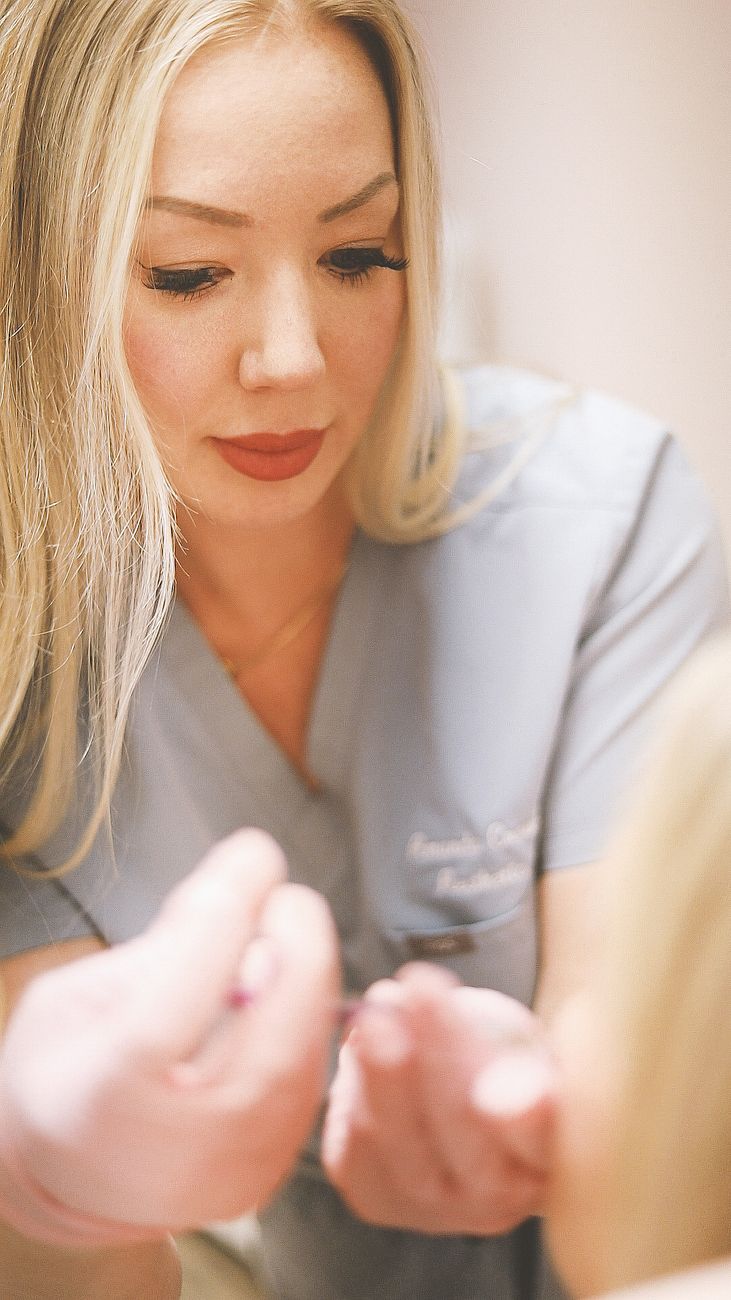
People considering Botox in Milwaukee at Quintessa Aesthetic Center are assessed across all of these areas during consultation, with treatment mapped to the specific muscles driving each concern rather than a blanket approach. That kind of precision is what determines how natural and balanced the results look once the treatment settles.
Photo by Tima Miroshnichenko
When to Seek Other Remedies
Botox has clear limits, and they all come back to the same principle. If a wrinkle isn’t caused by muscle movement, relaxing a muscle won’t fix it. Here’s where it struggles and what actually helps instead.
Static Wrinkles and Volume Loss
Static wrinkles are lines that are visible even when your face is completely at rest. They’ve often developed because the skin has lost collagen and fat over time, leaving it thinner and less supported. Botox won’t touch these. Dermal fillers, which physically restore lost volume beneath the skin, are the more appropriate solution here.
Deep Folds Like Nasolabial Folds
The lines that run from the sides of the nose down to the corners of the mouth are largely structural. They deepen as the cheeks lose volume and the skin descends with age. Injecting Botox into this area doesn’t address the cause. Fillers placed in the cheeks or directly along the fold are far more effective.
Skin Laxity and Sagging
Loose or sagging skin is caused by a loss of collagen, elastin, and structural support, none of which Botox can restore. Treatments like radiofrequency skin tightening, ultrasound therapy, or, in more significant cases, surgical intervention are better suited to this concern.
Final Thoughts
Botox is genuinely one of the most effective cosmetic treatments available, but only for the right kind of wrinkles. Dynamic wrinkles caused by repeated muscle movement are where it excels. Static lines, deep folds, and sagging skin need different solutions entirely.
Knowing which category your concerns fall into before you sit down for a consultation puts you in a much stronger position to have an honest conversation about what will actually work and what won’t. The treatment isn’t the variable. Matching it to the right problem is.


Botox is one of the most recognized cosmetic treatments in the world, and for good reason. It works, it’s fast, and millions of people get it every year. According to the International Society of Aesthetic and Plastic Surgery, Botox ranks as the most performed minimally invasive cosmetic procedure in the United States, with over seven million treatments carried out annually.
But here’s what doesn’t get talked about enough. Botox works exceptionally well for certain types of wrinkles and barely at all for others. A lot of people here in Milwaukee go for Botox expecting it to fix everything they see in the mirror. But they return disappointed, not because the treatment failed, but because it was never the right tool for that particular problem.
Understanding the difference before you book an appointment saves both money and frustration.
How Botox Actually Works
Botox is a purified form of botulinum toxin. When injected into a specific muscle, it temporarily blocks the nerve signals that tell that muscle to contract. The muscle relaxes, and the wrinkle caused by that repeated contraction softens or disappears.
That mechanism is the key to understanding everything else about what Botox can and can’t do. It works on wrinkles that are created by muscle movement. It does nothing for wrinkles caused by other factors like volume loss, sun damage, or skin that has lost its elasticity over time.
The Wrinkles Botox Is Best For
Botox delivers its strongest results on what are called dynamic wrinkles. These are lines that form when you make facial expressions and deepen over time as those expressions are repeated thousands of times over the years. Here are the areas where it performs best.
Forehead Lines
The horizontal lines that run across the forehead when you raise your eyebrows are a classic example of dynamic wrinkles. They’re caused by the frontalis muscle, which lifts the brows. Botox relaxes this muscle and smooths those lines effectively, often with results that last three to four months.
Frown Lines Between the Brows
These are the vertical lines that appear between the eyebrows when you squint or concentrate. They’re sometimes called the elevens because of the two parallel lines they form. This is one of the most common treatment areas and one where Botox consistently delivers clear, visible results.
Crow’s Feet Around the Eyes
The fine lines that fan out from the outer corners of the eyes when you smile or squint respond very well to Botox. The muscle responsible for these lines, called the orbicularis oculi, is easily targeted with small, precise injections.
Bunny Lines and Lip Lines
Bunny lines are the small creases that appear on either side of the nose when you scrunch it. Lip lines, sometimes called smoker’s lines, form above the upper lip from repeated pursing movements. Both respond to Botox when the underlying cause is muscle activity rather than volume loss.
People considering Botox in Milwaukee at Quintessa Aesthetic Center are assessed across all of these areas during consultation, with treatment mapped to the specific muscles driving each concern rather than a blanket approach. That kind of precision is what determines how natural and balanced the results look once the treatment settles.
When to Seek Other Remedies
Botox has clear limits, and they all come back to the same principle. If a wrinkle isn’t caused by muscle movement, relaxing a muscle won’t fix it. Here’s where it struggles and what actually helps instead.
Static Wrinkles and Volume Loss
Static wrinkles are lines that are visible even when your face is completely at rest. They’ve often developed because the skin has lost collagen and fat over time, leaving it thinner and less supported. Botox won’t touch these. Dermal fillers, which physically restore lost volume beneath the skin, are the more appropriate solution here.
Deep Folds Like Nasolabial Folds
The lines that run from the sides of the nose down to the corners of the mouth are largely structural. They deepen as the cheeks lose volume and the skin descends with age. Injecting Botox into this area doesn’t address the cause. Fillers placed in the cheeks or directly along the fold are far more effective.
Skin Laxity and Sagging
Loose or sagging skin is caused by a loss of collagen, elastin, and structural support, none of which Botox can restore. Treatments like radiofrequency skin tightening, ultrasound therapy, or, in more significant cases, surgical intervention are better suited to this concern.
Final Thoughts
Botox is genuinely one of the most effective cosmetic treatments available, but only for the right kind of wrinkles. Dynamic wrinkles caused by repeated muscle movement are where it excels. Static lines, deep folds, and sagging skin need different solutions entirely.
Knowing which category your concerns fall into before you sit down for a consultation puts you in a much stronger position to have an honest conversation about what will actually work and what won’t. The treatment isn’t the variable. Matching it to the right problem is.
Share this:
Like this: