Most people can tell you their sun sign straight away. Ask for their moon sign, and you’ll probably get a blank look.
Both signs come from your birth chart, a map of the sky at the moment you were born. Astrologers read the sun, the moon, and each planet on that map as clues to different sides of you.
Your sun sign is the one in the horoscope columns. It depends on your birthday, and astrologers say it reflects your core identity. Your sign is whichever sign the moon was in when you were born, and astrology ties it to your private self: how you respond to stress, what makes you feel safe, and what you need after a bad day.
1. Confirm Your Moon Sign Before Relying on It
The moon moves rapidly through the zodiac. It passes through each sign in roughly two and a half days. On a day when it crosses from one sign to the next, two babies born a few hours apart can end up with different moon signs. If you don’t know your birth time, many free calculators plug in noon and carry on, which could give you the wrong moon sign.
Get the sign wrong, and the rest of this guide may feel off. Someone reading advice meant for a fiery Aries moon, when their moon is really sitting in Pisces, may find that little of it fits. So if a reading seems wrong, check your birth details first.
First, find your exact birth time. Your birth certificate or hospital records may list it, or a parent may remember. If you can’t find it, run a free calculator twice, once with 12:01 a.m. and once with 11:59 p.m. If both show the same sign, you have your answer.
Confusion often happens in two specific situations:
You were born on a day when the moon changed signs.
Two calculators give you completely different answers.
When this happens, a quick chat with an astrologer can help settle it. Finding one locally can take a while, so many people go online instead. You can enter your birth details on a website and get an answer straight from the couch.
Many online platforms let you try a short session before you pay for anything. For instance, new users get 3 free minutes on Nebula, which can be enough to confirm your moon sign. The platform has hundreds of advisors, and each profile lists:
What they specialize in
How long they’ve given readings
What they charge per minute
What past clients thought
This way, you can choose someone who works with birth charts. There’s also a short quiz when you sign up that points you toward advisors suited to the questions you have. Once you confirm your moon sign, you can try the ideas below with more confidence.
2. Match Your Self-Care to Your Moon’s Element
Every zodiac sign falls under one of four elements (fire, earth, air, or water), and in astrology each element is tied to its own way of feeling better. Astrologers would say that’s partly why one friend swears by a long bath, and another finds it unbearable. The same advice rarely suits everyone.
The element of your moon sign can point to how you recover from a tough day. Each group tends to need something different:
If your moon is in Aries, Leo, or Sagittarius, you have a fire moon, and you may recover by moving. Go for a brisk walk or throw yourself into something new. Sitting still and resting, the thing everyone tells you to do, can leave a fire moon feeling more restless.
Earth moons, in Taurus, Virgo, or Capricorn, often want the opposite. Routine tends to calm them. A real meal, eaten sitting down, and an hour outside can do a lot for an Earth moon’s mood.
If your moon is in Gemini, Libra, or Aquarius, you have an air moon, and you often work things out by putting them into words. That might be a long talk with someone who listens well or a notebook nobody else reads. Either way, the feeling tends to settle once it’s been said.
Water moons, in Cancer, Scorpio, or Pisces, often need some time alone, long enough to feel the whole thing from start to finish. After that, they may find it easier to put it down. If the feeling stays heavy, reach out to someone you trust.
Pick the approach for your element and give it two weeks, then take an honest look at how you feel. Keep the change small and concrete: ten minutes of walking if you’re fire, a sit-down lunch if you’re earth, one phone call to a friend if you’re air, or half an hour alone if you’re water. If it works, it stays in the routine. If it doesn’t, try the approach for another element. Astrologers would also say something else in your chart, often the rising sign (the sign on the eastern horizon when you were born), may be pulling harder than the moon.
3. Plan Around the Moon’s Monthly Visit to Your Moon Sign
Ever had a couple of days when everything got to you, and you can’t say why? Many astrologers would point to the moon. It’s back in your moon sign every 27 days or so and hangs around for about two and a half days. They see that stretch as the time your feelings sit closest to the surface, so it helps to know when it’s coming.
You’ll find the dates in any moon calendar or astrology app, and plenty of them are free. Put the next few in your phone. When one comes up, leave a bit of room in your schedule. Maybe you move on a non-urgent task, or you keep an evening free to do nothing much.
You don’t have to take anyone’s word for it, though. A line or two about your mood each day is plenty, and after three or four months, your own notes can show you whether those days really are different for you.
4. Keep Learning About Your Placement
No moon sign works on its own. A planet or two may sit close by, and then there’s the house it falls in. Houses are the 12 sections of a birth chart, each tied to an area of life like home or work. That’s how you and your sister can share a moon sign and still come across as very different people.
Most of this you can pick up by reading. Well-researched astrology articles on your moon sign should walk you through:
Its element
The traits that normally go with it
Challenges linked to that moon sign
One of those pieces may catch something a quick summary leaves out. Choose writers who explain their reasoning, and don’t take the first one you find as the final word. Read three or four and notice where they agree.
Don’t try to absorb it all at once. Pick a single idea, try it in your routine for a bit, and hang on to it only if it helps.
Making It Part of Your Routine
Your moon sign can point you toward the kind of care that works for you, show you patterns in how you feel, and remind you when you’re ready for some rest. Make sure you have the right moon sign, change one thing at a time, and write down what happens. That’s the whole method. A good first step is to look up your birth time this week.
Astrology can help, but it’s one tool among several, and the others matter more: enough sleep, friends you can be honest with, and a doctor or a mental health professional when your feelings get bigger than you can handle on your own.


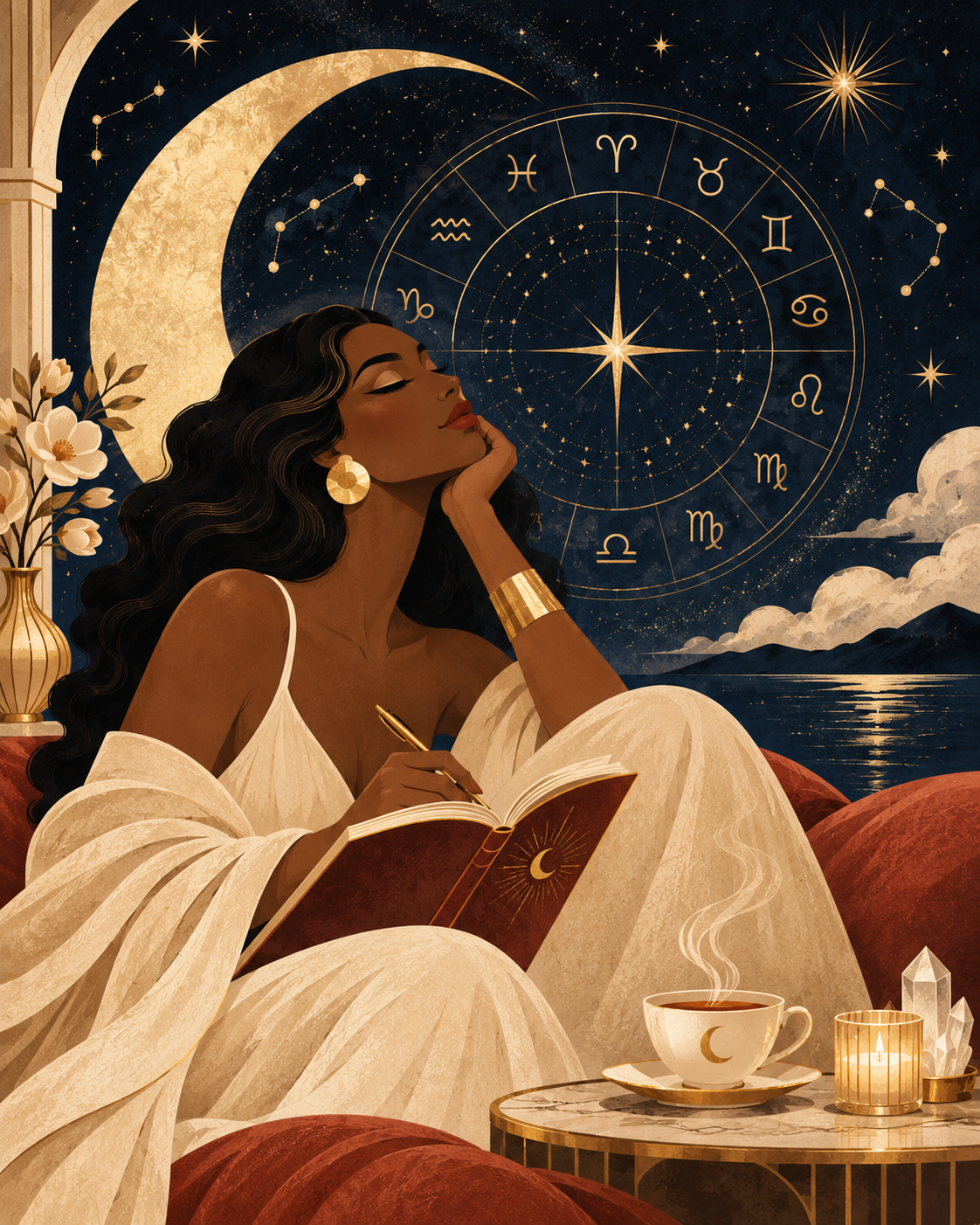
Most people can tell you their sun sign straight away. Ask for their moon sign, and you’ll probably get a blank look.
Both signs come from your birth chart, a map of the sky at the moment you were born. Astrologers read the sun, the moon, and each planet on that map as clues to different sides of you.
Your sun sign is the one in the horoscope columns. It depends on your birthday, and astrologers say it reflects your core identity. Your sign is whichever sign the moon was in when you were born, and astrology ties it to your private self: how you respond to stress, what makes you feel safe, and what you need after a bad day.
1. Confirm Your Moon Sign Before Relying on It
The moon moves rapidly through the zodiac. It passes through each sign in roughly two and a half days. On a day when it crosses from one sign to the next, two babies born a few hours apart can end up with different moon signs. If you don’t know your birth time, many free calculators plug in noon and carry on, which could give you the wrong moon sign.
Get the sign wrong, and the rest of this guide may feel off. Someone reading advice meant for a fiery Aries moon, when their moon is really sitting in Pisces, may find that little of it fits. So if a reading seems wrong, check your birth details first.
First, find your exact birth time. Your birth certificate or hospital records may list it, or a parent may remember. If you can’t find it, run a free calculator twice, once with 12:01 a.m. and once with 11:59 p.m. If both show the same sign, you have your answer.
Confusion often happens in two specific situations:
When this happens, a quick chat with an astrologer can help settle it. Finding one locally can take a while, so many people go online instead. You can enter your birth details on a website and get an answer straight from the couch.
Many online platforms let you try a short session before you pay for anything. For instance, new users get 3 free minutes on Nebula, which can be enough to confirm your moon sign. The platform has hundreds of advisors, and each profile lists:
This way, you can choose someone who works with birth charts. There’s also a short quiz when you sign up that points you toward advisors suited to the questions you have. Once you confirm your moon sign, you can try the ideas below with more confidence.
2. Match Your Self-Care to Your Moon’s Element
Every zodiac sign falls under one of four elements (fire, earth, air, or water), and in astrology each element is tied to its own way of feeling better. Astrologers would say that’s partly why one friend swears by a long bath, and another finds it unbearable. The same advice rarely suits everyone.
The element of your moon sign can point to how you recover from a tough day. Each group tends to need something different:
Pick the approach for your element and give it two weeks, then take an honest look at how you feel. Keep the change small and concrete: ten minutes of walking if you’re fire, a sit-down lunch if you’re earth, one phone call to a friend if you’re air, or half an hour alone if you’re water. If it works, it stays in the routine. If it doesn’t, try the approach for another element. Astrologers would also say something else in your chart, often the rising sign (the sign on the eastern horizon when you were born), may be pulling harder than the moon.
3. Plan Around the Moon’s Monthly Visit to Your Moon Sign
Ever had a couple of days when everything got to you, and you can’t say why? Many astrologers would point to the moon. It’s back in your moon sign every 27 days or so and hangs around for about two and a half days. They see that stretch as the time your feelings sit closest to the surface, so it helps to know when it’s coming.
You’ll find the dates in any moon calendar or astrology app, and plenty of them are free. Put the next few in your phone. When one comes up, leave a bit of room in your schedule. Maybe you move on a non-urgent task, or you keep an evening free to do nothing much.
You don’t have to take anyone’s word for it, though. A line or two about your mood each day is plenty, and after three or four months, your own notes can show you whether those days really are different for you.
4. Keep Learning About Your Placement
No moon sign works on its own. A planet or two may sit close by, and then there’s the house it falls in. Houses are the 12 sections of a birth chart, each tied to an area of life like home or work. That’s how you and your sister can share a moon sign and still come across as very different people.
Most of this you can pick up by reading. Well-researched astrology articles on your moon sign should walk you through:
One of those pieces may catch something a quick summary leaves out. Choose writers who explain their reasoning, and don’t take the first one you find as the final word. Read three or four and notice where they agree.
Don’t try to absorb it all at once. Pick a single idea, try it in your routine for a bit, and hang on to it only if it helps.
Making It Part of Your Routine
Your moon sign can point you toward the kind of care that works for you, show you patterns in how you feel, and remind you when you’re ready for some rest. Make sure you have the right moon sign, change one thing at a time, and write down what happens. That’s the whole method. A good first step is to look up your birth time this week.
Astrology can help, but it’s one tool among several, and the others matter more: enough sleep, friends you can be honest with, and a doctor or a mental health professional when your feelings get bigger than you can handle on your own.
Share this:
Like this: