A borrowed paddle can be enough for your first afternoon on a pickleball court. After a few more games, you may start noticing details: the handle feels awkward, quick exchanges take more effort than expected, or gentle shots keep traveling farther than you intended.
Whether your ideal Saturday involves relaxed doubles or practicing your returns, choosing your own paddle starts with understanding what feels comfortable and what you want to improve. A few practical comparisons can help you spend your budget on features you will use.
Start With the Games You Actually Play
Think about your recent games before looking at specifications. Perhaps you enjoyed driving the ball from the back of the court but struggled to take pace off it near the net. Identify the situations in which you wanted a different response.
Turn those experiences into two or three buying priorities, such as a predictable response on soft shots, room for a two-handed backhand, or easier handling during fast exchanges.
As you explore paddles from RPM, compare the available shapes and thicknesses against that short list. A collection with elongated, widebody, and hybrid options lets you consider different designs within the same search.
Shortlist two or three candidates so you can compare their differences without becoming overwhelmed by specifications.
Find a Grip and Weight That Feel Manageable
Start with the handle. Hold the paddle as you would during a rally, then move between forehand and backhand positions. Your fingers should sit comfortably around the grip without requiring constant adjustment.
Notice whether you need to squeeze hard to stop the handle from slipping. Grip texture and condition matter alongside circumference, so that a worn demonstration grip may give a misleading impression of fit. For a two-handed backhand, check that both hands fit comfortably on the handle.
Next, consider weight in motion. Two paddles with similar listed weights can feel different because their mass is distributed differently. Make several controlled swings and quick changes of direction, paying attention to how easily you can stop and reposition the face.
Continue the trial beyond a few swings to see whether the paddle remains manageable as you tire.
Choose a Shape With a Clear Purpose
An elongated paddle has a longer, narrower outline, which may appeal if reach is a priority. Check the handle length too, since overall length alone doesn’t tell you how much hitting area is available.
A widebody design offers a broader face and may suit players who frequently catch the ball towards either side. A hybrid outline combines aspects of elongated and widebody shapes, although dimensions vary between models.
You may also see references to the sweet spot. This describes the area where contact produces a more solid, consistent response. Its size and position depend on construction and shape.
Understand What the Face and Core Contribute
The paddle face is the outer hitting surface; the core sits beneath it. Their materials and construction work together to influence the response at contact, including whether the ball rebounds sharply or feels more muted.
Treat thickness as one part of the design. If a model comes in different thicknesses, compare each version on gentle shots and firmer drives. A thicker core or a particular face material alone does not guarantee control.
Surface texture can contribute to spin potential, but producing useful spin also depends on your swing and contact. Ask whether you can repeat the shot and keep it in play, rather than judging the surface by touch alone.
If organized competition might become part of your routine, check a paddle’s approval status and confirm the requirements of the event you intend to enter. Match the exact model and version, since a familiar product name alone may not identify the equipment you are buying.
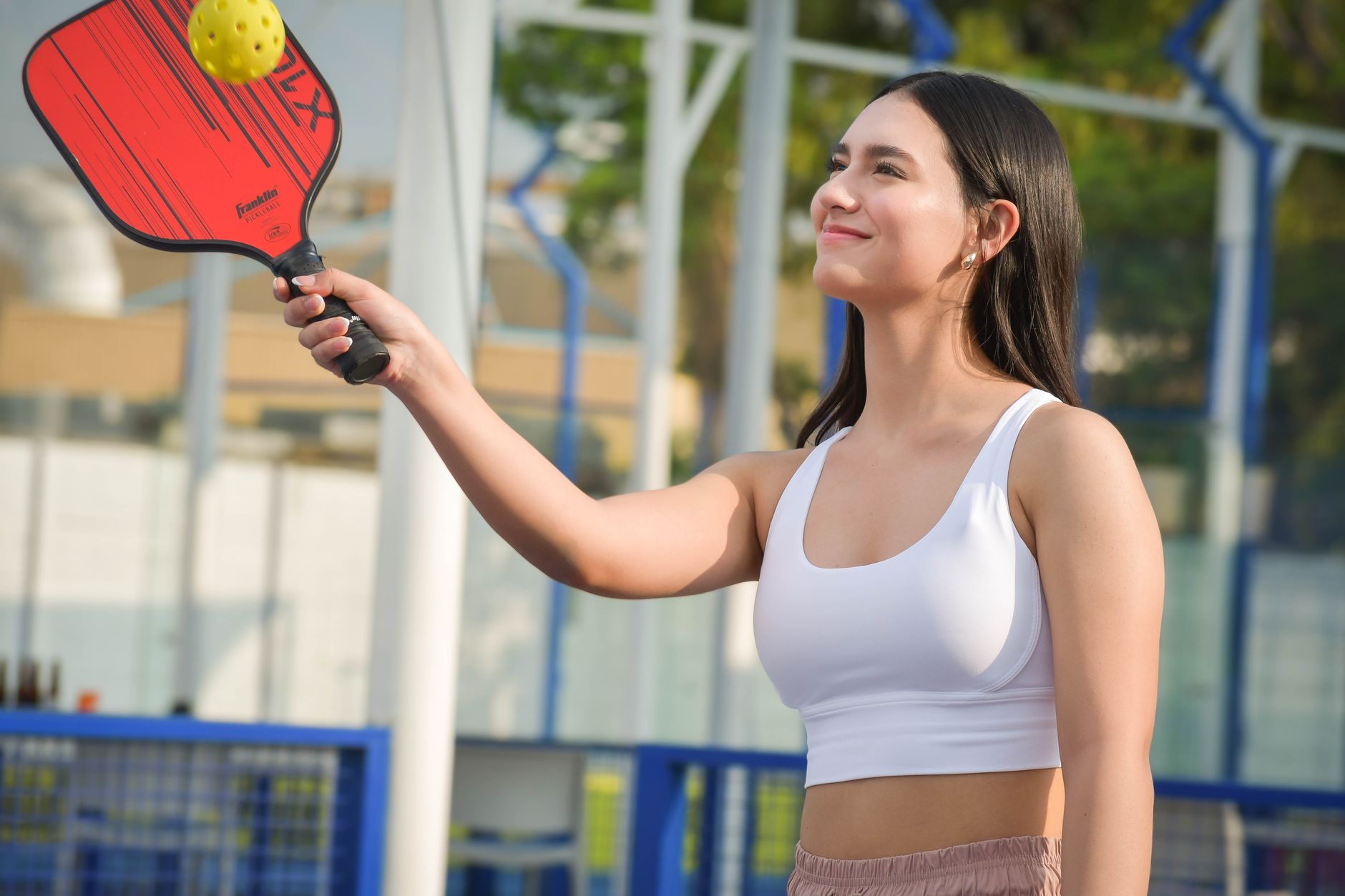
Photo by Lindsey Flynn
Give Every Paddle the Same Court Test
A short, repeatable trial is more informative than switching paddles randomly during a match. If demonstrations are available, use the same ball and similar conditions for each candidate.
Begin with serves and returns. Aim for a chosen area and assess how easily you can repeat your placement. Move to gentle shots near the net, where the ball needs to clear the net and land short. Then try volleys, paying attention to how quickly you can prepare for the following ball.
Compare center strikes with off-center contact. Notice whether the paddle twists, sounds different, or sends the ball away from your intended target.
After each trial, write down three observations: handling, soft-shot response, and confidence on firmer shots. Specific notes such as “easy to redirect, but soft shots kept running long” are more useful than “felt good.”
Ask about demonstration fees and return conditions before buying. A return policy may distinguish between unused equipment and a paddle you’ve played with.
Buy for the Weekend Routine You Want to Keep
Set a spending limit before making your final comparison. Give priority to differences you could identify on court, and ask whether any extra cost buys a feature you will use regularly.
Consider how often you realistically expect to play. When making time for hobbies, a regular court booking helps you estimate how much you’ll use your purchase. A monthly social game may justify a different budget from several sessions each week.
If you are replacing an existing paddle, distinguish equipment wear from technique difficulties. A fresh grip may solve slipping, while an inconsistent shot may need practice before you can judge whether different equipment would help.
Keep Your Paddle Ready for Regular Play
Use a cover to protect the paddle face from loose objects in your bag. Store it somewhere dry, away from prolonged heat, and avoid leaving it in a parked car between weekend outings.
Follow the cleaning instructions for your paddle’s face material. Check before using abrasive products, solvents, or specialist cleaning blocks, since what works for one surface may damage another.
Inspect the grip for slipping, wear, or loose wrapping. Check the edge and face for damage, especially after accidental contact with the court. If the paddle develops a new rattle or a noticeable change in response, seek guidance before continuing to use it.
Choose for Your Next Game
Choose the paddle that best meets the priorities you identified before shopping. A successful trial should leave you able to explain your choice in practical terms: the handle fits, the paddle moves comfortably, and you can judge its response.
Once you have made that decision, give yourself time to become familiar with the paddle over several games. A regular weekend session gives you a chance to learn how it behaves across the shots you enjoy playing.


A borrowed paddle can be enough for your first afternoon on a pickleball court. After a few more games, you may start noticing details: the handle feels awkward, quick exchanges take more effort than expected, or gentle shots keep traveling farther than you intended.
Whether your ideal Saturday involves relaxed doubles or practicing your returns, choosing your own paddle starts with understanding what feels comfortable and what you want to improve. A few practical comparisons can help you spend your budget on features you will use.
Start With the Games You Actually Play
Think about your recent games before looking at specifications. Perhaps you enjoyed driving the ball from the back of the court but struggled to take pace off it near the net. Identify the situations in which you wanted a different response.
Turn those experiences into two or three buying priorities, such as a predictable response on soft shots, room for a two-handed backhand, or easier handling during fast exchanges.
As you explore paddles from RPM, compare the available shapes and thicknesses against that short list. A collection with elongated, widebody, and hybrid options lets you consider different designs within the same search.
Shortlist two or three candidates so you can compare their differences without becoming overwhelmed by specifications.
Find a Grip and Weight That Feel Manageable
Start with the handle. Hold the paddle as you would during a rally, then move between forehand and backhand positions. Your fingers should sit comfortably around the grip without requiring constant adjustment.
Notice whether you need to squeeze hard to stop the handle from slipping. Grip texture and condition matter alongside circumference, so that a worn demonstration grip may give a misleading impression of fit. For a two-handed backhand, check that both hands fit comfortably on the handle.
Next, consider weight in motion. Two paddles with similar listed weights can feel different because their mass is distributed differently. Make several controlled swings and quick changes of direction, paying attention to how easily you can stop and reposition the face.
Continue the trial beyond a few swings to see whether the paddle remains manageable as you tire.
Choose a Shape With a Clear Purpose
An elongated paddle has a longer, narrower outline, which may appeal if reach is a priority. Check the handle length too, since overall length alone doesn’t tell you how much hitting area is available.
A widebody design offers a broader face and may suit players who frequently catch the ball towards either side. A hybrid outline combines aspects of elongated and widebody shapes, although dimensions vary between models.
You may also see references to the sweet spot. This describes the area where contact produces a more solid, consistent response. Its size and position depend on construction and shape.
Understand What the Face and Core Contribute
The paddle face is the outer hitting surface; the core sits beneath it. Their materials and construction work together to influence the response at contact, including whether the ball rebounds sharply or feels more muted.
Treat thickness as one part of the design. If a model comes in different thicknesses, compare each version on gentle shots and firmer drives. A thicker core or a particular face material alone does not guarantee control.
Surface texture can contribute to spin potential, but producing useful spin also depends on your swing and contact. Ask whether you can repeat the shot and keep it in play, rather than judging the surface by touch alone.
If organized competition might become part of your routine, check a paddle’s approval status and confirm the requirements of the event you intend to enter. Match the exact model and version, since a familiar product name alone may not identify the equipment you are buying.
Give Every Paddle the Same Court Test
A short, repeatable trial is more informative than switching paddles randomly during a match. If demonstrations are available, use the same ball and similar conditions for each candidate.
Begin with serves and returns. Aim for a chosen area and assess how easily you can repeat your placement. Move to gentle shots near the net, where the ball needs to clear the net and land short. Then try volleys, paying attention to how quickly you can prepare for the following ball.
Compare center strikes with off-center contact. Notice whether the paddle twists, sounds different, or sends the ball away from your intended target.
After each trial, write down three observations: handling, soft-shot response, and confidence on firmer shots. Specific notes such as “easy to redirect, but soft shots kept running long” are more useful than “felt good.”
Ask about demonstration fees and return conditions before buying. A return policy may distinguish between unused equipment and a paddle you’ve played with.
Buy for the Weekend Routine You Want to Keep
Set a spending limit before making your final comparison. Give priority to differences you could identify on court, and ask whether any extra cost buys a feature you will use regularly.
Consider how often you realistically expect to play. When making time for hobbies, a regular court booking helps you estimate how much you’ll use your purchase. A monthly social game may justify a different budget from several sessions each week.
If you are replacing an existing paddle, distinguish equipment wear from technique difficulties. A fresh grip may solve slipping, while an inconsistent shot may need practice before you can judge whether different equipment would help.
Keep Your Paddle Ready for Regular Play
Use a cover to protect the paddle face from loose objects in your bag. Store it somewhere dry, away from prolonged heat, and avoid leaving it in a parked car between weekend outings.
Follow the cleaning instructions for your paddle’s face material. Check before using abrasive products, solvents, or specialist cleaning blocks, since what works for one surface may damage another.
Inspect the grip for slipping, wear, or loose wrapping. Check the edge and face for damage, especially after accidental contact with the court. If the paddle develops a new rattle or a noticeable change in response, seek guidance before continuing to use it.
Choose for Your Next Game
Choose the paddle that best meets the priorities you identified before shopping. A successful trial should leave you able to explain your choice in practical terms: the handle fits, the paddle moves comfortably, and you can judge its response.
Once you have made that decision, give yourself time to become familiar with the paddle over several games. A regular weekend session gives you a chance to learn how it behaves across the shots you enjoy playing.
Share this:
Like this: