A well-placed indoor plant does more than fill space, it can transform how a room feels. It softens hard edges, breathes life into an awkward corner, and gives a space a sense of calm it might otherwise lack. Many homeowners reach for large indoor plants to anchor a room, but success has less to do with picking something eye-catching and everything to do with matching the plant to your light, your layout, and your lifestyle. This guide is about long-term results, not passing trends.
Why Statement Houseplants Matter in Everyday Spaces
A tall or full-bodied plant can bring balance to large rooms, open-plan layouts, and those bare corners that never quite look finished. But the benefits go beyond looks—greenery softens a space visually, can quietly divide an area without walls, and adds a layer of warmth that’s hard to replicate any other way. The smartest choices start with light conditions, floor space, and maintenance level. Appearance should be the last box you check, not the first.
How to Assess Your Space Before Buying
Before you fall in love with a plant, take stock of your space. Measure the floor area, note the ceiling height, and pay attention to how people actually move through the room. Light matters more than most people realize, not just how much you get, but where it’s coming from. A north-facing room behaves nothing like a south-facing one, even if both seem “bright” at first glance. It’s also worth thinking about pets, kids, heating vents, and drafty windows before you commit.
Before You Buy
– Measure the space and note nearby light sources
– Check for vents, radiators, or drafts nearby
– Confirm pet or child safety around the plant
– Consider how much time you can realistically commit weekly
Choosing the Right Plant for the Right Room
Different rooms call for different shapes. Living rooms tend to suit wide, bushy plants that can fill an open corner with presence, while narrow hallways work better with upright growers that don’t eat into walking space. Bedrooms and offices often do best with smaller footprints, think trailing varieties draped over a shelf or plant stand. A dim apartment corner needs something shade-tolerant, while a sunny south-facing window can handle a plant that craves more light.
Light, Water, and Humidity: The Basics That Determine Success
Three factors drive most plant outcomes: light, water, and humidity. Bright indirect light typically means sunlight filtered through sheer curtains; medium light is a spot a few feet back from a window; lower light describes anywhere further from natural light sources. When it comes to watering, always check soil moisture before reaching for the watering can, avoid letting soil stay constantly soggy, and adjust your routine with the seasons. Well-draining soil helps prevent root rot, and grouping humidity-loving plants together, or adding a humidifier, can make a real difference for species that crave moisture in the air.
Common Mistakes That Shorten Plant Life
Overwatering, still the number one cause of plant decline
Buying based on looks alone, without checking light requirements
Choosing pots without drainage holes
Overlooking how large a plant will eventually grow
Placing plants too close to heat sources or cold drafts
Every one of these mistakes comes back to the same two things: root health and how well the plant actually fits its environment.
How to Keep Larger Plants Healthy Over Time
Rotate your plants occasionally so growth stays even on all sides, wipe down leaves so they can photosynthesize properly, and keep an eye out for pests before they become a real problem. Repot once roots start to feel crowded, and give top-heavy or climbing varieties the support of a stake or trellis. A quick weekly glance, paired with a more thorough check once a month, is usually enough to keep most plants thriving.
Styling Plants Without Making the Room Feel Crowded
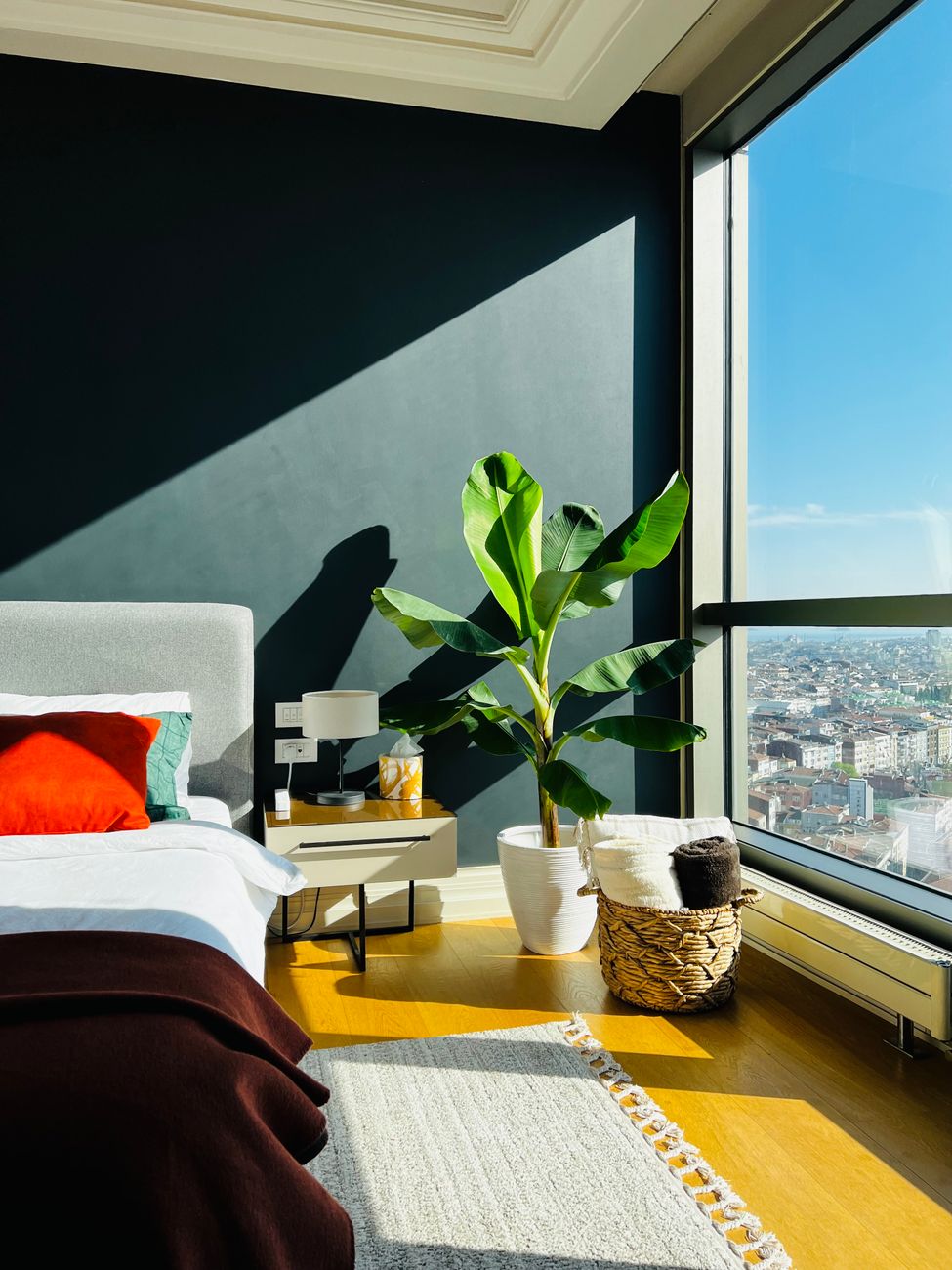
Design Tip: Rather than scattering several plants that compete for attention, let one large anchor plant hold the room, with open space around it to let it breathe. Choose a pot whose material and shape echo other textures already in the room—the goal is for the plant to complement the space, not dominate it.
Photo by ROCKETMANN TEAM
When a Plant Is Not the Right Fit
Yellowing leaves, drooping stems, scorched edges, stunted growth—these are usually signs of a mismatch between the plant and its environment, not signs of neglect. In most cases, repositioning the plant, rethinking your watering habits, or simply choosing a different species will do more good than stubbornly sticking with something that isn’t working. At the end of the day, a plant’s health matters far more than its size.
Practical Examples of Good Plant Matches
A bright living room corner is ideal for upright, light-loving plants. A dimmer office setting calls for something shade-tolerant and slow-growing. A humid bathroom with indirect light, meanwhile, is practically made for moisture-loving species.
Final Thoughts on Building a Sustainable Indoor Plant Habit
The best plant for your home isn’t the biggest or the trendiest, it’s the one that fits your light, your watering habits, and the routine you can realistically maintain. Choose with intention, pay attention to how your plant responds, and don’t be afraid to adjust course. That approach will always serve you better than chasing size or style for its own sake.


A well-placed indoor plant does more than fill space, it can transform how a room feels. It softens hard edges, breathes life into an awkward corner, and gives a space a sense of calm it might otherwise lack. Many homeowners reach for large indoor plants to anchor a room, but success has less to do with picking something eye-catching and everything to do with matching the plant to your light, your layout, and your lifestyle. This guide is about long-term results, not passing trends.
Why Statement Houseplants Matter in Everyday Spaces
A tall or full-bodied plant can bring balance to large rooms, open-plan layouts, and those bare corners that never quite look finished. But the benefits go beyond looks—greenery softens a space visually, can quietly divide an area without walls, and adds a layer of warmth that’s hard to replicate any other way. The smartest choices start with light conditions, floor space, and maintenance level. Appearance should be the last box you check, not the first.
How to Assess Your Space Before Buying
Before you fall in love with a plant, take stock of your space. Measure the floor area, note the ceiling height, and pay attention to how people actually move through the room. Light matters more than most people realize, not just how much you get, but where it’s coming from. A north-facing room behaves nothing like a south-facing one, even if both seem “bright” at first glance. It’s also worth thinking about pets, kids, heating vents, and drafty windows before you commit.
Before You Buy
– Measure the space and note nearby light sources
– Check for vents, radiators, or drafts nearby
– Confirm pet or child safety around the plant
– Consider how much time you can realistically commit weekly
Choosing the Right Plant for the Right Room
Different rooms call for different shapes. Living rooms tend to suit wide, bushy plants that can fill an open corner with presence, while narrow hallways work better with upright growers that don’t eat into walking space. Bedrooms and offices often do best with smaller footprints, think trailing varieties draped over a shelf or plant stand. A dim apartment corner needs something shade-tolerant, while a sunny south-facing window can handle a plant that craves more light.
Light, Water, and Humidity: The Basics That Determine Success
Three factors drive most plant outcomes: light, water, and humidity. Bright indirect light typically means sunlight filtered through sheer curtains; medium light is a spot a few feet back from a window; lower light describes anywhere further from natural light sources. When it comes to watering, always check soil moisture before reaching for the watering can, avoid letting soil stay constantly soggy, and adjust your routine with the seasons. Well-draining soil helps prevent root rot, and grouping humidity-loving plants together, or adding a humidifier, can make a real difference for species that crave moisture in the air.
Common Mistakes That Shorten Plant Life
Every one of these mistakes comes back to the same two things: root health and how well the plant actually fits its environment.
How to Keep Larger Plants Healthy Over Time
Rotate your plants occasionally so growth stays even on all sides, wipe down leaves so they can photosynthesize properly, and keep an eye out for pests before they become a real problem. Repot once roots start to feel crowded, and give top-heavy or climbing varieties the support of a stake or trellis. A quick weekly glance, paired with a more thorough check once a month, is usually enough to keep most plants thriving.
Styling Plants Without Making the Room Feel Crowded
Design Tip: Rather than scattering several plants that compete for attention, let one large anchor plant hold the room, with open space around it to let it breathe. Choose a pot whose material and shape echo other textures already in the room—the goal is for the plant to complement the space, not dominate it.
When a Plant Is Not the Right Fit
Yellowing leaves, drooping stems, scorched edges, stunted growth—these are usually signs of a mismatch between the plant and its environment, not signs of neglect. In most cases, repositioning the plant, rethinking your watering habits, or simply choosing a different species will do more good than stubbornly sticking with something that isn’t working. At the end of the day, a plant’s health matters far more than its size.
Practical Examples of Good Plant Matches
A bright living room corner is ideal for upright, light-loving plants. A dimmer office setting calls for something shade-tolerant and slow-growing. A humid bathroom with indirect light, meanwhile, is practically made for moisture-loving species.
Final Thoughts on Building a Sustainable Indoor Plant Habit
The best plant for your home isn’t the biggest or the trendiest, it’s the one that fits your light, your watering habits, and the routine you can realistically maintain. Choose with intention, pay attention to how your plant responds, and don’t be afraid to adjust course. That approach will always serve you better than chasing size or style for its own sake.
Share this:
Like this: