The proposal weekend has quietly replaced the proposal moment. Where a generation ago the question was asked over dinner and that was the whole event, couples now build a weekend around it. Somewhere away from home, a good meal, a walk, a view, and at some point across those two days, the question.
It is a better format, mostly. It removes the pressure of a single perfect instant and replaces it with a window. It also introduces about a dozen ways for things to go sideways, nearly all of which are logistical rather than romantic.
Here is how to build one that works.
Choose the window not the moment
The single most useful decision is to stop planning a moment and start planning a window. A specific plan, sunset on Saturday at the lookout, is hostage to weather, traffic, a late lunch, a flat phone and your partner deciding they want a nap. When it fails, and it frequently does, the fallback is improvised and everybody can tell.
A window works differently. You know roughly when across the weekend, you have two or three settings that would each work, and you pick on the day based on how things are actually going. Nobody except you knows the difference.
The trick is to ask early rather than late. Proposing on the Friday evening or the Saturday morning converts the rest of the weekend into a celebration. Proposing on the Sunday afternoon means both of you have spent two days with one person quietly tense and the other wondering why.
Ask early. Enjoy the rest.
Pick somewhere that already means something
The most common mistake is choosing a location because it photographs well. Spectacular scenery is not the same as personal significance, and a weekend spent somewhere neither of you has any connection to produces a lovely photograph of two people in front of a view.
Better options, roughly in order:
Somewhere you have been together before, particularly early in the relationship.
Somewhere connected to how you met, or to a shared interest, or to family.
Somewhere you have both talked about going but never got to.
And failing all of that, somewhere your partner would choose for an ordinary weekend away, because it will at least suit them.
Accommodation with a room you would want to be in
Two practical considerations. Book something where the room itself is pleasant, because if the weather turns, the room is the backup plan. A stunning location with a mediocre room gives you nowhere to go.
And think about privacy. A proposal in a hotel restaurant with twenty other diners watching is an experience some people love and others would find mortifying. You know which yours is. If in doubt, choose privacy, because you can always make it public afterwards and you cannot make it private again.
If you are telling the property what is happening, tell them precisely and in writing. Vague instructions to hotel staff produce champagne arriving forty minutes early with a knowing smile, which is how a surprise ends.
The food question
Restaurants are the default proposal setting and they are frequently the wrong one.
The problems are structural. You cannot control timing because the kitchen does. Other tables are close. Staff who know will hover. And a proposal between entree and main is an awkward shape for a meal, because whatever happens next, you are still sitting there with two courses to go.
If you want to involve food, consider the shape of the weekend rather than a single dinner.
Propose earlier, then have the celebratory dinner. This is the arrangement that works best by a distance. The meal becomes a celebration rather than a stage, and you can tell the restaurant afterwards rather than conspiring with them beforehand.
If you do propose at a table, ask for a corner, ask that nothing be brought during a specified window, and do it early in the meal rather than at dessert.
And book the celebration dinner regardless. Whatever happens, a good meal on the Saturday night is the correct outcome.
Getting the ring there
This is the part people underestimate, and it has more failure modes than the proposal itself.
Carry it. Never check it. Airline liability for checked baggage is governed by international convention and sits far below the value of an engagement ring. Checked luggage is also where theft happens.
Think about who packs. If your partner is the organised one who checks the bag before you leave, the ring box in the side pocket is a problem. Carry it on your person or in something they have no reason to open.
Do not put it in the hotel safe on arrival. This sounds absurd. It happens constantly.
Have a plan for the moment before. The physical business of retrieving a box from a coat while walking is the bit nobody rehearses, and a jacket with a deep inside pocket solves most of it.
Insurance. Most home and contents policies cap jewellery at a modest figure per item unless specified separately, and travel clauses vary. Sort this before you leave, because a ring collected on the Friday for a weekend away has spent that weekend uninsured. To specify an item you need a valuation, which is a different document from a diamond grading report.
Photo by Taylor Thompson
The ring itself
It’s knowing what has changed, because the market has moved significantly in the last eighteen months.
Laboratory-grown diamond prices have collapsed. Capacity has expanded enormously and average prices fell 20 to 30 per cent against 2024 alone, and some categories are down more than 90 per cent from their peak. Above a carat, lab-grown stones now commonly sell at 5 to 10 per cent of a natural equivalent.
And in late 2025 the Gemological Institute of America stopped grading laboratory-grown diamonds on the D to Z colour and flawless to included clarity scales used for natural stones, replacing them with two descriptive categories, premium and standard.
Lab-grown buys far more size but holds essentially no value. Natural costs considerably more and retains some value. Ask directly which you are being shown and ask to see the report, because the certificate format no longer tells you at a glance.
If you want something with an Australian connection, the Argyle mine in Western Australia produced more than 90 per cent of the world’s pink diamonds before closing permanently in November 2020, and Rio Tinto’s final tender of remaining inventory concluded in October 2025. Supply is now fixed, appreciation has run at roughly 8 to 12 per cent a year since closure, and Argyle provenance carries a 20 to 50 per cent premium over comparable pinks. The paperwork is the asset.
Sizing without asking
This is a perennial problem, and there are more solutions than people realise.
Borrow a ring she already wears on that finger and take it to a jeweller. This is the most accurate method by far.
Trace the inside of a ring on paper. Less accurate, workable.
Ask a friend or family member who has almost certainly discussed it already.
Buy slightly large. A ring that is too big can be worn for a few days and then resized. A ring that is too small cannot be worn at all, which sits badly in every photograph taken that weekend.
Or propose with a placeholder and commission the real ring together. This is increasingly common and removes the guessing entirely. It also suits couples where the wearer has strong preferences, which is most of them.
Ask about the resizing allowance before you buy, because full eternity bands and some channel settings cannot be resized at all.
The commissioning timeline
If you want something made rather than bought from stock, work backwards properly.
Four to eight weeks is realistic for a commission, longer if a particular stone has to be sourced or if you want a coloured diamond with specific paperwork. Add a fortnight of margin for resizing, the valuation appointment and the insurer adding the item to your policy.
So a proposal weekend in three months is comfortable. One in five weeks means buying from stock.
Studios working this way handle interstate commissions routinely now, using video consultations, stone options sent as photographs and a posted silver prototype so you can check the fit and feel before anything is cast. Makers like Stelios Jewellers post prototypes specifically for this, which is worth knowing if you have found a studio you like in another city.
Packing for two people when only one knows
A small problem that causes a surprising amount of stress.
If the weekend is a surprise in itself, your partner is packing for a trip whose purpose they do not know, which means they may pack entirely the wrong things. Someone who thinks they are going for a bushwalk will not bring something they would want to be photographed in, and that matters to a lot of people afterwards.
You do not have to give the game away to fix this. Telling them the Saturday night booking is somewhere nice is enough, and it is the single kindest piece of misdirection available.
A short timeline for the weekend itself
Three months out. Ring commissioned or chosen. Accommodation booked.
One month out. Ring collected. Insurance specified. Restaurant booked for the celebration dinner.
One week out. Confirm everything. Check the weather trend and think about what the wet weather version looks like.
The day before. Ring packed where your partner has no reason to look. Phone charged. Tell whoever needs to know, and tell them precisely.
The day. Ask early.
Telling people and not telling people
This is the bit that trips couples up afterwards rather than during.
Decide in advance who hears first. Parents on both sides generally expect to, and finding out via a group chat lands badly with people who will be at the wedding. A short call from the car before anything goes online costs ten minutes and prevents a small grievance that lasts years.
Decide whether anything goes online at all, and agree it between you before the weekend rather than in the moment. One of you may want the photograph up immediately and the other may want a week of it belonging only to the two of you. Both positions are reasonable and they are much easier to reconcile on a Wednesday than on a Saturday afternoon.
If you want a photograph of the moment itself, the options are a hidden phone on a timer propped somewhere, or a photographer briefed to be at a distance. The second is expensive and produces much better results. The first produces a wobbly video of two people’s knees, which some couples treasure more.
The wet weather version
Every outdoor plan needs one, and the couples who have thought about it are noticeably more relaxed all weekend.
Work out now what happens if Saturday is washed out. A room with a view and a bottle of something. A long lunch somewhere with windows. A gallery, a cellar door, a drive.
The trick is to decide it in advance so that switching to it feels like a plan rather than a retreat. A proposal indoors because it is raining outside is not a lesser proposal unless somebody visibly treats it as one.
And consider that weather is a reason to ask earlier rather than later. If Friday evening is clear and Saturday looks marginal, take Friday.
What actually matters
Having planned all of it, it is worth saying that almost none of it is the point.
The weekends people describe fondly a decade later are not the ones with flawless logistics. They are the ones where something went slightly wrong, it rained, the restaurant lost the booking, the box got stuck in a pocket, and it was funny rather than ruinous because the two people involved were in a good mood and looking forward to the same thing.
Plan enough that nothing is stressful. Then stop planning, because the part that matters is not on any checklist.
This article is general information only. Diamond prices and grading standards change. Confirm current specifications, certification and insurance requirements with your jeweller and insurer.


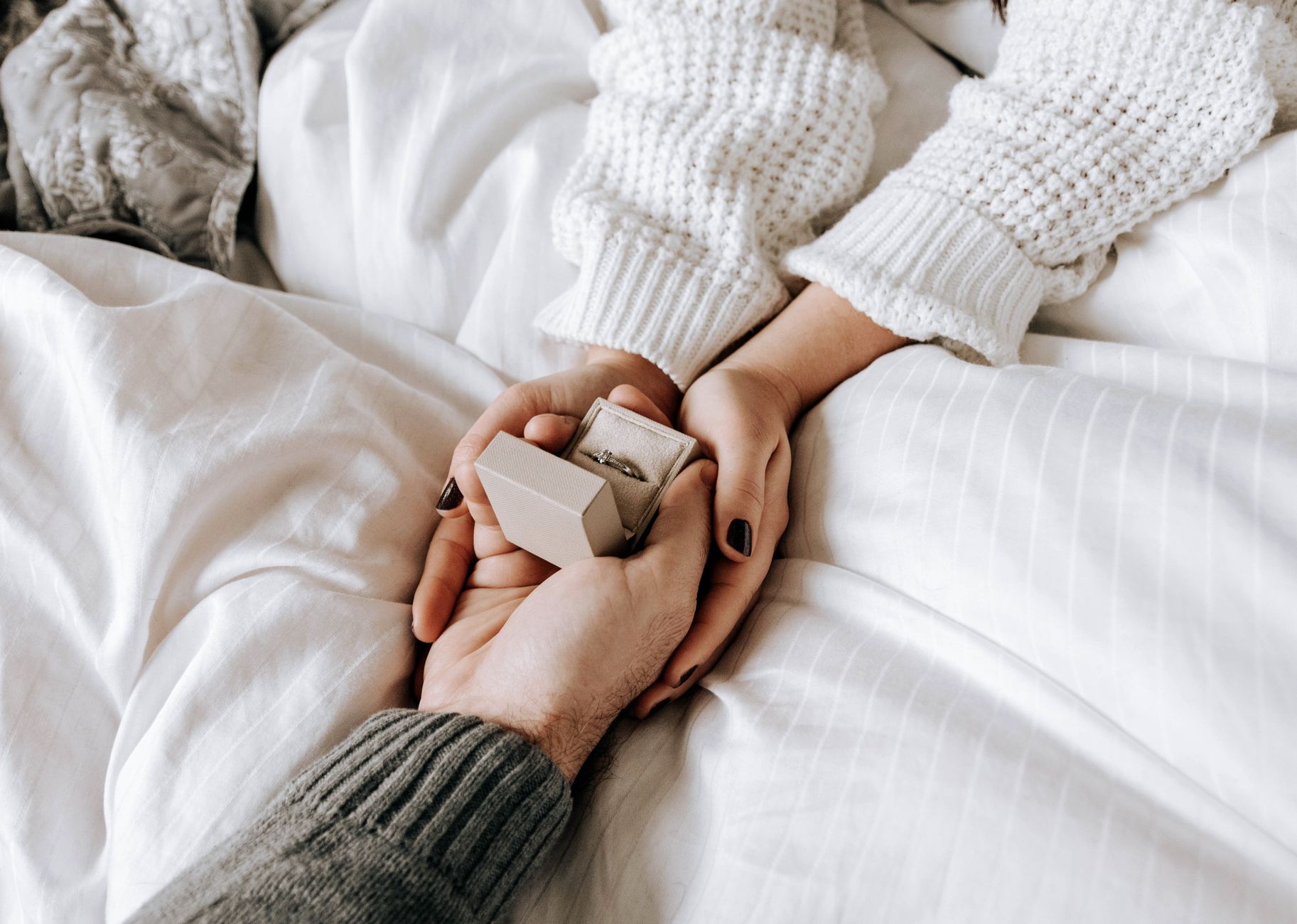
The proposal weekend has quietly replaced the proposal moment. Where a generation ago the question was asked over dinner and that was the whole event, couples now build a weekend around it. Somewhere away from home, a good meal, a walk, a view, and at some point across those two days, the question.
It is a better format, mostly. It removes the pressure of a single perfect instant and replaces it with a window. It also introduces about a dozen ways for things to go sideways, nearly all of which are logistical rather than romantic.
Here is how to build one that works.
Choose the window not the moment
The single most useful decision is to stop planning a moment and start planning a window. A specific plan, sunset on Saturday at the lookout, is hostage to weather, traffic, a late lunch, a flat phone and your partner deciding they want a nap. When it fails, and it frequently does, the fallback is improvised and everybody can tell.
A window works differently. You know roughly when across the weekend, you have two or three settings that would each work, and you pick on the day based on how things are actually going. Nobody except you knows the difference.
The trick is to ask early rather than late. Proposing on the Friday evening or the Saturday morning converts the rest of the weekend into a celebration. Proposing on the Sunday afternoon means both of you have spent two days with one person quietly tense and the other wondering why.
Ask early. Enjoy the rest.
Pick somewhere that already means something
The most common mistake is choosing a location because it photographs well. Spectacular scenery is not the same as personal significance, and a weekend spent somewhere neither of you has any connection to produces a lovely photograph of two people in front of a view.
Better options, roughly in order:
Somewhere you have been together before, particularly early in the relationship.
Somewhere connected to how you met, or to a shared interest, or to family.
Somewhere you have both talked about going but never got to.
And failing all of that, somewhere your partner would choose for an ordinary weekend away, because it will at least suit them.
Accommodation with a room you would want to be in
Two practical considerations. Book something where the room itself is pleasant, because if the weather turns, the room is the backup plan. A stunning location with a mediocre room gives you nowhere to go.
And think about privacy. A proposal in a hotel restaurant with twenty other diners watching is an experience some people love and others would find mortifying. You know which yours is. If in doubt, choose privacy, because you can always make it public afterwards and you cannot make it private again.
If you are telling the property what is happening, tell them precisely and in writing. Vague instructions to hotel staff produce champagne arriving forty minutes early with a knowing smile, which is how a surprise ends.
The food question
Restaurants are the default proposal setting and they are frequently the wrong one.
The problems are structural. You cannot control timing because the kitchen does. Other tables are close. Staff who know will hover. And a proposal between entree and main is an awkward shape for a meal, because whatever happens next, you are still sitting there with two courses to go.
If you want to involve food, consider the shape of the weekend rather than a single dinner.
Propose earlier, then have the celebratory dinner. This is the arrangement that works best by a distance. The meal becomes a celebration rather than a stage, and you can tell the restaurant afterwards rather than conspiring with them beforehand.
If you do propose at a table, ask for a corner, ask that nothing be brought during a specified window, and do it early in the meal rather than at dessert.
And book the celebration dinner regardless. Whatever happens, a good meal on the Saturday night is the correct outcome.
Getting the ring there
This is the part people underestimate, and it has more failure modes than the proposal itself.
Carry it. Never check it. Airline liability for checked baggage is governed by international convention and sits far below the value of an engagement ring. Checked luggage is also where theft happens.
Think about who packs. If your partner is the organised one who checks the bag before you leave, the ring box in the side pocket is a problem. Carry it on your person or in something they have no reason to open.
Do not put it in the hotel safe on arrival. This sounds absurd. It happens constantly.
Have a plan for the moment before. The physical business of retrieving a box from a coat while walking is the bit nobody rehearses, and a jacket with a deep inside pocket solves most of it.
Insurance. Most home and contents policies cap jewellery at a modest figure per item unless specified separately, and travel clauses vary. Sort this before you leave, because a ring collected on the Friday for a weekend away has spent that weekend uninsured. To specify an item you need a valuation, which is a different document from a diamond grading report.
The ring itself
It’s knowing what has changed, because the market has moved significantly in the last eighteen months.
Laboratory-grown diamond prices have collapsed. Capacity has expanded enormously and average prices fell 20 to 30 per cent against 2024 alone, and some categories are down more than 90 per cent from their peak. Above a carat, lab-grown stones now commonly sell at 5 to 10 per cent of a natural equivalent.
And in late 2025 the Gemological Institute of America stopped grading laboratory-grown diamonds on the D to Z colour and flawless to included clarity scales used for natural stones, replacing them with two descriptive categories, premium and standard.
Lab-grown buys far more size but holds essentially no value. Natural costs considerably more and retains some value. Ask directly which you are being shown and ask to see the report, because the certificate format no longer tells you at a glance.
If you want something with an Australian connection, the Argyle mine in Western Australia produced more than 90 per cent of the world’s pink diamonds before closing permanently in November 2020, and Rio Tinto’s final tender of remaining inventory concluded in October 2025. Supply is now fixed, appreciation has run at roughly 8 to 12 per cent a year since closure, and Argyle provenance carries a 20 to 50 per cent premium over comparable pinks. The paperwork is the asset.
Sizing without asking
This is a perennial problem, and there are more solutions than people realise.
Borrow a ring she already wears on that finger and take it to a jeweller. This is the most accurate method by far.
Trace the inside of a ring on paper. Less accurate, workable.
Ask a friend or family member who has almost certainly discussed it already.
Buy slightly large. A ring that is too big can be worn for a few days and then resized. A ring that is too small cannot be worn at all, which sits badly in every photograph taken that weekend.
Or propose with a placeholder and commission the real ring together. This is increasingly common and removes the guessing entirely. It also suits couples where the wearer has strong preferences, which is most of them.
Ask about the resizing allowance before you buy, because full eternity bands and some channel settings cannot be resized at all.
The commissioning timeline
If you want something made rather than bought from stock, work backwards properly.
Four to eight weeks is realistic for a commission, longer if a particular stone has to be sourced or if you want a coloured diamond with specific paperwork. Add a fortnight of margin for resizing, the valuation appointment and the insurer adding the item to your policy.
So a proposal weekend in three months is comfortable. One in five weeks means buying from stock.
Studios working this way handle interstate commissions routinely now, using video consultations, stone options sent as photographs and a posted silver prototype so you can check the fit and feel before anything is cast. Makers like Stelios Jewellers post prototypes specifically for this, which is worth knowing if you have found a studio you like in another city.
Packing for two people when only one knows
A small problem that causes a surprising amount of stress.
If the weekend is a surprise in itself, your partner is packing for a trip whose purpose they do not know, which means they may pack entirely the wrong things. Someone who thinks they are going for a bushwalk will not bring something they would want to be photographed in, and that matters to a lot of people afterwards.
You do not have to give the game away to fix this. Telling them the Saturday night booking is somewhere nice is enough, and it is the single kindest piece of misdirection available.
A short timeline for the weekend itself
Three months out. Ring commissioned or chosen. Accommodation booked.
One month out. Ring collected. Insurance specified. Restaurant booked for the celebration dinner.
One week out. Confirm everything. Check the weather trend and think about what the wet weather version looks like.
The day before. Ring packed where your partner has no reason to look. Phone charged. Tell whoever needs to know, and tell them precisely.
The day. Ask early.
Telling people and not telling people
This is the bit that trips couples up afterwards rather than during.
Decide in advance who hears first. Parents on both sides generally expect to, and finding out via a group chat lands badly with people who will be at the wedding. A short call from the car before anything goes online costs ten minutes and prevents a small grievance that lasts years.
Decide whether anything goes online at all, and agree it between you before the weekend rather than in the moment. One of you may want the photograph up immediately and the other may want a week of it belonging only to the two of you. Both positions are reasonable and they are much easier to reconcile on a Wednesday than on a Saturday afternoon.
If you want a photograph of the moment itself, the options are a hidden phone on a timer propped somewhere, or a photographer briefed to be at a distance. The second is expensive and produces much better results. The first produces a wobbly video of two people’s knees, which some couples treasure more.
The wet weather version
Every outdoor plan needs one, and the couples who have thought about it are noticeably more relaxed all weekend.
Work out now what happens if Saturday is washed out. A room with a view and a bottle of something. A long lunch somewhere with windows. A gallery, a cellar door, a drive.
The trick is to decide it in advance so that switching to it feels like a plan rather than a retreat. A proposal indoors because it is raining outside is not a lesser proposal unless somebody visibly treats it as one.
And consider that weather is a reason to ask earlier rather than later. If Friday evening is clear and Saturday looks marginal, take Friday.
What actually matters
Having planned all of it, it is worth saying that almost none of it is the point.
The weekends people describe fondly a decade later are not the ones with flawless logistics. They are the ones where something went slightly wrong, it rained, the restaurant lost the booking, the box got stuck in a pocket, and it was funny rather than ruinous because the two people involved were in a good mood and looking forward to the same thing.
Plan enough that nothing is stressful. Then stop planning, because the part that matters is not on any checklist.
This article is general information only. Diamond prices and grading standards change. Confirm current specifications, certification and insurance requirements with your jeweller and insurer.
Share this:
Like this: