Imagine walking through a narrow sandstone canyon as the morning light slowly reveals a rose-coloured city carved into the rock. Later, you are floating effortlessly in the Dead Sea, and by sunset, the world has transformed into a sea of red and gold beneath the cliffs of Wadi Rum.
This is Jordan.
A country where ancient history, dramatic landscapes, warm hospitality and unforgettable food come together in a surprisingly compact corner of the Middle East.
Jordan is best known for Petra, and rightly so. But the experience of travelling here goes far beyond one extraordinary archaeological site. There are Roman cities, mountain trails, desert camps, Bedouin traditions, bustling markets, quiet villages and the warm waters of the Red Sea.
It is a country that rewards curiosity.
You can spend the morning exploring ruins that are thousands of years old, stop for a long lunch of hummus and grilled meats, drive through mountains in the afternoon and fall asleep beneath a sky filled with stars.
For travellers who want more than a checklist of famous sights, Jordan offers something much more memorable, a journey through landscapes, stories and cultures that continue to shape the region.
Why Jordan Belongs on Your Travel List
Jordan may be relatively small, but its landscapes are remarkably varied.
Within one trip, you can experience:
Ancient archaeological cities
Roman ruins
Vast desert landscapes
Mountain villages
The Dead Sea
Red Sea beaches
Traditional markets
Bedouin culture
World-class hiking
Exceptional Middle Eastern food
The country’s compact size also makes it ideal for a road trip.
Rather than spending an entire holiday travelling between destinations, you can build an itinerary that moves naturally from Amman to Petra, through Wadi Rum and towards the Dead Sea or Aqaba.
And then there are the moments between the major attractions.
A cup of sweet Arabic coffee.
Fresh bread from a neighbourhood bakery.
A conversation with a local shopkeeper.
The changing colours of the desert at sunset.
These quieter moments are often what stay with you longest.
Amman is a city of hills, stone buildings, lively streets and layers of history. It can feel modern and ancient at the same time. The best way to experience it is to allow yourself a little time before heading straight for Jordan’s more famous attractions.
Explore the Amman Citadel
High above the city, the Amman Citadel offers panoramic views across the capital. The archaeological site contains remains from several periods, including the Temple of Hercules and the Umayyad Palace. Come towards late afternoon if possible. As the sun begins to lower, the pale stone buildings of Amman take on a warm golden glow. It is a beautiful introduction to Jordan.
Visit the Roman Theatre
The enormous Roman Theatre is one of Amman’s most recognisable landmarks.
Carved into the hillside, the theatre demonstrates just how significant the city was during the Roman period.
Climb towards the top for a wonderful view across downtown.
Wander Downtown Amman
Give yourself time to simply walk.
Explore small shops, cafés, bakeries and restaurants.
Try falafel from a local spot.
Stop for mint tea or Arabic coffee.
And do not be afraid to wander away from the obvious tourist attractions.
Amman becomes much more interesting when you allow yourself to experience it at street level.
Jordan’s extraordinary history is also part of a much wider story of ancient travel and civilisation. For more inspiration, explore Eat Live Escape’s historical sites worth adding to your travel bucket list, which includes Petra alongside some of the world’s most remarkable ancient destinations.
Petra: The Place You Have to See
Photo by Yasir Gürbüz
There are destinations that look beautiful in photographs and then there are places that feel completely different when you finally stand there.
Petra is the latter.
The ancient Nabataean city was carved directly into rose-coloured sandstone, creating an archaeological landscape unlike almost anywhere else on Earth.
The first glimpse of the Treasury is unforgettable.
Walk Through the Siq
The journey begins through the Siq, a narrow canyon with towering walls that slowly lead you towards Petra. The anticipation builds with every step. Then the canyon opens. And suddenly, the Treasury appears. Give yourself time to appreciate the moment rather than immediately rushing forward.
The Treasury
The Treasury is Petra’s most famous monument and one of the most recognisable archaeological structures in the world.
Despite its name, it was not actually built as a treasury.
Its elaborate façade was carved into the sandstone and changes dramatically with the light throughout the day.
Explore Beyond the Treasury
Petra is much larger than the Treasury suggests.
Continue deeper into the site and you will discover tombs, temples, columns, stairways and viewpoints.
The Monastery is one of the major highlights for travellers willing to tackle the climb.
The route involves hundreds of steps, but the scale of the monument and the surrounding landscape make the effort worthwhile.
How Long Should You Spend in Petra?
One full day is the minimum. Two days is preferable if you want to explore more trails without rushing.
Wear comfortable shoes and take plenty of water.
Petra involves far more walking than many first-time visitors expect.
Wadi Rum: Sleep Beneath a Desert Sky
Photo by Matan Levanon
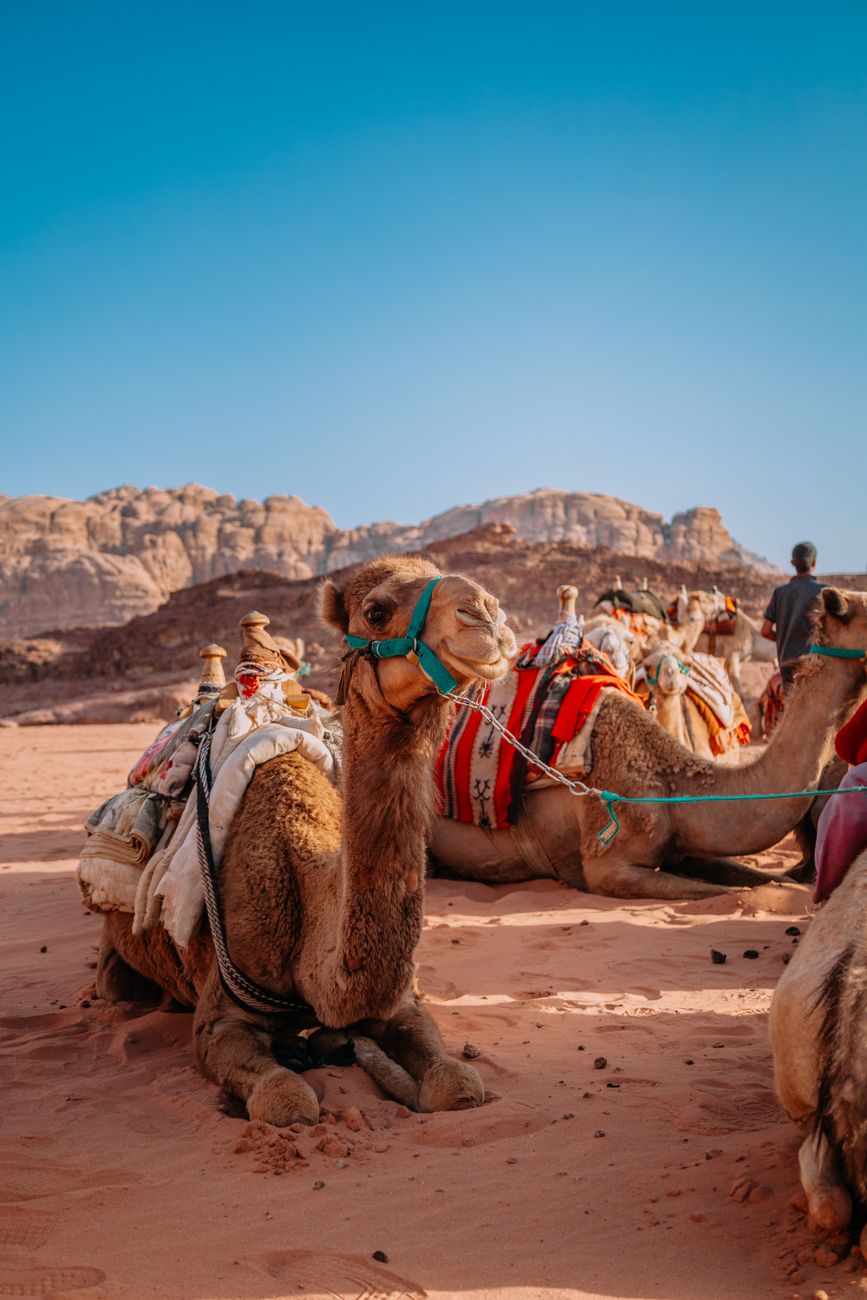
From Petra, the landscape begins to change. The mountains give way to enormous open spaces, red sand and towering sandstone formations.
Welcome to Wadi Rum.
Often described as one of the most beautiful desert landscapes on Earth, Wadi Rum feels almost otherworldly. Its enormous cliffs and open valleys have also made it a favourite filming location.
Wadi Rum is a real-world destination that perfectly captures the dramatic, otherworldly landscapes imagined in fantasy worlds.
Explore by 4WD
A local 4WD tour is one of the best ways to experience Wadi Rum. Rather than trying to see everything yourself, travel with a local guide who knows the desert. You can visit rock formations, narrow canyons, ancient inscriptions and spectacular viewpoints.
Watch the Sunset
Make sunset part of your desert experience.
As the sun drops lower, the sandstone changes colour from warm orange to deep red and eventually purple.
It is one of those moments when you understand why people fall in love with deserts.
Spend the Night
Do not rush back to a city.
Stay overnight.
Traditional Bedouin-style camps offer a more immersive experience, while luxury desert camps provide comfortable beds, private facilities and panoramic views.
After dinner, step outside. The silence is extraordinary. On a clear night, the stars seem impossibly bright.
The Dead Sea: Float in Another World
Photo by Omer Shatz
After the intensity of Petra and Wadi Rum, the Dead Sea offers a completely different experience.The water is so mineral-rich and salty that you can float effortlessly on its surface.
It feels strange the first time.
And wonderfully relaxing.
What to Expect
Choose a reputable beach or resort with safe access to the water.
Do not shave immediately before visiting, as salt can sting irritated skin.
Avoid getting the water in your eyes and rinse thoroughly with fresh water afterwards.
Try a Dead Sea Mud Treatment
The mineral-rich mud is famous around the world and many resorts offer spa treatments using it.
For travellers who enjoy combining natural landscapes with wellness, this can be a relaxing addition to a Jordan itinerary.
Jerash: Roman Ruins Without the Crowds of Rome
Photo by AXP Photography
North of Amman lies Jerash, one of the most impressive Roman archaeological sites in the region. Walking through its ancient streets feels almost surreal. Columns line the roads. Temples rise above the ruins. The enormous Oval Plaza opens out before you.
The Oval Plaza
The Oval Plaza is one of Jerash’s most recognisable features.
Its unusual shape and surrounding columns create an enormous sense of scale.
The Colonnaded Street
Walk along the ancient colonnaded street and imagine the city as it once was.
Look closely at the paving stones and architectural details.
Jerash is not simply a collection of ruins.
It is a glimpse into how an ancient city functioned.
Temple of Artemis
The Temple of Artemis is another highlight.
The enormous columns remain standing above the surrounding ruins, offering one of the site’s most dramatic views.
Allow several hours to explore Jerash properly.
Madaba: A Small City With a Remarkable Past
Madaba is particularly famous for its ancient mosaics.
The city is home to the famous Madaba Map, a Byzantine-era mosaic depicting the Holy Land.
It is a worthwhile stop between Amman and the Dead Sea.
Spend time visiting churches, exploring local workshops and looking at the intricate craftsmanship.
Mount Nebo
Close to Madaba, Mount Nebo offers expansive views across the surrounding landscape.
The site has major religious significance and is traditionally associated with Moses.
Even for travellers visiting primarily for the landscape and history, the views make the journey worthwhile.
Dana Biosphere Reserve: A Different Side of Jordan
If Petra and Wadi Rum show you Jordan’s ancient and desert landscapes, Dana reveals another side entirely.
The Dana Biosphere Reserve stretches across dramatically changing terrain, from highlands to valleys and desert.
It is an excellent destination for travellers who enjoy hiking and nature.
Go Hiking
There are trails for different abilities, ranging from shorter walks to longer routes through the reserve.
Bring appropriate footwear, water and sun protection.
Stay Overnight
Staying in the region allows you to experience Jordan away from its busiest tourist attractions.
Choose locally run accommodation where possible and use local guides for longer or more challenging walks.
Aqaba: End Your Trip by the Red Sea
Photo by Lawrence Gordon
At the southern tip of Jordan, Aqaba offers a completely different atmosphere.
The desert meets the sea.
The pace slows down.
And after days of exploring archaeological sites and mountains, it is the perfect place to unwind.
Go Snorkelling or Diving
The Red Sea around Aqaba is known for clear water and coral reefs.
You can explore underwater landscapes by snorkelling or diving, making Aqaba an excellent addition for travellers who want some ocean time.
Relax by the Water
You do not need to spend every day exploring.
Sometimes the best final day of a trip is simply swimming, eating fresh seafood and watching the sun disappear over the water.
What to Eat in Jordan
Jordan is a destination where food deserves almost as much attention as the sightseeing. Meals are social, portions are generous and sharing food is an important part of hospitality.
Mansaf
Mansaf is Jordan’s national dish.
It traditionally combines lamb, rice and jameed, a fermented dried yoghurt sauce.
It is often served communally and is deeply connected to Jordanian culture and hospitality.
Falafel
Do not underestimate a simple plate of falafel.
Crisp, fragrant and usually served with fresh bread, hummus and vegetables, it can be one of the most satisfying meals of the trip.
Hummus and Mezze
A Jordanian meal often begins with a selection of small dishes.
Hummus, baba ghanoush, salads, olives, pickles and breads can turn a simple lunch into a feast.
Maqluba
Maqluba is a comforting rice dish traditionally prepared with vegetables and meat and then flipped upside down when served.
Kanafeh
Save room for dessert.
Kanafeh combines sweet syrup, pastry and cheese into one rich and indulgent dish.
It is particularly popular in Amman and across the wider region.
Jordanian Hospitality
One of the things travellers often remember most about Jordan is the generosity of its people. Tea appears, food is shared and conversations begin, often without any sense of hurry. A simple invitation to sit down can become one of the unexpected highlights of your trip, so try not to rush these moments. Travel is not always about seeing more or ticking off the next sight. Sometimes the experiences that stay with you longest come from slowing down, accepting the invitation and simply staying a little longer.
How to Get Around Jordan
Jordan is relatively easy to explore, particularly if you plan your route around the country’s main destinations.
Rental Car
A rental car provides the greatest freedom and is particularly useful for road trips.
It allows you to stop at viewpoints, villages and smaller attractions along the way.
Private Driver
A private driver offers flexibility without requiring you to navigate unfamiliar roads yourself.
This can be particularly useful for longer routes between Petra, Wadi Rum and the Dead Sea.
Organised Tours
Tours can be a convenient option for travellers with limited time.
They can also simplify logistics for desert experiences and archaeological sites.
Public Transport
Buses and taxis connect many major destinations, although public transport can be less convenient if you want to explore smaller or more remote areas.
The Best Time to Visit Jordan
Spring
March through May is one of the most appealing periods for travelling through Jordan.
Temperatures are generally comfortable for sightseeing and hiking.
Summer
June through August can be extremely hot.
Petra and Wadi Rum can become particularly challenging during the middle of the day.
If travelling in summer, start early and plan slower afternoons.
Autumn
September through November offers another excellent combination of comfortable temperatures and good conditions for outdoor exploration.
Winter
Winter can be surprisingly cold, especially in Petra and Wadi Rum at night.
Amman can also experience rain and cooler temperatures.
Pack layers regardless of the season.
How Long Should You Spend in Jordan?
Five Days
A five-day trip can cover Amman, Petra, Wadi Rum and the Dead Sea.
It will be relatively fast-paced.
Seven Days
One week gives you a more comfortable introduction and allows you to add Jerash, Madaba or Aqaba.
Ten Days
Ten days gives you enough breathing room for Petra, Wadi Rum, the Dead Sea, Amman and some hiking or coastal time.
Two Weeks
Two weeks allows you to slow down and explore less-visited areas.
You can include Dana, northern Jordan, desert castles and longer stays in Petra and Wadi Rum.
A Classic Seven-Day Jordan Itinerary
Day 1: Amman
Explore the Citadel, Roman Theatre and downtown.
Spend the evening trying local food.
Day 2: Jerash and Madaba
Visit Jerash in the morning before continuing towards Madaba.
Day 3: Dead Sea
Spend the day floating, relaxing and enjoying the surrounding landscape.
Day 4: Petra
Travel south and spend the afternoon exploring the ancient city.
Day 5: Petra
Return for a full day and explore trails beyond the Treasury.
Day 6: Wadi Rum
Travel into the desert, explore by 4WD and stay overnight.
Day 7: Aqaba
Finish the trip beside the Red Sea.
Go snorkelling, swim or simply relax before heading home.
What to Pack for Jordan
Jordan can take you from city streets to desert dunes within a few days, so packing versatile layers is important.
Bring:
Comfortable walking shoes
Lightweight breathable clothing
A light jacket
Warm layers for desert evenings
Sun protection
Reusable water bottle
Scarf
Swimwear
Comfortable trousers
Small daypack
Hiking shoes if visiting Dana or the mountains
Modest clothing for religious and traditional settings
Do not underestimate how cold the desert can feel after sunset.
What to Wear in Jordan
Jordan is welcoming to international travellers, but respectful clothing is important, particularly outside resort areas.
Loose-fitting clothing that covers the shoulders and knees is a practical choice for many parts of the country.
A lightweight scarf is useful when visiting religious sites.
Resort areas around the Dead Sea and Aqaba are naturally more relaxed.
The best approach is to dress comfortably while remaining aware of local customs.
Jordan for Adventure Lovers
Jordan is an excellent destination for travellers who want more than sightseeing. You can hike through sandstone valleys, climb the trails around Petra, explore Wadi Rum by 4WD, sleep beneath the stars in the desert, snorkel in the Red Sea and wander through nature reserves filled with dramatic scenery. Travelling by road adds another layer to the experience, with landscapes shifting from rugged mountains to wide desert plains and coastal views within just a few hours. What makes Jordan particularly appealing is how easily adventure can be combined with culture, history and time to simply slow down and relax.
Jordan for History Lovers
Few countries offer such an extraordinary concentration of ancient sites and layered history. Roman ruins, Nabataean architecture, Byzantine mosaics, Islamic heritage, biblical landscapes and Ottoman influences all sit remarkably close together, often woven into everyday life. Jordan’s history is not confined to museums or carefully preserved monuments. It is built into the landscape itself. You walk through it, eat beside it, drive past it and, sometimes, stumble across it completely unexpectedly.
Jordan for Couples
Jordan can make an unforgettable romantic escape, particularly for couples who want a trip that feels both adventurous and intimate. Stay in a beautiful hotel beside the Dead Sea, watch the sun set over Wadi Rum, sleep beneath a sky full of stars and explore the ancient paths of Petra together. In Amman, slow things down with a long dinner before finishing the journey beside the Red Sea in Aqaba. It is this mix of dramatic landscapes, shared experiences and quieter moments that makes Jordan such a memorable destination for two.
Jordan for Families
Families can have an incredible time in Jordan when the itinerary is not too rushed.
Children may particularly enjoy:
Desert camps
Camel rides
Petra
Archaeological sites
Snorkelling
Road trips
Traditional food
Give yourself enough downtime between major attractions.
The desert and archaeological sites can be tiring, particularly during warmer months.
Is Jordan Expensive?
Jordan can work across a range of budgets.
Jordan sits somewhere in the middle when it comes to travel costs. It is generally more expensive than destinations across Southeast Asia, parts of North Africa or neighbouring Egypt, but it can still feel considerably better value than much of Western Europe, the UK or major cities in Australia. Local meals, taxis and everyday expenses can be quite affordable, particularly away from the most tourist-heavy areas, while entrance fees, private guides and organised tours can add up quickly. Accommodation varies enormously, from inexpensive guesthouses to luxury desert camps and high-end resorts beside the Dead Sea. Petra and Wadi Rum are also places where travellers tend to spend more, simply because many of the best experiences involve guides, transport or organised activities. Jordan is not necessarily a budget destination, but it is a country where you can control costs relatively easily by keeping everyday spending modest and choosing a few standout experiences to splurge on.
Rather than spending money everywhere, choose a few experiences that feel genuinely worth investing in. That might mean a memorable desert camp, a beautiful hotel beside the Dead Sea, a knowledgeable local guide or one really special meal. These are often the moments that stay with you long after the trip is over, and they are usually far more memorable than trying to upgrade every part of the journey.
Is Jordan Safe for Travellers?
Jordan is an established tourism destination, but travelers should always check current government travel advice and local conditions before departure. Current instability in the area means thoughtful consideration should be given before embarking on any travel, please check your countries travel advice.
Stay aware of your surroundings, use reputable accommodation and tour operators, and take particular care when travelling near border areas.
For desert and hiking experiences, use experienced local guides where appropriate.
Jordan Travel Etiquette
A little cultural awareness can make your trip through Jordan much more rewarding. Dress respectfully, particularly around religious sites, ask before photographing people and accept hospitality graciously when it is offered. Learning a few simple Arabic greetings can also go a long way and often opens the door to warmer, more personal interactions. Most importantly, remember that some of the best travel moments are not the ones you photograph, but the conversations and connections you make along the way.
Frequently Asked Questions
Is Jordan worth visiting?
Absolutely. Jordan combines Petra, Wadi Rum, the Dead Sea, Roman ruins, mountains, beaches, exceptional food and rich cultural experiences within a relatively compact country.
How many days do you need in Jordan?
Seven to ten days is ideal for a first trip. Two weeks allows you to travel more slowly and explore beyond the major highlights.
What is the best time to visit Jordan?
Spring and autumn are generally the most comfortable seasons for sightseeing, hiking and exploring Petra and Wadi Rum.
Is Petra really worth visiting?
Yes. Petra is one of the world’s most extraordinary archaeological sites and deserves at least one full day.
How long should you spend in Wadi Rum?
One night gives you a memorable introduction, while two nights allow you to slow down and explore more of the desert.
Can you float in the Dead Sea?
Yes. Its extremely high salt concentration makes floating remarkably easy. Avoid getting the water in your eyes and rinse with fresh water afterwards.
Yes. Private drivers, organised tours, taxis and buses can connect many of the major destinations.
Is Jordan good for a road trip?
Very much so. The changing landscapes between Amman, Petra, Wadi Rum and the Dead Sea make driving one of the most rewarding ways to experience the country.
What should you wear in Jordan?
Lightweight, breathable and relatively modest clothing is generally the most practical choice. Bring warmer layers for desert nights.
Is Jordan suitable for a honeymoon?
Yes. Petra, Wadi Rum, the Dead Sea and Aqaba can easily be combined into a romantic itinerary filled with memorable experiences.
Where to Next?
If Jordan has left you wanting to explore more ancient landscapes, continue with Eat Live Escape’s Historical Sites To Add To Your Travel Bucket List, which places Petra alongside some of the world’s most fascinating historic destinations.
For another destination where dramatic landscapes and adventure take centre stage, explore The Ultimate Guide to Antarctica. It could not be more different from Jordan, but both destinations offer that rare feeling of standing somewhere that seems almost beyond imagination.
If you are drawn to desert landscapes after experiencing Wadi Rum, keep the adventure going with The Ten Hottest Travel Destinations for 2026, which highlights AlUla in Saudi Arabia as another extraordinary destination where ancient history and vast desert landscapes meet.
For a completely different kind of escape, slow the pace with Sifnos Greece: 2025 Travel Guide, a Greek island guide built around beautiful villages, local food, walking and the simple pleasure of taking your time.
And when you are ready for a city shaped by centuries of history, food and culture, escape to The Ultimate Venice Travel Guide, where winding streets, canals and historic architecture create an entirely different kind of travel magic.
The Final Word
Jordan is the kind of destination that gives you stories rather than just photographs. It is the first glimpse of Petra through the Siq, the warmth of the desert beneath your feet, fresh bread and hummus shared around a table, and the strange, weightless feeling of floating in the Dead Sea. It is the silence that settles over Wadi Rum as the sun disappears, the sound of evening conversations drifting through the streets of Amman, and the feeling of standing somewhere ancient and real, knowing that people have been moving through these landscapes for thousands of years. Come for Petra, stay for the desert, eat slowly, talk to people and leave room for the unexpected. Because the most memorable part of Jordan may not be the place you planned to visit at all. It might be the road between two destinations, a meal you never expected or the quiet moment when the desert suddenly turns gold. That is the magic of Jordan.


Imagine walking through a narrow sandstone canyon as the morning light slowly reveals a rose-coloured city carved into the rock. Later, you are floating effortlessly in the Dead Sea, and by sunset, the world has transformed into a sea of red and gold beneath the cliffs of Wadi Rum.
This is Jordan.
A country where ancient history, dramatic landscapes, warm hospitality and unforgettable food come together in a surprisingly compact corner of the Middle East.
Jordan is best known for Petra, and rightly so. But the experience of travelling here goes far beyond one extraordinary archaeological site. There are Roman cities, mountain trails, desert camps, Bedouin traditions, bustling markets, quiet villages and the warm waters of the Red Sea.
It is a country that rewards curiosity.
You can spend the morning exploring ruins that are thousands of years old, stop for a long lunch of hummus and grilled meats, drive through mountains in the afternoon and fall asleep beneath a sky filled with stars.
For travellers who want more than a checklist of famous sights, Jordan offers something much more memorable, a journey through landscapes, stories and cultures that continue to shape the region.
Why Jordan Belongs on Your Travel List
Jordan may be relatively small, but its landscapes are remarkably varied.
Within one trip, you can experience:
The country’s compact size also makes it ideal for a road trip.
Rather than spending an entire holiday travelling between destinations, you can build an itinerary that moves naturally from Amman to Petra, through Wadi Rum and towards the Dead Sea or Aqaba.
And then there are the moments between the major attractions.
A cup of sweet Arabic coffee.
Fresh bread from a neighbourhood bakery.
A conversation with a local shopkeeper.
The changing colours of the desert at sunset.
These quieter moments are often what stay with you longest.
Amman: Begin Your Jordan Adventure
Amman is a city of hills, stone buildings, lively streets and layers of history. It can feel modern and ancient at the same time. The best way to experience it is to allow yourself a little time before heading straight for Jordan’s more famous attractions.
Explore the Amman Citadel
High above the city, the Amman Citadel offers panoramic views across the capital. The archaeological site contains remains from several periods, including the Temple of Hercules and the Umayyad Palace. Come towards late afternoon if possible. As the sun begins to lower, the pale stone buildings of Amman take on a warm golden glow. It is a beautiful introduction to Jordan.
Visit the Roman Theatre
The enormous Roman Theatre is one of Amman’s most recognisable landmarks.
Carved into the hillside, the theatre demonstrates just how significant the city was during the Roman period.
Climb towards the top for a wonderful view across downtown.
Wander Downtown Amman
Give yourself time to simply walk.
Explore small shops, cafés, bakeries and restaurants.
Try falafel from a local spot.
Stop for mint tea or Arabic coffee.
And do not be afraid to wander away from the obvious tourist attractions.
Amman becomes much more interesting when you allow yourself to experience it at street level.
Jordan’s extraordinary history is also part of a much wider story of ancient travel and civilisation. For more inspiration, explore Eat Live Escape’s historical sites worth adding to your travel bucket list, which includes Petra alongside some of the world’s most remarkable ancient destinations.
Petra: The Place You Have to See
There are destinations that look beautiful in photographs and then there are places that feel completely different when you finally stand there.
Petra is the latter.
The ancient Nabataean city was carved directly into rose-coloured sandstone, creating an archaeological landscape unlike almost anywhere else on Earth.
The first glimpse of the Treasury is unforgettable.
Walk Through the Siq
The journey begins through the Siq, a narrow canyon with towering walls that slowly lead you towards Petra. The anticipation builds with every step. Then the canyon opens. And suddenly, the Treasury appears. Give yourself time to appreciate the moment rather than immediately rushing forward.
The Treasury
The Treasury is Petra’s most famous monument and one of the most recognisable archaeological structures in the world.
Despite its name, it was not actually built as a treasury.
Its elaborate façade was carved into the sandstone and changes dramatically with the light throughout the day.
Explore Beyond the Treasury
Petra is much larger than the Treasury suggests.
Continue deeper into the site and you will discover tombs, temples, columns, stairways and viewpoints.
The Monastery is one of the major highlights for travellers willing to tackle the climb.
The route involves hundreds of steps, but the scale of the monument and the surrounding landscape make the effort worthwhile.
How Long Should You Spend in Petra?
One full day is the minimum. Two days is preferable if you want to explore more trails without rushing.
Wear comfortable shoes and take plenty of water.
Petra involves far more walking than many first-time visitors expect.
Wadi Rum: Sleep Beneath a Desert Sky
From Petra, the landscape begins to change. The mountains give way to enormous open spaces, red sand and towering sandstone formations.
Welcome to Wadi Rum.
Often described as one of the most beautiful desert landscapes on Earth, Wadi Rum feels almost otherworldly. Its enormous cliffs and open valleys have also made it a favourite filming location.
Wadi Rum is a real-world destination that perfectly captures the dramatic, otherworldly landscapes imagined in fantasy worlds.
Explore by 4WD
A local 4WD tour is one of the best ways to experience Wadi Rum. Rather than trying to see everything yourself, travel with a local guide who knows the desert. You can visit rock formations, narrow canyons, ancient inscriptions and spectacular viewpoints.
Watch the Sunset
Make sunset part of your desert experience.
As the sun drops lower, the sandstone changes colour from warm orange to deep red and eventually purple.
It is one of those moments when you understand why people fall in love with deserts.
Spend the Night
Do not rush back to a city.
Stay overnight.
Traditional Bedouin-style camps offer a more immersive experience, while luxury desert camps provide comfortable beds, private facilities and panoramic views.
After dinner, step outside. The silence is extraordinary. On a clear night, the stars seem impossibly bright.
The Dead Sea: Float in Another World
After the intensity of Petra and Wadi Rum, the Dead Sea offers a completely different experience.The water is so mineral-rich and salty that you can float effortlessly on its surface.
It feels strange the first time.
And wonderfully relaxing.
What to Expect
Choose a reputable beach or resort with safe access to the water.
Do not shave immediately before visiting, as salt can sting irritated skin.
Avoid getting the water in your eyes and rinse thoroughly with fresh water afterwards.
Try a Dead Sea Mud Treatment
The mineral-rich mud is famous around the world and many resorts offer spa treatments using it.
For travellers who enjoy combining natural landscapes with wellness, this can be a relaxing addition to a Jordan itinerary.
Jerash: Roman Ruins Without the Crowds of Rome
North of Amman lies Jerash, one of the most impressive Roman archaeological sites in the region. Walking through its ancient streets feels almost surreal. Columns line the roads. Temples rise above the ruins. The enormous Oval Plaza opens out before you.
The Oval Plaza
The Oval Plaza is one of Jerash’s most recognisable features.
Its unusual shape and surrounding columns create an enormous sense of scale.
The Colonnaded Street
Walk along the ancient colonnaded street and imagine the city as it once was.
Look closely at the paving stones and architectural details.
Jerash is not simply a collection of ruins.
It is a glimpse into how an ancient city functioned.
Temple of Artemis
The Temple of Artemis is another highlight.
The enormous columns remain standing above the surrounding ruins, offering one of the site’s most dramatic views.
Allow several hours to explore Jerash properly.
Madaba: A Small City With a Remarkable Past
Madaba is particularly famous for its ancient mosaics.
The city is home to the famous Madaba Map, a Byzantine-era mosaic depicting the Holy Land.
It is a worthwhile stop between Amman and the Dead Sea.
Spend time visiting churches, exploring local workshops and looking at the intricate craftsmanship.
Mount Nebo
Close to Madaba, Mount Nebo offers expansive views across the surrounding landscape.
The site has major religious significance and is traditionally associated with Moses.
Even for travellers visiting primarily for the landscape and history, the views make the journey worthwhile.
Dana Biosphere Reserve: A Different Side of Jordan
If Petra and Wadi Rum show you Jordan’s ancient and desert landscapes, Dana reveals another side entirely.
The Dana Biosphere Reserve stretches across dramatically changing terrain, from highlands to valleys and desert.
It is an excellent destination for travellers who enjoy hiking and nature.
Go Hiking
There are trails for different abilities, ranging from shorter walks to longer routes through the reserve.
Bring appropriate footwear, water and sun protection.
Stay Overnight
Staying in the region allows you to experience Jordan away from its busiest tourist attractions.
Choose locally run accommodation where possible and use local guides for longer or more challenging walks.
Aqaba: End Your Trip by the Red Sea
At the southern tip of Jordan, Aqaba offers a completely different atmosphere.
The desert meets the sea.
The pace slows down.
And after days of exploring archaeological sites and mountains, it is the perfect place to unwind.
Go Snorkelling or Diving
The Red Sea around Aqaba is known for clear water and coral reefs.
You can explore underwater landscapes by snorkelling or diving, making Aqaba an excellent addition for travellers who want some ocean time.
Relax by the Water
You do not need to spend every day exploring.
Sometimes the best final day of a trip is simply swimming, eating fresh seafood and watching the sun disappear over the water.
What to Eat in Jordan
Jordan is a destination where food deserves almost as much attention as the sightseeing. Meals are social, portions are generous and sharing food is an important part of hospitality.
Mansaf
Mansaf is Jordan’s national dish.
It traditionally combines lamb, rice and jameed, a fermented dried yoghurt sauce.
It is often served communally and is deeply connected to Jordanian culture and hospitality.
Falafel
Do not underestimate a simple plate of falafel.
Crisp, fragrant and usually served with fresh bread, hummus and vegetables, it can be one of the most satisfying meals of the trip.
Hummus and Mezze
A Jordanian meal often begins with a selection of small dishes.
Hummus, baba ghanoush, salads, olives, pickles and breads can turn a simple lunch into a feast.
Maqluba
Maqluba is a comforting rice dish traditionally prepared with vegetables and meat and then flipped upside down when served.
Kanafeh
Save room for dessert.
Kanafeh combines sweet syrup, pastry and cheese into one rich and indulgent dish.
It is particularly popular in Amman and across the wider region.
Jordanian Hospitality
One of the things travellers often remember most about Jordan is the generosity of its people. Tea appears, food is shared and conversations begin, often without any sense of hurry. A simple invitation to sit down can become one of the unexpected highlights of your trip, so try not to rush these moments. Travel is not always about seeing more or ticking off the next sight. Sometimes the experiences that stay with you longest come from slowing down, accepting the invitation and simply staying a little longer.
How to Get Around Jordan
Jordan is relatively easy to explore, particularly if you plan your route around the country’s main destinations.
Rental Car
A rental car provides the greatest freedom and is particularly useful for road trips.
It allows you to stop at viewpoints, villages and smaller attractions along the way.
Private Driver
A private driver offers flexibility without requiring you to navigate unfamiliar roads yourself.
This can be particularly useful for longer routes between Petra, Wadi Rum and the Dead Sea.
Organised Tours
Tours can be a convenient option for travellers with limited time.
They can also simplify logistics for desert experiences and archaeological sites.
Public Transport
Buses and taxis connect many major destinations, although public transport can be less convenient if you want to explore smaller or more remote areas.
The Best Time to Visit Jordan
Spring
March through May is one of the most appealing periods for travelling through Jordan.
Temperatures are generally comfortable for sightseeing and hiking.
Summer
June through August can be extremely hot.
Petra and Wadi Rum can become particularly challenging during the middle of the day.
If travelling in summer, start early and plan slower afternoons.
Autumn
September through November offers another excellent combination of comfortable temperatures and good conditions for outdoor exploration.
Winter
Winter can be surprisingly cold, especially in Petra and Wadi Rum at night.
Amman can also experience rain and cooler temperatures.
Pack layers regardless of the season.
How Long Should You Spend in Jordan?
Five Days
A five-day trip can cover Amman, Petra, Wadi Rum and the Dead Sea.
It will be relatively fast-paced.
Seven Days
One week gives you a more comfortable introduction and allows you to add Jerash, Madaba or Aqaba.
Ten Days
Ten days gives you enough breathing room for Petra, Wadi Rum, the Dead Sea, Amman and some hiking or coastal time.
Two Weeks
Two weeks allows you to slow down and explore less-visited areas.
You can include Dana, northern Jordan, desert castles and longer stays in Petra and Wadi Rum.
A Classic Seven-Day Jordan Itinerary
Day 1: Amman
Explore the Citadel, Roman Theatre and downtown.
Spend the evening trying local food.
Day 2: Jerash and Madaba
Visit Jerash in the morning before continuing towards Madaba.
Day 3: Dead Sea
Spend the day floating, relaxing and enjoying the surrounding landscape.
Day 4: Petra
Travel south and spend the afternoon exploring the ancient city.
Day 5: Petra
Return for a full day and explore trails beyond the Treasury.
Day 6: Wadi Rum
Travel into the desert, explore by 4WD and stay overnight.
Day 7: Aqaba
Finish the trip beside the Red Sea.
Go snorkelling, swim or simply relax before heading home.
What to Pack for Jordan
Jordan can take you from city streets to desert dunes within a few days, so packing versatile layers is important.
Bring:
Do not underestimate how cold the desert can feel after sunset.
What to Wear in Jordan
Jordan is welcoming to international travellers, but respectful clothing is important, particularly outside resort areas.
Loose-fitting clothing that covers the shoulders and knees is a practical choice for many parts of the country.
A lightweight scarf is useful when visiting religious sites.
Resort areas around the Dead Sea and Aqaba are naturally more relaxed.
The best approach is to dress comfortably while remaining aware of local customs.
Jordan for Adventure Lovers
Jordan is an excellent destination for travellers who want more than sightseeing. You can hike through sandstone valleys, climb the trails around Petra, explore Wadi Rum by 4WD, sleep beneath the stars in the desert, snorkel in the Red Sea and wander through nature reserves filled with dramatic scenery. Travelling by road adds another layer to the experience, with landscapes shifting from rugged mountains to wide desert plains and coastal views within just a few hours. What makes Jordan particularly appealing is how easily adventure can be combined with culture, history and time to simply slow down and relax.
Jordan for History Lovers
Few countries offer such an extraordinary concentration of ancient sites and layered history. Roman ruins, Nabataean architecture, Byzantine mosaics, Islamic heritage, biblical landscapes and Ottoman influences all sit remarkably close together, often woven into everyday life. Jordan’s history is not confined to museums or carefully preserved monuments. It is built into the landscape itself. You walk through it, eat beside it, drive past it and, sometimes, stumble across it completely unexpectedly.
Jordan for Couples
Jordan can make an unforgettable romantic escape, particularly for couples who want a trip that feels both adventurous and intimate. Stay in a beautiful hotel beside the Dead Sea, watch the sun set over Wadi Rum, sleep beneath a sky full of stars and explore the ancient paths of Petra together. In Amman, slow things down with a long dinner before finishing the journey beside the Red Sea in Aqaba. It is this mix of dramatic landscapes, shared experiences and quieter moments that makes Jordan such a memorable destination for two.
Jordan for Families
Families can have an incredible time in Jordan when the itinerary is not too rushed.
Children may particularly enjoy:
Give yourself enough downtime between major attractions.
The desert and archaeological sites can be tiring, particularly during warmer months.
Is Jordan Expensive?
Jordan can work across a range of budgets.
Jordan sits somewhere in the middle when it comes to travel costs. It is generally more expensive than destinations across Southeast Asia, parts of North Africa or neighbouring Egypt, but it can still feel considerably better value than much of Western Europe, the UK or major cities in Australia. Local meals, taxis and everyday expenses can be quite affordable, particularly away from the most tourist-heavy areas, while entrance fees, private guides and organised tours can add up quickly. Accommodation varies enormously, from inexpensive guesthouses to luxury desert camps and high-end resorts beside the Dead Sea. Petra and Wadi Rum are also places where travellers tend to spend more, simply because many of the best experiences involve guides, transport or organised activities. Jordan is not necessarily a budget destination, but it is a country where you can control costs relatively easily by keeping everyday spending modest and choosing a few standout experiences to splurge on.
Rather than spending money everywhere, choose a few experiences that feel genuinely worth investing in. That might mean a memorable desert camp, a beautiful hotel beside the Dead Sea, a knowledgeable local guide or one really special meal. These are often the moments that stay with you long after the trip is over, and they are usually far more memorable than trying to upgrade every part of the journey.
Is Jordan Safe for Travellers?
Jordan is an established tourism destination, but travelers should always check current government travel advice and local conditions before departure. Current instability in the area means thoughtful consideration should be given before embarking on any travel, please check your countries travel advice.
Stay aware of your surroundings, use reputable accommodation and tour operators, and take particular care when travelling near border areas.
For desert and hiking experiences, use experienced local guides where appropriate.
Jordan Travel Etiquette
A little cultural awareness can make your trip through Jordan much more rewarding. Dress respectfully, particularly around religious sites, ask before photographing people and accept hospitality graciously when it is offered. Learning a few simple Arabic greetings can also go a long way and often opens the door to warmer, more personal interactions. Most importantly, remember that some of the best travel moments are not the ones you photograph, but the conversations and connections you make along the way.
Frequently Asked Questions
Is Jordan worth visiting?
Absolutely. Jordan combines Petra, Wadi Rum, the Dead Sea, Roman ruins, mountains, beaches, exceptional food and rich cultural experiences within a relatively compact country.
How many days do you need in Jordan?
Seven to ten days is ideal for a first trip. Two weeks allows you to travel more slowly and explore beyond the major highlights.
What is the best time to visit Jordan?
Spring and autumn are generally the most comfortable seasons for sightseeing, hiking and exploring Petra and Wadi Rum.
Is Petra really worth visiting?
Yes. Petra is one of the world’s most extraordinary archaeological sites and deserves at least one full day.
How long should you spend in Wadi Rum?
One night gives you a memorable introduction, while two nights allow you to slow down and explore more of the desert.
Can you float in the Dead Sea?
Yes. Its extremely high salt concentration makes floating remarkably easy. Avoid getting the water in your eyes and rinse with fresh water afterwards.
What food should you try in Jordan?
Try mansaf, falafel, hummus, mezze, maqluba, grilled meats, fresh bread and kanafeh.
Can you visit Jordan without renting a car?
Yes. Private drivers, organised tours, taxis and buses can connect many of the major destinations.
Is Jordan good for a road trip?
Very much so. The changing landscapes between Amman, Petra, Wadi Rum and the Dead Sea make driving one of the most rewarding ways to experience the country.
What should you wear in Jordan?
Lightweight, breathable and relatively modest clothing is generally the most practical choice. Bring warmer layers for desert nights.
Is Jordan suitable for a honeymoon?
Yes. Petra, Wadi Rum, the Dead Sea and Aqaba can easily be combined into a romantic itinerary filled with memorable experiences.
Where to Next?
If Jordan has left you wanting to explore more ancient landscapes, continue with Eat Live Escape’s Historical Sites To Add To Your Travel Bucket List, which places Petra alongside some of the world’s most fascinating historic destinations.
For another destination where dramatic landscapes and adventure take centre stage, explore The Ultimate Guide to Antarctica. It could not be more different from Jordan, but both destinations offer that rare feeling of standing somewhere that seems almost beyond imagination.
If you are drawn to desert landscapes after experiencing Wadi Rum, keep the adventure going with The Ten Hottest Travel Destinations for 2026, which highlights AlUla in Saudi Arabia as another extraordinary destination where ancient history and vast desert landscapes meet.
For a completely different kind of escape, slow the pace with Sifnos Greece: 2025 Travel Guide, a Greek island guide built around beautiful villages, local food, walking and the simple pleasure of taking your time.
And when you are ready for a city shaped by centuries of history, food and culture, escape to The Ultimate Venice Travel Guide, where winding streets, canals and historic architecture create an entirely different kind of travel magic.
The Final Word
Jordan is the kind of destination that gives you stories rather than just photographs. It is the first glimpse of Petra through the Siq, the warmth of the desert beneath your feet, fresh bread and hummus shared around a table, and the strange, weightless feeling of floating in the Dead Sea. It is the silence that settles over Wadi Rum as the sun disappears, the sound of evening conversations drifting through the streets of Amman, and the feeling of standing somewhere ancient and real, knowing that people have been moving through these landscapes for thousands of years. Come for Petra, stay for the desert, eat slowly, talk to people and leave room for the unexpected. Because the most memorable part of Jordan may not be the place you planned to visit at all. It might be the road between two destinations, a meal you never expected or the quiet moment when the desert suddenly turns gold. That is the magic of Jordan.
Share this:
Like this: