There was a time when status was designed to be seen. The right restaurant, the right handbag, the right car, the right neighbourhood and the right table all mattered because other people could recognise them. Visibility was part of the appeal. Being invited somewhere exclusive carried social weight, and being seen there carried even more.
Now, something has shifted. The people who seem most aspirational are increasingly the ones who are not available. They are away for the weekend, at a house somewhere with bad reception, walking to lunch in a village no one has heard of, or sitting at dinner without posting it in real time. They have plans, but there is no detailed account of those plans. In a culture built around constant visibility, absence has become strangely powerful.
The new status symbol is not necessarily having more to show. It is having somewhere better to be.
That “somewhere” might be a villa in Puglia, a beach house on the Mornington Peninsula, a tiny restaurant in Paris, a garden, a tennis court, a dinner table, a bookshop, a country road or simply a place where your phone is not the most interesting thing in the room. What matters is less about the destination itself and more about what it suggests: that your life is happening somewhere beyond the screen.
We Used to Perform Success. Now We Perform Escape
For years, aspiration was loud. Luxury meant recognisable logos, big nights out, expensive restaurants and a life that looked visibly full. Social media amplified that instinct by rewarding the most photogenic version of experience. The more places you went, the more you posted, the more compelling your life appeared.
But hyper-visibility has created its own backlash. When everyone can post from the newest restaurant, everyone can book the same hotel, and everyone can recreate the same itinerary, exclusivity becomes harder to communicate through consumption alone. So the aspiration changes.
Now it is not simply about where you are. It is about whether you seem too occupied by real life to document it properly. The person who posts a hundred stories from a holiday may be enjoying themselves enormously, but culturally, the person who disappears for four days and returns with one slightly blurry photograph of a table under an olive tree somehow feels more interesting.
That shift makes sense. Scarcity has always created value, and in 2026 one of the scarcest things is attention.
Being Unavailable Has Become a Luxury
Modern life has made everyone extremely reachable. Messages arrive instantly, emails follow us home, group chats run all day, and work slips easily into evenings and weekends. Availability has become the default, which means unavailability now feels luxurious.
To say, even indirectly, “I was away” carries a different kind of social weight than it once did. It suggests autonomy. It suggests you have somewhere to go. More importantly, it suggests that your time is not entirely available for other people to claim.
This is part of why travel remains so aspirational, although the fantasy has evolved. It is less about ticking off destinations and more about disappearing into them. The appeal of places such as the South of France is not simply that they are beautiful. It is that they seem to offer a different rhythm: market mornings, long lunches, afternoon swims and evenings that do not appear to involve checking email.
The same is true of Sardinia, where the fantasy is less about the hotel or beach club and more about the sense that time might move differently there.
We Are Tired of Looking Available
There is another reason absence feels appealing. We are tired, not necessarily in the dramatic sense, but in the low-level, always-on way that comes from living in a world where everything competes for attention. There is always another message, another invitation, another update, another person doing something that looks more interesting than whatever we are doing.
Constant connectivity was supposed to make life easier, but it often leaves us with the sense that we should be everywhere at once. So now the ultimate luxury is to be somewhere that requires us to be nowhere else.
That helps explain why simple pleasures have become so heavily romanticised. Reading a novel, cooking dinner at home, taking a long walk, going to the market, swimming before breakfast or driving somewhere without a detailed plan are not new activities. What is new is how aspirational they now feel.
In a culture obsessed with productivity, doing something with no measurable outcome has started to feel almost rebellious.
The Rise of the Softly Full Life
There is a particular type of lifestyle that now feels culturally powerful. It is not empty, but it is not frantic either. The calendar is not crammed, yet there is always something happening: a weekend away, a long lunch, a Pilates class, a dinner at someone’s house, a trip being planned, a walk by the water or a few quiet hours spent reading.
Nothing feels rushed. Nothing appears aggressively productive. This is very different from the old “busy is important” model of success.
For years, people bragged about having no time. Increasingly, the flex is having enough control over your life that you do. Success is no longer only about having the biggest job, the largest home or the busiest schedule. It is also about having the freedom to leave early, take Friday afternoon off, spend August somewhere else, work from another city or say no to a dinner because you would rather stay home.
The plans do not have to be impressive. They simply have to be yours.
Photo by Efrem Efre
Why Everyone Suddenly Wants a Second Place
There is a reason the fantasy of “somewhere else” has become so powerful. You see it in the obsession with coastal houses, country escapes, tiny cabins, European rentals and regional towns. People are not always dreaming of a permanent move. Often, they just want access to another version of their life.
That version is slower. The routines are different. There is less noise and more space. It offers distance from the version of ourselves that is always working, replying, organising and performing.
Our piece on whether moving to the country really lives up to the fantasy touches on exactly this. The appeal is often less about rural life itself and more about what it represents: time, quiet, space and the possibility of being less available.
Travel Has Become Less About Seeing and More About Feeling
Travel used to be sold through landmarks. Now it is sold through atmosphere. The best travel imagery is often not a famous monument or postcard view, but a table set for lunch, a pair of sandals by a pool, a market bag, a linen shirt or a plate of pasta.
The emotional promise is obvious. You could be there, but more importantly, you could be that person there.
This is why travel content increasingly focuses on how a destination feels rather than what there is to do. We are not simply looking for places to visit. We are looking for places that offer temporary access to a version of ourselves that feels calmer, more interesting and less hurried.
That is part of the appeal of cities such as Copenhagen and Vienna, where the pleasure is as much about rhythm and ritual as sightseeing. A morning coffee, a walk, a museum and a long lunch sound simple, but simplicity itself has become desirable.
Offline Is the New Exclusive
For years, exclusivity meant access. Now it increasingly means privacy. A private dinner, a hidden beach, a hotel nobody has tagged yet or a weekend that passes without being documented can feel more luxurious than something everyone has already seen.
The irony is that social media helped create this appetite. When everything became visible, invisible things became more valuable.
There is something undeniably appealing about a life that seems too full to narrate in real time. Not secretive, just lived. This does not mean people are abandoning social media, but the aesthetic has changed. The endless carousel of proof feels less aspirational than it once did.
The cooler version now is selective. One image instead of twenty. A place name, perhaps. No explanation. The implication does the work.
The Real Luxury Is Control Over Your Time
At the centre of all of this is something more substantial than aesthetics: time.
The people we envy most often seem to have some ownership over theirs. They can travel outside peak periods, take a long lunch, leave the city, or build a weekday around themselves rather than someone else’s schedule.
This is why flexible work, portfolio careers and smaller businesses can appear so attractive even when they do not fit traditional definitions of prestige. They offer something money alone cannot guarantee: control.
The fantasy is not necessarily wealth. It is agency. It is the ability to decide where you are going, when you are going, and how much of your life belongs to other people.
Why “Nothing Planned” Suddenly Sounds So Good
There is also a growing fascination with emptiness. An empty weekend used to sound sad. Now it sounds luxurious.
No reservations, no birthday drinks, no obligations, no rushing. The possibility of waking up and deciding what to do feels almost decadent because spontaneity requires margin, and margin is increasingly rare.
We fill our calendars because we can, then spend the week wishing we had not. The desire to escape is often less about wanting a different life and more about wanting some space inside the one we already have.
The New Luxury Is a Life That Feels Good Off-Camera
Perhaps this is the real shift. We are becoming more suspicious of lives designed primarily to look impressive.
The most aspirational life now is not necessarily the one with the most visible markers of success. It is the one that seems genuinely enjoyable. A breakfast worth lingering over, a trip taken slowly, a home you actually want to spend time in, friends you want to see, work that leaves room for something else, and weekends that do not need an audience.
The old status symbols were objects. The new ones are conditions: time, privacy, ease, choice and a sense that you are not trapped by your own calendar.
Somewhere Better to Be Does Not Have to Be Somewhere Far Away
This is the part we often miss. The fantasy of somewhere better does not necessarily require a passport.
It might be a local beach, a favourite cafe, a weekend away, a garden, a friend’s house, a long lunch or a walk you take alone. If the desire to escape is constant, that may be worth paying attention to, but sometimes escape is simply a healthy interruption.
Maybe the Ultimate Flex Is Not Needing to Prove Anything
The most interesting people increasingly seem less concerned with convincing everyone else that they are interesting. That may be the final stage of the shift.
Status has always depended on recognition, but perhaps the highest form of it now is not caring whether anyone notices. Going somewhere beautiful and not posting it. Owning something nice without explaining it. Having a free Saturday and keeping it free. Disappearing for a weekend. Missing something. Saying no.
It is having a life that is compelling enough without being constantly documented.
That is why “somewhere better to be” has become such an appealing idea. It is not really about escape. It is about having a life that can pull you away from the noise.
And perhaps, increasingly, that is the thing we want most.
FAQs
Why has being offline become aspirational?
Being offline has become aspirational because constant connectivity has made attention and privacy feel scarce. Stepping away can signal freedom, control over your time and a life that does not depend on constant visibility.
Is travel still a status symbol?
Travel is still a status symbol, but the emphasis has shifted. It is less about obvious luxury and more about access, atmosphere, slow travel, privacy and the appearance of having enough time to experience a place properly.
Why are people romanticising slower lifestyles?
Slower lifestyles offer an antidote to digital overload, long work hours and constant availability. They represent more space, more autonomy and a different relationship with time.
What is quiet luxury in lifestyle terms?
Beyond fashion, quiet luxury can mean privacy, flexibility, control over your time, beautiful experiences and the ability to opt out of constant performance or visibility.
Why does everyone seem to want to escape the city?
Often the fantasy is not really about leaving the city permanently. It reflects a desire for more space, less noise, fewer demands and greater control over how time is spent.


There was a time when status was designed to be seen. The right restaurant, the right handbag, the right car, the right neighbourhood and the right table all mattered because other people could recognise them. Visibility was part of the appeal. Being invited somewhere exclusive carried social weight, and being seen there carried even more.
Now, something has shifted. The people who seem most aspirational are increasingly the ones who are not available. They are away for the weekend, at a house somewhere with bad reception, walking to lunch in a village no one has heard of, or sitting at dinner without posting it in real time. They have plans, but there is no detailed account of those plans. In a culture built around constant visibility, absence has become strangely powerful.
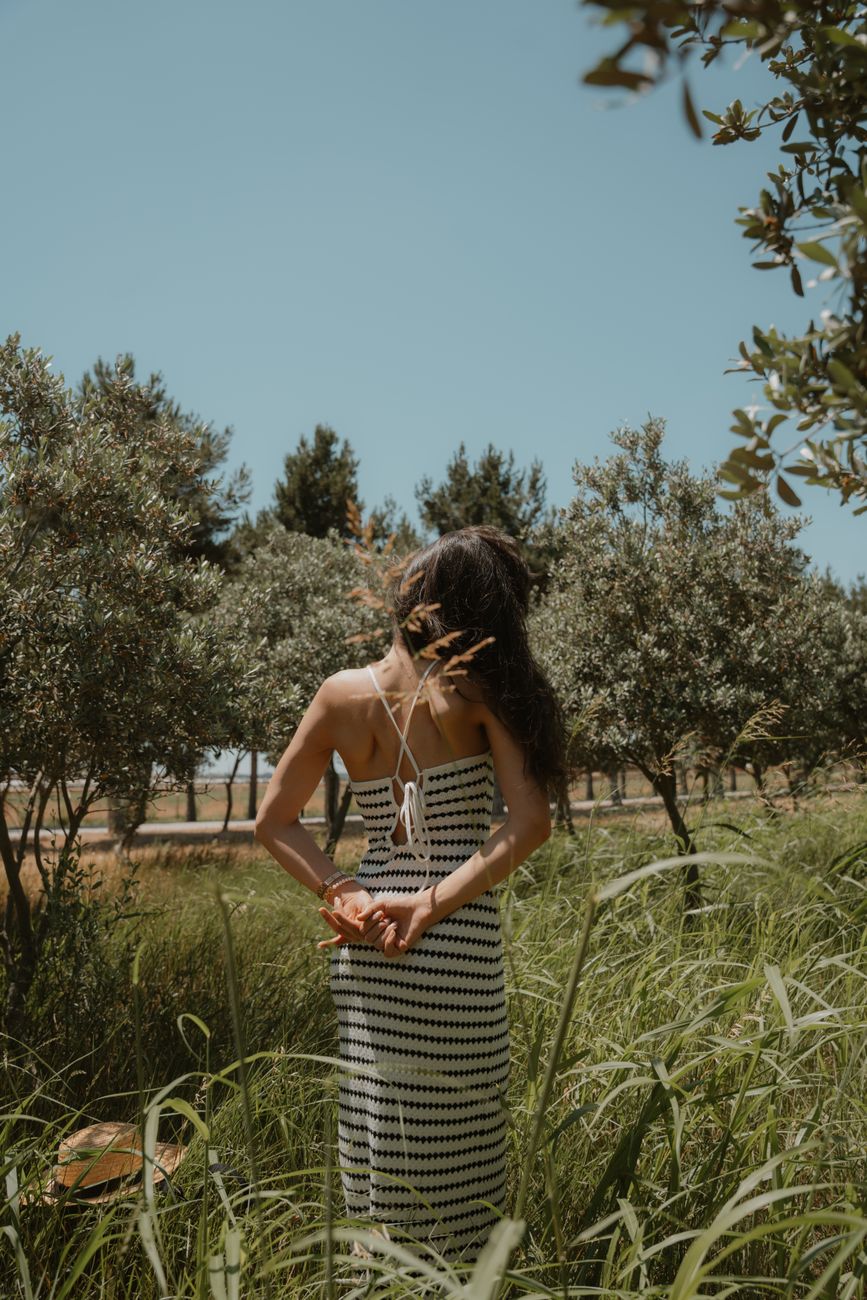
The new status symbol is not necessarily having more to show. It is having somewhere better to be.
That “somewhere” might be a villa in Puglia, a beach house on the Mornington Peninsula, a tiny restaurant in Paris, a garden, a tennis court, a dinner table, a bookshop, a country road or simply a place where your phone is not the most interesting thing in the room. What matters is less about the destination itself and more about what it suggests: that your life is happening somewhere beyond the screen.
We Used to Perform Success. Now We Perform Escape
For years, aspiration was loud. Luxury meant recognisable logos, big nights out, expensive restaurants and a life that looked visibly full. Social media amplified that instinct by rewarding the most photogenic version of experience. The more places you went, the more you posted, the more compelling your life appeared.
But hyper-visibility has created its own backlash. When everyone can post from the newest restaurant, everyone can book the same hotel, and everyone can recreate the same itinerary, exclusivity becomes harder to communicate through consumption alone. So the aspiration changes.
Now it is not simply about where you are. It is about whether you seem too occupied by real life to document it properly. The person who posts a hundred stories from a holiday may be enjoying themselves enormously, but culturally, the person who disappears for four days and returns with one slightly blurry photograph of a table under an olive tree somehow feels more interesting.
That shift makes sense. Scarcity has always created value, and in 2026 one of the scarcest things is attention.
Being Unavailable Has Become a Luxury
Modern life has made everyone extremely reachable. Messages arrive instantly, emails follow us home, group chats run all day, and work slips easily into evenings and weekends. Availability has become the default, which means unavailability now feels luxurious.
To say, even indirectly, “I was away” carries a different kind of social weight than it once did. It suggests autonomy. It suggests you have somewhere to go. More importantly, it suggests that your time is not entirely available for other people to claim.
This is part of why travel remains so aspirational, although the fantasy has evolved. It is less about ticking off destinations and more about disappearing into them. The appeal of places such as the South of France is not simply that they are beautiful. It is that they seem to offer a different rhythm: market mornings, long lunches, afternoon swims and evenings that do not appear to involve checking email.
The same is true of Sardinia, where the fantasy is less about the hotel or beach club and more about the sense that time might move differently there.
We Are Tired of Looking Available
There is another reason absence feels appealing. We are tired, not necessarily in the dramatic sense, but in the low-level, always-on way that comes from living in a world where everything competes for attention. There is always another message, another invitation, another update, another person doing something that looks more interesting than whatever we are doing.
Constant connectivity was supposed to make life easier, but it often leaves us with the sense that we should be everywhere at once. So now the ultimate luxury is to be somewhere that requires us to be nowhere else.
That helps explain why simple pleasures have become so heavily romanticised. Reading a novel, cooking dinner at home, taking a long walk, going to the market, swimming before breakfast or driving somewhere without a detailed plan are not new activities. What is new is how aspirational they now feel.
In a culture obsessed with productivity, doing something with no measurable outcome has started to feel almost rebellious.
The Rise of the Softly Full Life
There is a particular type of lifestyle that now feels culturally powerful. It is not empty, but it is not frantic either. The calendar is not crammed, yet there is always something happening: a weekend away, a long lunch, a Pilates class, a dinner at someone’s house, a trip being planned, a walk by the water or a few quiet hours spent reading.
Nothing feels rushed. Nothing appears aggressively productive. This is very different from the old “busy is important” model of success.
For years, people bragged about having no time. Increasingly, the flex is having enough control over your life that you do. Success is no longer only about having the biggest job, the largest home or the busiest schedule. It is also about having the freedom to leave early, take Friday afternoon off, spend August somewhere else, work from another city or say no to a dinner because you would rather stay home.
The plans do not have to be impressive. They simply have to be yours.
Why Everyone Suddenly Wants a Second Place
There is a reason the fantasy of “somewhere else” has become so powerful. You see it in the obsession with coastal houses, country escapes, tiny cabins, European rentals and regional towns. People are not always dreaming of a permanent move. Often, they just want access to another version of their life.
That version is slower. The routines are different. There is less noise and more space. It offers distance from the version of ourselves that is always working, replying, organising and performing.
Our piece on whether moving to the country really lives up to the fantasy touches on exactly this. The appeal is often less about rural life itself and more about what it represents: time, quiet, space and the possibility of being less available.
Travel Has Become Less About Seeing and More About Feeling
Travel used to be sold through landmarks. Now it is sold through atmosphere. The best travel imagery is often not a famous monument or postcard view, but a table set for lunch, a pair of sandals by a pool, a market bag, a linen shirt or a plate of pasta.
The emotional promise is obvious. You could be there, but more importantly, you could be that person there.
This is why travel content increasingly focuses on how a destination feels rather than what there is to do. We are not simply looking for places to visit. We are looking for places that offer temporary access to a version of ourselves that feels calmer, more interesting and less hurried.
That is part of the appeal of cities such as Copenhagen and Vienna, where the pleasure is as much about rhythm and ritual as sightseeing. A morning coffee, a walk, a museum and a long lunch sound simple, but simplicity itself has become desirable.
Offline Is the New Exclusive
For years, exclusivity meant access. Now it increasingly means privacy. A private dinner, a hidden beach, a hotel nobody has tagged yet or a weekend that passes without being documented can feel more luxurious than something everyone has already seen.
The irony is that social media helped create this appetite. When everything became visible, invisible things became more valuable.
There is something undeniably appealing about a life that seems too full to narrate in real time. Not secretive, just lived. This does not mean people are abandoning social media, but the aesthetic has changed. The endless carousel of proof feels less aspirational than it once did.
The cooler version now is selective. One image instead of twenty. A place name, perhaps. No explanation. The implication does the work.
The Real Luxury Is Control Over Your Time
At the centre of all of this is something more substantial than aesthetics: time.
The people we envy most often seem to have some ownership over theirs. They can travel outside peak periods, take a long lunch, leave the city, or build a weekday around themselves rather than someone else’s schedule.
This is why flexible work, portfolio careers and smaller businesses can appear so attractive even when they do not fit traditional definitions of prestige. They offer something money alone cannot guarantee: control.
The fantasy is not necessarily wealth. It is agency. It is the ability to decide where you are going, when you are going, and how much of your life belongs to other people.
Why “Nothing Planned” Suddenly Sounds So Good
There is also a growing fascination with emptiness. An empty weekend used to sound sad. Now it sounds luxurious.
No reservations, no birthday drinks, no obligations, no rushing. The possibility of waking up and deciding what to do feels almost decadent because spontaneity requires margin, and margin is increasingly rare.
We fill our calendars because we can, then spend the week wishing we had not. The desire to escape is often less about wanting a different life and more about wanting some space inside the one we already have.
The New Luxury Is a Life That Feels Good Off-Camera
Perhaps this is the real shift. We are becoming more suspicious of lives designed primarily to look impressive.
The most aspirational life now is not necessarily the one with the most visible markers of success. It is the one that seems genuinely enjoyable. A breakfast worth lingering over, a trip taken slowly, a home you actually want to spend time in, friends you want to see, work that leaves room for something else, and weekends that do not need an audience.
The old status symbols were objects. The new ones are conditions: time, privacy, ease, choice and a sense that you are not trapped by your own calendar.
Somewhere Better to Be Does Not Have to Be Somewhere Far Away
This is the part we often miss. The fantasy of somewhere better does not necessarily require a passport.
It might be a local beach, a favourite cafe, a weekend away, a garden, a friend’s house, a long lunch or a walk you take alone. If the desire to escape is constant, that may be worth paying attention to, but sometimes escape is simply a healthy interruption.
Our guide to the best weekend getaways from Melbourne under three hours away is built around this exact idea. You do not need to reinvent your life to experience it differently. Sometimes you just need to leave it for a couple of days.
Maybe the Ultimate Flex Is Not Needing to Prove Anything
The most interesting people increasingly seem less concerned with convincing everyone else that they are interesting. That may be the final stage of the shift.
Status has always depended on recognition, but perhaps the highest form of it now is not caring whether anyone notices. Going somewhere beautiful and not posting it. Owning something nice without explaining it. Having a free Saturday and keeping it free. Disappearing for a weekend. Missing something. Saying no.
It is having a life that is compelling enough without being constantly documented.
That is why “somewhere better to be” has become such an appealing idea. It is not really about escape. It is about having a life that can pull you away from the noise.
And perhaps, increasingly, that is the thing we want most.
FAQs
Why has being offline become aspirational?
Being offline has become aspirational because constant connectivity has made attention and privacy feel scarce. Stepping away can signal freedom, control over your time and a life that does not depend on constant visibility.
Is travel still a status symbol?
Travel is still a status symbol, but the emphasis has shifted. It is less about obvious luxury and more about access, atmosphere, slow travel, privacy and the appearance of having enough time to experience a place properly.
Why are people romanticising slower lifestyles?
Slower lifestyles offer an antidote to digital overload, long work hours and constant availability. They represent more space, more autonomy and a different relationship with time.
What is quiet luxury in lifestyle terms?
Beyond fashion, quiet luxury can mean privacy, flexibility, control over your time, beautiful experiences and the ability to opt out of constant performance or visibility.
Why does everyone seem to want to escape the city?
Often the fantasy is not really about leaving the city permanently. It reflects a desire for more space, less noise, fewer demands and greater control over how time is spent.
Where to Next?
If you are craving somewhere better to be, explore our Ultimate South of France Travel Guide, plan an escape with our Ultimate Sardinia Travel Guide, or read Everyone Wants to Move to the Country, But Would They Actually Like It?.
Share this:
Like this: