Buying a violin is a big deal. It’s easy to get overwhelmed when you’re picking up the instrument for the very first time, shopping for your child, or finally upgrading from that clunky starter model. From the outside, most violins have a similar appearance. But under the varnish, little details make a big difference in how an instrument feels and sounds.
And that’s where a good local music store comes in. Rather than guessing online and ending up with an unplayable “violin-shaped object,” talking to knowledgeable store employees can help you figure out what you’re really paying for. Asking the right questions saves you from costly mistakes and ensures you walk away with an instrument you love playing.
I. Questions to ask before buying a violin
It helps to break your questions down into three practical categories before you walk into a store:
Craftsmanship and Set-up: You need to know what the instrument is made of, and if a real technician has actually set it up for playability.
Fit and Comfort: The violin needs to be the correct size for the player’s body size, skill level and budget.
Value and Support: You want to know what else is in the box, how the warranty works, and where to go when something breaks.
II. Questions on Construction and Quality of the Violin
The construction of a violin influences its tone, its tuning ability and its longevity. Here’s what to ask about construction before you put down any money.
What is the violin made of?
Real violins are made of tonewoods. You want a nice solid spruce top with maple back, sides and neck. Don’t opt for cheap instruments made from laminated plywood or painted hardwoods. They sound muffled and tend to fall apart fast. Make sure the fingerboard and tuning pegs are solid ebony as well; this type of wood is best at handling the daily finger wear and tuning tension.
How does it stack up against other models in its price range?
Each instrument has a voice unto itself. Have the shop staff play 2 or 3 violins side by side, together, so you can hear the difference. Some are deep and warm, some bright and punchy. It’s much easier to pick the sound you prefer if you have them playing next to each other.
Is the violin in good condition and properly set up?
Probably the most crucial question you can ask is this one. Violins shipped directly from the factory are rarely ready to play out of the box. Ask whether an in-house luthier shaped the bridge, inspected the soundpost, planed the fingerboard and oiled the pegs. Good setup means your instrument stays in tune and doesn’t hurt your fingers.
Are there any visible defects or issues with the construction?
Examine the body in strong light. You see these little cracks around the edges? Is the crooked bridge? Do you see any gaps where the top wood meets the sides? An honest seller will show you cosmetic marks and fix minor setup issues in front of you.
Why is this violin a good option for both beginners and experienced players?
Beginner violins are all about sturdy builds, cheap prices and easy-to-tune. More advanced violins use aged woods that project louder and provide deeper tone colors. Be honest with your current level so you don’t buy too much or too little instrument.
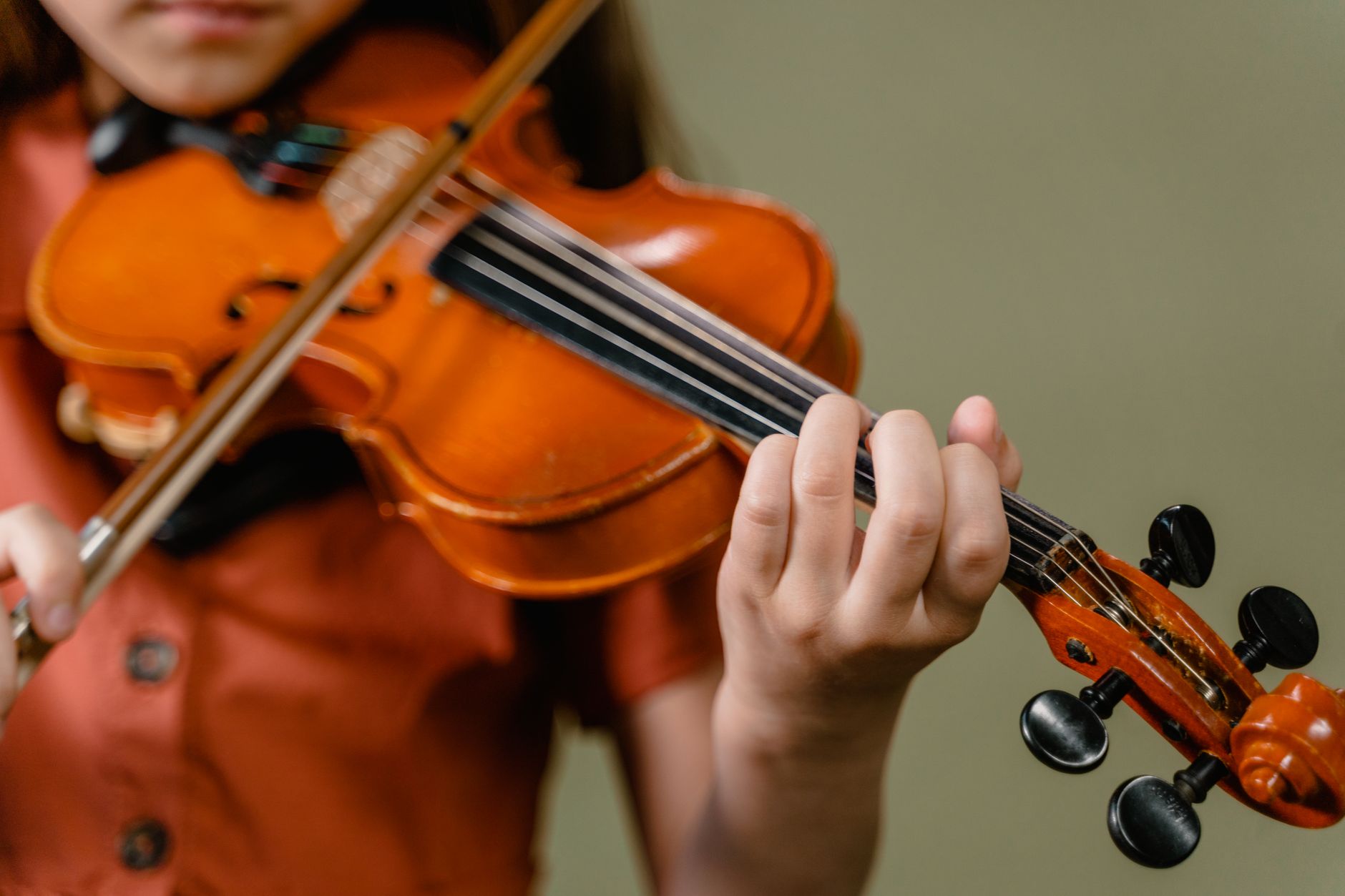
Photo by Peter Dyllong
III. Questions on Sizing and Playability
If the violin does not fit your body properly, practicing will be an uncomfortable and frustrating experience.
What size of violin is right for the player’s age and build?
Violins are available in sizes ranging from 1/16 to 4/4 (full size). Simply ask the store staff to measure the distance from your neck to the palm of your extended left hand and you’ll get your perfect match.
Can I try the instrument before buying?
Always ask to play some notes yourself. If you are buying online ask if they have a trial period so you can try it out at home.
Are the string height and bridge placement correct?
Strings that are too high off the fingerboard will hurt to press down while strings that are too low will buzz loudly. Ask the store to verify that the action is correctly configured.
How comfortable is the violin during extended practice sessions?
Raise the instrument up to your shoulder. The chinrest should feel natural under your jaw, and not make you strain your neck.
Can a music teacher assist in assessing suitability?
Most good shops will let you take an instrument home for a day or two, so your teacher can look at it before you make your final choice.
IV. Questions About Price and Accessories Included
Asking about prices up front means you won’t be surprised by the cost at the register.
What’s included in the purchase price?
Be sure whether you are paying for just the wooden body or a complete outfit ready to play.
Does the violin include a bow, case and required accessories?
The hard case, a basic bow and rosin are all part of a typical student’s kit. Higher-end models are often sold on their own so the more advanced players can select their preferred gear separately.
Are there any additional costs for installation or maintenance?
Ask whether the bench work and setup are included in the price or are an additional charge.
Do you have beginner packages or payment plans?
Ask about monthly financing or rent-to-own plans. These programs make it easy to start a business without a huge cash up-front investment.
What makes one model of violin more expensive than another?
Differences in price are usually due to how long the wood was aged, whether the carving was done by hand or machine, and the reputation of the workshop.
V. Violin Bow and Other Accessories Questions
The bow is as important as the instrument itself – that’s what actually makes the tone.
What kind of bow does the violin come with?
Starter sets usually include basic wood or fiberglass bows. Sturdy Brazilwood or carbon fiber bows for violin make it much simpler to produce a clean sound.
How do different bow materials affect weight and handling?
Carbon fiber violin bows are tough, straight and well balanced. They are great for beginners. Pernambuco wood bows offer more flexibility and warmth for advanced players.
Is the bow and violin a good match?
A heavy bow can dampen the sound of a light violin, and a light bow can feel jittery on a heavy instrument. Ask the staff if that bow is for that particular violin.
What accessories do beginners need?
Don’t forget to take home rosin for the bow hair, a microfiber cleaning cloth, a comfortable shoulder rest and a digital clip-on tuner.
Are replacement bows available if necessary?
Bow hair wears down, and sticks can warp, so it is good to know if the shop has affordable backups and rehairing services.
VI. Questions About Warranties, Repairs and After-Sales Support
Your relationship with the shop doesn’t end when you walk out the front door with your new case.
Does the violin have a warranty?
Ask about coverage. A good warranty should cover defects from the factory, warped wood or open seams.
Are repairs and adjustments possible in the store?
With luthiers on site, you can stop by for quick adjustments, new strings or soundpost tweaks without sending your instrument away.
What is the average routine maintenance cost?
Get an estimate for typical maintenance such as annual repairs, new sets of strings and inspections of the bridge.
Is it possible to replace damaged parts or accessories?
Check to see if they have extra tuning pegs, fine tuners and tailpieces in case any of these wear out.
What is the support after the purchase?
See if they have trade in programs. Shops that are good will let you trade in a growing child’s fractional violin toward the purchase price of the next size up.
Finding the Perfect Fit
These easy questions take the pressure off buying a violin. So take your time, listen to the different instruments and rely on the experience of the store staff to ensure you walk away with a setup that sounds great, plays smoothly and makes practicing something you actually look forward to each and every day.


Buying a violin is a big deal. It’s easy to get overwhelmed when you’re picking up the instrument for the very first time, shopping for your child, or finally upgrading from that clunky starter model. From the outside, most violins have a similar appearance. But under the varnish, little details make a big difference in how an instrument feels and sounds.
And that’s where a good local music store comes in. Rather than guessing online and ending up with an unplayable “violin-shaped object,” talking to knowledgeable store employees can help you figure out what you’re really paying for. Asking the right questions saves you from costly mistakes and ensures you walk away with an instrument you love playing.
I. Questions to ask before buying a violin
It helps to break your questions down into three practical categories before you walk into a store:
II. Questions on Construction and Quality of the Violin
The construction of a violin influences its tone, its tuning ability and its longevity. Here’s what to ask about construction before you put down any money.
What is the violin made of?
Real violins are made of tonewoods. You want a nice solid spruce top with maple back, sides and neck. Don’t opt for cheap instruments made from laminated plywood or painted hardwoods. They sound muffled and tend to fall apart fast. Make sure the fingerboard and tuning pegs are solid ebony as well; this type of wood is best at handling the daily finger wear and tuning tension.
How does it stack up against other models in its price range?
Each instrument has a voice unto itself. Have the shop staff play 2 or 3 violins side by side, together, so you can hear the difference. Some are deep and warm, some bright and punchy. It’s much easier to pick the sound you prefer if you have them playing next to each other.
Is the violin in good condition and properly set up?
Probably the most crucial question you can ask is this one. Violins shipped directly from the factory are rarely ready to play out of the box. Ask whether an in-house luthier shaped the bridge, inspected the soundpost, planed the fingerboard and oiled the pegs. Good setup means your instrument stays in tune and doesn’t hurt your fingers.
Are there any visible defects or issues with the construction?
Examine the body in strong light. You see these little cracks around the edges? Is the crooked bridge? Do you see any gaps where the top wood meets the sides? An honest seller will show you cosmetic marks and fix minor setup issues in front of you.
Why is this violin a good option for both beginners and experienced players?
Beginner violins are all about sturdy builds, cheap prices and easy-to-tune. More advanced violins use aged woods that project louder and provide deeper tone colors. Be honest with your current level so you don’t buy too much or too little instrument.
III. Questions on Sizing and Playability
If the violin does not fit your body properly, practicing will be an uncomfortable and frustrating experience.
What size of violin is right for the player’s age and build?
Violins are available in sizes ranging from 1/16 to 4/4 (full size). Simply ask the store staff to measure the distance from your neck to the palm of your extended left hand and you’ll get your perfect match.
Can I try the instrument before buying?
Always ask to play some notes yourself. If you are buying online ask if they have a trial period so you can try it out at home.
Are the string height and bridge placement correct?
Strings that are too high off the fingerboard will hurt to press down while strings that are too low will buzz loudly. Ask the store to verify that the action is correctly configured.
How comfortable is the violin during extended practice sessions?
Raise the instrument up to your shoulder. The chinrest should feel natural under your jaw, and not make you strain your neck.
Can a music teacher assist in assessing suitability?
Most good shops will let you take an instrument home for a day or two, so your teacher can look at it before you make your final choice.
IV. Questions About Price and Accessories Included
Asking about prices up front means you won’t be surprised by the cost at the register.
What’s included in the purchase price?
Be sure whether you are paying for just the wooden body or a complete outfit ready to play.
Does the violin include a bow, case and required accessories?
The hard case, a basic bow and rosin are all part of a typical student’s kit. Higher-end models are often sold on their own so the more advanced players can select their preferred gear separately.
Are there any additional costs for installation or maintenance?
Ask whether the bench work and setup are included in the price or are an additional charge.
Do you have beginner packages or payment plans?
Ask about monthly financing or rent-to-own plans. These programs make it easy to start a business without a huge cash up-front investment.
What makes one model of violin more expensive than another?
Differences in price are usually due to how long the wood was aged, whether the carving was done by hand or machine, and the reputation of the workshop.
V. Violin Bow and Other Accessories Questions
The bow is as important as the instrument itself – that’s what actually makes the tone.
What kind of bow does the violin come with?
Starter sets usually include basic wood or fiberglass bows. Sturdy Brazilwood or carbon fiber bows for violin make it much simpler to produce a clean sound.
How do different bow materials affect weight and handling?
Carbon fiber violin bows are tough, straight and well balanced. They are great for beginners. Pernambuco wood bows offer more flexibility and warmth for advanced players.
Is the bow and violin a good match?
A heavy bow can dampen the sound of a light violin, and a light bow can feel jittery on a heavy instrument. Ask the staff if that bow is for that particular violin.
What accessories do beginners need?
Don’t forget to take home rosin for the bow hair, a microfiber cleaning cloth, a comfortable shoulder rest and a digital clip-on tuner.
Are replacement bows available if necessary?
Bow hair wears down, and sticks can warp, so it is good to know if the shop has affordable backups and rehairing services.
VI. Questions About Warranties, Repairs and After-Sales Support
Your relationship with the shop doesn’t end when you walk out the front door with your new case.
Does the violin have a warranty?
Ask about coverage. A good warranty should cover defects from the factory, warped wood or open seams.
Are repairs and adjustments possible in the store?
With luthiers on site, you can stop by for quick adjustments, new strings or soundpost tweaks without sending your instrument away.
What is the average routine maintenance cost?
Get an estimate for typical maintenance such as annual repairs, new sets of strings and inspections of the bridge.
Is it possible to replace damaged parts or accessories?
Check to see if they have extra tuning pegs, fine tuners and tailpieces in case any of these wear out.
What is the support after the purchase?
See if they have trade in programs. Shops that are good will let you trade in a growing child’s fractional violin toward the purchase price of the next size up.
Finding the Perfect Fit
These easy questions take the pressure off buying a violin. So take your time, listen to the different instruments and rely on the experience of the store staff to ensure you walk away with a setup that sounds great, plays smoothly and makes practicing something you actually look forward to each and every day.
Share this:
Like this: