She loves her husband. She doesn’t want an affair, a dramatic separation or a new man with an interesting collection of emotional problems. She just wants a beautiful little apartment where nobody leaves dishes in the sink, asks what’s for dinner or breathes quite so loudly. Welcome to the divorce fantasy, and the surprising number of happily married women who know exactly what it feels like.
There’s a particular fantasy that begins to creep into the minds of women who have been married for fifteen, twenty or thirty years. It doesn’t involve a handsome stranger, an illicit weekend in Paris or running away with the tennis instructor.
It involves an apartment.
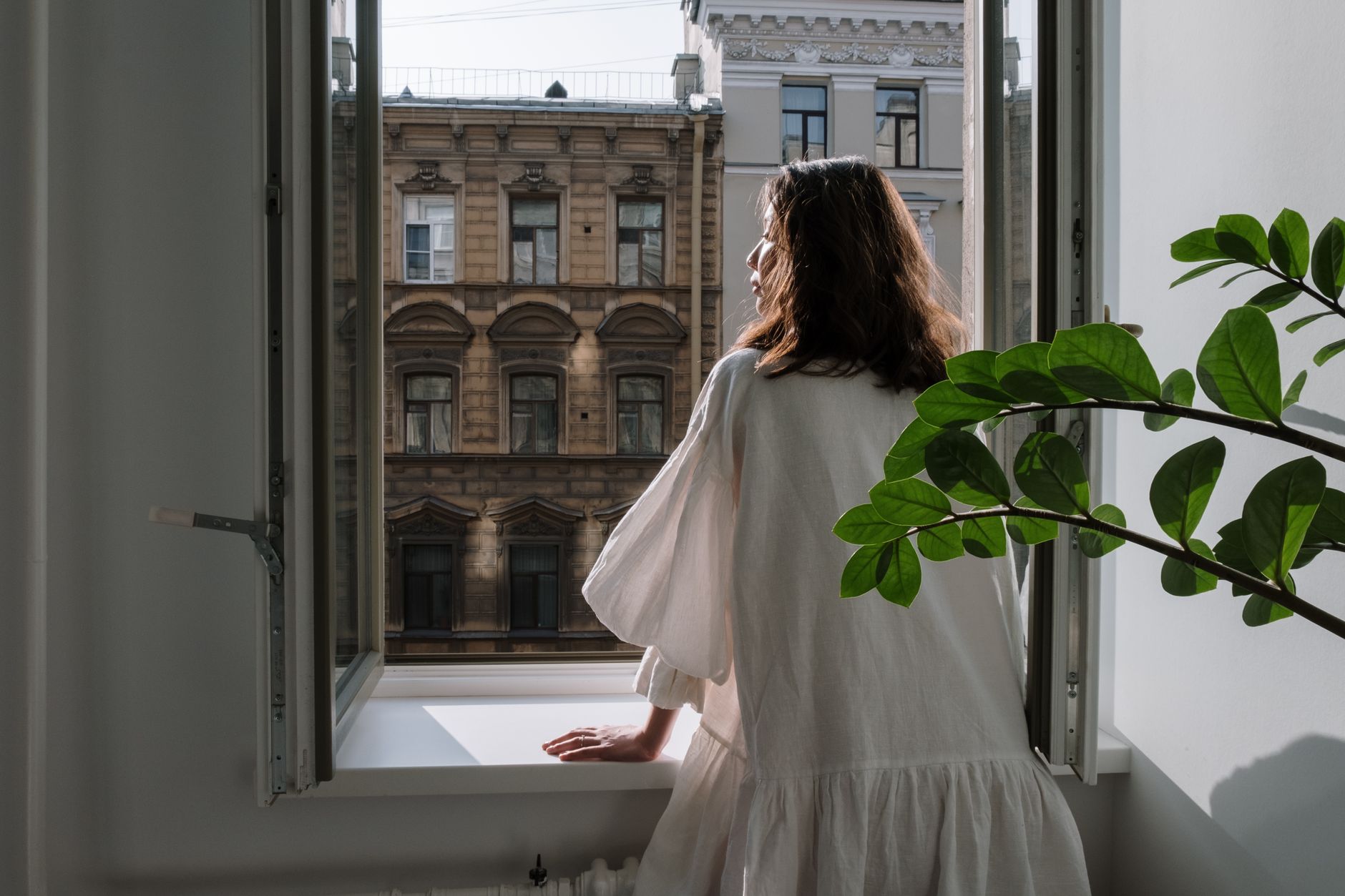
Not a particularly large one. Perhaps a lovely two-bedroom place with high ceilings, beautiful natural light and a small balcony overlooking a leafy street. There are fresh flowers on the table, a perfectly organised wardrobe and a fridge containing precisely the food she likes to eat.
There are books stacked beside the bed. The linen is always clean. There’s a very good coffee machine and absolutely nobody asking where the batteries are.
She can eat toast for dinner. She can watch whatever she likes on television. She can get into bed at nine with a book and nobody will sigh dramatically because the light is still on.
And the truly delicious part?
Nobody else lives there.
Not her husband. Not her children. Not even a particularly demanding dog.
Just her.
She loves her husband, of course. He’s a good man. They’ve built a life together, survived the exhausting years of small children, paid down mortgages, attended countless school concerts and developed an elaborate shared understanding of which relatives are best avoided at Christmas.
She’s not unhappy, exactly. She just occasionally imagines what it would be like to live in a house where everything stays exactly where she puts it. And judging by the conversations happening over long lunches and in women’s group chats, she’s far from alone.
It’s Not Another Man She Wants. It’s Another Life. Preferably With Good Storage.
We’ve been conditioned to believe that women who fantasise about leaving their marriages must be deeply dissatisfied. Perhaps they’re lonely. Perhaps the romance has disappeared. Perhaps their husband has become emotionally unavailable, or they’ve fallen out of love.
And sometimes, of course, those things are true.
But there’s another kind of marital fantasy that has very little to do with the quality of the marriage itself. It’s the fantasy of complete autonomy.
The pleasure of waking up and deciding how to spend an entire day without consulting another human being. The luxury of not knowing, or caring, whether anyone else has eaten lunch. The simple, glorious freedom of being responsible for one adult rather than functioning as the unofficial operations manager of a small domestic corporation.
In this imaginary apartment, there are no conversations about whether the dishwasher has been emptied. There is no mysterious pile of clothes sitting beside the laundry basket, apparently waiting for divine intervention.
There is no husband or child standing in front of an open fridge declaring that there’s nothing to eat, despite several hundred dollars’ worth of groceries staring directly back at him.
And there is certainly nobody asking, “What are we doing this weekend?” in a tone suggesting that she is both the entertainment director and the travel agent.
The fantasy isn’t necessarily about escaping a person. It’s about escaping the relentless obligation to consider another person.
Which, when you think about it, is a rather different thing.
The Most Romantic Thing a Man Can Say After Twenty Years of Marriage Is “I’ve Sorted Dinner”
There was a time when romance meant flowers, candlelit dinners and passionate declarations of love. Then you got married, had children, bought a house and discovered that the most seductive sentence in the English language is actually, “Don’t worry, I’ve taken care of it.”
Not “What can I do to help?”
Not “Just tell me what you need.”
And certainly not “I was going to do it.”
Just the quiet, competent assurance that something has been handled without your supervision. Because for many women, the exhausting part of marriage isn’t the physical work. It’s the thinking.
The remembering. The planning. The anticipating.
Knowing when the dog needs medication, which bills are due, whether there’s enough milk, what time the dinner reservation is, who needs a birthday present and why their husband hasn’t spoken to his sister since Easter.
It’s the mental equivalent of having forty-seven browser tabs open at all times, with one of them inexplicably playing music.
And even in marriages where household responsibilities are relatively evenly shared, one partner can still end up carrying the invisible responsibility of making sure life runs smoothly.
So perhaps it’s hardly surprising that some women occasionally imagine a life where the only person they need to organise is themselves.
And that person, incidentally, is perfectly happy eating cheese and crackers for dinner.
Why Does the Fantasy Get Stronger After 50?
There’s something particularly interesting about the timing. For many women, their fifties arrive with a series of enormous life changes.
Children become adults. Careers reach a different stage. Menopause changes the relationship they have with their bodies. Parents grow older. Friendships shift. The future begins to feel both more precious and more immediate.
And after decades of being somebody’s mother, wife, daughter, employee and emergency contact, an unsettling question can begin to surface.
What do I actually want?
Not what would make the family happy. Not what would be practical. Not what everyone else has already agreed to.
What would I choose if nobody else’s preferences needed to be considered? For some women, the answer is travel, a new career or a creative pursuit they’ve spent years putting off.
For others, it’s a little fantasy about a beautiful apartment containing an expensive sofa that nobody is allowed to eat on.
There’s something rather liberating about reaching an age when the need to please everyone begins to lose its appeal.
The woman who once spent an entire afternoon accommodating six different dinner preferences might suddenly realise she could simply make pasta.
Or not make dinner at all.
Imagine.
Of course, the appeal of independence isn’t exclusive to women over 50. Younger women experience it too. But midlife can bring a particular clarity about the difference between loving the life you’ve built and wanting every single part of it to remain exactly the same.
The Husband Is Often Completely Oblivious
One of the more entertaining aspects of the divorce fantasy is that the husband in question may have absolutely no idea it’s happening. As far as he’s concerned, everything is fine.
They have dinner together. They watch television. They go on holidays. They argue occasionally about the correct way to load the dishwasher, but otherwise things are ticking along quite nicely.
Meanwhile, his wife has mentally purchased a small apartment in Paris, decorated it entirely in cream and pale oak, and worked out which books she’d take with her.
She has considered the lighting, the linen, the neighbourhood boulangerie and whether she would keep fresh flowers in the bedroom.
She has not, notably, included him in the floor plan.
This doesn’t necessarily mean she wants him gone. In fact, in many versions of the fantasy, he’s still around.
Perhaps he visits occasionally. Perhaps they have dinner twice a week. Perhaps they go on holidays together and then return to their separate homes, where everyone can control their own thermostat.
It’s an arrangement that would once have seemed faintly scandalous.
Now it sounds rather civilised.
There are, after all, couples who genuinely choose to live apart while maintaining committed relationships. Sometimes called living apart together, the arrangement challenges the idea that sharing a roof is the ultimate proof of romantic devotion.
For most married women entertaining the fantasy, however, there’s no actual property inspection booked. It’s simply nice to know the imaginary apartment is there.
Perhaps We Have Marriage All Wrong
Modern marriage asks an extraordinary amount of two people. Your partner is supposed to be your lover, best friend, emotional support, financial collaborator, travel companion, parenting partner, intellectual equal and preferred person to spend a rainy Sunday with.
They should make you laugh, challenge you intellectually, understand your emotional needs and ideally remember to buy toilet paper.
It’s a remarkable job description.
And one that arguably no single human being is entirely qualified to fulfil.
For generations, marriage was understood primarily as an economic and social partnership. Love mattered, of course, but the expectation that one person should provide almost every source of happiness and fulfilment is a relatively modern idea.
Now we expect stability and excitement. Security and spontaneity. Familiarity and passion. We want someone who knows us completely but can still surprise us. Someone who shares our life but never infringes upon our independence. And someone who is always there for us but occasionally, please, could just go somewhere else for a few hours.
Perhaps the divorce fantasy isn’t a rejection of marriage at all. Perhaps it’s a reaction to the enormous pressure we place on marriage to satisfy every part of our lives.
There’s a Reason Women Love a Girls’ Weekend
Consider what happens when a group of married women goes away together. Within approximately twenty minutes of arriving at their destination, a remarkable transformation takes place.
Nobody is asking them what’s for dinner. Nobody needs a clean sports uniform. Nobody is enquiring about the location of their phone charger. Nobody expects them to mediate a minor domestic disagreement about where the car keys were last seen.
They can order another bottle of wine without considering whether someone else needs to drive home.
They can stay up talking until two in the morning. They can spend three hours wandering through shops without receiving a text asking when they’ll be back.
They can eat lunch at four. And the conversation, inevitably, turns to how wonderful it is to be away. Not necessarily away from their husbands specifically, but away from the constant demands of ordinary domestic life.
There’s laughter, a little complaining and usually at least one woman who announces, after her second glass of rosé, that she’s seriously considering moving to Italy.
By Sunday afternoon, most of them are perfectly happy to return home.
They’ve missed their families. They’re looking forward to their own beds. They might even be rather pleased to see their husbands.
But something important has happened. For forty-eight hours, they’ve remembered what it feels like to be a person rather than a role. And that’s an intoxicating thing.
But Would We Actually Be Happier Living Alone?
Here’s where the fantasy becomes interesting. Because the imagined version of single life rarely includes the less appealing details.
There are no unexpected plumbing bills. No lonely Sunday afternoons. No financial worries about maintaining two households. No awkward conversations about dividing possessions, navigating family relationships or explaining to your children why you’ve decided to move into a chic little apartment.
The imaginary home doesn’t need insurance, its appliances never break down and the neighbours are unfailingly charming.
And in this beautiful parallel universe, the woman herself never feels lonely, frightened, ill or overwhelmed. Reality, naturally, is less obliging.
Marriage can offer extraordinary comfort. The intimacy of shared history. The reassurance of having someone who knows exactly how you take your coffee. The quiet pleasure of sitting beside another person without needing to make conversation.
There’s something deeply lovely about being known so completely.
And while solitude can be wonderful, loneliness is another matter entirely.
The fantasy of independence often overlooks the thousands of small moments that make a long relationship meaningful.
The private jokes. The remembered stories. The person who brings you tea when you’re unwell and knows, without being asked, that you hate the big mugs.
The husband who drives you to the airport at five in the morning, remembers how frightened you were when your mother was ill and still laughs at a story you’ve told at least fifteen times.
For many women, those things matter far more than an immaculate kitchen. Even if the dishwasher situation remains a constant source of tension.
What If You Don’t Need a Divorce? Just a Door That Closes.
Perhaps the most useful thing about the divorce fantasy is that it tells us something. Not necessarily that we should leave our marriages, but that we might need more independence within them.
A room of our own. Time alone. Separate hobbies. Friendships that exist outside the marriage. The freedom to make decisions without turning every small preference into a committee meeting.
And, crucially, a fairer distribution of the invisible labour that makes domestic life possible.
Because a weekend away is lovely, but it doesn’t solve much if you return to three loads of washing, an empty fridge and a family that has spent forty-eight hours waiting for you to come home and restore civilisation.
Real independence requires something more substantial than an occasional spa weekend.
It requires the freedom to be unavailable without everything falling apart.
It requires a partner who sees household management as a shared responsibility rather than something he occasionally assists with.
And it requires letting go of the idea that being a good wife means being permanently accessible.
For some couples, that might mean separate bedrooms or more time apart. For others, it might mean rediscovering interests that have nothing to do with each other.
And for a few, it may lead to difficult but necessary conversations about whether the marriage itself is still working.
The important distinction is that fantasising about freedom and genuinely wanting to end a relationship are not automatically the same thing.
Sometimes an imaginary escape is simply a reminder that there’s a part of you that needs a little more room.
The Marriage Is Fine. She Just Wants the Apartment.
So no, she probably isn’t leaving her husband. She loves him. She likes their life. She appreciates the comfort of shared history, the pleasure of familiar company and the fact that he knows exactly how to fix the temperamental garage door.
She just occasionally imagines waking up in a beautiful apartment where the cupboards are organised to her liking, the bathroom is entirely her own and nobody has used her expensive face cream to moisturise their elbows.
She imagines drinking coffee on the balcony in complete silence. She imagines an afternoon stretching ahead without a single obligation.
She imagines deciding to go out for dinner at the last minute, then changing her mind and eating toast in bed instead.
Nobody questions either decision. And perhaps that’s the entire point. Because the divorce fantasy isn’t always about wanting to escape your husband.
Sometimes it’s about wanting to escape the version of yourself who has spent decades making sure everybody else is comfortable.
The wife. The mother. The organiser. The person who always knows what needs doing next.
Maybe she doesn’t want a divorce.
Maybe she just wants to be left alone occasionally, preferably in an apartment with lovely natural light.
And if her husband really loves her, he might consider doing something rather radical.
Taking responsibility for dinner without asking her what she wants.
Or, better still, going away for the weekend and leaving her in the house. With absolutely no instructions.


She loves her husband. She doesn’t want an affair, a dramatic separation or a new man with an interesting collection of emotional problems. She just wants a beautiful little apartment where nobody leaves dishes in the sink, asks what’s for dinner or breathes quite so loudly. Welcome to the divorce fantasy, and the surprising number of happily married women who know exactly what it feels like.
There’s a particular fantasy that begins to creep into the minds of women who have been married for fifteen, twenty or thirty years. It doesn’t involve a handsome stranger, an illicit weekend in Paris or running away with the tennis instructor.
It involves an apartment.
Not a particularly large one. Perhaps a lovely two-bedroom place with high ceilings, beautiful natural light and a small balcony overlooking a leafy street. There are fresh flowers on the table, a perfectly organised wardrobe and a fridge containing precisely the food she likes to eat.
There are books stacked beside the bed. The linen is always clean. There’s a very good coffee machine and absolutely nobody asking where the batteries are.
She can eat toast for dinner. She can watch whatever she likes on television. She can get into bed at nine with a book and nobody will sigh dramatically because the light is still on.
And the truly delicious part?
Nobody else lives there.
Not her husband. Not her children. Not even a particularly demanding dog.
Just her.
She loves her husband, of course. He’s a good man. They’ve built a life together, survived the exhausting years of small children, paid down mortgages, attended countless school concerts and developed an elaborate shared understanding of which relatives are best avoided at Christmas.
She’s not unhappy, exactly. She just occasionally imagines what it would be like to live in a house where everything stays exactly where she puts it. And judging by the conversations happening over long lunches and in women’s group chats, she’s far from alone.
It’s Not Another Man She Wants. It’s Another Life. Preferably With Good Storage.
We’ve been conditioned to believe that women who fantasise about leaving their marriages must be deeply dissatisfied. Perhaps they’re lonely. Perhaps the romance has disappeared. Perhaps their husband has become emotionally unavailable, or they’ve fallen out of love.
And sometimes, of course, those things are true.
But there’s another kind of marital fantasy that has very little to do with the quality of the marriage itself. It’s the fantasy of complete autonomy.
The pleasure of waking up and deciding how to spend an entire day without consulting another human being. The luxury of not knowing, or caring, whether anyone else has eaten lunch. The simple, glorious freedom of being responsible for one adult rather than functioning as the unofficial operations manager of a small domestic corporation.
In this imaginary apartment, there are no conversations about whether the dishwasher has been emptied. There is no mysterious pile of clothes sitting beside the laundry basket, apparently waiting for divine intervention.
There is no husband or child standing in front of an open fridge declaring that there’s nothing to eat, despite several hundred dollars’ worth of groceries staring directly back at him.
And there is certainly nobody asking, “What are we doing this weekend?” in a tone suggesting that she is both the entertainment director and the travel agent.
The fantasy isn’t necessarily about escaping a person. It’s about escaping the relentless obligation to consider another person.
Which, when you think about it, is a rather different thing.
The Most Romantic Thing a Man Can Say After Twenty Years of Marriage Is “I’ve Sorted Dinner”
There was a time when romance meant flowers, candlelit dinners and passionate declarations of love. Then you got married, had children, bought a house and discovered that the most seductive sentence in the English language is actually, “Don’t worry, I’ve taken care of it.”
Not “What can I do to help?”
Not “Just tell me what you need.”
And certainly not “I was going to do it.”
Just the quiet, competent assurance that something has been handled without your supervision. Because for many women, the exhausting part of marriage isn’t the physical work. It’s the thinking.
The remembering. The planning. The anticipating.
Knowing when the dog needs medication, which bills are due, whether there’s enough milk, what time the dinner reservation is, who needs a birthday present and why their husband hasn’t spoken to his sister since Easter.
It’s the mental equivalent of having forty-seven browser tabs open at all times, with one of them inexplicably playing music.
And even in marriages where household responsibilities are relatively evenly shared, one partner can still end up carrying the invisible responsibility of making sure life runs smoothly.
So perhaps it’s hardly surprising that some women occasionally imagine a life where the only person they need to organise is themselves.
And that person, incidentally, is perfectly happy eating cheese and crackers for dinner.
Why Does the Fantasy Get Stronger After 50?
There’s something particularly interesting about the timing. For many women, their fifties arrive with a series of enormous life changes.
Children become adults. Careers reach a different stage. Menopause changes the relationship they have with their bodies. Parents grow older. Friendships shift. The future begins to feel both more precious and more immediate.
And after decades of being somebody’s mother, wife, daughter, employee and emergency contact, an unsettling question can begin to surface.
What do I actually want?
Not what would make the family happy. Not what would be practical. Not what everyone else has already agreed to.
What would I choose if nobody else’s preferences needed to be considered? For some women, the answer is travel, a new career or a creative pursuit they’ve spent years putting off.
For others, it’s a little fantasy about a beautiful apartment containing an expensive sofa that nobody is allowed to eat on.
There’s something rather liberating about reaching an age when the need to please everyone begins to lose its appeal.
The woman who once spent an entire afternoon accommodating six different dinner preferences might suddenly realise she could simply make pasta.
Or not make dinner at all.
Imagine.
Of course, the appeal of independence isn’t exclusive to women over 50. Younger women experience it too. But midlife can bring a particular clarity about the difference between loving the life you’ve built and wanting every single part of it to remain exactly the same.
The Husband Is Often Completely Oblivious
One of the more entertaining aspects of the divorce fantasy is that the husband in question may have absolutely no idea it’s happening. As far as he’s concerned, everything is fine.
They have dinner together. They watch television. They go on holidays. They argue occasionally about the correct way to load the dishwasher, but otherwise things are ticking along quite nicely.
Meanwhile, his wife has mentally purchased a small apartment in Paris, decorated it entirely in cream and pale oak, and worked out which books she’d take with her.
She has considered the lighting, the linen, the neighbourhood boulangerie and whether she would keep fresh flowers in the bedroom.
She has not, notably, included him in the floor plan.
This doesn’t necessarily mean she wants him gone. In fact, in many versions of the fantasy, he’s still around.
Perhaps he visits occasionally. Perhaps they have dinner twice a week. Perhaps they go on holidays together and then return to their separate homes, where everyone can control their own thermostat.
It’s an arrangement that would once have seemed faintly scandalous.
Now it sounds rather civilised.
There are, after all, couples who genuinely choose to live apart while maintaining committed relationships. Sometimes called living apart together, the arrangement challenges the idea that sharing a roof is the ultimate proof of romantic devotion.
For most married women entertaining the fantasy, however, there’s no actual property inspection booked. It’s simply nice to know the imaginary apartment is there.
Perhaps We Have Marriage All Wrong
Modern marriage asks an extraordinary amount of two people. Your partner is supposed to be your lover, best friend, emotional support, financial collaborator, travel companion, parenting partner, intellectual equal and preferred person to spend a rainy Sunday with.
They should make you laugh, challenge you intellectually, understand your emotional needs and ideally remember to buy toilet paper.
It’s a remarkable job description.
And one that arguably no single human being is entirely qualified to fulfil.
For generations, marriage was understood primarily as an economic and social partnership. Love mattered, of course, but the expectation that one person should provide almost every source of happiness and fulfilment is a relatively modern idea.
Now we expect stability and excitement. Security and spontaneity. Familiarity and passion. We want someone who knows us completely but can still surprise us. Someone who shares our life but never infringes upon our independence. And someone who is always there for us but occasionally, please, could just go somewhere else for a few hours.
Perhaps the divorce fantasy isn’t a rejection of marriage at all. Perhaps it’s a reaction to the enormous pressure we place on marriage to satisfy every part of our lives.
There’s a Reason Women Love a Girls’ Weekend
Consider what happens when a group of married women goes away together. Within approximately twenty minutes of arriving at their destination, a remarkable transformation takes place.
Nobody is asking them what’s for dinner. Nobody needs a clean sports uniform. Nobody is enquiring about the location of their phone charger. Nobody expects them to mediate a minor domestic disagreement about where the car keys were last seen.
They can order another bottle of wine without considering whether someone else needs to drive home.
They can stay up talking until two in the morning. They can spend three hours wandering through shops without receiving a text asking when they’ll be back.
They can eat lunch at four. And the conversation, inevitably, turns to how wonderful it is to be away. Not necessarily away from their husbands specifically, but away from the constant demands of ordinary domestic life.
There’s laughter, a little complaining and usually at least one woman who announces, after her second glass of rosé, that she’s seriously considering moving to Italy.
By Sunday afternoon, most of them are perfectly happy to return home.
They’ve missed their families. They’re looking forward to their own beds. They might even be rather pleased to see their husbands.
But something important has happened. For forty-eight hours, they’ve remembered what it feels like to be a person rather than a role. And that’s an intoxicating thing.
But Would We Actually Be Happier Living Alone?
Here’s where the fantasy becomes interesting. Because the imagined version of single life rarely includes the less appealing details.
There are no unexpected plumbing bills. No lonely Sunday afternoons. No financial worries about maintaining two households. No awkward conversations about dividing possessions, navigating family relationships or explaining to your children why you’ve decided to move into a chic little apartment.
The imaginary home doesn’t need insurance, its appliances never break down and the neighbours are unfailingly charming.
And in this beautiful parallel universe, the woman herself never feels lonely, frightened, ill or overwhelmed. Reality, naturally, is less obliging.
Marriage can offer extraordinary comfort. The intimacy of shared history. The reassurance of having someone who knows exactly how you take your coffee. The quiet pleasure of sitting beside another person without needing to make conversation.
There’s something deeply lovely about being known so completely.
And while solitude can be wonderful, loneliness is another matter entirely.
The fantasy of independence often overlooks the thousands of small moments that make a long relationship meaningful.
The private jokes. The remembered stories. The person who brings you tea when you’re unwell and knows, without being asked, that you hate the big mugs.
The husband who drives you to the airport at five in the morning, remembers how frightened you were when your mother was ill and still laughs at a story you’ve told at least fifteen times.
For many women, those things matter far more than an immaculate kitchen. Even if the dishwasher situation remains a constant source of tension.
What If You Don’t Need a Divorce? Just a Door That Closes.
Perhaps the most useful thing about the divorce fantasy is that it tells us something. Not necessarily that we should leave our marriages, but that we might need more independence within them.
A room of our own. Time alone. Separate hobbies. Friendships that exist outside the marriage. The freedom to make decisions without turning every small preference into a committee meeting.
And, crucially, a fairer distribution of the invisible labour that makes domestic life possible.
Because a weekend away is lovely, but it doesn’t solve much if you return to three loads of washing, an empty fridge and a family that has spent forty-eight hours waiting for you to come home and restore civilisation.
Real independence requires something more substantial than an occasional spa weekend.
It requires the freedom to be unavailable without everything falling apart.
It requires a partner who sees household management as a shared responsibility rather than something he occasionally assists with.
And it requires letting go of the idea that being a good wife means being permanently accessible.
For some couples, that might mean separate bedrooms or more time apart. For others, it might mean rediscovering interests that have nothing to do with each other.
And for a few, it may lead to difficult but necessary conversations about whether the marriage itself is still working.
The important distinction is that fantasising about freedom and genuinely wanting to end a relationship are not automatically the same thing.
Sometimes an imaginary escape is simply a reminder that there’s a part of you that needs a little more room.
The Marriage Is Fine. She Just Wants the Apartment.
So no, she probably isn’t leaving her husband. She loves him. She likes their life. She appreciates the comfort of shared history, the pleasure of familiar company and the fact that he knows exactly how to fix the temperamental garage door.
She just occasionally imagines waking up in a beautiful apartment where the cupboards are organised to her liking, the bathroom is entirely her own and nobody has used her expensive face cream to moisturise their elbows.
She imagines drinking coffee on the balcony in complete silence. She imagines an afternoon stretching ahead without a single obligation.
She imagines deciding to go out for dinner at the last minute, then changing her mind and eating toast in bed instead.
Nobody questions either decision. And perhaps that’s the entire point. Because the divorce fantasy isn’t always about wanting to escape your husband.
Sometimes it’s about wanting to escape the version of yourself who has spent decades making sure everybody else is comfortable.
The wife. The mother. The organiser. The person who always knows what needs doing next.
Maybe she doesn’t want a divorce.
Maybe she just wants to be left alone occasionally, preferably in an apartment with lovely natural light.
And if her husband really loves her, he might consider doing something rather radical.
Taking responsibility for dinner without asking her what she wants.
Or, better still, going away for the weekend and leaving her in the house. With absolutely no instructions.
Now that’s romance.
Share this:
Like this: