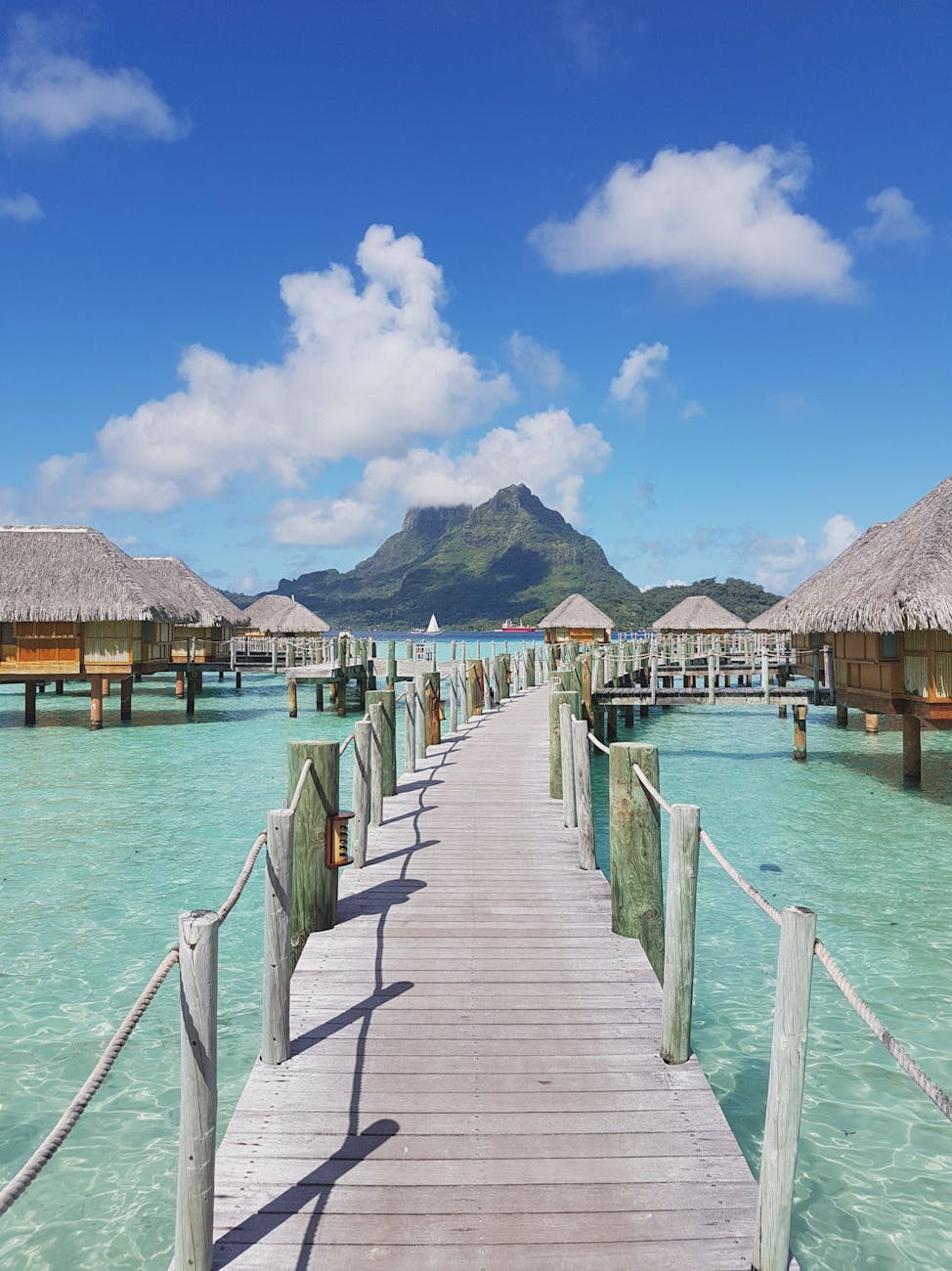
French Polynesia is the kind of destination that feels almost unreal until you arrive. The water really is that blue. The mountains really do rise out of the lagoon like something from a dream. The beaches really are fringed with palms, the air really does smell faintly of flowers and salt, and the pace of life really does make you question why you spend so much of the year rushing.
But French Polynesia is also much more than the postcard version of Bora Bora. The wider destination is made up of 118 islands across five archipelagos, including the Society Islands, Tuamotu Islands, Marquesas Islands, Austral Islands and Gambier Islands. Tahiti, Moorea and Bora Bora may be the most famous names, but places like Huahine, Taha’a, Raiatea, Maupiti, Fakarava, Tikehau, Rangiroa, Nuku Hiva, Hiva Oa, Rurutu and Raivavae offer a more layered, soulful and often quieter way to experience the islands.
For travellers dreaming of overwater bungalows, reef snorkelling, volcanic peaks, slow island days, fresh seafood, warm Polynesian hospitality and those endless turquoise lagoons, this guide covers everything you need to know before planning a trip to Tahiti and French Polynesia.
Photo by Vincent Gerbouin
Where Is French Polynesia?
French Polynesia sits in the South Pacific Ocean, roughly halfway between Australia and South America. It is an overseas collectivity of France, which means you will notice a mix of Polynesian, French and wider Pacific influences throughout the islands, from the language and food to the architecture, road signs and administrative systems.
Most travellers refer to the destination as “Tahiti,” but Tahiti is actually just one island. It is the largest island in French Polynesia and the main international gateway, home to the capital, Papeete, and Tahiti Faa’a International Airport.
The broader destination is often marketed as The Islands of Tahiti, which includes Bora Bora, Moorea, Taha’a, Raiatea, Huahine, Rangiroa, Fakarava, Tikehau, the Marquesas and many more.
Photo by Adrien Daurenjou
How to Get to Tahiti and French Polynesia
All international flights arrive into Tahiti Faa’a International Airport, also known by the airport code PPT, on the island of Tahiti. From there, travellers connect to other islands by domestic flight, ferry, cruise or private transfer, depending on the destination. Tahiti Tourisme notes that inter-island flights are operated by domestic airlines including Air Tahiti and Air Moana.
From Australia, the most common routes usually involve flying via Auckland, or connecting through another international hub depending on airline schedules. Flight routes and connections can change, so it is worth checking directly with airlines or a specialist South Pacific travel agent before locking in your itinerary.
Once you land in Tahiti, you can stay on the main island for a few nights or connect onwards. Moorea is the easiest island to reach from Tahiti, with the option of a short flight or ferry from Papeete.
For Bora Bora, Huahine, Raiatea, Taha’a, Rangiroa, Fakarava, Tikehau and the Marquesas, most visitors fly domestically from Tahiti. Some islands are easy to combine, while others require careful planning because flights may not run every day.
The Main Island Groups Explained
French Polynesia is easier to understand once you think of it by archipelago rather than as one single island destination.
The Society Islands
This is the best known island group and the easiest for first time travellers. It includes Tahiti, Moorea, Bora Bora, Huahine, Raiatea, Taha’a and Maupiti.
This is where you will find many of the classic French Polynesia experiences, lush volcanic mountains, lagoons, overwater bungalows, snorkelling, resorts, guesthouses, vanilla plantations, waterfalls and cultural sites.
Best for: first timers, honeymoons, luxury travel, easy island hopping, lagoon scenery, resorts and classic South Pacific beauty.
The Tuamotu Islands
The Tuamotus are a chain of coral atolls known for extraordinary lagoons, diving, snorkelling, pearl farms and remote island beauty. Rangiroa, Fakarava and Tikehau are the most accessible names for visitors.
These islands feel flatter and more lagoon focused than Tahiti, Moorea and Bora Bora. There are fewer dramatic mountains, but the marine life can be sensational.
Best for: divers, snorkellers, underwater photography, lagoon lovers, remote island stays and travellers who want fewer crowds.
The Marquesas Islands
The Marquesas feel wild, remote and culturally rich. Instead of calm lagoons and reef protected beaches, the Marquesas are known for volcanic cliffs, deep valleys, dramatic coastlines, horses, archaeological sites, wood carving, tattoo culture and a powerful sense of place.
The Marquesas are rugged and untamed, with steep volcanic mountains plunging into the Pacific rather than the lagoon landscapes found elsewhere in French Polynesia.
Best for: culture, adventure, hiking, art, history, photography and travellers who want something far beyond the honeymoon brochure.
The Austral Islands
The Austral Islands sit further south and are much less visited. Rurutu is known for whale watching in season, while Raivavae is often described as one of the most beautiful and untouched islands in French Polynesia.
Best for: off the beaten track travel, whale watching, remote beaches, local guesthouses and a slower, more traditional island rhythm.
The Gambier Islands
The Gambier Islands are among the most remote parts of French Polynesia. Mangareva is the main island travellers may hear about, though this region is far less common for first time visitors.
Best for: experienced travellers, remote island collectors, culture, history and serious slow travel.
Best Time to Visit Tahiti and French Polynesia
French Polynesia is warm year round, but there are two broad seasons. The drier, cooler season generally runs from May to October. This is the most popular time to visit because humidity is lower, rainfall is generally less frequent and conditions are often better for outdoor activities, sailing, snorkelling and resort stays. Tahiti Tourisme Australia describes the dry season as cooler, less humid and generally sunnier.
The warmer, wetter season generally runs from November to April. Temperatures are higher, humidity rises and tropical showers are more common, particularly around December, January and February. Tahiti Tourisme notes that November to April is the warmest period, with temperatures ranging from about 25°C to 35°C, and that it is also the rainy season.
For most travellers, the sweet spots are often May, June, September and October. These months can offer a good balance of pleasant weather and slightly fewer peak season crowds, though French Polynesia is never exactly a budget destination.
How Long Do You Need in French Polynesia?
The biggest mistake many travellers make is trying to do too much. French Polynesia looks compact on a map until you realise how spread out the islands are. Flights, ferry schedules and transfer times matter.
For a first trip, 10 to 14 days is ideal. A shorter trip of 7 nights can work if you focus on Tahiti and Moorea, or Tahiti, Moorea and Bora Bora.
A 10 night trip gives you enough time for three islands, such as Tahiti, Moorea and Bora Bora, or Tahiti, Moorea and Huahine.
A 14 night trip lets you add something more adventurous, such as Taha’a, Raiatea, Rangiroa, Fakarava or the Marquesas.
If you want to visit the Marquesas or Austral Islands properly, consider three weeks or more. These are not places to squeeze in as an afterthought.
Best Islands to Visit for a First Trip
Tahiti
Tahiti is often treated as a transit stop, but it deserves at least one or two nights. This is where you can visit Papeete Market, explore black sand beaches, see waterfalls, take a circle island tour, eat at food trucks, learn about Polynesian culture and get your bearings before flying onwards.
Tahiti is also the practical heart of the trip. You will likely pass through it at the beginning and end, so it makes sense to use that time well rather than rushing straight to another island.
Stay here for culture, food, markets, waterfalls and an introduction to everyday Polynesian life.
Moorea
Moorea is one of the best islands in French Polynesia for first time visitors because it delivers an incredible amount without feeling too difficult. It is close to Tahiti, easy to reach, and has that classic South Pacific combination of mountains, lagoon, beaches and relaxed accommodation.
You can snorkel with rays, swim in blue water, hike, visit pineapple plantations, drive around the island, enjoy casual beachside meals and stay in everything from guesthouses to luxury resorts.
Moorea is a wonderful choice for travellers who want beauty without the full Bora Bora price tag.
Bora Bora
Bora Bora is the fantasy island. It is famous for Mount Otemanu, luminous lagoons and some of the world’s most recognisable overwater bungalow resorts. It is expensive, polished and very much geared toward honeymoons, anniversaries and once in a lifetime trips.
Bora Bora is worth it if you want the full luxury lagoon experience. But it is not the only beautiful island in French Polynesia, and it is not always the most culturally immersive. Think of it as the glamorous finale, not the whole story.
Huahine
Huahine is a superb choice if you want something quieter, greener and more local. It is often called the Garden Island and feels less developed than Moorea or Bora Bora. There are archaeological sites, beaches, lagoon tours, vanilla, small villages, guesthouses and a gentle island rhythm. Huahine is perfect for travellers who want beauty but not too much gloss.
Raiatea and Taha’a share the same lagoon but have very different personalities. Raiatea is culturally important and often associated with sailing, sacred sites and the UNESCO listed Taputapuātea cultural landscape. Taha’a is quieter, flower shaped and known for vanilla plantations, motu stays and a relaxed atmosphere. Together, they make a lovely alternative or addition to Bora Bora.
Photo by Taryn Elliott
Best Off the Beaten Track Islands in French Polynesia
Maupiti
Maupiti is often described as what Bora Bora may have felt like decades ago. It has a dramatic central mountain, a sparkling lagoon and a much quieter, more local feel. There are no big international resorts, which is part of the appeal.
Accommodation is mostly simple guesthouses and family run stays. If you want polished service and five star dining, this may not be for you. If you want beauty, quiet and authenticity, it could be one of the highlights of your trip.
Fakarava
Fakarava is one of the great destinations for divers and snorkellers. It is part of the Tuamotu Islands and known for its lagoon, passes, reef life and remote atmosphere. It suits travellers who care more about underwater experiences than shopping, nightlife or resort glamour.
Fakarava can be combined with Rangiroa or Tikehau for a more adventurous lagoon focused itinerary.
Tikehau is dreamy, soft and lagoon heavy. Think pink sand tinged beaches, quiet motu, clear water and a strong sense of escape. It is a beautiful choice for couples who want a more secluded alternative to the better known islands.
Rangiroa
Rangiroa is one of the world’s largest atolls and a major diving destination. It is known for its huge lagoon, marine life, blue lagoon excursions and relaxed atoll stays. It feels very different from Moorea or Bora Bora because the landscape is flatter and more ocean focused.
Nuku Hiva
Nuku Hiva, in the Marquesas, is for travellers who want drama rather than resort perfection. Expect cliffs, valleys, waterfalls, archaeological sites, cultural encounters and a far more rugged version of French Polynesia.
This is not the island for a classic overwater bungalow holiday. It is the island for people who want to feel somewhere remote and powerful.
Hiva Oa
Hiva Oa is another Marquesas island with deep cultural appeal. It is associated with artist Paul Gauguin and singer Jacques Brel, but its real magic is in the landscapes, archaeological sites and strong Marquesan identity.
Rurutu
Rurutu, in the Austral Islands, is especially known for whale watching during the right season. It is far less visited than the Society Islands and offers a completely different experience of French Polynesia.
Raivavae
Raivavae is remote, quiet and astonishingly beautiful. It is sometimes compared visually to Bora Bora, but without the international resort scene. Travel here requires more effort, patience and flexibility, but that is exactly why it remains so special.
Suggested Itineraries
7 Days, Easy First Trip
Spend one night in Tahiti, four nights in Moorea and two nights back in Tahiti or add a short Bora Bora stay if your budget allows. This works well for travellers from Australia who want a manageable beach and lagoon holiday without too many transfers.
10 Days, Classic French Polynesia
Spend two nights in Tahiti, four nights in Moorea and four nights in Bora Bora. This is the classic honeymoon style route and gives you a beautiful mix of culture, scenery, lagoon activities and luxury.
12 to 14 Days, More Interesting Island Mix
Spend two nights in Tahiti, four nights in Moorea, three nights in Huahine and three to four nights in Taha’a or Bora Bora. This gives you the classic highlights but adds a more local, less obvious island experience.
14 to 18 Days, Lagoon and Diving Route
Spend one or two nights in Tahiti, four nights in Moorea, four nights in Rangiroa or Fakarava, then four nights in Bora Bora or Taha’a. This is ideal if snorkelling, diving and lagoon experiences are a priority.
3 Weeks, Culture and Remote Islands
Spend two nights in Tahiti, four nights in Moorea, three nights in Huahine, four nights in Taha’a or Raiatea, then continue to the Marquesas for Nuku Hiva and Hiva Oa. This is a richer, more adventurous trip that goes well beyond the honeymoon trail.
Photo by Adrien Daurenjou
Where to Stay, Luxury and Budget Options
French Polynesia can be expensive, but there is more variety than many travellers realise. Yes, there are legendary five star resorts with overwater bungalows. But there are also family run pensions, guesthouses, self catering stays and smaller hotels that make the destination more accessible.
Luxury Stays
For the classic luxury French Polynesia experience, look at Bora Bora, Taha’a, Moorea and Tetiaroa. Bora Bora is the obvious choice for overwater bungalows, lagoon views and high-end resort service. This is where you will find some of the destination’s most famous luxury properties, often set on private motu facing Mount Otemanu.
Taha’a is ideal if you want something luxurious but quieter, especially if you love the idea of vanilla plantations, motu beaches and a slower mood.
Moorea has luxury resorts too, but also feels more accessible and active than Bora Bora. It is a strong choice if you want a beautiful setting without feeling cut off from local life.
Tetiaroa, a private atoll north of Tahiti, is one of the most exclusive stays in French Polynesia and suits travellers looking for serious barefoot luxury.
Photo by Vincent Gerbouin
Mid Range Stays
For better value without losing charm, look at Moorea, Huahine, Raiatea and Tahiti. These islands offer smaller hotels, boutique stays and guesthouses that can feel more connected to the destination than large resort properties.
Moorea is particularly good for travellers who want a beautiful lagoon holiday with more accommodation variety. Huahine is excellent for relaxed stays, while Raiatea works well for sailing, culture and access to Taha’a.
Budget and Guesthouse Options
The best way to reduce costs in French Polynesia is to choose pensions, also called family run guesthouses. These can range from simple rooms to charming beachfront stays with home cooked meals.
Guesthouses are often more personal, more local and more culturally rewarding than big resorts. They are especially useful on islands like Huahine, Maupiti, Fakarava, Tikehau, Raiatea, Rurutu and the Marquesas.
Self catering accommodation can also help with costs, especially on Tahiti and Moorea, where you may have easier access to supermarkets, food trucks and casual restaurants.
How Much Does French Polynesia Cost?
French Polynesia is not a cheap destination. Flights, domestic island hopping, imported goods, resorts and activities can all add up quickly. Your budget will depend heavily on how many islands you visit, whether you choose resorts or guesthouses, how often you eat out, and whether you include Bora Bora.
As a broad planning mindset:
A luxury trip will usually involve international flights, domestic flights, private transfers, high end resorts, overwater bungalows, lagoon tours, fine dining and spa treatments.
A mid range trip might combine Moorea, Huahine or Raiatea with smaller hotels, selected tours, casual restaurants and one splurge stay.
A more affordable trip is possible by focusing on Tahiti and Moorea, using ferries where possible, staying in guesthouses or self catering accommodation, eating at markets and food trucks, and limiting inter island flights.
The most expensive part is usually not just accommodation, it is the combination of accommodation plus domestic flights between multiple islands.
Money, Currency and Payments
The currency in French Polynesia is the Pacific Franc, often shown as XPF or CFP. The Pacific Franc is fixed to the Euro, with Tahiti Tourisme listing the fixed rate as 1 Euro to 119.33 XPF. Major credit cards are widely accepted, and currency exchange is available at Tahiti Faa’a Airport during international flight arrival and departure times, as well as in Papeete.
In resorts, larger restaurants and hotels, cards are usually fine. On smaller islands, in markets, for taxis, guesthouses, food stalls or local tours, cash is useful. Do not assume every remote island will have easy ATM access, and do not leave cash withdrawals until the last moment before flying to a smaller atoll.
What to Eat in Tahiti and French Polynesia
Food in French Polynesia reflects the islands themselves, fresh, ocean driven, tropical, French influenced and shaped by Polynesian traditions.
Poisson Cru
The must try dish is poisson cru au lait de coco, also known as raw fish with coconut milk. Tahiti Tourisme describes it as fresh raw fish marinated with coconut milk and lime, and notes that it is widely served across restaurants in the islands.
It is refreshing, rich, clean and perfect in the heat. You will find it in resorts, casual restaurants, food trucks and local snack bars.
Fresh Seafood
Expect tuna, mahi mahi, reef fish, prawns, lobster and other seafood depending on where you are. Grilled fish with rice, salad and coconut sauce can be one of the simplest and best meals of the trip.
Firi Firi
Firi firi are Tahitian coconut doughnuts, often eaten for breakfast. They are simple, slightly sweet and excellent with coffee.
Po’e
Po’e is a traditional Polynesian dessert often made with banana, pumpkin or papaya, mixed with starch and served with coconut milk. It is soft, sweet and very island specific.
Ma’a Tinito
Ma’a tinito reflects the Chinese influence in Tahitian food. It is a hearty dish often made with pork, beans, macaroni and soy based flavours. French Polynesia has a rich Tahitian Chinese culinary history, and dishes like ma’a tinito are part of that story.
French Influences
Because of the French connection, you will also find baguettes, pastries, good butter, French cheeses, wine and bistro style dishes, especially in Papeete and resort restaurants.
Food Trucks and Markets
Do not only eat in hotels. Papeete’s markets and roulottes, or food trucks, are a great way to experience local flavour. Food and Wine notes that Papeete’s Municipal Market is a strong introduction to Tahiti’s food culture, with local produce, snacks and island specialities.
Things to Do in French Polynesia
Snorkelling and Diving
French Polynesia is one of the world’s great marine destinations. Moorea, Bora Bora, Taha’a, Rangiroa, Fakarava and Tikehau are all excellent choices depending on your level of experience.
Expect coral gardens, rays, reef sharks, tropical fish, lagoon snorkelling, drift snorkels and, in some places, world class diving passes.
Lagoon Tours
A lagoon tour is one of the best activities on islands like Bora Bora, Moorea, Taha’a and Huahine. These tours usually include snorkelling stops, reef scenery, motu picnics and time on the water.
Hiking
Moorea, Tahiti, Raiatea, Huahine and the Marquesas all offer hiking opportunities. Trails vary in difficulty, and guided hikes are often recommended, especially in remote or mountainous areas.
Cultural Experiences
Look for traditional dance, music, craft, tattoo history, archaeological sites, marae, carving, weaving, food experiences and village visits. Raiatea, Huahine and the Marquesas are particularly rewarding for travellers interested in Polynesian culture.
Whale Watching
Whale season generally draws travellers to islands such as Moorea and Rurutu, though exact timing and regulations should be checked when planning. Always choose ethical operators that follow local guidelines and respect the animals.
Spa and Wellness
French Polynesia is naturally suited to wellness travel. Many resorts offer Polynesian massage, botanical treatments, open air spa rooms and quiet lagoon settings. Even outside luxury resorts, the pace of the islands encourages rest.
Things to Be Aware of Before You Go
Island Hopping Takes Planning
Do not assume you can move between any two islands easily. Many domestic flights route through Tahiti, and schedules may not line up perfectly. Build in buffer time, especially before your international flight home.
Sundays Can Be Quiet
Many shops, services and restaurants may close or operate reduced hours on Sundays, especially outside resort areas. Plan meals and transport ahead.
French and Tahitian Are Widely Used
French is the official language, and Tahitian is also culturally important. English is commonly spoken in major hotels and tourism settings, but less so in some local areas. A few basic French phrases are helpful.
Costs Can Be High
Imported goods are expensive, and remote islands cost more to supply. Supermarket shopping, food trucks and guesthouses can help, but French Polynesia still needs a realistic budget.
Reef Safe Travel Matters
Use reef safe sunscreen, avoid touching coral, never stand on reefs and choose responsible tour operators. The lagoons are part of what makes the islands extraordinary, and they need careful protection.
Weather Can Disrupt Plans
Tropical weather can affect flights, boats and excursions. This is another reason not to overpack your itinerary.
Travel Insurance Is Important
Smartraveller advises that travel insurance is highly recommended for French Polynesia, and may be mandatory for some tour groups and cruises.
Entry Requirements and Visas
French Polynesia is an overseas territory of France. For Australian travellers, Smartraveller advises that you likely will not need a visa for a tourist visit of up to three months, though the total stay must not exceed 90 days within a 180 day period. You may also need to show proof of sufficient funds, accommodation, onward or return travel and travel insurance. Entry rules can change, so always check the latest official advice before booking and before departure.
What to Pack for French Polynesia
Pack light, breathable clothing, swimwear, reef safe sunscreen, sunglasses, a wide brim hat, sandals, water shoes, a light rain jacket, insect repellent and a few polished resort pieces if you are staying somewhere luxurious.
For women, linen dresses, relaxed shirts, swim cover ups, flat sandals and simple evening pieces work beautifully. For men, linen shirts, tailored shorts, polos and relaxed trousers are usually enough.
Bring a dry bag for lagoon tours, a waterproof phone pouch, any medication you need, a universal adapter and copies of travel documents.
Avoid overpacking formal clothes. Even luxury resorts in French Polynesia tend to feel elegant but relaxed.
Photo by Franco Solari
The Best Islands by Travel Style
Best for Honeymoons
Bora Bora, Taha’a, Moorea and Tetiaroa.
Best for Families
Moorea and Tahiti are practical choices because they are easier to reach and have more services.
Best for Luxury
Bora Bora, Tetiaroa, Taha’a and selected resorts on Moorea.
Best for Budget Conscious Travellers
Tahiti, Moorea, Huahine, Raiatea and guesthouse stays on lesser known islands.
Best for Diving
Rangiroa, Fakarava, Tikehau and Moorea.
Best for Culture
Raiatea, Huahine, Tahiti, Nuku Hiva and Hiva Oa.
Best for Getting Away From Crowds
Maupiti, Fakarava, Tikehau, Rurutu, Raivavae and the Marquesas.
Best for a First Time Visitor
Tahiti, Moorea and Bora Bora, or Tahiti, Moorea and Huahine if you want something less obvious.
The Wrap
Tahiti and the islands of French Polynesia are not just a beach holiday. They are a lesson in slowing down, looking closely and letting the rhythm of the Pacific take over for a while. Yes, the lagoons are spectacular. Yes, Bora Bora is as beautiful as everyone says. But the real magic often appears in quieter moments, a plate of poisson cru by the water, the smell of vanilla on Taha’a, the green peaks of Moorea after rain, a family guesthouse breakfast, a market morning in Papeete, or the wild cliffs of the Marquesas.
For a first trip, keep it simple. Start with Tahiti and Moorea, add Bora Bora if you want the iconic luxury experience, or choose Huahine, Taha’a, Raiatea or the Tuamotus if you want something more personal. For a second trip, go further. The off the beaten track islands are where French Polynesia becomes even more memorable.
FAQs About Travelling to Tahiti and French Polynesia
Is Tahiti the same as French Polynesia?
No. Tahiti is one island within French Polynesia. French Polynesia is made up of 118 islands across five archipelagos, including the Society Islands, Tuamotus, Marquesas, Australs and Gambier Islands.
What is the best time to visit Tahiti?
The most popular time to visit is during the drier season, generally from May to October. This period is usually cooler, less humid and sunnier. The warmer, wetter season runs from November to April, with more humidity and tropical showers.
How many days do you need in French Polynesia?
For a first trip, 10 to 14 days is ideal. A week can work for Tahiti and Moorea, while two weeks allows you to add Bora Bora, Huahine, Taha’a, Raiatea or one of the Tuamotu atolls.
Is Bora Bora worth it?
Yes, Bora Bora is worth it if you want the iconic lagoon, Mount Otemanu views and overwater bungalow experience. However, it is expensive and not the only beautiful island in French Polynesia. Moorea, Huahine, Taha’a, Maupiti and the Tuamotus are also worth considering.
Is French Polynesia expensive?
Yes, French Polynesia is generally expensive, especially if you include luxury resorts, overwater bungalows and multiple domestic flights. You can reduce costs by staying in guesthouses, focusing on Tahiti and Moorea, eating at markets and food trucks, and limiting island hopping.
What currency is used in Tahiti?
French Polynesia uses the Pacific Franc, also called XPF or CFP. The currency is fixed to the Euro at 1 Euro to 119.33 XPF.
Can you use credit cards in French Polynesia?
Credit cards are widely accepted in major hotels, resorts and larger restaurants, but cash is useful for markets, taxis, guesthouses, smaller islands and local operators. Carry cash when travelling beyond Tahiti, Moorea and Bora Bora.
Do Australians need a visa for French Polynesia?
Australian travellers likely do not need a visa for tourist stays of up to three months, but the total stay must not exceed 90 days in a 180-day period. Entry requirements can change, so check official advice before travelling.
What food should you try in Tahiti?
Start with poisson cru au lait de coco, fresh fish marinated with lime and coconut milk. Also try firi firi, po’e, grilled seafood, ma’a tinito, tropical fruit, baguettes, pastries and food truck meals.
What are the best off the beaten track islands in French Polynesia?
Maupiti, Huahine, Fakarava, Tikehau, Nuku Hiva, Hiva Oa, Rurutu and Raivavae are excellent choices for travellers who want to go beyond Tahiti, Moorea and Bora Bora.
Is Moorea or Bora Bora better?
Moorea is easier to reach, generally more affordable and great for scenery, activities and local exploration. Bora Bora is more luxurious and famous for overwater bungalows and lagoon views. For many travellers, Moorea is better value, while Bora Bora is the once in a lifetime splurge.
Can you travel French Polynesia on a budget?
You can travel more affordably by staying in guesthouses, choosing Tahiti and Moorea, using the ferry to Moorea, eating casually and avoiding too many domestic flights. It will still usually cost more than many other island destinations, but it does not have to be all five star resorts.
What is the best island in French Polynesia for first timers?
Moorea is probably the best all round island for first timers. It is easy to reach from Tahiti, beautiful, active, relaxed and has a good mix of accommodation, food, beaches, mountains and lagoon experiences.
Tahiti & French Polynesia
Fast Facts
Best time to visit
May to October for drier weather, sunshine and lower humidity.
Main gateway
Tahiti Faa’a International Airport in Papeete, on the island of Tahiti.
Currency
Pacific Franc, also known as XPF or CFP.
Language
French and Tahitian are widely used, with English common in major resorts.
Ideal trip length
10 to 14 days for a first visit, longer if adding remote islands.
Best first islands
Tahiti, Moorea and Bora Bora, or swap Bora Bora for Huahine for a quieter feel.
Off the beaten track
Maupiti, Fakarava, Tikehau, Nuku Hiva, Hiva Oa, Rurutu and Raivavae.
Food to try
Poisson cru, fresh tuna, firi firi, po’e, tropical fruit and Tahitian food truck dishes.
Good to know
Island hopping takes planning, and many flights route through Tahiti.
Photo by Jess Loiterton
Where to Next
If Tahiti and French Polynesia have you dreaming of more island escapes, slow travel and ocean blue adventures, these EatLiveEscape guides are the perfect next read. Start with 6 Island Escapes You Can Add to Your Australia Itinerary, which covers some of Australia’s most beautiful island destinations, including Hamilton Island, K’gari, Rottnest, Lord Howe and Kangaroo Island.


French Polynesia is the kind of destination that feels almost unreal until you arrive. The water really is that blue. The mountains really do rise out of the lagoon like something from a dream. The beaches really are fringed with palms, the air really does smell faintly of flowers and salt, and the pace of life really does make you question why you spend so much of the year rushing.
But French Polynesia is also much more than the postcard version of Bora Bora. The wider destination is made up of 118 islands across five archipelagos, including the Society Islands, Tuamotu Islands, Marquesas Islands, Austral Islands and Gambier Islands. Tahiti, Moorea and Bora Bora may be the most famous names, but places like Huahine, Taha’a, Raiatea, Maupiti, Fakarava, Tikehau, Rangiroa, Nuku Hiva, Hiva Oa, Rurutu and Raivavae offer a more layered, soulful and often quieter way to experience the islands.
For travellers dreaming of overwater bungalows, reef snorkelling, volcanic peaks, slow island days, fresh seafood, warm Polynesian hospitality and those endless turquoise lagoons, this guide covers everything you need to know before planning a trip to Tahiti and French Polynesia.
Where Is French Polynesia?
French Polynesia sits in the South Pacific Ocean, roughly halfway between Australia and South America. It is an overseas collectivity of France, which means you will notice a mix of Polynesian, French and wider Pacific influences throughout the islands, from the language and food to the architecture, road signs and administrative systems.
Most travellers refer to the destination as “Tahiti,” but Tahiti is actually just one island. It is the largest island in French Polynesia and the main international gateway, home to the capital, Papeete, and Tahiti Faa’a International Airport.
The broader destination is often marketed as The Islands of Tahiti, which includes Bora Bora, Moorea, Taha’a, Raiatea, Huahine, Rangiroa, Fakarava, Tikehau, the Marquesas and many more.
How to Get to Tahiti and French Polynesia
All international flights arrive into Tahiti Faa’a International Airport, also known by the airport code PPT, on the island of Tahiti. From there, travellers connect to other islands by domestic flight, ferry, cruise or private transfer, depending on the destination. Tahiti Tourisme notes that inter-island flights are operated by domestic airlines including Air Tahiti and Air Moana.
From Australia, the most common routes usually involve flying via Auckland, or connecting through another international hub depending on airline schedules. Flight routes and connections can change, so it is worth checking directly with airlines or a specialist South Pacific travel agent before locking in your itinerary.
Once you land in Tahiti, you can stay on the main island for a few nights or connect onwards. Moorea is the easiest island to reach from Tahiti, with the option of a short flight or ferry from Papeete.
For Bora Bora, Huahine, Raiatea, Taha’a, Rangiroa, Fakarava, Tikehau and the Marquesas, most visitors fly domestically from Tahiti. Some islands are easy to combine, while others require careful planning because flights may not run every day.
The Main Island Groups Explained
French Polynesia is easier to understand once you think of it by archipelago rather than as one single island destination.
The Society Islands
This is the best known island group and the easiest for first time travellers. It includes Tahiti, Moorea, Bora Bora, Huahine, Raiatea, Taha’a and Maupiti.
This is where you will find many of the classic French Polynesia experiences, lush volcanic mountains, lagoons, overwater bungalows, snorkelling, resorts, guesthouses, vanilla plantations, waterfalls and cultural sites.
Best for: first timers, honeymoons, luxury travel, easy island hopping, lagoon scenery, resorts and classic South Pacific beauty.
The Tuamotu Islands
The Tuamotus are a chain of coral atolls known for extraordinary lagoons, diving, snorkelling, pearl farms and remote island beauty. Rangiroa, Fakarava and Tikehau are the most accessible names for visitors.
These islands feel flatter and more lagoon focused than Tahiti, Moorea and Bora Bora. There are fewer dramatic mountains, but the marine life can be sensational.
Best for: divers, snorkellers, underwater photography, lagoon lovers, remote island stays and travellers who want fewer crowds.
The Marquesas Islands
The Marquesas feel wild, remote and culturally rich. Instead of calm lagoons and reef protected beaches, the Marquesas are known for volcanic cliffs, deep valleys, dramatic coastlines, horses, archaeological sites, wood carving, tattoo culture and a powerful sense of place.
The Marquesas are rugged and untamed, with steep volcanic mountains plunging into the Pacific rather than the lagoon landscapes found elsewhere in French Polynesia.
Best for: culture, adventure, hiking, art, history, photography and travellers who want something far beyond the honeymoon brochure.
The Austral Islands
The Austral Islands sit further south and are much less visited. Rurutu is known for whale watching in season, while Raivavae is often described as one of the most beautiful and untouched islands in French Polynesia.
Best for: off the beaten track travel, whale watching, remote beaches, local guesthouses and a slower, more traditional island rhythm.
The Gambier Islands
The Gambier Islands are among the most remote parts of French Polynesia. Mangareva is the main island travellers may hear about, though this region is far less common for first time visitors.
Best for: experienced travellers, remote island collectors, culture, history and serious slow travel.
Best Time to Visit Tahiti and French Polynesia
French Polynesia is warm year round, but there are two broad seasons. The drier, cooler season generally runs from May to October. This is the most popular time to visit because humidity is lower, rainfall is generally less frequent and conditions are often better for outdoor activities, sailing, snorkelling and resort stays. Tahiti Tourisme Australia describes the dry season as cooler, less humid and generally sunnier.
The warmer, wetter season generally runs from November to April. Temperatures are higher, humidity rises and tropical showers are more common, particularly around December, January and February. Tahiti Tourisme notes that November to April is the warmest period, with temperatures ranging from about 25°C to 35°C, and that it is also the rainy season.
For most travellers, the sweet spots are often May, June, September and October. These months can offer a good balance of pleasant weather and slightly fewer peak season crowds, though French Polynesia is never exactly a budget destination.
How Long Do You Need in French Polynesia?
The biggest mistake many travellers make is trying to do too much. French Polynesia looks compact on a map until you realise how spread out the islands are. Flights, ferry schedules and transfer times matter.
For a first trip, 10 to 14 days is ideal. A shorter trip of 7 nights can work if you focus on Tahiti and Moorea, or Tahiti, Moorea and Bora Bora.
A 10 night trip gives you enough time for three islands, such as Tahiti, Moorea and Bora Bora, or Tahiti, Moorea and Huahine.
A 14 night trip lets you add something more adventurous, such as Taha’a, Raiatea, Rangiroa, Fakarava or the Marquesas.
If you want to visit the Marquesas or Austral Islands properly, consider three weeks or more. These are not places to squeeze in as an afterthought.
Best Islands to Visit for a First Trip
Tahiti
Tahiti is often treated as a transit stop, but it deserves at least one or two nights. This is where you can visit Papeete Market, explore black sand beaches, see waterfalls, take a circle island tour, eat at food trucks, learn about Polynesian culture and get your bearings before flying onwards.
Tahiti is also the practical heart of the trip. You will likely pass through it at the beginning and end, so it makes sense to use that time well rather than rushing straight to another island.
Stay here for culture, food, markets, waterfalls and an introduction to everyday Polynesian life.
Moorea
Moorea is one of the best islands in French Polynesia for first time visitors because it delivers an incredible amount without feeling too difficult. It is close to Tahiti, easy to reach, and has that classic South Pacific combination of mountains, lagoon, beaches and relaxed accommodation.
You can snorkel with rays, swim in blue water, hike, visit pineapple plantations, drive around the island, enjoy casual beachside meals and stay in everything from guesthouses to luxury resorts.
Moorea is a wonderful choice for travellers who want beauty without the full Bora Bora price tag.
Bora Bora
Bora Bora is the fantasy island. It is famous for Mount Otemanu, luminous lagoons and some of the world’s most recognisable overwater bungalow resorts. It is expensive, polished and very much geared toward honeymoons, anniversaries and once in a lifetime trips.
Bora Bora is worth it if you want the full luxury lagoon experience. But it is not the only beautiful island in French Polynesia, and it is not always the most culturally immersive. Think of it as the glamorous finale, not the whole story.
Huahine
Huahine is a superb choice if you want something quieter, greener and more local. It is often called the Garden Island and feels less developed than Moorea or Bora Bora. There are archaeological sites, beaches, lagoon tours, vanilla, small villages, guesthouses and a gentle island rhythm. Huahine is perfect for travellers who want beauty but not too much gloss.
Raiatea and Taha’a
Raiatea and Taha’a share the same lagoon but have very different personalities. Raiatea is culturally important and often associated with sailing, sacred sites and the UNESCO listed Taputapuātea cultural landscape. Taha’a is quieter, flower shaped and known for vanilla plantations, motu stays and a relaxed atmosphere. Together, they make a lovely alternative or addition to Bora Bora.
Best Off the Beaten Track Islands in French Polynesia
Maupiti
Maupiti is often described as what Bora Bora may have felt like decades ago. It has a dramatic central mountain, a sparkling lagoon and a much quieter, more local feel. There are no big international resorts, which is part of the appeal.
Accommodation is mostly simple guesthouses and family run stays. If you want polished service and five star dining, this may not be for you. If you want beauty, quiet and authenticity, it could be one of the highlights of your trip.
Fakarava
Fakarava is one of the great destinations for divers and snorkellers. It is part of the Tuamotu Islands and known for its lagoon, passes, reef life and remote atmosphere. It suits travellers who care more about underwater experiences than shopping, nightlife or resort glamour.
Fakarava can be combined with Rangiroa or Tikehau for a more adventurous lagoon focused itinerary.
Tikehau
Tikehau is dreamy, soft and lagoon heavy. Think pink sand tinged beaches, quiet motu, clear water and a strong sense of escape. It is a beautiful choice for couples who want a more secluded alternative to the better known islands.
Rangiroa
Rangiroa is one of the world’s largest atolls and a major diving destination. It is known for its huge lagoon, marine life, blue lagoon excursions and relaxed atoll stays. It feels very different from Moorea or Bora Bora because the landscape is flatter and more ocean focused.
Nuku Hiva
Nuku Hiva, in the Marquesas, is for travellers who want drama rather than resort perfection. Expect cliffs, valleys, waterfalls, archaeological sites, cultural encounters and a far more rugged version of French Polynesia.
This is not the island for a classic overwater bungalow holiday. It is the island for people who want to feel somewhere remote and powerful.
Hiva Oa
Hiva Oa is another Marquesas island with deep cultural appeal. It is associated with artist Paul Gauguin and singer Jacques Brel, but its real magic is in the landscapes, archaeological sites and strong Marquesan identity.
Rurutu
Rurutu, in the Austral Islands, is especially known for whale watching during the right season. It is far less visited than the Society Islands and offers a completely different experience of French Polynesia.
Raivavae
Raivavae is remote, quiet and astonishingly beautiful. It is sometimes compared visually to Bora Bora, but without the international resort scene. Travel here requires more effort, patience and flexibility, but that is exactly why it remains so special.
Suggested Itineraries
7 Days, Easy First Trip
Spend one night in Tahiti, four nights in Moorea and two nights back in Tahiti or add a short Bora Bora stay if your budget allows. This works well for travellers from Australia who want a manageable beach and lagoon holiday without too many transfers.
10 Days, Classic French Polynesia
Spend two nights in Tahiti, four nights in Moorea and four nights in Bora Bora. This is the classic honeymoon style route and gives you a beautiful mix of culture, scenery, lagoon activities and luxury.
12 to 14 Days, More Interesting Island Mix
Spend two nights in Tahiti, four nights in Moorea, three nights in Huahine and three to four nights in Taha’a or Bora Bora. This gives you the classic highlights but adds a more local, less obvious island experience.
14 to 18 Days, Lagoon and Diving Route
Spend one or two nights in Tahiti, four nights in Moorea, four nights in Rangiroa or Fakarava, then four nights in Bora Bora or Taha’a. This is ideal if snorkelling, diving and lagoon experiences are a priority.
3 Weeks, Culture and Remote Islands
Spend two nights in Tahiti, four nights in Moorea, three nights in Huahine, four nights in Taha’a or Raiatea, then continue to the Marquesas for Nuku Hiva and Hiva Oa. This is a richer, more adventurous trip that goes well beyond the honeymoon trail.
Where to Stay, Luxury and Budget Options
French Polynesia can be expensive, but there is more variety than many travellers realise. Yes, there are legendary five star resorts with overwater bungalows. But there are also family run pensions, guesthouses, self catering stays and smaller hotels that make the destination more accessible.
Luxury Stays
For the classic luxury French Polynesia experience, look at Bora Bora, Taha’a, Moorea and Tetiaroa. Bora Bora is the obvious choice for overwater bungalows, lagoon views and high-end resort service. This is where you will find some of the destination’s most famous luxury properties, often set on private motu facing Mount Otemanu.
Taha’a is ideal if you want something luxurious but quieter, especially if you love the idea of vanilla plantations, motu beaches and a slower mood.
Moorea has luxury resorts too, but also feels more accessible and active than Bora Bora. It is a strong choice if you want a beautiful setting without feeling cut off from local life.
Tetiaroa, a private atoll north of Tahiti, is one of the most exclusive stays in French Polynesia and suits travellers looking for serious barefoot luxury.
Mid Range Stays
For better value without losing charm, look at Moorea, Huahine, Raiatea and Tahiti. These islands offer smaller hotels, boutique stays and guesthouses that can feel more connected to the destination than large resort properties.
Moorea is particularly good for travellers who want a beautiful lagoon holiday with more accommodation variety. Huahine is excellent for relaxed stays, while Raiatea works well for sailing, culture and access to Taha’a.
Budget and Guesthouse Options
The best way to reduce costs in French Polynesia is to choose pensions, also called family run guesthouses. These can range from simple rooms to charming beachfront stays with home cooked meals.
Guesthouses are often more personal, more local and more culturally rewarding than big resorts. They are especially useful on islands like Huahine, Maupiti, Fakarava, Tikehau, Raiatea, Rurutu and the Marquesas.
Self catering accommodation can also help with costs, especially on Tahiti and Moorea, where you may have easier access to supermarkets, food trucks and casual restaurants.
How Much Does French Polynesia Cost?
French Polynesia is not a cheap destination. Flights, domestic island hopping, imported goods, resorts and activities can all add up quickly. Your budget will depend heavily on how many islands you visit, whether you choose resorts or guesthouses, how often you eat out, and whether you include Bora Bora.
As a broad planning mindset:
A luxury trip will usually involve international flights, domestic flights, private transfers, high end resorts, overwater bungalows, lagoon tours, fine dining and spa treatments.
A mid range trip might combine Moorea, Huahine or Raiatea with smaller hotels, selected tours, casual restaurants and one splurge stay.
A more affordable trip is possible by focusing on Tahiti and Moorea, using ferries where possible, staying in guesthouses or self catering accommodation, eating at markets and food trucks, and limiting inter island flights.
The most expensive part is usually not just accommodation, it is the combination of accommodation plus domestic flights between multiple islands.
Money, Currency and Payments
The currency in French Polynesia is the Pacific Franc, often shown as XPF or CFP. The Pacific Franc is fixed to the Euro, with Tahiti Tourisme listing the fixed rate as 1 Euro to 119.33 XPF. Major credit cards are widely accepted, and currency exchange is available at Tahiti Faa’a Airport during international flight arrival and departure times, as well as in Papeete.
In resorts, larger restaurants and hotels, cards are usually fine. On smaller islands, in markets, for taxis, guesthouses, food stalls or local tours, cash is useful. Do not assume every remote island will have easy ATM access, and do not leave cash withdrawals until the last moment before flying to a smaller atoll.
What to Eat in Tahiti and French Polynesia
Food in French Polynesia reflects the islands themselves, fresh, ocean driven, tropical, French influenced and shaped by Polynesian traditions.
Poisson Cru
The must try dish is poisson cru au lait de coco, also known as raw fish with coconut milk. Tahiti Tourisme describes it as fresh raw fish marinated with coconut milk and lime, and notes that it is widely served across restaurants in the islands.
It is refreshing, rich, clean and perfect in the heat. You will find it in resorts, casual restaurants, food trucks and local snack bars.
Fresh Seafood
Expect tuna, mahi mahi, reef fish, prawns, lobster and other seafood depending on where you are. Grilled fish with rice, salad and coconut sauce can be one of the simplest and best meals of the trip.
Firi Firi
Firi firi are Tahitian coconut doughnuts, often eaten for breakfast. They are simple, slightly sweet and excellent with coffee.
Po’e
Po’e is a traditional Polynesian dessert often made with banana, pumpkin or papaya, mixed with starch and served with coconut milk. It is soft, sweet and very island specific.
Ma’a Tinito
Ma’a tinito reflects the Chinese influence in Tahitian food. It is a hearty dish often made with pork, beans, macaroni and soy based flavours. French Polynesia has a rich Tahitian Chinese culinary history, and dishes like ma’a tinito are part of that story.
French Influences
Because of the French connection, you will also find baguettes, pastries, good butter, French cheeses, wine and bistro style dishes, especially in Papeete and resort restaurants.
Food Trucks and Markets
Do not only eat in hotels. Papeete’s markets and roulottes, or food trucks, are a great way to experience local flavour. Food and Wine notes that Papeete’s Municipal Market is a strong introduction to Tahiti’s food culture, with local produce, snacks and island specialities.
Things to Do in French Polynesia
Snorkelling and Diving
French Polynesia is one of the world’s great marine destinations. Moorea, Bora Bora, Taha’a, Rangiroa, Fakarava and Tikehau are all excellent choices depending on your level of experience.
Expect coral gardens, rays, reef sharks, tropical fish, lagoon snorkelling, drift snorkels and, in some places, world class diving passes.
Lagoon Tours
A lagoon tour is one of the best activities on islands like Bora Bora, Moorea, Taha’a and Huahine. These tours usually include snorkelling stops, reef scenery, motu picnics and time on the water.
Hiking
Moorea, Tahiti, Raiatea, Huahine and the Marquesas all offer hiking opportunities. Trails vary in difficulty, and guided hikes are often recommended, especially in remote or mountainous areas.
Cultural Experiences
Look for traditional dance, music, craft, tattoo history, archaeological sites, marae, carving, weaving, food experiences and village visits. Raiatea, Huahine and the Marquesas are particularly rewarding for travellers interested in Polynesian culture.
Whale Watching
Whale season generally draws travellers to islands such as Moorea and Rurutu, though exact timing and regulations should be checked when planning. Always choose ethical operators that follow local guidelines and respect the animals.
Spa and Wellness
French Polynesia is naturally suited to wellness travel. Many resorts offer Polynesian massage, botanical treatments, open air spa rooms and quiet lagoon settings. Even outside luxury resorts, the pace of the islands encourages rest.
Things to Be Aware of Before You Go
Island Hopping Takes Planning
Do not assume you can move between any two islands easily. Many domestic flights route through Tahiti, and schedules may not line up perfectly. Build in buffer time, especially before your international flight home.
Sundays Can Be Quiet
Many shops, services and restaurants may close or operate reduced hours on Sundays, especially outside resort areas. Plan meals and transport ahead.
French and Tahitian Are Widely Used
French is the official language, and Tahitian is also culturally important. English is commonly spoken in major hotels and tourism settings, but less so in some local areas. A few basic French phrases are helpful.
Costs Can Be High
Imported goods are expensive, and remote islands cost more to supply. Supermarket shopping, food trucks and guesthouses can help, but French Polynesia still needs a realistic budget.
Reef Safe Travel Matters
Use reef safe sunscreen, avoid touching coral, never stand on reefs and choose responsible tour operators. The lagoons are part of what makes the islands extraordinary, and they need careful protection.
Weather Can Disrupt Plans
Tropical weather can affect flights, boats and excursions. This is another reason not to overpack your itinerary.
Travel Insurance Is Important
Smartraveller advises that travel insurance is highly recommended for French Polynesia, and may be mandatory for some tour groups and cruises.
Entry Requirements and Visas
French Polynesia is an overseas territory of France. For Australian travellers, Smartraveller advises that you likely will not need a visa for a tourist visit of up to three months, though the total stay must not exceed 90 days within a 180 day period. You may also need to show proof of sufficient funds, accommodation, onward or return travel and travel insurance. Entry rules can change, so always check the latest official advice before booking and before departure.
What to Pack for French Polynesia
Pack light, breathable clothing, swimwear, reef safe sunscreen, sunglasses, a wide brim hat, sandals, water shoes, a light rain jacket, insect repellent and a few polished resort pieces if you are staying somewhere luxurious.
For women, linen dresses, relaxed shirts, swim cover ups, flat sandals and simple evening pieces work beautifully. For men, linen shirts, tailored shorts, polos and relaxed trousers are usually enough.
Bring a dry bag for lagoon tours, a waterproof phone pouch, any medication you need, a universal adapter and copies of travel documents.
Avoid overpacking formal clothes. Even luxury resorts in French Polynesia tend to feel elegant but relaxed.
The Best Islands by Travel Style
Best for Honeymoons
Bora Bora, Taha’a, Moorea and Tetiaroa.
Best for Families
Moorea and Tahiti are practical choices because they are easier to reach and have more services.
Best for Luxury
Bora Bora, Tetiaroa, Taha’a and selected resorts on Moorea.
Best for Budget Conscious Travellers
Tahiti, Moorea, Huahine, Raiatea and guesthouse stays on lesser known islands.
Best for Diving
Rangiroa, Fakarava, Tikehau and Moorea.
Best for Culture
Raiatea, Huahine, Tahiti, Nuku Hiva and Hiva Oa.
Best for Getting Away From Crowds
Maupiti, Fakarava, Tikehau, Rurutu, Raivavae and the Marquesas.
Best for a First Time Visitor
Tahiti, Moorea and Bora Bora, or Tahiti, Moorea and Huahine if you want something less obvious.
The Wrap
Tahiti and the islands of French Polynesia are not just a beach holiday. They are a lesson in slowing down, looking closely and letting the rhythm of the Pacific take over for a while. Yes, the lagoons are spectacular. Yes, Bora Bora is as beautiful as everyone says. But the real magic often appears in quieter moments, a plate of poisson cru by the water, the smell of vanilla on Taha’a, the green peaks of Moorea after rain, a family guesthouse breakfast, a market morning in Papeete, or the wild cliffs of the Marquesas.
For a first trip, keep it simple. Start with Tahiti and Moorea, add Bora Bora if you want the iconic luxury experience, or choose Huahine, Taha’a, Raiatea or the Tuamotus if you want something more personal. For a second trip, go further. The off the beaten track islands are where French Polynesia becomes even more memorable.
FAQs About Travelling to Tahiti and French Polynesia
Is Tahiti the same as French Polynesia?
No. Tahiti is one island within French Polynesia. French Polynesia is made up of 118 islands across five archipelagos, including the Society Islands, Tuamotus, Marquesas, Australs and Gambier Islands.
What is the best time to visit Tahiti?
The most popular time to visit is during the drier season, generally from May to October. This period is usually cooler, less humid and sunnier. The warmer, wetter season runs from November to April, with more humidity and tropical showers.
How many days do you need in French Polynesia?
For a first trip, 10 to 14 days is ideal. A week can work for Tahiti and Moorea, while two weeks allows you to add Bora Bora, Huahine, Taha’a, Raiatea or one of the Tuamotu atolls.
Is Bora Bora worth it?
Yes, Bora Bora is worth it if you want the iconic lagoon, Mount Otemanu views and overwater bungalow experience. However, it is expensive and not the only beautiful island in French Polynesia. Moorea, Huahine, Taha’a, Maupiti and the Tuamotus are also worth considering.
Is French Polynesia expensive?
Yes, French Polynesia is generally expensive, especially if you include luxury resorts, overwater bungalows and multiple domestic flights. You can reduce costs by staying in guesthouses, focusing on Tahiti and Moorea, eating at markets and food trucks, and limiting island hopping.
What currency is used in Tahiti?
French Polynesia uses the Pacific Franc, also called XPF or CFP. The currency is fixed to the Euro at 1 Euro to 119.33 XPF.
Can you use credit cards in French Polynesia?
Credit cards are widely accepted in major hotels, resorts and larger restaurants, but cash is useful for markets, taxis, guesthouses, smaller islands and local operators. Carry cash when travelling beyond Tahiti, Moorea and Bora Bora.
Do Australians need a visa for French Polynesia?
Australian travellers likely do not need a visa for tourist stays of up to three months, but the total stay must not exceed 90 days in a 180-day period. Entry requirements can change, so check official advice before travelling.
What food should you try in Tahiti?
Start with poisson cru au lait de coco, fresh fish marinated with lime and coconut milk. Also try firi firi, po’e, grilled seafood, ma’a tinito, tropical fruit, baguettes, pastries and food truck meals.
What are the best off the beaten track islands in French Polynesia?
Maupiti, Huahine, Fakarava, Tikehau, Nuku Hiva, Hiva Oa, Rurutu and Raivavae are excellent choices for travellers who want to go beyond Tahiti, Moorea and Bora Bora.
Is Moorea or Bora Bora better?
Moorea is easier to reach, generally more affordable and great for scenery, activities and local exploration. Bora Bora is more luxurious and famous for overwater bungalows and lagoon views. For many travellers, Moorea is better value, while Bora Bora is the once in a lifetime splurge.
Can you travel French Polynesia on a budget?
You can travel more affordably by staying in guesthouses, choosing Tahiti and Moorea, using the ferry to Moorea, eating casually and avoiding too many domestic flights. It will still usually cost more than many other island destinations, but it does not have to be all five star resorts.
What is the best island in French Polynesia for first timers?
Moorea is probably the best all round island for first timers. It is easy to reach from Tahiti, beautiful, active, relaxed and has a good mix of accommodation, food, beaches, mountains and lagoon experiences.
Tahiti & French Polynesia
Fast Facts
May to October for drier weather, sunshine and lower humidity.
Tahiti Faa’a International Airport in Papeete, on the island of Tahiti.
Pacific Franc, also known as XPF or CFP.
French and Tahitian are widely used, with English common in major resorts.
10 to 14 days for a first visit, longer if adding remote islands.
Tahiti, Moorea and Bora Bora, or swap Bora Bora for Huahine for a quieter feel.
Maupiti, Fakarava, Tikehau, Nuku Hiva, Hiva Oa, Rurutu and Raivavae.
Poisson cru, fresh tuna, firi firi, po’e, tropical fruit and Tahitian food truck dishes.
Island hopping takes planning, and many flights route through Tahiti.
Where to Next
If Tahiti and French Polynesia have you dreaming of more island escapes, slow travel and ocean blue adventures, these EatLiveEscape guides are the perfect next read. Start with 6 Island Escapes You Can Add to Your Australia Itinerary, which covers some of Australia’s most beautiful island destinations, including Hamilton Island, K’gari, Rottnest, Lord Howe and Kangaroo Island.
For another unforgettable island destination, read The Ultimate Jeju Island Travel Guide for First-Time Visitors, a scenic South Korea escape with beaches, volcanic landscapes, food and seasonal travel tips.
If you are planning more Asia travel, continue with The Ultimate Travel Guide to Osaka: Where to Stay, What to Eat & When to Visit, especially if your ideal holiday includes great food, lively neighbourhoods and easy city exploring.
For a wilder coastal escape closer to home, A Sandy Paradise, North Stradbroke Island, Australia is a lovely follow-up for readers who love beaches, wildlife and relaxed island days.
And for more remote island inspiration, Five Remote Pacific Islands You’ll Dream Of Escaping To keeps the South Pacific mood going with far-flung island stays and off-grid travel ideas.
Share this:
Like this: