Vienna is one of Europe’s most elegant cities, a place where imperial palaces, candlelit coffee houses, grand museums and polished boulevards sit beside cool neighbourhoods, contemporary restaurants and leafy parks. It has all the romance of old Europe without feeling trapped in the past. One moment you are standing beneath the tiled roof of St Stephen’s Cathedral, the next you are drifting through the MuseumsQuartier, sitting in a courtyard with a glass of Austrian wine, or catching the tram past the Ringstrasse as the city glows in the late afternoon light.
Austria’s capital has long been associated with music, art, architecture and café culture. The Historic Centre of Vienna is recognised by UNESCO for its rich architectural ensembles, from Baroque castles and gardens to the Ringstrasse, while the city also played a major role as a European music centre from the age of Viennese Classicism into the early 20th century. But Vienna’s beauty is not only found in its famous sights. It is in the everyday rituals too, a perfectly poured melange, a slice of cake served on a silver tray, a walk through Volksgarten, a quiet hour in a museum, a late lunch at a traditional beisl, or a summer evening by the Danube.
If you loved our guides to stylish European escapes like The Ultimate Copenhagen Travel Guide and The Ultimate South of France Travel Guide, Vienna offers a different kind of European magic. It is more classical, more composed, and beautifully layered, with enough culture, food, shopping and atmosphere to fill a long weekend or a full week.
Why Visit Vienna?
Vienna is ideal for travellers who love cities with depth. It is refined without being intimidating, romantic without being overly polished, and cultural without requiring a strict museum schedule every day. The city is famous for its palaces, opera houses, concert halls, galleries, coffee houses and historic streets, yet it is also full of relaxed neighbourhoods, independent boutiques, wine taverns, markets and green spaces.
It is a wonderful city for first-time visitors to Europe because it feels safe, organised and easy to navigate. It is also perfect for repeat travellers who want to move slowly, spend longer in galleries, linger over coffee, discover local restaurants and explore beyond the main sights. Vienna rewards both styles of travel. You can tick off the big icons, Schönbrunn Palace, Hofburg, Belvedere, St Stephen’s Cathedral and the Vienna State Opera, or you can simply let the city unfold one elegant street at a time.
Photo by Clive Kim
The Best Time to Visit Vienna
Vienna is beautiful year-round, but each season changes the feel of the city.
Spring, from April to June, is one of the loveliest times to visit. Parks and palace gardens begin to bloom, outdoor terraces reopen and the weather is mild enough for long days of walking.
Summer, from June to August, brings warm days, open-air events, riverside drinks and a lively energy around the Danube. It can be busier and warmer, but it is a great time if you like outdoor dining, festivals and long evenings.
Autumn, from September to October, is ideal for culture, food and softer crowds. The light is beautiful, the weather is often comfortable and the city feels especially atmospheric.
Winter, from late November through December, is magical if you love Christmas markets, lights, music and old-world charm. The markets around Rathausplatz, Belvedere and Schönbrunn are especially atmospheric, though it is worth booking accommodation early.
How Many Days Do You Need in Vienna?
Three days is enough for a beautiful first taste of Vienna. You can see the historic centre, visit one palace, spend time in a major museum, experience a traditional coffee house and enjoy a memorable dinner.
Four to five days is better if you want to explore more slowly. This gives you time for Schönbrunn, Belvedere, the Kunsthistorisches Museum, the MuseumsQuartier, a classical concert, local neighbourhoods and a few long coffee stops.
A week in Vienna lets you settle into the city properly. You can add day trips, wine taverns in the hills, extra galleries, design shopping and quieter districts away from the main tourist routes.
Where to Stay in Vienna
Innere Stadt: Best for First-Time Visitors
The Innere Stadt, Vienna’s 1st District, is the heart of the city and the best base if you want to walk to many of the main sights. St Stephen’s Cathedral, Hofburg, the Spanish Riding School, Graben, Kohlmarkt and the Vienna State Opera are all close by. This is where Vienna feels most cinematic, with grand façades, polished cafés, luxury shops and historic hotels.
Stay here if you want elegance, convenience and a classic Vienna experience. Hotels tend to be more expensive, but for a short trip the location is hard to beat.
MuseumsQuartier and Neubau: Best for Art, Design and Cool Cafés
The 7th District, Neubau, is a great choice for travellers who want a more contemporary feel. It sits close to the MuseumsQuartier and has a creative mix of boutiques, bars, galleries, cafés and design-led hotels. You are still close to the centre, but the atmosphere is more relaxed and local.
This is one of the best areas for repeat visitors, younger travellers, design lovers and anyone who wants Vienna with a little more edge.
Wieden and Naschmarkt: Best for Food Lovers
Wieden, the 4th District, and the area around Naschmarkt are ideal if you like food markets, independent restaurants and a slightly more lived-in feel. You are close to Karlsplatz, Secession, Belvedere and the city centre, with plenty of cafés and restaurants nearby.
Naschmarkt is one of Vienna’s most famous food markets, good for grazing, produce, casual lunches and people-watching. Stay nearby if you like starting the day with a market wander before heading into museums or the old town.
Leopoldstadt: Best for Green Space and Families
Leopoldstadt sits between the Danube Canal and the Danube, giving it a more open, relaxed feeling. It is home to the Prater, the famous Giant Ferris Wheel and large green spaces, making it a good choice for families or anyone who wants easy access to parks.
It is also well connected to the centre, so you can still reach the major sights quickly while staying somewhere a little calmer.
Hietzing: Best for Schönbrunn and a Quieter Stay
Hietzing, near Schönbrunn Palace, is elegant, residential and peaceful. It is not as central, but it is lovely if you prefer a quieter base, especially for a longer stay. Schönbrunn’s gardens, zoo and palace grounds are close by, and the area has a graceful, old Vienna feel.
Best Hotels in Vienna
For classic luxury, Hotel Sacher Wien is one of the city’s most iconic stays, located near the Vienna State Opera and famous for its old-world service and Sachertorte. Hotel Imperial is another grand option, with a sense of historic ceremony and a beautiful Ringstrasse address.
For a modern luxury stay, Rosewood Vienna brings a more contemporary, residential feel to the historic centre, while Almanac Palais Vienna is a refined choice near Stadtpark. The Amauris Vienna and Park Hyatt Vienna are also strong options for travellers who want five-star comfort in central locations.
For something more boutique, look around Neubau, Wieden and the MuseumsQuartier area. These neighbourhoods offer smaller design-led hotels, easy access to art and dining, and a more relaxed base than the grand hotels of the 1st District.
Photo by Klaus Nenning
What to Do in Vienna
Explore the Historic Centre
Start with the Innere Stadt. This is where Vienna’s grandeur is most concentrated, with St Stephen’s Cathedral, Hofburg, Graben, Kohlmarkt, Peterskirche, the Spanish Riding School and elegant old streets all within walking distance. The best way to experience it is slowly. Walk early in the morning before the crowds arrive, then return in the evening when the lights come on and the city feels softer.
St Stephen’s Cathedral is the natural landmark of the old town. Climb the tower if you want a view across the rooftops, or simply stand in Stephansplatz and watch the city move around you.
Visit Hofburg Palace
Hofburg was the former imperial palace of the Habsburgs and remains one of Vienna’s defining landmarks. Today the complex includes museums, ceremonial rooms, courtyards, the Austrian National Library, the Imperial Treasury and the Spanish Riding School.
It is worth allowing time to wander the surrounding area too. Michaelerplatz, Heldenplatz and the gardens nearby give you a strong sense of Vienna’s imperial scale.
Spend Half a Day at Schönbrunn Palace
Schönbrunn Palace is one of Vienna’s great sights and should be included on a first visit. The former summer residence of the Habsburgs is famous for its grand rooms, gardens, fountains and Gloriette view. Go early if you want a quieter experience, then leave time to walk through the gardens rather than rushing straight back to the centre.
Families may also want to visit Schönbrunn Zoo, while garden lovers should plan extra time in spring or summer when the grounds are at their best.
See Klimt at Belvedere
Belvedere is a beautiful Baroque palace complex and one of the best places in Vienna for art lovers. It is home to Gustav Klimt’s The Kiss, along with works by Egon Schiele, Oskar Kokoschka and other Austrian artists. Even if you are not usually a museum person, Belvedere is worth visiting for the setting alone, with gardens, fountains and palace views that feel pure Vienna.
Visit the Kunsthistorisches Museum
The Kunsthistorisches Museum is one of Europe’s great museums, with collections spanning Ancient Egypt, classical antiquity and European old masters. The museum describes its holdings as spanning five millennia, from Ancient Egypt to the late 18th century. It is also one of the most beautiful museum interiors in the city, so plan time for a coffee beneath the dome if you can.
Spend Time in the MuseumsQuartier
The MuseumsQuartier gives Vienna a more contemporary edge. This large cultural complex brings together museums, courtyards, cafés and public spaces. Visit the Leopold Museum for Austrian modernism, MUMOK for modern and contemporary art, or simply sit outside with a drink and take in the creative energy of the area.
If you enjoy art-focused travel, you may also like our feature on European Art: Top Modern Museums to Visit, which includes Vienna among Europe’s leading cultural cities.
Experience Vienna’s Coffee House Culture
Vienna’s coffee houses are not just places to drink coffee, they are part of the city’s identity. Viennese coffee house culture was added to Austria’s UNESCO intangible cultural heritage inventory in 2011, recognised for its atmosphere of marble tables, Thonet chairs, newspaper tables, alcoves and historic interiors.
Order a Wiener Melange, a slice of cake and do not rush. Try Café Central for grandeur, Café Sperl for old-school charm, Café Prückel for mid-century atmosphere, Demel for pastries, Café Landtmann for history, or Café Sacher for the classic Sachertorte experience.
Go to the Vienna State Opera or a Concert
Vienna is a city of music, so try to experience at least one performance. The Vienna State Opera is the most famous option, but you can also look at concerts at Musikverein, Konzerthaus, churches and smaller venues. Even if you do not usually plan around classical music, hearing it in Vienna gives the city another layer.
Ride the Giant Ferris Wheel at Prater
For something lighter, head to the Prater and ride the Giant Ferris Wheel. It is nostalgic, romantic and a little playful, with views across the city. The surrounding park is also good for families, casual walks and a break from museums and palaces.
Wander Naschmarkt
Naschmarkt is Vienna’s best-known market, stretching with stalls, produce, casual restaurants and food from across Europe, the Middle East and Asia. It is not hidden, but it is still fun, especially for a relaxed lunch or a Saturday wander when the flea market is running nearby.
Explore the Danube and Danube Canal
Vienna is not a beach city, but the Danube gives it a relaxed summer side. In warmer months, head to the Danube Canal for drinks, street art and casual waterside bars, or go further to Danube Island for bike rides, swimming areas and open space.
Discover Vienna’s Wine Tavern Culture
Vienna is one of the few major cities with vineyards within its limits, and a visit to a heuriger, or traditional wine tavern, is a lovely way to experience a more local side of the city. Grinzing, Nussdorf and Neustift am Walde are popular areas for wine taverns, especially in spring, summer and autumn. Go for Austrian wine, simple food and a slower evening outside the centre.
Where to Eat in Vienna
Vienna is a wonderful city for both classic and contemporary dining. You can eat schnitzel in a traditional beisl, sit down for fine dining, graze through Naschmarkt or stand at a Würstelstand for a late-night sausage. Viennese sausage stand culture was added to Austria’s intangible cultural heritage inventory in 2024, recognising the role of these stands as social gathering places in the city.
For fine dining, Steirereck in Stadtpark and Amador are two of the city’s major destination restaurants, and Vienna’s official tourism site notes both among Austria’s three-star Michelin restaurants. TIAN is a standout for vegetarian fine dining and also holds a green Michelin star. For a special trip, book well ahead.
For classic Viennese food, try Figlmüller for schnitzel, Plachutta for tafelspitz, Gasthaus Pöschl for a cosy central meal, Glacis Beisl near MuseumsQuartier for a relaxed garden setting, or Reinthaler’s Beisl for traditional Austrian dishes in the old town.
For casual eating, wander Naschmarkt, stop at a Würstelstand such as Bitzinger near the Albertina, or head to the 7th District for more contemporary cafés and restaurants. Vienna’s food scene is broader than many visitors expect, with strong vegetarian options, modern bistros, natural wine bars and design-led dining rooms sitting alongside traditional institutions.
Photo by Jonas Horsch
What to Eat in Vienna
A trip to Vienna should include a few classics. Try Wiener schnitzel, ideally with potato salad and lemon. Order tafelspitz, a traditional boiled beef dish often served with apple horseradish and chive sauce. Leave room for apfelstrudel, Kaiserschmarrn, Sachertorte and Esterházy torte.
For coffee, order a Wiener Melange, similar to a cappuccino but with its own Viennese character. In a traditional coffee house, you will often be served with a small glass of water, and you are not expected to rush. That is part of the pleasure.
Where to Shop in Vienna
Vienna is excellent for elegant shopping, especially if you like fashion, jewellery, antiques, design and beautifully made things.
For luxury shopping, head to Kohlmarkt, Graben and the Golden Quarter, where you will find international designer boutiques in a polished historic setting. Kärntner Strasse is more mainstream but central and easy to combine with sightseeing.
For independent boutiques and design, explore Neubau and the streets around Kirchengasse, Lindengasse and Siebensterngasse. This area has a younger, more creative feel, with fashion, homewares, vintage, concept stores and small galleries.
For food and gifts, visit Naschmarkt, Demel, Julius Meinl am Graben and traditional confectionery shops. Porcelain, glassware, leather goods, books, chocolate, wine and beautifully packaged pantry items all make good Vienna souvenirs.
Best Neighbourhoods to Explore
Innere Stadt
The historic centre is essential for first-time visitors. Come for landmarks, grand cafés, luxury shopping and the most classic Vienna views.
Neubau
Creative, relaxed and stylish, Neubau is perfect for boutiques, galleries, casual restaurants and a younger local feel.
Wieden
Close to Naschmarkt, Karlsplatz and Belvedere, Wieden is elegant but not overly formal. It is great for food, architecture and easy exploring.
Leopoldstadt
Green, spacious and family-friendly, Leopoldstadt offers Prater, riverside access and a calmer base outside the old town.
Josefstadt
Small, charming and residential, Josefstadt is a lovely district for cafés, quiet streets and a more local experience.
The Perfect Three-Day Vienna Itinerary
Day One: Classic Vienna
Start at St Stephen’s Cathedral, then wander Graben, Kohlmarkt and Peterskirche before walking to Hofburg. Visit the palace complex, the Austrian National Library or the Imperial Treasury, then stop for coffee at Café Central or Demel.
In the afternoon, walk along the Ringstrasse towards the Vienna State Opera and Albertina. Finish with dinner in the 1st District, or book a performance if you want a classic Vienna evening.
Day Two: Palaces and Art
Spend the morning at Schönbrunn Palace and gardens. Return to the centre for lunch, then visit Belvedere in the afternoon to see Klimt and the palace grounds.
In the evening, head to Wieden or Neubau for dinner, or book a table at a traditional beisl for schnitzel, tafelspitz and Austrian wine.
Day Three: Museums, Markets and Local Vienna
Begin at the Kunsthistorisches Museum or Leopold Museum, then spend time around MuseumsQuartier. Walk to Naschmarkt for lunch and explore the surrounding streets.
In the late afternoon, choose between the Prater and Giant Ferris Wheel, a Danube Canal drink, or a trip to a heuriger in the wine districts. End the day slowly. Vienna is best when you leave space for the small rituals.
Best Day Trips from Vienna
Wachau Valley
The Wachau Valley is one of the best day trips from Vienna, known for vineyards, river scenery, pretty towns and Melk Abbey. It is especially beautiful in spring, summer and autumn.
Bratislava
Slovakia’s capital is close enough for an easy day trip by train or boat. It is smaller and more relaxed than Vienna, with a compact old town and riverside setting.
Salzburg
Salzburg is possible as a long day trip, though it is better as an overnight stay if you have time. Go for Mozart history, Baroque architecture and mountain views.
Budapest
Budapest can technically be done in a day by train, but it deserves at least one or two nights. If you are planning a bigger Central Europe itinerary, Vienna and Budapest pair beautifully.
Photo by Zepps Project
Getting Around Vienna
Vienna is easy to navigate, with an excellent public transport network of U-Bahn, trams and buses. For most visitors, walking and public transport are the best combination. The official Vienna City Card includes public transport options for 24, 48 or 72 hours, or 7 days, plus discounts at museums, attractions, restaurants and shops.
From Vienna International Airport, you can reach the city by train, airport bus, taxi or private transfer. The City Airport Train, S-Bahn and ÖBB rail services are common options, so choose based on your arrival time, hotel location and budget.
Vienna Travel Tips
Book major museums, restaurants and performances in advance, especially in high season and around Christmas.
Bring comfortable shoes. Vienna is elegant, but the best way to see it is still on foot.
Do not overpack your itinerary. Vienna is not a city to rush. Leave time for coffee, parks, side streets and spontaneous stops.
Carry a light layer, even in warmer months, as evenings can cool down.
Check opening days for museums and restaurants. Some places close one day a week, often Monday or Sunday.
Use trams when you can. They are practical, scenic and part of the Vienna experience.
Photo by Alexandre Moreira
Is Vienna Expensive?
Vienna can be expensive, especially for luxury hotels, fine dining and peak-season stays, but it does not have to be. Public transport is efficient, many neighbourhoods are wonderful to explore on foot, and you can balance splurge meals with coffee houses, markets, bakeries and casual beisls.
Museum entries and palace tickets can add up, so choose the sights you really care about. A slower trip built around walking, coffee, parks, architecture and one or two major museums can feel just as rich as a packed itinerary.
Who Will Love Vienna?
Vienna is perfect for culture lovers, couples, solo travellers, food lovers, architecture fans and anyone who enjoys refined city breaks. It is also a good family destination, especially with Prater, Schönbrunn Zoo, parks, trams and spacious public areas.
It is less suited to travellers chasing nightlife, beaches or a chaotic, high-energy city. Vienna’s beauty is quieter. It is about atmosphere, elegance, detail and the pleasure of taking your time.
The Wrap
Vienna is a city that understands ritual. Coffee is not just coffee, music is not just background, and architecture is not just scenery. Everything feels considered, from the curve of a staircase to the way cake is served, from the hush of a museum room to the golden glow of a palace at sunset.
It is one of Europe’s great city breaks because it offers so much without demanding too much. You can build your days around art, food, history, shopping, parks or music, and still feel like you have barely scratched the surface. Vienna is elegant, yes, but it is also warm, layered and deeply rewarding once you slow down enough to meet it properly.
Yes, Vienna is absolutely worth visiting, especially if you love culture, architecture, music, museums, elegant cafés, history and walkable cities. It is one of Europe’s most beautiful capitals and works well for both short breaks and longer stays.
How many days do you need in Vienna?
Three days is enough for a first visit, but four to five days is better if you want to see the major palaces, museums, coffee houses and neighbourhoods without rushing.
What is Vienna best known for?
Vienna is best known for imperial palaces, classical music, coffee house culture, art museums, the Vienna State Opera, Gustav Klimt, grand architecture and traditional dishes such as Wiener schnitzel and Sachertorte.
What is the best area to stay in Vienna?
The Innere Stadt is best for first-time visitors who want to be close to major sights. Neubau is best for a cooler, more creative stay, while Wieden and Naschmarkt are great for food lovers.
Is Vienna walkable?
Yes, Vienna is very walkable, especially in the historic centre. For longer distances, the city’s public transport system is easy to use and well connected.
When is the best time to visit Vienna?
Spring and autumn are ideal for mild weather and comfortable sightseeing. December is magical for Christmas markets, while summer is great for outdoor dining, parks and the Danube.
What should I eat in Vienna?
Try Wiener schnitzel, tafelspitz, potato salad, goulash, apfelstrudel, Kaiserschmarrn and Sachertorte. You should also experience a traditional Viennese coffee house and order a Wiener Melange.
Is Vienna good for families?
Yes, Vienna is a good family destination. Schönbrunn Zoo, Prater, the Giant Ferris Wheel, parks, trams and spacious museums make it easy to explore with children.
Do you need to book restaurants in Vienna?
For popular restaurants, fine dining and traditional institutions, booking ahead is recommended. Coffee houses are often walk-in, but expect queues at famous places such as Café Central and Café Sacher.
What are the best day trips from Vienna?
The Wachau Valley, Bratislava, Salzburg and Budapest are all popular options. Wachau and Bratislava are especially good for easy day trips, while Salzburg and Budapest are better if you can stay overnight.


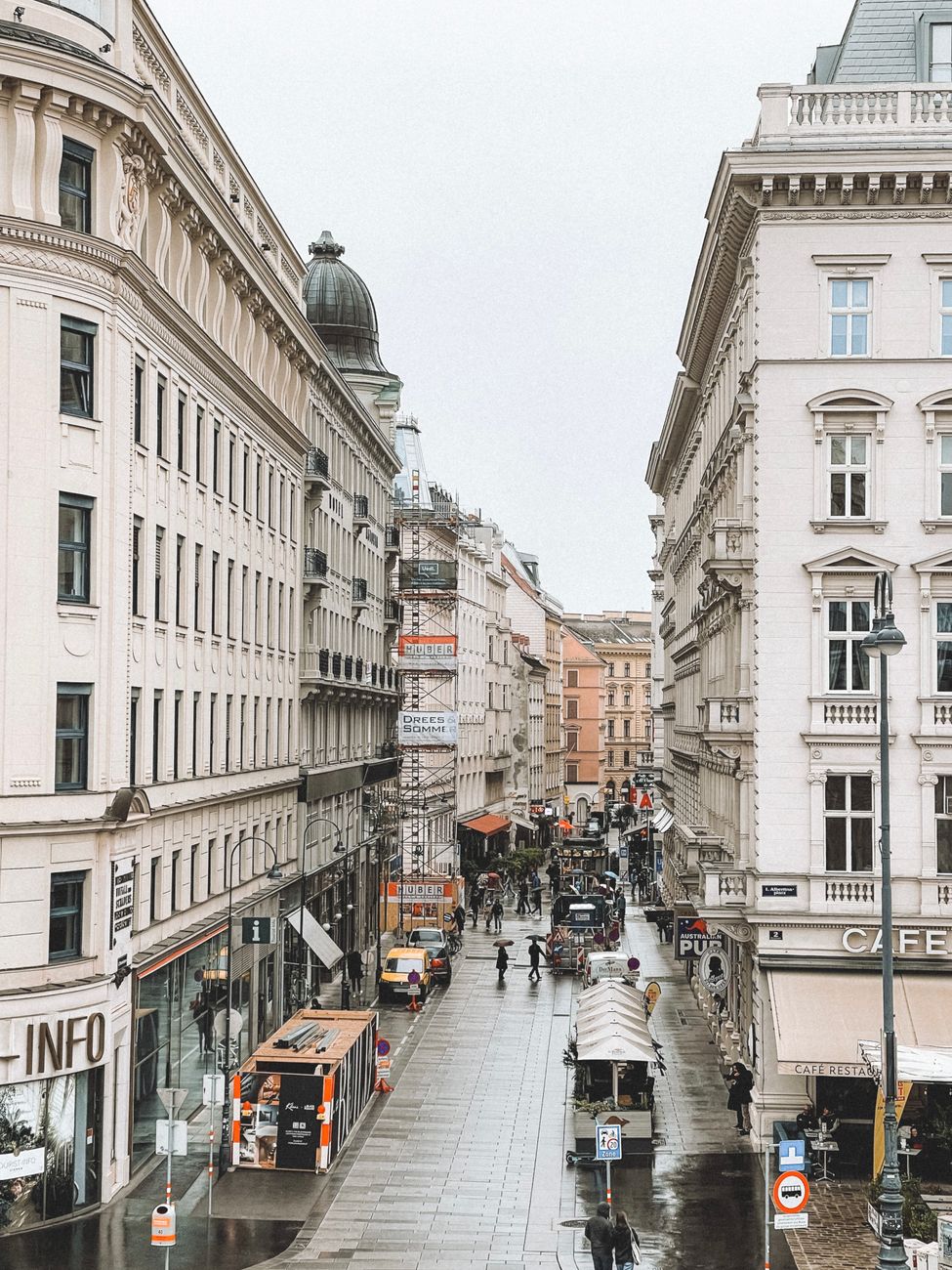
Vienna is one of Europe’s most elegant cities, a place where imperial palaces, candlelit coffee houses, grand museums and polished boulevards sit beside cool neighbourhoods, contemporary restaurants and leafy parks. It has all the romance of old Europe without feeling trapped in the past. One moment you are standing beneath the tiled roof of St Stephen’s Cathedral, the next you are drifting through the MuseumsQuartier, sitting in a courtyard with a glass of Austrian wine, or catching the tram past the Ringstrasse as the city glows in the late afternoon light.
Austria’s capital has long been associated with music, art, architecture and café culture. The Historic Centre of Vienna is recognised by UNESCO for its rich architectural ensembles, from Baroque castles and gardens to the Ringstrasse, while the city also played a major role as a European music centre from the age of Viennese Classicism into the early 20th century. But Vienna’s beauty is not only found in its famous sights. It is in the everyday rituals too, a perfectly poured melange, a slice of cake served on a silver tray, a walk through Volksgarten, a quiet hour in a museum, a late lunch at a traditional beisl, or a summer evening by the Danube.
If you loved our guides to stylish European escapes like The Ultimate Copenhagen Travel Guide and The Ultimate South of France Travel Guide, Vienna offers a different kind of European magic. It is more classical, more composed, and beautifully layered, with enough culture, food, shopping and atmosphere to fill a long weekend or a full week.
Why Visit Vienna?
Vienna is ideal for travellers who love cities with depth. It is refined without being intimidating, romantic without being overly polished, and cultural without requiring a strict museum schedule every day. The city is famous for its palaces, opera houses, concert halls, galleries, coffee houses and historic streets, yet it is also full of relaxed neighbourhoods, independent boutiques, wine taverns, markets and green spaces.
It is a wonderful city for first-time visitors to Europe because it feels safe, organised and easy to navigate. It is also perfect for repeat travellers who want to move slowly, spend longer in galleries, linger over coffee, discover local restaurants and explore beyond the main sights. Vienna rewards both styles of travel. You can tick off the big icons, Schönbrunn Palace, Hofburg, Belvedere, St Stephen’s Cathedral and the Vienna State Opera, or you can simply let the city unfold one elegant street at a time.
The Best Time to Visit Vienna
Vienna is beautiful year-round, but each season changes the feel of the city.
Spring, from April to June, is one of the loveliest times to visit. Parks and palace gardens begin to bloom, outdoor terraces reopen and the weather is mild enough for long days of walking.
Summer, from June to August, brings warm days, open-air events, riverside drinks and a lively energy around the Danube. It can be busier and warmer, but it is a great time if you like outdoor dining, festivals and long evenings.
Autumn, from September to October, is ideal for culture, food and softer crowds. The light is beautiful, the weather is often comfortable and the city feels especially atmospheric.
Winter, from late November through December, is magical if you love Christmas markets, lights, music and old-world charm. The markets around Rathausplatz, Belvedere and Schönbrunn are especially atmospheric, though it is worth booking accommodation early.
How Many Days Do You Need in Vienna?
Three days is enough for a beautiful first taste of Vienna. You can see the historic centre, visit one palace, spend time in a major museum, experience a traditional coffee house and enjoy a memorable dinner.
Four to five days is better if you want to explore more slowly. This gives you time for Schönbrunn, Belvedere, the Kunsthistorisches Museum, the MuseumsQuartier, a classical concert, local neighbourhoods and a few long coffee stops.
A week in Vienna lets you settle into the city properly. You can add day trips, wine taverns in the hills, extra galleries, design shopping and quieter districts away from the main tourist routes.
Where to Stay in Vienna
Innere Stadt: Best for First-Time Visitors
The Innere Stadt, Vienna’s 1st District, is the heart of the city and the best base if you want to walk to many of the main sights. St Stephen’s Cathedral, Hofburg, the Spanish Riding School, Graben, Kohlmarkt and the Vienna State Opera are all close by. This is where Vienna feels most cinematic, with grand façades, polished cafés, luxury shops and historic hotels.
Stay here if you want elegance, convenience and a classic Vienna experience. Hotels tend to be more expensive, but for a short trip the location is hard to beat.
MuseumsQuartier and Neubau: Best for Art, Design and Cool Cafés
The 7th District, Neubau, is a great choice for travellers who want a more contemporary feel. It sits close to the MuseumsQuartier and has a creative mix of boutiques, bars, galleries, cafés and design-led hotels. You are still close to the centre, but the atmosphere is more relaxed and local.
This is one of the best areas for repeat visitors, younger travellers, design lovers and anyone who wants Vienna with a little more edge.
Wieden and Naschmarkt: Best for Food Lovers
Wieden, the 4th District, and the area around Naschmarkt are ideal if you like food markets, independent restaurants and a slightly more lived-in feel. You are close to Karlsplatz, Secession, Belvedere and the city centre, with plenty of cafés and restaurants nearby.
Naschmarkt is one of Vienna’s most famous food markets, good for grazing, produce, casual lunches and people-watching. Stay nearby if you like starting the day with a market wander before heading into museums or the old town.
Leopoldstadt: Best for Green Space and Families
Leopoldstadt sits between the Danube Canal and the Danube, giving it a more open, relaxed feeling. It is home to the Prater, the famous Giant Ferris Wheel and large green spaces, making it a good choice for families or anyone who wants easy access to parks.
It is also well connected to the centre, so you can still reach the major sights quickly while staying somewhere a little calmer.
Hietzing: Best for Schönbrunn and a Quieter Stay
Hietzing, near Schönbrunn Palace, is elegant, residential and peaceful. It is not as central, but it is lovely if you prefer a quieter base, especially for a longer stay. Schönbrunn’s gardens, zoo and palace grounds are close by, and the area has a graceful, old Vienna feel.
Best Hotels in Vienna
For classic luxury, Hotel Sacher Wien is one of the city’s most iconic stays, located near the Vienna State Opera and famous for its old-world service and Sachertorte. Hotel Imperial is another grand option, with a sense of historic ceremony and a beautiful Ringstrasse address.
For a modern luxury stay, Rosewood Vienna brings a more contemporary, residential feel to the historic centre, while Almanac Palais Vienna is a refined choice near Stadtpark. The Amauris Vienna and Park Hyatt Vienna are also strong options for travellers who want five-star comfort in central locations.
For something more boutique, look around Neubau, Wieden and the MuseumsQuartier area. These neighbourhoods offer smaller design-led hotels, easy access to art and dining, and a more relaxed base than the grand hotels of the 1st District.
What to Do in Vienna
Explore the Historic Centre
Start with the Innere Stadt. This is where Vienna’s grandeur is most concentrated, with St Stephen’s Cathedral, Hofburg, Graben, Kohlmarkt, Peterskirche, the Spanish Riding School and elegant old streets all within walking distance. The best way to experience it is slowly. Walk early in the morning before the crowds arrive, then return in the evening when the lights come on and the city feels softer.
St Stephen’s Cathedral is the natural landmark of the old town. Climb the tower if you want a view across the rooftops, or simply stand in Stephansplatz and watch the city move around you.
Visit Hofburg Palace
Hofburg was the former imperial palace of the Habsburgs and remains one of Vienna’s defining landmarks. Today the complex includes museums, ceremonial rooms, courtyards, the Austrian National Library, the Imperial Treasury and the Spanish Riding School.
It is worth allowing time to wander the surrounding area too. Michaelerplatz, Heldenplatz and the gardens nearby give you a strong sense of Vienna’s imperial scale.
Spend Half a Day at Schönbrunn Palace
Schönbrunn Palace is one of Vienna’s great sights and should be included on a first visit. The former summer residence of the Habsburgs is famous for its grand rooms, gardens, fountains and Gloriette view. Go early if you want a quieter experience, then leave time to walk through the gardens rather than rushing straight back to the centre.
Families may also want to visit Schönbrunn Zoo, while garden lovers should plan extra time in spring or summer when the grounds are at their best.
See Klimt at Belvedere
Belvedere is a beautiful Baroque palace complex and one of the best places in Vienna for art lovers. It is home to Gustav Klimt’s The Kiss, along with works by Egon Schiele, Oskar Kokoschka and other Austrian artists. Even if you are not usually a museum person, Belvedere is worth visiting for the setting alone, with gardens, fountains and palace views that feel pure Vienna.
Visit the Kunsthistorisches Museum
The Kunsthistorisches Museum is one of Europe’s great museums, with collections spanning Ancient Egypt, classical antiquity and European old masters. The museum describes its holdings as spanning five millennia, from Ancient Egypt to the late 18th century. It is also one of the most beautiful museum interiors in the city, so plan time for a coffee beneath the dome if you can.
Spend Time in the MuseumsQuartier
The MuseumsQuartier gives Vienna a more contemporary edge. This large cultural complex brings together museums, courtyards, cafés and public spaces. Visit the Leopold Museum for Austrian modernism, MUMOK for modern and contemporary art, or simply sit outside with a drink and take in the creative energy of the area.
If you enjoy art-focused travel, you may also like our feature on European Art: Top Modern Museums to Visit, which includes Vienna among Europe’s leading cultural cities.
Experience Vienna’s Coffee House Culture
Vienna’s coffee houses are not just places to drink coffee, they are part of the city’s identity. Viennese coffee house culture was added to Austria’s UNESCO intangible cultural heritage inventory in 2011, recognised for its atmosphere of marble tables, Thonet chairs, newspaper tables, alcoves and historic interiors.
Order a Wiener Melange, a slice of cake and do not rush. Try Café Central for grandeur, Café Sperl for old-school charm, Café Prückel for mid-century atmosphere, Demel for pastries, Café Landtmann for history, or Café Sacher for the classic Sachertorte experience.
Go to the Vienna State Opera or a Concert
Vienna is a city of music, so try to experience at least one performance. The Vienna State Opera is the most famous option, but you can also look at concerts at Musikverein, Konzerthaus, churches and smaller venues. Even if you do not usually plan around classical music, hearing it in Vienna gives the city another layer.
Ride the Giant Ferris Wheel at Prater
For something lighter, head to the Prater and ride the Giant Ferris Wheel. It is nostalgic, romantic and a little playful, with views across the city. The surrounding park is also good for families, casual walks and a break from museums and palaces.
Wander Naschmarkt
Naschmarkt is Vienna’s best-known market, stretching with stalls, produce, casual restaurants and food from across Europe, the Middle East and Asia. It is not hidden, but it is still fun, especially for a relaxed lunch or a Saturday wander when the flea market is running nearby.
Explore the Danube and Danube Canal
Vienna is not a beach city, but the Danube gives it a relaxed summer side. In warmer months, head to the Danube Canal for drinks, street art and casual waterside bars, or go further to Danube Island for bike rides, swimming areas and open space.
Discover Vienna’s Wine Tavern Culture
Vienna is one of the few major cities with vineyards within its limits, and a visit to a heuriger, or traditional wine tavern, is a lovely way to experience a more local side of the city. Grinzing, Nussdorf and Neustift am Walde are popular areas for wine taverns, especially in spring, summer and autumn. Go for Austrian wine, simple food and a slower evening outside the centre.
Where to Eat in Vienna
Vienna is a wonderful city for both classic and contemporary dining. You can eat schnitzel in a traditional beisl, sit down for fine dining, graze through Naschmarkt or stand at a Würstelstand for a late-night sausage. Viennese sausage stand culture was added to Austria’s intangible cultural heritage inventory in 2024, recognising the role of these stands as social gathering places in the city.
For fine dining, Steirereck in Stadtpark and Amador are two of the city’s major destination restaurants, and Vienna’s official tourism site notes both among Austria’s three-star Michelin restaurants. TIAN is a standout for vegetarian fine dining and also holds a green Michelin star. For a special trip, book well ahead.
For classic Viennese food, try Figlmüller for schnitzel, Plachutta for tafelspitz, Gasthaus Pöschl for a cosy central meal, Glacis Beisl near MuseumsQuartier for a relaxed garden setting, or Reinthaler’s Beisl for traditional Austrian dishes in the old town.
For casual eating, wander Naschmarkt, stop at a Würstelstand such as Bitzinger near the Albertina, or head to the 7th District for more contemporary cafés and restaurants. Vienna’s food scene is broader than many visitors expect, with strong vegetarian options, modern bistros, natural wine bars and design-led dining rooms sitting alongside traditional institutions.
What to Eat in Vienna
A trip to Vienna should include a few classics. Try Wiener schnitzel, ideally with potato salad and lemon. Order tafelspitz, a traditional boiled beef dish often served with apple horseradish and chive sauce. Leave room for apfelstrudel, Kaiserschmarrn, Sachertorte and Esterházy torte.
For coffee, order a Wiener Melange, similar to a cappuccino but with its own Viennese character. In a traditional coffee house, you will often be served with a small glass of water, and you are not expected to rush. That is part of the pleasure.
Where to Shop in Vienna
Vienna is excellent for elegant shopping, especially if you like fashion, jewellery, antiques, design and beautifully made things.
For luxury shopping, head to Kohlmarkt, Graben and the Golden Quarter, where you will find international designer boutiques in a polished historic setting. Kärntner Strasse is more mainstream but central and easy to combine with sightseeing.
For independent boutiques and design, explore Neubau and the streets around Kirchengasse, Lindengasse and Siebensterngasse. This area has a younger, more creative feel, with fashion, homewares, vintage, concept stores and small galleries.
For food and gifts, visit Naschmarkt, Demel, Julius Meinl am Graben and traditional confectionery shops. Porcelain, glassware, leather goods, books, chocolate, wine and beautifully packaged pantry items all make good Vienna souvenirs.
Best Neighbourhoods to Explore
Innere Stadt
The historic centre is essential for first-time visitors. Come for landmarks, grand cafés, luxury shopping and the most classic Vienna views.
Neubau
Creative, relaxed and stylish, Neubau is perfect for boutiques, galleries, casual restaurants and a younger local feel.
Wieden
Close to Naschmarkt, Karlsplatz and Belvedere, Wieden is elegant but not overly formal. It is great for food, architecture and easy exploring.
Leopoldstadt
Green, spacious and family-friendly, Leopoldstadt offers Prater, riverside access and a calmer base outside the old town.
Josefstadt
Small, charming and residential, Josefstadt is a lovely district for cafés, quiet streets and a more local experience.
The Perfect Three-Day Vienna Itinerary
Day One: Classic Vienna
Start at St Stephen’s Cathedral, then wander Graben, Kohlmarkt and Peterskirche before walking to Hofburg. Visit the palace complex, the Austrian National Library or the Imperial Treasury, then stop for coffee at Café Central or Demel.
In the afternoon, walk along the Ringstrasse towards the Vienna State Opera and Albertina. Finish with dinner in the 1st District, or book a performance if you want a classic Vienna evening.
Day Two: Palaces and Art
Spend the morning at Schönbrunn Palace and gardens. Return to the centre for lunch, then visit Belvedere in the afternoon to see Klimt and the palace grounds.
In the evening, head to Wieden or Neubau for dinner, or book a table at a traditional beisl for schnitzel, tafelspitz and Austrian wine.
Day Three: Museums, Markets and Local Vienna
Begin at the Kunsthistorisches Museum or Leopold Museum, then spend time around MuseumsQuartier. Walk to Naschmarkt for lunch and explore the surrounding streets.
In the late afternoon, choose between the Prater and Giant Ferris Wheel, a Danube Canal drink, or a trip to a heuriger in the wine districts. End the day slowly. Vienna is best when you leave space for the small rituals.
Best Day Trips from Vienna
Wachau Valley
The Wachau Valley is one of the best day trips from Vienna, known for vineyards, river scenery, pretty towns and Melk Abbey. It is especially beautiful in spring, summer and autumn.
Bratislava
Slovakia’s capital is close enough for an easy day trip by train or boat. It is smaller and more relaxed than Vienna, with a compact old town and riverside setting.
Salzburg
Salzburg is possible as a long day trip, though it is better as an overnight stay if you have time. Go for Mozart history, Baroque architecture and mountain views.
Budapest
Budapest can technically be done in a day by train, but it deserves at least one or two nights. If you are planning a bigger Central Europe itinerary, Vienna and Budapest pair beautifully.
Getting Around Vienna
Vienna is easy to navigate, with an excellent public transport network of U-Bahn, trams and buses. For most visitors, walking and public transport are the best combination. The official Vienna City Card includes public transport options for 24, 48 or 72 hours, or 7 days, plus discounts at museums, attractions, restaurants and shops.
From Vienna International Airport, you can reach the city by train, airport bus, taxi or private transfer. The City Airport Train, S-Bahn and ÖBB rail services are common options, so choose based on your arrival time, hotel location and budget.
Vienna Travel Tips
Book major museums, restaurants and performances in advance, especially in high season and around Christmas.
Bring comfortable shoes. Vienna is elegant, but the best way to see it is still on foot.
Do not overpack your itinerary. Vienna is not a city to rush. Leave time for coffee, parks, side streets and spontaneous stops.
Carry a light layer, even in warmer months, as evenings can cool down.
Check opening days for museums and restaurants. Some places close one day a week, often Monday or Sunday.
Use trams when you can. They are practical, scenic and part of the Vienna experience.
Is Vienna Expensive?
Vienna can be expensive, especially for luxury hotels, fine dining and peak-season stays, but it does not have to be. Public transport is efficient, many neighbourhoods are wonderful to explore on foot, and you can balance splurge meals with coffee houses, markets, bakeries and casual beisls.
Museum entries and palace tickets can add up, so choose the sights you really care about. A slower trip built around walking, coffee, parks, architecture and one or two major museums can feel just as rich as a packed itinerary.
Who Will Love Vienna?
Vienna is perfect for culture lovers, couples, solo travellers, food lovers, architecture fans and anyone who enjoys refined city breaks. It is also a good family destination, especially with Prater, Schönbrunn Zoo, parks, trams and spacious public areas.
It is less suited to travellers chasing nightlife, beaches or a chaotic, high-energy city. Vienna’s beauty is quieter. It is about atmosphere, elegance, detail and the pleasure of taking your time.
The Wrap
Vienna is a city that understands ritual. Coffee is not just coffee, music is not just background, and architecture is not just scenery. Everything feels considered, from the curve of a staircase to the way cake is served, from the hush of a museum room to the golden glow of a palace at sunset.
It is one of Europe’s great city breaks because it offers so much without demanding too much. You can build your days around art, food, history, shopping, parks or music, and still feel like you have barely scratched the surface. Vienna is elegant, yes, but it is also warm, layered and deeply rewarding once you slow down enough to meet it properly.
For more travel inspiration, read our guides to Sardinia, The Hamptons, Copenhagen, The South of France and The Perfect 10 Day Vietnam Itinerary.
FAQs About Visiting Vienna
Is Vienna worth visiting?
Yes, Vienna is absolutely worth visiting, especially if you love culture, architecture, music, museums, elegant cafés, history and walkable cities. It is one of Europe’s most beautiful capitals and works well for both short breaks and longer stays.
How many days do you need in Vienna?
Three days is enough for a first visit, but four to five days is better if you want to see the major palaces, museums, coffee houses and neighbourhoods without rushing.
What is Vienna best known for?
Vienna is best known for imperial palaces, classical music, coffee house culture, art museums, the Vienna State Opera, Gustav Klimt, grand architecture and traditional dishes such as Wiener schnitzel and Sachertorte.
What is the best area to stay in Vienna?
The Innere Stadt is best for first-time visitors who want to be close to major sights. Neubau is best for a cooler, more creative stay, while Wieden and Naschmarkt are great for food lovers.
Is Vienna walkable?
Yes, Vienna is very walkable, especially in the historic centre. For longer distances, the city’s public transport system is easy to use and well connected.
When is the best time to visit Vienna?
Spring and autumn are ideal for mild weather and comfortable sightseeing. December is magical for Christmas markets, while summer is great for outdoor dining, parks and the Danube.
What should I eat in Vienna?
Try Wiener schnitzel, tafelspitz, potato salad, goulash, apfelstrudel, Kaiserschmarrn and Sachertorte. You should also experience a traditional Viennese coffee house and order a Wiener Melange.
Is Vienna good for families?
Yes, Vienna is a good family destination. Schönbrunn Zoo, Prater, the Giant Ferris Wheel, parks, trams and spacious museums make it easy to explore with children.
Do you need to book restaurants in Vienna?
For popular restaurants, fine dining and traditional institutions, booking ahead is recommended. Coffee houses are often walk-in, but expect queues at famous places such as Café Central and Café Sacher.
What are the best day trips from Vienna?
The Wachau Valley, Bratislava, Salzburg and Budapest are all popular options. Wachau and Bratislava are especially good for easy day trips, while Salzburg and Budapest are better if you can stay overnight.
Share this:
Like this: