Walk into almost any home a few years after it was first furnished, and you’ll notice the same story playing out: a sofa that no longer fits the space, shelves crammed with things that never found a proper home, or a layout that made sense once but now feels off somehow. This isn’t about chasing trends – it’s about understanding proportion, durability, and how you actually live day to day. This article walks through planning a room, choosing furniture built to last, balancing comfort with style, and making sustainable choices along the way. The goal is simple: to help you create a home that still feels right years from now.
Whether you’re furnishing your first apartment or rethinking existing home furniture, paying attention to layout, durability, and function can help you build a space that stays welcoming for years to come.
Before buying anything, take the time to understand the space itself. Measure room dimensions, doorway widths, and window placement so furniture fits comfortably instead of overwhelming or underwhelming the room. Most design guides recommend jotting down length, width, ceiling height, and the location of doors and windows before you even think about shopping.
Just as important is figuring out how the space will actually be used. Who occupies it, kids, pets, guests who drop by often? Is it a quiet reading nook, a home office, or the main gathering spot in the house? Think about storage needs early on, since visual clutter usually stems from a lack of planned storage rather than owning too much stuff.
Two concepts matter here: traffic flow, meaning clear walkways that let people move naturally through a room, and scale, the relationship between furniture size and the room’s overall proportions. Sketching a rough floor plan, even something quick on paper, helps you test layouts before committing to purchases.
Key Takeaway: Never buy major pieces before you’ve measured your room and figured out how you actually use it.
A quick measurement checklist can help:
– Room length, width, and ceiling height
– Doorway and hallway widths for moving furniture in
– Window and outlet placement
Choosing Furniture That Ages Well
Timeless design relies on simple lines, versatile colors, and classic silhouettes rather than whatever’s trending this season. Just as important is quality construction – solid frames, sturdy joints, and durable materials like hardwood or tightly woven fabric.
Buying fewer, better pieces tends to cost less over time than replacing cheaper items every few years. A well-made piece can often be reupholstered or refinished instead of tossed out.
When you’re evaluating a major purchase like a sofa, a simple test helps:
Check the frame material—solid wood typically outlasts particleboard.
Press on the joints to feel for any wobbling or creaking.
Examine the fabric for a tight, even weave, and look for removable covers if possible.
Reputable consumer guides and sustainability organizations often publish independent information on material durability, which can be a useful cross-check against sales claims—particularly when it comes to telling solid wood apart from veneer.
Photo by Hello Pipcke
Applying Principles to Different Spaces
Living Room: Comfort, Conversation, and Flow
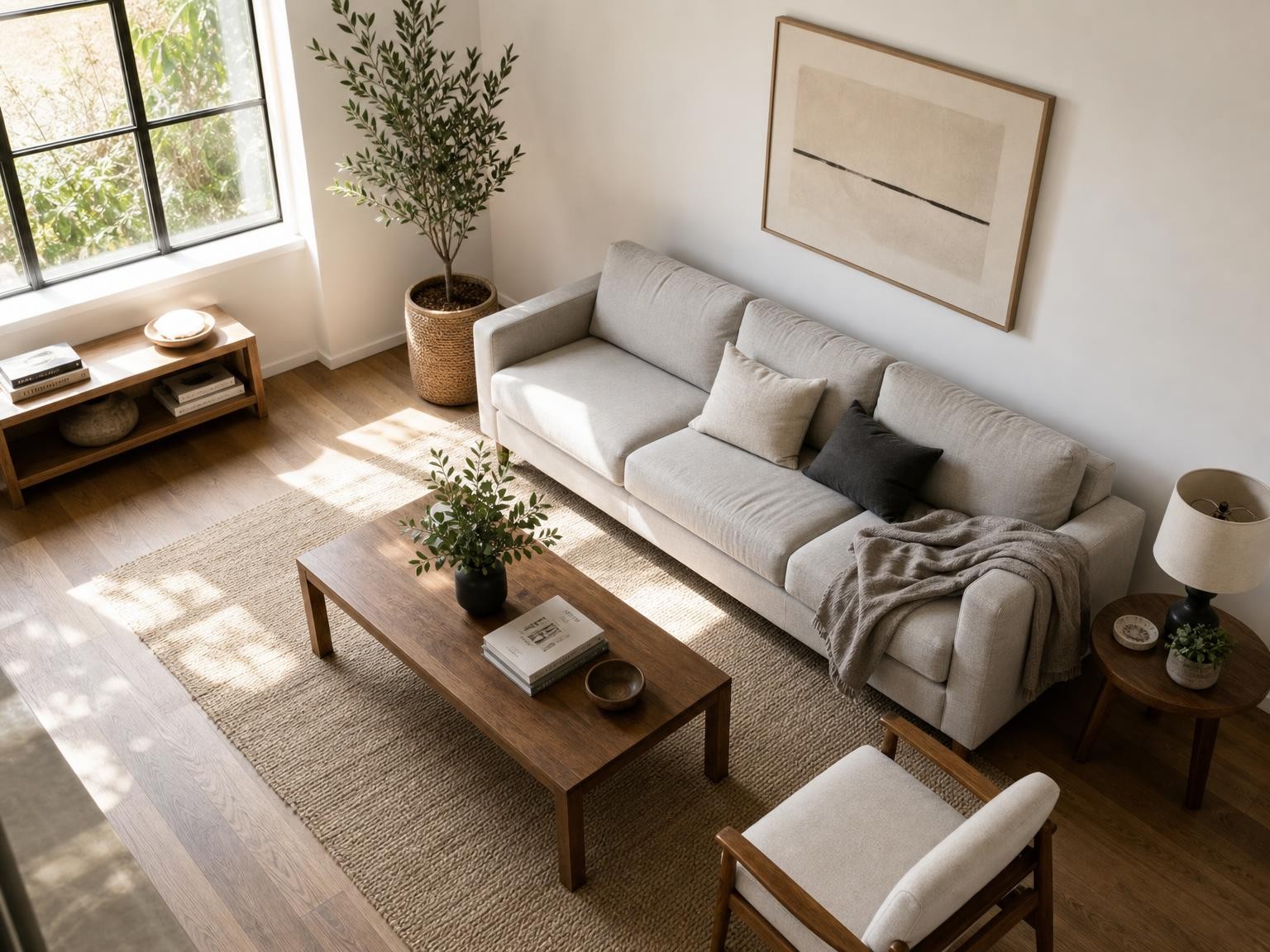
Sofa size should match your wall length and room proportions—oversized seating can overwhelm a small room, while undersized pieces can leave it feeling sparse and unfinished. Arrange seating to encourage conversation, with side tables and lighting within easy reach. Multi-functional pieces, like storage ottomans or nesting tables, add a welcome bit of flexibility.
Living room essentials generally include comfortable seating, a stable surface for drinks, and adjustable task lighting.
Bedroom: Rest, Storage, and Calm
Bed placement should allow circulation on both sides when space permits. Closed storage, dressers, wardrobes, under-bed bins, helps keep the room feeling restful and uncluttered. Since beds see daily use for years on end, prioritizing a durable frame and supportive mattress pays off in comfort and longevity down the line.
Dining and Work Areas: Shared and Flexible Spaces
In smaller homes, dining tables often end up doing double duty as workspaces. Choosing chairs that are comfortable enough for both dining and desk use, along with foldable or stackable pieces, adds flexibility as needs shift throughout the day.
Making Mindful, Sustainable Choices
Timeless interiors and sustainability naturally overlap: buy less, choose well cuts down on both clutter and resource use. Favor durable, repairable designs, and consider second-hand or refurbished pieces when you can. Where possible, look for transparent information about wood sourcing and finishes.
Basic care, cleaning fabric regularly, tightening loose hardware, or reupholstering rather than replacing, extends furniture life significantly. Independent environmental and consumer organizations can offer guidance on sustainable materials if you’d like to dig deeper.
Sustainable furnishing habits worth adopting:
– Repair over replace when possible
– Choose adaptable, multi-use pieces
– Research materials before purchasing
Making the Space Feel Like Yours Without Sacrificing Function
Timeless doesn’t mean plain. Textiles, art, and accessories let your personality shine through, while the larger investment pieces stay neutral and adaptable. Rugs, cushions, and lighting can be layered and swapped as your tastes evolve, all anchored by a cohesive color palette that ties the rooms together.
Key Takeaway: Anchor your rooms with long-lasting, functional pieces, and let smaller, replaceable items reflect your changing tastes.
Pitfalls That Shorten the Life of Your Interior
Common mistakes include buying on impulse without measuring, chasing trends instead of function, ignoring comfort, and neglecting storage. The fixes are fairly simple: put together a room plan and budget beforehand, and give yourself a day or two before major purchases to avoid buyer’s remorse.
Tip: Tape out furniture dimensions on the floor before buying so you can actually see the scale in the real space.
Creating a Home That Grows With You
Plan your space and lifestyle first, invest in durable and timeless key pieces, and furnish room by room with comfort and flow in mind. Make sustainable choices and take care of what you already own. Furnishing is an ongoing process, not a single event—start with one room, measure, plan, and refine as you go.
A well-furnished home is one that serves your life, not just your sense of style.


Walk into almost any home a few years after it was first furnished, and you’ll notice the same story playing out: a sofa that no longer fits the space, shelves crammed with things that never found a proper home, or a layout that made sense once but now feels off somehow. This isn’t about chasing trends – it’s about understanding proportion, durability, and how you actually live day to day. This article walks through planning a room, choosing furniture built to last, balancing comfort with style, and making sustainable choices along the way. The goal is simple: to help you create a home that still feels right years from now.
Whether you’re furnishing your first apartment or rethinking existing home furniture, paying attention to layout, durability, and function can help you build a space that stays welcoming for years to come.
Before buying anything, take the time to understand the space itself. Measure room dimensions, doorway widths, and window placement so furniture fits comfortably instead of overwhelming or underwhelming the room. Most design guides recommend jotting down length, width, ceiling height, and the location of doors and windows before you even think about shopping.
Just as important is figuring out how the space will actually be used. Who occupies it, kids, pets, guests who drop by often? Is it a quiet reading nook, a home office, or the main gathering spot in the house? Think about storage needs early on, since visual clutter usually stems from a lack of planned storage rather than owning too much stuff.
Two concepts matter here: traffic flow, meaning clear walkways that let people move naturally through a room, and scale, the relationship between furniture size and the room’s overall proportions. Sketching a rough floor plan, even something quick on paper, helps you test layouts before committing to purchases.
Key Takeaway: Never buy major pieces before you’ve measured your room and figured out how you actually use it.
A quick measurement checklist can help:
– Room length, width, and ceiling height
– Doorway and hallway widths for moving furniture in
– Window and outlet placement
Choosing Furniture That Ages Well
Timeless design relies on simple lines, versatile colors, and classic silhouettes rather than whatever’s trending this season. Just as important is quality construction – solid frames, sturdy joints, and durable materials like hardwood or tightly woven fabric.
Buying fewer, better pieces tends to cost less over time than replacing cheaper items every few years. A well-made piece can often be reupholstered or refinished instead of tossed out.
When you’re evaluating a major purchase like a sofa, a simple test helps:
Reputable consumer guides and sustainability organizations often publish independent information on material durability, which can be a useful cross-check against sales claims—particularly when it comes to telling solid wood apart from veneer.
Applying Principles to Different Spaces
Living Room: Comfort, Conversation, and Flow
Sofa size should match your wall length and room proportions—oversized seating can overwhelm a small room, while undersized pieces can leave it feeling sparse and unfinished. Arrange seating to encourage conversation, with side tables and lighting within easy reach. Multi-functional pieces, like storage ottomans or nesting tables, add a welcome bit of flexibility.
Living room essentials generally include comfortable seating, a stable surface for drinks, and adjustable task lighting.
Bedroom: Rest, Storage, and Calm
Bed placement should allow circulation on both sides when space permits. Closed storage, dressers, wardrobes, under-bed bins, helps keep the room feeling restful and uncluttered. Since beds see daily use for years on end, prioritizing a durable frame and supportive mattress pays off in comfort and longevity down the line.
Dining and Work Areas: Shared and Flexible Spaces
In smaller homes, dining tables often end up doing double duty as workspaces. Choosing chairs that are comfortable enough for both dining and desk use, along with foldable or stackable pieces, adds flexibility as needs shift throughout the day.
Making Mindful, Sustainable Choices
Timeless interiors and sustainability naturally overlap: buy less, choose well cuts down on both clutter and resource use. Favor durable, repairable designs, and consider second-hand or refurbished pieces when you can. Where possible, look for transparent information about wood sourcing and finishes.
Basic care, cleaning fabric regularly, tightening loose hardware, or reupholstering rather than replacing, extends furniture life significantly. Independent environmental and consumer organizations can offer guidance on sustainable materials if you’d like to dig deeper.
Sustainable furnishing habits worth adopting:
– Repair over replace when possible
– Choose adaptable, multi-use pieces
– Research materials before purchasing
Making the Space Feel Like Yours Without Sacrificing Function
Timeless doesn’t mean plain. Textiles, art, and accessories let your personality shine through, while the larger investment pieces stay neutral and adaptable. Rugs, cushions, and lighting can be layered and swapped as your tastes evolve, all anchored by a cohesive color palette that ties the rooms together.
Key Takeaway: Anchor your rooms with long-lasting, functional pieces, and let smaller, replaceable items reflect your changing tastes.
Pitfalls That Shorten the Life of Your Interior
Common mistakes include buying on impulse without measuring, chasing trends instead of function, ignoring comfort, and neglecting storage. The fixes are fairly simple: put together a room plan and budget beforehand, and give yourself a day or two before major purchases to avoid buyer’s remorse.
Tip: Tape out furniture dimensions on the floor before buying so you can actually see the scale in the real space.
Creating a Home That Grows With You
Plan your space and lifestyle first, invest in durable and timeless key pieces, and furnish room by room with comfort and flow in mind. Make sustainable choices and take care of what you already own. Furnishing is an ongoing process, not a single event—start with one room, measure, plan, and refine as you go.
A well-furnished home is one that serves your life, not just your sense of style.
Share this:
Like this: