Andalusia is Spain at its most vivid. It is the sound of flamenco drifting through a narrow street in Seville, sunlight pouring into flower-filled courtyards in Córdoba and the silhouette of the Alhambra glowing above Granada at dusk. It is whitewashed villages clinging to mountainsides, long lunches built around tapas and sherry, glamorous Mediterranean resorts, wild Atlantic beaches and roads that disappear between olive groves.
Stretching across the southern edge of Spain, Andalusia is made up of eight provinces: Almería, Cádiz, Córdoba, Granada, Huelva, Jaén, Málaga and Seville. Each has its own character, but together they form one of Europe’s most rewarding regions for a longer holiday or road trip.
You can spend a week moving between monumental cities, base yourself beside the sea on the Costa del Sol, explore the white villages by car or combine palaces, beaches, markets, mountains and food into one unforgettable journey.
This complete Andalusia travel guide covers where to go, where to stay, what to eat, the best time to visit and how to plan an itinerary through southern Spain.
Why Visit Andalusia?
Andalusia offers a rare combination of history, beauty and everyday pleasure. Its major landmarks are extraordinary, but the quieter moments can be just as memorable: coffee in a tiled courtyard, a late lunch beneath orange trees, a swim in a hidden cove or an evening spent moving between tapas bars.
The region is particularly suited to travellers who enjoy:
Historic architecture and atmospheric old towns
Food markets, tapas bars and destination restaurants
Beautiful beaches and Mediterranean resorts
Boutique hotels, converted palaces and rural estates
Scenic driving routes and whitewashed villages
Art, ceramics, music and flamenco
Hiking, mountains and dramatic natural landscapes
Warm weather and outdoor dining
Andalusia is also flexible. It can be explored as a cultural city break, a relaxed coastal holiday, a romantic escape, a family road trip or a longer food-focused journey.
No single destination captures the whole of Andalusia. Seville feels romantic and theatrical, Granada is atmospheric and layered with history, Córdoba is intimate and architectural, while Málaga combines a revitalised cultural centre with easy access to the coast.
Beyond the cities, Cádiz, Ronda, Jerez de la Frontera and the white villages reveal a slower and often more traditional side of the region.
Seville
Seville is the natural starting point for many Andalusian journeys. The regional capital is grand, warm and deeply atmospheric, with tiled palaces, shady plazas, orange trees and neighbourhoods that seem designed for wandering.
Begin at the Real Alcázar, a royal palace complex known for its intricate decorative work, courtyards and gardens. From there, visit Seville Cathedral and climb the Giralda for views across the city’s rooftops.
Plaza de España is another essential stop. Its sweeping semicircular building, bridges and colourful tiled alcoves make it one of Seville’s most recognisable locations. Visit early in the morning for softer light and fewer people.
Across the river, Triana is known for ceramics, flamenco culture and lively tapas bars. Spend an evening walking along Calle Betis before crossing back towards the old city as the lights appear along the river.
The Santa Cruz quarter is one of Seville’s most beautiful areas, filled with narrow lanes, hidden courtyards and small squares. It can become crowded during the day, so return in the early evening when the streets begin to quieten.
Allow at least two full days for Seville, although three nights gives you time to slow down and experience the city after the main sights close.
Stay around Santa Cruz or El Arenal for easy access to the main landmarks. Alameda and Feria offer a more local, creative atmosphere, while Triana is a good option for travellers interested in food, ceramics and nightlife.
Look for:
Restored palace hotels with internal courtyards
Small boutique properties in Santa Cruz
Stylish apartments around Alameda
Riverside hotels near El Arenal or Triana
Photo by Reinhard Bruckner
Granada
Granada feels more intimate and mysterious than Seville. Set beneath the Sierra Nevada, the city brings together monumental architecture, hillside neighbourhoods, old tea houses, garden courtyards and one of Spain’s most celebrated food traditions.
The Alhambra is the centrepiece. The vast hilltop complex includes the Nasrid Palaces, Alcazaba fortress and Generalife gardens. Tickets are timed and can sell out, so purchase them well before your visit through official channels. (Tickets Alhambra Patronato)
Set aside at least half a day rather than treating the Alhambra as a quick stop. Wear comfortable shoes, carry water and check the time printed for entry to the Nasrid Palaces.
Afterwards, explore the Albaicín, Granada’s historic hillside neighbourhood. Its steep lanes open onto small plazas, whitewashed houses and miradores overlooking the Alhambra. The Mirador de San Nicolás is the most famous viewpoint, particularly around sunset, but smaller nearby terraces can be quieter.
Sacromonte is associated with cave houses and flamenco, while the lower city contains Granada Cathedral, the Royal Chapel, busy shopping streets and traditional bars.
Granada is also famous for serving a complimentary tapa with drinks in many establishments. The quality and size vary, but moving between neighbourhood bars remains one of the most enjoyable ways to experience the city’s food culture.
Where to stay in Granada
Stay in the lower centre for convenience, in the Albaicín for atmosphere or near the Alhambra for tranquillity and views.
The Albaicín is beautiful but steep, so consider your luggage and mobility before booking accommodation high on the hillside.
Photo by Enrique
Córdoba
Córdoba is often visited as a day trip, but staying overnight reveals a more peaceful city after tour groups leave.
Its great landmark is the Mosque-Cathedral, or Mezquita-Catedral, an extraordinary building known for its forest of red-and-white arches and layered Islamic and Christian history. Allow enough time to walk slowly through the interior rather than rushing between viewpoints.
Outside, the old Jewish quarter is a maze of whitewashed streets, flower pots, patios and small shops. Cross the Roman Bridge for a classic view back towards the old city, particularly in the late afternoon.
Córdoba is also known for its patios. The annual courtyard festival usually brings private flower-filled spaces to life, but beautiful patios can be found throughout the city outside festival time as well.
Other worthwhile stops include the Alcázar de los Reyes Cristianos, the Roman Temple and Medina Azahara, the remains of a vast palace city outside Córdoba.
The city’s food deserves more attention than it often receives. Look for salmorejo, a thick chilled tomato soup usually topped with egg and ham; fried aubergine with honey; and oxtail stew.
Two nights is ideal, although Córdoba can be seen in one long day if your itinerary is limited. Its historic quarter, patios and food culture reward travellers who stay beyond the main sightseeing hours.
Photo by Igor Passchier
Málaga
Málaga is far more than an airport gateway to the Costa del Sol. Its walkable historic centre, galleries, waterfront and rooftop bars make it an appealing city break in its own right.
Begin at the Alcazaba, the hilltop fortress overlooking the city and harbour. Below it sits Málaga’s Roman Theatre, while the Castillo de Gibralfaro offers broader views over the coastline.
Málaga is closely associated with Pablo Picasso, who was born in the city. The Museo Picasso Málaga is one of the city’s major cultural attractions, while the Carmen Thyssen Museum focuses on Spanish painting.
Spend time around the historic centre, particularly Calle Larios, Plaza de la Constitución and the streets surrounding the cathedral. For a more relaxed afternoon, walk towards the port and continue to La Malagueta beach.
Málaga’s dining scene ranges from traditional seafood restaurants to contemporary wine bars and polished modern kitchens. At the beach, order grilled sardines cooked on skewers over an open fire, known as espetos.
Where to stay in Málaga
The historic centre is best for first-time visitors who want to walk to restaurants and cultural attractions. Soho has a more creative feel, while La Malagueta suits travellers who want to be close to the beach.
Málaga is also a practical base for day trips to Nerja, Frigiliana, Antequera and the Caminito del Rey.
Photo by Jose D´Alessandro
Cádiz
Surrounded by water on a narrow peninsula, Cádiz has a breezy, faded beauty that feels different from Andalusia’s inland cities.The old town is compact and easy to explore on foot. Wander through La Viña, visit Cádiz Cathedral and climb the Tavira Tower for panoramic views over the city’s pale rooftops and the Atlantic.
The city’s beaches are part of everyday life rather than separate resort zones. La Caleta is small and atmospheric, framed by historic fortifications, while Playa de la Victoria offers a longer stretch of sand.
Cádiz is one of the best places in Andalusia for seafood. Look for fried fish served in paper cones, prawns, tuna, clams and seafood stews. The central market is an excellent place to begin, with produce stalls surrounded by casual places to eat and drink.
Stay for at least one night to experience the city after day visitors leave and the evening light settles across the sea.
Photo by Emilio Sánchez Hernández
Jerez de la Frontera
Jerez is one of Andalusia’s essential food and drink destinations. It lies at the heart of sherry country and is home to historic bodegas producing styles ranging from dry fino and manzanilla to richer oloroso and sweet Pedro Ximénez.
Book a bodega tour to understand how sherry is aged through the solera system and how dramatically the different styles vary. Tastings are far more interesting when paired with local food.
Jerez is also known for flamenco and equestrian traditions. The historic centre is less polished than Seville’s, but it has handsome squares, churches, palaces and an appealingly lived-in atmosphere.
Combine Jerez with Cádiz, which is around half an hour away by train, or include it as part of a road trip through the province of Cádiz.
Ronda
Ronda occupies one of the most dramatic settings in Spain. The town is divided by the deep El Tajo gorge, crossed by the monumental Puente Nuevo.
Walk to several viewpoints because the bridge and surrounding cliffs look different from each angle. The paths below the town can provide the most dramatic views, although conditions and access should be checked before descending.
Ronda’s old town contains quiet streets, historic houses, gardens and sections of the old city walls. The surrounding countryside is dotted with vineyards, olive groves and rural estates, making Ronda an attractive base for a slower two-night stay.
Many travellers visit on a rushed day tour, but the town is at its most atmospheric in the early morning and evening.
Where to stay in Ronda
Choose a property near the gorge for the classic view, or stay on a finca outside town for more space, quiet and access to the countryside.
The White Villages of Andalusia
The pueblos blancos are among the great pleasures of an Andalusian road trip. These hill towns and villages are characterised by whitewashed houses, steep lanes, tiled signs, church towers and flower-filled balconies.
Some of the best-known include:
Grazalema
Set within the Sierra de Grazalema Natural Park, this beautiful village makes a good base for walking, mountain scenery and traditional food.
Zahara de la Sierra
Zahara overlooks a turquoise reservoir and is crowned by the remains of a hilltop castle. The approach by road is particularly striking.
Setenil de las Bodegas
Setenil is known for homes, shops and restaurants built beneath vast rock overhangs. It is visually unusual and easy to combine with Ronda.
Vejer de la Frontera
One of the loveliest villages near the Cádiz coast, Vejer has whitewashed lanes, hidden courtyards, attractive restaurants and views across the surrounding countryside.
Frigiliana
Near Nerja, Frigiliana is known for its immaculate white streets, colourful doors and views towards the Mediterranean.
A car is the easiest way to explore these villages, although some can be reached on organised tours from Seville, Málaga or Cádiz.
Photo by Mihai Vlasceanu
The Best Beaches in Andalusia
Andalusia has both Mediterranean and Atlantic coastlines, and the experience changes considerably between them.
Costa del Sol
The Costa del Sol is the most developed stretch of coastline, with a wide choice of resorts, restaurants, beach clubs and family-friendly beaches.
Marbella
Marbella combines an attractive old town with glamorous hotels, restaurants, beach clubs and boutiques. The old quarter, centred around Plaza de los Naranjos, is far more traditional than the luxury marina areas.
Puerto Banús is known for designer shopping, superyachts and nightlife, while the coastline east and west of town contains quieter hotels and beach restaurants.
Estepona
Estepona offers a more relaxed alternative to Marbella, with a flower-filled old town, long promenade and sandy beach. It works well for families and travellers wanting an easy coastal base.
Nerja
Nerja has a more compact feel, with cliffs, coves and views from the Balcón de Europa. Nearby attractions include the Nerja Caves and the village of Frigiliana.
Photo by Miguel Rivera
Costa de la Luz
Facing the Atlantic, the Costa de la Luz feels wilder and less intensively developed than much of the Costa del Sol. Expect long sandy beaches, breezier conditions and a more relaxed atmosphere.
Tarifa
Tarifa sits close to the southernmost point of mainland Spain and is known for wind sports, laid-back cafés and views towards Morocco on clear days.
The old town is compact and lively, while the surrounding coastline contains broad beaches and natural landscapes.
Bolonia
Bolonia is one of southern Spain’s most beautiful beaches, backed by a large dune and located beside the Roman ruins of Baelo Claudia.
El Palmar
Popular with surfers, El Palmar has a long sandy beach, casual restaurants and a relaxed summer atmosphere.
Zahara de los Atunes
Zahara is known for its beach, sunsets and exceptional tuna. It becomes lively in summer but retains a more low-rise, village-like character than larger resorts.
Cabo de Gata and Almería
For a more rugged coastal escape, head east to the province of Almería.
Cabo de Gata-Níjar Natural Park has volcanic landscapes, arid hills, fishing villages and clear-water coves. Its scenery feels markedly different from the greener parts of western Andalusia.
Base yourself around Níjar, San José, Las Negras or Agua Amarga and explore beaches such as Playa de los Genoveses and Mónsul.
Almería city itself has an imposing Alcazaba, historic centre and waterfront. Inland, the Tabernas Desert provides one of Europe’s most unusual landscapes and has served as a filming location for numerous productions.
Natural Landscapes and Outdoor Adventures
Andalusia is not only about cities and beaches.
Caminito del Rey
The Caminito del Rey is a cliffside walkway through the Gaitanes Gorge near Málaga. Once famous for its dangerous condition, it has been restored as a managed walking route.
Tickets should be booked in advance, and visitors should check current access, weather and transport arrangements before travelling.
Sierra Nevada
Rising above Granada, the Sierra Nevada offers skiing in winter and hiking during warmer months. The mountain villages of Las Alpujarras provide a quieter alternative to the major cities.
Doñana National Park
Doñana is one of Spain’s most significant wetland landscapes, with marshes, dunes and migratory birdlife. Access to sensitive areas is controlled, so guided excursions are often the best way to explore.
Sierra de Grazalema
This mountainous natural park near the white villages offers limestone peaks, forest walks and scenic drives. It is an ideal addition to a Ronda or Cádiz itinerary.
What to Eat in Andalusia
Food is central to the Andalusian experience. Rather than relying on formal multi-course meals, embrace tapas culture by ordering several small dishes and moving between bars.
Regional specialities vary significantly between the coast, cities and rural areas.
Tapas
Tapas may include olives, cheese, croquettes, anchovies, meatballs, fried fish, tortilla or slow-cooked meats. In some Granada bars, a tapa is still served with each drink, while elsewhere dishes are ordered and paid for individually.
Do not assume every restaurant serving tapas is traditional or good. Step away from the busiest tourist squares and look for places filled with local diners.
Gazpacho and salmorejo
Gazpacho is a chilled soup made with tomato, peppers, cucumber, olive oil and vinegar. Salmorejo, associated particularly with Córdoba, is thicker and richer, usually topped with chopped egg and cured ham.
Jamón ibérico
Andalusia produces some of Spain’s finest cured ham, particularly in the area around Jabugo in Huelva province. Quality varies, so ask about the breed, feeding and curing classification when ordering or buying it.
Photo by Josh Eleazar
Fried fish
Known as pescaíto frito, mixed fried fish is especially popular in Málaga and Cádiz. The best versions are light, crisp and served simply with lemon.
Seafood
The long coastline produces prawns, clams, tuna, sardines, squid and many other seafood dishes. In Cádiz province, seek out almadraba tuna, caught using a traditional seasonal method.
Oxtail stew
Known as rabo de toro, this slow-cooked dish is rich and deeply flavoured. It is associated with Córdoba but appears throughout the region.
Espetos
A Málaga speciality, espetos are skewers of sardines grilled over coals, traditionally cooked in sand-filled boats beside the beach.
Olive oil
Andalusia is one of the world’s great olive-growing regions, with the province of Jaén particularly associated with production. Visit an olive estate or mill to learn how oil quality, harvest timing and olive varieties affect flavour.
Sherry
Produced around Jerez, Sanlúcar de Barrameda and El Puerto de Santa María, sherry is far more varied than its old-fashioned reputation suggests.
Try dry fino with olives or almonds, manzanilla with seafood, amontillado with richer dishes and Pedro Ximénez with dessert.
Andalusia’s accommodation ranges from grand city hotels to beach resorts, farm stays and converted historic buildings.
Historic city hotels
Seville, Córdoba and Granada are excellent places to stay in restored palaces or traditional courtyard houses. These properties often have beautiful communal spaces, although historic buildings may have small rooms or limited lifts.
Paradores
Spain’s Paradores network operates hotels in historic buildings and remarkable locations. Andalusian options include properties in former convents, castles and monumental buildings.
They can be particularly appealing in places where the accommodation itself becomes part of the experience.
Rural fincas and haciendas
For a slower trip, book a countryside estate surrounded by olive groves, vineyards or mountains. Rural stays work well near Ronda, the white villages, Jaén and Las Alpujarras.
Coastal resorts
Marbella and the wider Costa del Sol offer the greatest concentration of full-service resorts, while Cádiz province and Cabo de Gata provide quieter and often more natural coastal settings.
Apartments
Apartments can be practical for families or longer stays, particularly in Seville, Málaga and Granada. Check whether parking is available if you are driving, as old-city access can be restricted.
The Best Time to Visit Andalusia
Spring: March to May
Spring is one of the best times to visit. Temperatures are generally comfortable, gardens are in bloom and major festivals bring extraordinary energy to the cities.
Holy Week and Seville’s April Fair are major cultural events, but they also bring crowds, higher prices and transport complications. Book far ahead when travelling during festival periods.
Summer: June to August
Summer is hot, particularly in inland cities such as Seville and Córdoba. Daytime temperatures can make sightseeing uncomfortable, so plan outdoor visits early and rest during the hottest part of the afternoon.
The coast is busy and lively, with warmer water and a full schedule of beach clubs, festivals and nightlife.
Summer works best for a coast-focused itinerary or for travellers comfortable adapting to local rhythms by beginning early, eating late and taking a long afternoon break.
Autumn: September to November
Early autumn is another excellent period. The sea remains warm, major summer crowds begin to ease and inland sightseeing becomes more comfortable.
September is well suited to combining the coast with cities, while October and November work particularly well for food, culture and road trips.
Winter: December to February
Winters are generally mild at lower elevations, although evenings can be cold and mountain areas may receive snow.
This is a good season for quieter city breaks, museums and food-focused travel. Some coastal businesses reduce their hours or close seasonally.
How Long Do You Need in Andalusia?
A week allows you to see several major destinations, but 10 to 14 days provides a much better balance.
Five days
Choose two bases rather than trying to see the entire region.
A good combination would be:
Seville and Córdoba
Granada and Málaga
Seville and Cádiz
Seven days
A classic first itinerary could include:
Three nights in Seville
One night in Córdoba
Two nights in Granada
One night in Málaga
This is possible by train, although the pace will be fairly quick.
Ten days
With 10 days, add Ronda or Cádiz and allow more time in each city.
Two weeks
Fourteen days gives you space to combine cities, villages and the coast without constantly changing hotels.
A Suggested 10-Day Andalusia Itinerary
Days 1–3: Seville
Explore the Alcázar, cathedral, Santa Cruz, Triana and Plaza de España. Include one evening of flamenco and another devoted to tapas.
Day 4: Córdoba
Travel to Córdoba, visit the Mosque-Cathedral and explore the historic centre. Stay overnight to enjoy the quieter evening atmosphere.
Days 5–6: Granada
Continue to Granada. Visit the Albaicín on arrival and reserve the following morning or afternoon for the Alhambra.
Day 7: Ronda
Collect a car or travel by transfer to Ronda. Explore the gorge, old town and surrounding countryside.
Days 8–10: Málaga and the coast
Finish in Málaga, combining museums and historic sights with a beach afternoon. Take a day trip to Nerja, Frigiliana or the Caminito del Rey.
A Suggested Two-Week Andalusia Road Trip
For a more complete journey:
Three nights in Seville
Two nights in Cádiz or Jerez
Two nights around Vejer or the Costa de la Luz
Two nights in Ronda
Two nights in Granada
Three nights in Málaga, Marbella or Nerja
Travellers who prefer remote landscapes could replace Marbella with Cabo de Gata, although this adds considerable driving.
Getting to Andalusia
Málaga Airport is the region’s major international gateway and is convenient for Granada, the Costa del Sol and eastern Andalusia.
Seville Airport is well placed for Seville, Córdoba, Cádiz and western Andalusia.
Some travellers also arrive through Madrid and take a high-speed train south. This can work well for an itinerary beginning in Córdoba or Seville.
Getting Around Andalusia
By train
High-speed and intercity trains connect major destinations including Seville, Córdoba, Málaga and Granada.
Rail travel is convenient when your itinerary focuses on cities and you do not want to deal with parking or restricted historic streets.
By car
A car becomes far more useful when visiting:
Ronda and the white villages
Cabo de Gata
Las Alpujarras
Rural hotels and olive estates
The Costa de la Luz
Smaller beaches and mountain areas
Avoid collecting a car until you are ready to leave the major city centres. Parking in historic districts can be difficult, expensive and restricted.
By bus
Buses connect many towns not served directly by rail. They are generally affordable but can make multi-stop itineraries slower.
Practical Tips for Visiting Andalusia
Book major attractions early
Reserve the Alhambra and Seville’s Alcázar before your trip, particularly in spring, summer and around major holidays.
Expect later meal times
Lunch commonly begins in the early-to-mid afternoon, while dinner may not start until 8.30 or 9pm. Restaurants aimed at visitors may open earlier, but local dining rhythms tend to be later.
Plan around the heat
During warmer months, begin sightseeing early, eat lunch indoors and return outside in the late afternoon.
Wear comfortable shoes
Historic centres often have cobblestones, steep streets and uneven surfaces. Granada, Ronda and the white villages involve significant hills.
Do not overpack the itinerary
Distances may appear manageable, but changing accommodation every night quickly becomes tiring. Two or three nights in each major base usually creates a better trip.
Learn a few Spanish phrases
English is widely understood in major tourism areas, but basic Spanish is useful in rural villages, markets and local restaurants.
Carry some cash
Cards are widely accepted, but cash remains useful for small purchases, local buses, markets and rural establishments.
Check seasonal closures
Smaller restaurants, beach clubs and rural attractions may close on particular weekdays or outside peak season. Confirm opening times shortly before visiting.
Yes. Andalusia offers some of Spain’s most important architecture, distinctive food traditions, atmospheric cities and varied landscapes. It is particularly rewarding for travellers who want to combine culture, beaches, historic towns and scenic countryside.
What is Andalusia best known for?
Andalusia is known for flamenco, Moorish architecture, white villages, tapas, sherry, olive oil and its Mediterranean and Atlantic coastlines. Its most famous landmarks include Granada’s Alhambra, Córdoba’s Mosque-Cathedral and Seville’s Alcázar and cathedral.
What is the most beautiful part of Andalusia?
Beauty is subjective, but Granada, Ronda, Seville, the white villages and the Costa de la Luz are among the region’s most striking destinations. Cabo de Gata is particularly beautiful for travellers drawn to rugged, undeveloped landscapes.
Which city is best for a first visit to Andalusia?
Seville is the best all-round introduction because it combines major landmarks, beautiful neighbourhoods, excellent food and strong transport connections.
Granada may be the better choice for travellers whose priority is the Alhambra and a smaller, more intimate city.
Is Seville or Granada better?
Seville is larger, grander and generally offers more restaurants, neighbourhoods and major attractions. Granada feels smaller, moodier and more closely shaped by the Alhambra and Sierra Nevada.
Ideally, visit both because they provide very different experiences.
How many days should you spend in Andalusia?
Allow at least seven days for a first visit. Ten days is better for combining Seville, Córdoba, Granada and one coastal or rural destination. Two weeks allows for a relaxed road trip including villages and beaches.
Can you visit Andalusia without a car?
Yes, particularly when visiting Seville, Córdoba, Granada and Málaga. These cities can be linked by train or bus.
A car is recommended for the white villages, rural properties, Cabo de Gata and less accessible sections of the coast.
What is the best month to visit Andalusia?
April, May, September and October are generally excellent because conditions are usually more comfortable than midsummer.
Festival dates, school holidays and major events can significantly affect prices and availability.
Is Andalusia too hot in summer?
Inland Andalusia can become extremely hot in July and August, particularly around Seville and Córdoba. Coastal areas are usually more manageable, although still hot and busy.
Plan sightseeing in the morning and evening, stay somewhere with air conditioning and avoid demanding outdoor activities during the hottest hours.
Where are the best beaches in Andalusia?
The Costa de la Luz is best for broad, natural Atlantic beaches, while the Costa del Sol offers resorts and convenient facilities. Cabo de Gata is ideal for dramatic coves and rugged scenery.
Bolonia, Zahara de los Atunes, El Palmar, Nerja and the beaches around Cabo de Gata are all worth considering.
Is Andalusia expensive?
Andalusia can offer good value compared with some other popular parts of western Europe, although prices rise in central Seville, Marbella, major resorts and during festivals.
Tapas bars, markets, apartments and inland towns can help keep costs manageable.
Is Andalusia suitable for families?
Yes. The beaches, walkable cities, relaxed dining culture and range of apartments make it family-friendly.
Summer heat and steep historic streets require planning when travelling with very young children.
What food should you try in Andalusia?
Try salmorejo, gazpacho, jamón ibérico, fried fish, grilled sardines, oxtail stew, local cheeses, olives and dishes made with regional olive oil. In Cádiz, look for tuna and seafood, while Jerez is essential for sherry.
Do you need to book the Alhambra in advance?
Yes. Timed entry to the Nasrid Palaces is limited, and popular dates can sell out. Book through the official ticket platform and ensure the visitor details match the required identification. (Tickets Alhambra Patronato)
Is Andalusia good for a road trip?
It is one of Europe’s best road-trip regions. The cities are relatively close together, while driving makes it possible to visit mountain villages, rural estates, beaches and natural parks that are difficult to reach by train.
Where to Next?
After Andalusia, continue your Spanish escape with a few days in Madrid, travel east towards Valencia or cross the Mediterranean to the Balearic Islands. Our guide to Santa Eulària des Riu in Ibiza is a good starting point for a slower island stay.
For another Mediterranean journey combining historic towns, beaches and regional food, explore our complete Sardinia travel guide.
Travellers drawn to glamorous coastal towns, markets and countryside may prefer the South of France, while those planning a cultural city break can discover where to stay, eat and explore in our ultimate Vienna guide.
For more inspiration closer to Andalusia, revisit our full Seville travel guide before planning your route through southern Spain.
The Final Word
Andalusia rewards travellers who resist the urge to rush. Its great monuments deserve time, but so do its markets, neighbourhood bars, village roads and long coastal afternoons. Spend a morning beneath the arches of Córdoba, watch the light change across the Alhambra, order one more plate in Seville and leave enough room in the itinerary for places you had not planned to find.
Whether you come for the cities, beaches, food or history, Andalusia has a way of feeling both larger than life and wonderfully easy to inhabit. It is a destination made for lingering, returning and discovering differently each time.


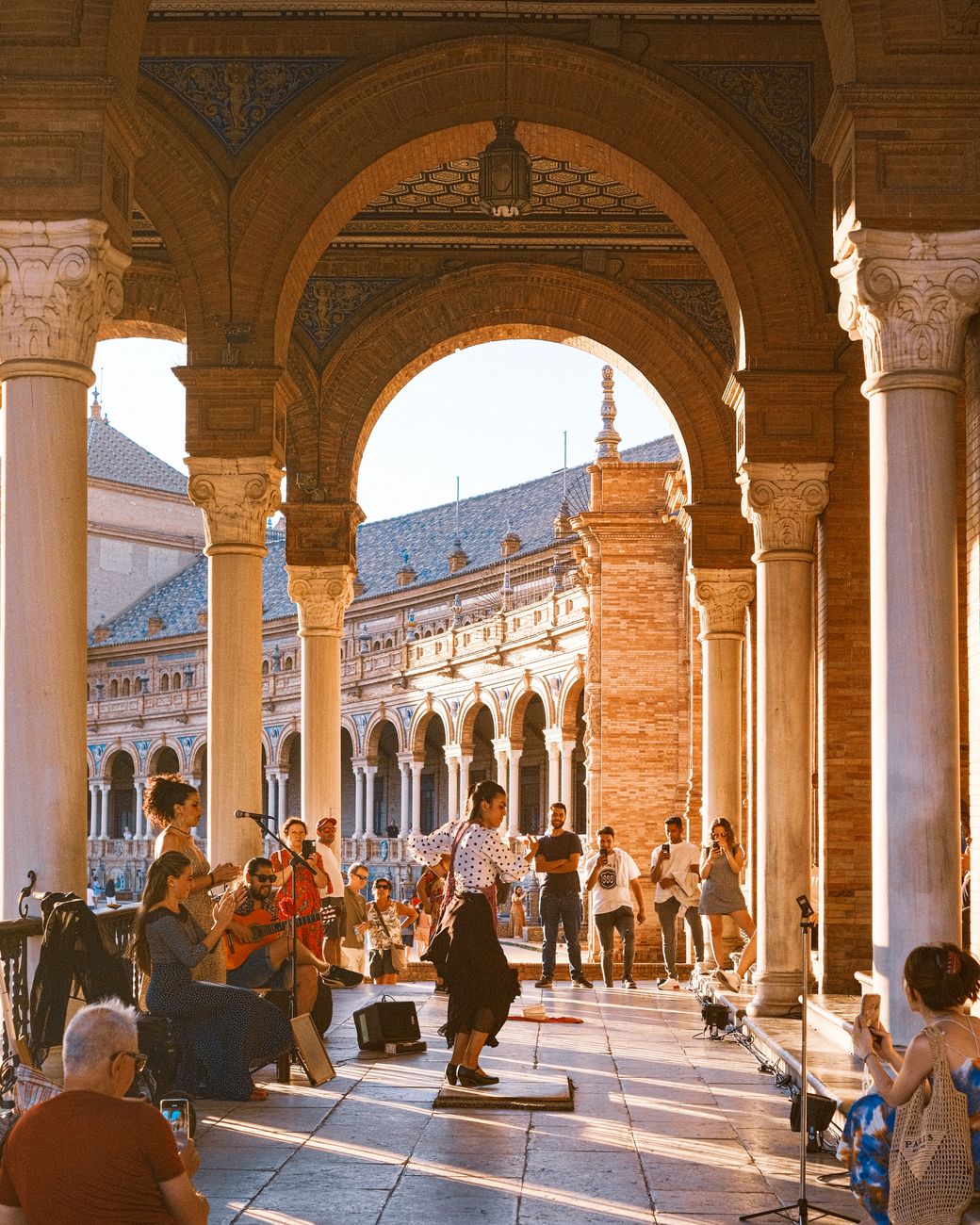
Andalusia is Spain at its most vivid. It is the sound of flamenco drifting through a narrow street in Seville, sunlight pouring into flower-filled courtyards in Córdoba and the silhouette of the Alhambra glowing above Granada at dusk. It is whitewashed villages clinging to mountainsides, long lunches built around tapas and sherry, glamorous Mediterranean resorts, wild Atlantic beaches and roads that disappear between olive groves.
Stretching across the southern edge of Spain, Andalusia is made up of eight provinces: Almería, Cádiz, Córdoba, Granada, Huelva, Jaén, Málaga and Seville. Each has its own character, but together they form one of Europe’s most rewarding regions for a longer holiday or road trip.
You can spend a week moving between monumental cities, base yourself beside the sea on the Costa del Sol, explore the white villages by car or combine palaces, beaches, markets, mountains and food into one unforgettable journey.
This complete Andalusia travel guide covers where to go, where to stay, what to eat, the best time to visit and how to plan an itinerary through southern Spain.
Why Visit Andalusia?
Andalusia offers a rare combination of history, beauty and everyday pleasure. Its major landmarks are extraordinary, but the quieter moments can be just as memorable: coffee in a tiled courtyard, a late lunch beneath orange trees, a swim in a hidden cove or an evening spent moving between tapas bars.
The region is particularly suited to travellers who enjoy:
Andalusia is also flexible. It can be explored as a cultural city break, a relaxed coastal holiday, a romantic escape, a family road trip or a longer food-focused journey.
Travellers planning a wider European holiday may also enjoy our guides to the South of France, Sardinia and Vienna.
The Best Places to Visit in Andalusia
No single destination captures the whole of Andalusia. Seville feels romantic and theatrical, Granada is atmospheric and layered with history, Córdoba is intimate and architectural, while Málaga combines a revitalised cultural centre with easy access to the coast.
Beyond the cities, Cádiz, Ronda, Jerez de la Frontera and the white villages reveal a slower and often more traditional side of the region.
Seville
Seville is the natural starting point for many Andalusian journeys. The regional capital is grand, warm and deeply atmospheric, with tiled palaces, shady plazas, orange trees and neighbourhoods that seem designed for wandering.
Begin at the Real Alcázar, a royal palace complex known for its intricate decorative work, courtyards and gardens. From there, visit Seville Cathedral and climb the Giralda for views across the city’s rooftops.
Plaza de España is another essential stop. Its sweeping semicircular building, bridges and colourful tiled alcoves make it one of Seville’s most recognisable locations. Visit early in the morning for softer light and fewer people.
Across the river, Triana is known for ceramics, flamenco culture and lively tapas bars. Spend an evening walking along Calle Betis before crossing back towards the old city as the lights appear along the river.
The Santa Cruz quarter is one of Seville’s most beautiful areas, filled with narrow lanes, hidden courtyards and small squares. It can become crowded during the day, so return in the early evening when the streets begin to quieten.
Allow at least two full days for Seville, although three nights gives you time to slow down and experience the city after the main sights close.
For more detailed ideas, read our dedicated travel guide to Seville.
Where to stay in Seville
Stay around Santa Cruz or El Arenal for easy access to the main landmarks. Alameda and Feria offer a more local, creative atmosphere, while Triana is a good option for travellers interested in food, ceramics and nightlife.
Look for:
Granada
Granada feels more intimate and mysterious than Seville. Set beneath the Sierra Nevada, the city brings together monumental architecture, hillside neighbourhoods, old tea houses, garden courtyards and one of Spain’s most celebrated food traditions.
The Alhambra is the centrepiece. The vast hilltop complex includes the Nasrid Palaces, Alcazaba fortress and Generalife gardens. Tickets are timed and can sell out, so purchase them well before your visit through official channels. (Tickets Alhambra Patronato)
Set aside at least half a day rather than treating the Alhambra as a quick stop. Wear comfortable shoes, carry water and check the time printed for entry to the Nasrid Palaces.
Afterwards, explore the Albaicín, Granada’s historic hillside neighbourhood. Its steep lanes open onto small plazas, whitewashed houses and miradores overlooking the Alhambra. The Mirador de San Nicolás is the most famous viewpoint, particularly around sunset, but smaller nearby terraces can be quieter.
Sacromonte is associated with cave houses and flamenco, while the lower city contains Granada Cathedral, the Royal Chapel, busy shopping streets and traditional bars.
Granada is also famous for serving a complimentary tapa with drinks in many establishments. The quality and size vary, but moving between neighbourhood bars remains one of the most enjoyable ways to experience the city’s food culture.
Where to stay in Granada
Stay in the lower centre for convenience, in the Albaicín for atmosphere or near the Alhambra for tranquillity and views.
The Albaicín is beautiful but steep, so consider your luggage and mobility before booking accommodation high on the hillside.
Córdoba
Córdoba is often visited as a day trip, but staying overnight reveals a more peaceful city after tour groups leave.
Its great landmark is the Mosque-Cathedral, or Mezquita-Catedral, an extraordinary building known for its forest of red-and-white arches and layered Islamic and Christian history. Allow enough time to walk slowly through the interior rather than rushing between viewpoints.
Outside, the old Jewish quarter is a maze of whitewashed streets, flower pots, patios and small shops. Cross the Roman Bridge for a classic view back towards the old city, particularly in the late afternoon.
Córdoba is also known for its patios. The annual courtyard festival usually brings private flower-filled spaces to life, but beautiful patios can be found throughout the city outside festival time as well.
Other worthwhile stops include the Alcázar de los Reyes Cristianos, the Roman Temple and Medina Azahara, the remains of a vast palace city outside Córdoba.
The city’s food deserves more attention than it often receives. Look for salmorejo, a thick chilled tomato soup usually topped with egg and ham; fried aubergine with honey; and oxtail stew.
Two nights is ideal, although Córdoba can be seen in one long day if your itinerary is limited. Its historic quarter, patios and food culture reward travellers who stay beyond the main sightseeing hours.
Málaga
Málaga is far more than an airport gateway to the Costa del Sol. Its walkable historic centre, galleries, waterfront and rooftop bars make it an appealing city break in its own right.
Begin at the Alcazaba, the hilltop fortress overlooking the city and harbour. Below it sits Málaga’s Roman Theatre, while the Castillo de Gibralfaro offers broader views over the coastline.
Málaga is closely associated with Pablo Picasso, who was born in the city. The Museo Picasso Málaga is one of the city’s major cultural attractions, while the Carmen Thyssen Museum focuses on Spanish painting.
Spend time around the historic centre, particularly Calle Larios, Plaza de la Constitución and the streets surrounding the cathedral. For a more relaxed afternoon, walk towards the port and continue to La Malagueta beach.
Málaga’s dining scene ranges from traditional seafood restaurants to contemporary wine bars and polished modern kitchens. At the beach, order grilled sardines cooked on skewers over an open fire, known as espetos.
Where to stay in Málaga
The historic centre is best for first-time visitors who want to walk to restaurants and cultural attractions. Soho has a more creative feel, while La Malagueta suits travellers who want to be close to the beach.
Málaga is also a practical base for day trips to Nerja, Frigiliana, Antequera and the Caminito del Rey.
Cádiz
Surrounded by water on a narrow peninsula, Cádiz has a breezy, faded beauty that feels different from Andalusia’s inland cities.The old town is compact and easy to explore on foot. Wander through La Viña, visit Cádiz Cathedral and climb the Tavira Tower for panoramic views over the city’s pale rooftops and the Atlantic.
The city’s beaches are part of everyday life rather than separate resort zones. La Caleta is small and atmospheric, framed by historic fortifications, while Playa de la Victoria offers a longer stretch of sand.
Cádiz is one of the best places in Andalusia for seafood. Look for fried fish served in paper cones, prawns, tuna, clams and seafood stews. The central market is an excellent place to begin, with produce stalls surrounded by casual places to eat and drink.
Stay for at least one night to experience the city after day visitors leave and the evening light settles across the sea.
Jerez de la Frontera
Jerez is one of Andalusia’s essential food and drink destinations. It lies at the heart of sherry country and is home to historic bodegas producing styles ranging from dry fino and manzanilla to richer oloroso and sweet Pedro Ximénez.
Book a bodega tour to understand how sherry is aged through the solera system and how dramatically the different styles vary. Tastings are far more interesting when paired with local food.
Jerez is also known for flamenco and equestrian traditions. The historic centre is less polished than Seville’s, but it has handsome squares, churches, palaces and an appealingly lived-in atmosphere.
Combine Jerez with Cádiz, which is around half an hour away by train, or include it as part of a road trip through the province of Cádiz.
Ronda
Ronda occupies one of the most dramatic settings in Spain. The town is divided by the deep El Tajo gorge, crossed by the monumental Puente Nuevo.
Walk to several viewpoints because the bridge and surrounding cliffs look different from each angle. The paths below the town can provide the most dramatic views, although conditions and access should be checked before descending.
Ronda’s old town contains quiet streets, historic houses, gardens and sections of the old city walls. The surrounding countryside is dotted with vineyards, olive groves and rural estates, making Ronda an attractive base for a slower two-night stay.
Many travellers visit on a rushed day tour, but the town is at its most atmospheric in the early morning and evening.
Where to stay in Ronda
Choose a property near the gorge for the classic view, or stay on a finca outside town for more space, quiet and access to the countryside.
The White Villages of Andalusia
The pueblos blancos are among the great pleasures of an Andalusian road trip. These hill towns and villages are characterised by whitewashed houses, steep lanes, tiled signs, church towers and flower-filled balconies.
Some of the best-known include:
Grazalema
Set within the Sierra de Grazalema Natural Park, this beautiful village makes a good base for walking, mountain scenery and traditional food.
Zahara de la Sierra
Zahara overlooks a turquoise reservoir and is crowned by the remains of a hilltop castle. The approach by road is particularly striking.
Setenil de las Bodegas
Setenil is known for homes, shops and restaurants built beneath vast rock overhangs. It is visually unusual and easy to combine with Ronda.
Vejer de la Frontera
One of the loveliest villages near the Cádiz coast, Vejer has whitewashed lanes, hidden courtyards, attractive restaurants and views across the surrounding countryside.
Frigiliana
Near Nerja, Frigiliana is known for its immaculate white streets, colourful doors and views towards the Mediterranean.
A car is the easiest way to explore these villages, although some can be reached on organised tours from Seville, Málaga or Cádiz.
The Best Beaches in Andalusia
Andalusia has both Mediterranean and Atlantic coastlines, and the experience changes considerably between them.
Costa del Sol
The Costa del Sol is the most developed stretch of coastline, with a wide choice of resorts, restaurants, beach clubs and family-friendly beaches.
Marbella
Marbella combines an attractive old town with glamorous hotels, restaurants, beach clubs and boutiques. The old quarter, centred around Plaza de los Naranjos, is far more traditional than the luxury marina areas.
Puerto Banús is known for designer shopping, superyachts and nightlife, while the coastline east and west of town contains quieter hotels and beach restaurants.
Estepona
Estepona offers a more relaxed alternative to Marbella, with a flower-filled old town, long promenade and sandy beach. It works well for families and travellers wanting an easy coastal base.
Nerja
Nerja has a more compact feel, with cliffs, coves and views from the Balcón de Europa. Nearby attractions include the Nerja Caves and the village of Frigiliana.
Costa de la Luz
Facing the Atlantic, the Costa de la Luz feels wilder and less intensively developed than much of the Costa del Sol. Expect long sandy beaches, breezier conditions and a more relaxed atmosphere.
Tarifa
Tarifa sits close to the southernmost point of mainland Spain and is known for wind sports, laid-back cafés and views towards Morocco on clear days.
The old town is compact and lively, while the surrounding coastline contains broad beaches and natural landscapes.
Bolonia
Bolonia is one of southern Spain’s most beautiful beaches, backed by a large dune and located beside the Roman ruins of Baelo Claudia.
El Palmar
Popular with surfers, El Palmar has a long sandy beach, casual restaurants and a relaxed summer atmosphere.
Zahara de los Atunes
Zahara is known for its beach, sunsets and exceptional tuna. It becomes lively in summer but retains a more low-rise, village-like character than larger resorts.
Cabo de Gata and Almería
For a more rugged coastal escape, head east to the province of Almería.
Cabo de Gata-Níjar Natural Park has volcanic landscapes, arid hills, fishing villages and clear-water coves. Its scenery feels markedly different from the greener parts of western Andalusia.
Base yourself around Níjar, San José, Las Negras or Agua Amarga and explore beaches such as Playa de los Genoveses and Mónsul.
Almería city itself has an imposing Alcazaba, historic centre and waterfront. Inland, the Tabernas Desert provides one of Europe’s most unusual landscapes and has served as a filming location for numerous productions.
Natural Landscapes and Outdoor Adventures
Andalusia is not only about cities and beaches.
Caminito del Rey
The Caminito del Rey is a cliffside walkway through the Gaitanes Gorge near Málaga. Once famous for its dangerous condition, it has been restored as a managed walking route.
Tickets should be booked in advance, and visitors should check current access, weather and transport arrangements before travelling.
Sierra Nevada
Rising above Granada, the Sierra Nevada offers skiing in winter and hiking during warmer months. The mountain villages of Las Alpujarras provide a quieter alternative to the major cities.
Doñana National Park
Doñana is one of Spain’s most significant wetland landscapes, with marshes, dunes and migratory birdlife. Access to sensitive areas is controlled, so guided excursions are often the best way to explore.
Sierra de Grazalema
This mountainous natural park near the white villages offers limestone peaks, forest walks and scenic drives. It is an ideal addition to a Ronda or Cádiz itinerary.
What to Eat in Andalusia
Food is central to the Andalusian experience. Rather than relying on formal multi-course meals, embrace tapas culture by ordering several small dishes and moving between bars.
Regional specialities vary significantly between the coast, cities and rural areas.
Tapas
Tapas may include olives, cheese, croquettes, anchovies, meatballs, fried fish, tortilla or slow-cooked meats. In some Granada bars, a tapa is still served with each drink, while elsewhere dishes are ordered and paid for individually.
Do not assume every restaurant serving tapas is traditional or good. Step away from the busiest tourist squares and look for places filled with local diners.
Gazpacho and salmorejo
Gazpacho is a chilled soup made with tomato, peppers, cucumber, olive oil and vinegar. Salmorejo, associated particularly with Córdoba, is thicker and richer, usually topped with chopped egg and cured ham.
Jamón ibérico
Andalusia produces some of Spain’s finest cured ham, particularly in the area around Jabugo in Huelva province. Quality varies, so ask about the breed, feeding and curing classification when ordering or buying it.
Fried fish
Known as pescaíto frito, mixed fried fish is especially popular in Málaga and Cádiz. The best versions are light, crisp and served simply with lemon.
Seafood
The long coastline produces prawns, clams, tuna, sardines, squid and many other seafood dishes. In Cádiz province, seek out almadraba tuna, caught using a traditional seasonal method.
Oxtail stew
Known as rabo de toro, this slow-cooked dish is rich and deeply flavoured. It is associated with Córdoba but appears throughout the region.
Espetos
A Málaga speciality, espetos are skewers of sardines grilled over coals, traditionally cooked in sand-filled boats beside the beach.
Olive oil
Andalusia is one of the world’s great olive-growing regions, with the province of Jaén particularly associated with production. Visit an olive estate or mill to learn how oil quality, harvest timing and olive varieties affect flavour.
Sherry
Produced around Jerez, Sanlúcar de Barrameda and El Puerto de Santa María, sherry is far more varied than its old-fashioned reputation suggests.
Try dry fino with olives or almonds, manzanilla with seafood, amontillado with richer dishes and Pedro Ximénez with dessert.
Bring some Andalusian flavour home with our seafood paella recipe, Rick Stein’s green rice with garlic, parsley and mussels or these baked sardines with lemon crumb. For another Spanish-inspired dish, try our tomato, beetroot, white bean and pomegranate salad.
Where to Stay in Andalusia
Andalusia’s accommodation ranges from grand city hotels to beach resorts, farm stays and converted historic buildings.
Historic city hotels
Seville, Córdoba and Granada are excellent places to stay in restored palaces or traditional courtyard houses. These properties often have beautiful communal spaces, although historic buildings may have small rooms or limited lifts.
Paradores
Spain’s Paradores network operates hotels in historic buildings and remarkable locations. Andalusian options include properties in former convents, castles and monumental buildings.
They can be particularly appealing in places where the accommodation itself becomes part of the experience.
Rural fincas and haciendas
For a slower trip, book a countryside estate surrounded by olive groves, vineyards or mountains. Rural stays work well near Ronda, the white villages, Jaén and Las Alpujarras.
Coastal resorts
Marbella and the wider Costa del Sol offer the greatest concentration of full-service resorts, while Cádiz province and Cabo de Gata provide quieter and often more natural coastal settings.
Apartments
Apartments can be practical for families or longer stays, particularly in Seville, Málaga and Granada. Check whether parking is available if you are driving, as old-city access can be restricted.
The Best Time to Visit Andalusia
Spring: March to May
Spring is one of the best times to visit. Temperatures are generally comfortable, gardens are in bloom and major festivals bring extraordinary energy to the cities.
Holy Week and Seville’s April Fair are major cultural events, but they also bring crowds, higher prices and transport complications. Book far ahead when travelling during festival periods.
Summer: June to August
Summer is hot, particularly in inland cities such as Seville and Córdoba. Daytime temperatures can make sightseeing uncomfortable, so plan outdoor visits early and rest during the hottest part of the afternoon.
The coast is busy and lively, with warmer water and a full schedule of beach clubs, festivals and nightlife.
Summer works best for a coast-focused itinerary or for travellers comfortable adapting to local rhythms by beginning early, eating late and taking a long afternoon break.
Autumn: September to November
Early autumn is another excellent period. The sea remains warm, major summer crowds begin to ease and inland sightseeing becomes more comfortable.
September is well suited to combining the coast with cities, while October and November work particularly well for food, culture and road trips.
Winter: December to February
Winters are generally mild at lower elevations, although evenings can be cold and mountain areas may receive snow.
This is a good season for quieter city breaks, museums and food-focused travel. Some coastal businesses reduce their hours or close seasonally.
How Long Do You Need in Andalusia?
A week allows you to see several major destinations, but 10 to 14 days provides a much better balance.
Five days
Choose two bases rather than trying to see the entire region.
A good combination would be:
Seven days
A classic first itinerary could include:
This is possible by train, although the pace will be fairly quick.
Ten days
With 10 days, add Ronda or Cádiz and allow more time in each city.
Two weeks
Fourteen days gives you space to combine cities, villages and the coast without constantly changing hotels.
A Suggested 10-Day Andalusia Itinerary
Days 1–3: Seville
Explore the Alcázar, cathedral, Santa Cruz, Triana and Plaza de España. Include one evening of flamenco and another devoted to tapas.
Day 4: Córdoba
Travel to Córdoba, visit the Mosque-Cathedral and explore the historic centre. Stay overnight to enjoy the quieter evening atmosphere.
Days 5–6: Granada
Continue to Granada. Visit the Albaicín on arrival and reserve the following morning or afternoon for the Alhambra.
Day 7: Ronda
Collect a car or travel by transfer to Ronda. Explore the gorge, old town and surrounding countryside.
Days 8–10: Málaga and the coast
Finish in Málaga, combining museums and historic sights with a beach afternoon. Take a day trip to Nerja, Frigiliana or the Caminito del Rey.
A Suggested Two-Week Andalusia Road Trip
For a more complete journey:
Travellers who prefer remote landscapes could replace Marbella with Cabo de Gata, although this adds considerable driving.
Getting to Andalusia
Málaga Airport is the region’s major international gateway and is convenient for Granada, the Costa del Sol and eastern Andalusia.
Seville Airport is well placed for Seville, Córdoba, Cádiz and western Andalusia.
Some travellers also arrive through Madrid and take a high-speed train south. This can work well for an itinerary beginning in Córdoba or Seville.
Getting Around Andalusia
By train
High-speed and intercity trains connect major destinations including Seville, Córdoba, Málaga and Granada.
Rail travel is convenient when your itinerary focuses on cities and you do not want to deal with parking or restricted historic streets.
By car
A car becomes far more useful when visiting:
Avoid collecting a car until you are ready to leave the major city centres. Parking in historic districts can be difficult, expensive and restricted.
By bus
Buses connect many towns not served directly by rail. They are generally affordable but can make multi-stop itineraries slower.
Practical Tips for Visiting Andalusia
Book major attractions early
Reserve the Alhambra and Seville’s Alcázar before your trip, particularly in spring, summer and around major holidays.
Expect later meal times
Lunch commonly begins in the early-to-mid afternoon, while dinner may not start until 8.30 or 9pm. Restaurants aimed at visitors may open earlier, but local dining rhythms tend to be later.
Plan around the heat
During warmer months, begin sightseeing early, eat lunch indoors and return outside in the late afternoon.
Wear comfortable shoes
Historic centres often have cobblestones, steep streets and uneven surfaces. Granada, Ronda and the white villages involve significant hills.
Do not overpack the itinerary
Distances may appear manageable, but changing accommodation every night quickly becomes tiring. Two or three nights in each major base usually creates a better trip.
Learn a few Spanish phrases
English is widely understood in major tourism areas, but basic Spanish is useful in rural villages, markets and local restaurants.
Carry some cash
Cards are widely accepted, but cash remains useful for small purchases, local buses, markets and rural establishments.
Check seasonal closures
Smaller restaurants, beach clubs and rural attractions may close on particular weekdays or outside peak season. Confirm opening times shortly before visiting.
For more practical planning advice, read our guide on how to pack properly for your next trip.
Frequently Asked Questions About Andalusia
Is Andalusia worth visiting?
Yes. Andalusia offers some of Spain’s most important architecture, distinctive food traditions, atmospheric cities and varied landscapes. It is particularly rewarding for travellers who want to combine culture, beaches, historic towns and scenic countryside.
What is Andalusia best known for?
Andalusia is known for flamenco, Moorish architecture, white villages, tapas, sherry, olive oil and its Mediterranean and Atlantic coastlines. Its most famous landmarks include Granada’s Alhambra, Córdoba’s Mosque-Cathedral and Seville’s Alcázar and cathedral.
What is the most beautiful part of Andalusia?
Beauty is subjective, but Granada, Ronda, Seville, the white villages and the Costa de la Luz are among the region’s most striking destinations. Cabo de Gata is particularly beautiful for travellers drawn to rugged, undeveloped landscapes.
Which city is best for a first visit to Andalusia?
Seville is the best all-round introduction because it combines major landmarks, beautiful neighbourhoods, excellent food and strong transport connections.
Granada may be the better choice for travellers whose priority is the Alhambra and a smaller, more intimate city.
Is Seville or Granada better?
Seville is larger, grander and generally offers more restaurants, neighbourhoods and major attractions. Granada feels smaller, moodier and more closely shaped by the Alhambra and Sierra Nevada.
Ideally, visit both because they provide very different experiences.
How many days should you spend in Andalusia?
Allow at least seven days for a first visit. Ten days is better for combining Seville, Córdoba, Granada and one coastal or rural destination. Two weeks allows for a relaxed road trip including villages and beaches.
Can you visit Andalusia without a car?
Yes, particularly when visiting Seville, Córdoba, Granada and Málaga. These cities can be linked by train or bus.
A car is recommended for the white villages, rural properties, Cabo de Gata and less accessible sections of the coast.
What is the best month to visit Andalusia?
April, May, September and October are generally excellent because conditions are usually more comfortable than midsummer.
Festival dates, school holidays and major events can significantly affect prices and availability.
Is Andalusia too hot in summer?
Inland Andalusia can become extremely hot in July and August, particularly around Seville and Córdoba. Coastal areas are usually more manageable, although still hot and busy.
Plan sightseeing in the morning and evening, stay somewhere with air conditioning and avoid demanding outdoor activities during the hottest hours.
Where are the best beaches in Andalusia?
The Costa de la Luz is best for broad, natural Atlantic beaches, while the Costa del Sol offers resorts and convenient facilities. Cabo de Gata is ideal for dramatic coves and rugged scenery.
Bolonia, Zahara de los Atunes, El Palmar, Nerja and the beaches around Cabo de Gata are all worth considering.
Is Andalusia expensive?
Andalusia can offer good value compared with some other popular parts of western Europe, although prices rise in central Seville, Marbella, major resorts and during festivals.
Tapas bars, markets, apartments and inland towns can help keep costs manageable.
Is Andalusia suitable for families?
Yes. The beaches, walkable cities, relaxed dining culture and range of apartments make it family-friendly.
Summer heat and steep historic streets require planning when travelling with very young children.
What food should you try in Andalusia?
Try salmorejo, gazpacho, jamón ibérico, fried fish, grilled sardines, oxtail stew, local cheeses, olives and dishes made with regional olive oil. In Cádiz, look for tuna and seafood, while Jerez is essential for sherry.
Do you need to book the Alhambra in advance?
Yes. Timed entry to the Nasrid Palaces is limited, and popular dates can sell out. Book through the official ticket platform and ensure the visitor details match the required identification. (Tickets Alhambra Patronato)
Is Andalusia good for a road trip?
It is one of Europe’s best road-trip regions. The cities are relatively close together, while driving makes it possible to visit mountain villages, rural estates, beaches and natural parks that are difficult to reach by train.
Where to Next?
After Andalusia, continue your Spanish escape with a few days in Madrid, travel east towards Valencia or cross the Mediterranean to the Balearic Islands. Our guide to Santa Eulària des Riu in Ibiza is a good starting point for a slower island stay.
For another Mediterranean journey combining historic towns, beaches and regional food, explore our complete Sardinia travel guide.
Travellers drawn to glamorous coastal towns, markets and countryside may prefer the South of France, while those planning a cultural city break can discover where to stay, eat and explore in our ultimate Vienna guide.
For more inspiration closer to Andalusia, revisit our full Seville travel guide before planning your route through southern Spain.
The Final Word
Andalusia rewards travellers who resist the urge to rush. Its great monuments deserve time, but so do its markets, neighbourhood bars, village roads and long coastal afternoons. Spend a morning beneath the arches of Córdoba, watch the light change across the Alhambra, order one more plate in Seville and leave enough room in the itinerary for places you had not planned to find.
Whether you come for the cities, beaches, food or history, Andalusia has a way of feeling both larger than life and wonderfully easy to inhabit. It is a destination made for lingering, returning and discovering differently each time.
Share this:
Like this: