Nobody warns you that the products on your shelf become temporarily irrelevant. The retinol you’ve used nightly for six years, the acid toner, and the foundation you know how to apply without thinking. All of it goes into a drawer for weeks while your skin recovers from a facelift and adjusts to something it has never had to handle before.
That interruption catches people off guard more than the recovery itself, partly because it’s rarely discussed during consultations focused on surgical technique. Beverly Hills patients navigating recovery tend to hit these same questions at roughly the same points. Often surprised by how much of the adjustment happens in the bathroom mirror rather than the surgeon’s office.
Here’s how the routine actually changes and when it comes back.
The First Two Weeks Are Deliberately Minimal
Whatever your surgeon specifies takes precedence over anything here, and the instruction is almost always the same: gentle cleansing, prescribed ointment on incisions, and nothing else.
Gentle cleansing only: nothing more aggressive than what’s specifically approved for freshly healing skin
Prescribed ointment on incisions: the only active treatment applied during this window
No active ingredients: freshly closed incisions and a disrupted skin barrier don’t tolerate anything beyond the basics
The impulse to “help” is the risk: introducing soothing products early risks irritation, delayed healing, and pigmentation problems that outlast the recovery itself
The temptation to help things along with something soothing is exactly the impulse to resist during this window.
Skincare Products to Pause During Surgical Recovery
Retinoids, alpha and beta hydroxy acids, vitamin C in higher concentrations, and any exfoliant are typically paused well before surgery and reintroduced considerably later than patients expect. Many assume a few weeks of caution is sufficient, only to learn from their surgeon that the actual timeline stretches well beyond that initial recovery window.
The reasoning is straightforward. These work by controlled disruption of the skin surface, which is precisely the wrong thing to add to tissue already healing from surgical disruption. Reintroduction is usually staggered rather than simultaneous, one product at a time, so any reaction can be traced to a specific cause rather than guessed at.
Makeup Timing Depends on Incision Closure
This is the question patients ask earliest, and it has no universal answer since it depends on how your incisions are healing rather than on a fixed number of days. Explicit clearance before applying anything over or near an incision line matters more than a general timeline pulled from a search result, since two people healing from the exact same procedure can be ready for makeup weeks apart.
This is exactly the kind of question worth confirming directly during recovery from a facelift in Beverly Hills, rather than assuming a standard timeline applies. Dr. Kimberly Lee’s practice typically assesses incision closure at follow-up appointments, and that examination is what actually determines when makeup over the sites is safe.
Photo by Mike Murray
Sun Protection Becomes Non-Negotiable
This is the single most consequential change and the one with the longest tail. Research on periprocedural skincare published through the NIH’s National Center for Biotechnology Information strongly recommends broad-spectrum SPF 50 or higher, noting that tinted sunscreens containing iron oxide provide protection against visible light as well as UV and have been shown to improve hyperpigmentation.
Immature scar tissue is particularly vulnerable, and UV exposure during the healing window can produce permanent darkening along incision lines. This is one of the few post-operative instructions where the consequence of ignoring it is genuinely irreversible.
Scar Management Runs Longer Than the Recovery
Surgeons frequently discontinue active scar management once wounds are closed, at around two to three weeks. Remodelling continues for months beyond that point, and sometimes up to a year after closure, which means the visible appearance of a scar at week three is nowhere near its final state.
Silicone sheeting or gel, gentle massage once cleared, and consistent sun protection all belong in the routine during that period. It’s easy to lose momentum here because the visible healing appears finished, and the scars that mature best generally belong to patients who kept going after everything looked fine.
What Gets Simpler Rather Than More Complicated
Not everything about the routine expands. Several things frequently become less involved afterward, which people rarely anticipate:
Less concealing: foundation applied to disguise shadowing and laxity becomes unnecessary
Fewer targeted products: treatments aimed at contour rather than skin quality lose their purpose
Simplified evening routine: the reduced product load frequently persists once the barrier has recovered
Different priorities: attention shifts toward skin texture and protection rather than correction
The routine that eventually settles tends to be shorter than the one that preceded surgery, focused on maintaining skin quality rather than compensating for structural change.
Conclusion
The most useful thing you can do is ask your surgeon for a written reintroduction schedule before the operation rather than after, since deciding what to use while swollen and uncomfortable is a poor time to be making judgment calls. Photograph your current routine and get clarity on which products pause, when each returns, and what to substitute in the interim.
Buy a proper broad-spectrum sunscreen ahead of time, because it will be the one product you genuinely cannot skip. And expect the timeline to run longer than feels necessary, since the skin that eventually looks best generally belongs to whoever was most patient about leaving it alone.


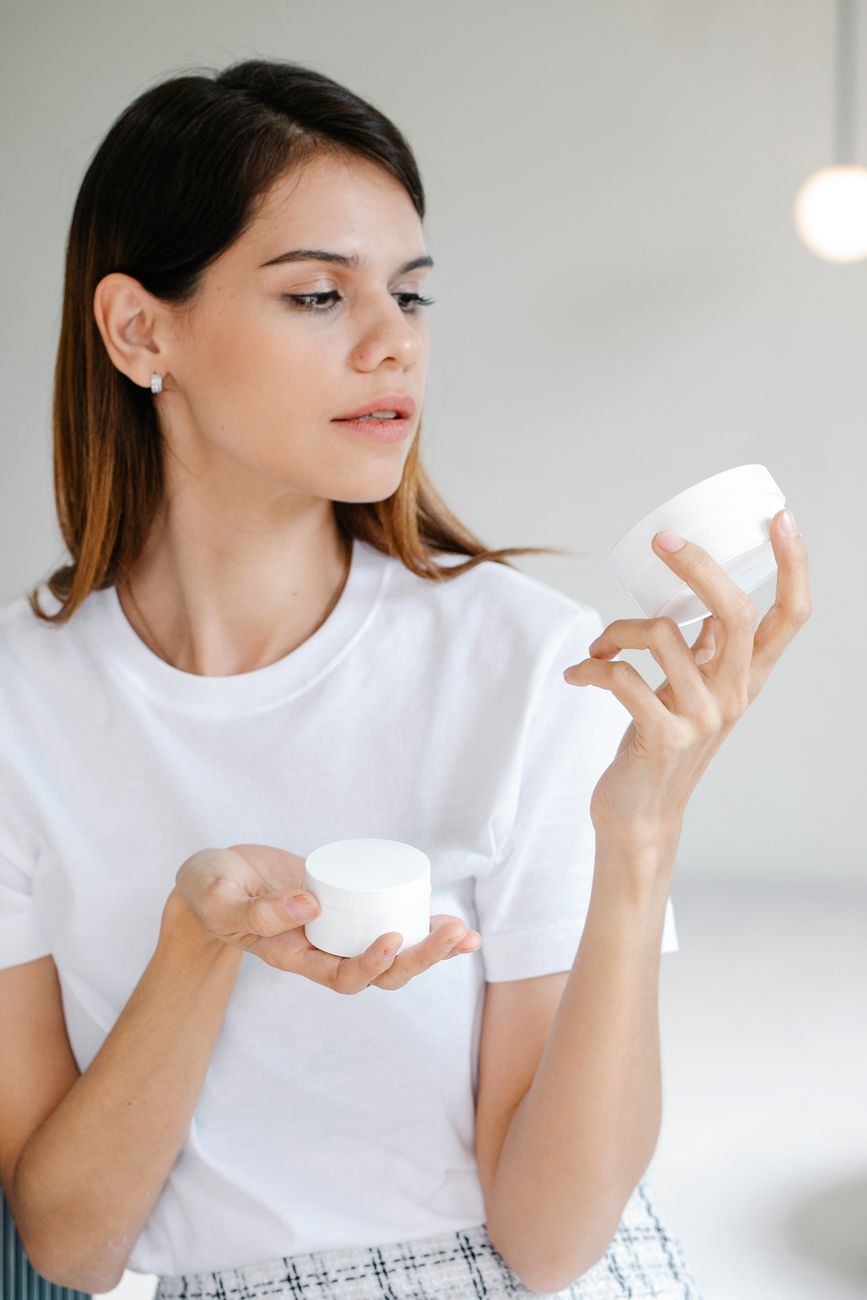
Nobody warns you that the products on your shelf become temporarily irrelevant. The retinol you’ve used nightly for six years, the acid toner, and the foundation you know how to apply without thinking. All of it goes into a drawer for weeks while your skin recovers from a facelift and adjusts to something it has never had to handle before.
That interruption catches people off guard more than the recovery itself, partly because it’s rarely discussed during consultations focused on surgical technique. Beverly Hills patients navigating recovery tend to hit these same questions at roughly the same points. Often surprised by how much of the adjustment happens in the bathroom mirror rather than the surgeon’s office.
Here’s how the routine actually changes and when it comes back.
The First Two Weeks Are Deliberately Minimal
Whatever your surgeon specifies takes precedence over anything here, and the instruction is almost always the same: gentle cleansing, prescribed ointment on incisions, and nothing else.
The temptation to help things along with something soothing is exactly the impulse to resist during this window.
Skincare Products to Pause During Surgical Recovery
Retinoids, alpha and beta hydroxy acids, vitamin C in higher concentrations, and any exfoliant are typically paused well before surgery and reintroduced considerably later than patients expect. Many assume a few weeks of caution is sufficient, only to learn from their surgeon that the actual timeline stretches well beyond that initial recovery window.
The reasoning is straightforward. These work by controlled disruption of the skin surface, which is precisely the wrong thing to add to tissue already healing from surgical disruption. Reintroduction is usually staggered rather than simultaneous, one product at a time, so any reaction can be traced to a specific cause rather than guessed at.
Makeup Timing Depends on Incision Closure
This is the question patients ask earliest, and it has no universal answer since it depends on how your incisions are healing rather than on a fixed number of days. Explicit clearance before applying anything over or near an incision line matters more than a general timeline pulled from a search result, since two people healing from the exact same procedure can be ready for makeup weeks apart.
This is exactly the kind of question worth confirming directly during recovery from a facelift in Beverly Hills, rather than assuming a standard timeline applies. Dr. Kimberly Lee’s practice typically assesses incision closure at follow-up appointments, and that examination is what actually determines when makeup over the sites is safe.
Sun Protection Becomes Non-Negotiable
This is the single most consequential change and the one with the longest tail. Research on periprocedural skincare published through the NIH’s National Center for Biotechnology Information strongly recommends broad-spectrum SPF 50 or higher, noting that tinted sunscreens containing iron oxide provide protection against visible light as well as UV and have been shown to improve hyperpigmentation.
Immature scar tissue is particularly vulnerable, and UV exposure during the healing window can produce permanent darkening along incision lines. This is one of the few post-operative instructions where the consequence of ignoring it is genuinely irreversible.
Scar Management Runs Longer Than the Recovery
Surgeons frequently discontinue active scar management once wounds are closed, at around two to three weeks. Remodelling continues for months beyond that point, and sometimes up to a year after closure, which means the visible appearance of a scar at week three is nowhere near its final state.
Silicone sheeting or gel, gentle massage once cleared, and consistent sun protection all belong in the routine during that period. It’s easy to lose momentum here because the visible healing appears finished, and the scars that mature best generally belong to patients who kept going after everything looked fine.
What Gets Simpler Rather Than More Complicated
Not everything about the routine expands. Several things frequently become less involved afterward, which people rarely anticipate:
The routine that eventually settles tends to be shorter than the one that preceded surgery, focused on maintaining skin quality rather than compensating for structural change.
Conclusion
The most useful thing you can do is ask your surgeon for a written reintroduction schedule before the operation rather than after, since deciding what to use while swollen and uncomfortable is a poor time to be making judgment calls. Photograph your current routine and get clarity on which products pause, when each returns, and what to substitute in the interim.
Buy a proper broad-spectrum sunscreen ahead of time, because it will be the one product you genuinely cannot skip. And expect the timeline to run longer than feels necessary, since the skin that eventually looks best generally belongs to whoever was most patient about leaving it alone.
Share this:
Like this: