Some countries are beautiful. Costa Rica is alive. Wake up to the sound of howler monkeys somewhere beyond the trees, spend the morning walking through a misty cloud forest, soak in naturally heated volcanic waters in the afternoon and finish the day watching the sun disappear over a Pacific beach.
This is Costa Rica.
Wedged between the Pacific Ocean and Caribbean Sea, this small Central American country packs an extraordinary amount of nature into its borders. Volcanoes rise above rainforest, rivers cut through jungle valleys, cloud forests disappear into mist and beaches stretch for miles along two very different coastlines.
Then there is the wildlife.
Sloths move slowly through the canopy. Monkeys call from the trees. Toucans flash through the forest. Sea turtles return to beaches to nest, while whales and dolphins can be spotted offshore at certain times of year.
But Costa Rica is not only about wildlife and scenery.
It is about a way of travelling.
The phrase pura vida is everywhere, and although it can be translated as “pure life”, its meaning is much broader. It captures a relaxed approach to life, a sense of optimism and an appreciation for simple pleasures.
A perfect Costa Rica trip is therefore not about racing between every national park and beach.
It is about choosing a few places, staying long enough to appreciate them and allowing the country to set the pace.
This Costa Rica travel guide covers the best places to visit, the most beautiful beaches, rainforest and wildlife experiences, volcanoes, adventure activities, where to stay, when to go, how to get around and how to plan a trip that feels unforgettable.
Why Visit Costa Rica?
Costa Rica is one of those rare destinations where adventure and relaxation naturally belong together.
You can spend one day hiking through a national park and the next doing almost nothing except swimming in the sea.
The country’s protected areas are a huge part of its appeal. Costa Rica’s tourism board notes that more than a quarter of the country’s land is dedicated to conservation, creating an extraordinary variety of protected landscapes and habitats.
There is also remarkable variety between regions. The Pacific coast has beautiful beaches, surfing and dramatic sunsets, while the Caribbean side offers a different atmosphere shaped by rainforest, Afro-Caribbean culture and coastal villages.
Inland, volcanoes, cloud forests and hot springs create another world entirely.
For travellers who love nature, Costa Rica can feel almost overwhelming in the best possible way.
And if wildlife is your reason for travelling, Eat Live Escape’s 5 Best Destinations for Wildlife Lovers offers more inspiration for destinations where nature is the main attraction.
The Best Time to Visit Costa Rica
There is no single perfect month to visit Costa Rica because different regions experience different weather patterns.
Broadly speaking, the country has a dry season from around December to April and a green season from May through November. The Pacific coast generally has a more defined dry season, while the Caribbean coast follows a different rainfall pattern.
December through April is popular because many travellers want sunny beach days and drier conditions. This is also when accommodation and popular attractions can be busiest.
The green season should not be dismissed.
Rain brings the forests to life, landscapes become intensely green and crowds can be lighter. Depending on where you are travelling, you may also find better accommodation value.
July is particularly interesting because a short period sometimes known as the “little summer” can bring a spell of drier weather, while the season also offers excellent opportunities for certain wildlife experiences.
The best strategy is to choose your destinations around the experiences you care about most rather than simply choosing the driest month.
San José: Start With the Capital
Many Costa Rica trips begin in San José, but it is easy to underestimate the capital.
San José sits in the Central Valley and offers museums, markets, historic buildings, restaurants and an opportunity to see a more urban side of Costa Rica before heading into the wild.
You do not necessarily need several days here, but one night can be worthwhile, particularly if your international flight arrives late.
Spend some time exploring the city centre, visit the Central Market and try traditional Costa Rican food before continuing towards the mountains or coast.
San José is also a useful logistical base.
From here, roads lead towards destinations including Arenal, Monteverde, the Pacific coast and other parts of the country.
Think of the capital as the opening chapter rather than the entire story.
Arenal and La Fortuna: Volcanoes, Rainforest and Hot Springs
If you only have time for one inland destination, La Fortuna and the Arenal region are among the strongest choices.
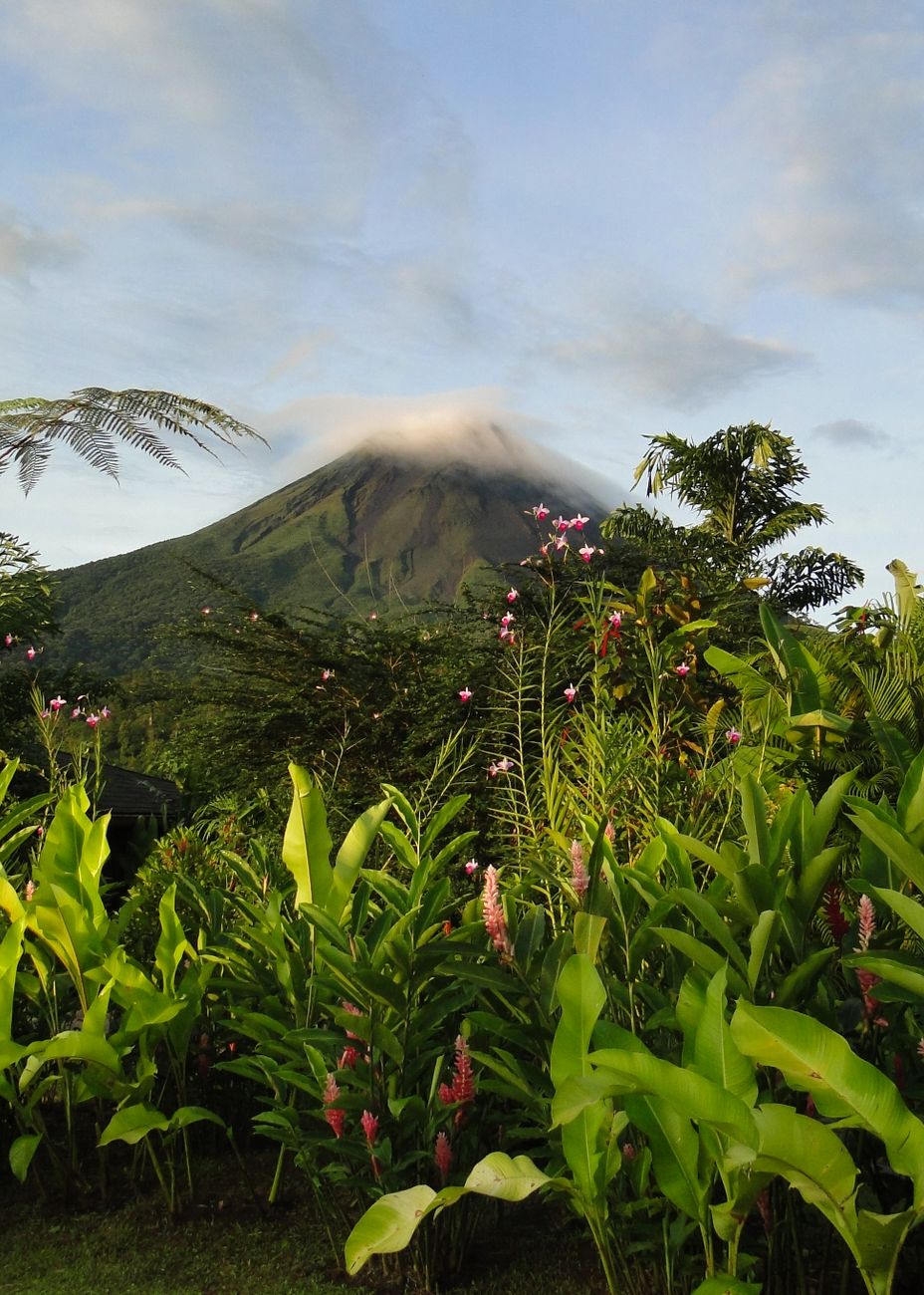
Arenal Volcano dominates the landscape, rising above lush forests and creating the dramatic backdrop that makes this area so memorable. Costa Rica’s tourism board describes the Northern Plains as a region where Arenal rises above protected forests, with hot springs, rivers and waterfalls adding to the landscape.
La Fortuna itself is lively but surrounded by nature.
You can spend the morning hiking, the afternoon swimming beneath a waterfall and the evening soaking in naturally heated thermal waters.
The hot springs are one of the region’s signature experiences.
After a day outdoors, slipping into warm mineral-rich water surrounded by tropical vegetation feels almost impossibly relaxing.
Hiking Around Arenal
Arenal is also a wonderful destination for travellers who want to get active.
Trails wind through rainforest and volcanic landscapes, with opportunities to see birds, monkeys and other wildlife along the way.
Some walks are relatively easy, while others involve more challenging terrain.
You do not need to be an experienced hiker to enjoy the area, but proper shoes and rain protection are essential because weather conditions can change quickly.
Monteverde feels completely different from Arenal.
Instead of tropical heat and volcano views, you enter a cooler world of mist, moss, hanging bridges and dense cloud forest.
The Monteverde area is one of Costa Rica’s great nature experiences. Walk slowly and look upwards because the canopy is where much of the action happens.
Birdwatchers come here hoping to spot the resplendent quetzal, while nature lovers can spend hours exploring trails surrounded by extraordinary plant life.
The atmosphere is almost magical.
Mist moves between the trees, leaves glisten with moisture and the forest seems to make its own sounds.
This is a destination where you should resist rushing.
Choose a trail, walk slowly and pay attention.
The forest rewards people who look closely.
Ziplining Through the Canopy
Monteverde is also one of Costa Rica’s most famous places for ziplining.
Flying above the forest canopy gives you an entirely different perspective on the landscape.
There is something wonderfully surreal about standing on a platform high above the trees before launching yourself across a valley.
If adventure travel is your priority, this is the kind of experience that belongs near the top of your list.
Eat Live Escape’s Bucket List Adventure Travel Experiences is another useful source of inspiration for building an itinerary around memorable adventure experiences.
Manuel Antonio: Jungle Meets Beach
Photo by Mora Varela
Manuel Antonio is one of Costa Rica’s most famous destinations because it combines two of the country’s greatest attractions in one place.
Jungle and beach.
The national park is home to rainforest, coastal scenery and abundant wildlife, while nearby beaches offer the chance to swim and relax after a morning on the trails.
This combination makes Manuel Antonio particularly appealing for first-time visitors.
You do not have to choose between a wildlife experience and a beach holiday.
You can have both on the same day.
Arrive early when possible, especially during busy periods, and give yourself enough time to walk the trails before heading towards the coast.
Costa Rica’s official tourism resources list Manuel Antonio among the country’s major national park destinations, alongside Arenal, Tortuguero, Corcovado and other protected areas.
Corcovado: For the Wildest Side of Costa Rica
If Manuel Antonio is an accessible introduction to Costa Rica’s wildlife, Corcovado is a deeper immersion.
Located on the Osa Peninsula in the South Pacific, Corcovado is known for its extraordinary biodiversity and remote character.
This is the place to consider if your idea of a dream holiday involves dense rainforest, wildlife encounters and feeling genuinely far away from everyday life.
The journey takes more planning, but that is part of the appeal.
Corcovado is not a destination you simply tick off between other attractions.
It deserves time.
Go with experienced local guides, follow park regulations and treat wildlife encounters as exactly that: encounters with wild animals in their own environment.
Tortuguero: Rivers, Rainforest and Sea Turtles
Photo by Italo Melo
On the Caribbean side, Tortuguero offers a completely different Costa Rican experience.
The region is made up of waterways, rainforest and coastal habitats, and access to the national park is by boat. Costa Rica’s tourism authorities describe Tortuguero as one of the country’s important turtle nesting areas and note that the park’s waterways are a defining part of the experience.
Boat trips allow you to move through canals surrounded by thick vegetation.
Instead of hiking through a forest, you are quietly travelling through it.
Look for monkeys, birds, reptiles and other wildlife along the banks.
During turtle nesting seasons, the beaches become particularly important, but wildlife activities should always be undertaken with reputable operators and according to current local rules.
Puerto Viejo: Costa Rica’s Caribbean Soul
Puerto Viejo feels completely different from the Pacific coast.
The atmosphere is relaxed, colourful and distinctly Caribbean, with Afro-Caribbean influences visible in the food, music and culture.
Nearby beaches such as Playa Cocles and Punta Uva offer opportunities for swimming, cycling and relaxing beneath palm trees.
This is not the place for a tightly scheduled itinerary.
Rent a bicycle, explore the coastline, stop for lunch and allow yourself to spend an afternoon doing almost nothing.
The Caribbean side is particularly attractive for travellers who want to see a different cultural side of Costa Rica rather than simply collecting national parks.
Guanacaste: Beaches, Sunsets and the Pacific
Photo by Diego Madrigal
If your ideal Costa Rica holiday includes long beach days, Guanacaste should be high on your list.
The region is known for tropical dry forests, beautiful beaches and a warmer, sunnier climate than some of the country’s wetter areas. Official Costa Rica tourism information highlights beaches including Tamarindo, Playa Grande, Playa Conchal and Nosara as key Guanacaste destinations.
Tamarindo is one of the best-known beach towns and has a lively atmosphere, restaurants, surf schools and plenty of accommodation.
Nosara offers a more wellness-oriented atmosphere, with yoga, surfing and a slower rhythm.
Playa Conchal is famous for its beautiful coastline and distinctive beach scenery.
The best part of Guanacaste may be the evenings.
Find a spot beside the Pacific and watch the sky change colour as the sun disappears over the water.
Nicoya Peninsula: Slow Travel and the Pura Vida Lifestyle
The Nicoya Peninsula is where Costa Rica’s relaxed philosophy becomes especially easy to understand.
Life moves slowly here.
The region is known for beaches, small towns, wellness, surfing and the Blue Zone associated with longevity and healthy lifestyles.
Nosara is particularly popular with travellers looking for yoga, wellness and a connection with nature.
Santa Teresa has a more youthful, surf-focused atmosphere, with sandy roads, cafés and a strong beach culture.
The peninsula works best when you stop trying to make every day productive.
Wake up early.
Swim.
Have breakfast.
Read.
Surf.
Eat.
Watch the sunset.
Repeat.
That can be the entire itinerary.
The Pacific Coast: Choose Your Beach Mood
Costa Rica’s Pacific coast is not one single beach destination.
It changes dramatically as you travel south.
The Central Pacific around Manuel Antonio combines rainforest and beaches, while further south, places such as Dominical and Uvita offer a more relaxed and nature-focused atmosphere.
Dominical is particularly popular with surfers and travellers looking for a laid-back beach town.
Uvita is known for its beautiful coastline and access to the Marino Ballena area.
Further south, the landscape becomes increasingly wild and remote.
The official tourism board recommends different activities by season and region, including beach time on Dominical and Uvita during the dry season and whale and dolphin watching in the South Pacific during the green season.
White-Water Rafting
Costa Rica is an excellent destination for adventure travellers, and white-water rafting is one of the country’s most exciting activities.
The Pacuare, Reventazón, Sarapiquí, Naranjo and Savegre rivers all offer rafting opportunities, with different sections suited to different experience levels.
The experience is about more than adrenaline.
You move through tropical landscapes that would be difficult to experience from a road, passing forested riverbanks, waterfalls and remote stretches of countryside.
Always use an established operator and choose a route appropriate for your experience and current river conditions.
Wildlife is one of the biggest reasons to visit Costa Rica.
Sloths, monkeys, toucans, frogs, crocodiles, turtles and countless smaller creatures live across the country’s forests, wetlands and coastal habitats.
But seeing wildlife is not guaranteed.
That is part of the experience.
A good guide can dramatically improve your chances because they know where to look and, importantly, how to observe animals without disturbing them.
Bring binoculars if you have them and learn to slow down.
Sometimes the most memorable sight is not the obvious animal everyone came to find.
It might be a tiny frog hidden beneath a leaf or a brightly coloured bird moving through the canopy.
Sloths, Monkeys and Toucans
Manuel Antonio is famous for sloths and monkeys, while the cloud forests are excellent for birdwatching.
Tortuguero offers a completely different wildlife environment, with animals seen from boats rather than forest trails.
Corcovado is where serious wildlife enthusiasts can go deeper into the country’s wilderness.
The official tourism board notes that Costa Rica is home to a wide range of wildlife experiences, from turtle nesting and monkey populations to frogs and marine species.
The key is to travel responsibly.
Do not feed animals.
Do not touch wildlife.
Do not use flash photography when guides advise against it.
And avoid operators who encourage close or intrusive encounters simply for photographs.
Costa Rican Food: What to Eat
Costa Rican food is generally simple, comforting and built around fresh ingredients.
Gallo pinto is one of the country’s most recognisable dishes, combining rice and beans with seasonings and often served for breakfast.
Casado is another classic, usually bringing together rice, beans, salad, plantain and a protein such as chicken, beef or fish.
Ceviche is particularly enjoyable along the coast, while fresh tropical fruit is everywhere.
Try pineapple, papaya, mango and watermelon whenever you see them.
And do not underestimate a simple plate of rice, beans and grilled fish eaten after a morning outdoors.
Costa Rica’s food culture is not necessarily about elaborate presentation.
It is about freshness, simplicity and eating well.
Coffee in Costa Rica
Coffee deserves its own mention.
Costa Rica is internationally known for coffee, and coffee-growing regions in the Central Valley and highlands offer opportunities to visit farms and learn about production.
A coffee tour can be a lovely addition to an itinerary, particularly if you are travelling through the Central Valley.
You get to see how the beans are grown, harvested, processed and roasted before tasting the finished product.
It is a slower experience that connects you with the agricultural side of Costa Rica.
Where to Stay in Costa Rica
There is no single best place to stay because Costa Rica works best as a multi-stop trip.
In La Fortuna, choose somewhere with easy access to hot springs and the surrounding rainforest.
In Monteverde, look for a forest lodge or hotel that lets you experience the atmosphere of the cloud forest.
In Manuel Antonio, staying close to the park or beach makes it easier to start early and avoid unnecessary driving.
In Puerto Viejo, a smaller boutique hotel or jungle lodge can suit the relaxed Caribbean atmosphere.
On the Nicoya Peninsula, choose based on your travel personality.
Nosara is excellent for wellness and yoga, while Santa Teresa is better suited to surfing, beach culture and a livelier atmosphere.
For a more remote experience, look towards the Osa Peninsula and Corcovado.
A Perfect 7-Day Costa Rica Itinerary
Day One: San José
Arrive in San José and keep the first day easy.
Explore the city, visit the Central Market and enjoy a relaxed dinner before getting an early night.
Day Two: La Fortuna
Travel towards La Fortuna and spend the afternoon exploring the town or nearby trails.
Finish the day in a hot spring surrounded by tropical greenery.
Day Three: Arenal
Spend the morning hiking around Arenal before choosing an afternoon activity such as a waterfall visit, rafting or a hanging bridge experience.
Return to your accommodation for another relaxed evening.
Day Four: Monteverde
Travel towards Monteverde and settle into the cloud forest.
Take a short walk in the afternoon and enjoy the cooler climate.
Day Five: Monteverde Adventure
Spend the morning exploring the cloud forest and the afternoon ziplining or enjoying another guided nature experience.
Day Six: Pacific Coast
Continue towards Manuel Antonio or another Pacific destination.
Spend the afternoon on the beach.
Day Seven: Manuel Antonio
Start early with a national park visit before spending the rest of the day relaxing beside the ocean.
This itinerary is fast enough to see a lot but still leaves space for enjoying each destination.
A Better 10-Day Costa Rica Itinerary
If you have ten days, slow things down.
Spend two nights in San José or the Central Valley, three nights around Arenal, two nights in Monteverde and three nights on the Pacific coast.
Alternatively, replace Monteverde with the Caribbean side if wildlife and culture are more important to you.
The advantage of ten days is that you can experience Costa Rica without changing hotels every night.
A Two-Week Costa Rica Road Trip
Two weeks is ideal for a more complete trip.
Begin in San José before heading towards La Fortuna and Arenal.
Continue to Monteverde, then travel towards the Pacific coast.
Spend several nights around Manuel Antonio before heading further south towards Uvita or Dominical.
If time allows, continue towards the Osa Peninsula and Corcovado.
Alternatively, travel back north and spend several nights around the Nicoya Peninsula.
Two weeks gives you the freedom to experience both rainforest and beach without making the journey feel like a checklist.
How to Get Around Costa Rica
Rental cars are popular because they give you freedom to explore at your own pace.
However, driving times can be longer than they appear on a map because of mountain roads, weather, traffic and road conditions.
Do not build an itinerary based purely on distance.
A journey that looks short can take considerably longer than expected.
Shared shuttles are another useful option between popular tourist destinations, while domestic flights can save time on longer journeys.
If you prefer not to drive, it is still possible to experience Costa Rica using a combination of transfers, buses, shuttles and tours.
Is Costa Rica Expensive?
Costa Rica can be more expensive than travellers expect.
Luxury eco-lodges, guided wildlife tours, private transfers and popular national parks can quickly increase the cost.
However, there are plenty of ways to control your budget.
Choose smaller hotels or guesthouses, eat at local restaurants, use shared shuttles and prioritise the experiences that matter most to you.
It is better to spend money on one excellent wildlife guide or unforgettable adventure than to pay for expensive extras you do not really care about.
Sustainable Travel in Costa Rica
Costa Rica’s environmental reputation is one of the country’s biggest attractions, but responsible travel still matters.
Stay on marked trails, avoid single-use plastics where possible, use refillable water bottles and support locally owned businesses.
Choose wildlife operators that respect animals and follow park regulations.
Stay in accommodation with genuine environmental practices rather than choosing a property simply because it uses the word “eco” in its marketing.
The best version of Costa Rica tourism should benefit both travellers and the communities and ecosystems that make the country special.
What to Pack for Costa Rica
Pack lightweight, breathable clothing, comfortable hiking shoes, sandals, swimwear, a waterproof jacket, insect repellent, sunscreen and a small daypack.
A dry bag is useful for rafting, boat trips and rainy days.
Bring a reusable water bottle and a lightweight long-sleeved shirt for forest walks.
If you are travelling during the green season, waterproof protection becomes even more important.
For beach destinations, add a few easy resort pieces that can take you from the beach to dinner without requiring a complete outfit change.
If you want stylish but practical holiday outfit inspiration, eleSTYLED is a useful place to browse before you start packing.
Costa Rica Travel Tips
Do Not Try to See Everything
Costa Rica looks small, but travel between destinations takes time.
Choose three or four regions and experience them properly.
Book Popular Experiences Early
National parks, guided wildlife tours, popular hotels and adventure activities can fill up during busy periods.
Start Early
Wildlife is often most active earlier in the day, while popular attractions can become busier later.
Expect Rain
Even during the dry season, weather can change.
Bring a lightweight waterproof layer and embrace it.
Rain is part of what makes Costa Rica so green.
Carry Some Cash
Cards are widely used, but cash can still be useful for small restaurants, local businesses, parking and remote destinations.
Respect Wildlife
Keep your distance and never feed wild animals.
A good photograph is never worth disturbing an animal.
Frequently Asked Questions About Costa Rica
How many days do you need in Costa Rica?
Seven days is enough for a first taste, but ten to fourteen days is much better.
A two-week trip allows you to combine volcanoes, cloud forest, rainforest and beaches without constantly moving.
What is the best time to visit Costa Rica?
December through April is generally the dry season, while May through November is the green season. However, conditions vary significantly by region, so the best time depends on what you want to see and do.
Is Costa Rica good for first-time travellers?
Yes.
Costa Rica is one of the easiest destinations in Central America for travellers who want a combination of nature, adventure and comfortable accommodation.
Is Costa Rica expensive?
It can be, particularly for luxury accommodation, private transfers and guided experiences.
However, it is possible to travel on a more moderate budget by choosing guesthouses, local restaurants and shared transport.
Which is better, the Pacific or Caribbean coast?
Neither is better.
The Pacific coast offers beautiful beaches, surfing and dramatic sunsets, while the Caribbean coast has a more relaxed atmosphere, rainforest, Afro-Caribbean culture and excellent wildlife opportunities.
If you have enough time, experience both.
Is Costa Rica safe for tourists?
Costa Rica is a major tourism destination, but normal travel precautions are still important.
Take care with valuables, avoid leaving belongings unattended and follow local advice, particularly when driving or exploring unfamiliar areas.
Can you see sloths in Costa Rica?
Yes, sloths can be encountered in several regions, including Manuel Antonio and other forested areas.
A knowledgeable wildlife guide can significantly improve your chances of spotting them while ensuring you observe them responsibly.
Is Costa Rica good for couples?
Absolutely.
It works beautifully for couples because you can combine adventure with relaxation. Imagine hiking through rainforest in the morning, soaking in hot springs in the afternoon and watching a Pacific sunset together in the evening.
Is Costa Rica good for families?
Yes.
The country offers beaches, wildlife, nature walks, waterfalls, hot springs and adventure activities suitable for different ages.
The key is to avoid overloading the itinerary with long travel days.
What does pura vida mean?
Pura vida literally translates to “pure life”, but in Costa Rica it is used much more broadly as an expression of positivity, wellbeing, gratitude and enjoying life.
It is less a phrase you simply hear and more an attitude you notice throughout the country.
Where to Next?
If Costa Rica has made you want to keep chasing wild landscapes and unforgettable wildlife experiences, continue with The Ultimate Travel Guide to Tahiti and the Islands of French Polynesia. The turquoise lagoons, volcanic mountains and slower island rhythm offer a completely different kind of tropical escape.
For another tropical destination where beaches, jungles, waterfalls and island adventures come together, explore A Guide to the Philippines for First Time Travellers. It is a natural next choice for travellers who never quite feel ready to leave the tropics.
And if you want to stay closer to the feeling of warm water, dramatic landscapes and adventurous coastal travel, discover The Ultimate Guide to the Albanian Riviera. Its turquoise coves, mountain roads and slower pace make it another destination worth adding to your list.
Photo by Alberth Osorio
The Final Word
Costa Rica is not a destination you simply tick off.
It is a country that asks you to slow down enough to notice what is happening around you.
The sound of rain arriving over the rainforest.
A sloth moving slowly through the trees.
The sudden flash of a toucan.
Steam rising from a volcanic hot spring.
Bare feet sinking into warm Pacific sand.
A cold drink after a long hike.
The sound of waves rolling onto an empty beach as the sun disappears.
This is the magic of Costa Rica.
You can come for the adventure and stay for the feeling.
You can hike volcanoes, zip through cloud forests, surf Pacific waves, watch wildlife and explore national parks. But you can also spend an entire afternoon doing nothing at all.
And perhaps that is what pura vida really means.
Knowing when to explore.
Knowing when to stop.
And knowing that sometimes the best part of a journey is simply being there.


Some countries are beautiful. Costa Rica is alive. Wake up to the sound of howler monkeys somewhere beyond the trees, spend the morning walking through a misty cloud forest, soak in naturally heated volcanic waters in the afternoon and finish the day watching the sun disappear over a Pacific beach.
This is Costa Rica.
Wedged between the Pacific Ocean and Caribbean Sea, this small Central American country packs an extraordinary amount of nature into its borders. Volcanoes rise above rainforest, rivers cut through jungle valleys, cloud forests disappear into mist and beaches stretch for miles along two very different coastlines.
Then there is the wildlife.
Sloths move slowly through the canopy. Monkeys call from the trees. Toucans flash through the forest. Sea turtles return to beaches to nest, while whales and dolphins can be spotted offshore at certain times of year.
But Costa Rica is not only about wildlife and scenery.
It is about a way of travelling.
The phrase pura vida is everywhere, and although it can be translated as “pure life”, its meaning is much broader. It captures a relaxed approach to life, a sense of optimism and an appreciation for simple pleasures.
A perfect Costa Rica trip is therefore not about racing between every national park and beach.
It is about choosing a few places, staying long enough to appreciate them and allowing the country to set the pace.
This Costa Rica travel guide covers the best places to visit, the most beautiful beaches, rainforest and wildlife experiences, volcanoes, adventure activities, where to stay, when to go, how to get around and how to plan a trip that feels unforgettable.
Why Visit Costa Rica?
Costa Rica is one of those rare destinations where adventure and relaxation naturally belong together.
You can spend one day hiking through a national park and the next doing almost nothing except swimming in the sea.
The country’s protected areas are a huge part of its appeal. Costa Rica’s tourism board notes that more than a quarter of the country’s land is dedicated to conservation, creating an extraordinary variety of protected landscapes and habitats.
There is also remarkable variety between regions. The Pacific coast has beautiful beaches, surfing and dramatic sunsets, while the Caribbean side offers a different atmosphere shaped by rainforest, Afro-Caribbean culture and coastal villages.
Inland, volcanoes, cloud forests and hot springs create another world entirely.
For travellers who love nature, Costa Rica can feel almost overwhelming in the best possible way.
And if wildlife is your reason for travelling, Eat Live Escape’s 5 Best Destinations for Wildlife Lovers offers more inspiration for destinations where nature is the main attraction.
The Best Time to Visit Costa Rica
There is no single perfect month to visit Costa Rica because different regions experience different weather patterns.
Broadly speaking, the country has a dry season from around December to April and a green season from May through November. The Pacific coast generally has a more defined dry season, while the Caribbean coast follows a different rainfall pattern.
December through April is popular because many travellers want sunny beach days and drier conditions. This is also when accommodation and popular attractions can be busiest.
The green season should not be dismissed.
Rain brings the forests to life, landscapes become intensely green and crowds can be lighter. Depending on where you are travelling, you may also find better accommodation value.
July is particularly interesting because a short period sometimes known as the “little summer” can bring a spell of drier weather, while the season also offers excellent opportunities for certain wildlife experiences.
The best strategy is to choose your destinations around the experiences you care about most rather than simply choosing the driest month.
San José: Start With the Capital
Many Costa Rica trips begin in San José, but it is easy to underestimate the capital.
San José sits in the Central Valley and offers museums, markets, historic buildings, restaurants and an opportunity to see a more urban side of Costa Rica before heading into the wild.
You do not necessarily need several days here, but one night can be worthwhile, particularly if your international flight arrives late.
Spend some time exploring the city centre, visit the Central Market and try traditional Costa Rican food before continuing towards the mountains or coast.
San José is also a useful logistical base.
From here, roads lead towards destinations including Arenal, Monteverde, the Pacific coast and other parts of the country.
Think of the capital as the opening chapter rather than the entire story.
Arenal and La Fortuna: Volcanoes, Rainforest and Hot Springs
If you only have time for one inland destination, La Fortuna and the Arenal region are among the strongest choices.
Arenal Volcano dominates the landscape, rising above lush forests and creating the dramatic backdrop that makes this area so memorable. Costa Rica’s tourism board describes the Northern Plains as a region where Arenal rises above protected forests, with hot springs, rivers and waterfalls adding to the landscape.
La Fortuna itself is lively but surrounded by nature.
You can spend the morning hiking, the afternoon swimming beneath a waterfall and the evening soaking in naturally heated thermal waters.
The hot springs are one of the region’s signature experiences.
After a day outdoors, slipping into warm mineral-rich water surrounded by tropical vegetation feels almost impossibly relaxing.
Hiking Around Arenal
Arenal is also a wonderful destination for travellers who want to get active.
Trails wind through rainforest and volcanic landscapes, with opportunities to see birds, monkeys and other wildlife along the way.
Some walks are relatively easy, while others involve more challenging terrain.
You do not need to be an experienced hiker to enjoy the area, but proper shoes and rain protection are essential because weather conditions can change quickly.
If you love walking as a way of experiencing a destination, Eat Live Escape’s Top 5 Walking Experiences: From Sri Lanka’s Tea Valleys to Peru’s Inca Trail is another great source of inspiration.
Monteverde: Into the Cloud Forest
Monteverde feels completely different from Arenal.
Instead of tropical heat and volcano views, you enter a cooler world of mist, moss, hanging bridges and dense cloud forest.
The Monteverde area is one of Costa Rica’s great nature experiences. Walk slowly and look upwards because the canopy is where much of the action happens.
Birdwatchers come here hoping to spot the resplendent quetzal, while nature lovers can spend hours exploring trails surrounded by extraordinary plant life.
The atmosphere is almost magical.
Mist moves between the trees, leaves glisten with moisture and the forest seems to make its own sounds.
This is a destination where you should resist rushing.
Choose a trail, walk slowly and pay attention.
The forest rewards people who look closely.
Ziplining Through the Canopy
Monteverde is also one of Costa Rica’s most famous places for ziplining.
Flying above the forest canopy gives you an entirely different perspective on the landscape.
There is something wonderfully surreal about standing on a platform high above the trees before launching yourself across a valley.
If adventure travel is your priority, this is the kind of experience that belongs near the top of your list.
Eat Live Escape’s Bucket List Adventure Travel Experiences is another useful source of inspiration for building an itinerary around memorable adventure experiences.
Manuel Antonio: Jungle Meets Beach
Manuel Antonio is one of Costa Rica’s most famous destinations because it combines two of the country’s greatest attractions in one place.
Jungle and beach.
The national park is home to rainforest, coastal scenery and abundant wildlife, while nearby beaches offer the chance to swim and relax after a morning on the trails.
This combination makes Manuel Antonio particularly appealing for first-time visitors.
You do not have to choose between a wildlife experience and a beach holiday.
You can have both on the same day.
Arrive early when possible, especially during busy periods, and give yourself enough time to walk the trails before heading towards the coast.
Costa Rica’s official tourism resources list Manuel Antonio among the country’s major national park destinations, alongside Arenal, Tortuguero, Corcovado and other protected areas.
Corcovado: For the Wildest Side of Costa Rica
If Manuel Antonio is an accessible introduction to Costa Rica’s wildlife, Corcovado is a deeper immersion.
Located on the Osa Peninsula in the South Pacific, Corcovado is known for its extraordinary biodiversity and remote character.
This is the place to consider if your idea of a dream holiday involves dense rainforest, wildlife encounters and feeling genuinely far away from everyday life.
The journey takes more planning, but that is part of the appeal.
Corcovado is not a destination you simply tick off between other attractions.
It deserves time.
Go with experienced local guides, follow park regulations and treat wildlife encounters as exactly that: encounters with wild animals in their own environment.
Tortuguero: Rivers, Rainforest and Sea Turtles
On the Caribbean side, Tortuguero offers a completely different Costa Rican experience.
The region is made up of waterways, rainforest and coastal habitats, and access to the national park is by boat. Costa Rica’s tourism authorities describe Tortuguero as one of the country’s important turtle nesting areas and note that the park’s waterways are a defining part of the experience.
Boat trips allow you to move through canals surrounded by thick vegetation.
Instead of hiking through a forest, you are quietly travelling through it.
Look for monkeys, birds, reptiles and other wildlife along the banks.
During turtle nesting seasons, the beaches become particularly important, but wildlife activities should always be undertaken with reputable operators and according to current local rules.
Puerto Viejo: Costa Rica’s Caribbean Soul
Puerto Viejo feels completely different from the Pacific coast.
The atmosphere is relaxed, colourful and distinctly Caribbean, with Afro-Caribbean influences visible in the food, music and culture.
Nearby beaches such as Playa Cocles and Punta Uva offer opportunities for swimming, cycling and relaxing beneath palm trees.
This is not the place for a tightly scheduled itinerary.
Rent a bicycle, explore the coastline, stop for lunch and allow yourself to spend an afternoon doing almost nothing.
The Caribbean side is particularly attractive for travellers who want to see a different cultural side of Costa Rica rather than simply collecting national parks.
Guanacaste: Beaches, Sunsets and the Pacific
If your ideal Costa Rica holiday includes long beach days, Guanacaste should be high on your list.
The region is known for tropical dry forests, beautiful beaches and a warmer, sunnier climate than some of the country’s wetter areas. Official Costa Rica tourism information highlights beaches including Tamarindo, Playa Grande, Playa Conchal and Nosara as key Guanacaste destinations.
Tamarindo is one of the best-known beach towns and has a lively atmosphere, restaurants, surf schools and plenty of accommodation.
Nosara offers a more wellness-oriented atmosphere, with yoga, surfing and a slower rhythm.
Playa Conchal is famous for its beautiful coastline and distinctive beach scenery.
The best part of Guanacaste may be the evenings.
Find a spot beside the Pacific and watch the sky change colour as the sun disappears over the water.
Nicoya Peninsula: Slow Travel and the Pura Vida Lifestyle
The Nicoya Peninsula is where Costa Rica’s relaxed philosophy becomes especially easy to understand.
Life moves slowly here.
The region is known for beaches, small towns, wellness, surfing and the Blue Zone associated with longevity and healthy lifestyles.
Nosara is particularly popular with travellers looking for yoga, wellness and a connection with nature.
Santa Teresa has a more youthful, surf-focused atmosphere, with sandy roads, cafés and a strong beach culture.
The peninsula works best when you stop trying to make every day productive.
Wake up early.
Swim.
Have breakfast.
Read.
Surf.
Eat.
Watch the sunset.
Repeat.
That can be the entire itinerary.
The Pacific Coast: Choose Your Beach Mood
Costa Rica’s Pacific coast is not one single beach destination.
It changes dramatically as you travel south.
The Central Pacific around Manuel Antonio combines rainforest and beaches, while further south, places such as Dominical and Uvita offer a more relaxed and nature-focused atmosphere.
Dominical is particularly popular with surfers and travellers looking for a laid-back beach town.
Uvita is known for its beautiful coastline and access to the Marino Ballena area.
Further south, the landscape becomes increasingly wild and remote.
The official tourism board recommends different activities by season and region, including beach time on Dominical and Uvita during the dry season and whale and dolphin watching in the South Pacific during the green season.
White-Water Rafting
Costa Rica is an excellent destination for adventure travellers, and white-water rafting is one of the country’s most exciting activities.
The Pacuare, Reventazón, Sarapiquí, Naranjo and Savegre rivers all offer rafting opportunities, with different sections suited to different experience levels.
The experience is about more than adrenaline.
You move through tropical landscapes that would be difficult to experience from a road, passing forested riverbanks, waterfalls and remote stretches of countryside.
Always use an established operator and choose a route appropriate for your experience and current river conditions.
For more ideas, Eat Live Escape’s Best Spots for an Action-Packed Day on the River offers further adventure inspiration.
Costa Rica’s Wildlife
Wildlife is one of the biggest reasons to visit Costa Rica.
Sloths, monkeys, toucans, frogs, crocodiles, turtles and countless smaller creatures live across the country’s forests, wetlands and coastal habitats.
But seeing wildlife is not guaranteed.
That is part of the experience.
A good guide can dramatically improve your chances because they know where to look and, importantly, how to observe animals without disturbing them.
Bring binoculars if you have them and learn to slow down.
Sometimes the most memorable sight is not the obvious animal everyone came to find.
It might be a tiny frog hidden beneath a leaf or a brightly coloured bird moving through the canopy.
Sloths, Monkeys and Toucans
Manuel Antonio is famous for sloths and monkeys, while the cloud forests are excellent for birdwatching.
Tortuguero offers a completely different wildlife environment, with animals seen from boats rather than forest trails.
Corcovado is where serious wildlife enthusiasts can go deeper into the country’s wilderness.
The official tourism board notes that Costa Rica is home to a wide range of wildlife experiences, from turtle nesting and monkey populations to frogs and marine species.
The key is to travel responsibly.
Do not feed animals.
Do not touch wildlife.
Do not use flash photography when guides advise against it.
And avoid operators who encourage close or intrusive encounters simply for photographs.
Costa Rican Food: What to Eat
Costa Rican food is generally simple, comforting and built around fresh ingredients.
Gallo pinto is one of the country’s most recognisable dishes, combining rice and beans with seasonings and often served for breakfast.
Casado is another classic, usually bringing together rice, beans, salad, plantain and a protein such as chicken, beef or fish.
Ceviche is particularly enjoyable along the coast, while fresh tropical fruit is everywhere.
Try pineapple, papaya, mango and watermelon whenever you see them.
And do not underestimate a simple plate of rice, beans and grilled fish eaten after a morning outdoors.
Costa Rica’s food culture is not necessarily about elaborate presentation.
It is about freshness, simplicity and eating well.
Coffee in Costa Rica
Coffee deserves its own mention.
Costa Rica is internationally known for coffee, and coffee-growing regions in the Central Valley and highlands offer opportunities to visit farms and learn about production.
A coffee tour can be a lovely addition to an itinerary, particularly if you are travelling through the Central Valley.
You get to see how the beans are grown, harvested, processed and roasted before tasting the finished product.
It is a slower experience that connects you with the agricultural side of Costa Rica.
Where to Stay in Costa Rica
There is no single best place to stay because Costa Rica works best as a multi-stop trip.
In La Fortuna, choose somewhere with easy access to hot springs and the surrounding rainforest.
In Monteverde, look for a forest lodge or hotel that lets you experience the atmosphere of the cloud forest.
In Manuel Antonio, staying close to the park or beach makes it easier to start early and avoid unnecessary driving.
In Puerto Viejo, a smaller boutique hotel or jungle lodge can suit the relaxed Caribbean atmosphere.
On the Nicoya Peninsula, choose based on your travel personality.
Nosara is excellent for wellness and yoga, while Santa Teresa is better suited to surfing, beach culture and a livelier atmosphere.
For a more remote experience, look towards the Osa Peninsula and Corcovado.
A Perfect 7-Day Costa Rica Itinerary
Day One: San José
Arrive in San José and keep the first day easy.
Explore the city, visit the Central Market and enjoy a relaxed dinner before getting an early night.
Day Two: La Fortuna
Travel towards La Fortuna and spend the afternoon exploring the town or nearby trails.
Finish the day in a hot spring surrounded by tropical greenery.
Day Three: Arenal
Spend the morning hiking around Arenal before choosing an afternoon activity such as a waterfall visit, rafting or a hanging bridge experience.
Return to your accommodation for another relaxed evening.
Day Four: Monteverde
Travel towards Monteverde and settle into the cloud forest.
Take a short walk in the afternoon and enjoy the cooler climate.
Day Five: Monteverde Adventure
Spend the morning exploring the cloud forest and the afternoon ziplining or enjoying another guided nature experience.
Day Six: Pacific Coast
Continue towards Manuel Antonio or another Pacific destination.
Spend the afternoon on the beach.
Day Seven: Manuel Antonio
Start early with a national park visit before spending the rest of the day relaxing beside the ocean.
This itinerary is fast enough to see a lot but still leaves space for enjoying each destination.
A Better 10-Day Costa Rica Itinerary
If you have ten days, slow things down.
Spend two nights in San José or the Central Valley, three nights around Arenal, two nights in Monteverde and three nights on the Pacific coast.
Alternatively, replace Monteverde with the Caribbean side if wildlife and culture are more important to you.
The advantage of ten days is that you can experience Costa Rica without changing hotels every night.
A Two-Week Costa Rica Road Trip
Two weeks is ideal for a more complete trip.
Begin in San José before heading towards La Fortuna and Arenal.
Continue to Monteverde, then travel towards the Pacific coast.
Spend several nights around Manuel Antonio before heading further south towards Uvita or Dominical.
If time allows, continue towards the Osa Peninsula and Corcovado.
Alternatively, travel back north and spend several nights around the Nicoya Peninsula.
Two weeks gives you the freedom to experience both rainforest and beach without making the journey feel like a checklist.
How to Get Around Costa Rica
Rental cars are popular because they give you freedom to explore at your own pace.
However, driving times can be longer than they appear on a map because of mountain roads, weather, traffic and road conditions.
Do not build an itinerary based purely on distance.
A journey that looks short can take considerably longer than expected.
Shared shuttles are another useful option between popular tourist destinations, while domestic flights can save time on longer journeys.
If you prefer not to drive, it is still possible to experience Costa Rica using a combination of transfers, buses, shuttles and tours.
Is Costa Rica Expensive?
Costa Rica can be more expensive than travellers expect.
Luxury eco-lodges, guided wildlife tours, private transfers and popular national parks can quickly increase the cost.
However, there are plenty of ways to control your budget.
Choose smaller hotels or guesthouses, eat at local restaurants, use shared shuttles and prioritise the experiences that matter most to you.
It is better to spend money on one excellent wildlife guide or unforgettable adventure than to pay for expensive extras you do not really care about.
Sustainable Travel in Costa Rica
Costa Rica’s environmental reputation is one of the country’s biggest attractions, but responsible travel still matters.
Stay on marked trails, avoid single-use plastics where possible, use refillable water bottles and support locally owned businesses.
Choose wildlife operators that respect animals and follow park regulations.
Stay in accommodation with genuine environmental practices rather than choosing a property simply because it uses the word “eco” in its marketing.
The best version of Costa Rica tourism should benefit both travellers and the communities and ecosystems that make the country special.
What to Pack for Costa Rica
Pack lightweight, breathable clothing, comfortable hiking shoes, sandals, swimwear, a waterproof jacket, insect repellent, sunscreen and a small daypack.
A dry bag is useful for rafting, boat trips and rainy days.
Bring a reusable water bottle and a lightweight long-sleeved shirt for forest walks.
If you are travelling during the green season, waterproof protection becomes even more important.
For beach destinations, add a few easy resort pieces that can take you from the beach to dinner without requiring a complete outfit change.
If you want stylish but practical holiday outfit inspiration, eleSTYLED is a useful place to browse before you start packing.
Costa Rica Travel Tips
Do Not Try to See Everything
Costa Rica looks small, but travel between destinations takes time.
Choose three or four regions and experience them properly.
Book Popular Experiences Early
National parks, guided wildlife tours, popular hotels and adventure activities can fill up during busy periods.
Start Early
Wildlife is often most active earlier in the day, while popular attractions can become busier later.
Expect Rain
Even during the dry season, weather can change.
Bring a lightweight waterproof layer and embrace it.
Rain is part of what makes Costa Rica so green.
Carry Some Cash
Cards are widely used, but cash can still be useful for small restaurants, local businesses, parking and remote destinations.
Respect Wildlife
Keep your distance and never feed wild animals.
A good photograph is never worth disturbing an animal.
Frequently Asked Questions About Costa Rica
How many days do you need in Costa Rica?
Seven days is enough for a first taste, but ten to fourteen days is much better.
A two-week trip allows you to combine volcanoes, cloud forest, rainforest and beaches without constantly moving.
What is the best time to visit Costa Rica?
December through April is generally the dry season, while May through November is the green season. However, conditions vary significantly by region, so the best time depends on what you want to see and do.
Is Costa Rica good for first-time travellers?
Yes.
Costa Rica is one of the easiest destinations in Central America for travellers who want a combination of nature, adventure and comfortable accommodation.
Is Costa Rica expensive?
It can be, particularly for luxury accommodation, private transfers and guided experiences.
However, it is possible to travel on a more moderate budget by choosing guesthouses, local restaurants and shared transport.
Which is better, the Pacific or Caribbean coast?
Neither is better.
The Pacific coast offers beautiful beaches, surfing and dramatic sunsets, while the Caribbean coast has a more relaxed atmosphere, rainforest, Afro-Caribbean culture and excellent wildlife opportunities.
If you have enough time, experience both.
Is Costa Rica safe for tourists?
Costa Rica is a major tourism destination, but normal travel precautions are still important.
Take care with valuables, avoid leaving belongings unattended and follow local advice, particularly when driving or exploring unfamiliar areas.
Can you see sloths in Costa Rica?
Yes, sloths can be encountered in several regions, including Manuel Antonio and other forested areas.
A knowledgeable wildlife guide can significantly improve your chances of spotting them while ensuring you observe them responsibly.
Is Costa Rica good for couples?
Absolutely.
It works beautifully for couples because you can combine adventure with relaxation. Imagine hiking through rainforest in the morning, soaking in hot springs in the afternoon and watching a Pacific sunset together in the evening.
Is Costa Rica good for families?
Yes.
The country offers beaches, wildlife, nature walks, waterfalls, hot springs and adventure activities suitable for different ages.
The key is to avoid overloading the itinerary with long travel days.
What does pura vida mean?
Pura vida literally translates to “pure life”, but in Costa Rica it is used much more broadly as an expression of positivity, wellbeing, gratitude and enjoying life.
It is less a phrase you simply hear and more an attitude you notice throughout the country.
Where to Next?
If Costa Rica has made you want to keep chasing wild landscapes and unforgettable wildlife experiences, continue with The Ultimate Travel Guide to Tahiti and the Islands of French Polynesia. The turquoise lagoons, volcanic mountains and slower island rhythm offer a completely different kind of tropical escape.
For another tropical destination where beaches, jungles, waterfalls and island adventures come together, explore A Guide to the Philippines for First Time Travellers. It is a natural next choice for travellers who never quite feel ready to leave the tropics.
If you loved Costa Rica’s quieter island and nature experiences, The Ultimate Guide to Siquijor: Waterfalls, Beaches and Island Magic offers another slower tropical escape with waterfalls, beaches and a wonderfully unhurried atmosphere.
For something much more remote and wild, How to Visit Antarctica: The Ultimate Travel Guide to Antarctica takes you from tropical rainforest to one of the world’s most extraordinary wilderness destinations.
And if you want to stay closer to the feeling of warm water, dramatic landscapes and adventurous coastal travel, discover The Ultimate Guide to the Albanian Riviera. Its turquoise coves, mountain roads and slower pace make it another destination worth adding to your list.
The Final Word
Costa Rica is not a destination you simply tick off.
It is a country that asks you to slow down enough to notice what is happening around you.
The sound of rain arriving over the rainforest.
A sloth moving slowly through the trees.
The sudden flash of a toucan.
Steam rising from a volcanic hot spring.
Bare feet sinking into warm Pacific sand.
A cold drink after a long hike.
The sound of waves rolling onto an empty beach as the sun disappears.
This is the magic of Costa Rica.
You can come for the adventure and stay for the feeling.
You can hike volcanoes, zip through cloud forests, surf Pacific waves, watch wildlife and explore national parks. But you can also spend an entire afternoon doing nothing at all.
And perhaps that is what pura vida really means.
Knowing when to explore.
Knowing when to stop.
And knowing that sometimes the best part of a journey is simply being there.
Share this:
Like this: