Smooth, creamy and endlessly useful, this homemade hummus is the kind of recipe worth keeping on repeat. Made with chickpeas, tahini, lemon and garlic, it comes together with a rich, velvety texture that is far better than most supermarket versions.
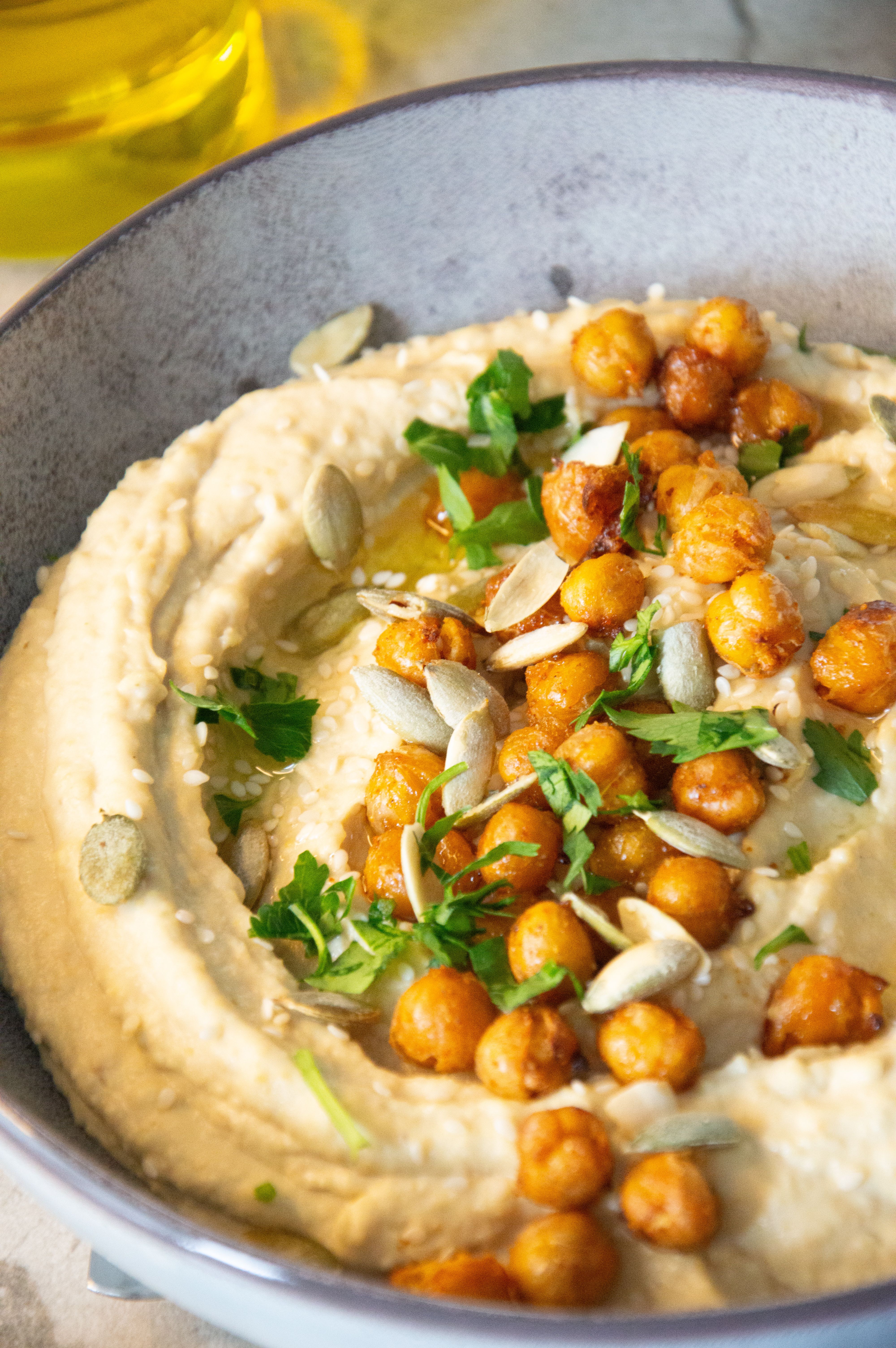
To make it feel a little more special, the hummus is topped with golden crispy chickpeas, toasted seeds, fresh herbs and a generous drizzle of olive oil. Serve it as a dip, spread it through sandwiches and wraps, add it to mezze platters or spoon it alongside roasted vegetables for an easy lunch or dinner.
Why You’ll Love This Homemade Hummus Recipe
There are plenty of reasons to make hummus at home, but the biggest one is texture. Freshly blended hummus can be exceptionally light, smooth and creamy, particularly when the chickpeas are blended while still slightly warm.
This recipe is also:
Easy to prepare
Naturally vegan
Gluten-free
Rich in plant-based protein
Perfect for meal preparation
Easy to customise
Suitable for snacks, lunches and entertaining
The crispy chickpea topping adds contrast and makes a simple bowl of hummus look impressive enough to serve to guests.
What Is Hummus?
Hummus is a creamy Middle Eastern dip traditionally made with cooked chickpeas, tahini, lemon juice, garlic and olive oil. Its name comes from the Arabic word for chickpeas.
Although the ingredient list is simple, the balance is important. Good hummus should taste nutty, bright and savoury, with enough lemon to lift the richness of the tahini.
It can be served as part of a mezze spread, used as a sandwich filling or paired with vegetables, bread and salads.
Creamy Homemade Hummus with Crispy Chickpeas
Ingredients
For the creamy hummus
2 x 400g cans chickpeas, drained and rinsed
⅓ cup tahini
3 tablespoons fresh lemon juice
1 small garlic clove, roughly chopped
½ teaspoon ground cumin
½ teaspoon salt, plus extra to taste
3 to 5 tablespoons ice-cold water
2 tablespoons extra virgin olive oil
For the crispy chickpeas
1 cup cooked chickpeas, drained and thoroughly dried
1 tablespoon olive oil
½ teaspoon smoked paprika
¼ teaspoon ground cumin
Pinch of salt
To serve
Extra virgin olive oil
Fresh parsley, roughly chopped
Pumpkin seeds
Warm pita bread, crackers or vegetable sticks
How to Make Creamy Homemade Hummus
1. Prepare the chickpeas
Drain and rinse the chickpeas well under cold water. For an especially smooth hummus, place the chickpeas in a saucepan, cover them with water and simmer for around 10 minutes. This softens them further and helps them blend into a creamier consistency.
Drain well before blending.
2. Blend the tahini and lemon
Add the tahini and lemon juice to a food processor or high-powered blender.
Blend for around one minute, stopping to scrape down the sides if necessary. This step helps whip the tahini and gives the finished hummus a lighter texture.
3. Add the remaining ingredients
Add the garlic, cumin, salt and warm chickpeas.
Blend until the chickpeas begin to break down, then slowly add the ice-cold water, one tablespoon at a time.
Continue blending for two to three minutes, or until the hummus is very smooth. Add the olive oil and blend again until combined.
Taste and adjust with more lemon juice, salt or tahini as needed.
4. Make the crispy chickpeas
Preheat the oven to 200°C. Pat the chickpeas completely dry using a clean tea towel or paper towel. The drier they are, the crispier they will become.
Place them on a lined baking tray and toss with the olive oil, smoked paprika, cumin and salt. Roast for 20 to 30 minutes, shaking the tray halfway through, until golden and crisp. Allow them to cool slightly before adding them to the hummus.
5. Serve
Spoon the hummus into a shallow serving bowl and create swirls across the surface using the back of a spoon.
Top with the crispy chickpeas, pumpkin seeds and chopped parsley. Finish with a generous drizzle of extra virgin olive oil. Serve immediately with warm pita bread, crackers or crunchy vegetables.
The Secret to Really Creamy Hummus
The difference between grainy hummus and beautifully smooth hummus usually comes down to a few simple steps.
Use very soft chickpeas
Chickpeas straight from the tin can sometimes be slightly firm. Simmering them for 10 minutes before blending helps soften them and creates a much smoother result.
Blend the tahini first
Blending tahini with lemon juice before adding the chickpeas helps aerate the mixture. This creates a lighter and creamier base.
Add ice-cold water
Cold water helps loosen the hummus without making it oily. Add it gradually until the mixture becomes light, glossy and smooth.
Blend for longer than you think
Hummus often needs several minutes in the food processor. Keep blending until there are no visible lumps and the texture looks whipped.
Remove the chickpea skins if you have time
Removing the thin outer skins from the chickpeas can produce an exceptionally smooth result. It is not essential, but it is worth doing when you want the hummus to feel especially refined.
How to Serve Homemade Hummus
This hummus works well as part of a snack platter, but it can also become the base of a more substantial meal.
Try serving it with:
Warm pita or flatbread
Cucumber, carrot and capsicum sticks
Roasted cauliflower or pumpkin
Falafel
Grilled chicken or lamb
Tomato and cucumber salad
Olives and marinated vegetables
Soft-boiled eggs
Toasted sourdough
Grain bowls
It also makes an excellent spread for wraps, sandwiches and toast.
Hummus Topping Ideas
The crispy chickpeas add texture, but there are plenty of other ways to finish a bowl of hummus.
Try adding:
Za’atar
Sumac
Chilli oil
Roasted garlic
Crumbled feta
Toasted pine nuts
Pomegranate seeds
Chopped cucumber and tomato
Roasted red capsicum
Fresh mint or coriander
Caramelised onions
Dukkah
A drizzle of good-quality extra virgin olive oil is always worth including.
Can You Make Hummus Without Tahini?
Yes. Tahini gives traditional hummus its distinctive nutty flavour, but you can leave it out if necessary.
Replace it with a little extra olive oil, natural yoghurt or a spoonful of smooth nut butter. The flavour will be different, but the hummus will still be creamy.
For a nut-free and sesame-free version, use olive oil and add a little extra cold water to achieve the right consistency.
Can You Use Dried Chickpeas?
Dried chickpeas produce excellent hummus, although they require more preparation.
Soak the chickpeas overnight in plenty of water, then drain and simmer them in fresh water until very soft. This may take between 45 minutes and 1½ hours, depending on the age of the chickpeas.
For this recipe, you will need approximately three cups of cooked chickpeas.
How to Store Homemade Hummus
Store the hummus in an airtight container in the refrigerator for up to four days.
For the best texture, allow it to sit at room temperature for around 10 minutes before serving. Add a fresh drizzle of olive oil and the crispy chickpeas just before eating.
Keep the crispy chickpeas in a separate airtight container so they remain crunchy.
Can You Freeze Hummus?
Hummus can be frozen for up to three months, although the texture may change slightly after defrosting.
Place it in an airtight container, leaving a little room for expansion. Defrost it overnight in the refrigerator and stir thoroughly before serving.
A spoonful of olive oil, lemon juice or cold water can help restore the creamy consistency.
Creamy Homemade Hummus Recipe
Serves: 6 Preparation time: 15 minutes Cooking time: 25 minutes Total time: 40 minutes Dietary: Vegan and gluten-free
Ingredients
Hummus
2 x 400g cans chickpeas, drained and rinsed
⅓ cup tahini
3 tablespoons lemon juice
1 small garlic clove
½ teaspoon ground cumin
½ teaspoon salt
3 to 5 tablespoons ice-cold water
2 tablespoons extra virgin olive oil
Crispy chickpeas
1 cup cooked chickpeas, thoroughly dried
1 tablespoon olive oil
½ teaspoon smoked paprika
¼ teaspoon ground cumin
Pinch of salt
Toppings
Extra virgin olive oil
Chopped parsley
Pumpkin seeds
Sesame seeds
Method
Preheat the oven to 200°C and line a baking tray with baking paper.
Toss the chickpeas for the topping with olive oil, smoked paprika, cumin and salt.
Roast for 20 to 30 minutes, shaking the tray halfway through, until crisp.
Place the tahini and lemon juice in a food processor and blend for one minute.
Add the garlic, cumin, salt and remaining chickpeas.
Blend until mostly smooth.
Slowly add the ice-cold water while blending until the hummus becomes light and creamy.
Add the olive oil and blend again.
Taste and adjust the seasoning.
Spoon into a bowl and top with crispy chickpeas, parsley, seeds and olive oil.
Recipe Notes
For smoother hummus, simmer canned chickpeas for 10 minutes before blending.
Add the water gradually, as different brands of chickpeas and tahini absorb liquid differently.
Use fresh lemon juice rather than bottled juice for the best flavour.
Reduce the garlic if you prefer a milder hummus.
Add the crispy chickpeas immediately before serving so they remain crunchy.
The hummus will thicken slightly in the refrigerator.
Frequently Asked Questions
Why is my homemade hummus grainy?
Grainy hummus is usually caused by chickpeas that are too firm or not blended for long enough. Simmer the chickpeas until very soft and continue blending for several minutes.
Why do you add cold water to hummus?
Ice-cold water loosens the tahini and helps create a lighter, creamier texture without adding too much oil.
Do you need to peel chickpeas for hummus?
No, peeling chickpeas is optional. However, removing the skins can help create an especially smooth texture.
Is homemade hummus healthy?
Hummus contains chickpeas, tahini and olive oil, providing plant-based protein, fibre and unsaturated fats. Portion size and toppings will influence the overall nutritional content.
Is hummus gluten-free?
Traditional hummus is naturally gluten-free. Check the labels on tahini and any seasonings if you are cooking for someone with coeliac disease or a serious intolerance.
Is hummus vegan?
Yes. Traditional hummus is made entirely from plant-based ingredients.
How long does homemade hummus last?
Homemade hummus will generally keep for up to four days in a sealed container in the refrigerator.
Can I make hummus without a food processor?
Yes. A high-powered blender works well. You can also use a stick blender, although you may need to add slightly more water and blend in smaller batches.
Can I use olive oil instead of tahini?
You can make hummus without tahini by adding extra olive oil, although the flavour will be less nutty and the texture may be slightly lighter.
What can I use instead of pumpkin seeds?
Try toasted pine nuts, sunflower seeds, chopped almonds, pistachios or extra sesame seeds.
More Easy Recipes to Try
Turn this creamy homemade hummus into part of a relaxed lunch, colourful mezze spread or easy weeknight meal with a few more recipes. Serve it alongside our Sabich Salad, filled with fried eggplant, potatoes, eggs, pickles and a creamy tahini dressing. For something fresh and crunchy, try the Quinoa Crunch Salad with Lemon Tahini Dressing or our Mediterranean-inspired Haloumi, Tomato and Flatbread Salad.


Smooth, creamy and endlessly useful, this homemade hummus is the kind of recipe worth keeping on repeat. Made with chickpeas, tahini, lemon and garlic, it comes together with a rich, velvety texture that is far better than most supermarket versions.
To make it feel a little more special, the hummus is topped with golden crispy chickpeas, toasted seeds, fresh herbs and a generous drizzle of olive oil. Serve it as a dip, spread it through sandwiches and wraps, add it to mezze platters or spoon it alongside roasted vegetables for an easy lunch or dinner.
Why You’ll Love This Homemade Hummus Recipe
There are plenty of reasons to make hummus at home, but the biggest one is texture. Freshly blended hummus can be exceptionally light, smooth and creamy, particularly when the chickpeas are blended while still slightly warm.
This recipe is also:
The crispy chickpea topping adds contrast and makes a simple bowl of hummus look impressive enough to serve to guests.
What Is Hummus?
Hummus is a creamy Middle Eastern dip traditionally made with cooked chickpeas, tahini, lemon juice, garlic and olive oil. Its name comes from the Arabic word for chickpeas.
Although the ingredient list is simple, the balance is important. Good hummus should taste nutty, bright and savoury, with enough lemon to lift the richness of the tahini.
It can be served as part of a mezze spread, used as a sandwich filling or paired with vegetables, bread and salads.
Ingredients
For the creamy hummus
For the crispy chickpeas
To serve
How to Make Creamy Homemade Hummus
1. Prepare the chickpeas
Drain and rinse the chickpeas well under cold water. For an especially smooth hummus, place the chickpeas in a saucepan, cover them with water and simmer for around 10 minutes. This softens them further and helps them blend into a creamier consistency.
Drain well before blending.
2. Blend the tahini and lemon
Add the tahini and lemon juice to a food processor or high-powered blender.
Blend for around one minute, stopping to scrape down the sides if necessary. This step helps whip the tahini and gives the finished hummus a lighter texture.
3. Add the remaining ingredients
Add the garlic, cumin, salt and warm chickpeas.
Blend until the chickpeas begin to break down, then slowly add the ice-cold water, one tablespoon at a time.
Continue blending for two to three minutes, or until the hummus is very smooth. Add the olive oil and blend again until combined.
Taste and adjust with more lemon juice, salt or tahini as needed.
4. Make the crispy chickpeas
Preheat the oven to 200°C. Pat the chickpeas completely dry using a clean tea towel or paper towel. The drier they are, the crispier they will become.
Place them on a lined baking tray and toss with the olive oil, smoked paprika, cumin and salt. Roast for 20 to 30 minutes, shaking the tray halfway through, until golden and crisp. Allow them to cool slightly before adding them to the hummus.
5. Serve
Spoon the hummus into a shallow serving bowl and create swirls across the surface using the back of a spoon.
Top with the crispy chickpeas, pumpkin seeds and chopped parsley. Finish with a generous drizzle of extra virgin olive oil. Serve immediately with warm pita bread, crackers or crunchy vegetables.
The Secret to Really Creamy Hummus
The difference between grainy hummus and beautifully smooth hummus usually comes down to a few simple steps.
Use very soft chickpeas
Chickpeas straight from the tin can sometimes be slightly firm. Simmering them for 10 minutes before blending helps soften them and creates a much smoother result.
Blend the tahini first
Blending tahini with lemon juice before adding the chickpeas helps aerate the mixture. This creates a lighter and creamier base.
Add ice-cold water
Cold water helps loosen the hummus without making it oily. Add it gradually until the mixture becomes light, glossy and smooth.
Blend for longer than you think
Hummus often needs several minutes in the food processor. Keep blending until there are no visible lumps and the texture looks whipped.
Remove the chickpea skins if you have time
Removing the thin outer skins from the chickpeas can produce an exceptionally smooth result. It is not essential, but it is worth doing when you want the hummus to feel especially refined.
How to Serve Homemade Hummus
This hummus works well as part of a snack platter, but it can also become the base of a more substantial meal.
Try serving it with:
It also makes an excellent spread for wraps, sandwiches and toast.
Hummus Topping Ideas
The crispy chickpeas add texture, but there are plenty of other ways to finish a bowl of hummus.
Try adding:
A drizzle of good-quality extra virgin olive oil is always worth including.
Can You Make Hummus Without Tahini?
Yes. Tahini gives traditional hummus its distinctive nutty flavour, but you can leave it out if necessary.
Replace it with a little extra olive oil, natural yoghurt or a spoonful of smooth nut butter. The flavour will be different, but the hummus will still be creamy.
For a nut-free and sesame-free version, use olive oil and add a little extra cold water to achieve the right consistency.
Can You Use Dried Chickpeas?
Dried chickpeas produce excellent hummus, although they require more preparation.
Soak the chickpeas overnight in plenty of water, then drain and simmer them in fresh water until very soft. This may take between 45 minutes and 1½ hours, depending on the age of the chickpeas.
For this recipe, you will need approximately three cups of cooked chickpeas.
How to Store Homemade Hummus
Store the hummus in an airtight container in the refrigerator for up to four days.
For the best texture, allow it to sit at room temperature for around 10 minutes before serving. Add a fresh drizzle of olive oil and the crispy chickpeas just before eating.
Keep the crispy chickpeas in a separate airtight container so they remain crunchy.
Can You Freeze Hummus?
Hummus can be frozen for up to three months, although the texture may change slightly after defrosting.
Place it in an airtight container, leaving a little room for expansion. Defrost it overnight in the refrigerator and stir thoroughly before serving.
A spoonful of olive oil, lemon juice or cold water can help restore the creamy consistency.
Creamy Homemade Hummus Recipe
Serves: 6
Preparation time: 15 minutes
Cooking time: 25 minutes
Total time: 40 minutes
Dietary: Vegan and gluten-free
Ingredients
Hummus
Crispy chickpeas
Toppings
Method
Recipe Notes
Frequently Asked Questions
Why is my homemade hummus grainy?
Grainy hummus is usually caused by chickpeas that are too firm or not blended for long enough. Simmer the chickpeas until very soft and continue blending for several minutes.
Why do you add cold water to hummus?
Ice-cold water loosens the tahini and helps create a lighter, creamier texture without adding too much oil.
Do you need to peel chickpeas for hummus?
No, peeling chickpeas is optional. However, removing the skins can help create an especially smooth texture.
Is homemade hummus healthy?
Hummus contains chickpeas, tahini and olive oil, providing plant-based protein, fibre and unsaturated fats. Portion size and toppings will influence the overall nutritional content.
Is hummus gluten-free?
Traditional hummus is naturally gluten-free. Check the labels on tahini and any seasonings if you are cooking for someone with coeliac disease or a serious intolerance.
Is hummus vegan?
Yes. Traditional hummus is made entirely from plant-based ingredients.
How long does homemade hummus last?
Homemade hummus will generally keep for up to four days in a sealed container in the refrigerator.
Can I make hummus without a food processor?
Yes. A high-powered blender works well. You can also use a stick blender, although you may need to add slightly more water and blend in smaller batches.
Can I use olive oil instead of tahini?
You can make hummus without tahini by adding extra olive oil, although the flavour will be less nutty and the texture may be slightly lighter.
What can I use instead of pumpkin seeds?
Try toasted pine nuts, sunflower seeds, chopped almonds, pistachios or extra sesame seeds.
More Easy Recipes to Try
Turn this creamy homemade hummus into part of a relaxed lunch, colourful mezze spread or easy weeknight meal with a few more recipes. Serve it alongside our Sabich Salad, filled with fried eggplant, potatoes, eggs, pickles and a creamy tahini dressing. For something fresh and crunchy, try the Quinoa Crunch Salad with Lemon Tahini Dressing or our Mediterranean-inspired Haloumi, Tomato and Flatbread Salad.
The hummus also works beautifully with warm slices of Flatbread Pizza with Tomato, Blue Cheese and Thyme, or spooned onto a plate beside these Broccoli, Zucchini and Haloumi Fritters. For a cosy meal, pair it with our Red Pepper and Tomato Soup with Roasted Cauliflower
Share this:
Like this: