There is something timeless about growing herbs for both the kitchen and everyday wellbeing. In this guide, Naomi Singer @rawplant_life, Health and Nutrition Coach, Chef, and author of My Vibrant Table (Sunday Press), shares how to create a modern living apothecary garden filled with beautiful, useful plants. From rosemary and thyme to chamomile, lemon balm and calendula, Naomi explains what to grow, where to plant it and how to make these herbs part of your daily rituals at home.
Naomi Singer
Creating a Living Apothecary Garden
A herb garden is one of the few gardens that nourishes almost every part of us. It flavours our meals, perfumes the air, supports pollinators, calms the senses and offers simple, time-honoured traditions for everyday life.
For me, a herb garden offers far more than a finishing touch to a meal. It becomes a living apothecary, a place to wander with a cup of tea, brush your hands through rosemary, gather chamomile flowers at sunset, or cut fresh lemon balm after rain.
Start with the Sun
Most medicinal herbs originate from the Mediterranean and thrive in conditions that resemble their native environment. Choose the sunniest area available, ideally receiving six to eight hours of direct sunlight each day. Good drainage is essential.
Divide the garden into two zones: • Dry Mediterranean Section: Rosemary, Thyme, Sage, Oregano, Lavender • Moist Section: Chamomile, Lemon Balm, Mint, Parsley, Calendula
Rosemary: The Mother of Herbs
Rosemary is fragrant, evergreen and highly versatile. Traditionally associated with memory and remembrance, it has been cherished in kitchens and gardens for centuries.
Fresh rosemary can be added to roasted vegetables, infused into olive oil, steeped as a tea with lemon or used to fragrance bath water.
Thyme: The Quiet Healer
Thyme loves hot, dry conditions and poor soils. Its tiny flowers attract bees and beneficial insects, making it invaluable in the garden ecosystem. I add thyme to many vegetable dishes and harvest bunches during summer to dry and store for the months ahead.
Lemon Balm: Calm in Plant Form
Lemon balm offers a beautiful citrus fragrance and is a favourite herb for teas, infused water and fruit salads. I often add lemon balm to salads, where it contributes a delicate lemon flavour and freshness to the plate.
Chamomile: Flowers for Rest
Chamomile is one of the gentlest and most beautiful herbs to grow. Harvest flowers on a dry morning once fully open and dry them in a warm, airy space to enjoy as tea throughout winter.
Sage, Oregano and Lavender
Sage, oregano and lavender thrive alongside rosemary and thyme in a Mediterranean-style herb garden. Lavender contributes beauty, fragrance and pollinator-friendly flowers, while oregano and sage are valued culinary staples.
Calendula: Sunshine in Flower Form
Calendula’s bright orange and yellow blooms attract pollinators while adding colour throughout the garden. The petals can be scattered through salads or dried for tea.
Mint: Useful but Contained
Mint is invaluable for teas and culinary use but is best grown in pots due to its vigorous spreading habit. Plant it near seating areas where its fragrance can be enjoyed.
Seasonal Rhythms
Autumn and spring are often the ideal planting seasons. Harvest herbs in the morning after the dew has dried but before the heat of the day. Dry bunches upside down in a cool, shaded room and store them in glass jars.
Living with Herbs
The greatest value of a herb garden may not be found solely in the plants themselves, but in the rituals they encourage. A herb garden becomes part kitchen, part sanctuary and part connection to the natural world.
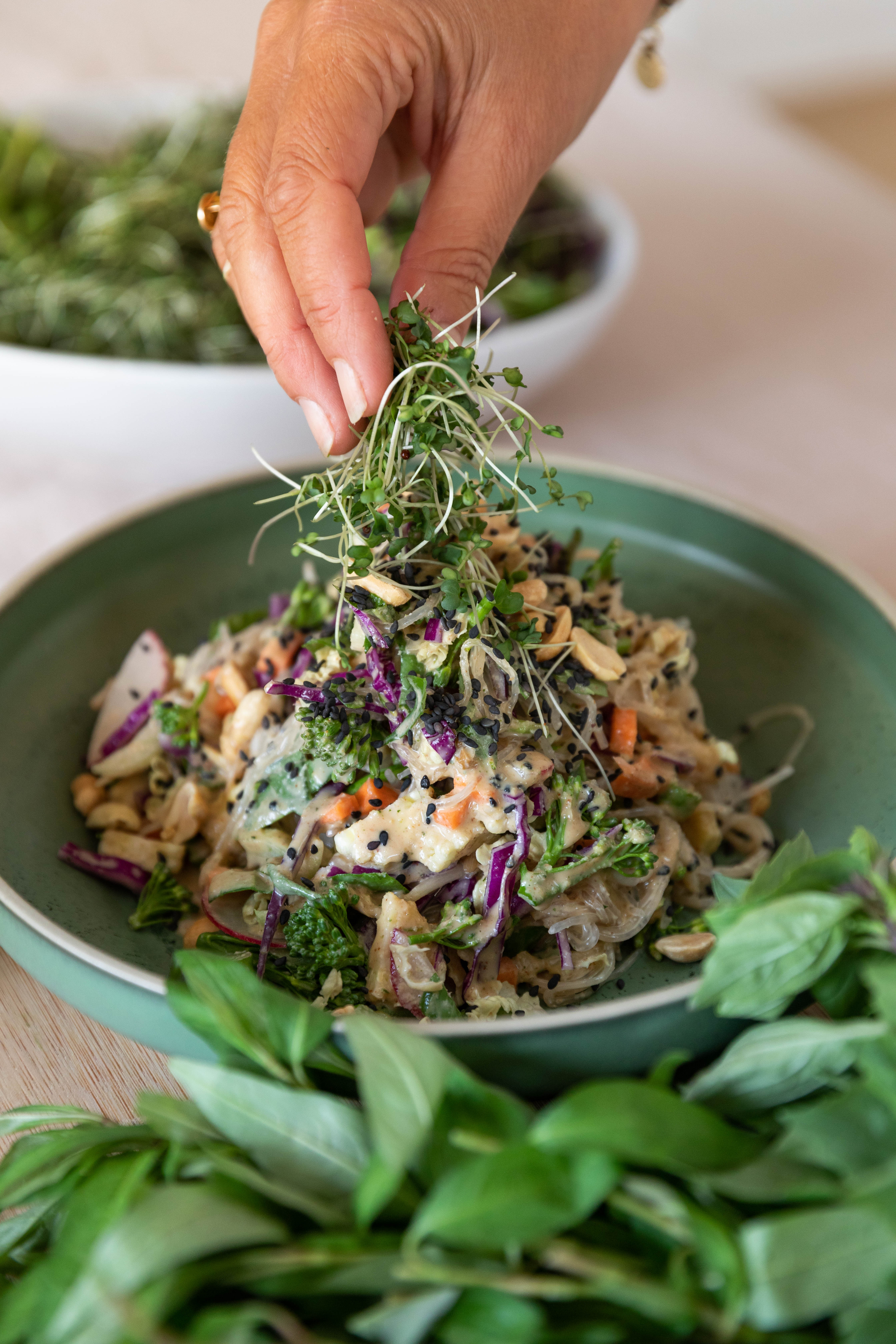
Raw Pad Thai Recipe
Try this delicious Raw Pad Thai recipe from My Vibrant Table by Naomi Singer.
Photography Madeleine Gill, Marina Oliphan MY VIBRANT TABLE


There is something timeless about growing herbs for both the kitchen and everyday wellbeing. In this guide, Naomi Singer @rawplant_life, Health and Nutrition Coach, Chef, and author of My Vibrant Table (Sunday Press), shares how to create a modern living apothecary garden filled with beautiful, useful plants. From rosemary and thyme to chamomile, lemon balm and calendula, Naomi explains what to grow, where to plant it and how to make these herbs part of your daily rituals at home.
Creating a Living Apothecary Garden
A herb garden is one of the few gardens that nourishes almost every part of us. It flavours our meals, perfumes the air, supports pollinators, calms the senses and offers simple, time-honoured traditions for everyday life.
For me, a herb garden offers far more than a finishing touch to a meal. It becomes a living apothecary, a place to wander with a cup of tea, brush your hands through rosemary, gather chamomile flowers at sunset, or cut fresh lemon balm after rain.
Start with the Sun
Most medicinal herbs originate from the Mediterranean and thrive in conditions that resemble their native environment. Choose the sunniest area available, ideally receiving six to eight hours of direct sunlight each day. Good drainage is essential.
Divide the garden into two zones:
• Dry Mediterranean Section: Rosemary, Thyme, Sage, Oregano, Lavender
• Moist Section: Chamomile, Lemon Balm, Mint, Parsley, Calendula
Rosemary: The Mother of Herbs
Rosemary is fragrant, evergreen and highly versatile. Traditionally associated with memory and remembrance, it has been cherished in kitchens and gardens for centuries.
Fresh rosemary can be added to roasted vegetables, infused into olive oil, steeped as a tea with lemon or used to fragrance bath water.
Thyme: The Quiet Healer
Thyme loves hot, dry conditions and poor soils. Its tiny flowers attract bees and beneficial insects, making it invaluable in the garden ecosystem. I add thyme to many vegetable dishes and harvest bunches during summer to dry and store for the months ahead.
Lemon Balm: Calm in Plant Form
Lemon balm offers a beautiful citrus fragrance and is a favourite herb for teas, infused water and fruit salads. I often add lemon balm to salads, where it contributes a delicate lemon flavour and freshness to the plate.
Chamomile: Flowers for Rest
Chamomile is one of the gentlest and most beautiful herbs to grow. Harvest flowers on a dry morning once fully open and dry them in a warm, airy space to enjoy as tea throughout winter.
Sage, Oregano and Lavender
Sage, oregano and lavender thrive alongside rosemary and thyme in a Mediterranean-style herb garden. Lavender contributes beauty, fragrance and pollinator-friendly flowers, while oregano and sage are valued culinary staples.
Calendula: Sunshine in Flower Form
Calendula’s bright orange and yellow blooms attract pollinators while adding colour throughout the garden. The petals can be scattered through salads or dried for tea.
Mint: Useful but Contained
Mint is invaluable for teas and culinary use but is best grown in pots due to its vigorous spreading habit. Plant it near seating areas where its fragrance can be enjoyed.
Seasonal Rhythms
Autumn and spring are often the ideal planting seasons. Harvest herbs in the morning after the dew has dried but before the heat of the day. Dry bunches upside down in a cool, shaded room and store them in glass jars.
Living with Herbs
The greatest value of a herb garden may not be found solely in the plants themselves, but in the rituals they encourage. A herb garden becomes part kitchen, part sanctuary and part connection to the natural world.
Raw Pad Thai Recipe
Try this delicious Raw Pad Thai recipe from My Vibrant Table by Naomi Singer.
Photography Madeleine Gill, Marina Oliphan MY VIBRANT TABLE
Author: Naomi Singer
Publisher: Sunday Press Melbourne
Release: April 2026
Available: All major bookstores
Share this:
Like this: