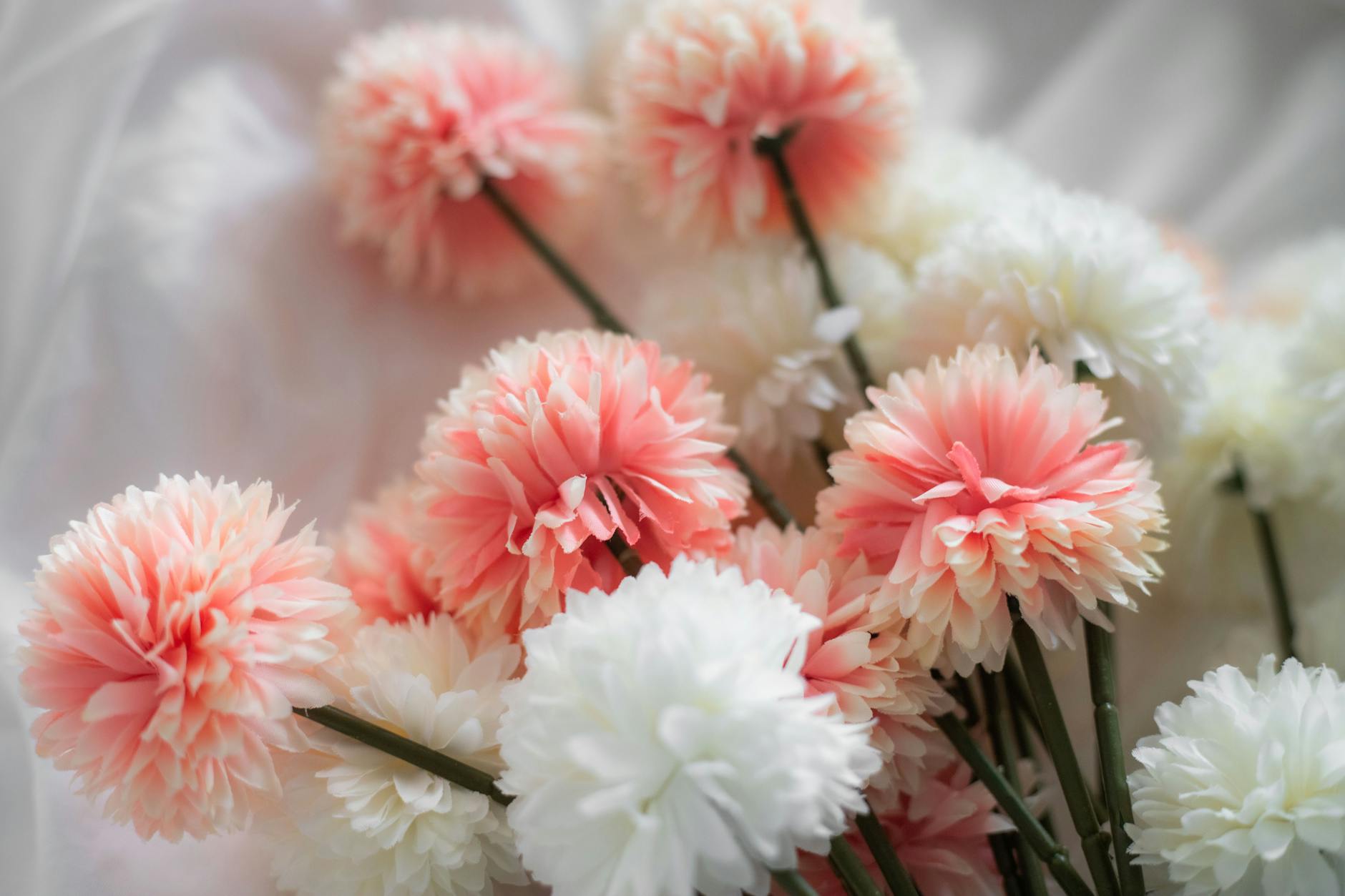
Artificial flowers look better than ever these days, with many of them able to compete against natural flowers in terms of appearance. On top of this, they’re easy to look after because they require little to no maintenance.
You don’t have to worry about watering, changing the water in the vase, or keeping them away from drafts or direct sunlight in the same way you would with fresh flowers.
However, like traditional flowers, unless you get a beautiful arrangement, you’ll have to set it up yourself. Learning how to arrange artificial flowers in a vase isn’t that hard though, but make sure to follow a few general design rules. Here’s everything you need to know.
Photo by Secret Garden
Get the Base Ready
The base is one of the most important things in the process because it dictates the pattern or design. If the base isn’t secure, the whole arrangement will keep shifting every time you move the vase. You can obviously change it as many times as you want. That’s actually one of the benefits of artificial flowers. You can rearrange the design whenever you feel like it.
To prepare the base, you’ll have to use floral foam. You can also get some chicken wire, yet most people rely on clear tape. It’s cheap and easy to find. Chances are you already have some in your home. Come up with a grid pattern over the vase opening. It’s the best way to keep steps in the right position.
Shape the Design
Second, you’ll need to shape the stems accordingly. It depends on how tall they are. Some of them might have to be shorter than others, only to ensure that everything is visible.
Besides, your goal is to mimic natural growth as well. Having everything at the exact same height will look dull and stiff, but also unnatural.
To make your white artificial flowers look more natural, you may have to bend some stems at the bottom. You may have to rearrange leaves and flowers as well, only to ensure everything looks natural.
Unless you have a sense for floral arrangements, it might be a good idea to save a few designs online. Keeping a couple of reference photos nearby makes it easier to notice what your arrangement is missing.
Work on Structure
Your structure starts with a base. Apart from the physical base on the actual vase, you’ll also need a base in terms of plants, colors and flowers. Your structure should start with greenery. Get all the foliage and green elements in place before inserting color.
This way, you’ll be able to design a framework. It’s like setting an environment for your upcoming work on art. You need this structure to help you. Don’t include anything with colors, but just greenery. And of course, you can have all kinds of shapes and designs here.
Bring in the Focal Elements
When learning how to arrange artificial flowers in a vase, you probably have a few ideas in mind already. And if you don’t, you might have some pictures from the Internet or magazines. Once the green structure is ready, it’s time to add the focal elements.
Your focal elements are colorful plants usually. These are the largest flowers you have. They’re usually central, but again, it depends on what you’re trying to achieve. The idea is to come up with a natural look. A natural look is asymmetrical and makes your plants look like they’ve just been picked.
More Layers
When figuring out how to arrange artificial flowers in a vase, you need to focus on establishing more layers. That’s why you’ll usually need a few different types of plants. The height of stems should vary. Pick a pattern, whether you organize them by type or color.
While not always a general rule, taller flowers tend to go in the central part of the vase. They can also go slightly to the back. As for shorter flowers, they go around the edges or in the front. After all, you want every plant to be visible and be part of the arrangement.
Last Bits
Last, but not least, you may need to make a few small adjustments. It’s one thing to look at the vase from a short distance and a different thing to step back. Go a few steps back and watch the balance from every possible angle. Rotate the vase slowly and check that it looks good from all sides, especially if it will be used as a centerpiece. Try to make adjustments to your arrangement to look perfect.
Last, but not least, here are a few tips and tricks to make your arrangement look more realistic:
Stay away from perfect symmetry. You need the arrangement to look natural.
Hide fake elements. You should use opaque vases. If you have a clear vase, fill it up with other natural things.
Measure twice. Measure all stems close to the vase, just to make sure they’re at the right height for your arrangement. Some of them may need bending or cutting.
Bottom line, learning how to arrange artificial flowers in a vase isn’t the most complicated thing in the world, but you have to pay attention to small details. The process is similar to arranging natural flowers, only you have the freedom to rearrange and reposition everything in a more effective manner. Once you’ve done it a couple of times, you will understand what works in your space.


Artificial flowers look better than ever these days, with many of them able to compete against natural flowers in terms of appearance. On top of this, they’re easy to look after because they require little to no maintenance.
You don’t have to worry about watering, changing the water in the vase, or keeping them away from drafts or direct sunlight in the same way you would with fresh flowers.
However, like traditional flowers, unless you get a beautiful arrangement, you’ll have to set it up yourself. Learning how to arrange artificial flowers in a vase isn’t that hard though, but make sure to follow a few general design rules. Here’s everything you need to know.
Get the Base Ready
The base is one of the most important things in the process because it dictates the pattern or design. If the base isn’t secure, the whole arrangement will keep shifting every time you move the vase. You can obviously change it as many times as you want. That’s actually one of the benefits of artificial flowers. You can rearrange the design whenever you feel like it.
To prepare the base, you’ll have to use floral foam. You can also get some chicken wire, yet most people rely on clear tape. It’s cheap and easy to find. Chances are you already have some in your home. Come up with a grid pattern over the vase opening. It’s the best way to keep steps in the right position.
Shape the Design
Second, you’ll need to shape the stems accordingly. It depends on how tall they are. Some of them might have to be shorter than others, only to ensure that everything is visible.
Besides, your goal is to mimic natural growth as well. Having everything at the exact same height will look dull and stiff, but also unnatural.
To make your white artificial flowers look more natural, you may have to bend some stems at the bottom. You may have to rearrange leaves and flowers as well, only to ensure everything looks natural.
Unless you have a sense for floral arrangements, it might be a good idea to save a few designs online. Keeping a couple of reference photos nearby makes it easier to notice what your arrangement is missing.
Work on Structure
Your structure starts with a base. Apart from the physical base on the actual vase, you’ll also need a base in terms of plants, colors and flowers. Your structure should start with greenery. Get all the foliage and green elements in place before inserting color.
This way, you’ll be able to design a framework. It’s like setting an environment for your upcoming work on art. You need this structure to help you. Don’t include anything with colors, but just greenery. And of course, you can have all kinds of shapes and designs here.
Bring in the Focal Elements
When learning how to arrange artificial flowers in a vase, you probably have a few ideas in mind already. And if you don’t, you might have some pictures from the Internet or magazines. Once the green structure is ready, it’s time to add the focal elements.
Your focal elements are colorful plants usually. These are the largest flowers you have. They’re usually central, but again, it depends on what you’re trying to achieve. The idea is to come up with a natural look. A natural look is asymmetrical and makes your plants look like they’ve just been picked.
More Layers
When figuring out how to arrange artificial flowers in a vase, you need to focus on establishing more layers. That’s why you’ll usually need a few different types of plants. The height of stems should vary. Pick a pattern, whether you organize them by type or color.
While not always a general rule, taller flowers tend to go in the central part of the vase. They can also go slightly to the back. As for shorter flowers, they go around the edges or in the front. After all, you want every plant to be visible and be part of the arrangement.
Last Bits
Last, but not least, you may need to make a few small adjustments. It’s one thing to look at the vase from a short distance and a different thing to step back. Go a few steps back and watch the balance from every possible angle. Rotate the vase slowly and check that it looks good from all sides, especially if it will be used as a centerpiece. Try to make adjustments to your arrangement to look perfect.
Last, but not least, here are a few tips and tricks to make your arrangement look more realistic:
Bottom line, learning how to arrange artificial flowers in a vase isn’t the most complicated thing in the world, but you have to pay attention to small details. The process is similar to arranging natural flowers, only you have the freedom to rearrange and reposition everything in a more effective manner. Once you’ve done it a couple of times, you will understand what works in your space.
Share this:
Like this: