Discerning travellers usually look for more than famous landmarks or luxury hotels. They tend to gravitate towards destinations with character, good local food, interesting architecture, and neighbourhoods that still feel connected to everyday life. The destinations below suit that. They appeal to travellers who appreciate thoughtful stays, cultural detail, and places that reveal more over a few days.
From London’s historic garden squares to Kyoto’s traditional streets and hidden alleys, each destination offers a refined escape without feeling overly polished.
Timeless Sun and Sea Across the Greek Isles
While Greece is best known for its islands, travellers who venture beyond the busiest harbours often discover a quieter and more local side of the country. In Paros, mornings around Naoussa begin slowly, as fishing boats line the marina beside whitewashed buildings and narrow marble streets. Further inland, villages like Lefkes feature old stone pathways, tiny chapels, and shaded courtyards filled with bougainvillaea. On Naxos, the Portara dominates the waterfront at sunset, and some of the island’s most beautiful beaches lie further south near Alyko and Pyrgaki, where cedar trees grow beside sandy dunes.
In Corfu Town, the streets around Campiello still follow the Venetian layout of centuries ago, with faded shutters, tiny grocery shops, and washing hanging above the alleys. Meanwhile, Santorini continues drawing huge crowds around Oia and Fira, especially along the caldera paths each evening. Yet areas near Pyrgos and Megalochori still feel more residential, with old cave houses, bell towers, and vineyards stretching towards the centre of the island.
Discerning travellers often choose to go on Greece villa holidays because private properties provide easier access to the quieter side of islands like Milos, Antiparos, and Corfu. Villas near Agios Georgios in Antiparos or along the hillside roads above Elounda in Crete often place visitors close to local bakeries, village squares, and smaller beaches that are rarely found in more hotel-heavy areas.
Photo by Mihai Vlasceanu
Rolling Vineyards and Culinary Heritage in Tuscany
Tuscany’s landscape shifts noticeably from one valley to the next. South of Florence, the roads around Greve in Chianti wind past olive groves, cypress trees, and wine estates that have operated for generations. In Siena, the narrow streets leading toward Piazza del Campo stay busy from early morning, especially around Via di Città and the old brick lanes surrounding the Duomo. Across the region, small produce markets continue to fill town squares throughout the week, particularly in places like Arezzo and Lucca.
The Val d’Orcia has some of Tuscany’s most recognisable scenery, though the smaller hill towns often leave the strongest impression. Pienza fills with the smell of pecorino cheese shops during summer afternoons, while Montepulciano’s steep stone streets lead down towards old wine cellars carved directly beneath the town. Around Montalcino, vineyards stretch across rolling hills for kilometres, especially along the roads near Castelnuovo dell’Abate and the Abbey of Sant’Antimo.
Florence remains one of Italy’s busiest cities, though quieter corners still exist beyond the streets surrounding the Duomo and Ponte Vecchio. Around Oltrarno, workshops continue producing leather goods, paper products, and handmade jewellery along streets like Via Santo Spirito and Borgo San Frediano.
Photo by Maria Doina Mareggini
Sophisticated Heritage and Garden Squares in London
Beyond the major shopping districts, London reveals a far quieter and more characterful side of the city. Bloomsbury remains one of the most interesting areas for visitors who enjoy architecture, museums, and quieter streets within central London. Around Russell Square and Bedford Square, Georgian terraces sit beside independent bookshops, academic buildings, and small garden squares that have changed little over the past century. The British Museum still dominates the neighbourhood, especially along Great Russell Street, where queues form early most mornings.
Those who want a more relaxed base in the city centre can find a Bloomsbury hotel in London, particularly near Russell Square or Bedford Place. The area places visitors within walking distance of Covent Garden, Soho, Fitzrovia, and the South Bank without being directly inside the busiest tourist zones. Streets like Marchmont Street and Lamb’s Conduit Street still feature long-established cafés, local delis, and independent shops frequented by nearby residents and university students.
Elsewhere in London, neighbourhoods continue changing block by block. Marylebone High Street stays busy throughout the day with galleries and boutiques, while Columbia Road fills with flower stalls every Sunday morning. Along the South Bank, people gather near the National Theatre and Waterloo Bridge as the city lights begin reflecting across the Thames after dark.
Photo by Paloma Lian
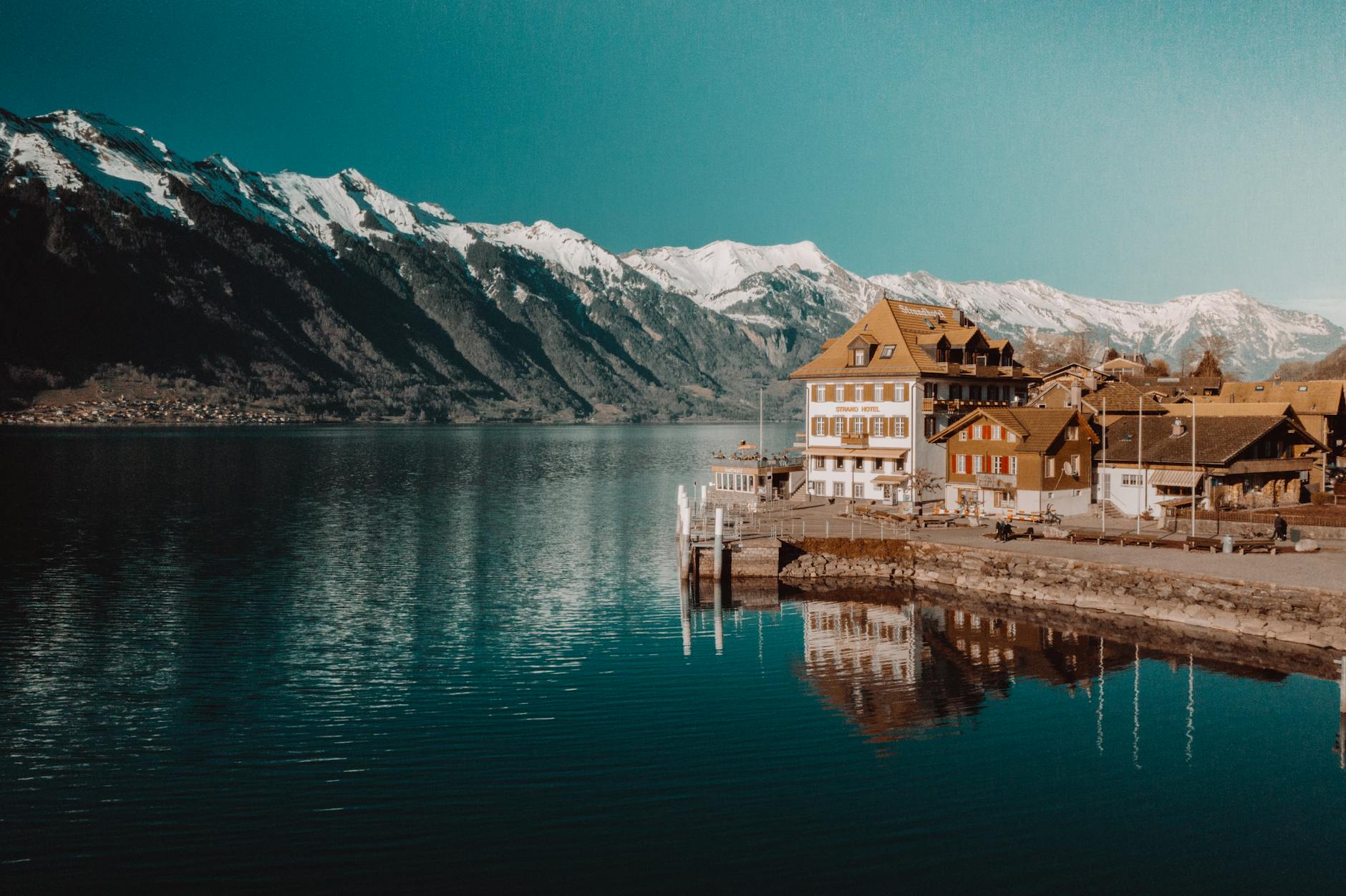
Pristine Nature and Mountain Serenity in the Swiss Alps
The Swiss Alps attract visitors throughout the year, though the mountain villages often feel most enjoyable outside peak ski weeks. In Wengen, trains still climb slowly above Lauterbrunnen through steep alpine meadows where wooden chalets sit beneath the cliffs. The valley itself changes constantly with the weather. Low cloud often hangs around Staubbach Falls early in the morning before clearing towards Mürren and Kleine Scheidegg later in the day.
Further east, St Moritz and Pontresina have a noticeably different landscape shaped by wide valleys, frozen lakes, and long cross-country ski trails during winter. Around Lake St Moritz, morning walkers pass rowers training on the water throughout the summer while cyclists climb the Bernina Pass road towards Poschiavo. The Glacier Express also cuts through parts of the region, particularly near Filisur and the Landwasser Viaduct.
Zermatt remains one of Switzerland’s most visited mountain towns, though quieter paths still exist above the village. The route towards Findeln passes old barns, small chapels, and wooden farm buildings beneath the Matterhorn. Electric taxis move slowly through the Bahnhofstrasse while hikers gather outside the Gornergrat railway station, carrying boots and trekking poles before heading higher into the mountains.
Photo by Mathis Blackburn
Artistic Traditions and Hidden Alleys in Kyoto
Kyoto still holds onto parts of old Japan that disappeared elsewhere decades ago. In Gion, narrow streets around Hanamikoji remain lined with wooden machiya townhouses, lanterns, and tea houses tucked behind sliding doors. Early evenings near Yasaka Shrine usually bring small crowds gathering around the stone staircases and alleyways leading into Higashiyama. Streets like Ninenzaka and Sannenzaka become especially busy during cherry blossom season, though quieter corners appear quickly once visitors move a few streets away.
The city’s temples stretch across different neighbourhoods. Around Arashiyama, bamboo groves and temple gardens sit beside the Katsura River, where traditional wooden boats still operate through parts of the year. Further north, Kinkaku-ji draws steady queues from opening time, and the pathways around Nanzen-ji and the Philosopher’s Path feel calmer, particularly in late autumn when maple leaves begin covering the canals.
Kyoto’s markets and craft districts still play a huge part in daily life. Nishiki Market stays crowded with seafood vendors, tea shops, and traditional sweets throughout the afternoon. Near Gojo-zaka, pottery workshops still produce ceramics by hand, particularly during festival periods linking Kiyomizu-dera and the Gion Matsuri celebrations.
Photo by Musa Ortaç
Which destination sparks your wanderlust?
The destinations above are well-suited to travellers who enjoy places with strong local character and plenty to discover beyond the main landmarks. Walking through a Tuscan hill town, staying near a quieter beach in Greece, or exploring Kyoto’s side streets often becomes the part people remember the most. Each destination offers a distinct atmosphere, though all of them reward discerning travellers willing to spend time beyond the busiest areas.


Discerning travellers usually look for more than famous landmarks or luxury hotels. They tend to gravitate towards destinations with character, good local food, interesting architecture, and neighbourhoods that still feel connected to everyday life. The destinations below suit that. They appeal to travellers who appreciate thoughtful stays, cultural detail, and places that reveal more over a few days.
From London’s historic garden squares to Kyoto’s traditional streets and hidden alleys, each destination offers a refined escape without feeling overly polished.
Timeless Sun and Sea Across the Greek Isles
While Greece is best known for its islands, travellers who venture beyond the busiest harbours often discover a quieter and more local side of the country. In Paros, mornings around Naoussa begin slowly, as fishing boats line the marina beside whitewashed buildings and narrow marble streets. Further inland, villages like Lefkes feature old stone pathways, tiny chapels, and shaded courtyards filled with bougainvillaea. On Naxos, the Portara dominates the waterfront at sunset, and some of the island’s most beautiful beaches lie further south near Alyko and Pyrgaki, where cedar trees grow beside sandy dunes.
In Corfu Town, the streets around Campiello still follow the Venetian layout of centuries ago, with faded shutters, tiny grocery shops, and washing hanging above the alleys. Meanwhile, Santorini continues drawing huge crowds around Oia and Fira, especially along the caldera paths each evening. Yet areas near Pyrgos and Megalochori still feel more residential, with old cave houses, bell towers, and vineyards stretching towards the centre of the island.
Discerning travellers often choose to go on Greece villa holidays because private properties provide easier access to the quieter side of islands like Milos, Antiparos, and Corfu. Villas near Agios Georgios in Antiparos or along the hillside roads above Elounda in Crete often place visitors close to local bakeries, village squares, and smaller beaches that are rarely found in more hotel-heavy areas.
Rolling Vineyards and Culinary Heritage in Tuscany
Tuscany’s landscape shifts noticeably from one valley to the next. South of Florence, the roads around Greve in Chianti wind past olive groves, cypress trees, and wine estates that have operated for generations. In Siena, the narrow streets leading toward Piazza del Campo stay busy from early morning, especially around Via di Città and the old brick lanes surrounding the Duomo. Across the region, small produce markets continue to fill town squares throughout the week, particularly in places like Arezzo and Lucca.
The Val d’Orcia has some of Tuscany’s most recognisable scenery, though the smaller hill towns often leave the strongest impression. Pienza fills with the smell of pecorino cheese shops during summer afternoons, while Montepulciano’s steep stone streets lead down towards old wine cellars carved directly beneath the town. Around Montalcino, vineyards stretch across rolling hills for kilometres, especially along the roads near Castelnuovo dell’Abate and the Abbey of Sant’Antimo.
Florence remains one of Italy’s busiest cities, though quieter corners still exist beyond the streets surrounding the Duomo and Ponte Vecchio. Around Oltrarno, workshops continue producing leather goods, paper products, and handmade jewellery along streets like Via Santo Spirito and Borgo San Frediano.
Sophisticated Heritage and Garden Squares in London
Beyond the major shopping districts, London reveals a far quieter and more characterful side of the city. Bloomsbury remains one of the most interesting areas for visitors who enjoy architecture, museums, and quieter streets within central London. Around Russell Square and Bedford Square, Georgian terraces sit beside independent bookshops, academic buildings, and small garden squares that have changed little over the past century. The British Museum still dominates the neighbourhood, especially along Great Russell Street, where queues form early most mornings.
Those who want a more relaxed base in the city centre can find a Bloomsbury hotel in London, particularly near Russell Square or Bedford Place. The area places visitors within walking distance of Covent Garden, Soho, Fitzrovia, and the South Bank without being directly inside the busiest tourist zones. Streets like Marchmont Street and Lamb’s Conduit Street still feature long-established cafés, local delis, and independent shops frequented by nearby residents and university students.
Elsewhere in London, neighbourhoods continue changing block by block. Marylebone High Street stays busy throughout the day with galleries and boutiques, while Columbia Road fills with flower stalls every Sunday morning. Along the South Bank, people gather near the National Theatre and Waterloo Bridge as the city lights begin reflecting across the Thames after dark.
Pristine Nature and Mountain Serenity in the Swiss Alps
The Swiss Alps attract visitors throughout the year, though the mountain villages often feel most enjoyable outside peak ski weeks. In Wengen, trains still climb slowly above Lauterbrunnen through steep alpine meadows where wooden chalets sit beneath the cliffs. The valley itself changes constantly with the weather. Low cloud often hangs around Staubbach Falls early in the morning before clearing towards Mürren and Kleine Scheidegg later in the day.
Further east, St Moritz and Pontresina have a noticeably different landscape shaped by wide valleys, frozen lakes, and long cross-country ski trails during winter. Around Lake St Moritz, morning walkers pass rowers training on the water throughout the summer while cyclists climb the Bernina Pass road towards Poschiavo. The Glacier Express also cuts through parts of the region, particularly near Filisur and the Landwasser Viaduct.
Zermatt remains one of Switzerland’s most visited mountain towns, though quieter paths still exist above the village. The route towards Findeln passes old barns, small chapels, and wooden farm buildings beneath the Matterhorn. Electric taxis move slowly through the Bahnhofstrasse while hikers gather outside the Gornergrat railway station, carrying boots and trekking poles before heading higher into the mountains.
Artistic Traditions and Hidden Alleys in Kyoto
Kyoto still holds onto parts of old Japan that disappeared elsewhere decades ago. In Gion, narrow streets around Hanamikoji remain lined with wooden machiya townhouses, lanterns, and tea houses tucked behind sliding doors. Early evenings near Yasaka Shrine usually bring small crowds gathering around the stone staircases and alleyways leading into Higashiyama. Streets like Ninenzaka and Sannenzaka become especially busy during cherry blossom season, though quieter corners appear quickly once visitors move a few streets away.
The city’s temples stretch across different neighbourhoods. Around Arashiyama, bamboo groves and temple gardens sit beside the Katsura River, where traditional wooden boats still operate through parts of the year. Further north, Kinkaku-ji draws steady queues from opening time, and the pathways around Nanzen-ji and the Philosopher’s Path feel calmer, particularly in late autumn when maple leaves begin covering the canals.
Kyoto’s markets and craft districts still play a huge part in daily life. Nishiki Market stays crowded with seafood vendors, tea shops, and traditional sweets throughout the afternoon. Near Gojo-zaka, pottery workshops still produce ceramics by hand, particularly during festival periods linking Kiyomizu-dera and the Gion Matsuri celebrations.
Which destination sparks your wanderlust?
The destinations above are well-suited to travellers who enjoy places with strong local character and plenty to discover beyond the main landmarks. Walking through a Tuscan hill town, staying near a quieter beach in Greece, or exploring Kyoto’s side streets often becomes the part people remember the most. Each destination offers a distinct atmosphere, though all of them reward discerning travellers willing to spend time beyond the busiest areas.
Share this:
Like this: