The Maldives is one of those destinations that almost feels too perfect to be real. Tiny islands scattered across the Indian Ocean, white sand so soft it looks powdered, water that shifts between turquoise, glassy blue and deep sapphire, overwater villas, coral reefs, tropical fish, manta rays, whale sharks, sunset dhoni cruises and barefoot breakfasts by the lagoon.
For many travellers, the Maldives is the dream holiday. Honeymoon territory. Anniversary territory. The place you save for when you want the kind of escape that does not ask much from you beyond swimming, eating, reading, resting and staring at the ocean. But the Maldives is also more varied than people realise. It is not just one island, one resort style or one kind of traveller.
The country is made up of 22 natural atolls and around 1,190 islands, stretching across the Indian Ocean in a long chain north to south. Some islands are private resort islands, some are local inhabited islands, some are protected marine environments, and others remain untouched.
That means choosing the right Maldives holiday is less about asking, “Should I go?” and more about asking, “Which Maldives experience do I want?” This guide covers everything first time visitors need to know, including how to get there, when to go, how many days to stay, which islands and atolls to choose, what to do, where to stay, what to pack, costs, travel tips and FAQs.
Where Are the Maldives?
The Maldives sits in the Indian Ocean, southwest of India and Sri Lanka. The country is made up of coral islands grouped into atolls, with the capital city, Malé, located near the main international airport, Velana International Airport.
Most international visitors arrive into Malé, then transfer to their chosen island by speedboat, domestic flight, seaplane or a combination of flights and boats.
This is one of the first things to understand about the Maldives, your resort or island may look close on a map, but logistics matter. Some islands are a short speedboat ride from the airport. Others require a seaplane. More remote islands may need a domestic flight followed by a boat transfer.
Why Visit the Maldives?
The Maldives is one of the world’s best destinations for ocean lovers, honeymooners, luxury travellers and anyone craving a true island escape. It is also one of the easiest destinations to enjoy once you arrive, because most resorts are self-contained and designed around slow, relaxed days.
You visit the Maldives for:
Overwater villas Private island resorts White sand beaches Snorkelling and diving Manta rays and whale sharks Honeymoons and romantic escapes Family-friendly island resorts Wellness, spas and barefoot luxury All-inclusive resort holidays Warm weather and tropical water A proper digital reset
The Maldives is not a destination filled with museums, big-city wandering, shopping streets or packed sightseeing itineraries. Its magic is slower. The best days are usually built around swimming, snorkelling, long lunches, spa treatments, reading, boat trips and sunset.
How to Get to the Maldives
Most international travellers arrive at Velana International Airport, near Malé. From there, you continue to your island.
For Australian travellers, flights usually connect through hubs such as Singapore, Kuala Lumpur, Doha, Dubai or Colombo, depending on airline schedules. Direct flight options can change, so it is worth checking current routes before planning.
From Malé, transfers generally fall into three categories.
Speedboat Transfers
Speedboat transfers are common for resorts and local islands close to Malé, especially in North Malé Atoll and South Malé Atoll. These are usually the easiest transfers because they can operate throughout much of the day and are generally less complicated than seaplanes.
Best for:
Shorter trips Families First time visitors Travellers arriving later in the day More affordable resort access
Seaplane Transfers
Seaplanes are one of the most iconic parts of a Maldives holiday. You fly low over the atolls, seeing rings of reef, tiny islands and endless water beneath you. It is beautiful, but it also adds cost and timing considerations.
Seaplanes usually operate during daylight hours, so if your international flight arrives late, you may need to overnight near Malé before transferring the next day.
Best for:
Luxury resorts Remote islands Scenic arrival experience Baa Atoll, Noonu Atoll, Raa Atoll, Dhaalu Atoll and other further resort areas
Domestic Flight Plus Boat Transfer
Some islands are too far for a simple speedboat and may use domestic flights to a regional airport, followed by a speedboat transfer.
Best for:
Remote atolls Local islands further from Malé Diving destinations Travellers wanting a quieter, less obvious island experience
Before booking your resort, always check the transfer method, cost and timing. A cheaper room rate can become less affordable once seaplane or domestic transfer costs are added.
Entry Requirements for the Maldives
Entry rules can change, so check official advice before travelling. At the time of writing, Maldives Immigration states that travellers must submit a Traveller Declaration within 96 hours before their flight time for arrival, and the form is free to submit.
Tourist visa rules should also be checked before departure. Maldives Immigration provides current tourist visa information and Traveller Declaration instructions through its official channels.
Best Time to Visit the Maldives
The Maldives is warm year-round, but weather patterns are shaped by two main seasons, the dry season and the wet season.
Dry Season, November to April
The dry season is generally considered the best time to visit the Maldives. This period usually brings more sunshine, calmer seas and lower rainfall, especially from January to March. It is also the most popular and most expensive time to travel.
Best for:
Honeymoons Beach holidays First time visitors Clear skies Calm water Snorkelling and diving visibility Luxury resort stays
Peak months are usually December, January, February and March. If you want the highest chance of classic postcard weather, this is your safest window.
Wet Season, May to October
The wetter season can bring more humidity, cloud, rain and rougher seas, though it does not usually mean constant rain all day every day. Smartraveller notes that the Maldives monsoon season runs from mid-May to November and can bring strong winds, rough seas and heavy rain.
Best for:
Better resort deals Fewer crowds Surfers Repeat visitors Marine life enthusiasts Travellers who do not mind some rain
The wet season can also be rewarding for manta ray encounters in certain areas, especially around Baa Atoll and Hanifaru Bay during the right conditions.
Best Months for First Time Visitors
For a first Maldives trip, the safest choices are usually:
January Excellent weather, peak pricing.
February Often one of the driest months, great for beach time.
March Sunny, warm and popular.
April Still a good option, often slightly better value than peak months.
November Can be a good shoulder month, though weather can vary.
If budget matters, look at late April, May, September, October or November, but accept a little more weather risk.
How Many Days Do You Need in the Maldives?
For most first time visitors, 5 to 7 nights is ideal.
A shorter stay of 4 nights can work if you choose a resort close to Malé with a speedboat transfer. This is enough for a quick reset, but it may feel short if you are travelling from Australia or Europe.
A 5 night trip is good for a simple resort holiday, especially if you want one island, one villa and one proper escape.
A 7 night trip is ideal for honeymoons, anniversaries and first timers who want time to settle into island life.
A 10 night trip is perfect if you want to split your stay between two islands or combine a private resort with a local island.
A 14 night trip gives you enough time for two or three different Maldives experiences, such as a luxury resort, a diving atoll and a local island.
The Maldives is not usually a destination where you want to change hotels every two nights. Transfers are expensive and time-consuming, so slow travel works better.
First Time Maldives Itinerary Ideas
4 Nights, Quick Luxury Escape
Stay at one resort in North Malé Atoll or South Malé Atoll with a speedboat transfer.
Best for:
Short breaks Stopovers Travellers who want easy logistics Couples wanting a quick reset
Suggested plan:
Day 1, arrive and settle in Day 2, snorkel and beach time Day 3, spa and sunset cruise Day 4, sandbank picnic or water sports Day 5, depart
7 Nights, Classic First Maldives Trip
Stay at one private island resort with a mix of beach villa and overwater villa if budget allows.
Suggested plan:
Days 1 to 3, beach villa Days 4 to 7, overwater villa Activities, snorkelling, sunset cruise, spa, special dinner
This gives you the classic Maldives experience without overcomplicating the trip.
10 Nights, Two Island Combination
Combine one accessible island with one more remote island.
Example:
3 nights near Malé 7 nights in Baa Atoll, Ari Atoll, Raa Atoll or Dhaalu Atoll
or
5 nights on a local island 5 nights at a luxury resort
This works well if you want both culture and luxury.
14 Nights, Deeper Maldives Holiday
Combine:
A local island A diving or marine life atoll A luxury resort
This gives a more rounded experience of the Maldives beyond the postcard version.
Understanding Maldives Islands and Atolls
The Maldives can be confusing because people often refer to islands, atolls and resorts interchangeably. The easiest way to think about it is this:
An atoll is a larger ring or group of coral islands. An island is the actual landmass where you stay. A resort island is usually one private island with one resort. A local island is inhabited by Maldivians and has guesthouses, local restaurants and community life.
For most visitors, choosing the right island or resort matters more than trying to visit every atoll.
Best Maldives Atolls and Islands to Visit
North Malé Atoll
North Malé Atoll is one of the easiest areas for first time visitors because it is close to the international airport. Many resorts are reached by speedboat, which keeps transfers simple and relatively efficient.
Best for:
First timers Short stays Families Easy transfers Surfing Resort choice Travellers arriving later in the day
North Malé Atoll is practical, but it can feel busier than more remote atolls. It is a strong choice if convenience matters.
South Malé Atoll
South Malé Atoll is also close to Malé and offers easy speedboat transfers, resort islands and local island options.
Best for:
Short holidays Couples Families Speedboat transfers Accessible luxury Local island stays
It is a good alternative to North Malé if you want simple logistics but a slightly different resort selection.
Ari Atoll
Ari Atoll is one of the most popular areas for diving and marine life. South Ari Atoll is especially known for whale shark encounters, although sightings are never guaranteed.
Ari Atoll is a strong choice if you want your Maldives holiday to feel more ocean-focused rather than purely resort-based.
Baa Atoll
Baa Atoll is one of the most special areas in the Maldives for marine biodiversity. It is a UNESCO Biosphere Reserve, and Hanifaru Bay is known for some of the largest manta ray gatherings in the world.
Visit Maldives notes that Hanifaru Bay is one of Baa Atoll’s biodiversity highlights and has seen large gatherings of manta rays feeding when plankton is pushed into the bay.
If manta rays are a priority, Baa Atoll should be high on your list.
Lhaviyani Atoll
Lhaviyani Atoll offers beautiful resorts, diving, snorkelling and a slightly more remote feeling than the Malé atolls without being extremely far away.
Best for:
Couples Families Diving Resort stays Good marine life Travellers wanting a quieter resort feel
Raa Atoll
Raa Atoll has become more popular with luxury resort travellers. It is further from Malé and usually reached by seaplane or domestic transfer, giving it a more removed feeling.
Noonu Atoll is known for high-end resorts and polished private island experiences. It suits travellers who want serious luxury and do not mind a longer transfer.
Best for:
Luxury travellers Honeymoons Private island resorts Spa and wellness Design-led stays
Dhaalu Atoll
Dhaalu Atoll has a mix of stylish resorts and family-friendly options. It is a good choice for travellers who want a more contemporary resort atmosphere.
Best for:
Families Couples Resort facilities Water villas Longer stays Stylish island hotels
Laamu Atoll
Laamu Atoll is quieter and more remote, with fewer resorts and a more untouched feeling. It is often chosen by travellers who want nature, surf, marine life and a less obvious Maldives experience.
Addu Atoll sits in the far south of the Maldives and feels different from the central resort atolls. It has local islands, roads connecting some islands, diving, history and a more lived-in feel.
Best for:
Repeat visitors Culture Diving Local island life Longer trips Travellers who want to see beyond resort islands
Vaavu Atoll
Vaavu Atoll is loved by divers and snorkellers, with local island stays and strong marine experiences. It is less polished than major luxury resort areas, but very rewarding for adventurous travellers.
Best for:
Diving Local islands Budget travel Nurse shark excursions Snorkelling Adventure
Haa Alif and Haa Dhaalu Atolls
These northern atolls are less visited and feel more remote. They are better suited to travellers who have already experienced the Maldives and want something quieter and more unusual.
Best for:
Remote travel Repeat visitors Quiet luxury Culture Less crowded islands
Local Islands vs Resort Islands
This is one of the biggest choices for first time visitors.
Resort Islands
A resort island is usually one island, one resort. This is the classic Maldives experience, private beaches, overwater villas, multiple restaurants, house reefs, spa treatments, pools, water sports and polished service.
Best for:
Honeymoons Luxury travel First time visitors Families wanting convenience All-inclusive holidays Couples who want privacy
The downside is cost. Meals, drinks, transfers and activities can be expensive, and you may have limited connection with local Maldivian life.
Local Islands
Local islands are inhabited by Maldivian communities and offer guesthouses, smaller hotels, local cafes, public beaches and a more affordable way to experience the Maldives.
Budget travellers Longer stays Cultural experience Diving and snorkelling Backpackers Travellers who want local restaurants and community life
Important note, the Maldives is a Muslim country, so local island rules are different from private resorts. Alcohol is generally not available on local islands, and swimwear is usually limited to designated bikini beaches. Dress modestly when away from tourist beach areas.
Best Maldives Islands for First Time Visitors
Baros
A classic luxury island close to Malé, ideal for couples who want a romantic and refined Maldives experience without a long transfer.
Kurumba
One of the original Maldives resort islands and very close to the airport. Good for short stays, families and first timers.
Maafushi
A popular local island with guesthouses, affordable excursions and easy access from Malé. It is not the quietest island, but it is practical and budget-friendly.
Dhigurah
A beautiful local island in South Ari Atoll, often chosen for whale shark trips, long beaches and a more relaxed atmosphere.
Thulusdhoo
A local island popular with surfers and travellers who want a more casual Maldives experience close to Malé.
Fulidhoo
A small, quieter local island in Vaavu Atoll with a relaxed feel and good access to snorkelling and marine excursions.
Baa Atoll Resort Islands
Excellent for travellers who want manta rays, marine life and a luxury nature-focused stay.
South Ari Atoll Resort Islands
Great for diving, snorkelling and whale shark experiences.
What First Time Visitors Should Do in the Maldives
Stay in an Overwater Villa, Even for One or Two Nights
You do not have to book an overwater villa for the whole trip, but if it is within budget, spend at least one or two nights in one. Waking up over the lagoon is part of the classic Maldives experience.
A good strategy is to start in a beach villa, then upgrade to an overwater villa for the final nights.
Snorkel the House Reef
A strong house reef can make a resort. It means you can snorkel directly from the island without needing a boat tour every time.
When choosing a resort, check whether it has:
A good house reef Easy snorkelling access Marine life nearby Calm lagoon areas Guided snorkelling options
Take a Sunset Cruise
A sunset cruise is simple, romantic and very Maldives. Many resorts offer sunset dhoni cruises, sometimes with dolphins, drinks or canapés.
Book One Special Meal
This could be a sandbank picnic, beach barbecue, private dinner, underwater restaurant, floating breakfast or chef’s table. You do not need to do every add-on, but one special dining experience can make the trip feel memorable.
Go Snorkelling or Diving With a Guide
Even confident swimmers can benefit from guided snorkelling, especially in areas with currents. The sea around the Maldives can have strong tidal currents and rips, and Smartraveller notes that water safety is important. (Smartraveller)
Try a Spa Treatment
The Maldives does spa settings beautifully, overwater treatment rooms, tropical gardens, ocean breezes and slow post-treatment teas. If ever there were a place to book a massage, this is it.
Visit a Local Island, If Available
Some resorts offer local island visits. This gives you a glimpse of Maldivian life beyond the resort. Dress respectfully, ask before taking photos and follow your guide’s advice.
Food to Try in the Maldives
Maldivian food is shaped by the ocean, coconut, rice, tuna, spices and influences from nearby South Asia.
Look for:
Mas Huni
A traditional breakfast dish made with shredded tuna, coconut, onion and chilli, often served with flatbread called roshi.
Garudhiya
A simple fish broth usually served with rice, lime, chilli and onion.
Rihaakuru
A thick fish paste often used as a flavour base or condiment.
Fish Curry
Maldivian fish curry is rich, fragrant and usually made with tuna or reef fish.
Hedhikaa
Maldivian short eats, often served as snacks, including fish-filled pastries, fritters and savoury bites.
Fresh Tuna
Tuna is central to Maldivian cuisine, and you will see it grilled, curried, raw, smoked, dried and served at breakfast.
Coconut-Based Dishes
Coconut appears in curries, salads, sweets and breakfast dishes.
At resorts, you will also find international dining, Japanese, Italian, Indian, Middle Eastern, Mediterranean and seafood restaurants. Some luxury resorts have extraordinary food, but if you want local flavour, make sure you actively seek it out.
Photo by Asad Photo Maldives
How to Choose the Right Maldives Resort
Choosing the right resort is the difference between a good Maldives holiday and the exact Maldives holiday you imagined.
Ask these questions before booking.
How Far Is It From Malé?
If you only have four or five nights, choose somewhere with an easy speedboat transfer. If you have seven nights or more, a seaplane resort becomes more worthwhile.
Is There a Good House Reef?
If you love snorkelling, this matters. Some islands have beautiful beaches but limited reef access. Others have excellent reefs close to shore.
Is It Better for Couples or Families?
Some resorts are adults-only or romance-focused. Others have kids’ clubs, family villas, water parks, sports facilities and larger restaurants.
Is It All-Inclusive?
All-inclusive can be good value in the Maldives because dining and drinks are expensive once you are on an island. But read inclusions carefully. Some packages include premium drinks and dining across multiple restaurants, while others are more limited.
Does It Suit Your Travel Style?
Some resorts are quiet and barefoot. Others are glossy and social. Some are wellness-focused. Some are family-friendly. Some are design-led. Some are huge, with lots of facilities. Others are tiny and intimate.
Do not just book the prettiest overwater villa. Book the island that matches how you want the trip to feel.
Best Maldives Resorts by Travel Style
This is not an exhaustive list, but these are the kinds of resort categories to consider.
Best for Honeymoons
Look for adults-only or romantic resorts with private pools, overwater villas, sunset dining and quiet beaches.
Best areas:
Baa Atoll Noonu Atoll Raa Atoll Ari Atoll South Malé Atoll
Best for Families
Look for kids’ clubs, family beach villas, calm lagoon access, casual restaurants, medical support, easy transfers and activities.
Best areas:
North Malé Atoll South Malé Atoll Dhaalu Atoll Ari Atoll
Best for Diving
Look for strong dive centres, access to channels, thilas, manta sites, whale shark areas and house reefs.
Best areas:
Ari Atoll Baa Atoll Vaavu Atoll Lhaviyani Atoll Addu Atoll
Best for Surfing
Some resorts and local islands are better positioned for surf breaks.
Best areas:
North Malé Atoll South Malé Atoll Laamu Atoll Thulusdhoo
Best for Wellness
Look for resorts with spa programs, yoga, healthy dining, sleep rituals, fitness classes and quiet villas.
Best areas:
Baa Atoll Noonu Atoll Raa Atoll Laamu Atoll
Best for Budget Travellers
Look at local islands with guesthouses and affordable excursions.
The Maldives is full of high-end resorts, but the most luxurious options often combine privacy, design, dining, service and remote settings.
Best areas:
Noonu Atoll Baa Atoll Raa Atoll Dhaalu Atoll South Ari Atoll
Maldives Costs, What to Budget For
The Maldives can be extremely expensive, but it can also be more accessible if you choose local islands or a simple resort package.
The main costs are:
International flights Resort or guesthouse accommodation Airport transfers Meals and drinks Service charges and taxes Excursions Spa treatments Diving Seaplane transfers Travel insurance
Resort Costs
Private island resorts often charge high prices for food, drinks and activities. If you are not on an all-inclusive or half-board package, daily spending can climb quickly. For a first trip, half-board, full-board or all-inclusive can offer peace of mind.
Local Island Costs
Local islands are much more affordable. Guesthouses, local restaurants and shared excursions can reduce costs significantly, though you will not have the same private island resort atmosphere.
Transfer Costs
Always check transfer prices before booking. Seaplane and domestic transfers can be a major part of the total cost.
Taxes and Service Charges
Maldives resort pricing can involve taxes and service charges, so make sure you are looking at the final price, not just the headline nightly rate.
What to Pack for the Maldives
Pack light. The Maldives is relaxed, warm and beach-focused, and seaplane transfers may have luggage restrictions.
Bring:
Swimwear Lightweight dresses Linen shirts Shorts Kaftans or cover-ups Sandals Reef-safe sunscreen Hat Sunglasses Rash vest Dry bag Waterproof phone pouch Medication Insect repellent A few dressier resort outfits Modest clothing for local islands Underwater camera or GoPro Book or Kindle
For resort islands, dress codes are usually relaxed but polished in the evenings. For local islands, pack clothes that cover shoulders and knees when walking through villages.
Things to Be Aware of Before Visiting the Maldives
The Maldives Is a Muslim Country
Resort islands are more relaxed, but local islands follow local customs. Dress modestly away from designated tourist beaches, be respectful during Ramadan and understand that alcohol is generally only served at resorts and liveaboards.
Alcohol Is Not Available on Local Islands
If cocktails and wine are important to your holiday, choose a private resort island rather than a local island.
Seaplanes Operate During Daylight
Late arrivals may need an overnight near Malé before transferring to a remote resort.
Weather Can Change Quickly
Even in dry season, tropical showers can happen. In wet season, rain and wind may affect excursions.
Currents Can Be Strong
The water may look calm, but currents can be powerful. Follow resort and guide advice, especially when snorkelling.
Reef Protection Matters
Do not touch coral, stand on reefs, chase marine life or collect shells. Use reef-safe sunscreen where possible and choose responsible operators.
Some Resorts Are Very Isolated
This is part of the appeal, but it also means you are relying on the resort for food, activities, medical support and transport.
Is the Maldives Worth It?
Yes, if you want the kind of holiday the Maldives does best, ocean, rest, beauty, privacy and a true escape. It is not the best destination if you want cities, road trips, shopping, nightlife or lots of independent exploring.
The Maldives is worth it for:
Honeymoons Anniversaries Luxury beach holidays Snorkelling and diving Wellness escapes Family resort holidays Once-in-a-lifetime trips
It is less ideal for:
Travellers who get bored staying in one place People who dislike resort environments Budget travellers who want alcohol and nightlife Travellers who want lots of cultural sightseeing
Suggested Maldives Travel Plan for First Timers
For a first Maldives trip, I would keep it simple.
Choose one resort island if you have 5 to 7 nights.
Choose two islands if you have 10 nights or more.
Choose a speedboat transfer resort if you are short on time.
Choose a seaplane resort if you want the full scenic arrival and have a week or more.
Split beach villa and overwater villa if you want the best of both.
Choose half-board or all-inclusive if you want cost control.
Prioritise a good house reef if you love snorkelling.
The Wrap
The Maldives is not a place that needs a packed itinerary. In fact, trying to over-plan it slightly misses the point. The best version of a Maldives holiday is built around choosing the right island, giving yourself enough time and letting the days unfold slowly.
Wake early for the soft light over the lagoon. Swim before breakfast. Read under palms. Snorkel the reef. Eat tuna curry or fresh seafood by the water. Book the spa treatment. Take the sunset cruise. Stay in the overwater villa if you can. Spend less time trying to see every island and more time enjoying the one you chose. For first time visitors, the Maldives is at its best when you do less, but choose well.
FAQs About Visiting the Maldives
Where is the Maldives located?
The Maldives is located in the Indian Ocean, southwest of India and Sri Lanka. It is made up of coral islands grouped into atolls, stretching in a long north-to-south chain.
How many islands are in the Maldives?
The Maldives comprises 22 natural atolls and around 1,190 islands, according to official Maldives atoll information.
What is the best time to visit the Maldives?
The best time to visit the Maldives is generally during the dry season, from November to April, when rainfall is lower and sunshine is more reliable. January to March are especially popular for classic beach weather.
Is the Maldives good in the wet season?
Yes, the Maldives can still be beautiful in the wet season, but you should expect a higher chance of rain, wind and rough seas. The wet season can offer better prices and good marine life opportunities, but it carries more weather risk.
How many days do you need in the Maldives?
For a first trip, 5 to 7 nights is ideal. Four nights can work for a short stay close to Malé, while 10 to 14 nights allows you to combine two islands or experience both local island and resort stays.
Which Maldives atoll is best for first time visitors?
North Malé Atoll and South Malé Atoll are easiest for first time visitors because of their speedboat transfers and wide resort choice. Ari Atoll is excellent for marine life, while Baa Atoll is ideal for manta rays and luxury nature-focused stays.
Should I stay on a resort island or local island?
Choose a resort island if you want privacy, alcohol, luxury facilities and the classic Maldives experience. Choose a local island if you want lower costs, local culture and guesthouse-style travel.
Are overwater villas worth it in the Maldives?
Yes, overwater villas are worth it if they fit your budget. They offer direct lagoon access, privacy and the classic Maldives experience. To manage costs, consider staying in a beach villa first and upgrading to an overwater villa for the final nights.
Is the Maldives expensive?
The Maldives can be very expensive, especially at private island resorts. Local islands are much more affordable. The biggest costs are accommodation, transfers, meals, drinks and excursions.
Can you drink alcohol in the Maldives?
Alcohol is available at private resort islands and some liveaboards, but it is generally not available on local inhabited islands due to local laws and customs.
Is the Maldives good for families?
Yes, many Maldives resorts are excellent for families, with kids’ clubs, family villas, calm lagoons, babysitting, water sports and child-friendly dining. Choose a resort with easy transfers if travelling with young children.
Is the Maldives only for couples?
No. The Maldives is famous for honeymoons, but it also works well for families, divers, wellness travellers, solo travellers, friend trips and luxury escapes.
Do you need a visa for the Maldives?
Tourist entry requirements can change, so check Maldives Immigration before travelling. Travellers are required to submit the official Traveller Declaration within 96 hours before arrival, and it is free to submit.
What should first time visitors do in the Maldives?
First time visitors should snorkel the house reef, stay in an overwater villa if possible, take a sunset cruise, book one special dining experience, try a spa treatment and allow plenty of time to simply relax.
What should I pack for the Maldives?
Pack swimwear, lightweight clothing, sunscreen, sunglasses, sandals, resort wear, a hat, reef-safe sunscreen, a dry bag, modest clothing for local islands and a waterproof phone pouch. Keep luggage light, especially if taking a seaplane.
Where to Next
If the Maldives has you dreaming of more turquoise water, private islands and barefoot luxury, keep planning with more of our travel guides.


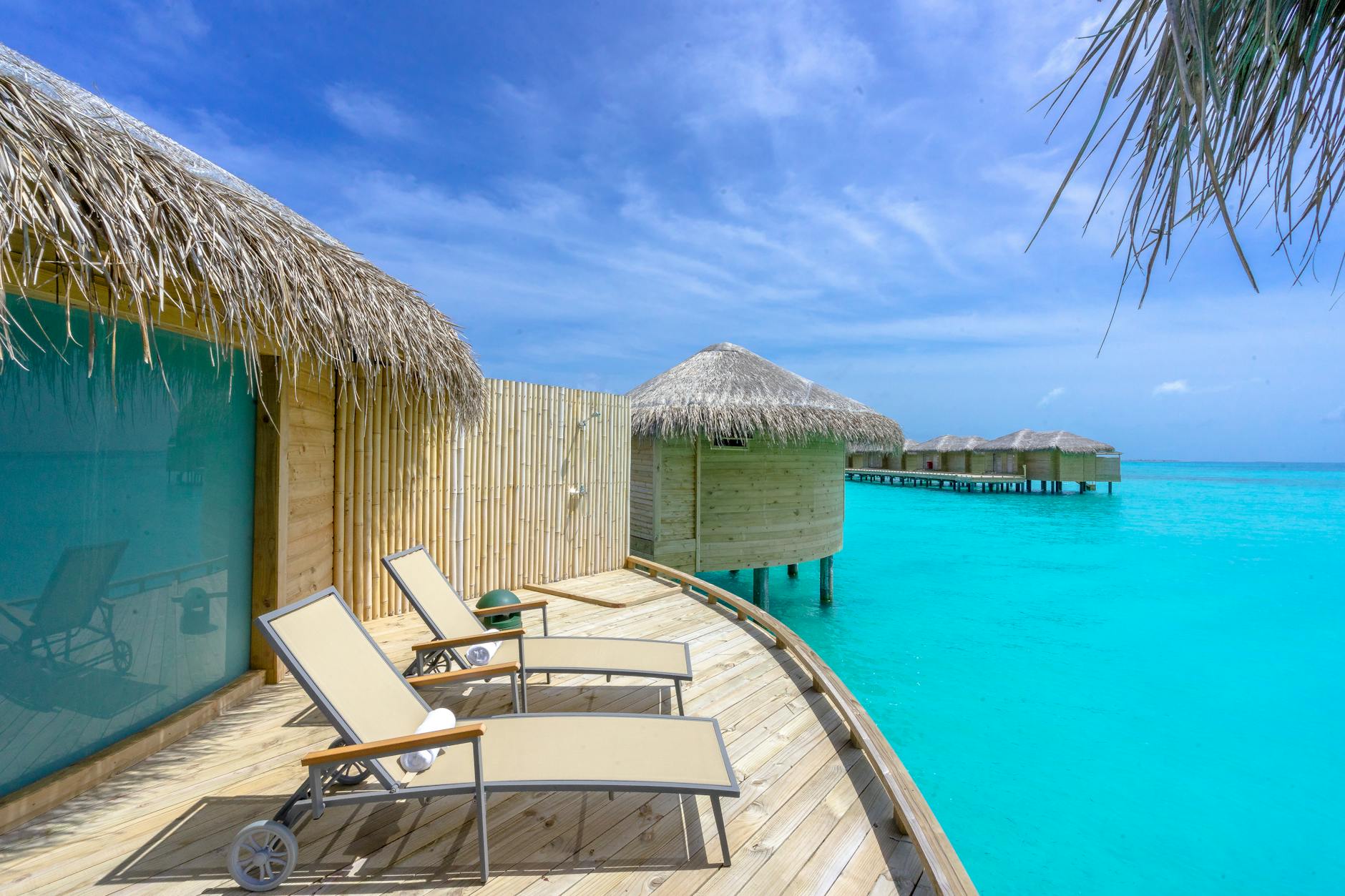
The Maldives is one of those destinations that almost feels too perfect to be real. Tiny islands scattered across the Indian Ocean, white sand so soft it looks powdered, water that shifts between turquoise, glassy blue and deep sapphire, overwater villas, coral reefs, tropical fish, manta rays, whale sharks, sunset dhoni cruises and barefoot breakfasts by the lagoon.
For many travellers, the Maldives is the dream holiday. Honeymoon territory. Anniversary territory. The place you save for when you want the kind of escape that does not ask much from you beyond swimming, eating, reading, resting and staring at the ocean. But the Maldives is also more varied than people realise. It is not just one island, one resort style or one kind of traveller.
The country is made up of 22 natural atolls and around 1,190 islands, stretching across the Indian Ocean in a long chain north to south. Some islands are private resort islands, some are local inhabited islands, some are protected marine environments, and others remain untouched.
That means choosing the right Maldives holiday is less about asking, “Should I go?” and more about asking, “Which Maldives experience do I want?” This guide covers everything first time visitors need to know, including how to get there, when to go, how many days to stay, which islands and atolls to choose, what to do, where to stay, what to pack, costs, travel tips and FAQs.
Where Are the Maldives?
The Maldives sits in the Indian Ocean, southwest of India and Sri Lanka. The country is made up of coral islands grouped into atolls, with the capital city, Malé, located near the main international airport, Velana International Airport.
Most international visitors arrive into Malé, then transfer to their chosen island by speedboat, domestic flight, seaplane or a combination of flights and boats.
This is one of the first things to understand about the Maldives, your resort or island may look close on a map, but logistics matter. Some islands are a short speedboat ride from the airport. Others require a seaplane. More remote islands may need a domestic flight followed by a boat transfer.
Why Visit the Maldives?
The Maldives is one of the world’s best destinations for ocean lovers, honeymooners, luxury travellers and anyone craving a true island escape. It is also one of the easiest destinations to enjoy once you arrive, because most resorts are self-contained and designed around slow, relaxed days.
You visit the Maldives for:
Overwater villas
Private island resorts
White sand beaches
Snorkelling and diving
Manta rays and whale sharks
Honeymoons and romantic escapes
Family-friendly island resorts
Wellness, spas and barefoot luxury
All-inclusive resort holidays
Warm weather and tropical water
A proper digital reset
The Maldives is not a destination filled with museums, big-city wandering, shopping streets or packed sightseeing itineraries. Its magic is slower. The best days are usually built around swimming, snorkelling, long lunches, spa treatments, reading, boat trips and sunset.
How to Get to the Maldives
Most international travellers arrive at Velana International Airport, near Malé. From there, you continue to your island.
For Australian travellers, flights usually connect through hubs such as Singapore, Kuala Lumpur, Doha, Dubai or Colombo, depending on airline schedules. Direct flight options can change, so it is worth checking current routes before planning.
From Malé, transfers generally fall into three categories.
Speedboat Transfers
Speedboat transfers are common for resorts and local islands close to Malé, especially in North Malé Atoll and South Malé Atoll. These are usually the easiest transfers because they can operate throughout much of the day and are generally less complicated than seaplanes.
Best for:
Shorter trips
Families
First time visitors
Travellers arriving later in the day
More affordable resort access
Seaplane Transfers
Seaplanes are one of the most iconic parts of a Maldives holiday. You fly low over the atolls, seeing rings of reef, tiny islands and endless water beneath you. It is beautiful, but it also adds cost and timing considerations.
Seaplanes usually operate during daylight hours, so if your international flight arrives late, you may need to overnight near Malé before transferring the next day.
Best for:
Luxury resorts
Remote islands
Scenic arrival experience
Baa Atoll, Noonu Atoll, Raa Atoll, Dhaalu Atoll and other further resort areas
Domestic Flight Plus Boat Transfer
Some islands are too far for a simple speedboat and may use domestic flights to a regional airport, followed by a speedboat transfer.
Best for:
Remote atolls
Local islands further from Malé
Diving destinations
Travellers wanting a quieter, less obvious island experience
Before booking your resort, always check the transfer method, cost and timing. A cheaper room rate can become less affordable once seaplane or domestic transfer costs are added.
Entry Requirements for the Maldives
Entry rules can change, so check official advice before travelling. At the time of writing, Maldives Immigration states that travellers must submit a Traveller Declaration within 96 hours before their flight time for arrival, and the form is free to submit.
Tourist visa rules should also be checked before departure. Maldives Immigration provides current tourist visa information and Traveller Declaration instructions through its official channels.
Best Time to Visit the Maldives
The Maldives is warm year-round, but weather patterns are shaped by two main seasons, the dry season and the wet season.
Dry Season, November to April
The dry season is generally considered the best time to visit the Maldives. This period usually brings more sunshine, calmer seas and lower rainfall, especially from January to March. It is also the most popular and most expensive time to travel.
Best for:
Honeymoons
Beach holidays
First time visitors
Clear skies
Calm water
Snorkelling and diving visibility
Luxury resort stays
Peak months are usually December, January, February and March. If you want the highest chance of classic postcard weather, this is your safest window.
Wet Season, May to October
The wetter season can bring more humidity, cloud, rain and rougher seas, though it does not usually mean constant rain all day every day. Smartraveller notes that the Maldives monsoon season runs from mid-May to November and can bring strong winds, rough seas and heavy rain.
Best for:
Better resort deals
Fewer crowds
Surfers
Repeat visitors
Marine life enthusiasts
Travellers who do not mind some rain
The wet season can also be rewarding for manta ray encounters in certain areas, especially around Baa Atoll and Hanifaru Bay during the right conditions.
Best Months for First Time Visitors
For a first Maldives trip, the safest choices are usually:
January
Excellent weather, peak pricing.
February
Often one of the driest months, great for beach time.
March
Sunny, warm and popular.
April
Still a good option, often slightly better value than peak months.
November
Can be a good shoulder month, though weather can vary.
If budget matters, look at late April, May, September, October or November, but accept a little more weather risk.
How Many Days Do You Need in the Maldives?
For most first time visitors, 5 to 7 nights is ideal.
A shorter stay of 4 nights can work if you choose a resort close to Malé with a speedboat transfer. This is enough for a quick reset, but it may feel short if you are travelling from Australia or Europe.
A 5 night trip is good for a simple resort holiday, especially if you want one island, one villa and one proper escape.
A 7 night trip is ideal for honeymoons, anniversaries and first timers who want time to settle into island life.
A 10 night trip is perfect if you want to split your stay between two islands or combine a private resort with a local island.
A 14 night trip gives you enough time for two or three different Maldives experiences, such as a luxury resort, a diving atoll and a local island.
The Maldives is not usually a destination where you want to change hotels every two nights. Transfers are expensive and time-consuming, so slow travel works better.
First Time Maldives Itinerary Ideas
4 Nights, Quick Luxury Escape
Stay at one resort in North Malé Atoll or South Malé Atoll with a speedboat transfer.
Best for:
Short breaks
Stopovers
Travellers who want easy logistics
Couples wanting a quick reset
Suggested plan:
Day 1, arrive and settle in
Day 2, snorkel and beach time
Day 3, spa and sunset cruise
Day 4, sandbank picnic or water sports
Day 5, depart
7 Nights, Classic First Maldives Trip
Stay at one private island resort with a mix of beach villa and overwater villa if budget allows.
Suggested plan:
Days 1 to 3, beach villa
Days 4 to 7, overwater villa
Activities, snorkelling, sunset cruise, spa, special dinner
This gives you the classic Maldives experience without overcomplicating the trip.
10 Nights, Two Island Combination
Combine one accessible island with one more remote island.
Example:
3 nights near Malé
7 nights in Baa Atoll, Ari Atoll, Raa Atoll or Dhaalu Atoll
or
5 nights on a local island
5 nights at a luxury resort
This works well if you want both culture and luxury.
14 Nights, Deeper Maldives Holiday
Combine:
A local island
A diving or marine life atoll
A luxury resort
This gives a more rounded experience of the Maldives beyond the postcard version.
Understanding Maldives Islands and Atolls
The Maldives can be confusing because people often refer to islands, atolls and resorts interchangeably. The easiest way to think about it is this:
An atoll is a larger ring or group of coral islands.
An island is the actual landmass where you stay.
A resort island is usually one private island with one resort.
A local island is inhabited by Maldivians and has guesthouses, local restaurants and community life.
For most visitors, choosing the right island or resort matters more than trying to visit every atoll.
Best Maldives Atolls and Islands to Visit
North Malé Atoll
North Malé Atoll is one of the easiest areas for first time visitors because it is close to the international airport. Many resorts are reached by speedboat, which keeps transfers simple and relatively efficient.
Best for:
First timers
Short stays
Families
Easy transfers
Surfing
Resort choice
Travellers arriving later in the day
North Malé Atoll is practical, but it can feel busier than more remote atolls. It is a strong choice if convenience matters.
South Malé Atoll
South Malé Atoll is also close to Malé and offers easy speedboat transfers, resort islands and local island options.
Best for:
Short holidays
Couples
Families
Speedboat transfers
Accessible luxury
Local island stays
It is a good alternative to North Malé if you want simple logistics but a slightly different resort selection.
Ari Atoll
Ari Atoll is one of the most popular areas for diving and marine life. South Ari Atoll is especially known for whale shark encounters, although sightings are never guaranteed.
Best for:
Diving
Snorkelling
Whale shark experiences
Luxury resorts
Couples
Marine life lovers
Ari Atoll is a strong choice if you want your Maldives holiday to feel more ocean-focused rather than purely resort-based.
Baa Atoll
Baa Atoll is one of the most special areas in the Maldives for marine biodiversity. It is a UNESCO Biosphere Reserve, and Hanifaru Bay is known for some of the largest manta ray gatherings in the world.
Best for:
Manta rays
Marine life
Luxury resorts
Eco-conscious travel
Snorkelling
Diving
Nature lovers
Visit Maldives notes that Hanifaru Bay is one of Baa Atoll’s biodiversity highlights and has seen large gatherings of manta rays feeding when plankton is pushed into the bay.
If manta rays are a priority, Baa Atoll should be high on your list.
Lhaviyani Atoll
Lhaviyani Atoll offers beautiful resorts, diving, snorkelling and a slightly more remote feeling than the Malé atolls without being extremely far away.
Best for:
Couples
Families
Diving
Resort stays
Good marine life
Travellers wanting a quieter resort feel
Raa Atoll
Raa Atoll has become more popular with luxury resort travellers. It is further from Malé and usually reached by seaplane or domestic transfer, giving it a more removed feeling.
Best for:
Luxury resorts
Honeymoons
Remote island feeling
Snorkelling
Beautiful lagoons
Longer stays
Noonu Atoll
Noonu Atoll is known for high-end resorts and polished private island experiences. It suits travellers who want serious luxury and do not mind a longer transfer.
Best for:
Luxury travellers
Honeymoons
Private island resorts
Spa and wellness
Design-led stays
Dhaalu Atoll
Dhaalu Atoll has a mix of stylish resorts and family-friendly options. It is a good choice for travellers who want a more contemporary resort atmosphere.
Best for:
Families
Couples
Resort facilities
Water villas
Longer stays
Stylish island hotels
Laamu Atoll
Laamu Atoll is quieter and more remote, with fewer resorts and a more untouched feeling. It is often chosen by travellers who want nature, surf, marine life and a less obvious Maldives experience.
Best for:
Surfing
Eco-conscious stays
Remote luxury
Couples
Repeat visitors
Addu Atoll
Addu Atoll sits in the far south of the Maldives and feels different from the central resort atolls. It has local islands, roads connecting some islands, diving, history and a more lived-in feel.
Best for:
Repeat visitors
Culture
Diving
Local island life
Longer trips
Travellers who want to see beyond resort islands
Vaavu Atoll
Vaavu Atoll is loved by divers and snorkellers, with local island stays and strong marine experiences. It is less polished than major luxury resort areas, but very rewarding for adventurous travellers.
Best for:
Diving
Local islands
Budget travel
Nurse shark excursions
Snorkelling
Adventure
Haa Alif and Haa Dhaalu Atolls
These northern atolls are less visited and feel more remote. They are better suited to travellers who have already experienced the Maldives and want something quieter and more unusual.
Best for:
Remote travel
Repeat visitors
Quiet luxury
Culture
Less crowded islands
Local Islands vs Resort Islands
This is one of the biggest choices for first time visitors.
Resort Islands
A resort island is usually one island, one resort. This is the classic Maldives experience, private beaches, overwater villas, multiple restaurants, house reefs, spa treatments, pools, water sports and polished service.
Best for:
Honeymoons
Luxury travel
First time visitors
Families wanting convenience
All-inclusive holidays
Couples who want privacy
The downside is cost. Meals, drinks, transfers and activities can be expensive, and you may have limited connection with local Maldivian life.
Local Islands
Local islands are inhabited by Maldivian communities and offer guesthouses, smaller hotels, local cafes, public beaches and a more affordable way to experience the Maldives.
Popular local islands include:
Maafushi
Thulusdhoo
Dhigurah
Fulidhoo
Ukulhas
Rasdhoo
Gulhi
Huraa
Dhangethi
Thinadhoo
Best for:
Budget travellers
Longer stays
Cultural experience
Diving and snorkelling
Backpackers
Travellers who want local restaurants and community life
Important note, the Maldives is a Muslim country, so local island rules are different from private resorts. Alcohol is generally not available on local islands, and swimwear is usually limited to designated bikini beaches. Dress modestly when away from tourist beach areas.
Best Maldives Islands for First Time Visitors
Baros
A classic luxury island close to Malé, ideal for couples who want a romantic and refined Maldives experience without a long transfer.
Kurumba
One of the original Maldives resort islands and very close to the airport. Good for short stays, families and first timers.
Maafushi
A popular local island with guesthouses, affordable excursions and easy access from Malé. It is not the quietest island, but it is practical and budget-friendly.
Dhigurah
A beautiful local island in South Ari Atoll, often chosen for whale shark trips, long beaches and a more relaxed atmosphere.
Thulusdhoo
A local island popular with surfers and travellers who want a more casual Maldives experience close to Malé.
Fulidhoo
A small, quieter local island in Vaavu Atoll with a relaxed feel and good access to snorkelling and marine excursions.
Baa Atoll Resort Islands
Excellent for travellers who want manta rays, marine life and a luxury nature-focused stay.
South Ari Atoll Resort Islands
Great for diving, snorkelling and whale shark experiences.
What First Time Visitors Should Do in the Maldives
Stay in an Overwater Villa, Even for One or Two Nights
You do not have to book an overwater villa for the whole trip, but if it is within budget, spend at least one or two nights in one. Waking up over the lagoon is part of the classic Maldives experience.
A good strategy is to start in a beach villa, then upgrade to an overwater villa for the final nights.
Snorkel the House Reef
A strong house reef can make a resort. It means you can snorkel directly from the island without needing a boat tour every time.
When choosing a resort, check whether it has:
A good house reef
Easy snorkelling access
Marine life nearby
Calm lagoon areas
Guided snorkelling options
Take a Sunset Cruise
A sunset cruise is simple, romantic and very Maldives. Many resorts offer sunset dhoni cruises, sometimes with dolphins, drinks or canapés.
Book One Special Meal
This could be a sandbank picnic, beach barbecue, private dinner, underwater restaurant, floating breakfast or chef’s table. You do not need to do every add-on, but one special dining experience can make the trip feel memorable.
Go Snorkelling or Diving With a Guide
Even confident swimmers can benefit from guided snorkelling, especially in areas with currents. The sea around the Maldives can have strong tidal currents and rips, and Smartraveller notes that water safety is important. (Smartraveller)
Try a Spa Treatment
The Maldives does spa settings beautifully, overwater treatment rooms, tropical gardens, ocean breezes and slow post-treatment teas. If ever there were a place to book a massage, this is it.
Visit a Local Island, If Available
Some resorts offer local island visits. This gives you a glimpse of Maldivian life beyond the resort. Dress respectfully, ask before taking photos and follow your guide’s advice.
Food to Try in the Maldives
Maldivian food is shaped by the ocean, coconut, rice, tuna, spices and influences from nearby South Asia.
Look for:
Mas Huni
A traditional breakfast dish made with shredded tuna, coconut, onion and chilli, often served with flatbread called roshi.
Garudhiya
A simple fish broth usually served with rice, lime, chilli and onion.
Rihaakuru
A thick fish paste often used as a flavour base or condiment.
Fish Curry
Maldivian fish curry is rich, fragrant and usually made with tuna or reef fish.
Hedhikaa
Maldivian short eats, often served as snacks, including fish-filled pastries, fritters and savoury bites.
Fresh Tuna
Tuna is central to Maldivian cuisine, and you will see it grilled, curried, raw, smoked, dried and served at breakfast.
Coconut-Based Dishes
Coconut appears in curries, salads, sweets and breakfast dishes.
At resorts, you will also find international dining, Japanese, Italian, Indian, Middle Eastern, Mediterranean and seafood restaurants. Some luxury resorts have extraordinary food, but if you want local flavour, make sure you actively seek it out.
How to Choose the Right Maldives Resort
Choosing the right resort is the difference between a good Maldives holiday and the exact Maldives holiday you imagined.
Ask these questions before booking.
How Far Is It From Malé?
If you only have four or five nights, choose somewhere with an easy speedboat transfer. If you have seven nights or more, a seaplane resort becomes more worthwhile.
Is There a Good House Reef?
If you love snorkelling, this matters. Some islands have beautiful beaches but limited reef access. Others have excellent reefs close to shore.
Is It Better for Couples or Families?
Some resorts are adults-only or romance-focused. Others have kids’ clubs, family villas, water parks, sports facilities and larger restaurants.
Is It All-Inclusive?
All-inclusive can be good value in the Maldives because dining and drinks are expensive once you are on an island. But read inclusions carefully. Some packages include premium drinks and dining across multiple restaurants, while others are more limited.
Does It Suit Your Travel Style?
Some resorts are quiet and barefoot. Others are glossy and social. Some are wellness-focused. Some are family-friendly. Some are design-led. Some are huge, with lots of facilities. Others are tiny and intimate.
Do not just book the prettiest overwater villa. Book the island that matches how you want the trip to feel.
Best Maldives Resorts by Travel Style
This is not an exhaustive list, but these are the kinds of resort categories to consider.
Best for Honeymoons
Look for adults-only or romantic resorts with private pools, overwater villas, sunset dining and quiet beaches.
Best areas:
Baa Atoll
Noonu Atoll
Raa Atoll
Ari Atoll
South Malé Atoll
Best for Families
Look for kids’ clubs, family beach villas, calm lagoon access, casual restaurants, medical support, easy transfers and activities.
Best areas:
North Malé Atoll
South Malé Atoll
Dhaalu Atoll
Ari Atoll
Best for Diving
Look for strong dive centres, access to channels, thilas, manta sites, whale shark areas and house reefs.
Best areas:
Ari Atoll
Baa Atoll
Vaavu Atoll
Lhaviyani Atoll
Addu Atoll
Best for Surfing
Some resorts and local islands are better positioned for surf breaks.
Best areas:
North Malé Atoll
South Malé Atoll
Laamu Atoll
Thulusdhoo
Best for Wellness
Look for resorts with spa programs, yoga, healthy dining, sleep rituals, fitness classes and quiet villas.
Best areas:
Baa Atoll
Noonu Atoll
Raa Atoll
Laamu Atoll
Best for Budget Travellers
Look at local islands with guesthouses and affordable excursions.
Best islands:
Maafushi
Thulusdhoo
Dhigurah
Rasdhoo
Ukulhas
Fulidhoo
Gulhi
Best for Luxury
The Maldives is full of high-end resorts, but the most luxurious options often combine privacy, design, dining, service and remote settings.
Best areas:
Noonu Atoll
Baa Atoll
Raa Atoll
Dhaalu Atoll
South Ari Atoll
Maldives Costs, What to Budget For
The Maldives can be extremely expensive, but it can also be more accessible if you choose local islands or a simple resort package.
The main costs are:
International flights
Resort or guesthouse accommodation
Airport transfers
Meals and drinks
Service charges and taxes
Excursions
Spa treatments
Diving
Seaplane transfers
Travel insurance
Resort Costs
Private island resorts often charge high prices for food, drinks and activities. If you are not on an all-inclusive or half-board package, daily spending can climb quickly. For a first trip, half-board, full-board or all-inclusive can offer peace of mind.
Local Island Costs
Local islands are much more affordable. Guesthouses, local restaurants and shared excursions can reduce costs significantly, though you will not have the same private island resort atmosphere.
Transfer Costs
Always check transfer prices before booking. Seaplane and domestic transfers can be a major part of the total cost.
Taxes and Service Charges
Maldives resort pricing can involve taxes and service charges, so make sure you are looking at the final price, not just the headline nightly rate.
What to Pack for the Maldives
Pack light. The Maldives is relaxed, warm and beach-focused, and seaplane transfers may have luggage restrictions.
Bring:
Swimwear
Lightweight dresses
Linen shirts
Shorts
Kaftans or cover-ups
Sandals
Reef-safe sunscreen
Hat
Sunglasses
Rash vest
Dry bag
Waterproof phone pouch
Medication
Insect repellent
A few dressier resort outfits
Modest clothing for local islands
Underwater camera or GoPro
Book or Kindle
For resort islands, dress codes are usually relaxed but polished in the evenings. For local islands, pack clothes that cover shoulders and knees when walking through villages.
Things to Be Aware of Before Visiting the Maldives
The Maldives Is a Muslim Country
Resort islands are more relaxed, but local islands follow local customs. Dress modestly away from designated tourist beaches, be respectful during Ramadan and understand that alcohol is generally only served at resorts and liveaboards.
Alcohol Is Not Available on Local Islands
If cocktails and wine are important to your holiday, choose a private resort island rather than a local island.
Seaplanes Operate During Daylight
Late arrivals may need an overnight near Malé before transferring to a remote resort.
Weather Can Change Quickly
Even in dry season, tropical showers can happen. In wet season, rain and wind may affect excursions.
Currents Can Be Strong
The water may look calm, but currents can be powerful. Follow resort and guide advice, especially when snorkelling.
Reef Protection Matters
Do not touch coral, stand on reefs, chase marine life or collect shells. Use reef-safe sunscreen where possible and choose responsible operators.
Some Resorts Are Very Isolated
This is part of the appeal, but it also means you are relying on the resort for food, activities, medical support and transport.
Is the Maldives Worth It?
Yes, if you want the kind of holiday the Maldives does best, ocean, rest, beauty, privacy and a true escape. It is not the best destination if you want cities, road trips, shopping, nightlife or lots of independent exploring.
The Maldives is worth it for:
Honeymoons
Anniversaries
Luxury beach holidays
Snorkelling and diving
Wellness escapes
Family resort holidays
Once-in-a-lifetime trips
It is less ideal for:
Travellers who get bored staying in one place
People who dislike resort environments
Budget travellers who want alcohol and nightlife
Travellers who want lots of cultural sightseeing
Suggested Maldives Travel Plan for First Timers
For a first Maldives trip, I would keep it simple.
Choose one resort island if you have 5 to 7 nights.
Choose two islands if you have 10 nights or more.
Choose a speedboat transfer resort if you are short on time.
Choose a seaplane resort if you want the full scenic arrival and have a week or more.
Split beach villa and overwater villa if you want the best of both.
Choose half-board or all-inclusive if you want cost control.
Prioritise a good house reef if you love snorkelling.
The Wrap
The Maldives is not a place that needs a packed itinerary. In fact, trying to over-plan it slightly misses the point. The best version of a Maldives holiday is built around choosing the right island, giving yourself enough time and letting the days unfold slowly.
Wake early for the soft light over the lagoon. Swim before breakfast. Read under palms. Snorkel the reef. Eat tuna curry or fresh seafood by the water. Book the spa treatment. Take the sunset cruise. Stay in the overwater villa if you can. Spend less time trying to see every island and more time enjoying the one you chose. For first time visitors, the Maldives is at its best when you do less, but choose well.
FAQs About Visiting the Maldives
Where is the Maldives located?
The Maldives is located in the Indian Ocean, southwest of India and Sri Lanka. It is made up of coral islands grouped into atolls, stretching in a long north-to-south chain.
How many islands are in the Maldives?
The Maldives comprises 22 natural atolls and around 1,190 islands, according to official Maldives atoll information.
What is the best time to visit the Maldives?
The best time to visit the Maldives is generally during the dry season, from November to April, when rainfall is lower and sunshine is more reliable. January to March are especially popular for classic beach weather.
Is the Maldives good in the wet season?
Yes, the Maldives can still be beautiful in the wet season, but you should expect a higher chance of rain, wind and rough seas. The wet season can offer better prices and good marine life opportunities, but it carries more weather risk.
How many days do you need in the Maldives?
For a first trip, 5 to 7 nights is ideal. Four nights can work for a short stay close to Malé, while 10 to 14 nights allows you to combine two islands or experience both local island and resort stays.
Which Maldives atoll is best for first time visitors?
North Malé Atoll and South Malé Atoll are easiest for first time visitors because of their speedboat transfers and wide resort choice. Ari Atoll is excellent for marine life, while Baa Atoll is ideal for manta rays and luxury nature-focused stays.
Should I stay on a resort island or local island?
Choose a resort island if you want privacy, alcohol, luxury facilities and the classic Maldives experience. Choose a local island if you want lower costs, local culture and guesthouse-style travel.
Are overwater villas worth it in the Maldives?
Yes, overwater villas are worth it if they fit your budget. They offer direct lagoon access, privacy and the classic Maldives experience. To manage costs, consider staying in a beach villa first and upgrading to an overwater villa for the final nights.
Is the Maldives expensive?
The Maldives can be very expensive, especially at private island resorts. Local islands are much more affordable. The biggest costs are accommodation, transfers, meals, drinks and excursions.
Can you drink alcohol in the Maldives?
Alcohol is available at private resort islands and some liveaboards, but it is generally not available on local inhabited islands due to local laws and customs.
Is the Maldives good for families?
Yes, many Maldives resorts are excellent for families, with kids’ clubs, family villas, calm lagoons, babysitting, water sports and child-friendly dining. Choose a resort with easy transfers if travelling with young children.
Is the Maldives only for couples?
No. The Maldives is famous for honeymoons, but it also works well for families, divers, wellness travellers, solo travellers, friend trips and luxury escapes.
Do you need a visa for the Maldives?
Tourist entry requirements can change, so check Maldives Immigration before travelling. Travellers are required to submit the official Traveller Declaration within 96 hours before arrival, and it is free to submit.
What should first time visitors do in the Maldives?
First time visitors should snorkel the house reef, stay in an overwater villa if possible, take a sunset cruise, book one special dining experience, try a spa treatment and allow plenty of time to simply relax.
What should I pack for the Maldives?
Pack swimwear, lightweight clothing, sunscreen, sunglasses, sandals, resort wear, a hat, reef-safe sunscreen, a dry bag, modest clothing for local islands and a waterproof phone pouch. Keep luggage light, especially if taking a seaplane.
Where to Next
If the Maldives has you dreaming of more turquoise water, private islands and barefoot luxury, keep planning with more of our travel guides.
Start with Dream Destination, Cocoa Island, The Maldives for a closer look at one of the Maldives’ most beautiful luxury stays. For another high-end island escape, read Luxury Escape, Baglioni Resort, Maldives, a dreamy resort feature set in Dhaalu Atoll. You can also explore the dining side of the destination with A Culinary Journey in the Heart of the Maldives, which spotlights Aragu Signature Restaurant at Velaa Private Island.
For more island travel inspiration beyond the Maldives, continue with The Ultimate Travel Guide to Tahiti and the Islands of French Polynesia or Five Remote Pacific Islands You’ll Dream Of Escaping To. Both are perfect next reads for travellers drawn to overwater bungalows, quiet beaches and once-in-a-lifetime ocean escapes.
And for island holidays closer to home, 6 Island Escapes You Can Add to Your Australia Itinerary and Travel Guide to Hamilton Island, Australia are ideal for readers looking for coral reefs, resort stays and warm-weather travel without going quite as far.
Share this:
Like this: