Small enough to cross in a few hours yet varied enough to fill several weeks, Slovenia is one of Europe’s most rewarding destinations. Alpine lakes, forested mountains, wine-growing valleys, medieval towns and a small stretch of Adriatic coastline all sit within surprisingly easy reach of one another.
You can begin the morning with coffee beside the Ljubljanica River, walk around Lake Bled before lunch and end the day surrounded by the peaks of the Julian Alps. Elsewhere, the emerald-green Soča River winds through a landscape of gorges and waterfalls, vineyards cover the Vipava Valley and Venetian-style buildings line the waterfront in Piran.
Slovenia suits travellers who prefer beautiful places without the scale or pressure of Europe’s larger destinations. Its capital is compact and relaxed, its natural landscapes feel wonderfully accessible and its food draws from Alpine, Mediterranean, Balkan and Central European traditions.
This complete Slovenia travel guide covers the best places to visit, where to stay, what to eat, how to get around and how to plan a memorable itinerary through one of Europe’s most appealing small countries.
Why Visit Slovenia?
Slovenia offers much of what travellers love about Italy, Austria and Croatia, but within a much smaller area. It borders all three countries, as well as Hungary, and its culture, architecture and food reflect this position between Central Europe, the Alps, the Adriatic and the Balkans.
The country is especially appealing for travellers interested in:
Alpine scenery and clear lakes
Walkable cities and historic towns
Hiking, cycling, swimming and kayaking
Boutique hotels and countryside stays
Wine regions and farm-to-table food
Caves, gorges, waterfalls and forests
Scenic road trips
Quieter alternatives to heavily visited European destinations
Slovenia is compact enough to experience several different landscapes in a single holiday. The national tourism board describes four broad tourism regions, stretching from the Alps to Mediterranean and Karst Slovenia, central Ljubljana, and the thermal and wine-producing east. Many parts of the country can be reached from Ljubljana in around two hours. (I feel Slovenia)
Slovenia may be small, but it should not be treated as a one-stop destination. Ljubljana, Lake Bled, Lake Bohinj, the Soča Valley, Piran and the country’s wine regions each offer a different experience.
Ljubljana
Ljubljana is one of Europe’s most enjoyable small capitals. It is compact, easy to explore on foot and arranged around the Ljubljanica River, where cafés, markets and restaurants spill onto pedestrianised embankments.
The city does not have the intimidating scale of Paris, Rome or Vienna. Instead, its appeal comes from its relaxed pace, attractive architecture, green spaces and abundance of places to sit outside with a coffee or glass of wine.
Begin in the historic centre around Prešeren Square and the pink façade of the Franciscan Church. From here, cross the Triple Bridge and wander towards the Central Market, Cathedral of St Nicholas and the colonnades designed by Slovenian architect Jože Plečnik.
Continue along the river to the Dragon Bridge, one of the city’s most recognisable landmarks, before exploring the lanes and squares beneath Ljubljana Castle.
The old town is largely pedestrianised, making it particularly pleasant for aimless wandering. Ljubljana Tourism notes that the city centre is compact and that the river promenades are lined with cafés, restaurants and bars.
Ljubljana Castle
Ljubljana Castle sits on a wooded hill above the old town. You can walk to the top or take the funicular from Krek Square.
The castle complex contains exhibitions, viewing areas, restaurants and event spaces. Even travellers who are not interested in touring every room should visit for the views across the city and towards the mountains on a clear day.
Central Market
The Central Market is one of Ljubljana’s best places to understand everyday Slovenian food. Depending on the day and season, stalls sell fruit, vegetables, flowers, cheeses, cured meats, honey and baked goods.
Visit in the morning when the market is at its liveliest, then stop for coffee or lunch nearby.
Tivoli Park
Tivoli Park begins just beyond the city centre and provides an easy escape from the historic streets. Its lawns, paths, gardens and tree-lined avenues make it ideal for a morning walk or quiet afternoon.
Metelkova
For something less polished, visit Metelkova, an autonomous cultural centre established in a former military barracks. The site is covered in murals, sculptures and experimental artwork and hosts music and cultural events.
It has a very different energy from the elegant riverside centre and is worth visiting during daylight as well as in the evening.
How long to spend in Ljubljana
Allow at least two nights. One full day is enough to see the main sights, but two days gives you time to explore the market, galleries, neighbourhoods and food scene without rushing.
Ljubljana is also a useful starting or finishing point for a wider road trip. Organised excursions and day trips are available from the capital, although staying overnight in Slovenia’s regional destinations creates a richer experience.
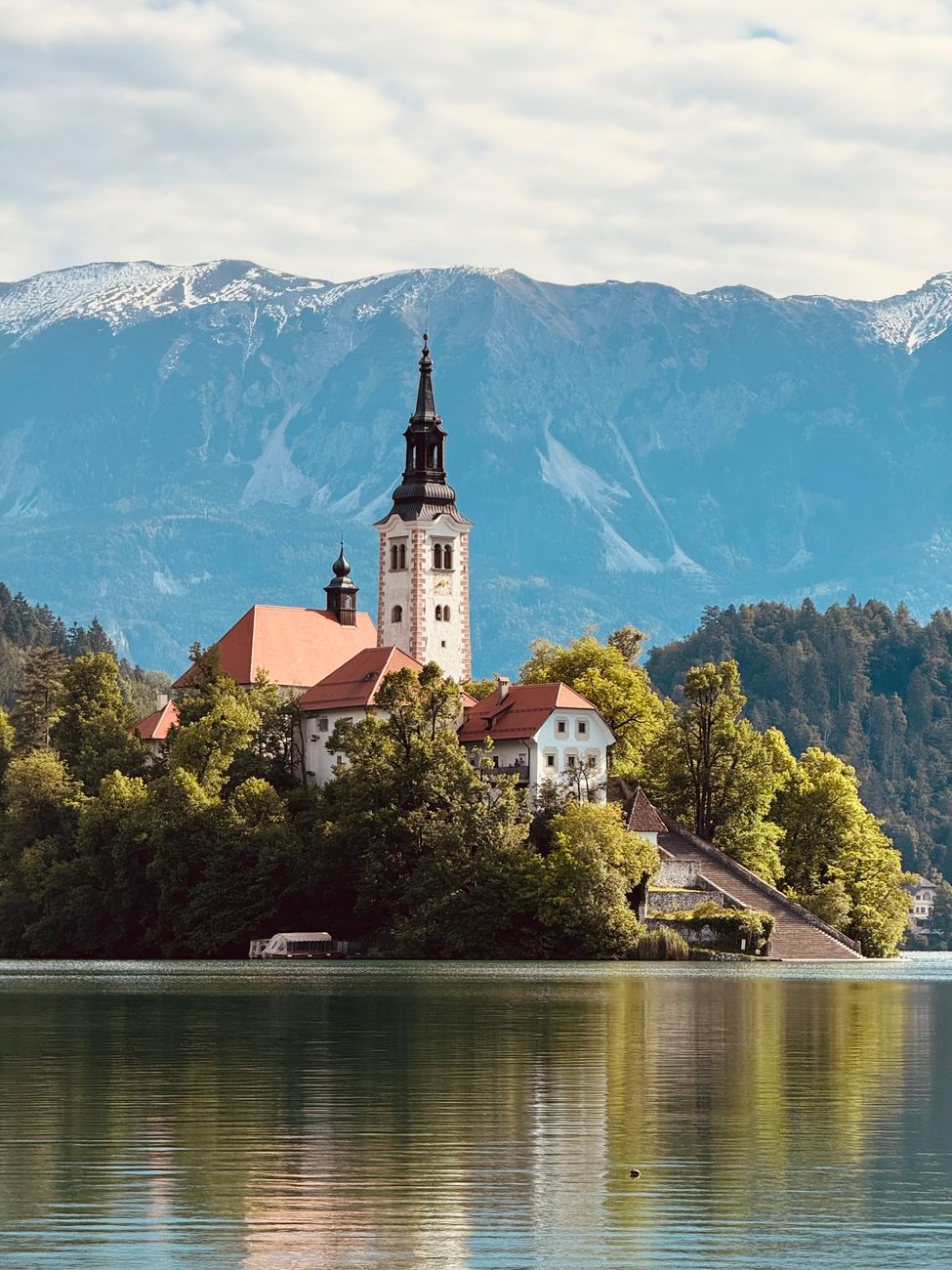
Lake Bled is Slovenia’s most famous landscape, and for good reason. The blue-green lake is surrounded by forested hills and mountains, with a tiny island church at its centre and a castle perched high on a rocky cliff.
It is one of those places that looks almost too perfectly arranged to be real.
Bled can be visited as a day trip from Ljubljana, but staying for at least one night allows you to experience the lake early in the morning and after the busiest visitors have left.
Walk around Lake Bled
The loop around the lake is one of the best ways to appreciate its changing views. The route is relatively gentle and passes swimming areas, boathouses, gardens and lookout points.
Allow plenty of time for photographs, coffee stops and detours rather than treating it as a brisk exercise walk.
Visit Bled Island
Traditional wooden boats known as pletna carry visitors to Bled Island. The island is home to the Church of the Mother of God on the Lake, reached by a long stone staircase.
Lake Bled contains Slovenia’s only natural island, and the traditional boat journey remains one of the destination’s signature experiences.
You can also hire a rowing boat and make your own way across the lake when conditions permit.
Explore Bled Castle
Bled Castle stands above the lake on a steep cliff. The complex includes exhibition spaces, terraces and panoramic viewpoints.
The view across the island and towards the Julian Alps is the main reason to visit, especially on a clear morning or in the softer light of late afternoon.
Try Bled cream cake
Bled is famous for kremna rezina, a layered cream slice made with custard, whipped cream and crisp pastry. It is available throughout town, but the classic experience is to enjoy it somewhere overlooking the lake.
Find the best Lake Bled viewpoints
The elevated views seen in many photographs require a short but steep hike. Ojstrica is the best-known viewpoint, while Mala Osojnica and Velika Osojnica provide higher perspectives.
Wear suitable shoes, particularly after rain, and allow more time than the distance might suggest.
Where to stay at Lake Bled
Choose a lakeside hotel for views and easy access to the walking path. Guesthouses and apartments slightly away from the shore can offer better value and a quieter setting.
Areas to consider include:
The town centre for restaurants and convenience
The western side of the lake for a calmer atmosphere
Mlino for lake access and island views
Nearby villages for countryside accommodation
Bled is increasingly busy during the warmer months. The destination recorded more than 1.2 million overnight stays in 2025, so booking early is sensible for summer weekends and rooms with lake views.
Photo by Pixabay
Lake Bohinj
Around half an hour from Bled by road, Lake Bohinj feels broader, quieter and more immersed in nature.
It is Slovenia’s largest natural lake and lies within the Julian Alps and Triglav National Park. While Bled is known for its carefully framed postcard views, Bohinj is the place to slow down, swim, paddle and spend time in the mountains.
The two lakes should not be treated as interchangeable. Ideally, visit both.
Swim and paddle in Lake Bohinj
During the warmer months, visitors can swim, kayak, canoe, paddleboard or take a panoramic boat ride on the lake. Conditions can change quickly in the mountains, so check local advice before heading onto the water. (bohinj.si)
The water is usually clearer and the setting less developed than at Lake Bled.
Visit Savica Waterfall
Savica Waterfall is one of the area’s best-known natural attractions. Reaching the viewpoint requires climbing a substantial series of steps through the forest.
The walk is not especially long, but it is steep enough to require comfortable footwear.
Take the Vogel cable car
The Vogel cable car rises above Lake Bohinj and provides access to mountain views, hiking routes and winter activities. From the upper station, visitors can take shorter walks or continue into higher alpine terrain.
Weather at the top may be very different from conditions beside the lake, so carry a warm layer even in summer.
Explore the villages around Bohinj
Bohinj refers to a wider area rather than a single town. Ribčev Laz sits near the eastern end of the lake, while Stara Fužina has a more traditional village atmosphere.
Bohinjska Bistrica is the area’s larger transport and service centre and can be a practical accommodation base.
Where to stay in Bohinj
Stay near the lake for immediate access to the water, or choose a guesthouse in one of the surrounding villages for a quieter rural experience.
Accommodation includes:
Contemporary alpine hotels
Family-run guesthouses
Self-contained apartments
Farm stays
Campsites
Mountain lodges
Bohinj rewards a longer stay. Spend at least two nights, or three to four if you plan to hike, cycle or spend a full day on the lake.
Triglav National Park
Triglav National Park protects much of Slovenia’s most dramatic alpine landscape. It takes its name from Mount Triglav, the country’s highest mountain and an important national symbol.
The park includes mountains, forests, valleys, rivers, waterfalls and alpine lakes. Bohinj and parts of the Soča Valley lie within or beside its boundaries.
This is not a single attraction that can be covered in an afternoon. It is a vast natural region with routes ranging from gentle valley walks to demanding mountain ascents.
Visitors should follow marked trails, check weather forecasts, carry suitable equipment and avoid underestimating alpine conditions. Some routes require mountaineering experience or specialist equipment.
For a more relaxed introduction, explore the areas around Bohinj, the Vintgar Gorge, the Pokljuka Plateau or one of the lower trails in the Soča Valley.
Vintgar Gorge
Vintgar Gorge lies close to Bled and is formed by the Radovna River, which runs between steep forested rock walls.
Boardwalks and paths lead visitors above the rushing water, pools and small waterfalls. It is a popular excursion, so reserve an early time where advance entry is required and check current access arrangements before setting out.
The gorge is best combined with a stay at Lake Bled rather than treated as a separate base.
The Soča Valley
The Soča Valley is one of Slovenia’s most beautiful regions. Its river is known for its almost impossibly vivid emerald colour as it flows between forested slopes, rocky gorges and alpine settlements.
The valley is Slovenia’s leading outdoor destination, with rafting, kayaking, hiking, cycling and trails connected to the region’s First World War history.
It is also an excellent choice for travellers who want dramatic scenery without centring their trip entirely around Lake Bled.
Bovec
Bovec is the main adventure base in the upper valley. It is surrounded by mountains and provides access to rafting, canyoning, zip-lining, hiking and cycling.
The town itself is small, but it has a useful collection of accommodation, tour providers and places to eat.
Kobarid
Kobarid is associated with both food and history. The surrounding area contains waterfalls, walking routes and First World War sites, while the town has developed an international reputation for dining.
The Kobarid Historical Trail links several important sites, including the Italian Charnel House, Kozjak Waterfall and sections of the Soča River.
Tolmin
Tolmin sits further south and is known for Tolmin Gorges, the lowest and southernmost entry point into Triglav National Park.
It is also a useful base for exploring the lower valley and nearby hills.
Kozjak Waterfall
Kozjak Waterfall falls into a dark, cave-like chamber near Kobarid. The walk follows the river and crosses a suspension bridge before entering the shaded final section.
The waterfall is visually dramatic, but swimming is not permitted in the protected pool.
The Vršič Pass
The Vršič Pass connects Kranjska Gora with the upper Soča Valley through a winding mountain road.
It is one of Slovenia’s most spectacular drives, but it requires care. The pass may be affected by snow or seasonal closures, and the road includes numerous tight bends.
Stop only in designated areas and check conditions before setting out.
How long to spend in the Soča Valley
Allow at least two nights. Three or four nights is better for travellers planning outdoor activities or wanting to explore Bovec, Kobarid and Tolmin without rushing.
Kranjska Gora
Kranjska Gora is an alpine resort near the borders with Austria and Italy. It is best known for skiing and winter sport, but the surrounding area is equally appealing in summer.
Walk or cycle to Lake Jasna, explore nearby valleys or use the town as a starting point for the Vršič Pass.
Kranjska Gora is more developed than some smaller mountain settlements, making it a convenient choice for families or travellers who want easy access to restaurants and activities.
Piran
Piran brings an entirely different character to a Slovenian itinerary. Located on the country’s short Adriatic coastline, it has narrow lanes, pastel façades, waterfront restaurants and architecture shaped by centuries of Venetian influence.
The historic centre is largely pedestrianised and best explored without a strict plan.
Tartini Square
Tartini Square is the centre of Piran, surrounded by elegant buildings and cafés. It was once part of the harbour before being filled and transformed into the town’s main public space.
From the square, narrow streets rise towards the Church of St George and the old town walls.
Church of St George
The Church of St George occupies an elevated position above the town. Its terrace offers beautiful views across Piran’s rooftops and the Adriatic.
Climbing the bell tower provides an even higher perspective, although opening conditions may vary.
Walk the old town walls
The remaining sections of Piran’s walls provide one of the best viewpoints over the peninsula. Visit in the morning or late afternoon when the rooftops and sea are at their most photogenic.
Swim from the waterfront
Piran does not have a broad sandy beach. Instead, swimmers enter the sea from concrete platforms, steps and small stretches of shore.
For larger beaches and resort facilities, visit nearby Portorož or explore the wider Slovenian coast.
Eat seafood beside the Adriatic
Piran’s location makes it an obvious place for grilled fish, calamari, shellfish and pasta. Seek out restaurants slightly away from the busiest part of the waterfront and look for menus that change according to the catch.
Where to stay in Piran
Stay inside the old town for atmosphere, but confirm parking arrangements before arriving. Most visitors leave cars outside the historic centre and continue by shuttle or on foot.
Nearby Portorož has larger hotels, pools and resort facilities, while Izola offers another attractive coastal base with a working harbour and a more local feel.
Piran, Izola and Koper are the principal historic towns along Slovenia’s Mediterranean coast, while nearby Portorož has the strongest resort focus.
Photo by Daciana Cristina Visan
Izola
Izola receives less attention than Piran, but its fishing harbour, old streets and waterfront make it an appealing stop.
The town feels more lived-in and less entirely shaped by tourism. Spend an afternoon walking through the centre, swimming and eating seafood near the harbour.
Izola can be visited from Piran, but it is also worth considering as a quieter overnight base.
Koper
Koper is Slovenia’s principal port city and has a compact historic centre shaped by Venetian architecture.
The main square, Titov Trg, is surrounded by important buildings including the Praetorian Palace and Cathedral of the Assumption.
Koper is useful as a transport hub, but the historic centre deserves several hours if you are travelling along the coast.
The Vipava Valley
The Vipava Valley is one of Slovenia’s most appealing food and wine regions. Vineyards, stone villages and orchards spread across a landscape between the Karst Plateau and forested hills.
It makes a peaceful alternative to the busier lakes and coastal towns, especially for travellers interested in wine, cycling and rural accommodation.
The valley is known for native grape varieties and small-scale producers. Official tourism information notes that the region has Slovenia’s highest concentration of indigenous wine varieties.
Vipava
The small town of Vipava is built around a series of river springs and crossed by stone bridges. It is a good place to begin exploring the valley’s wineries and villages.
Ajdovščina
Ajdovščina is the valley’s main town and a practical base for accommodation, dining and outdoor activities.
Vipavski Križ
This tiny walled settlement sits on a hill above the valley. Its narrow stone streets and compact scale make it a worthwhile stop during a driving itinerary.
Goče
Goče is a beautifully preserved wine village known for its stone architecture and network of cellars. Visits and tastings should generally be arranged in advance.
Where to stay in the Vipava Valley
Look for vineyard cottages, farm stays, small guesthouses and countryside hotels. A car is useful for reaching wineries and villages, although cycling is popular for active travellers.
Allow two nights if food and wine are central to your trip.
Goriška Brda
Often compared with Tuscany, Goriška Brda is a landscape of vineyard-covered hills, orchards and villages near the Italian border.
Dobrovo is the main centre, while Šmartno is the region’s most picturesque walled village.
Brda is especially beautiful in spring, early summer and autumn. Stay in a winery, guesthouse or rural hotel and plan tastings rather than attempting to drive between multiple producers spontaneously.
Postojna Cave
Postojna Cave is Slovenia’s best-known underground attraction. Its network of caverns, passages and formations is explored through a combination of an underground train journey and a guided walking route.
The standard visit takes around 90 minutes and introduces visitors to the cave’s major formations and unusual subterranean wildlife, including the olm, sometimes called the “human fish”.
The cave remains cool throughout the year, so bring a warm layer even in summer.
Postojna is easy to combine with Predjama Castle, which is built dramatically into the mouth of a cliffside cave.
Škocjan Caves
The Škocjan Caves provide a more immense and elemental underground experience. The cave system includes a vast subterranean canyon carved by the Reka River and forms part of a protected Karst landscape.
Tours involve walking, steps and changing conditions, so wear appropriate footwear and check the current visitor information.
Postojna and Škocjan are quite different. Postojna is highly developed and theatrical, while Škocjan feels darker, larger and more focused on the scale of the underground landscape.
Predjama Castle
Predjama Castle appears to emerge directly from a vertical rock face. It sits near Postojna and is most conveniently visited as part of the same day trip.
The interior reveals how the structure was integrated into the cave behind it, although the exterior setting is the most memorable feature.
Maribor
Maribor is Slovenia’s second-largest city and the centre of the country’s northeastern wine region.
The old town spreads along the Drava River and includes Lent, the riverside district traditionally associated with the city’s historic vine.
Maribor feels quieter and less polished than Ljubljana, but it makes a good base for exploring nearby vineyards, the Pohorje hills and eastern Slovenia.
Ptuj
Ptuj is often described as Slovenia’s oldest town. Its historic centre is filled with pastel buildings, churches and lanes beneath a hilltop castle.
The town is especially known for its Kurentovanje carnival, held before Lent, when participants wear elaborate sheepskin costumes and masks.
Outside festival time, Ptuj is a calm and attractive stop that can be combined with Maribor.
What to Eat in Slovenia
Slovenian food reflects the country’s geography. Alpine dishes dominate in the mountains, seafood and Mediterranean flavours appear near the coast, while the east is known for hearty stews, pastries and wines.
Menus often feature ingredients sourced from nearby farms, forests, rivers and vineyards.
Štruklji
Štruklji are rolled dumplings made with stretched or leavened dough and a variety of fillings. They may be sweet or savoury and can include cottage cheese, walnuts, apples, herbs or tarragon.
They are served as a side dish, main course or dessert depending on the preparation.
Kranjska klobasa
This Carniolan sausage is one of Slovenia’s best-known foods. It is generally served with mustard, horseradish, bread or sauerkraut.
Potica
Potica is a rolled festive cake traditionally filled with walnuts, although versions may also contain poppy seeds, tarragon or other fillings.
It is closely associated with celebrations and holidays but can be found throughout the year.
Jota
Jota is a thick stew made with beans, sauerkraut or sour turnip, potatoes and sometimes pork. It is particularly associated with western Slovenia and the Karst region.
Idrijski žlikrofi
These small filled dumplings come from the town of Idrija. Their shape is distinctive, and they are commonly filled with potato, onion and herbs before being served with meat sauces or other accompaniments.
Buckwheat dishes
Buckwheat appears frequently in Slovenian cooking, including in dumplings, porridge, breads and side dishes.
Freshwater fish
Trout is common in the alpine and river regions. In the Soča Valley, look for local trout served simply with seasonal vegetables or potatoes.
Seafood
Along the coast, menus feature grilled fish, calamari, shellfish, risotto and pasta. Slovenian Istria also produces olive oil and wine.
Bled cream cake
No visit to Lake Bled feels complete without trying the destination’s famous custard and cream slice.
Slovenian wine
Slovenia has several distinct wine regions and produces an impressive range of white, red, sparkling and skin-contact wines.
Look for:
Rebula in Goriška Brda
Zelen and Pinela in the Vipava Valley
Malvazija in Slovenian Istria
Teran in the Karst region
Šipon in the northeast
Cviček in southeastern Slovenia
Book winery visits in advance, especially at smaller family-run producers.
Slovenia offers a wide range of accommodation despite its small size.
Boutique hotels
Ljubljana, Piran and Lake Bled have the greatest concentration of design-focused and boutique properties.
In Ljubljana, choose the old town for atmosphere or stay just outside the pedestrian centre for easier vehicle access.
Alpine hotels
Bled, Bohinj, Kranjska Gora and the Soča Valley offer everything from polished resorts to traditional mountain guesthouses.
Properties near Lake Bled tend to command higher prices, while the villages around Bohinj can provide a quieter experience.
Farm stays
Tourist farms are one of the best ways to experience rural Slovenia. Accommodation may include breakfast or dinner made with produce from the property and surrounding area.
Farm stays are particularly appealing in the Vipava Valley, Brda, the Karst region and eastern Slovenia.
Vineyard stays
Several wine regions offer guest rooms, apartments and cottages among the vines. These are best suited to travellers with a car or those arranging transfers for tastings.
Glamping
Slovenia has embraced glamping, particularly around Bled, the Soča Valley and rural tourism regions. Quality varies, so check whether bathrooms and climate control are private or shared.
Mountain huts
Mountain huts provide simple accommodation along hiking routes. They are functional rather than luxurious and should be booked in advance during peak hiking season.
The Best Time to Visit Slovenia
Slovenia is a genuine year-round destination, but the ideal time depends on your itinerary.
Spring: March to May
Spring brings mild conditions, wildflowers and greener landscapes. It is a good time for Ljubljana, the coast, wine regions and lower-altitude walking.
Mountain conditions can remain wintry well into spring, and some high trails may still be inaccessible.
Late April and May provide a particularly good balance of pleasant weather and manageable visitor numbers.
Summer: June to August
Summer is the busiest period around Lake Bled, Bohinj, Piran and the Julian Alps.
Warm conditions make this the best season for swimming, paddling and high-mountain hiking, although thunderstorms can develop in alpine areas. Bled’s official visitor information notes that summer temperatures commonly exceed 25°C and that storms can occur because of its mountain setting.
Book accommodation well in advance and start popular walks early in the day.
Autumn: September to November
September and early October are among the best times to visit. The weather can remain pleasant, the summer crowds begin to ease and the wine regions become particularly attractive around harvest time.
Autumn colours transform the lakes, forests and alpine valleys.
Later in the season, conditions become less predictable and some seasonal businesses reduce their hours.
Winter: December to February
Winter brings skiing and snow activities to Kranjska Gora, Vogel and other mountain areas.
Ljubljana is attractive during the festive period, while thermal spas and food-focused stays work well during colder weather.
Driving and hiking plans should account for snow, ice and road closures.
How Many Days Do You Need in Slovenia?
Slovenia’s compact size can tempt travellers to move too quickly. Although distances are short, each region deserves time.
Four days
With four days, focus on Ljubljana and the lakes:
Two nights in Ljubljana
One night at Lake Bled
One night in Bohinj
This is possible without a car.
Seven days
A week allows for a satisfying first visit:
Two nights in Ljubljana
Two nights around Bled and Bohinj
Two nights in the Soča Valley
One night in Piran
This itinerary works best with a car, although sections can be completed using buses and organised transfers.
Ten days
Ten days gives you time to add caves or a wine region:
Two nights in Ljubljana
Two nights at Lake Bled
Two nights in Bohinj or Kranjska Gora
Two nights in the Soča Valley
Two nights in Piran or the Vipava Valley
Two weeks
Fourteen days allows for a much more relaxed trip incorporating eastern Slovenia, Maribor, Ptuj or additional hiking.
A Suggested Seven-Day Slovenia Itinerary
Days 1 and 2: Ljubljana
Explore the old town, Central Market, castle, riverfront and Tivoli Park. Use the second day for museums, neighbourhoods or a food tour.
Day 3: Lake Bled
Travel to Bled in the morning. Walk around the lake, visit the island and climb to the castle or one of the hillside viewpoints.
Stay overnight to enjoy the lake after day visitors leave.
Day 4: Lake Bohinj
Continue to Bohinj. Swim or paddle in the lake, visit Savica Waterfall or take the Vogel cable car.
Days 5 and 6: Soča Valley
Travel through the Julian Alps to Bovec or Kobarid. Spend the following day hiking, rafting or exploring waterfalls and historic trails.
Day 7: Return to Ljubljana
Return to the capital, stopping at Škofja Loka or another small town depending on your route and departure time.
A Suggested 10-Day Slovenia Road Trip
Days 1 and 2: Ljubljana
Stay centrally and explore on foot.
Days 3 and 4: Lake Bled and Bohinj
Spend one day at each lake, staying in Bled, Bohinj or dividing the nights between them.
Days 5 and 6: Soča Valley
Drive across the mountains when routes are open, then stay in Bovec or Kobarid.
Days 7 and 8: Vipava Valley or Goriška Brda
Slow down among vineyards and villages. Arrange a winery visit and stay in a rural guesthouse.
Days 9 and 10: Piran and the coast
Finish beside the Adriatic with seafood, swimming and a final sunset walk around Piran.
Stop at the Škocjan Caves or Postojna Cave while travelling between the coast and Ljubljana.
Getting to Slovenia
Ljubljana Jože Pučnik Airport is the main international airport. It is located outside the capital, with onward travel available by shuttle, taxi, bus or rental car.
Depending on your route, it may also be convenient to fly into a nearby airport in Italy, Austria or Croatia and continue overland.
Possible gateways include:
Venice
Trieste
Zagreb
Vienna
Graz
Klagenfurt
Slovenia also has international train and coach connections with neighbouring countries. Routes and frequencies can change, so check current schedules before booking.
Getting Around Slovenia
By car
A car is the easiest way to combine lakes, mountain valleys, vineyards, caves and coastal towns.
Roads are generally well maintained, but mountain routes can be narrow and winding. Build extra time into journeys rather than relying entirely on navigation estimates.
A valid electronic vignette is required to use Slovenian motorways and expressways. Make sure the vehicle registration details and toll category are entered correctly when purchasing one. Rental cars collected in Slovenia may already include it, but confirm this with the rental company.
By train
Trains connect Ljubljana with cities including Maribor, Koper and destinations near Lake Bled, although the most convenient station for a destination may require a bus or taxi connection.
The Bohinj railway between the Bohinj and Soča regions is particularly scenic and includes the Bohinj Tunnel and Solkan Bridge.
By bus
Buses are often more useful than trains for reaching Lake Bled, Bohinj, Piran and smaller towns.
Services can become crowded during summer, so arrive early and check whether advance reservations are available.
By organised tour
Day tours from Ljubljana are useful for travellers with limited time or those who do not want to drive. Common routes include Lake Bled, Postojna Cave, Predjama Castle, Piran and the Soča Valley.
Practical Tips for Visiting Slovenia
Do not try to see everything as a day trip
Ljubljana’s central location makes day trips easy, but staying overnight in Bled, Bohinj, Piran or the Soča Valley creates a much more relaxed experience.
Book summer accommodation early
Rooms near the lakes and coast can sell out well ahead of peak summer dates.
Prepare for changing mountain weather
Carry water, a rain layer and something warm when walking in the Alps. Clear mornings can turn into stormy afternoons.
Respect protected landscapes
Stay on marked routes, take rubbish with you and follow local restrictions around swimming, parking and camping.
Reserve activities and cave tours
Rafting trips, popular caves, guided hikes and limited-entry natural attractions may require advance booking.
Carry both cards and some cash
Cards are widely accepted, but cash can still be useful at mountain huts, market stalls, small cafés and rural businesses.
Learn a few Slovenian words
English is commonly spoken in visitor areas, but simple phrases are appreciated.
Useful words include:
Dober dan: Good day
Hvala: Thank you
Prosim: Please or you’re welcome
Na zdravje: Cheers
Nasvidenje: Goodbye
Pack for several climates
A single itinerary may include warm coastal weather, cool caves and alpine conditions. Layers are essential.
Yes. Slovenia combines beautiful landscapes, historic towns, outdoor activities, wine regions and a small Adriatic coastline within a compact area.
It is especially worthwhile for travellers who enjoy nature, road trips and destinations that feel more manageable than Europe’s largest tourism centres.
What is Slovenia best known for?
Slovenia is best known for Lake Bled, Ljubljana, the Julian Alps, Triglav National Park, the Soča River, Postojna Cave and the coastal town of Piran.
It is also gaining recognition for wine, gastronomy, cycling and nature-based travel.
How many days should you spend in Slovenia?
Allow at least five to seven days for a first visit. Ten days provides a better balance between cities, lakes, mountains and the coast.
Two weeks is ideal for a slower road trip that includes wine country or eastern Slovenia.
Is Lake Bled worth visiting?
Lake Bled is worth visiting for its scenery, island, castle and walking route. However, it is also one of Slovenia’s busiest destinations.
Stay overnight, visit outside the busiest summer period or begin your day early for a calmer experience.
Is Lake Bohinj better than Lake Bled?
The lakes offer different experiences.
Lake Bled is more iconic and has more developed tourism facilities. Lake Bohinj is larger, quieter and better suited to swimming, paddling, hiking and an immersive nature stay.
Most first-time visitors should include both.
Can you visit Slovenia without a car?
Yes. Ljubljana, Lake Bled, Bohinj, Piran and several larger towns are accessible by public transport.
A car is more convenient for the Soča Valley, remote villages, wine regions and flexible road trips.
Is driving in Slovenia easy?
Driving is generally straightforward on major roads. Mountain passes and rural routes can be narrow, steep or winding.
Check weather and road conditions before entering alpine areas and make sure your vehicle has the required motorway vignette.
What is the best month to visit Slovenia?
May, June, September and early October are excellent for general sightseeing and road trips.
July and August are best for swimming and high-altitude hiking but are also the busiest months.
Winter is best for skiing, Christmas markets and seasonal mountain stays.
Is Slovenia expensive?
Slovenia is not necessarily a budget destination, particularly around Lake Bled, Ljubljana and the coast in summer. However, it can offer better value than some neighbouring destinations.
Guesthouses, farm stays, public transport and meals outside the principal tourist areas can help reduce costs.
Is Slovenia part of the European Union?
Yes. Slovenia is a member of the European Union and uses the euro.
Entry requirements depend on the traveller’s nationality and may change, so check official government advice before departure.
Is Slovenia safe?
Slovenia is generally considered a comfortable destination for visitors. Normal travel precautions still apply, particularly around valuables, driving and outdoor activities.
Mountain weather, river conditions and difficult hiking routes may present greater risks than urban crime.
Can you swim in Lake Bled and Lake Bohinj?
Swimming is possible in designated or permitted areas during suitable conditions. Lake Bohinj is particularly popular for summer swimming and paddling.
Follow local signs and avoid entering the water during storms or where swimming is restricted.
Can you visit Slovenia in winter?
Yes. Winter is suitable for skiing, alpine stays, Ljubljana city breaks and thermal spa holidays.
Snow and seasonal closures may affect mountain roads, hiking routes and some attractions.
What food should you try in Slovenia?
Try štruklji, potica, Carniolan sausage, jota, Idrija dumplings, freshwater trout, local cheeses and Bled cream cake.
Wine lovers should explore the Vipava Valley, Goriška Brda, Slovenian Istria and the vineyards of eastern Slovenia.
Is Ljubljana worth more than one day?
Yes. Although the main historic sights can be seen in a day, two nights allow time for the market, museums, Tivoli Park, riverside dining and neighbourhoods beyond the old town.
Should you stay in Bled or Bohinj?
Stay in Bled for iconic scenery, restaurant choice and convenience. Stay in Bohinj for nature, water activities and a quieter alpine atmosphere.
Travellers with enough time can divide their stay between the two.
Can Slovenia be combined with another country?
Slovenia combines easily with northern Italy, Croatia or Austria.
Trieste and Venice can be paired with Piran and the Karst region. Croatia can be added after the Slovenian coast, while Austria works naturally with northern Slovenia and the alpine regions.
Where to Next?
After Slovenia, continue west into northern Italy for food, cities and another extraordinary landscape. Our Puglia travel guide explores a very different side of Italy, while our Cinque Terre guide is ideal for travellers drawn to colourful coastal villages.
You could also continue south towards Croatia and its Adriatic coastline, or travel north into Austria. For a culture-filled stop, explore our guide to Vienna.
Slovenia may be compact, but it never feels limited. Its landscapes change quickly and dramatically, moving from Ljubljana’s café-lined riverbanks to Alpine lakes, emerald waterways, underground caverns, vineyard-covered hills and the Adriatic Sea. The country is easy enough to explore in a week, yet layered enough to reward a much longer journey.
Visit Lake Bled for the famous view, but stay long enough to discover Bohinj. Walk Ljubljana’s riverfront, then leave the city for the valleys and villages beyond it. Taste local wine, swim beneath the mountains and make room for the small, unplanned stops that turn a road trip into something memorable.
Slovenia’s greatest appeal is not simply that it brings so much together in one small country. It is that each place still feels distinct, personal and worth slowing down for.


Small enough to cross in a few hours yet varied enough to fill several weeks, Slovenia is one of Europe’s most rewarding destinations. Alpine lakes, forested mountains, wine-growing valleys, medieval towns and a small stretch of Adriatic coastline all sit within surprisingly easy reach of one another.
You can begin the morning with coffee beside the Ljubljanica River, walk around Lake Bled before lunch and end the day surrounded by the peaks of the Julian Alps. Elsewhere, the emerald-green Soča River winds through a landscape of gorges and waterfalls, vineyards cover the Vipava Valley and Venetian-style buildings line the waterfront in Piran.
Slovenia suits travellers who prefer beautiful places without the scale or pressure of Europe’s larger destinations. Its capital is compact and relaxed, its natural landscapes feel wonderfully accessible and its food draws from Alpine, Mediterranean, Balkan and Central European traditions.
This complete Slovenia travel guide covers the best places to visit, where to stay, what to eat, how to get around and how to plan a memorable itinerary through one of Europe’s most appealing small countries.
Why Visit Slovenia?
Slovenia offers much of what travellers love about Italy, Austria and Croatia, but within a much smaller area. It borders all three countries, as well as Hungary, and its culture, architecture and food reflect this position between Central Europe, the Alps, the Adriatic and the Balkans.
The country is especially appealing for travellers interested in:
Slovenia is compact enough to experience several different landscapes in a single holiday. The national tourism board describes four broad tourism regions, stretching from the Alps to Mediterranean and Karst Slovenia, central Ljubljana, and the thermal and wine-producing east. Many parts of the country can be reached from Ljubljana in around two hours. (I feel Slovenia)
Readers looking for other beautiful European escapes can also explore our ultimate Puglia travel guide, our guide to Sardinia and the ultimate South of France travel guide.
The Best Places to Visit in Slovenia
Slovenia may be small, but it should not be treated as a one-stop destination. Ljubljana, Lake Bled, Lake Bohinj, the Soča Valley, Piran and the country’s wine regions each offer a different experience.
Ljubljana
Ljubljana is one of Europe’s most enjoyable small capitals. It is compact, easy to explore on foot and arranged around the Ljubljanica River, where cafés, markets and restaurants spill onto pedestrianised embankments.
The city does not have the intimidating scale of Paris, Rome or Vienna. Instead, its appeal comes from its relaxed pace, attractive architecture, green spaces and abundance of places to sit outside with a coffee or glass of wine.
Begin in the historic centre around Prešeren Square and the pink façade of the Franciscan Church. From here, cross the Triple Bridge and wander towards the Central Market, Cathedral of St Nicholas and the colonnades designed by Slovenian architect Jože Plečnik.
Continue along the river to the Dragon Bridge, one of the city’s most recognisable landmarks, before exploring the lanes and squares beneath Ljubljana Castle.
The old town is largely pedestrianised, making it particularly pleasant for aimless wandering. Ljubljana Tourism notes that the city centre is compact and that the river promenades are lined with cafés, restaurants and bars.
Ljubljana Castle
Ljubljana Castle sits on a wooded hill above the old town. You can walk to the top or take the funicular from Krek Square.
The castle complex contains exhibitions, viewing areas, restaurants and event spaces. Even travellers who are not interested in touring every room should visit for the views across the city and towards the mountains on a clear day.
Central Market
The Central Market is one of Ljubljana’s best places to understand everyday Slovenian food. Depending on the day and season, stalls sell fruit, vegetables, flowers, cheeses, cured meats, honey and baked goods.
Visit in the morning when the market is at its liveliest, then stop for coffee or lunch nearby.
Tivoli Park
Tivoli Park begins just beyond the city centre and provides an easy escape from the historic streets. Its lawns, paths, gardens and tree-lined avenues make it ideal for a morning walk or quiet afternoon.
Metelkova
For something less polished, visit Metelkova, an autonomous cultural centre established in a former military barracks. The site is covered in murals, sculptures and experimental artwork and hosts music and cultural events.
It has a very different energy from the elegant riverside centre and is worth visiting during daylight as well as in the evening.
How long to spend in Ljubljana
Allow at least two nights. One full day is enough to see the main sights, but two days gives you time to explore the market, galleries, neighbourhoods and food scene without rushing.
Ljubljana is also a useful starting or finishing point for a wider road trip. Organised excursions and day trips are available from the capital, although staying overnight in Slovenia’s regional destinations creates a richer experience.
For more affordable European inspiration, read our guide to four fabulous places to visit in Eastern Europe, which also features Ljubljana.
Lake Bled
Lake Bled is Slovenia’s most famous landscape, and for good reason. The blue-green lake is surrounded by forested hills and mountains, with a tiny island church at its centre and a castle perched high on a rocky cliff.
It is one of those places that looks almost too perfectly arranged to be real.
Bled can be visited as a day trip from Ljubljana, but staying for at least one night allows you to experience the lake early in the morning and after the busiest visitors have left.
Walk around Lake Bled
The loop around the lake is one of the best ways to appreciate its changing views. The route is relatively gentle and passes swimming areas, boathouses, gardens and lookout points.
Allow plenty of time for photographs, coffee stops and detours rather than treating it as a brisk exercise walk.
Visit Bled Island
Traditional wooden boats known as pletna carry visitors to Bled Island. The island is home to the Church of the Mother of God on the Lake, reached by a long stone staircase.
Lake Bled contains Slovenia’s only natural island, and the traditional boat journey remains one of the destination’s signature experiences.
You can also hire a rowing boat and make your own way across the lake when conditions permit.
Explore Bled Castle
Bled Castle stands above the lake on a steep cliff. The complex includes exhibition spaces, terraces and panoramic viewpoints.
The view across the island and towards the Julian Alps is the main reason to visit, especially on a clear morning or in the softer light of late afternoon.
Try Bled cream cake
Bled is famous for kremna rezina, a layered cream slice made with custard, whipped cream and crisp pastry. It is available throughout town, but the classic experience is to enjoy it somewhere overlooking the lake.
Find the best Lake Bled viewpoints
The elevated views seen in many photographs require a short but steep hike. Ojstrica is the best-known viewpoint, while Mala Osojnica and Velika Osojnica provide higher perspectives.
Wear suitable shoes, particularly after rain, and allow more time than the distance might suggest.
Where to stay at Lake Bled
Choose a lakeside hotel for views and easy access to the walking path. Guesthouses and apartments slightly away from the shore can offer better value and a quieter setting.
Areas to consider include:
Bled is increasingly busy during the warmer months. The destination recorded more than 1.2 million overnight stays in 2025, so booking early is sensible for summer weekends and rooms with lake views.
Lake Bohinj
Around half an hour from Bled by road, Lake Bohinj feels broader, quieter and more immersed in nature.
It is Slovenia’s largest natural lake and lies within the Julian Alps and Triglav National Park. While Bled is known for its carefully framed postcard views, Bohinj is the place to slow down, swim, paddle and spend time in the mountains.
The two lakes should not be treated as interchangeable. Ideally, visit both.
Swim and paddle in Lake Bohinj
During the warmer months, visitors can swim, kayak, canoe, paddleboard or take a panoramic boat ride on the lake. Conditions can change quickly in the mountains, so check local advice before heading onto the water. (bohinj.si)
The water is usually clearer and the setting less developed than at Lake Bled.
Visit Savica Waterfall
Savica Waterfall is one of the area’s best-known natural attractions. Reaching the viewpoint requires climbing a substantial series of steps through the forest.
The walk is not especially long, but it is steep enough to require comfortable footwear.
Take the Vogel cable car
The Vogel cable car rises above Lake Bohinj and provides access to mountain views, hiking routes and winter activities. From the upper station, visitors can take shorter walks or continue into higher alpine terrain.
Weather at the top may be very different from conditions beside the lake, so carry a warm layer even in summer.
Explore the villages around Bohinj
Bohinj refers to a wider area rather than a single town. Ribčev Laz sits near the eastern end of the lake, while Stara Fužina has a more traditional village atmosphere.
Bohinjska Bistrica is the area’s larger transport and service centre and can be a practical accommodation base.
Where to stay in Bohinj
Stay near the lake for immediate access to the water, or choose a guesthouse in one of the surrounding villages for a quieter rural experience.
Accommodation includes:
Bohinj rewards a longer stay. Spend at least two nights, or three to four if you plan to hike, cycle or spend a full day on the lake.
Triglav National Park
Triglav National Park protects much of Slovenia’s most dramatic alpine landscape. It takes its name from Mount Triglav, the country’s highest mountain and an important national symbol.
The park includes mountains, forests, valleys, rivers, waterfalls and alpine lakes. Bohinj and parts of the Soča Valley lie within or beside its boundaries.
This is not a single attraction that can be covered in an afternoon. It is a vast natural region with routes ranging from gentle valley walks to demanding mountain ascents.
Visitors should follow marked trails, check weather forecasts, carry suitable equipment and avoid underestimating alpine conditions. Some routes require mountaineering experience or specialist equipment.
For a more relaxed introduction, explore the areas around Bohinj, the Vintgar Gorge, the Pokljuka Plateau or one of the lower trails in the Soča Valley.
Vintgar Gorge
Vintgar Gorge lies close to Bled and is formed by the Radovna River, which runs between steep forested rock walls.
Boardwalks and paths lead visitors above the rushing water, pools and small waterfalls. It is a popular excursion, so reserve an early time where advance entry is required and check current access arrangements before setting out.
The gorge is best combined with a stay at Lake Bled rather than treated as a separate base.
The Soča Valley
The Soča Valley is one of Slovenia’s most beautiful regions. Its river is known for its almost impossibly vivid emerald colour as it flows between forested slopes, rocky gorges and alpine settlements.
The valley is Slovenia’s leading outdoor destination, with rafting, kayaking, hiking, cycling and trails connected to the region’s First World War history.
It is also an excellent choice for travellers who want dramatic scenery without centring their trip entirely around Lake Bled.
Bovec
Bovec is the main adventure base in the upper valley. It is surrounded by mountains and provides access to rafting, canyoning, zip-lining, hiking and cycling.
The town itself is small, but it has a useful collection of accommodation, tour providers and places to eat.
Kobarid
Kobarid is associated with both food and history. The surrounding area contains waterfalls, walking routes and First World War sites, while the town has developed an international reputation for dining.
The Kobarid Historical Trail links several important sites, including the Italian Charnel House, Kozjak Waterfall and sections of the Soča River.
Tolmin
Tolmin sits further south and is known for Tolmin Gorges, the lowest and southernmost entry point into Triglav National Park.
It is also a useful base for exploring the lower valley and nearby hills.
Kozjak Waterfall
Kozjak Waterfall falls into a dark, cave-like chamber near Kobarid. The walk follows the river and crosses a suspension bridge before entering the shaded final section.
The waterfall is visually dramatic, but swimming is not permitted in the protected pool.
The Vršič Pass
The Vršič Pass connects Kranjska Gora with the upper Soča Valley through a winding mountain road.
It is one of Slovenia’s most spectacular drives, but it requires care. The pass may be affected by snow or seasonal closures, and the road includes numerous tight bends.
Stop only in designated areas and check conditions before setting out.
How long to spend in the Soča Valley
Allow at least two nights. Three or four nights is better for travellers planning outdoor activities or wanting to explore Bovec, Kobarid and Tolmin without rushing.
Kranjska Gora
Kranjska Gora is an alpine resort near the borders with Austria and Italy. It is best known for skiing and winter sport, but the surrounding area is equally appealing in summer.
Walk or cycle to Lake Jasna, explore nearby valleys or use the town as a starting point for the Vršič Pass.
Kranjska Gora is more developed than some smaller mountain settlements, making it a convenient choice for families or travellers who want easy access to restaurants and activities.
Piran
Piran brings an entirely different character to a Slovenian itinerary. Located on the country’s short Adriatic coastline, it has narrow lanes, pastel façades, waterfront restaurants and architecture shaped by centuries of Venetian influence.
The historic centre is largely pedestrianised and best explored without a strict plan.
Tartini Square
Tartini Square is the centre of Piran, surrounded by elegant buildings and cafés. It was once part of the harbour before being filled and transformed into the town’s main public space.
From the square, narrow streets rise towards the Church of St George and the old town walls.
Church of St George
The Church of St George occupies an elevated position above the town. Its terrace offers beautiful views across Piran’s rooftops and the Adriatic.
Climbing the bell tower provides an even higher perspective, although opening conditions may vary.
Walk the old town walls
The remaining sections of Piran’s walls provide one of the best viewpoints over the peninsula. Visit in the morning or late afternoon when the rooftops and sea are at their most photogenic.
Swim from the waterfront
Piran does not have a broad sandy beach. Instead, swimmers enter the sea from concrete platforms, steps and small stretches of shore.
For larger beaches and resort facilities, visit nearby Portorož or explore the wider Slovenian coast.
Eat seafood beside the Adriatic
Piran’s location makes it an obvious place for grilled fish, calamari, shellfish and pasta. Seek out restaurants slightly away from the busiest part of the waterfront and look for menus that change according to the catch.
Where to stay in Piran
Stay inside the old town for atmosphere, but confirm parking arrangements before arriving. Most visitors leave cars outside the historic centre and continue by shuttle or on foot.
Nearby Portorož has larger hotels, pools and resort facilities, while Izola offers another attractive coastal base with a working harbour and a more local feel.
Piran, Izola and Koper are the principal historic towns along Slovenia’s Mediterranean coast, while nearby Portorož has the strongest resort focus.
Izola
Izola receives less attention than Piran, but its fishing harbour, old streets and waterfront make it an appealing stop.
The town feels more lived-in and less entirely shaped by tourism. Spend an afternoon walking through the centre, swimming and eating seafood near the harbour.
Izola can be visited from Piran, but it is also worth considering as a quieter overnight base.
Koper
Koper is Slovenia’s principal port city and has a compact historic centre shaped by Venetian architecture.
The main square, Titov Trg, is surrounded by important buildings including the Praetorian Palace and Cathedral of the Assumption.
Koper is useful as a transport hub, but the historic centre deserves several hours if you are travelling along the coast.
The Vipava Valley
The Vipava Valley is one of Slovenia’s most appealing food and wine regions. Vineyards, stone villages and orchards spread across a landscape between the Karst Plateau and forested hills.
It makes a peaceful alternative to the busier lakes and coastal towns, especially for travellers interested in wine, cycling and rural accommodation.
The valley is known for native grape varieties and small-scale producers. Official tourism information notes that the region has Slovenia’s highest concentration of indigenous wine varieties.
Vipava
The small town of Vipava is built around a series of river springs and crossed by stone bridges. It is a good place to begin exploring the valley’s wineries and villages.
Ajdovščina
Ajdovščina is the valley’s main town and a practical base for accommodation, dining and outdoor activities.
Vipavski Križ
This tiny walled settlement sits on a hill above the valley. Its narrow stone streets and compact scale make it a worthwhile stop during a driving itinerary.
Goče
Goče is a beautifully preserved wine village known for its stone architecture and network of cellars. Visits and tastings should generally be arranged in advance.
Where to stay in the Vipava Valley
Look for vineyard cottages, farm stays, small guesthouses and countryside hotels. A car is useful for reaching wineries and villages, although cycling is popular for active travellers.
Allow two nights if food and wine are central to your trip.
Goriška Brda
Often compared with Tuscany, Goriška Brda is a landscape of vineyard-covered hills, orchards and villages near the Italian border.
Dobrovo is the main centre, while Šmartno is the region’s most picturesque walled village.
Brda is especially beautiful in spring, early summer and autumn. Stay in a winery, guesthouse or rural hotel and plan tastings rather than attempting to drive between multiple producers spontaneously.
Postojna Cave
Postojna Cave is Slovenia’s best-known underground attraction. Its network of caverns, passages and formations is explored through a combination of an underground train journey and a guided walking route.
The standard visit takes around 90 minutes and introduces visitors to the cave’s major formations and unusual subterranean wildlife, including the olm, sometimes called the “human fish”.
The cave remains cool throughout the year, so bring a warm layer even in summer.
Postojna is easy to combine with Predjama Castle, which is built dramatically into the mouth of a cliffside cave.
Škocjan Caves
The Škocjan Caves provide a more immense and elemental underground experience. The cave system includes a vast subterranean canyon carved by the Reka River and forms part of a protected Karst landscape.
Tours involve walking, steps and changing conditions, so wear appropriate footwear and check the current visitor information.
Postojna and Škocjan are quite different. Postojna is highly developed and theatrical, while Škocjan feels darker, larger and more focused on the scale of the underground landscape.
Predjama Castle
Predjama Castle appears to emerge directly from a vertical rock face. It sits near Postojna and is most conveniently visited as part of the same day trip.
The interior reveals how the structure was integrated into the cave behind it, although the exterior setting is the most memorable feature.
Maribor
Maribor is Slovenia’s second-largest city and the centre of the country’s northeastern wine region.
The old town spreads along the Drava River and includes Lent, the riverside district traditionally associated with the city’s historic vine.
Maribor feels quieter and less polished than Ljubljana, but it makes a good base for exploring nearby vineyards, the Pohorje hills and eastern Slovenia.
Ptuj
Ptuj is often described as Slovenia’s oldest town. Its historic centre is filled with pastel buildings, churches and lanes beneath a hilltop castle.
The town is especially known for its Kurentovanje carnival, held before Lent, when participants wear elaborate sheepskin costumes and masks.
Outside festival time, Ptuj is a calm and attractive stop that can be combined with Maribor.
What to Eat in Slovenia
Slovenian food reflects the country’s geography. Alpine dishes dominate in the mountains, seafood and Mediterranean flavours appear near the coast, while the east is known for hearty stews, pastries and wines.
Menus often feature ingredients sourced from nearby farms, forests, rivers and vineyards.
Štruklji
Štruklji are rolled dumplings made with stretched or leavened dough and a variety of fillings. They may be sweet or savoury and can include cottage cheese, walnuts, apples, herbs or tarragon.
They are served as a side dish, main course or dessert depending on the preparation.
Kranjska klobasa
This Carniolan sausage is one of Slovenia’s best-known foods. It is generally served with mustard, horseradish, bread or sauerkraut.
Potica
Potica is a rolled festive cake traditionally filled with walnuts, although versions may also contain poppy seeds, tarragon or other fillings.
It is closely associated with celebrations and holidays but can be found throughout the year.
Jota
Jota is a thick stew made with beans, sauerkraut or sour turnip, potatoes and sometimes pork. It is particularly associated with western Slovenia and the Karst region.
Idrijski žlikrofi
These small filled dumplings come from the town of Idrija. Their shape is distinctive, and they are commonly filled with potato, onion and herbs before being served with meat sauces or other accompaniments.
Buckwheat dishes
Buckwheat appears frequently in Slovenian cooking, including in dumplings, porridge, breads and side dishes.
Freshwater fish
Trout is common in the alpine and river regions. In the Soča Valley, look for local trout served simply with seasonal vegetables or potatoes.
Seafood
Along the coast, menus feature grilled fish, calamari, shellfish, risotto and pasta. Slovenian Istria also produces olive oil and wine.
Bled cream cake
No visit to Lake Bled feels complete without trying the destination’s famous custard and cream slice.
Slovenian wine
Slovenia has several distinct wine regions and produces an impressive range of white, red, sparkling and skin-contact wines.
Look for:
Book winery visits in advance, especially at smaller family-run producers.
Continue the Central European flavours at home with our mushroom and thyme strudel recipe, or make these red apple, cinnamon and brown sugar galettes for a simple fruit-filled bake.
Where to Stay in Slovenia
Slovenia offers a wide range of accommodation despite its small size.
Boutique hotels
Ljubljana, Piran and Lake Bled have the greatest concentration of design-focused and boutique properties.
In Ljubljana, choose the old town for atmosphere or stay just outside the pedestrian centre for easier vehicle access.
Alpine hotels
Bled, Bohinj, Kranjska Gora and the Soča Valley offer everything from polished resorts to traditional mountain guesthouses.
Properties near Lake Bled tend to command higher prices, while the villages around Bohinj can provide a quieter experience.
Farm stays
Tourist farms are one of the best ways to experience rural Slovenia. Accommodation may include breakfast or dinner made with produce from the property and surrounding area.
Farm stays are particularly appealing in the Vipava Valley, Brda, the Karst region and eastern Slovenia.
Vineyard stays
Several wine regions offer guest rooms, apartments and cottages among the vines. These are best suited to travellers with a car or those arranging transfers for tastings.
Glamping
Slovenia has embraced glamping, particularly around Bled, the Soča Valley and rural tourism regions. Quality varies, so check whether bathrooms and climate control are private or shared.
Mountain huts
Mountain huts provide simple accommodation along hiking routes. They are functional rather than luxurious and should be booked in advance during peak hiking season.
The Best Time to Visit Slovenia
Slovenia is a genuine year-round destination, but the ideal time depends on your itinerary.
Spring: March to May
Spring brings mild conditions, wildflowers and greener landscapes. It is a good time for Ljubljana, the coast, wine regions and lower-altitude walking.
Mountain conditions can remain wintry well into spring, and some high trails may still be inaccessible.
Late April and May provide a particularly good balance of pleasant weather and manageable visitor numbers.
Summer: June to August
Summer is the busiest period around Lake Bled, Bohinj, Piran and the Julian Alps.
Warm conditions make this the best season for swimming, paddling and high-mountain hiking, although thunderstorms can develop in alpine areas. Bled’s official visitor information notes that summer temperatures commonly exceed 25°C and that storms can occur because of its mountain setting.
Book accommodation well in advance and start popular walks early in the day.
Autumn: September to November
September and early October are among the best times to visit. The weather can remain pleasant, the summer crowds begin to ease and the wine regions become particularly attractive around harvest time.
Autumn colours transform the lakes, forests and alpine valleys.
Later in the season, conditions become less predictable and some seasonal businesses reduce their hours.
Winter: December to February
Winter brings skiing and snow activities to Kranjska Gora, Vogel and other mountain areas.
Ljubljana is attractive during the festive period, while thermal spas and food-focused stays work well during colder weather.
Driving and hiking plans should account for snow, ice and road closures.
How Many Days Do You Need in Slovenia?
Slovenia’s compact size can tempt travellers to move too quickly. Although distances are short, each region deserves time.
Four days
With four days, focus on Ljubljana and the lakes:
This is possible without a car.
Seven days
A week allows for a satisfying first visit:
This itinerary works best with a car, although sections can be completed using buses and organised transfers.
Ten days
Ten days gives you time to add caves or a wine region:
Two weeks
Fourteen days allows for a much more relaxed trip incorporating eastern Slovenia, Maribor, Ptuj or additional hiking.
A Suggested Seven-Day Slovenia Itinerary
Days 1 and 2: Ljubljana
Explore the old town, Central Market, castle, riverfront and Tivoli Park. Use the second day for museums, neighbourhoods or a food tour.
Day 3: Lake Bled
Travel to Bled in the morning. Walk around the lake, visit the island and climb to the castle or one of the hillside viewpoints.
Stay overnight to enjoy the lake after day visitors leave.
Day 4: Lake Bohinj
Continue to Bohinj. Swim or paddle in the lake, visit Savica Waterfall or take the Vogel cable car.
Days 5 and 6: Soča Valley
Travel through the Julian Alps to Bovec or Kobarid. Spend the following day hiking, rafting or exploring waterfalls and historic trails.
Day 7: Return to Ljubljana
Return to the capital, stopping at Škofja Loka or another small town depending on your route and departure time.
A Suggested 10-Day Slovenia Road Trip
Days 1 and 2: Ljubljana
Stay centrally and explore on foot.
Days 3 and 4: Lake Bled and Bohinj
Spend one day at each lake, staying in Bled, Bohinj or dividing the nights between them.
Days 5 and 6: Soča Valley
Drive across the mountains when routes are open, then stay in Bovec or Kobarid.
Days 7 and 8: Vipava Valley or Goriška Brda
Slow down among vineyards and villages. Arrange a winery visit and stay in a rural guesthouse.
Days 9 and 10: Piran and the coast
Finish beside the Adriatic with seafood, swimming and a final sunset walk around Piran.
Stop at the Škocjan Caves or Postojna Cave while travelling between the coast and Ljubljana.
Getting to Slovenia
Ljubljana Jože Pučnik Airport is the main international airport. It is located outside the capital, with onward travel available by shuttle, taxi, bus or rental car.
Depending on your route, it may also be convenient to fly into a nearby airport in Italy, Austria or Croatia and continue overland.
Possible gateways include:
Slovenia also has international train and coach connections with neighbouring countries. Routes and frequencies can change, so check current schedules before booking.
Getting Around Slovenia
By car
A car is the easiest way to combine lakes, mountain valleys, vineyards, caves and coastal towns.
Roads are generally well maintained, but mountain routes can be narrow and winding. Build extra time into journeys rather than relying entirely on navigation estimates.
A valid electronic vignette is required to use Slovenian motorways and expressways. Make sure the vehicle registration details and toll category are entered correctly when purchasing one. Rental cars collected in Slovenia may already include it, but confirm this with the rental company.
By train
Trains connect Ljubljana with cities including Maribor, Koper and destinations near Lake Bled, although the most convenient station for a destination may require a bus or taxi connection.
The Bohinj railway between the Bohinj and Soča regions is particularly scenic and includes the Bohinj Tunnel and Solkan Bridge.
By bus
Buses are often more useful than trains for reaching Lake Bled, Bohinj, Piran and smaller towns.
Services can become crowded during summer, so arrive early and check whether advance reservations are available.
By organised tour
Day tours from Ljubljana are useful for travellers with limited time or those who do not want to drive. Common routes include Lake Bled, Postojna Cave, Predjama Castle, Piran and the Soča Valley.
Practical Tips for Visiting Slovenia
Do not try to see everything as a day trip
Ljubljana’s central location makes day trips easy, but staying overnight in Bled, Bohinj, Piran or the Soča Valley creates a much more relaxed experience.
Book summer accommodation early
Rooms near the lakes and coast can sell out well ahead of peak summer dates.
Prepare for changing mountain weather
Carry water, a rain layer and something warm when walking in the Alps. Clear mornings can turn into stormy afternoons.
Respect protected landscapes
Stay on marked routes, take rubbish with you and follow local restrictions around swimming, parking and camping.
Reserve activities and cave tours
Rafting trips, popular caves, guided hikes and limited-entry natural attractions may require advance booking.
Carry both cards and some cash
Cards are widely accepted, but cash can still be useful at mountain huts, market stalls, small cafés and rural businesses.
Learn a few Slovenian words
English is commonly spoken in visitor areas, but simple phrases are appreciated.
Useful words include:
Pack for several climates
A single itinerary may include warm coastal weather, cool caves and alpine conditions. Layers are essential.
Our guide to packing properly for your next trip can help you plan a flexible holiday wardrobe.
Frequently Asked Questions About Slovenia
Is Slovenia worth visiting?
Yes. Slovenia combines beautiful landscapes, historic towns, outdoor activities, wine regions and a small Adriatic coastline within a compact area.
It is especially worthwhile for travellers who enjoy nature, road trips and destinations that feel more manageable than Europe’s largest tourism centres.
What is Slovenia best known for?
Slovenia is best known for Lake Bled, Ljubljana, the Julian Alps, Triglav National Park, the Soča River, Postojna Cave and the coastal town of Piran.
It is also gaining recognition for wine, gastronomy, cycling and nature-based travel.
How many days should you spend in Slovenia?
Allow at least five to seven days for a first visit. Ten days provides a better balance between cities, lakes, mountains and the coast.
Two weeks is ideal for a slower road trip that includes wine country or eastern Slovenia.
Is Lake Bled worth visiting?
Lake Bled is worth visiting for its scenery, island, castle and walking route. However, it is also one of Slovenia’s busiest destinations.
Stay overnight, visit outside the busiest summer period or begin your day early for a calmer experience.
Is Lake Bohinj better than Lake Bled?
The lakes offer different experiences.
Lake Bled is more iconic and has more developed tourism facilities. Lake Bohinj is larger, quieter and better suited to swimming, paddling, hiking and an immersive nature stay.
Most first-time visitors should include both.
Can you visit Slovenia without a car?
Yes. Ljubljana, Lake Bled, Bohinj, Piran and several larger towns are accessible by public transport.
A car is more convenient for the Soča Valley, remote villages, wine regions and flexible road trips.
Is driving in Slovenia easy?
Driving is generally straightforward on major roads. Mountain passes and rural routes can be narrow, steep or winding.
Check weather and road conditions before entering alpine areas and make sure your vehicle has the required motorway vignette.
What is the best month to visit Slovenia?
May, June, September and early October are excellent for general sightseeing and road trips.
July and August are best for swimming and high-altitude hiking but are also the busiest months.
Winter is best for skiing, Christmas markets and seasonal mountain stays.
Is Slovenia expensive?
Slovenia is not necessarily a budget destination, particularly around Lake Bled, Ljubljana and the coast in summer. However, it can offer better value than some neighbouring destinations.
Guesthouses, farm stays, public transport and meals outside the principal tourist areas can help reduce costs.
Is Slovenia part of the European Union?
Yes. Slovenia is a member of the European Union and uses the euro.
Entry requirements depend on the traveller’s nationality and may change, so check official government advice before departure.
Is Slovenia safe?
Slovenia is generally considered a comfortable destination for visitors. Normal travel precautions still apply, particularly around valuables, driving and outdoor activities.
Mountain weather, river conditions and difficult hiking routes may present greater risks than urban crime.
Can you swim in Lake Bled and Lake Bohinj?
Swimming is possible in designated or permitted areas during suitable conditions. Lake Bohinj is particularly popular for summer swimming and paddling.
Follow local signs and avoid entering the water during storms or where swimming is restricted.
Can you visit Slovenia in winter?
Yes. Winter is suitable for skiing, alpine stays, Ljubljana city breaks and thermal spa holidays.
Snow and seasonal closures may affect mountain roads, hiking routes and some attractions.
What food should you try in Slovenia?
Try štruklji, potica, Carniolan sausage, jota, Idrija dumplings, freshwater trout, local cheeses and Bled cream cake.
Wine lovers should explore the Vipava Valley, Goriška Brda, Slovenian Istria and the vineyards of eastern Slovenia.
Is Ljubljana worth more than one day?
Yes. Although the main historic sights can be seen in a day, two nights allow time for the market, museums, Tivoli Park, riverside dining and neighbourhoods beyond the old town.
Should you stay in Bled or Bohinj?
Stay in Bled for iconic scenery, restaurant choice and convenience. Stay in Bohinj for nature, water activities and a quieter alpine atmosphere.
Travellers with enough time can divide their stay between the two.
Can Slovenia be combined with another country?
Slovenia combines easily with northern Italy, Croatia or Austria.
Trieste and Venice can be paired with Piran and the Karst region. Croatia can be added after the Slovenian coast, while Austria works naturally with northern Slovenia and the alpine regions.
Where to Next?
After Slovenia, continue west into northern Italy for food, cities and another extraordinary landscape. Our Puglia travel guide explores a very different side of Italy, while our Cinque Terre guide is ideal for travellers drawn to colourful coastal villages.
For a longer Mediterranean escape, discover the beaches, towns and regional food in our ultimate Sardinia travel guide.
You could also continue south towards Croatia and its Adriatic coastline, or travel north into Austria. For a culture-filled stop, explore our guide to Vienna.
For more European summer inspiration, read our ultimate South of France travel guide or discover five beautiful destinations that should be on your radar, including Slovenia’s alpine lakes.
The Final Word
Slovenia may be compact, but it never feels limited. Its landscapes change quickly and dramatically, moving from Ljubljana’s café-lined riverbanks to Alpine lakes, emerald waterways, underground caverns, vineyard-covered hills and the Adriatic Sea. The country is easy enough to explore in a week, yet layered enough to reward a much longer journey.
Visit Lake Bled for the famous view, but stay long enough to discover Bohinj. Walk Ljubljana’s riverfront, then leave the city for the valleys and villages beyond it. Taste local wine, swim beneath the mountains and make room for the small, unplanned stops that turn a road trip into something memorable.
Slovenia’s greatest appeal is not simply that it brings so much together in one small country. It is that each place still feels distinct, personal and worth slowing down for.
Share this:
Like this: