For a while there, being exhausted was practically a status symbol. We wore busyness like a badge of honour. Calendars became competitive. “I’m busy” replaced “I’m fine.” Entire personalities were constructed around waking before dawn, journalling before sunrise, drinking something green, answering emails before breakfast, squeezing in a workout, meditating for exactly 11 minutes and then announcing, with suspicious cheerfulness, that the day had barely begun.
Productivity stopped being a useful tool and became an aesthetic. There were colour-coded planners, 5am routines, habit trackers, standing desks, cold plunges, deep-work blocks, meal-prep grids and apps designed to stop you opening other apps. Even leisure became something to optimise. Reading had targets. Walking had step counts. Sleep had scores. Rest had metrics. Apparently even relaxing required admin.
At some point, the pursuit of productivity became less about getting useful things done and more about proving that every hour of your life had been properly monetised, measured or improved. And now, perhaps inevitably, it is starting to look a little embarrassing.
Not because ambition has disappeared. Not because people suddenly want to abandon careers, goals, businesses or personal growth. But because the culture around productivity has become so extreme, so performative and so strangely joyless that the pendulum is finally swinging the other way.
The new flex is not doing more. It is having enough control over your life that you do not have to.
How Productivity Became a Lifestyle
There is nothing inherently wrong with being productive. Most of us need structure. Deadlines are real. Work needs to get done. Children need to be collected. Bills need paying. Laundry remains stubbornly uninterested in your personal philosophy.
The problem began when productivity shifted from being a practical skill to a moral virtue. Being organised was no longer enough. You had to be maximising. A perfectly ordinary morning suddenly looked suspiciously lazy if it did not contain a wellness ritual, a workout, a podcast and at least one act of professional self-improvement before 8am.
The productivity industry flourished because it offered something incredibly appealing: the promise that the right system could rescue us from chaos. Buy this planner. Follow this routine. Wake at this time. Batch these tasks. Stack these habits. Eliminate these distractions. Become the sort of person whose fridge contains matching glass containers and whose inbox is inexplicably empty.
There was comfort in the idea that life could be controlled if only we were disciplined enough. It also made excellent content. A beautifully staged desk is more photogenic than someone staring blankly out the window for 20 minutes. A “morning routine” is much easier to package than a life with no discernible routine at all.
And because so much modern work is invisible, productivity gave us something visible to display. You may not be able to photograph a good decision, a difficult conversation or a day spent thinking, but you can absolutely photograph a notebook full of boxes you have ticked.
When Busyness Became a Status Symbol
For much of history, leisure was associated with wealth. The rich had time. They travelled slowly. They lingered over lunch. They took long summers. They had hobbies that were not secretly side hustles. They were unavailable.
Then something shifted. In the knowledge economy, busyness began to signify importance. If you were overwhelmed, people assumed you were in demand. If your calendar was impossible, your work must matter. If you answered emails at midnight, you were committed. If you had no time, perhaps your time was simply too valuable.
We created a bizarre inversion in which the highest-status person in the room was often the one with the least control over their own life. Imagine telling someone you own a beautiful house but are never there, have great friends but rarely see them, live near a beach but are too busy to go, and earn enough for excellent food but mostly eat standing over the kitchen bench because you have another call in six minutes.
For a surprisingly long time, that sounded like success. Now it just sounds a little like poor management.
The Rise of Performative Productivity
One reason productivity culture is losing its shine is that we have become much better at recognising when it is theatre.
There is an enormous difference between doing meaningful work and looking like someone who does meaningful work. The internet blurred that distinction beautifully. A person can now spend 45 minutes organising the tools they use to save time. We have productivity apps to manage productivity apps. We watch videos about how other people organise their lives instead of doing the thing we were meant to be doing.
We rearrange digital calendars with the intensity of air traffic controllers while quietly moving the same unfinished task to Thursday for the fifth consecutive week.
Productivity became content, and once something becomes content, aesthetics tend to take over. The perfectly labelled pantry. The pristine home office. The laptop beside a matcha. The notebook open to a page containing suspiciously beautiful handwriting.
Real productivity is often visually disappointing. It looks like saying no. It looks like cancelling something. It looks like working on one difficult thing for four hours and producing almost nothing visible. It looks like thinking. It sometimes looks like doing absolutely nothing because that is what allows the useful idea to arrive tomorrow.
None of this is particularly good for TikTok.
We Are Tired of Turning Ourselves Into Projects
The deeper backlash is not really against productivity. It is against the idea that we must constantly be improving ourselves.
Modern life has become full of subtle accusations. Your sleep could be better. Your gut could be healthier. Your morning could be more intentional. Your finances could be optimised. Your body could be stronger. Your wardrobe could be edited. Your career could be growing faster. Your relationships could be more conscious. Your home could be more organised.
Taken individually, none of these ideas is especially offensive. Taken together, they create the impression that a human being is an unfinished renovation project.
There is always another version of you waiting to be unlocked through discipline. No wonder people are tired.
At some point, self-improvement stops feeling empowering and starts feeling like surveillance. You begin watching yourself from the outside. Was that breakfast nutritious enough? Did that walk count if you forgot your watch? Did you waste Sunday? Did you make progress this quarter? Did you read enough books? Did you network? Did you maximise your potential?
Sometimes a Sunday can just be Sunday. This apparently radical concept is making a comeback.
The New Aspiration Is Spaciousness
Look closely at what is becoming aspirational now and you notice something interesting. It is less about intensity and more about space.
Long lunches. Cooking without rushing. Walking without listening to a podcast. Leaving work before dark. Gardening. Reading novels with no professional relevance. Spending a weekend somewhere with bad reception. Being unreachable.
Even the return of hobbies fits into this shift, although we have to resist immediately turning those into productivity systems too. Ceramics does not need to become an Etsy store. Running does not need to become a marathon. Reading does not need a yearly target. Photography does not need a monetisation strategy. Dinner with friends does not need to become networking.
This may be the quiet rebellion at the centre of the anti-productivity movement: the refusal to extract value from every experience.
It is surprisingly liberating to do something that achieves absolutely nothing.
Doing Less Has Become a Sign of Confidence
There is something deeply confident about not appearing busy.
It suggests you are not desperate to prove your usefulness. People with actual authority often understand this instinctively. They do not need to answer immediately. They do not attend every meeting. They do not explain why they are unavailable. They make fewer decisions, but better ones.
The person sprinting between 14 tasks can look industrious, but the person calmly choosing three can look powerful.
This is one reason the cult of productivity is becoming uncool. The optics have changed. Over-scheduling now risks looking chaotic rather than impressive. Constant emails suggest poor boundaries. Working every weekend suggests the system is broken. Having a dozen side projects can look less entrepreneurial than simply scattered.
And proudly announcing that you are “always on” now carries a faint whiff of 2017 LinkedIn.
The culturally desirable life is starting to look less like relentless acceleration and more like selective participation.
Wellness Somehow Became Another Job
There is a delicious irony in the fact that wellness became one of productivity culture’s biggest accomplices. Wellness was supposed to help us feel better. Instead, it frequently became another form of admin.
Morning sunlight. Protein targets. Meditation. Supplements. Breathwork. Hydration. Mobility. Cold exposure. Red light. Recovery scores. Sleep hygiene. Steps. Zone two cardio. Gratitude. Stretching.
By the time you finish maintaining yourself, it is almost bedtime.
Again, none of these practices is necessarily bad. Many are genuinely useful. The problem is what happens when wellbeing becomes an endless compliance regime.
Health starts to resemble homework.
And ironically, one of the most restorative things a person can do is stop thinking about themselves for five minutes. Not every cup of coffee needs to be evaluated for cortisol. Sometimes it is just coffee.
Why the Hustle Fantasy Has Lost Its Shine
The traditional bargain of overwork made more sense when it reliably produced security. Work hard, move up, buy a home, retire comfortably.
When housing becomes less attainable, jobs feel less permanent and technology keeps work permanently within reach, “give everything to your career” becomes a harder sales pitch.
Why sacrifice your entire twenties to a company that may restructure your role by email? Why pretend to love a 70-hour week when the reward may simply be more work?
This does not mean people have stopped being ambitious. It often means ambition is being defined differently. Autonomy can matter more than hierarchy. Flexibility can matter more than status. Time can matter more than titles. A life outside work can be more appealing than a career that consumes it.
What used to be dismissed as a lack of drive can also be read as a perfectly rational reassessment of what work is actually for.
Productivity Is Still Useful, It Just Should Not Be Your Religion
There is, of course, a danger that the backlash becomes equally silly. Doing less is not automatically profound. Procrastination is not resistance. Missing deadlines is not self-care. An empty calendar can mean freedom, but it can also mean you forgot the dentist.
The point is not that productivity is bad. The point is that productivity should serve your life, not become your life.
A good system should give you time back. If your elaborate organisational method requires constant maintenance, perhaps it is not making you more efficient. If your morning routine means waking at 4.45am to complete it, perhaps the routine is working for the routine rather than for you. If an app that tracks your habits makes you anxious when you miss one, deleting the app may be the healthier habit.
Useful productivity is almost invisible.
You know what matters. You do it. Then you stop.
The Return of the Unoptimised Life
There is something unexpectedly appealing now about people who are slightly inefficient.
They cook without timing themselves. They own books they have not finished. They have interests that make no money. Their weekends contain blank space. They take detours. They are occasionally bored. They are not building a personal brand around any of this.
Perhaps after years of turning ourselves into tiny corporations, the pendulum is moving back towards being human.
Humans are not efficient creatures. We fall in love with inconvenient people. We spend three hours cooking something we could order in 20 minutes. We reread novels. We travel across the world to stare at old buildings. We sit beside oceans. We spend an entire evening talking to someone when nothing measurable has been achieved.
From a productivity perspective, much of what makes life worthwhile is a terrible use of time.
That may be precisely the point.
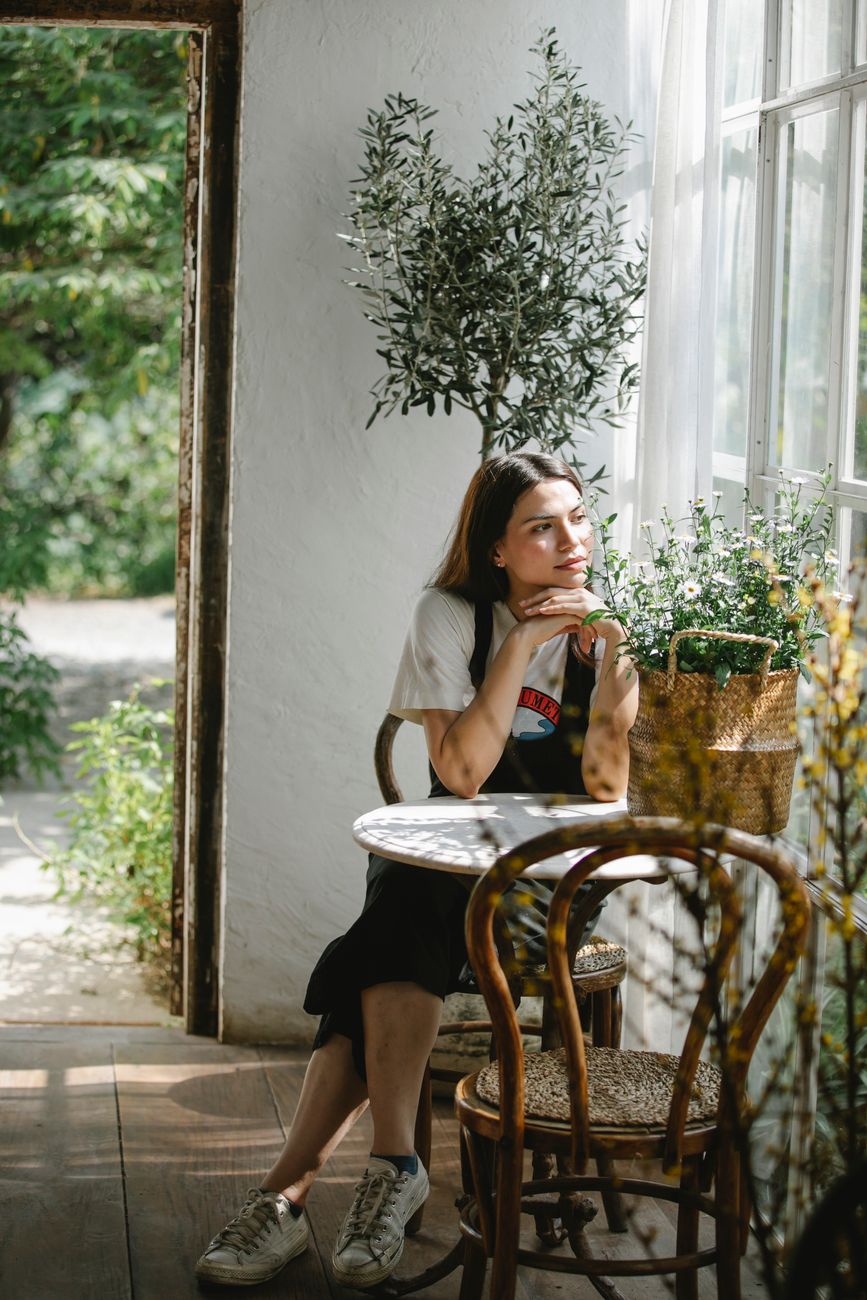
Photo by Ron Lach
The Real Luxury Is Control Over Your Time
This is where the cultural shift becomes particularly interesting. We once associated luxury with owning more. Now luxury increasingly looks like needing less and controlling more.
A quiet morning. A short commute. A free afternoon. Dinner at six instead of 9.30. Turning your phone off. Not having to explain why.
The ultimate status symbol may not be being booked and busy. It may be having somewhere better to be, even if that place is your own kitchen.
The people who seem most enviable now are not necessarily those squeezing the maximum amount from every hour. They are the people who appear to own their hours. That is a subtle but important distinction.
Maybe We Were Never Supposed to Optimise Everything
The cult of productivity sold us the idea that every part of life could be improved through enough discipline. But life refuses to behave like a spreadsheet.
Bodies get tired. Children interrupt. Ideas take longer than expected. Relationships demand time at inconvenient moments. Weather changes plans. Sometimes you have a brilliant day. Sometimes you stare at the same paragraph for two hours and then make toast.
The obsession with optimisation made normal human inconsistency feel like failure.
Perhaps the cooler response is accepting that not everything needs to be maximised. There are days for extraordinary output and days for doing the minimum. There are seasons of ambition and seasons of retreat. There are times to sprint and times when sprinting would simply be idiotic.
The goal was never supposed to be productivity for its own sake. The goal was supposed to be creating enough order that we could spend more of our time actually living.
Somewhere along the way, we forgot. Now we seem to be remembering. And perhaps the most subversive thing you can do in a culture obsessed with optimisation is finish what actually matters, close the laptop and refuse to feel guilty about the rest.


For a while there, being exhausted was practically a status symbol. We wore busyness like a badge of honour. Calendars became competitive. “I’m busy” replaced “I’m fine.” Entire personalities were constructed around waking before dawn, journalling before sunrise, drinking something green, answering emails before breakfast, squeezing in a workout, meditating for exactly 11 minutes and then announcing, with suspicious cheerfulness, that the day had barely begun.
Productivity stopped being a useful tool and became an aesthetic. There were colour-coded planners, 5am routines, habit trackers, standing desks, cold plunges, deep-work blocks, meal-prep grids and apps designed to stop you opening other apps. Even leisure became something to optimise. Reading had targets. Walking had step counts. Sleep had scores. Rest had metrics. Apparently even relaxing required admin.
At some point, the pursuit of productivity became less about getting useful things done and more about proving that every hour of your life had been properly monetised, measured or improved. And now, perhaps inevitably, it is starting to look a little embarrassing.
Not because ambition has disappeared. Not because people suddenly want to abandon careers, goals, businesses or personal growth. But because the culture around productivity has become so extreme, so performative and so strangely joyless that the pendulum is finally swinging the other way.
The new flex is not doing more. It is having enough control over your life that you do not have to.
How Productivity Became a Lifestyle
There is nothing inherently wrong with being productive. Most of us need structure. Deadlines are real. Work needs to get done. Children need to be collected. Bills need paying. Laundry remains stubbornly uninterested in your personal philosophy.
The problem began when productivity shifted from being a practical skill to a moral virtue. Being organised was no longer enough. You had to be maximising. A perfectly ordinary morning suddenly looked suspiciously lazy if it did not contain a wellness ritual, a workout, a podcast and at least one act of professional self-improvement before 8am.
The productivity industry flourished because it offered something incredibly appealing: the promise that the right system could rescue us from chaos. Buy this planner. Follow this routine. Wake at this time. Batch these tasks. Stack these habits. Eliminate these distractions. Become the sort of person whose fridge contains matching glass containers and whose inbox is inexplicably empty.
There was comfort in the idea that life could be controlled if only we were disciplined enough. It also made excellent content. A beautifully staged desk is more photogenic than someone staring blankly out the window for 20 minutes. A “morning routine” is much easier to package than a life with no discernible routine at all.
And because so much modern work is invisible, productivity gave us something visible to display. You may not be able to photograph a good decision, a difficult conversation or a day spent thinking, but you can absolutely photograph a notebook full of boxes you have ticked.
When Busyness Became a Status Symbol
For much of history, leisure was associated with wealth. The rich had time. They travelled slowly. They lingered over lunch. They took long summers. They had hobbies that were not secretly side hustles. They were unavailable.
Then something shifted. In the knowledge economy, busyness began to signify importance. If you were overwhelmed, people assumed you were in demand. If your calendar was impossible, your work must matter. If you answered emails at midnight, you were committed. If you had no time, perhaps your time was simply too valuable.
We created a bizarre inversion in which the highest-status person in the room was often the one with the least control over their own life. Imagine telling someone you own a beautiful house but are never there, have great friends but rarely see them, live near a beach but are too busy to go, and earn enough for excellent food but mostly eat standing over the kitchen bench because you have another call in six minutes.
For a surprisingly long time, that sounded like success. Now it just sounds a little like poor management.
The Rise of Performative Productivity
One reason productivity culture is losing its shine is that we have become much better at recognising when it is theatre.
There is an enormous difference between doing meaningful work and looking like someone who does meaningful work. The internet blurred that distinction beautifully. A person can now spend 45 minutes organising the tools they use to save time. We have productivity apps to manage productivity apps. We watch videos about how other people organise their lives instead of doing the thing we were meant to be doing.
We rearrange digital calendars with the intensity of air traffic controllers while quietly moving the same unfinished task to Thursday for the fifth consecutive week.
Productivity became content, and once something becomes content, aesthetics tend to take over. The perfectly labelled pantry. The pristine home office. The laptop beside a matcha. The notebook open to a page containing suspiciously beautiful handwriting.
Real productivity is often visually disappointing. It looks like saying no. It looks like cancelling something. It looks like working on one difficult thing for four hours and producing almost nothing visible. It looks like thinking. It sometimes looks like doing absolutely nothing because that is what allows the useful idea to arrive tomorrow.
None of this is particularly good for TikTok.
We Are Tired of Turning Ourselves Into Projects
The deeper backlash is not really against productivity. It is against the idea that we must constantly be improving ourselves.
Modern life has become full of subtle accusations. Your sleep could be better. Your gut could be healthier. Your morning could be more intentional. Your finances could be optimised. Your body could be stronger. Your wardrobe could be edited. Your career could be growing faster. Your relationships could be more conscious. Your home could be more organised.
Taken individually, none of these ideas is especially offensive. Taken together, they create the impression that a human being is an unfinished renovation project.
There is always another version of you waiting to be unlocked through discipline. No wonder people are tired.
At some point, self-improvement stops feeling empowering and starts feeling like surveillance. You begin watching yourself from the outside. Was that breakfast nutritious enough? Did that walk count if you forgot your watch? Did you waste Sunday? Did you make progress this quarter? Did you read enough books? Did you network? Did you maximise your potential?
Sometimes a Sunday can just be Sunday. This apparently radical concept is making a comeback.
The New Aspiration Is Spaciousness
Look closely at what is becoming aspirational now and you notice something interesting. It is less about intensity and more about space.
Long lunches. Cooking without rushing. Walking without listening to a podcast. Leaving work before dark. Gardening. Reading novels with no professional relevance. Spending a weekend somewhere with bad reception. Being unreachable.
Even the return of hobbies fits into this shift, although we have to resist immediately turning those into productivity systems too. Ceramics does not need to become an Etsy store. Running does not need to become a marathon. Reading does not need a yearly target. Photography does not need a monetisation strategy. Dinner with friends does not need to become networking.
This may be the quiet rebellion at the centre of the anti-productivity movement: the refusal to extract value from every experience.
It is surprisingly liberating to do something that achieves absolutely nothing.
Doing Less Has Become a Sign of Confidence
There is something deeply confident about not appearing busy.
It suggests you are not desperate to prove your usefulness. People with actual authority often understand this instinctively. They do not need to answer immediately. They do not attend every meeting. They do not explain why they are unavailable. They make fewer decisions, but better ones.
The person sprinting between 14 tasks can look industrious, but the person calmly choosing three can look powerful.
This is one reason the cult of productivity is becoming uncool. The optics have changed. Over-scheduling now risks looking chaotic rather than impressive. Constant emails suggest poor boundaries. Working every weekend suggests the system is broken. Having a dozen side projects can look less entrepreneurial than simply scattered.
And proudly announcing that you are “always on” now carries a faint whiff of 2017 LinkedIn.
The culturally desirable life is starting to look less like relentless acceleration and more like selective participation.
Wellness Somehow Became Another Job
There is a delicious irony in the fact that wellness became one of productivity culture’s biggest accomplices. Wellness was supposed to help us feel better. Instead, it frequently became another form of admin.
Morning sunlight. Protein targets. Meditation. Supplements. Breathwork. Hydration. Mobility. Cold exposure. Red light. Recovery scores. Sleep hygiene. Steps. Zone two cardio. Gratitude. Stretching.
By the time you finish maintaining yourself, it is almost bedtime.
Again, none of these practices is necessarily bad. Many are genuinely useful. The problem is what happens when wellbeing becomes an endless compliance regime.
Health starts to resemble homework.
And ironically, one of the most restorative things a person can do is stop thinking about themselves for five minutes. Not every cup of coffee needs to be evaluated for cortisol. Sometimes it is just coffee.
Why the Hustle Fantasy Has Lost Its Shine
The traditional bargain of overwork made more sense when it reliably produced security. Work hard, move up, buy a home, retire comfortably.
When housing becomes less attainable, jobs feel less permanent and technology keeps work permanently within reach, “give everything to your career” becomes a harder sales pitch.
Why sacrifice your entire twenties to a company that may restructure your role by email? Why pretend to love a 70-hour week when the reward may simply be more work?
This does not mean people have stopped being ambitious. It often means ambition is being defined differently. Autonomy can matter more than hierarchy. Flexibility can matter more than status. Time can matter more than titles. A life outside work can be more appealing than a career that consumes it.
What used to be dismissed as a lack of drive can also be read as a perfectly rational reassessment of what work is actually for.
Productivity Is Still Useful, It Just Should Not Be Your Religion
There is, of course, a danger that the backlash becomes equally silly. Doing less is not automatically profound. Procrastination is not resistance. Missing deadlines is not self-care. An empty calendar can mean freedom, but it can also mean you forgot the dentist.
The point is not that productivity is bad. The point is that productivity should serve your life, not become your life.
A good system should give you time back. If your elaborate organisational method requires constant maintenance, perhaps it is not making you more efficient. If your morning routine means waking at 4.45am to complete it, perhaps the routine is working for the routine rather than for you. If an app that tracks your habits makes you anxious when you miss one, deleting the app may be the healthier habit.
Useful productivity is almost invisible.
You know what matters. You do it. Then you stop.
The Return of the Unoptimised Life
There is something unexpectedly appealing now about people who are slightly inefficient.
They cook without timing themselves. They own books they have not finished. They have interests that make no money. Their weekends contain blank space. They take detours. They are occasionally bored. They are not building a personal brand around any of this.
Perhaps after years of turning ourselves into tiny corporations, the pendulum is moving back towards being human.
Humans are not efficient creatures. We fall in love with inconvenient people. We spend three hours cooking something we could order in 20 minutes. We reread novels. We travel across the world to stare at old buildings. We sit beside oceans. We spend an entire evening talking to someone when nothing measurable has been achieved.
From a productivity perspective, much of what makes life worthwhile is a terrible use of time.
That may be precisely the point.
The Real Luxury Is Control Over Your Time
This is where the cultural shift becomes particularly interesting. We once associated luxury with owning more. Now luxury increasingly looks like needing less and controlling more.
A quiet morning. A short commute. A free afternoon. Dinner at six instead of 9.30. Turning your phone off. Not having to explain why.
The ultimate status symbol may not be being booked and busy. It may be having somewhere better to be, even if that place is your own kitchen.
The people who seem most enviable now are not necessarily those squeezing the maximum amount from every hour. They are the people who appear to own their hours. That is a subtle but important distinction.
Maybe We Were Never Supposed to Optimise Everything
The cult of productivity sold us the idea that every part of life could be improved through enough discipline. But life refuses to behave like a spreadsheet.
Bodies get tired. Children interrupt. Ideas take longer than expected. Relationships demand time at inconvenient moments. Weather changes plans. Sometimes you have a brilliant day. Sometimes you stare at the same paragraph for two hours and then make toast.
The obsession with optimisation made normal human inconsistency feel like failure.
Perhaps the cooler response is accepting that not everything needs to be maximised. There are days for extraordinary output and days for doing the minimum. There are seasons of ambition and seasons of retreat. There are times to sprint and times when sprinting would simply be idiotic.
The goal was never supposed to be productivity for its own sake. The goal was supposed to be creating enough order that we could spend more of our time actually living.
Somewhere along the way, we forgot. Now we seem to be remembering. And perhaps the most subversive thing you can do in a culture obsessed with optimisation is finish what actually matters, close the laptop and refuse to feel guilty about the rest.
Share this:
Like this: