Summer is here. It’s that time of year when your little animal friend will need more water than other months of the year. Pets need at least 1 ounce of water per pound of their body weight. For example, if you own a dog, you need to give them at least 3 to 3.5 ounces of water for each 5 pounds they weigh.
Similar to humans, pets also need significant amount of water to stay hydrated during the summer. Well, it may seem easy, but we often tend to forget to give water to our furry friends with cute paws and the consequence can be quite frightening.
However, you can become vigilant and find different ways of keeping your dog hydrated. Read this article for helpful tips to keep your pet hydrated this summer.
Fresh Water Supply
The best way to keep your dog hydrated this summer is by making it self-serving. make clean, fresh water accessible to your pets by creating freshwater reserves in bowls or open tanks they can access – especially when it’s scorching hot outside.
You can also think of building a freshwater fountain for your pet. Some pets love to see running water and would feel more encouraged to drink from that source than from bowl. However, if you have a multi-pet house, ensure to clean the water source from time to time.
Bring Water along
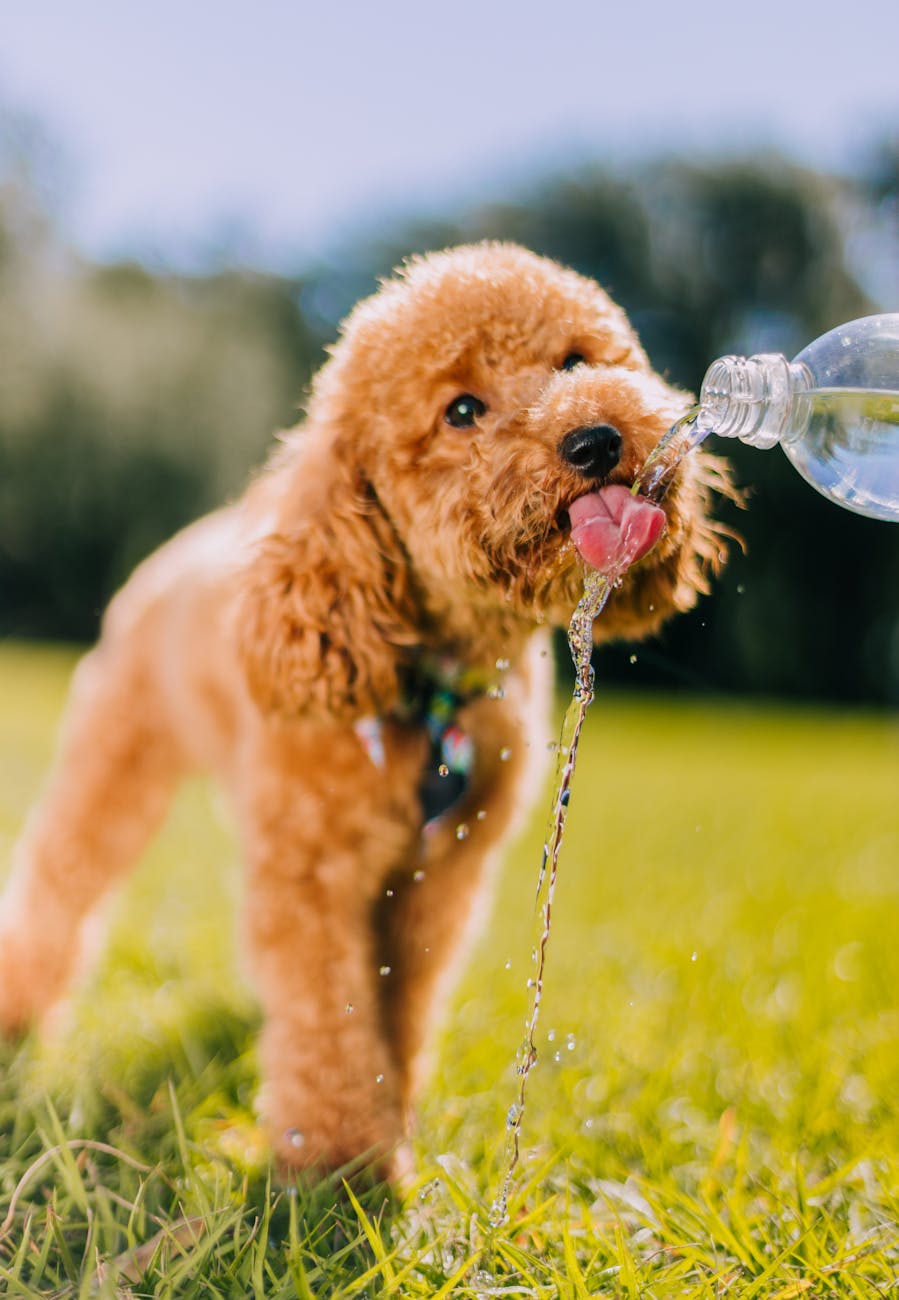
If you’re going on some outdoor activity and bringing your pet along with you, it’s best to also bring freshwater bottles or bowls. It’s best to take break in between your activities and give water to your pet. Give them the bowl or help them drink from the bottle.
It’s more important to bring water along for pet during summer if you’re going on an outdoor activity during summer. Physical exertion and heat can affect the pet and make them dehydrated quickly. That’s why it’s best to stay vigilant when your pet needs water.
Photo by Damian Barczak
Wet Treats and Food
It’s best to spend more on wet food for your pet during the summer. In this case, you must consult with your veterinarian first. Pet owners in Singapore can contact Mount Pleasant Clinic for Pets, to get more info on how to incorporate wet food to their pet’s diet.
If your veterinarian approves, you can go for frozen seedless melons or chicken broth ice cubes (ensure if it has low sodium content). These are tasty food and can help include more water content in your pet’s diet in the summer.
Check their Water Intake
Take some time to see how much water your pet is drinking everyday. If you see any significant change in their way of drinking water, you’ll be able to tell if there’s any underlying health condition.
If you see a sudden decrease in water consumption in your pet, you must visit a vet as soon as possible.
Knowing Hydration Signs
As a pet owner, you must build awareness around your pet’s behavior. This could include understanding when they are hungry or thirsty. Learn about your pet’s nature and their thirst cues. You can check if their gums are dry, or if you seem them lethargic, with sunken eyes and dry skin. Excessive panting, and a loss of appetite are also signs of dehydration.
If you’re seeing any of these signs and they are hard to recover from, take your pet to a nearby veterinarian.
Only Pet-Safe Summer Activities
Some pets, such as dogs, would love to go out. But, it’s best to stay mindful of the outdoor activities during the summer. It’s best to avoid excessive walking, running, or exercising them during the summer.
Also, if outdoor activities are a must, ensure to do them in moderation. Take breaks in between activities and give water to your pet frequently.
Photo by Elina Volkova
Regular Veterinary Check-Ups
Summer is the season when your pet requires the utmost care to keep their good health intact. Some pets are at increased level of risk to heat related sickness. Seasonal parasites are another issue making pets danger prone during summer. That’s why it’s important to schedule regular check-ups with the veterinarian.
Your vet can educate you on heatstroke prevention techniques and ways to keep your pet hydrated. Also, pets need protection from fleas, ticks, and other parasites during the summer. Vaccination and early disease detection are additional benefits of timely check-ups with your vet during summer.


Summer is here. It’s that time of year when your little animal friend will need more water than other months of the year. Pets need at least 1 ounce of water per pound of their body weight. For example, if you own a dog, you need to give them at least 3 to 3.5 ounces of water for each 5 pounds they weigh.
Similar to humans, pets also need significant amount of water to stay hydrated during the summer. Well, it may seem easy, but we often tend to forget to give water to our furry friends with cute paws and the consequence can be quite frightening.
However, you can become vigilant and find different ways of keeping your dog hydrated. Read this article for helpful tips to keep your pet hydrated this summer.
Fresh Water Supply
The best way to keep your dog hydrated this summer is by making it self-serving. make clean, fresh water accessible to your pets by creating freshwater reserves in bowls or open tanks they can access – especially when it’s scorching hot outside.
You can also think of building a freshwater fountain for your pet. Some pets love to see running water and would feel more encouraged to drink from that source than from bowl. However, if you have a multi-pet house, ensure to clean the water source from time to time.
Bring Water along
If you’re going on some outdoor activity and bringing your pet along with you, it’s best to also bring freshwater bottles or bowls. It’s best to take break in between your activities and give water to your pet. Give them the bowl or help them drink from the bottle.
It’s more important to bring water along for pet during summer if you’re going on an outdoor activity during summer. Physical exertion and heat can affect the pet and make them dehydrated quickly. That’s why it’s best to stay vigilant when your pet needs water.
Wet Treats and Food
It’s best to spend more on wet food for your pet during the summer. In this case, you must consult with your veterinarian first. Pet owners in Singapore can contact Mount Pleasant Clinic for Pets, to get more info on how to incorporate wet food to their pet’s diet.
If your veterinarian approves, you can go for frozen seedless melons or chicken broth ice cubes (ensure if it has low sodium content). These are tasty food and can help include more water content in your pet’s diet in the summer.
Check their Water Intake
Take some time to see how much water your pet is drinking everyday. If you see any significant change in their way of drinking water, you’ll be able to tell if there’s any underlying health condition.
If you see a sudden decrease in water consumption in your pet, you must visit a vet as soon as possible.
Knowing Hydration Signs
As a pet owner, you must build awareness around your pet’s behavior. This could include understanding when they are hungry or thirsty. Learn about your pet’s nature and their thirst cues. You can check if their gums are dry, or if you seem them lethargic, with sunken eyes and dry skin. Excessive panting, and a loss of appetite are also signs of dehydration.
If you’re seeing any of these signs and they are hard to recover from, take your pet to a nearby veterinarian.
Only Pet-Safe Summer Activities
Some pets, such as dogs, would love to go out. But, it’s best to stay mindful of the outdoor activities during the summer. It’s best to avoid excessive walking, running, or exercising them during the summer.
Also, if outdoor activities are a must, ensure to do them in moderation. Take breaks in between activities and give water to your pet frequently.
Regular Veterinary Check-Ups
Summer is the season when your pet requires the utmost care to keep their good health intact. Some pets are at increased level of risk to heat related sickness. Seasonal parasites are another issue making pets danger prone during summer. That’s why it’s important to schedule regular check-ups with the veterinarian.
Your vet can educate you on heatstroke prevention techniques and ways to keep your pet hydrated. Also, pets need protection from fleas, ticks, and other parasites during the summer. Vaccination and early disease detection are additional benefits of timely check-ups with your vet during summer.
Share this:
Like this: