Casteel Da’Neer is one of the most layered and emotionally complex characters in Jennifer L. Armentrout’s From Blood and Ash series. At first, he appears as Hawke Flynn, a charming guard with a mischievous smile and an easy confidence that disrupts the rigid world surrounding the Maiden. Over time, that surface identity peels away to reveal a prince shaped by war, duty, loss, and impossible choices. Where Poppy’s story is about awakening and self-discovery, Casteel’s journey is about responsibility, sacrifice, and love.
Casteel Da’Neer, Key Facts
Crown Prince of Atlantia and a central figure in the war against the Ascended
First introduced as Hawke Flynn, a guard with a hidden identity and political mission
Known for his charisma, strategic mind, and emotionally complex personality
Deeply loyal to his people, often prioritising their survival over personal happiness
Romantic partner of Poppy, with a relationship defined by love, betrayal, and equality
Shaped by war, loss, and the burden of leadership from a young age
The Man Behind the Mask
When readers first encounter Casteel, they do not meet him as a prince. They meet Hawke, a guard who treats Poppy like a person rather than a sacred symbol. His humour and warmth offer her a glimpse of freedom in a world that has denied her autonomy. Yet Hawke is a constructed persona, a role Casteel plays to achieve a political objective.
This dual identity is not simply a narrative twist. It reflects the deeper conflict within him. Hawke represents the man he might have been in a peaceful world. Casteel represents the man he has been forced to become. Throughout the series, he oscillates between these two selves, never fully belonging to either.
A Prince Forged by War
Casteel is the Crown Prince of Atlantia, a kingdom locked in a long and brutal conflict with the Ascended. His life has been shaped by violence and survival, not privilege. While he carries the title of prince, he has rarely experienced the safety or simplicity associated with royalty.
His mission to infiltrate Poppy’s kingdom is not driven by cruelty, but by desperation. Every decision he makes is weighed against the survival of his people. This is what makes his character morally complex. He lies, manipulates, and strategises, not because he lacks empathy, but because he believes the stakes are too high for honesty.
Power, Skill, and the Weight of Immortality
As an Atlantian, Casteel possesses abilities far beyond those of ordinary humans. His strength, speed, and resilience mark him as a formidable warrior, trained from a young age to fight in a world where power determines survival. Yet his abilities are not portrayed as effortless gifts. They are burdens that tie him to endless conflict and expectation.
Casteel’s true strength lies not only in physical power, but in strategy and emotional perception. He understands politics, people, and the fragile balance between authority and compassion. Unlike many fantasy heroes, he does not seek domination. He seeks stability, even when stability requires morally difficult choices.
Love and Betrayal, Poppy and Casteel
Casteel’s relationship with Poppy is the emotional core of his story. Their bond begins in curiosity and attraction, but it is built on deception. When Poppy discovers his true identity, the betrayal cuts deeply, forcing Casteel to confront the consequences of his actions.
What makes their relationship compelling is that it never becomes simplistic. Poppy does not immediately forgive him, and Casteel does not excuse himself. Their love evolves through conflict, honesty, and mutual transformation. Over time, they become partners rather than opposites, each challenging the other’s assumptions about power, loyalty, and identity.
For Casteel, loving Poppy means relinquishing control. It means accepting that leadership cannot be built on manipulation alone. This shift marks one of the most significant turning points in his character arc.
The Evolution of a Leader
At the beginning of the series, Casteel is defined by pragmatism. He believes that personal feelings must always come second to the survival of his people. As the story unfolds, this belief begins to fracture.
Through his relationship with Poppy and his experiences beyond Atlantia, Casteel learns that leadership without empathy becomes tyranny. He begins to question the systems he once defended and the methods he once justified. His evolution is subtle but profound. By the later books, he is no longer just a warrior prince and king, but a leader willing to reimagine what power should look like.
Casteel in the Wider Blood and Ash World
Within the broader universe of From Blood and Ash, Casteel represents the tension between tradition and transformation. While Poppy disrupts divine and political hierarchies, Casteel works within them, reshaping them from the inside. Together, they embody two forms of change: revolution and reform.
Casteel’s role extends beyond romance. He becomes a bridge between worlds, between mortals and immortals, between past structures and future possibilities. His journey mirrors the political and emotional evolution of Atlantia itself.
Why Casteel Resonates with Readers
Casteel stands out in the romantasy genre because he refuses to fit neatly into familiar archetypes. He is neither purely heroic nor purely ruthless. He is a man constantly negotiating between duty and desire, power and vulnerability.
Readers are drawn to him because he feels real. He carries guilt, doubt, and responsibility with quiet intensity. Unlike many fantasy male leads, he does not present strength as certainty. Instead, his strength emerges from his willingness to change. And of course he worships Poppy, which for many readers reflects the kind of love they expect in a romantasy series.
Casteel as a Modern Fantasy Hero
In modern fantasy romance, Casteel represents a shift away from flawless heroes toward emotionally complex protagonists. He is powerful, but introspective. Strategic, but compassionate. Dominant in battle, but humble in love.
His story is not about conquest. It is about accountability. And in a genre filled with mythical kings and immortal warriors, it is this humanity that makes Casteel unforgettable.
Final Reflection on Casteel
Casteel Da’Neer is not defined by his title, his power, or his relationship with Poppy. He is defined by the choices he makes when no option feels right. His journey explores the cost of leadership, the fragility of trust, and the possibility of transformation even in a world shaped by war.
If Poppy represents the fire that reshapes destiny, Casteel represents the force that learns to wield power with conscience. Together, they form the emotional and philosophical heart of From Blood and Ash, proving that true strength in fantasy is not just about magic or crowns, but about the courage to evolve.
Casteel Da’Neer (Hawke Flynn) From Blood and Ash
Frequently Asked Questions About Casteel
Take a deep dive into some of the most asked questions about Casteel.
Who are Casteel’s parents?
Casteel Da’Neer is the son of Atlantian royalty. His parents Valyn and Eloana, are the former rulers of Atlantia, whose legacy shapes both his identity and his responsibilities as Crown Prince. Although they are not always central figures in the narrative, their influence is deeply felt in Casteel’s sense of duty and leadership. Growing up within a royal lineage defined by conflict and survival, Casteel inherits not only a throne, but the emotional and political weight of a kingdom at war.
Where is Casteel from?
Casteel is from Atlantia, a powerful and ancient kingdom that exists in opposition to the Ascended. Atlantia is not simply a geographical place, but a cultural and political identity rooted in resistance, resilience, and long-standing conflict. Unlike the kingdom where Poppy was raised, Atlantia is built on truths hidden from the mortal world, and Casteel’s origins place him at the centre of a struggle that spans mortals, immortals, and gods.
What powers does Casteel have?
As an Atlantian, Casteel possesses enhanced physical and supernatural abilities that far exceed those of humans. He has extraordinary strength, speed, endurance, and heightened senses, making him a formidable warrior in both mortal and immortal conflicts. His regenerative abilities allow him to recover from injuries more rapidly than humans, and his combat skills reflect years of training shaped by war.
Beyond physical power, Casteel’s true strength lies in strategy, leadership, and emotional intelligence. He understands politics, people, and the cost of power, which makes him as dangerous in negotiation as he is in battle.
How old is Casteel?
Casteel is significantly older than he appears. As an Atlantian, his lifespan extends far beyond that of humans, placing him in a space between mortal and immortal existence. While the series does not always provide exact numbers in a conventional way, he is typically understood to be over 200 years old, despite appearing physically in his twenties. This contrast between age and appearance reflects the broader theme of immortality and hidden truths within the Blood and Ash universe.
Is Casteel immortal?
Casteel is not immortal in the same way as gods, but he is far longer lived than humans. His Atlantian nature grants him longevity and resilience, allowing him to exist across generations. However, he is not invincible, and his mortality, though extended, remains an important part of his character. This balance between power and vulnerability is what makes him both formidable and human. In the later books Casteel’s lifespan becomes more complex as he ties himself to Poppy.
Is Casteel stronger than Poppy?
Casteel begins the series as one of the most powerful characters, but as Poppy’s abilities awaken, the balance between them shifts. By later books, Poppy’s power surpasses his in many ways, though their strengths are different in nature. Casteel’s power lies in combat, strategy, and leadership, while Poppy’s power evolves into something more divine and transformative. Rather than existing in competition, their abilities complement each other, reinforcing their partnership.
Does Casteel become king?
As the Crown Prince of Atlantia, Casteel’s role naturally moves toward leadership. However, his journey is not defined solely by titles. He does however become King, following his parents, even though he is not the eldest brother. His significance lies not just in becoming a ruler, but in redefining what leadership means within Atlantia. Throughout the series, Casteel’s evolution reflects a shift from traditional monarchy toward a more emotionally conscious and morally complex form of power.
Is Casteel a hero or anti-hero?
Casteel exists in the space between hero and anti-hero. He is capable of compassion and love, but also willing to manipulate and sacrifice for the sake of his people. His decisions are rarely simple, and his morality is shaped by the realities of war rather than idealism. This complexity is what makes him one of the most compelling male leads in modern fantasy romance. Ultimately though he is more hero than not.
Why is Casteel so popular in romantasy?
Casteel resonates with readers because he combines power with vulnerability. He is not a flawless prince or a purely dark anti-hero, but a character defined by emotional depth, guilt, loyalty, and growth. His relationship with Poppy, his internal conflict between duty and desire, and his gradual transformation from strategist to partner make him feel real in a genre often dominated by archetypes.
Want more? Read our Poppy character deep dive here.


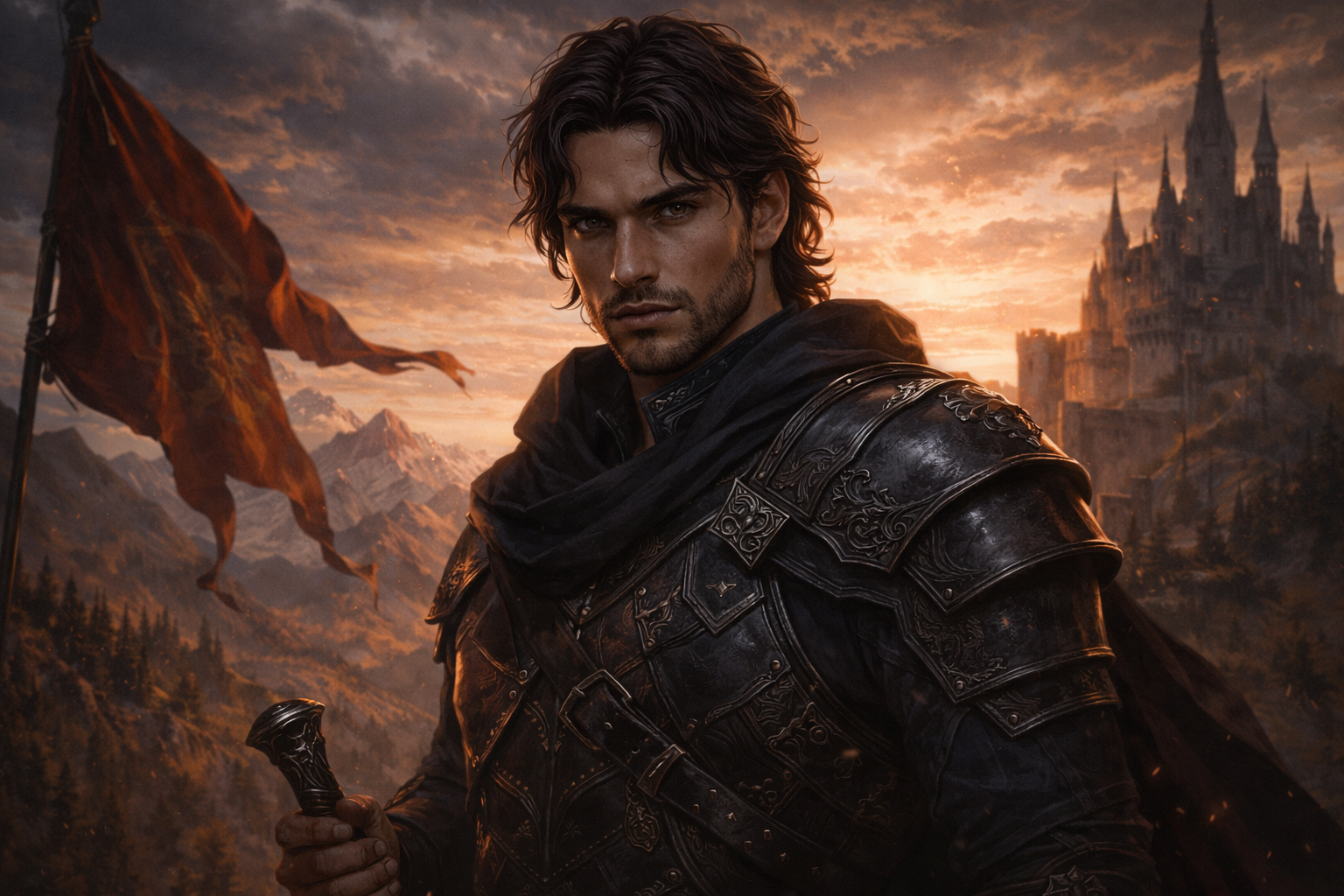
Casteel Da’Neer is one of the most layered and emotionally complex characters in Jennifer L. Armentrout’s From Blood and Ash series. At first, he appears as Hawke Flynn, a charming guard with a mischievous smile and an easy confidence that disrupts the rigid world surrounding the Maiden. Over time, that surface identity peels away to reveal a prince shaped by war, duty, loss, and impossible choices. Where Poppy’s story is about awakening and self-discovery, Casteel’s journey is about responsibility, sacrifice, and love.
Casteel Da’Neer, Key Facts
The Man Behind the Mask
When readers first encounter Casteel, they do not meet him as a prince. They meet Hawke, a guard who treats Poppy like a person rather than a sacred symbol. His humour and warmth offer her a glimpse of freedom in a world that has denied her autonomy. Yet Hawke is a constructed persona, a role Casteel plays to achieve a political objective.
This dual identity is not simply a narrative twist. It reflects the deeper conflict within him. Hawke represents the man he might have been in a peaceful world. Casteel represents the man he has been forced to become. Throughout the series, he oscillates between these two selves, never fully belonging to either.
A Prince Forged by War
Casteel is the Crown Prince of Atlantia, a kingdom locked in a long and brutal conflict with the Ascended. His life has been shaped by violence and survival, not privilege. While he carries the title of prince, he has rarely experienced the safety or simplicity associated with royalty.
His mission to infiltrate Poppy’s kingdom is not driven by cruelty, but by desperation. Every decision he makes is weighed against the survival of his people. This is what makes his character morally complex. He lies, manipulates, and strategises, not because he lacks empathy, but because he believes the stakes are too high for honesty.
Power, Skill, and the Weight of Immortality
As an Atlantian, Casteel possesses abilities far beyond those of ordinary humans. His strength, speed, and resilience mark him as a formidable warrior, trained from a young age to fight in a world where power determines survival. Yet his abilities are not portrayed as effortless gifts. They are burdens that tie him to endless conflict and expectation.
Casteel’s true strength lies not only in physical power, but in strategy and emotional perception. He understands politics, people, and the fragile balance between authority and compassion. Unlike many fantasy heroes, he does not seek domination. He seeks stability, even when stability requires morally difficult choices.
Love and Betrayal, Poppy and Casteel
Casteel’s relationship with Poppy is the emotional core of his story. Their bond begins in curiosity and attraction, but it is built on deception. When Poppy discovers his true identity, the betrayal cuts deeply, forcing Casteel to confront the consequences of his actions.
What makes their relationship compelling is that it never becomes simplistic. Poppy does not immediately forgive him, and Casteel does not excuse himself. Their love evolves through conflict, honesty, and mutual transformation. Over time, they become partners rather than opposites, each challenging the other’s assumptions about power, loyalty, and identity.
For Casteel, loving Poppy means relinquishing control. It means accepting that leadership cannot be built on manipulation alone. This shift marks one of the most significant turning points in his character arc.
The Evolution of a Leader
At the beginning of the series, Casteel is defined by pragmatism. He believes that personal feelings must always come second to the survival of his people. As the story unfolds, this belief begins to fracture.
Through his relationship with Poppy and his experiences beyond Atlantia, Casteel learns that leadership without empathy becomes tyranny. He begins to question the systems he once defended and the methods he once justified. His evolution is subtle but profound. By the later books, he is no longer just a warrior prince and king, but a leader willing to reimagine what power should look like.
Casteel in the Wider Blood and Ash World
Within the broader universe of From Blood and Ash, Casteel represents the tension between tradition and transformation. While Poppy disrupts divine and political hierarchies, Casteel works within them, reshaping them from the inside. Together, they embody two forms of change: revolution and reform.
Casteel’s role extends beyond romance. He becomes a bridge between worlds, between mortals and immortals, between past structures and future possibilities. His journey mirrors the political and emotional evolution of Atlantia itself.
Why Casteel Resonates with Readers
Casteel stands out in the romantasy genre because he refuses to fit neatly into familiar archetypes. He is neither purely heroic nor purely ruthless. He is a man constantly negotiating between duty and desire, power and vulnerability.
Readers are drawn to him because he feels real. He carries guilt, doubt, and responsibility with quiet intensity. Unlike many fantasy male leads, he does not present strength as certainty. Instead, his strength emerges from his willingness to change. And of course he worships Poppy, which for many readers reflects the kind of love they expect in a romantasy series.
Casteel as a Modern Fantasy Hero
In modern fantasy romance, Casteel represents a shift away from flawless heroes toward emotionally complex protagonists. He is powerful, but introspective. Strategic, but compassionate. Dominant in battle, but humble in love.
His story is not about conquest. It is about accountability. And in a genre filled with mythical kings and immortal warriors, it is this humanity that makes Casteel unforgettable.
Final Reflection on Casteel
Casteel Da’Neer is not defined by his title, his power, or his relationship with Poppy. He is defined by the choices he makes when no option feels right. His journey explores the cost of leadership, the fragility of trust, and the possibility of transformation even in a world shaped by war.
If Poppy represents the fire that reshapes destiny, Casteel represents the force that learns to wield power with conscience. Together, they form the emotional and philosophical heart of From Blood and Ash, proving that true strength in fantasy is not just about magic or crowns, but about the courage to evolve.
Frequently Asked Questions About Casteel
Take a deep dive into some of the most asked questions about Casteel.
Who are Casteel’s parents?
Casteel Da’Neer is the son of Atlantian royalty. His parents Valyn and Eloana, are the former rulers of Atlantia, whose legacy shapes both his identity and his responsibilities as Crown Prince. Although they are not always central figures in the narrative, their influence is deeply felt in Casteel’s sense of duty and leadership. Growing up within a royal lineage defined by conflict and survival, Casteel inherits not only a throne, but the emotional and political weight of a kingdom at war.
Where is Casteel from?
Casteel is from Atlantia, a powerful and ancient kingdom that exists in opposition to the Ascended. Atlantia is not simply a geographical place, but a cultural and political identity rooted in resistance, resilience, and long-standing conflict. Unlike the kingdom where Poppy was raised, Atlantia is built on truths hidden from the mortal world, and Casteel’s origins place him at the centre of a struggle that spans mortals, immortals, and gods.
What powers does Casteel have?
As an Atlantian, Casteel possesses enhanced physical and supernatural abilities that far exceed those of humans. He has extraordinary strength, speed, endurance, and heightened senses, making him a formidable warrior in both mortal and immortal conflicts. His regenerative abilities allow him to recover from injuries more rapidly than humans, and his combat skills reflect years of training shaped by war.
Beyond physical power, Casteel’s true strength lies in strategy, leadership, and emotional intelligence. He understands politics, people, and the cost of power, which makes him as dangerous in negotiation as he is in battle.
How old is Casteel?
Casteel is significantly older than he appears. As an Atlantian, his lifespan extends far beyond that of humans, placing him in a space between mortal and immortal existence. While the series does not always provide exact numbers in a conventional way, he is typically understood to be over 200 years old, despite appearing physically in his twenties. This contrast between age and appearance reflects the broader theme of immortality and hidden truths within the Blood and Ash universe.
Is Casteel immortal?
Casteel is not immortal in the same way as gods, but he is far longer lived than humans. His Atlantian nature grants him longevity and resilience, allowing him to exist across generations. However, he is not invincible, and his mortality, though extended, remains an important part of his character. This balance between power and vulnerability is what makes him both formidable and human. In the later books Casteel’s lifespan becomes more complex as he ties himself to Poppy.
Is Casteel stronger than Poppy?
Casteel begins the series as one of the most powerful characters, but as Poppy’s abilities awaken, the balance between them shifts. By later books, Poppy’s power surpasses his in many ways, though their strengths are different in nature. Casteel’s power lies in combat, strategy, and leadership, while Poppy’s power evolves into something more divine and transformative. Rather than existing in competition, their abilities complement each other, reinforcing their partnership.
Does Casteel become king?
As the Crown Prince of Atlantia, Casteel’s role naturally moves toward leadership. However, his journey is not defined solely by titles. He does however become King, following his parents, even though he is not the eldest brother. His significance lies not just in becoming a ruler, but in redefining what leadership means within Atlantia. Throughout the series, Casteel’s evolution reflects a shift from traditional monarchy toward a more emotionally conscious and morally complex form of power.
Is Casteel a hero or anti-hero?
Casteel exists in the space between hero and anti-hero. He is capable of compassion and love, but also willing to manipulate and sacrifice for the sake of his people. His decisions are rarely simple, and his morality is shaped by the realities of war rather than idealism. This complexity is what makes him one of the most compelling male leads in modern fantasy romance. Ultimately though he is more hero than not.
Why is Casteel so popular in romantasy?
Casteel resonates with readers because he combines power with vulnerability. He is not a flawless prince or a purely dark anti-hero, but a character defined by emotional depth, guilt, loyalty, and growth. His relationship with Poppy, his internal conflict between duty and desire, and his gradual transformation from strategist to partner make him feel real in a genre often dominated by archetypes.
Want more? Read our Poppy character deep dive here.
Share this:
Like this: