Everywhere we turn, the luxury and spaciousness of homes, estates, and possessions is glorified. Why shouldn’t this luxury be measured by the freedom of life and enjoyment and not by property?!
You’ve probably already heard about “downsizing” which refers to living spaces, but it’s also related to lifestyle and not just “small living”. This way of life reduces the consumption of resources, but also your footprint in the environment. We explored how downsizing affects your life and how to have a sustainable living space.
Photo by Melike Benli
Environmental Benefits of Downsizing
Energy Conservation
One of the biggest advantages of park model homes is energy saving. Smaller houses = less energy consumption for heating, cooling, or lighting because it is easier to maintain a pleasant atmosphere and control temperatures in smaller spaces. And by reducing utilities, we also reduce environmental pollution.
U.S. Energy Information Administration did a study that showed that households in smaller homes usesignificantly less energy than larger homes with a reduction in total consumption of up to 30%.
Reduced Carbon Footprint
A smaller home also means less consumption of raw materials and construction materials, which automatically means that you have done less damage to nature. There are ready-made models of park model homes through the construction process of which the efficiency of resources was thought of.
Photo by Roberto Nickson
Minimized Waste and Reduced Consumption
Smaller space unconsciously encourages less consumption. And when you have a smaller space, you also need less, but quality and sustainable, furniture and other stuff which decreases the amount of waste. This simplified lifestyle is guided by the motto: own only what you really need.
5 Essential Sustainable Living Practices in Downsized Home
Choose Eco-Friendly Materials
When buying any piece of furniture or when decorating a home, look for sustainable options of eco-materials (reclaimed wood, recycled materials, bamboo). In the long run, they are more profitable and protect the environment. This concept is under the slogan – buy once, buy well.
Optimize Energy Efficiency
Energy efficiency is key in downsized and sustainable homes. Open floor plans are in your favor because they let in more natural light, and if you really need additional lighting, use LED bulbs (lower energy consumption and longer service life). When buying appliances, opt for those with energy and water-saving options.
Water Conservation Methods
Reduce the water pressure on taps and toilets to reduce unnecessary losses. You can use rainwater or greywater to water the garden because it is all clean water that is not for your consumption, but it will not harm the plants.
Incorporate Green Spaces and Indoor Plants
Let’s arrange the space a little. “Arm” yourself with indoor plants because they purify the air, release oxygen, but also create a more pleasant atmosphere in the home. You can even create small vertical herb gardens that save space while providing you with fresh ingredients.
Adopt Sustainable Habits
In order for all of what we listed to work, you need to adopt some habits like composting food scraps, reducing single-use plastic, and recycling as many materials as possible. With every new habit you use to protect the environment, you are getting closer to a sustainable lifestyle.
The Personal Rewards of Sustainable Downsizing
And where is your satisfaction in all that?! In order for this lifestyle to be sustainable in the long term, apart from benefits for the environment, downsizing needs to appeal to you first.
The first benefit you’ll likely notice is the financial one. As we emphasized earlier, smaller spaces also mean lower costs, be it through utilities, loan payments or the cost of the housing itself. So you will be able to install eco-systems that can help you save more or dedicate yourself to yourself, travel, and try intangible experiences that are in line with a sustainable lifestyle.
With limited space you should be a little more organized. Clear the space of clutter and unnecessary things because a clutter-free environment promotes mental clarity and reduces stress. So you can focus on what is important to you and not be a slave to the house. Small spaces basically give you more time to devote to your hobbies, yourself and loved ones.
Photo by Melike Benli
Don’t let the name “downsizing” fool you into thinking that it’s just about too much stuff or too much space. It’s a way of life. The way of life of a minimalist approach, energy efficiency, sustainable habits, but also solving habits that prevent you from enjoying the things that are important to you. Every small step and shift has a positive impact on the environment and its preservation, but also on you.
Simplify your living space, your life and your thoughts. Aligning your lifestyle with your values can be quite satisfying.


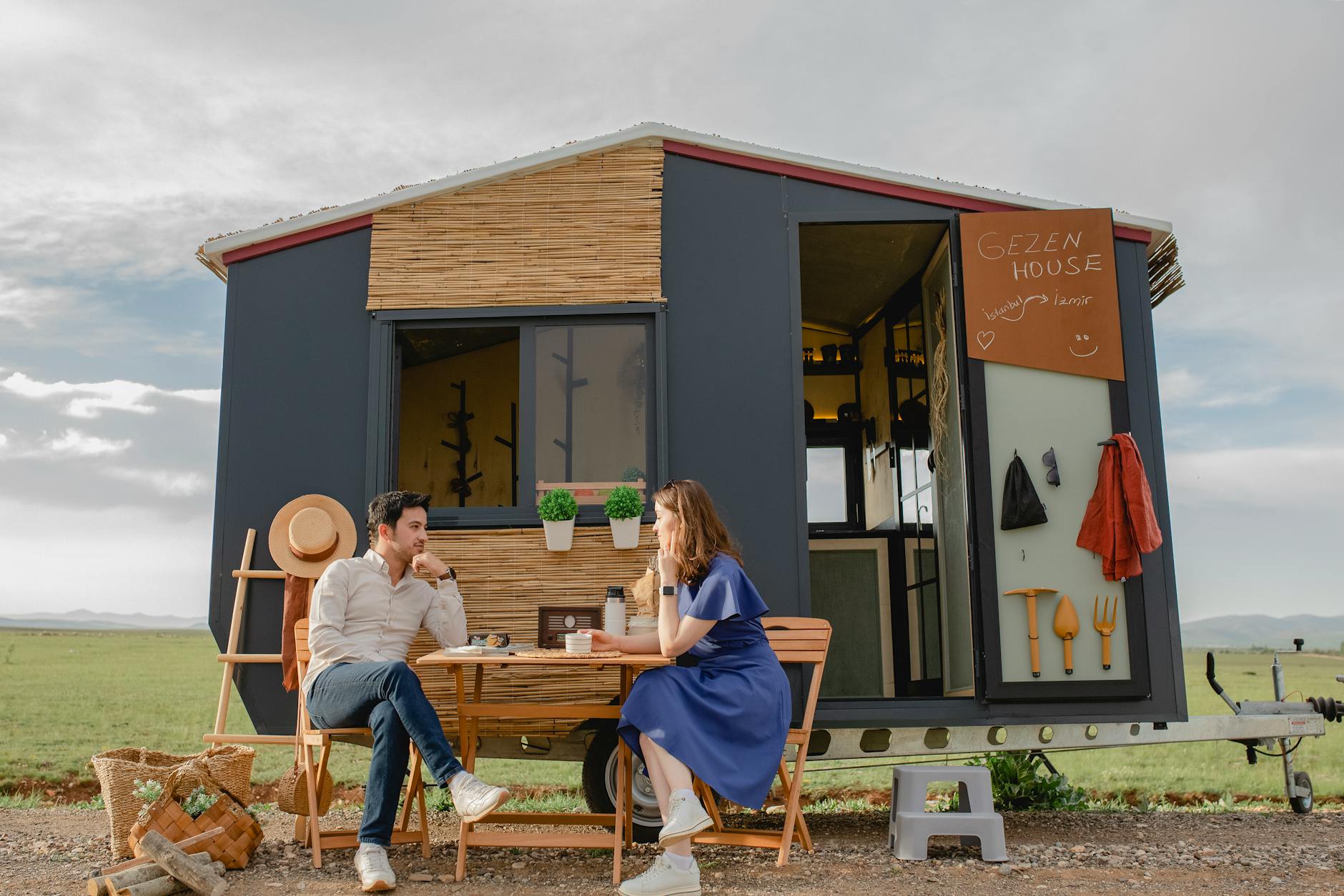
Everywhere we turn, the luxury and spaciousness of homes, estates, and possessions is glorified. Why shouldn’t this luxury be measured by the freedom of life and enjoyment and not by property?!
You’ve probably already heard about “downsizing” which refers to living spaces, but it’s also related to lifestyle and not just “small living”. This way of life reduces the consumption of resources, but also your footprint in the environment. We explored how downsizing affects your life and how to have a sustainable living space.
Environmental Benefits of Downsizing
Energy Conservation
One of the biggest advantages of park model homes is energy saving. Smaller houses = less energy consumption for heating, cooling, or lighting because it is easier to maintain a pleasant atmosphere and control temperatures in smaller spaces. And by reducing utilities, we also reduce environmental pollution.
U.S. Energy Information Administration did a study that showed that households in smaller homes use significantly less energy than larger homes with a reduction in total consumption of up to 30%.
Reduced Carbon Footprint
A smaller home also means less consumption of raw materials and construction materials, which automatically means that you have done less damage to nature. There are ready-made models of park model homes through the construction process of which the efficiency of resources was thought of.
Minimized Waste and Reduced Consumption
Smaller space unconsciously encourages less consumption. And when you have a smaller space, you also need less, but quality and sustainable, furniture and other stuff which decreases the amount of waste. This simplified lifestyle is guided by the motto: own only what you really need.
5 Essential Sustainable Living Practices in Downsized Home
When buying any piece of furniture or when decorating a home, look for sustainable options of eco-materials (reclaimed wood, recycled materials, bamboo). In the long run, they are more profitable and protect the environment. This concept is under the slogan – buy once, buy well.
Energy efficiency is key in downsized and sustainable homes. Open floor plans are in your favor because they let in more natural light, and if you really need additional lighting, use LED bulbs (lower energy consumption and longer service life). When buying appliances, opt for those with energy and water-saving options.
Reduce the water pressure on taps and toilets to reduce unnecessary losses. You can use rainwater or greywater to water the garden because it is all clean water that is not for your consumption, but it will not harm the plants.
Let’s arrange the space a little. “Arm” yourself with indoor plants because they purify the air, release oxygen, but also create a more pleasant atmosphere in the home. You can even create small vertical herb gardens that save space while providing you with fresh ingredients.
In order for all of what we listed to work, you need to adopt some habits like composting food scraps, reducing single-use plastic, and recycling as many materials as possible. With every new habit you use to protect the environment, you are getting closer to a sustainable lifestyle.
The Personal Rewards of Sustainable Downsizing
And where is your satisfaction in all that?! In order for this lifestyle to be sustainable in the long term, apart from benefits for the environment, downsizing needs to appeal to you first.
The first benefit you’ll likely notice is the financial one. As we emphasized earlier, smaller spaces also mean lower costs, be it through utilities, loan payments or the cost of the housing itself. So you will be able to install eco-systems that can help you save more or dedicate yourself to yourself, travel, and try intangible experiences that are in line with a sustainable lifestyle.
With limited space you should be a little more organized. Clear the space of clutter and unnecessary things because a clutter-free environment promotes mental clarity and reduces stress. So you can focus on what is important to you and not be a slave to the house. Small spaces basically give you more time to devote to your hobbies, yourself and loved ones.
Don’t let the name “downsizing” fool you into thinking that it’s just about too much stuff or too much space. It’s a way of life. The way of life of a minimalist approach, energy efficiency, sustainable habits, but also solving habits that prevent you from enjoying the things that are important to you. Every small step and shift has a positive impact on the environment and its preservation, but also on you.
Simplify your living space, your life and your thoughts. Aligning your lifestyle with your values can be quite satisfying.
Share this:
Like this: