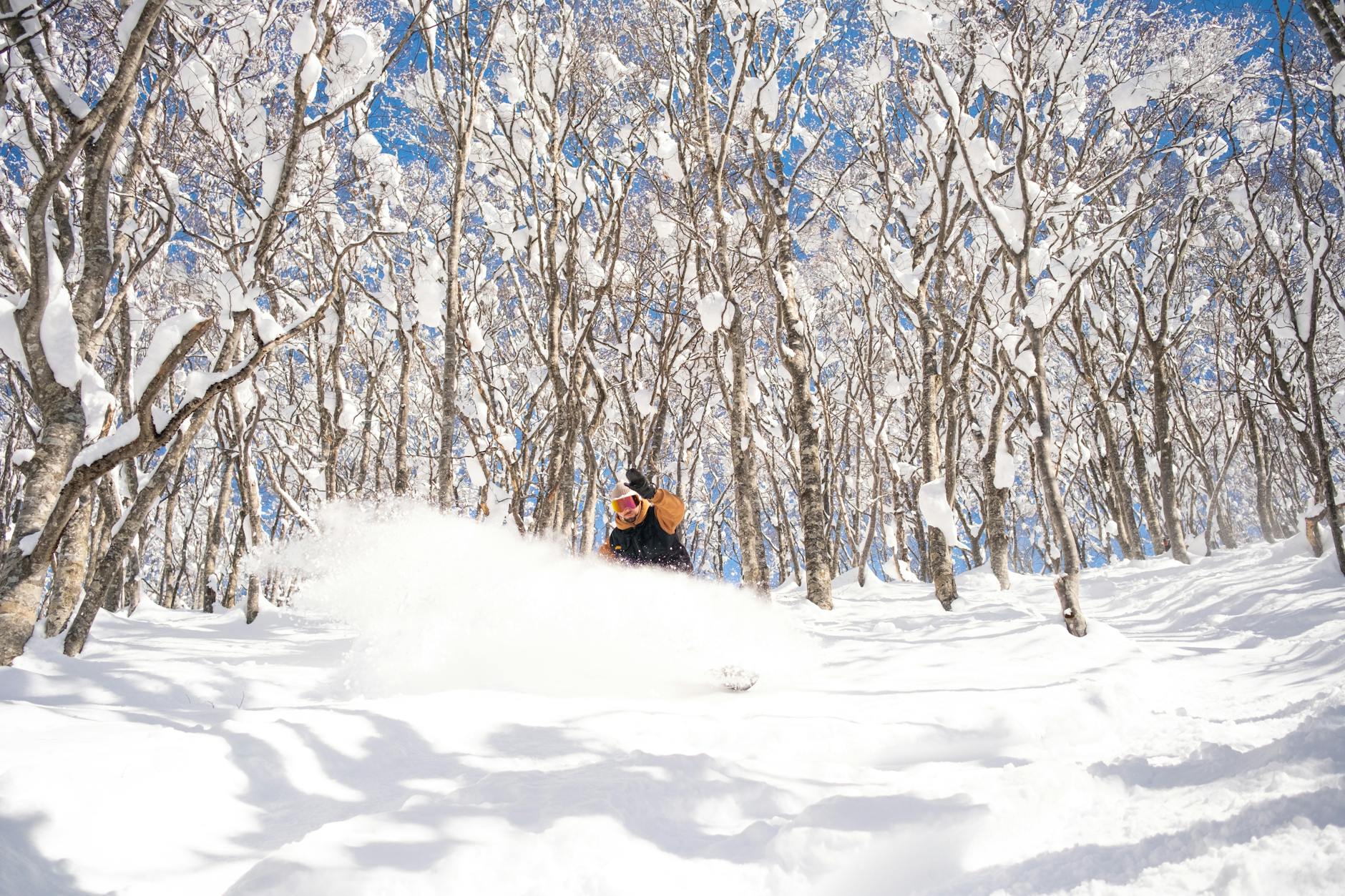
Myoko is one of those rare destinations that deserves two trips, one wrapped in snow, the other in green forests and autumn colour. Tucked into Niigata Prefecture beneath the brooding cone of Mount Myoko, this small mountain region has long been loved by skiers for its deep powder, but it is still quietly underrated the rest of the year.
While Hakuba and Niseko pull the headlines, Myoko keeps things refreshingly chilled. Winter brings the famous Japow, but spring, summer and autumn reveal lakes, waterfalls, walking trails and onsen villages that feel miles from the chaos of Tokyo.
Image: MJ Cowling
Why go to Myoko
Myoko is not one single resort, it is a cluster of ski areas, which means variety without relocation. Powder days are common, lift lines are shorter than Japan’s biggest hubs, and the atmosphere is calm rather than party driven.
We arrived a few days after the first snowfall of the season and watched steam lift off the onsen roofs as shop owners brushed snow from doorways. It felt like the town was waking up slowly with us, not racing to keep up with crowds.
An off season secret
From late spring through to autumn, the ski lifts go quiet and the mountains take centre stage. Forests, clear ponds, mossy walking tracks and waterfalls like Naena Falls make this a dream base for slow travel, photography and easy hiking.
When to visit
December to March Peak snow season, best for skiing and full resort operations.
Late March to May Shoulder season with lingering snow up high, fewer visitors and beautiful crisp days.
June to October Hiking, lakes, waterfalls and mountain air.
Late September to early November is koyo season when the hills turn gold and red.
How to get there
From Tokyo
Take the Hokuriku Shinkansen from Tokyo to Nagano
Transfer to the Shinano Railway line to Myoko Kogen Station
The total trip is just over two hours and is simple once you know the Nagano transfer is the key step.
Getting around
In winter, resort shuttles and local buses connect the ski areas. In the warmer months, hiring a car opens up the ponds, trailheads and scenic back roads.
Best ski resorts and where to stay
Choosing where to stay in Myoko shapes your entire experience. Some travellers want heritage charm and onsen culture, others prefer modern comforts with everything on site. The good news is Myoko does both beautifully, from historic alpine hotels to full service mountain resorts that make switching off effortless. These are the three bases that consistently deliver the best mix of snow access, atmosphere and comfort.
Akakura Kanko Resort
Akakura Kanko Resort is where Myoko’s ski heritage really comes to life. Opened in 1937, it is one of Japan’s oldest purpose-built ski resorts, and you feel that legacy in everything from the elegant hotel architecture to the relaxed rhythm of the mountain. The terrain here is ideal if you want long, flowing runs rather than short bursts, and on clear days the views stretch deep into Niigata’s rolling snow country. What makes Akakura Kanko special is how seamlessly it blends resort comfort with old-world charm, you ski all morning, duck inside for a warm lunch with mountain views, then soak in the onsen before dinner. It is not flashy, it is refined, and it suits travellers who appreciate atmosphere as much as snow quality.
Akakura Onsen Ski Area
Akakura Onsen Ski Area is the social heart of Myoko. This is the area most people picture when they imagine the town, lantern-lit streets, steam drifting from bathhouses, small restaurants tucked between ryokans, and the gentle hum of a ski village that never quite feels rushed. The mountain itself is beginner friendly with wide open slopes that are forgiving on tired legs, making it an excellent base if you are travelling with mixed ability groups. The real magic happens after the lifts close, when skiers wander straight from the slopes into town in snow boots, choosing between ramen counters, izakayas, bakeries, and traditional inns. If you want your ski trip to feel like you are living inside a Japanese snow globe, this is the place to base yourself.
Lotte Arai Resort
Lotte Arai Resort feels like Myoko’s modern counterpoint to its historic villages. Set slightly away from the main town cluster, it is a self-contained mountain retreat with broad slopes, fast lifts, and the kind of facilities that let you spend entire days without leaving the property. Families love it for its heated pools, spa complex, kids areas and generous room sizes, while couples appreciate the ease of ski-to-spa afternoons when the weather turns wild. The resort also shines outside winter, transforming into a base for ziplining, forest walks, cycling and seasonal outdoor experiences. It is Myoko with a luxury edge, and ideal if your travel style leans towards comfort, space and having everything you need under one roof.
Image: MJ Cowling
Food and sake of the region
One of the quiet joys of visiting Myoko is how good everything tastes. Niigata is Japan’s rice capital, and you notice it immediately, the rice is glossy, fragrant and slightly sweet, whether it arrives as a simple bowl with breakfast or wrapped around grilled salmon in an onigiri bought from a corner store. That same high quality grain is the backbone of the region’s famously clean, refined sake, which locals drink not to impress but because it genuinely suits the food and the climate.
Winter meals in Myoko are built for recovery. After a long day on the slopes, you will find yourself craving deep bowls of ramen or udon, rich broths layered with pork, miso or soy, and steaming plates of gyoza that seem to vanish as quickly as they arrive. Mountain vegetables, mushrooms and pickles appear alongside nearly every meal, grounding the cuisine in what grows here rather than what trends elsewhere.
In the warmer months, menus shift with the seasons. Light soba noodles made from local buckwheat are served cold with dipping sauce, perfect on a humid afternoon, while grilled river fish and crisp tempura vegetables appear at roadside restaurants near the lakes and trailheads. It is simple food, but it carries a sense of place that is hard to fake.
What makes eating in Myoko special is not white tablecloth dining, it is the rhythm. Ski in, order a beer and a bowl of noodles, wander back into the snow, repeat the next day with a different shop. It is the kind of food culture that quietly becomes part of the memory of the trip rather than something you have to chase.
Image: MJ Cowling
Myoko in the off season
Imori Pond, calm water with Mount Myoko reflected on still mornings
Naena Falls walks, mossy trails through dense forest
Autumn leaf drives, the Myoko region tracks foliage timing so you can plan perfectly
This is Japan at walking pace, no queues, no pressure.
Image: MJ Cowling
Is Myoko good for beginners and families?
Yes, very. The variety of ski areas means gentle beginner terrain is easy to find, and English friendly services are growing every year. Resorts like Lotte Arai are particularly well suited to families with kids clubs, pools and large rooms.
Is Myoko expensive compared to other ski towns
Generally, Myoko is cheaper than Hakuba and far more affordable than Niseko.
Feature
Myoko
Hakuba
Niseko
Lift ticket prices
$$
$$$
$$$$
Crowd levels
Low to medium
High
Very high
Accommodation range
Wide
Moderate
Luxury heavy
Best for
Relaxed powder trips
Social ski scene
High end powder holidays
What to pack
For winter
Thermal layers
Waterproof boots
Cash for small local restaurants
For autumn and summer
Hiking shoes
Light jacket
Portable charger
Camera or phone with storage
Image: MJ Cowling
Myoko FAQs
Is Myoko good for first time skiers? Yes, Myoko is one of the best places in Japan to learn to ski. The region has a mix of gentle beginner slopes, wide open runs, and ski schools that are increasingly English friendly. Resorts like Akakura Onsen and Lotte Arai are particularly well suited to first timers because they combine forgiving terrain with good facilities and easy access to accommodation.
How does Myoko compare to Hakuba? Hakuba has a bigger international scene and more nightlife, but it also comes with larger crowds and higher prices. Myoko is quieter, more traditional, and generally more affordable, especially when it comes to food and accommodation. If you prefer a relaxed mountain town atmosphere rather than a party driven ski holiday, Myoko is the better choice.
Is Myoko cheaper than Niseko? In almost every way, yes. Lift passes, accommodation, dining and transport in Myoko are all noticeably cheaper than Niseko. You still get outstanding snow quality, but without the premium price tags that come with Japan’s most famous ski destination.
Can I visit Myoko if I do not ski or snowboard? Absolutely. Outside winter, Myoko is a nature destination with walking trails, ponds, waterfalls and scenic mountain roads. Even in winter, many travellers come purely for the onsen culture, slow village life, cafés and regional food, treating skiing as optional rather than essential.
How many days should I spend in Myoko? Three to four days is ideal in winter, giving you time to sample more than one ski area and still enjoy the onsens and local dining scene. In the off season, two to three days works well for light hiking, sightseeing and relaxing without rushing.
What is the best month to see autumn leaves in Myoko? Late September through to early November is the sweet spot, depending on the year’s weather patterns. This is when the hills around Myoko light up with deep reds and golds, and it is one of the most photogenic times to visit the region.
Is it easy to get around without a car? In winter, yes. Shuttle buses and local transport connect the main ski areas and villages. In the warmer months, a car is recommended if you want to explore lakes, trailheads and more remote viewpoints.
Are there onsens in Myoko? Myoko is an onsen region, and soaking in hot spring baths is woven into daily life here. Many hotels and ryokans have their own baths, and public onsen are dotted throughout the villages, especially around Akakura Onsen.
Is English widely spoken? English is not as widely spoken as in Niseko, but it is improving every year. Ski schools, major hotels and tourist centres generally have English support, and locals are friendly and patient with travellers who make an effort.
Is Myoko suitable for families? Very much so. Resorts like Lotte Arai are designed with families in mind, offering kids facilities, spacious rooms and easy access to beginner slopes, while the quiet village environment makes it far less overwhelming than Japan’s busiest ski towns.
For more information and Myoko and the Niigata Prefecture, visit here.


Myoko is one of those rare destinations that deserves two trips, one wrapped in snow, the other in green forests and autumn colour. Tucked into Niigata Prefecture beneath the brooding cone of Mount Myoko, this small mountain region has long been loved by skiers for its deep powder, but it is still quietly underrated the rest of the year.
While Hakuba and Niseko pull the headlines, Myoko keeps things refreshingly chilled. Winter brings the famous Japow, but spring, summer and autumn reveal lakes, waterfalls, walking trails and onsen villages that feel miles from the chaos of Tokyo.
Why go to Myoko
Myoko is not one single resort, it is a cluster of ski areas, which means variety without relocation. Powder days are common, lift lines are shorter than Japan’s biggest hubs, and the atmosphere is calm rather than party driven.
We arrived a few days after the first snowfall of the season and watched steam lift off the onsen roofs as shop owners brushed snow from doorways. It felt like the town was waking up slowly with us, not racing to keep up with crowds.
An off season secret
From late spring through to autumn, the ski lifts go quiet and the mountains take centre stage. Forests, clear ponds, mossy walking tracks and waterfalls like Naena Falls make this a dream base for slow travel, photography and easy hiking.
When to visit
December to March
Peak snow season, best for skiing and full resort operations.
Late March to May
Shoulder season with lingering snow up high, fewer visitors and beautiful crisp days.
June to October
Hiking, lakes, waterfalls and mountain air.
Late September to early November is koyo season when the hills turn gold and red.
How to get there
From Tokyo
The total trip is just over two hours and is simple once you know the Nagano transfer is the key step.
Getting around
In winter, resort shuttles and local buses connect the ski areas. In the warmer months, hiring a car opens up the ponds, trailheads and scenic back roads.
Best ski resorts and where to stay
Choosing where to stay in Myoko shapes your entire experience. Some travellers want heritage charm and onsen culture, others prefer modern comforts with everything on site. The good news is Myoko does both beautifully, from historic alpine hotels to full service mountain resorts that make switching off effortless. These are the three bases that consistently deliver the best mix of snow access, atmosphere and comfort.
Akakura Kanko Resort
Akakura Kanko Resort is where Myoko’s ski heritage really comes to life. Opened in 1937, it is one of Japan’s oldest purpose-built ski resorts, and you feel that legacy in everything from the elegant hotel architecture to the relaxed rhythm of the mountain. The terrain here is ideal if you want long, flowing runs rather than short bursts, and on clear days the views stretch deep into Niigata’s rolling snow country. What makes Akakura Kanko special is how seamlessly it blends resort comfort with old-world charm, you ski all morning, duck inside for a warm lunch with mountain views, then soak in the onsen before dinner. It is not flashy, it is refined, and it suits travellers who appreciate atmosphere as much as snow quality.
Akakura Onsen Ski Area
Akakura Onsen Ski Area is the social heart of Myoko. This is the area most people picture when they imagine the town, lantern-lit streets, steam drifting from bathhouses, small restaurants tucked between ryokans, and the gentle hum of a ski village that never quite feels rushed. The mountain itself is beginner friendly with wide open slopes that are forgiving on tired legs, making it an excellent base if you are travelling with mixed ability groups. The real magic happens after the lifts close, when skiers wander straight from the slopes into town in snow boots, choosing between ramen counters, izakayas, bakeries, and traditional inns. If you want your ski trip to feel like you are living inside a Japanese snow globe, this is the place to base yourself.
Lotte Arai Resort
Lotte Arai Resort feels like Myoko’s modern counterpoint to its historic villages. Set slightly away from the main town cluster, it is a self-contained mountain retreat with broad slopes, fast lifts, and the kind of facilities that let you spend entire days without leaving the property. Families love it for its heated pools, spa complex, kids areas and generous room sizes, while couples appreciate the ease of ski-to-spa afternoons when the weather turns wild. The resort also shines outside winter, transforming into a base for ziplining, forest walks, cycling and seasonal outdoor experiences. It is Myoko with a luxury edge, and ideal if your travel style leans towards comfort, space and having everything you need under one roof.
Food and sake of the region
One of the quiet joys of visiting Myoko is how good everything tastes. Niigata is Japan’s rice capital, and you notice it immediately, the rice is glossy, fragrant and slightly sweet, whether it arrives as a simple bowl with breakfast or wrapped around grilled salmon in an onigiri bought from a corner store. That same high quality grain is the backbone of the region’s famously clean, refined sake, which locals drink not to impress but because it genuinely suits the food and the climate.
Winter meals in Myoko are built for recovery. After a long day on the slopes, you will find yourself craving deep bowls of ramen or udon, rich broths layered with pork, miso or soy, and steaming plates of gyoza that seem to vanish as quickly as they arrive. Mountain vegetables, mushrooms and pickles appear alongside nearly every meal, grounding the cuisine in what grows here rather than what trends elsewhere.
In the warmer months, menus shift with the seasons. Light soba noodles made from local buckwheat are served cold with dipping sauce, perfect on a humid afternoon, while grilled river fish and crisp tempura vegetables appear at roadside restaurants near the lakes and trailheads. It is simple food, but it carries a sense of place that is hard to fake.
What makes eating in Myoko special is not white tablecloth dining, it is the rhythm. Ski in, order a beer and a bowl of noodles, wander back into the snow, repeat the next day with a different shop. It is the kind of food culture that quietly becomes part of the memory of the trip rather than something you have to chase.
Myoko in the off season
This is Japan at walking pace, no queues, no pressure.
Is Myoko good for beginners and families?
Yes, very. The variety of ski areas means gentle beginner terrain is easy to find, and English friendly services are growing every year. Resorts like Lotte Arai are particularly well suited to families with kids clubs, pools and large rooms.
Is Myoko expensive compared to other ski towns
Generally, Myoko is cheaper than Hakuba and far more affordable than Niseko.
What to pack
For winter
For autumn and summer
Myoko FAQs
Is Myoko good for first time skiers?
Yes, Myoko is one of the best places in Japan to learn to ski. The region has a mix of gentle beginner slopes, wide open runs, and ski schools that are increasingly English friendly. Resorts like Akakura Onsen and Lotte Arai are particularly well suited to first timers because they combine forgiving terrain with good facilities and easy access to accommodation.
How does Myoko compare to Hakuba?
Hakuba has a bigger international scene and more nightlife, but it also comes with larger crowds and higher prices. Myoko is quieter, more traditional, and generally more affordable, especially when it comes to food and accommodation. If you prefer a relaxed mountain town atmosphere rather than a party driven ski holiday, Myoko is the better choice.
Is Myoko cheaper than Niseko?
In almost every way, yes. Lift passes, accommodation, dining and transport in Myoko are all noticeably cheaper than Niseko. You still get outstanding snow quality, but without the premium price tags that come with Japan’s most famous ski destination.
Can I visit Myoko if I do not ski or snowboard?
Absolutely. Outside winter, Myoko is a nature destination with walking trails, ponds, waterfalls and scenic mountain roads. Even in winter, many travellers come purely for the onsen culture, slow village life, cafés and regional food, treating skiing as optional rather than essential.
How many days should I spend in Myoko?
Three to four days is ideal in winter, giving you time to sample more than one ski area and still enjoy the onsens and local dining scene. In the off season, two to three days works well for light hiking, sightseeing and relaxing without rushing.
What is the best month to see autumn leaves in Myoko?
Late September through to early November is the sweet spot, depending on the year’s weather patterns. This is when the hills around Myoko light up with deep reds and golds, and it is one of the most photogenic times to visit the region.
Is it easy to get around without a car?
In winter, yes. Shuttle buses and local transport connect the main ski areas and villages. In the warmer months, a car is recommended if you want to explore lakes, trailheads and more remote viewpoints.
Are there onsens in Myoko?
Myoko is an onsen region, and soaking in hot spring baths is woven into daily life here. Many hotels and ryokans have their own baths, and public onsen are dotted throughout the villages, especially around Akakura Onsen.
Is English widely spoken?
English is not as widely spoken as in Niseko, but it is improving every year. Ski schools, major hotels and tourist centres generally have English support, and locals are friendly and patient with travellers who make an effort.
Is Myoko suitable for families?
Very much so. Resorts like Lotte Arai are designed with families in mind, offering kids facilities, spacious rooms and easy access to beginner slopes, while the quiet village environment makes it far less overwhelming than Japan’s busiest ski towns.
For more information and Myoko and the Niigata Prefecture, visit here.
Share this:
Like this: