There is a Japan that still moves slowly. It exists far from Shibuya crossings and vending machine noise, in towns where wooden houses lean gently toward narrow streets and the evenings are carried on the sound of cicadas. These places are not hidden, they are simply overlooked, and that is exactly why they still feel like traditional old Japan.
Sawara, Chiba
Just over an hour from Tokyo, Sawara is a perfectly preserved merchant town built along quiet canals. Wooden warehouses line the water, boats drift past Edo era facades, and the whole place feels like stepping into a ukiyo e print. It is the kind of town where you spend the afternoon wandering rather than planning, stopping for coffee in converted storehouses and watching the light change on the river. Katori City, Chiba Prefecture
Kakunodate, Akita
Known as the little Kyoto of the north, Kakunodate is a former samurai town where wide streets are lined with black wooden mansions and arching cherry trees. Outside of blossom season it is wonderfully calm, a place to walk slowly, peer into courtyards, and imagine life when the sword was more important than the smartphone. Semboku City, Akita Prefecture
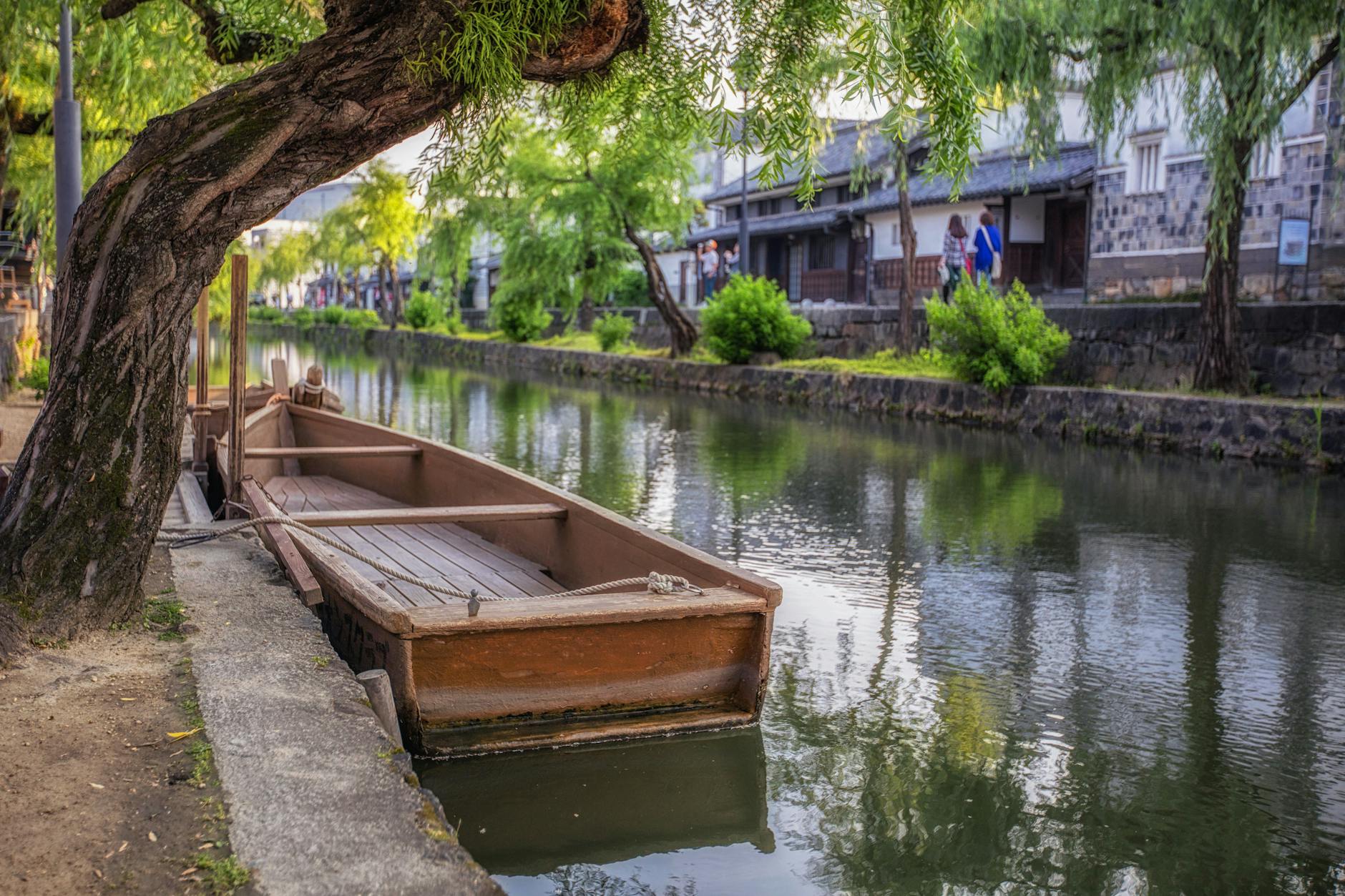
Kurashiki, Okayama
Set beside a willow lined canal, Kurashiki blends heritage warehouses, white plaster walls, and a creative spirit that feels organic rather than curated. Mornings are best here, before day trippers arrive, when shopkeepers sweep their doorways and the water reflects nothing but blue sky and tiled roofs. Kurashiki City, Okayama Prefecture
Photo by Derek Tsai
Takayama, Gifu
In the mountains of central Honshu, Takayama still hums at a gentler pace. The old town district is filled with timber houses, sake breweries, and narrow lanes that smell faintly of cedar. Evenings are the real magic here, when the streets empty and the town settles into itself. Takayama City, Gifu Prefecture
Photo by Evgeny Tchebotarev
Kanazawa, Ishikawa
While bigger than the others, Kanazawa has entire districts that feel untouched by time. The Nagamachi Samurai Quarter and Higashi Chaya teahouse district are places where you hear your footsteps echo and see kimono far more often than tour groups. It is culture without chaos, and it rewards slow exploration. Kanazawa City, Ishikawa Prefecture
Photo by Marek Piwnicki Photo by Jeremy Wong
Narai Juku, Nagano
Once a post town on the ancient Nakasendo highway, Narai Juku is a perfectly preserved strip of wooden inns and shops running along a single mountain road. Tour buses come and go, but stay the night and you will have the street to yourself, lit only by paper lanterns and moonlight. Shiojiri City, Nagano Prefecture
Photo by Satoshi Hirayama
These towns are not about ticking off sights. They are about rediscovering how Japan feels when it is not performing. If your dream trip involves wooden floors, peaceful mornings, traditional food and streets that belong more to locals than cameras, this is the Japan you should be chasing.


There is a Japan that still moves slowly. It exists far from Shibuya crossings and vending machine noise, in towns where wooden houses lean gently toward narrow streets and the evenings are carried on the sound of cicadas. These places are not hidden, they are simply overlooked, and that is exactly why they still feel like traditional old Japan.
Sawara, Chiba
Just over an hour from Tokyo, Sawara is a perfectly preserved merchant town built along quiet canals. Wooden warehouses line the water, boats drift past Edo era facades, and the whole place feels like stepping into a ukiyo e print. It is the kind of town where you spend the afternoon wandering rather than planning, stopping for coffee in converted storehouses and watching the light change on the river. Katori City, Chiba Prefecture
Kakunodate, Akita
Known as the little Kyoto of the north, Kakunodate is a former samurai town where wide streets are lined with black wooden mansions and arching cherry trees. Outside of blossom season it is wonderfully calm, a place to walk slowly, peer into courtyards, and imagine life when the sword was more important than the smartphone. Semboku City, Akita Prefecture
Kurashiki, Okayama
Set beside a willow lined canal, Kurashiki blends heritage warehouses, white plaster walls, and a creative spirit that feels organic rather than curated. Mornings are best here, before day trippers arrive, when shopkeepers sweep their doorways and the water reflects nothing but blue sky and tiled roofs. Kurashiki City, Okayama Prefecture
Takayama, Gifu
In the mountains of central Honshu, Takayama still hums at a gentler pace. The old town district is filled with timber houses, sake breweries, and narrow lanes that smell faintly of cedar. Evenings are the real magic here, when the streets empty and the town settles into itself. Takayama City, Gifu Prefecture
Kanazawa, Ishikawa
While bigger than the others, Kanazawa has entire districts that feel untouched by time. The Nagamachi Samurai Quarter and Higashi Chaya teahouse district are places where you hear your footsteps echo and see kimono far more often than tour groups. It is culture without chaos, and it rewards slow exploration.
Kanazawa City, Ishikawa Prefecture
Narai Juku, Nagano
Once a post town on the ancient Nakasendo highway, Narai Juku is a perfectly preserved strip of wooden inns and shops running along a single mountain road. Tour buses come and go, but stay the night and you will have the street to yourself, lit only by paper lanterns and moonlight. Shiojiri City, Nagano Prefecture
These towns are not about ticking off sights. They are about rediscovering how Japan feels when it is not performing. If your dream trip involves wooden floors, peaceful mornings, traditional food and streets that belong more to locals than cameras, this is the Japan you should be chasing.
Share this:
Like this: