Most offices are designed for the benefit of the employees, that’s what the spaces are purchased or rented out for after all. That being said, there are always improvements to make. This is especially true if you’re altering the use of the space, be that investing in expanded departments, restructuring, or moving to a more unique space, such as an office overlooking a new manufacturing or production area.
It’s a good opportunity to reinvest in some of your values, to take staff feedback, and to design a working space that will last. You might not be one of those companies forcing your employees to return to office full time after scrapping remote work as part of their fundamental staff management approach, but if you still maintain office space, it’s important to make it prioritze staff needs.
Let’s look at some suggestions:
Design With Quiet Zones and Collaboration In Mind
You might think the binary of an office as either open-plan or cubicle-heavy, but most people don’t really want to work in either of those extremes anymore. The middle ground is where the best if you can sit in a quiet corner if you need to get your head down, but also not feel like you’re walking into a library if you want to chat through an idea with someone.
The best way to get that right is to think about noise and space as something you can shape. Soft furnishings help, as not everything has to bounce sound around like a church hall. You can section off small areas with partitions, even bookable rooms with a glass front, so people can still feel connected without having to overhear everything. Then there’s the option of suspended ceilings, which can subtly help with acoustics while keeping things looking neat, especially if you have other noise going on in the area. It all counts and can be renovated quite easily. Most of it involves simple furniture orientation.
Photo by Los Muertos Crew
Invest In Natural Light & Air Quality
Lighting changes everything, and you can usually tell when it’s been ignored in office even if it’s been designed well, because there’ll be a grey-blue office glow that sucks all the energy out of the place, and the people inside it. Natural light is harder to fake than most people think, and even the best LED systems can’t really replicate what the sun does to a room. That’s why if you’ve got windows, use them. Pull desks towards them, skip the heavy blinds, and try not to block them with shelves or plants or anything that doesn’t need to be there.
Air quality is arguably just as important too. Plants are an easy win to bring in, but it’s worth getting proper filters or checking the HVAC setup and perhaps having a full review of your airflow to check if it’s moving how you’d like it.
Choose Furniture That Supports Movement & Comfort
Furniture can define the flow of a space and also how people think within it That might sound like something you’d read in a catalogue but it’s true, and people know instantly when it’s off. You may have seen horror stories in some past offices you’ve worked in, like having to deal with hard chairs with wonky backs, desks set at awkward heights, or old meeting tables that echo every time someone sets down a mug.
Even in companies that don’t go fully remote or hot-desk by default, it’s still helpful to create a layout where furniture can be moved around without causing a scene. One team might like to gather more often in one area, another might barely speak out loud and just want a bit of distance between them and the hallway, and that’s before you even consider people with access needs. Choosing pieces that are easy to reconfigure or feel soft to sit in without being too relaxed can be great, and you don’t have to overthink it.
Make Break Areas Feel Inviting and Inclusive
The atmosphere in a break area often says more about the workplace than anything else. After all, it’s where people go when they’re not doing something directly related to their role, which means the space has to do a bit more than just exist as an afterthought. It’s the one part of the office where people should feel able to fully stop and decompress, and if the room feels like a leftover corridor with a kettle in it, then it usually has the opposite effect.
Just having enough seating for the people who use it at certain times, having clean kitchen equipment there, and a rota so staff can look after it is key.
Involve Team Feedback Early & Often
Asking for team thoughts shouldn’t be saved for the end of a redesign or treated like a tick-box exercise once the main decisions have already been made. If you’re trying out a new layout, moving departments around, or perhaps just replacing key furniture, checking in with the people using those areas every day saves a lot of guesswork or just making people accept your changes when they could have been optimized, or at least altered a little, with that feedback.
Not everything will be a dramatic insight, but comments about glare from a certain window or where people end up standing around awkwardly during busy lunch hours can turn into smart changes that wouldn’t have been spotted otherwise. Maybe you have an employee who has recently come back from maternity leave, and they want an area they can privately attend to their business outside of the restroom, and so accommodating that might not have been possible if you didn’t listen.
To conclude, it’s not always easy to renovate a commercial space nor to try anything unique outside of the templated suggestions we all know. But it does make sense to listen, to try and maximize comfort and utility, and to make sure that what amenities are there do deliver. Your staff will appreciate the new space, and it’ll be a healthy new milestone in the life of your firm.


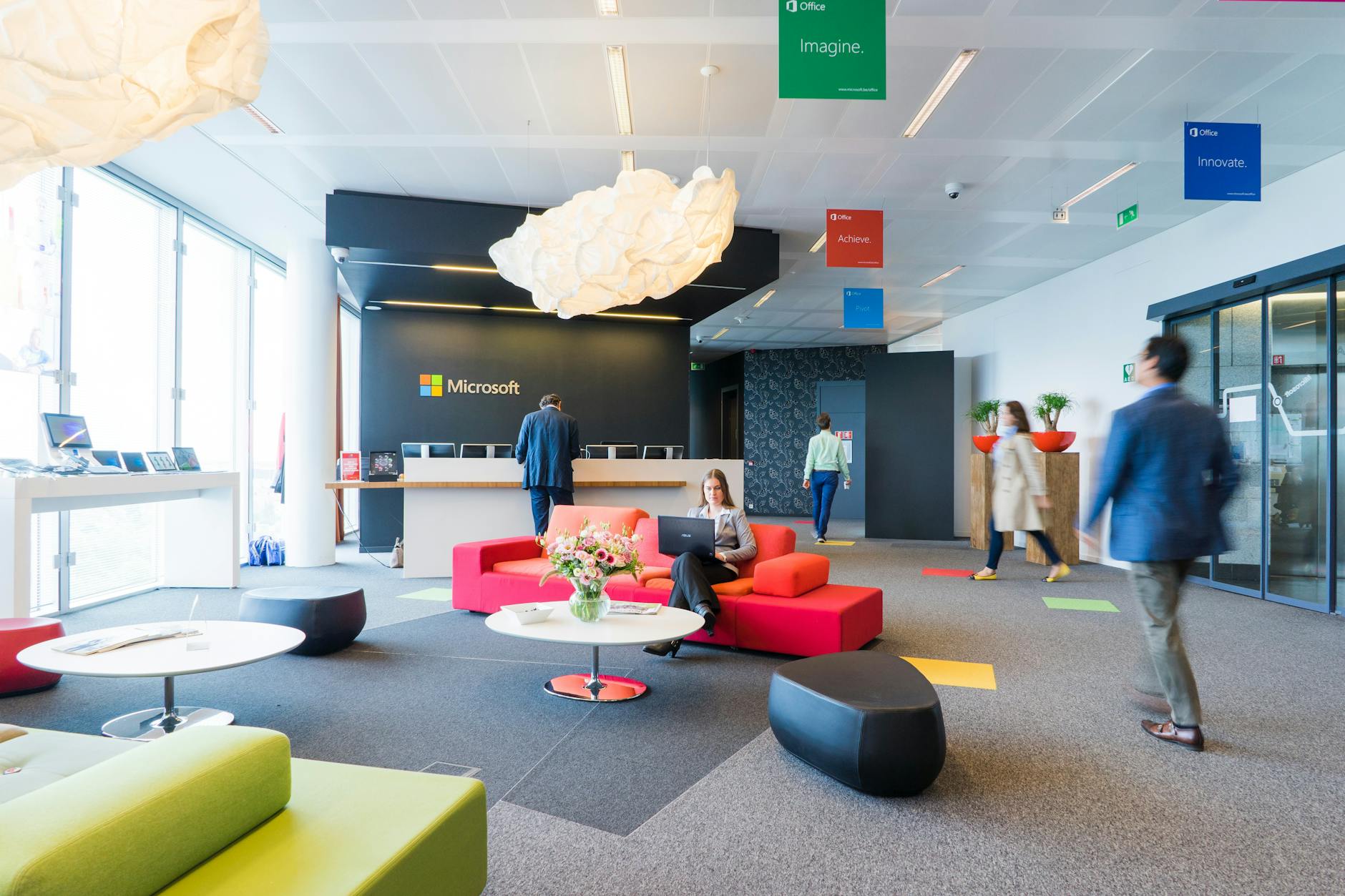
Most offices are designed for the benefit of the employees, that’s what the spaces are purchased or rented out for after all. That being said, there are always improvements to make. This is especially true if you’re altering the use of the space, be that investing in expanded departments, restructuring, or moving to a more unique space, such as an office overlooking a new manufacturing or production area.
It’s a good opportunity to reinvest in some of your values, to take staff feedback, and to design a working space that will last. You might not be one of those companies forcing your employees to return to office full time after scrapping remote work as part of their fundamental staff management approach, but if you still maintain office space, it’s important to make it prioritze staff needs.
Let’s look at some suggestions:
Design With Quiet Zones and Collaboration In Mind
You might think the binary of an office as either open-plan or cubicle-heavy, but most people don’t really want to work in either of those extremes anymore. The middle ground is where the best if you can sit in a quiet corner if you need to get your head down, but also not feel like you’re walking into a library if you want to chat through an idea with someone.
The best way to get that right is to think about noise and space as something you can shape. Soft furnishings help, as not everything has to bounce sound around like a church hall. You can section off small areas with partitions, even bookable rooms with a glass front, so people can still feel connected without having to overhear everything. Then there’s the option of suspended ceilings, which can subtly help with acoustics while keeping things looking neat, especially if you have other noise going on in the area. It all counts and can be renovated quite easily. Most of it involves simple furniture orientation.
Invest In Natural Light & Air Quality
Lighting changes everything, and you can usually tell when it’s been ignored in office even if it’s been designed well, because there’ll be a grey-blue office glow that sucks all the energy out of the place, and the people inside it. Natural light is harder to fake than most people think, and even the best LED systems can’t really replicate what the sun does to a room. That’s why if you’ve got windows, use them. Pull desks towards them, skip the heavy blinds, and try not to block them with shelves or plants or anything that doesn’t need to be there.
Air quality is arguably just as important too. Plants are an easy win to bring in, but it’s worth getting proper filters or checking the HVAC setup and perhaps having a full review of your airflow to check if it’s moving how you’d like it.
Choose Furniture That Supports Movement & Comfort
Furniture can define the flow of a space and also how people think within it That might sound like something you’d read in a catalogue but it’s true, and people know instantly when it’s off. You may have seen horror stories in some past offices you’ve worked in, like having to deal with hard chairs with wonky backs, desks set at awkward heights, or old meeting tables that echo every time someone sets down a mug.
Even in companies that don’t go fully remote or hot-desk by default, it’s still helpful to create a layout where furniture can be moved around without causing a scene. One team might like to gather more often in one area, another might barely speak out loud and just want a bit of distance between them and the hallway, and that’s before you even consider people with access needs. Choosing pieces that are easy to reconfigure or feel soft to sit in without being too relaxed can be great, and you don’t have to overthink it.
Make Break Areas Feel Inviting and Inclusive
The atmosphere in a break area often says more about the workplace than anything else. After all, it’s where people go when they’re not doing something directly related to their role, which means the space has to do a bit more than just exist as an afterthought. It’s the one part of the office where people should feel able to fully stop and decompress, and if the room feels like a leftover corridor with a kettle in it, then it usually has the opposite effect.
Just having enough seating for the people who use it at certain times, having clean kitchen equipment there, and a rota so staff can look after it is key.
Involve Team Feedback Early & Often
Asking for team thoughts shouldn’t be saved for the end of a redesign or treated like a tick-box exercise once the main decisions have already been made. If you’re trying out a new layout, moving departments around, or perhaps just replacing key furniture, checking in with the people using those areas every day saves a lot of guesswork or just making people accept your changes when they could have been optimized, or at least altered a little, with that feedback.
Not everything will be a dramatic insight, but comments about glare from a certain window or where people end up standing around awkwardly during busy lunch hours can turn into smart changes that wouldn’t have been spotted otherwise. Maybe you have an employee who has recently come back from maternity leave, and they want an area they can privately attend to their business outside of the restroom, and so accommodating that might not have been possible if you didn’t listen.
To conclude, it’s not always easy to renovate a commercial space nor to try anything unique outside of the templated suggestions we all know. But it does make sense to listen, to try and maximize comfort and utility, and to make sure that what amenities are there do deliver. Your staff will appreciate the new space, and it’ll be a healthy new milestone in the life of your firm.
Share this:
Like this: