Have you ever watched a child climb a tree, balance on a beam, or master a new move, and noticed how their entire posture changes? That’s physical confidence. It’s not about being the strongest or the fastest. It’s about feeling capable in your own body. And today, kids need that kind of confidence more than ever.
Between screens, school routines, and fewer chances for real-world movement, many children are growing up without the physical self-trust that helps them feel grounded, capable, and brave.
But here’s the good news: helping kids feel strong in their bodies doesn’t have to be complicated, and you don’t need to turn your living room into a mini gym. These six strategies are simple, flexible, and surprisingly powerful.
1) Prioritize Daily Movement (Even in Small Doses)
Think of movement like vitamins. A little each day goes a long way. You don’t need an hour-long workout or organized sports to help kids stay active. In fact, short bursts of everyday movement can be just as beneficial. Have them jump on the bed (safely!), race to the end of the block, or bounce a ball in the hallway. What matters most is consistency.
Tip: Build movement into natural moments — a stretch before brushing teeth, a hopscotch game on the way to school, or a silly dance while the pasta boils. These tiny additions add up fast.
2) Support Growth Through Skill-Based Activities
Confidence often comes from progress, not praise. That’s why kids thrive in settings where they can learn a new skill, see improvement, and work toward a goal.
Activities like martial arts classes or cardio kickboxing, anything that offers a structured path for learning, can make a big difference. And when a child earns that next belt or masters that new technique? You’ll see their self-esteem skyrocket.
If you want to learn more, resources like https://www.chicagonk.com/ offer information about youth programs that use a clear, goal-based system to help children build strength, focus, and confidence. With age-specific classes and an emphasis on discipline, these programs guide kids through each stage of development, encouraging personal growth through both physical movement and positive routine.
Tip: Choose programs that offer clear progression, such as levels, belts, or milestones, so your child can see and feel their growth over time.
3) Focus on What the Body Can Do
What we say about our kids’ bodies, and our own, really matters. Rather than commenting on size or appearance, shift your language to what their bodies can do.
Try: “You held that pose for so long!” or “You kicked that ball with such power!” Praise rooted in effort and function encourages internal confidence, not external comparison.
Example: Instead of “You look so fit,” say, “You’re getting so fast!” See the difference? One is about how they appear. The other is about what they can achieve.
Photo by Kai-Chieh Chan
4) Involve the Whole Family in Active Habits
Kids copy what we model. If they see movement as a normal, fun part of family life, they’re more likely to stick with it. No need for anything fancy, a quick walk after dinner, a living room yoga video, or weekend bike rides all count. The key is showing them that moving their body isn’t a punishment or a requirement. It’s something you all do together.
Want to keep it playful? Try making a “movement jar.” Fill it with fun prompts like “do 10 frog jumps,” “balance on one leg,” or “crawl like a bear.” Pull one at random when energy dips — and join them.
5) Encourage Play That Builds Strength
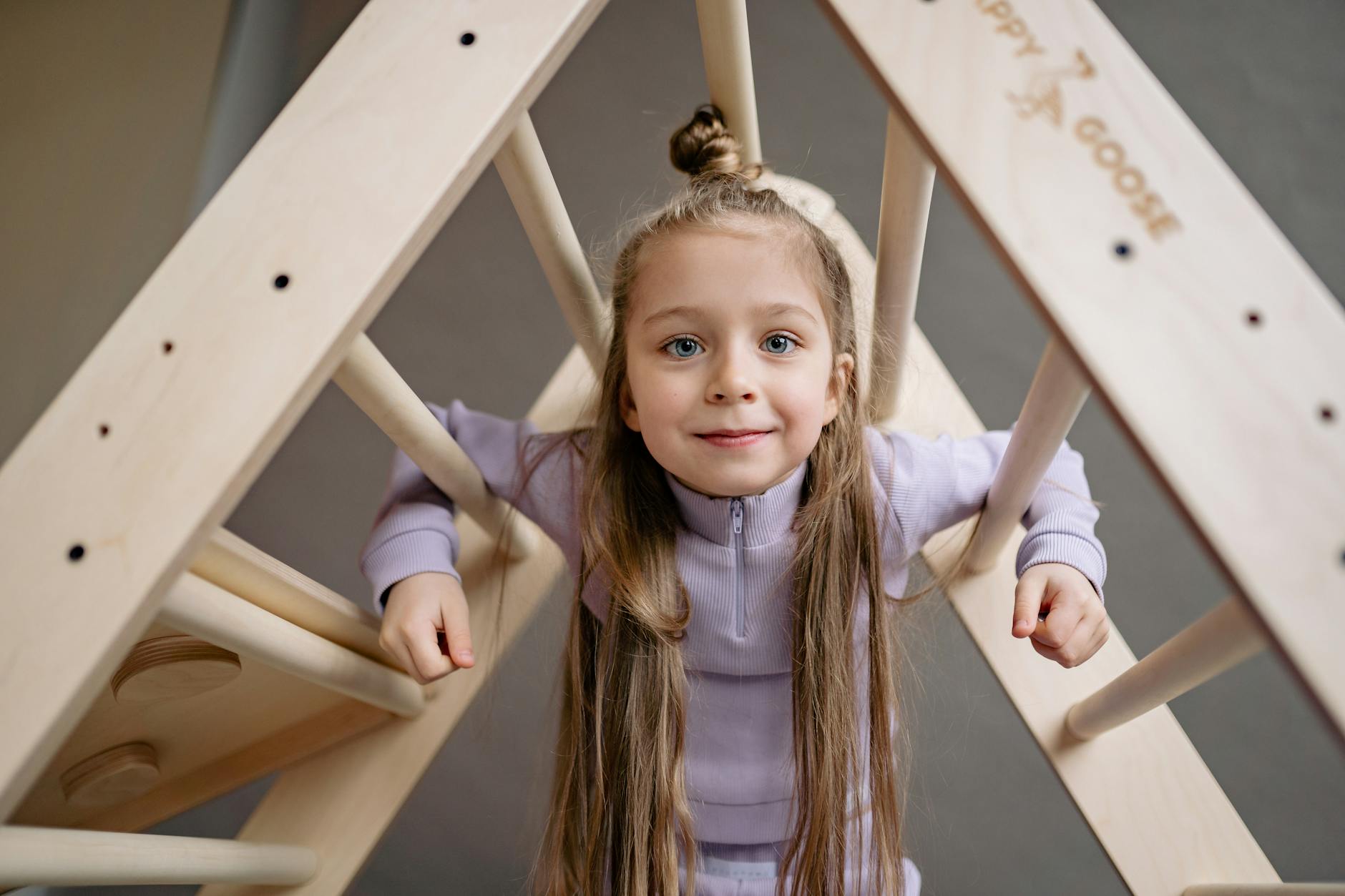
Some of the best physical confidence comes from play that looks messy. Climbing, crawling, tumbling, balancing, this kind of rough-and-ready movement builds coordination, spatial awareness, and physical courage.
Yes, they might fall. But they’ll also get back up. Safe risk-taking teaches kids what their bodies can handle. It also helps them understand limits, recover from stumbles, and feel proud of what they’ve done.
Tip: If you can, let them explore uneven terrain, like a nature trail or playground. These environments naturally challenge their bodies in creative, healthy ways.
6) Make Movement Part of Routine (Not a Chore)
Here’s a secret: kids are more likely to enjoy physical activity when it feels like play, not another task on their to-do list.
Instead of scheduling one big “active time,” weave movement into your routines. Have a five-minute dance-off while tidying the room. Stretch before bedtime. Race the clock to put toys away. These mini-movements feel light, spontaneous, and fun, and they still build strength and confidence.
Reminder: Avoid using movement as punishment (“Go run laps!”). Keep it connected to joy, energy, and discovery, not discipline.
Photo by Pavel Danilyuk
Conclusion
Physical confidence isn’t about doing everything right, it’s about a child feeling at home in their body. When kids climb, run, fall, and get back up, they’re learning what they’re capable of. You don’t need a rigid routine. What matters is consistency, encouragement, and freedom to move in ways that feel natural. Confidence grows not in perfect form, but in everyday moments that celebrate effort and progress.


Have you ever watched a child climb a tree, balance on a beam, or master a new move, and noticed how their entire posture changes? That’s physical confidence. It’s not about being the strongest or the fastest. It’s about feeling capable in your own body. And today, kids need that kind of confidence more than ever.
Between screens, school routines, and fewer chances for real-world movement, many children are growing up without the physical self-trust that helps them feel grounded, capable, and brave.
But here’s the good news: helping kids feel strong in their bodies doesn’t have to be complicated, and you don’t need to turn your living room into a mini gym. These six strategies are simple, flexible, and surprisingly powerful.
1) Prioritize Daily Movement (Even in Small Doses)
Think of movement like vitamins. A little each day goes a long way. You don’t need an hour-long workout or organized sports to help kids stay active. In fact, short bursts of everyday movement can be just as beneficial. Have them jump on the bed (safely!), race to the end of the block, or bounce a ball in the hallway. What matters most is consistency.
Tip: Build movement into natural moments — a stretch before brushing teeth, a hopscotch game on the way to school, or a silly dance while the pasta boils. These tiny additions add up fast.
2) Support Growth Through Skill-Based Activities
Confidence often comes from progress, not praise. That’s why kids thrive in settings where they can learn a new skill, see improvement, and work toward a goal.
Activities like martial arts classes or cardio kickboxing, anything that offers a structured path for learning, can make a big difference. And when a child earns that next belt or masters that new technique? You’ll see their self-esteem skyrocket.
If you want to learn more, resources like https://www.chicagonk.com/ offer information about youth programs that use a clear, goal-based system to help children build strength, focus, and confidence. With age-specific classes and an emphasis on discipline, these programs guide kids through each stage of development, encouraging personal growth through both physical movement and positive routine.
Tip: Choose programs that offer clear progression, such as levels, belts, or milestones, so your child can see and feel their growth over time.
3) Focus on What the Body Can Do
What we say about our kids’ bodies, and our own, really matters. Rather than commenting on size or appearance, shift your language to what their bodies can do.
Try: “You held that pose for so long!” or “You kicked that ball with such power!” Praise rooted in effort and function encourages internal confidence, not external comparison.
Example: Instead of “You look so fit,” say, “You’re getting so fast!” See the difference? One is about how they appear. The other is about what they can achieve.
4) Involve the Whole Family in Active Habits
Kids copy what we model. If they see movement as a normal, fun part of family life, they’re more likely to stick with it. No need for anything fancy, a quick walk after dinner, a living room yoga video, or weekend bike rides all count. The key is showing them that moving their body isn’t a punishment or a requirement. It’s something you all do together.
Want to keep it playful? Try making a “movement jar.” Fill it with fun prompts like “do 10 frog jumps,” “balance on one leg,” or “crawl like a bear.” Pull one at random when energy dips — and join them.
5) Encourage Play That Builds Strength
Some of the best physical confidence comes from play that looks messy. Climbing, crawling, tumbling, balancing, this kind of rough-and-ready movement builds coordination, spatial awareness, and physical courage.
Yes, they might fall. But they’ll also get back up. Safe risk-taking teaches kids what their bodies can handle. It also helps them understand limits, recover from stumbles, and feel proud of what they’ve done.
Tip: If you can, let them explore uneven terrain, like a nature trail or playground. These environments naturally challenge their bodies in creative, healthy ways.
6) Make Movement Part of Routine (Not a Chore)
Here’s a secret: kids are more likely to enjoy physical activity when it feels like play, not another task on their to-do list.
Instead of scheduling one big “active time,” weave movement into your routines. Have a five-minute dance-off while tidying the room. Stretch before bedtime. Race the clock to put toys away. These mini-movements feel light, spontaneous, and fun, and they still build strength and confidence.
Reminder: Avoid using movement as punishment (“Go run laps!”). Keep it connected to joy, energy, and discovery, not discipline.
Conclusion
Physical confidence isn’t about doing everything right, it’s about a child feeling at home in their body. When kids climb, run, fall, and get back up, they’re learning what they’re capable of. You don’t need a rigid routine. What matters is consistency, encouragement, and freedom to move in ways that feel natural. Confidence grows not in perfect form, but in everyday moments that celebrate effort and progress.
Share this:
Like this: