Nestled in the heart of Europe, where the majestic Alps meet the sky, lies Italy’s smallest yet most enchanting region: the Aosta Valley. This hidden gem, bordered by France and Switzerland, might be easy to overlook on a map, but its offerings are anything but small. Rich in culture, history, and natural beauty, the Aosta Valley stands as a testament to Italy’s diverse landscape and heritage, promising an unforgettable experience for every traveler.
As you venture into this captivating region, you’re greeted by a tapestry of ancient history, breathtaking natural wonders, and a fusion of culinary delights that mirror its multicultural influences. From the historic charm of Bard, Italy’s tiniest municipality, to the gastronomic pleasures of Courmayeur at the foot of Mont Blanc, the Aosta Valley invites you to explore its many treasures. Whether you’re carving through the snow on its world-class ski slopes, soaking in the therapeutic mineral waters of its renowned spas, or tracing the steps of Romans in the “little Rome of the Alps,” Aosta Valley offers a mosaic of experiences that cater to the adventurer, the historian, and the epicurean alike.
Join us as we delve into the heart of the Aosta Valley, uncovering the top reasons this region, though small in size, is mighty in its allure.
Bard: a hidden gem town (and Italy’s smallest)
Full of historic houses and set in a stunning valley, the village of Bard is the smallest Italian municipality with just over one hundred inhabitants. Bard is also considered one of the most beautiful villages in Italy. While it is small, spanning only three square kilometres, the same cannot be said for its fortress, which dominates the landscape imposing a majestic silhouette.
Evidence of the village’s history is clear including Neolithic rock carvings and a stretch of the Roman Consular road (Via delle Gallie) which was built between 31 and 25 B.C. The Via delle Gallie was a crucial connection between the Po Valley and Transalpine Gaul, allowing Bard to thrive in its privileged position since the Middle Ages.
Food, drink and great local hospitality in Courmayeur
While many towns and villages in the region serve delicious local delicacies, the Alpine town of Courmayeur is easily the hub of food, wine and hospitality. Around Cormayeur, you can try some of the region’s most popular dishes including fondue, traditional polenta concia, venison, and valpellinentze (an ancient soup made with bread, cabbage, and fontina cheese).
Located at the foot of Mont Blanc, the town is filled with restaurants and shops, making for a lively atmosphere in the evenings. Small, family-run wineries can also be found in the outskirts where you’ll be able to try local varietals rarely found outside the Aosta Valley.
Winter sports haven
Surrounded by the highest mountains in Europe, including Mont Blanc, the Aosta Valley is an ideal winter sports destination with 19 resorts, more than 800 kilometres of slopes, 8 snow parks and a single international electronic ski pass.
Cervinia is one of the region’s premier resorts, sitting in a rugged high-altitude basin in the lap of Monte Cervino (better known by its Austrian name, the world-famous Matterhorn). This high-altitude ski area links with both Valtournenche and Zermatt in Switzerland, offering 350km of pistes. Adventurous skiers can use the resort as a base to climb to 3,480 metres above sea level at Plateau Rosa or choose to use heliski services to reach the dramatic peaks
Relaxation and wellness in Aosta Valley’s healing mineral waters
A visit to the Aosta Valley must include a dip in the region’s famous therapeutic thermal waters, which have made the region a hotspot for wellness experiences ranging from therapeutic pools, hydromassage, saunas and steam therapy.
Discovered in 1770, the Saint Vincent spring is a mineral water spring that has been recognised for its healing properties for centuries. The waters now feed a stunning spa complex, Saint Vincent Spa (Terme di Saint-Vincent). Surrounded by alpine peaks, water temperatures get up to 36 degrees, and saunas, steam, ice baths and a range of other treatments are available at the complex.
Historic landmarks and the “little Rome of the Alps”
The Aosta Valley is steeped in history and culture and the region is dotted with Roman ruins, ancient bridges, churches, roads, aqueducts, and hamlets that decorate the landscape. The region’s castles and incredible manor houses include the castles of Savoy, Issogne, Verres, Ussel and Fenis.
Aosta City has earned the nickname “little Rome of the Alps” due to its wealth of open-air archaeological sites dating back to Roman times. Conquered by Rome in the days of Augustus, the city was enriched with important monuments due to its strategic position on the Roman Via delle Gallie. It is worth visiting sites both during the day and revisiting in the evening when the illuminated Roman remains take on a magical charm.
Rural summer adventures await
With hundreds of kilometres of recognised trails and itineraries, the Aosta Valley is ideal for those who enjoy outdoor adventure all year round. Whether it’s cycling or hiking, getting out on foot or using pedal power is a great way to take in the breathtaking views of lakes, rivers, and waterfalls and enjoy the local hospitality in the region’s tiny villages.
Visit castles and historical trails or soak up the mountains and lakes on loops from Quart or La Thuile. Day and multi-day hiking tours are also available in the Gran Paradiso National Park, as well as climbing tours. There are also e-bike trails for those who prefer the outdoors at a more relaxed pace.
Put the Aosta Valley on your next Italy travel itinerary, we promise you won’t be disappointed!


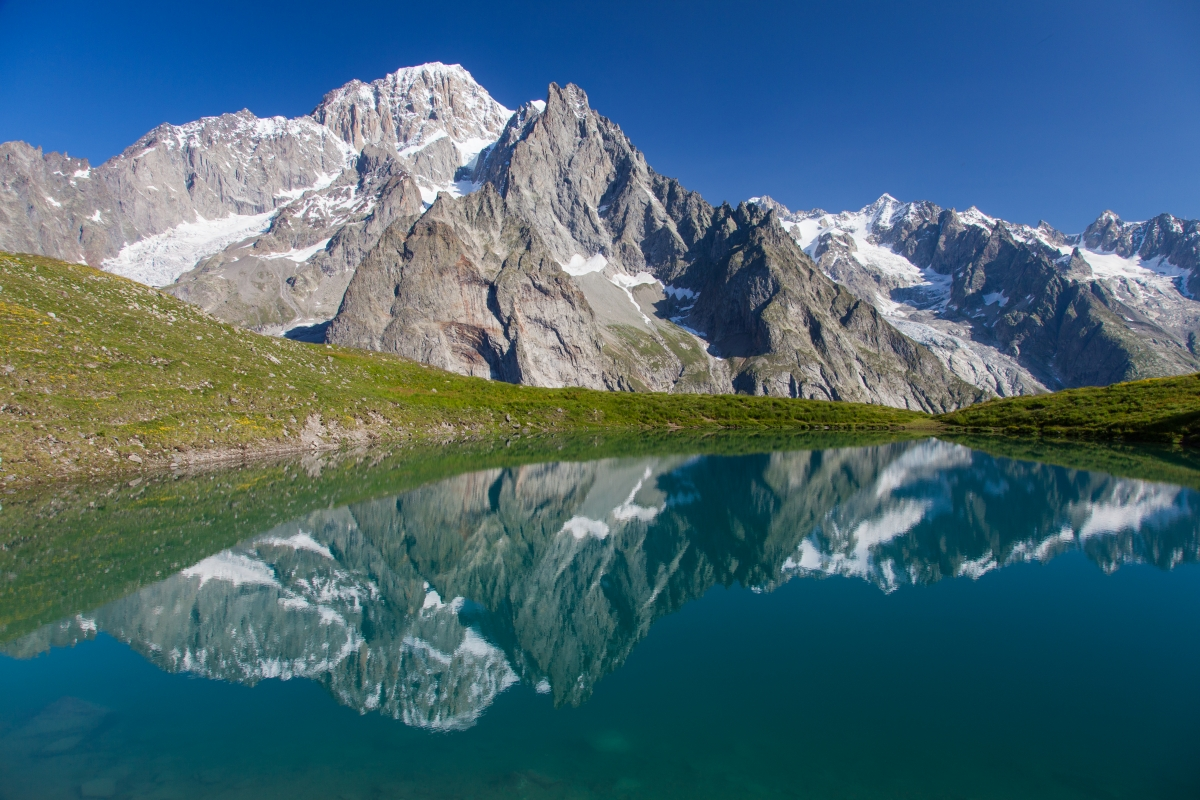
Nestled in the heart of Europe, where the majestic Alps meet the sky, lies Italy’s smallest yet most enchanting region: the Aosta Valley. This hidden gem, bordered by France and Switzerland, might be easy to overlook on a map, but its offerings are anything but small. Rich in culture, history, and natural beauty, the Aosta Valley stands as a testament to Italy’s diverse landscape and heritage, promising an unforgettable experience for every traveler.
As you venture into this captivating region, you’re greeted by a tapestry of ancient history, breathtaking natural wonders, and a fusion of culinary delights that mirror its multicultural influences. From the historic charm of Bard, Italy’s tiniest municipality, to the gastronomic pleasures of Courmayeur at the foot of Mont Blanc, the Aosta Valley invites you to explore its many treasures. Whether you’re carving through the snow on its world-class ski slopes, soaking in the therapeutic mineral waters of its renowned spas, or tracing the steps of Romans in the “little Rome of the Alps,” Aosta Valley offers a mosaic of experiences that cater to the adventurer, the historian, and the epicurean alike.
Join us as we delve into the heart of the Aosta Valley, uncovering the top reasons this region, though small in size, is mighty in its allure.
Bard: a hidden gem town (and Italy’s smallest)
Full of historic houses and set in a stunning valley, the village of Bard is the smallest Italian municipality with just over one hundred inhabitants. Bard is also considered one of the most beautiful villages in Italy. While it is small, spanning only three square kilometres, the same cannot be said for its fortress, which dominates the landscape imposing a majestic silhouette.
Evidence of the village’s history is clear including Neolithic rock carvings and a stretch of the Roman Consular road (Via delle Gallie) which was built between 31 and 25 B.C. The Via delle Gallie was a crucial connection between the Po Valley and Transalpine Gaul, allowing Bard to thrive in its privileged position since the Middle Ages.
Food, drink and great local hospitality in Courmayeur
While many towns and villages in the region serve delicious local delicacies, the Alpine town of Courmayeur is easily the hub of food, wine and hospitality. Around Cormayeur, you can try some of the region’s most popular dishes including fondue, traditional polenta concia, venison, and valpellinentze (an ancient soup made with bread, cabbage, and fontina cheese).
Located at the foot of Mont Blanc, the town is filled with restaurants and shops, making for a lively atmosphere in the evenings. Small, family-run wineries can also be found in the outskirts where you’ll be able to try local varietals rarely found outside the Aosta Valley.
Winter sports haven
Surrounded by the highest mountains in Europe, including Mont Blanc, the Aosta Valley is an ideal winter sports destination with 19 resorts, more than 800 kilometres of slopes, 8 snow parks and a single international electronic ski pass.
Cervinia is one of the region’s premier resorts, sitting in a rugged high-altitude basin in the lap of Monte Cervino (better known by its Austrian name, the world-famous Matterhorn). This high-altitude ski area links with both Valtournenche and Zermatt in Switzerland, offering 350km of pistes. Adventurous skiers can use the resort as a base to climb to 3,480 metres above sea level at Plateau Rosa or choose to use heliski services to reach the dramatic peaks
Relaxation and wellness in Aosta Valley’s healing mineral waters
A visit to the Aosta Valley must include a dip in the region’s famous therapeutic thermal waters, which have made the region a hotspot for wellness experiences ranging from therapeutic pools, hydromassage, saunas and steam therapy.
Discovered in 1770, the Saint Vincent spring is a mineral water spring that has been recognised for its healing properties for centuries. The waters now feed a stunning spa complex, Saint Vincent Spa (Terme di Saint-Vincent). Surrounded by alpine peaks, water temperatures get up to 36 degrees, and saunas, steam, ice baths and a range of other treatments are available at the complex.
Historic landmarks and the “little Rome of the Alps”
The Aosta Valley is steeped in history and culture and the region is dotted with Roman ruins, ancient bridges, churches, roads, aqueducts, and hamlets that decorate the landscape. The region’s castles and incredible manor houses include the castles of Savoy, Issogne, Verres, Ussel and Fenis.
Aosta City has earned the nickname “little Rome of the Alps” due to its wealth of open-air archaeological sites dating back to Roman times. Conquered by Rome in the days of Augustus, the city was enriched with important monuments due to its strategic position on the Roman Via delle Gallie. It is worth visiting sites both during the day and revisiting in the evening when the illuminated Roman remains take on a magical charm.
Rural summer adventures await
With hundreds of kilometres of recognised trails and itineraries, the Aosta Valley is ideal for those who enjoy outdoor adventure all year round. Whether it’s cycling or hiking, getting out on foot or using pedal power is a great way to take in the breathtaking views of lakes, rivers, and waterfalls and enjoy the local hospitality in the region’s tiny villages.
Visit castles and historical trails or soak up the mountains and lakes on loops from Quart or La Thuile. Day and multi-day hiking tours are also available in the Gran Paradiso National Park, as well as climbing tours. There are also e-bike trails for those who prefer the outdoors at a more relaxed pace.
Put the Aosta Valley on your next Italy travel itinerary, we promise you won’t be disappointed!
Love Italy and want more? Click here.
Share this:
Like this: