Holidays work best when they offer a genuine change of scenery. Walking or cycling through a landscape completely changes how you see it. There is a specific joy in earning a view after a long climb or coasting down a coastal road with the fresh sea breeze on your face. It slows everything down. You notice the temperature changes, the smells of the fields, and the sounds of the local wildlife. It connects you to the terrain in a way that driving simply cannot match. Whether you prefer rugged peaks or flat valley paths, getting active offers a fresh perspective.
Cycling in Portugal
Portugal has quietly become a massive hub for two-wheeled travel. The Alentejo region, specifically, offers quieter roads than the tourist-heavy south. It’s mostly rolling plains with cork oaks, but head toward the coast and things get dramatic near Zambujeira do Mar. You aren’t fighting traffic here; you are mostly sharing tarmac with the occasional tractor or local van. The infrastructure has improved significantly, with dedicated paths popping up to link rural villages where an espresso costs less than a euro.
For anyone searching for Portugal bike tours, this western edge stands out for value and variety. Stops in towns like Vila Nova de Milfontes allow for massive seafood lunches that fuel the next leg. It’s not flat, though. The climb up to Monchique requires gears and grit, but the view back toward the Atlantic makes the leg burn really worth it. The road surfaces are generally smooth and well-maintained.
Skiing in Italy
Skiing in The Dolomites feels distinct from the rest of the Alps. The sheer limestone walls of the Sella massif turn a brilliant pink at sunset, creating a backdrop that distracts you from the slopes. Cortina d’Ampezzo is the classic base, but the Sella Ronda circuit is the main draw for active skiers. You can spend an entire day skiing a 40km loop around the mountain group without repeating a single run. The lifts are modern, fast, and surprisingly efficient given the rugged terrain.
Food on the mountain is miles ahead of the usual expensive cafeteria fare found in France. You stop at a rifugio like Emilio Comici and get fresh seafood or game dishes right next to the piste. The slopes are generally wide and perfectly groomed, known locally as ‘autostradas’, which makes for confident, fast carving. It combines serious sport with very serious dining.
Photo by Marek Piwnicki
Walking in France
The Dordogne valley isn’t just for kayaking; the limestone plateaus above the river offer some of the most consistent walking terrain on the continent. Trails here often cut through walnut groves and pass by truffières where locals still hunt with dogs. It is deeply rural, which appeals. You can spend hours walking between villages like Beynac-et-Cazenac and La Roque-Gageac without seeing a car. The paths are well-marked with the standard yellow stripes, making navigation simple enough that you don’t need to stare at a phone screen all day.
Travellers who want to truly enjoy self-guided walking holidays should look at the shoulder seasons, specifically May or October. The summer heat trapped in the valley can be intense. In autumn, the changing leaves frame the chateaus nicely. Finding a boulangerie open for a midday baguette sandwich is rarely an issue, keeping packs light. It creates a very civilised rhythm to the days.
Kayaking in Slovenia
Slovenia packs a lot of geography into a tiny space. The Julian Alps are steep, but one of the best way to see them is actually from the waterline of the Soča River. It is famous for that distinct emerald colour, though be warned: it is freezing cold year-round. You don’t need to be a pro to get involved; the river has sections ranging from calm flows for beginners to Class IV rapids for the brave. Bovec is the main hub, filled with agencies renting out wetsuits and plastic boats.
Paddling here gives you a different angle on the mountains. You are looking up at the peaks rather than down from them. It is physically demanding on the arms and core, a sharp contrast to the leg-work of hiking. After a day on the water, the local speciality of Bovec cheese and potatoes tastes incredible. It is raw, wet, and thrilling.
Hiking in Norway
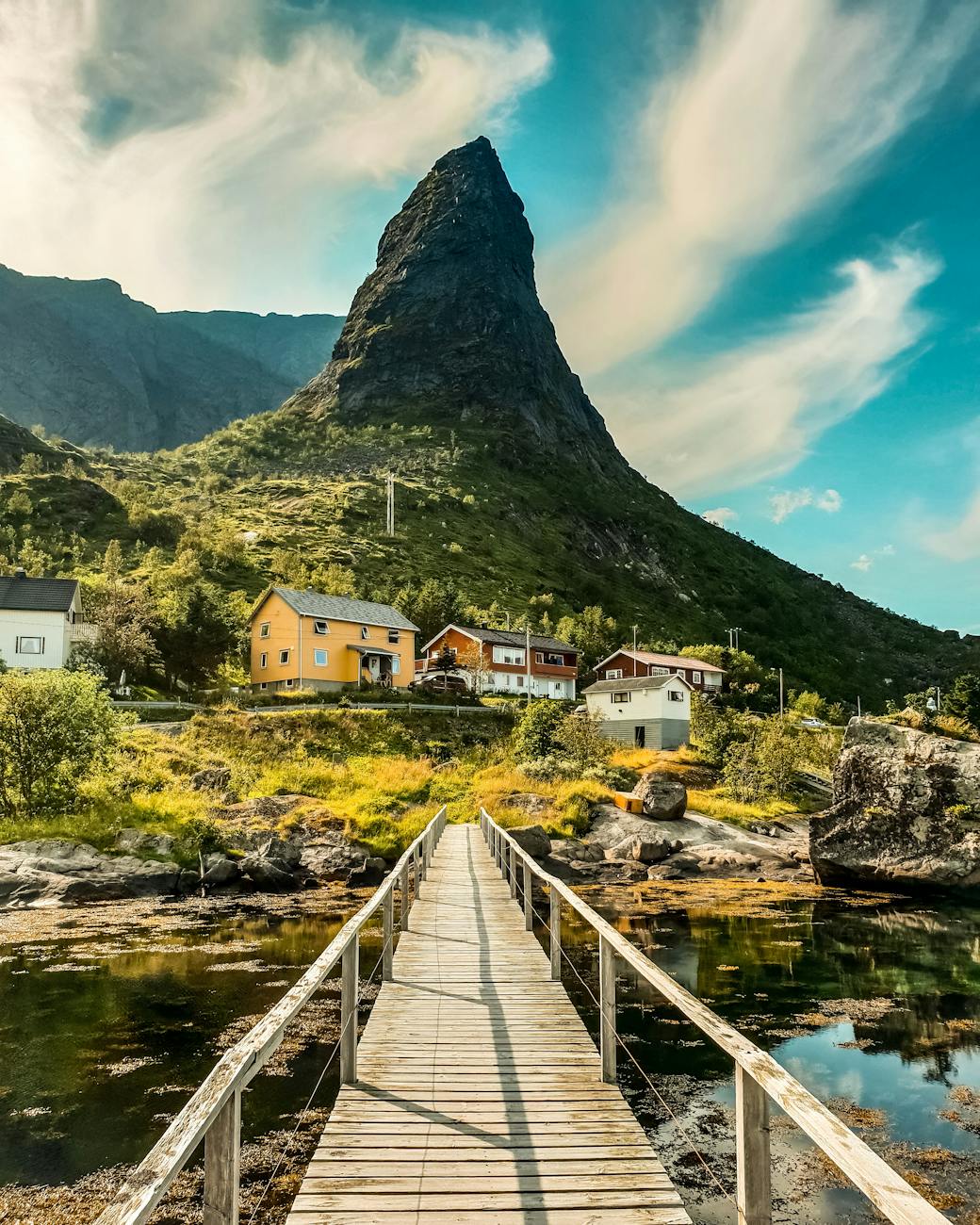
The Lofoten archipelago is rugged, wet, and incredibly dramatic. Roads here hug the shoreline, connecting islands via curved bridges that look like they belong in a car commercial. Reinebringen is the famous hike, mostly because of the beautiful views and unique stone steps laid by Sherpas to fix erosion. It is a steep, hard hike, but the view over the fishing villages and the fjords is the ultimate payoff.
The weather is the boss here. You might get four seasons in an hour. Being prepared means distinct layers and good boots, as the ground is often boggy. Even in summer, the midnight sun gives you 24 hours of daylight to explore. It feels remote, raw, and completely indifferent to tourism trends. It is nature on its own terms.
Why not swap the sunbed for boots?
Choosing an active holiday is about engaging with the world rather than just watching it pass by. Whether you are carving down Italian slopes or paddling through Slovenian rapids, the physical effort creates a much stronger memory than a week spent by a hotel pool ever could. Europe is packed with diverse terrain waiting to be explored, from the snowy peaks to the Atlantic coastlines. It just takes a little planning, the right gear, and a willingness to move your body. The sense of achievement you get from these trips is genuine, lasting long after you return home.


Holidays work best when they offer a genuine change of scenery. Walking or cycling through a landscape completely changes how you see it. There is a specific joy in earning a view after a long climb or coasting down a coastal road with the fresh sea breeze on your face. It slows everything down. You notice the temperature changes, the smells of the fields, and the sounds of the local wildlife. It connects you to the terrain in a way that driving simply cannot match. Whether you prefer rugged peaks or flat valley paths, getting active offers a fresh perspective.
Cycling in Portugal
Portugal has quietly become a massive hub for two-wheeled travel. The Alentejo region, specifically, offers quieter roads than the tourist-heavy south. It’s mostly rolling plains with cork oaks, but head toward the coast and things get dramatic near Zambujeira do Mar. You aren’t fighting traffic here; you are mostly sharing tarmac with the occasional tractor or local van. The infrastructure has improved significantly, with dedicated paths popping up to link rural villages where an espresso costs less than a euro.
For anyone searching for Portugal bike tours, this western edge stands out for value and variety. Stops in towns like Vila Nova de Milfontes allow for massive seafood lunches that fuel the next leg. It’s not flat, though. The climb up to Monchique requires gears and grit, but the view back toward the Atlantic makes the leg burn really worth it. The road surfaces are generally smooth and well-maintained.
Skiing in Italy
Skiing in The Dolomites feels distinct from the rest of the Alps. The sheer limestone walls of the Sella massif turn a brilliant pink at sunset, creating a backdrop that distracts you from the slopes. Cortina d’Ampezzo is the classic base, but the Sella Ronda circuit is the main draw for active skiers. You can spend an entire day skiing a 40km loop around the mountain group without repeating a single run. The lifts are modern, fast, and surprisingly efficient given the rugged terrain.
Food on the mountain is miles ahead of the usual expensive cafeteria fare found in France. You stop at a rifugio like Emilio Comici and get fresh seafood or game dishes right next to the piste. The slopes are generally wide and perfectly groomed, known locally as ‘autostradas’, which makes for confident, fast carving. It combines serious sport with very serious dining.
Walking in France
The Dordogne valley isn’t just for kayaking; the limestone plateaus above the river offer some of the most consistent walking terrain on the continent. Trails here often cut through walnut groves and pass by truffières where locals still hunt with dogs. It is deeply rural, which appeals. You can spend hours walking between villages like Beynac-et-Cazenac and La Roque-Gageac without seeing a car. The paths are well-marked with the standard yellow stripes, making navigation simple enough that you don’t need to stare at a phone screen all day.
Travellers who want to truly enjoy self-guided walking holidays should look at the shoulder seasons, specifically May or October. The summer heat trapped in the valley can be intense. In autumn, the changing leaves frame the chateaus nicely. Finding a boulangerie open for a midday baguette sandwich is rarely an issue, keeping packs light. It creates a very civilised rhythm to the days.
Kayaking in Slovenia
Slovenia packs a lot of geography into a tiny space. The Julian Alps are steep, but one of the best way to see them is actually from the waterline of the Soča River. It is famous for that distinct emerald colour, though be warned: it is freezing cold year-round. You don’t need to be a pro to get involved; the river has sections ranging from calm flows for beginners to Class IV rapids for the brave. Bovec is the main hub, filled with agencies renting out wetsuits and plastic boats.
Paddling here gives you a different angle on the mountains. You are looking up at the peaks rather than down from them. It is physically demanding on the arms and core, a sharp contrast to the leg-work of hiking. After a day on the water, the local speciality of Bovec cheese and potatoes tastes incredible. It is raw, wet, and thrilling.
Hiking in Norway
The Lofoten archipelago is rugged, wet, and incredibly dramatic. Roads here hug the shoreline, connecting islands via curved bridges that look like they belong in a car commercial. Reinebringen is the famous hike, mostly because of the beautiful views and unique stone steps laid by Sherpas to fix erosion. It is a steep, hard hike, but the view over the fishing villages and the fjords is the ultimate payoff.
The weather is the boss here. You might get four seasons in an hour. Being prepared means distinct layers and good boots, as the ground is often boggy. Even in summer, the midnight sun gives you 24 hours of daylight to explore. It feels remote, raw, and completely indifferent to tourism trends. It is nature on its own terms.
Why not swap the sunbed for boots?
Choosing an active holiday is about engaging with the world rather than just watching it pass by. Whether you are carving down Italian slopes or paddling through Slovenian rapids, the physical effort creates a much stronger memory than a week spent by a hotel pool ever could. Europe is packed with diverse terrain waiting to be explored, from the snowy peaks to the Atlantic coastlines. It just takes a little planning, the right gear, and a willingness to move your body. The sense of achievement you get from these trips is genuine, lasting long after you return home.
Share this:
Like this: