In a world where assertiveness is often mistaken for aggression, especially for women, the habit of over-apologizing has become a reflex that undermines our authority, diminishes our confidence, and perpetuates a cycle of unnecessary guilt. I’ve embarked on a journey to reclaim my voice and space by consciously eliminating the word “sorry” from my vocabulary, except when genuinely warranted. It’s a transformative path that I believe many of us can benefit from, and here’s why.
The Over-Apologizing Phenomenon Among Women
Research and societal observations reveal that women are more likely to apologize for their actions and presence than men. This tendency is deeply rooted in societal norms that have historically expected women to be more agreeable, less intrusive and take up less space. From apologizing for asking questions in meetings to saying sorry for occupying space, this pattern dilutes our presence and contributions, making us seem less confident and capable than we truly are.
The Power Dynamics of Apologies
Apologies, when used appropriately, are powerful tools for expressing empathy and repairing relationships. However, when overused, they can shift power dynamics, placing the apologizer in a subordinate position. For women, who are already navigating the complexities of gender dynamics in personal and professional settings, frequent, unwarranted apologies can further entrench existing inequalities.
Why I Stopped Saying Sorry
My journey to stop saying sorry began with the realization that my reflexive apologies were not only unnecessary but also counterproductive. Each “sorry” for things that didn’t warrant an apology chipped away at my self-esteem and professional image. By eliminating these unwarranted apologies, I’ve noticed a significant shift in how others perceive and interact with me. I’m treated with more respect, my contributions are taken more seriously, and I feel more confident in my right to speak and act without prefacing my existence with an apology.
The Impact of Taking Up Space Unapologetically
Taking up space, both literally and figuratively, without apology, has been liberating. It has allowed me to assert my ideas, make my presence known, and demand the respect I deserve. This doesn’t mean becoming inconsiderate or disrespectful; rather, it means recognizing that my voice, ideas, and presence are valid and don’t require a preemptive apology.
Why You Should Consider It Too
If you find yourself apologizing out of habit rather than necessity, I encourage you to join me in this journey. Start by paying attention to the instances when you say sorry and assess whether an apology is genuinely needed. More often than not, you’ll find that expressions of gratitude or statements of fact can replace unnecessary apologies, transforming them into moments of empowerment.
For instance, instead of saying “Sorry I’m late,” try “Thank you for waiting for me.” This not only shifts the narrative from one of guilt to gratitude but also reinforces your worth and agency.
Moving Forward
Breaking the cycle of over-apologizing isn’t about dismissing genuine mistakes or avoiding accountability. It’s about recognizing our worth, asserting our space, and changing the narrative around female presence and power. By doing so, we not only empower ourselves but also set a precedent for how women are perceived and treated. It’s a journey worth embarking on, one unapologetic step at a time.


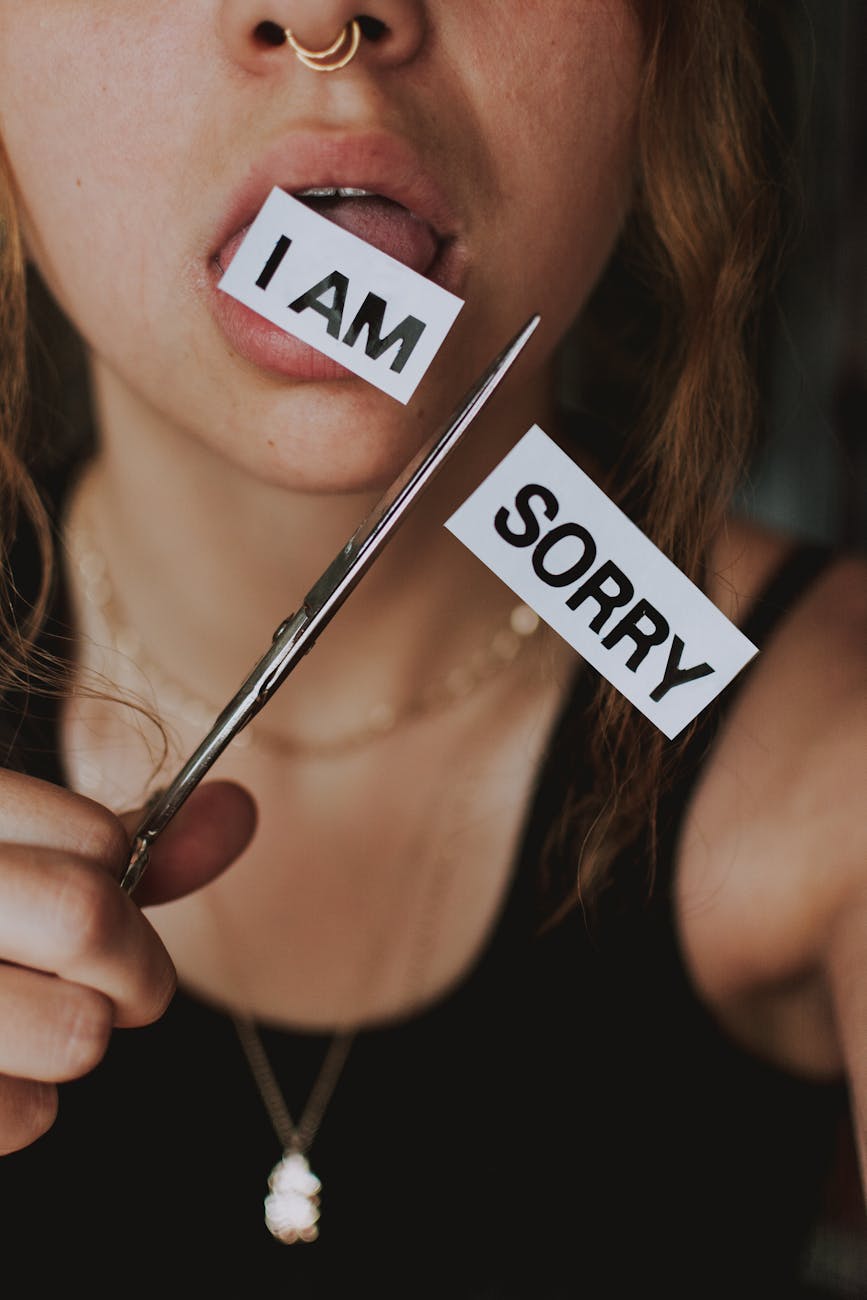
In a world where assertiveness is often mistaken for aggression, especially for women, the habit of over-apologizing has become a reflex that undermines our authority, diminishes our confidence, and perpetuates a cycle of unnecessary guilt. I’ve embarked on a journey to reclaim my voice and space by consciously eliminating the word “sorry” from my vocabulary, except when genuinely warranted. It’s a transformative path that I believe many of us can benefit from, and here’s why.
The Over-Apologizing Phenomenon Among Women
Research and societal observations reveal that women are more likely to apologize for their actions and presence than men. This tendency is deeply rooted in societal norms that have historically expected women to be more agreeable, less intrusive and take up less space. From apologizing for asking questions in meetings to saying sorry for occupying space, this pattern dilutes our presence and contributions, making us seem less confident and capable than we truly are.
The Power Dynamics of Apologies
Apologies, when used appropriately, are powerful tools for expressing empathy and repairing relationships. However, when overused, they can shift power dynamics, placing the apologizer in a subordinate position. For women, who are already navigating the complexities of gender dynamics in personal and professional settings, frequent, unwarranted apologies can further entrench existing inequalities.
Why I Stopped Saying Sorry
My journey to stop saying sorry began with the realization that my reflexive apologies were not only unnecessary but also counterproductive. Each “sorry” for things that didn’t warrant an apology chipped away at my self-esteem and professional image. By eliminating these unwarranted apologies, I’ve noticed a significant shift in how others perceive and interact with me. I’m treated with more respect, my contributions are taken more seriously, and I feel more confident in my right to speak and act without prefacing my existence with an apology.
The Impact of Taking Up Space Unapologetically
Taking up space, both literally and figuratively, without apology, has been liberating. It has allowed me to assert my ideas, make my presence known, and demand the respect I deserve. This doesn’t mean becoming inconsiderate or disrespectful; rather, it means recognizing that my voice, ideas, and presence are valid and don’t require a preemptive apology.
Why You Should Consider It Too
If you find yourself apologizing out of habit rather than necessity, I encourage you to join me in this journey. Start by paying attention to the instances when you say sorry and assess whether an apology is genuinely needed. More often than not, you’ll find that expressions of gratitude or statements of fact can replace unnecessary apologies, transforming them into moments of empowerment.
For instance, instead of saying “Sorry I’m late,” try “Thank you for waiting for me.” This not only shifts the narrative from one of guilt to gratitude but also reinforces your worth and agency.
Moving Forward
Breaking the cycle of over-apologizing isn’t about dismissing genuine mistakes or avoiding accountability. It’s about recognizing our worth, asserting our space, and changing the narrative around female presence and power. By doing so, we not only empower ourselves but also set a precedent for how women are perceived and treated. It’s a journey worth embarking on, one unapologetic step at a time.
Share this:
Like this: