Most home fitness routines do not get abandoned because people are lazy. They get abandoned because the whole thing starts to feel annoying. The workout takes too long to set up, the plan is vague, and by the time the day gets busy, it is easier to skip than to begin.
That is why the routines that actually last usually feel different from the start. They are not only about burning calories or squeezing in something intense before dinner. They feel more considered than that. The space works. The workout has a point. The whole thing feels like it belongs in real life instead of competing with it.
An elevated routine is not about making home fitness look expensive. It is about making it feel good enough to come back to.
Stop Treating Home Workouts Like The Backup Option
A lot of people still approach home training as the thing they do when they cannot get to a studio, cannot be bothered driving to the gym, or do not have enough time for a “real” session. That mindset usually kills the routine before it has a chance to settle in.
The home workouts that stick are the ones that stop trying to be a compromise. They become their own thing. A little more edited. A little less chaotic. Usually, it’s much easier to fit into an ordinary week.
That shift matters. Once the workout starts feeling like a real part of life, instead of the leftover version of a better plan, it gets used differently.
The Feel Of The Space Changes Everything
People talk about equipment a lot, but the mood of the space matters just as much. If the room feels cluttered, harsh, or like it needs ten minutes of setup before anything can happen, the routine already has a problem.
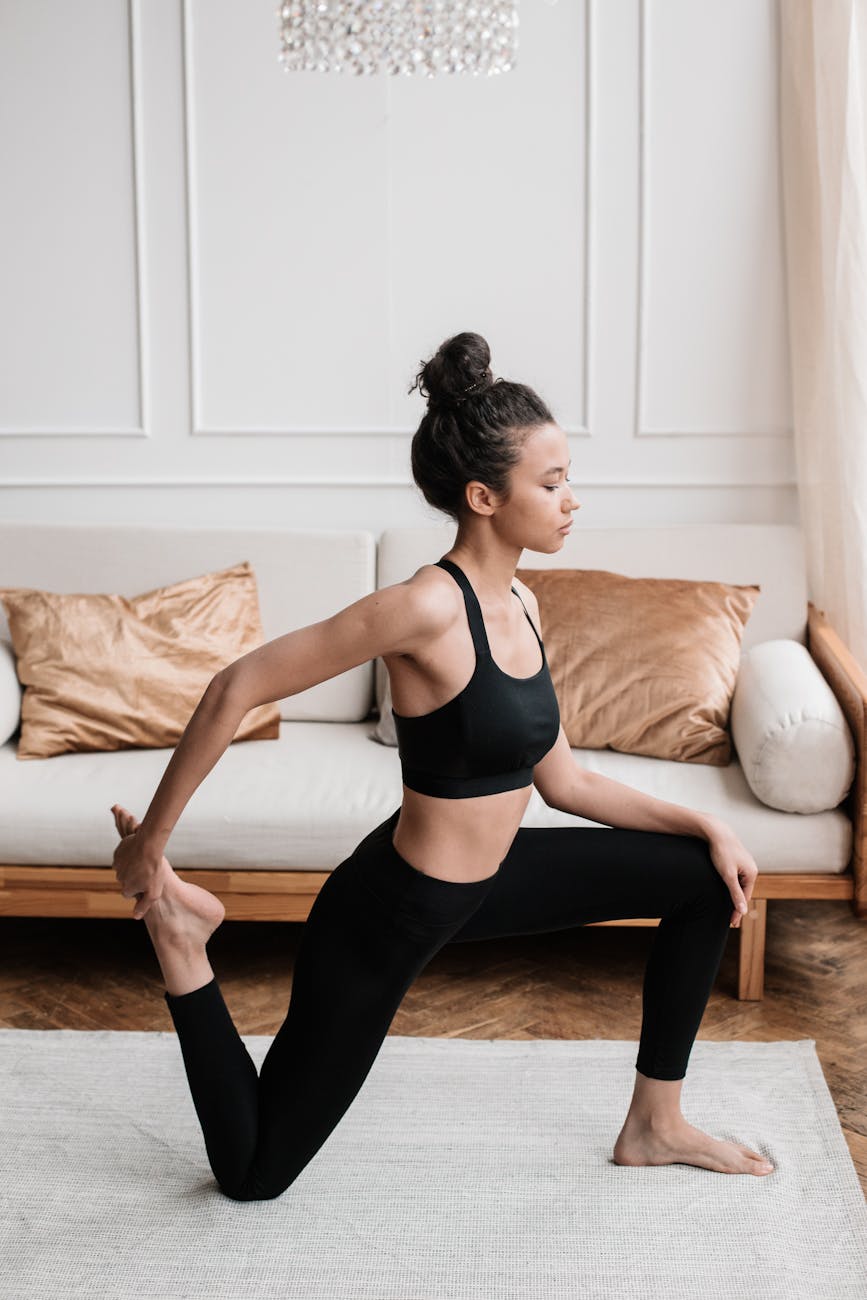
Most people do better with a space that feels simple and ready. A mat that is already there. A clear patch of floor. A towel nearby. Good light. Enough room to move without bumping into furniture. Nothing dramatic. Just a setup that does not create friction before the workout even starts.
That is usually what makes a home routine feel more elevated. Not more stuff. Just less resistance around using it.
Pick One Training Method That Does More
This is where a lot of routines get messy. People keep adding bits and pieces instead of choosing one approach that already covers enough ground. A few weights, some bands, a saved video, maybe a mat workout from two months ago. It all ends up feeling random.
A stronger approach is to build around one method that can carry most of the routine on its own. Strength, core work, and lower-impact conditioning should not feel like three separate projects. That is one reason reformer-style training has become such a popular upgrade in home setups.
Research on Pilates and wellbeing also links Pilates practice with benefits for balance, flexibility, muscle tone, and mood-related measures. It covers a lot without asking for a room full of gear.
Part of the appeal is having one setup that can cover strength, core work, and low-impact conditioning without turning the room into a cluttered gym, which is why premium pilates reformers for salekeep drawing attention in home fitness spaces.
Make The Routine Easier To Repeat Than To Skip
This part matters more than motivation. If the routine is too big to begin on a regular day, it will keep getting pushed back. The answer is usually not more discipline. The NHS activity guidelines also reinforce the value of building a week around both aerobic activity and muscle-strengthening work. It is usually about less friction.”
A few things help straight away:
Keep the setup ready instead of packing it away every time
Give each workout a role so the week feels clearer
Leave room for shorter sessions on tired days
Stop making every workout the hardest workout of the week
That last one matters a lot. People are more loyal to routines that feel demanding but not punishing. There is a difference between a workout that feels strong and one that feels like too much.
Let Progress Be Less Dramatic
One reason people get bored with home fitness is that they expect progress to feel exciting every single week. Most of the time, it does not. It is quieter than that. Better posture. More control. A stronger core. A movement that felt awkward last month starts to feel normal.
That kind of progress is easy to miss because it does not always look dramatic in the mirror after one session. Still, it is usually the kind that lasts. It builds trust in the method. It also makes the routine feel worthwhile, even before the “big results” show up.
This is where smoother, more controlled training tends to win people over. It feels hard, but not in a reckless way. It leaves the body worked, but not wrecked. That is usually what makes someone want to do it again.
Photo by Gustavo Fring
The Routines That Last Usually Feel Calmer
The home fitness routines that survive beyond a few weeks are rarely the loudest ones. They are the ones that feel clear, realistic, and good enough to return to without a fight. That is what makes them useful.
A more elevated routine does not need to be perfect. It just needs a better setup, a better rhythm, and a training style that feels worth keeping around. Once those pieces are in place, the workout stops feeling like another task and starts feeling like part of the day that actually works.


Most home fitness routines do not get abandoned because people are lazy. They get abandoned because the whole thing starts to feel annoying. The workout takes too long to set up, the plan is vague, and by the time the day gets busy, it is easier to skip than to begin.
That is why the routines that actually last usually feel different from the start. They are not only about burning calories or squeezing in something intense before dinner. They feel more considered than that. The space works. The workout has a point. The whole thing feels like it belongs in real life instead of competing with it.
An elevated routine is not about making home fitness look expensive. It is about making it feel good enough to come back to.
Stop Treating Home Workouts Like The Backup Option
A lot of people still approach home training as the thing they do when they cannot get to a studio, cannot be bothered driving to the gym, or do not have enough time for a “real” session. That mindset usually kills the routine before it has a chance to settle in.
The home workouts that stick are the ones that stop trying to be a compromise. They become their own thing. A little more edited. A little less chaotic. Usually, it’s much easier to fit into an ordinary week.
That shift matters. Once the workout starts feeling like a real part of life, instead of the leftover version of a better plan, it gets used differently.
The Feel Of The Space Changes Everything
People talk about equipment a lot, but the mood of the space matters just as much. If the room feels cluttered, harsh, or like it needs ten minutes of setup before anything can happen, the routine already has a problem.
Most people do better with a space that feels simple and ready. A mat that is already there. A clear patch of floor. A towel nearby. Good light. Enough room to move without bumping into furniture. Nothing dramatic. Just a setup that does not create friction before the workout even starts.
That is usually what makes a home routine feel more elevated. Not more stuff. Just less resistance around using it.
Pick One Training Method That Does More
This is where a lot of routines get messy. People keep adding bits and pieces instead of choosing one approach that already covers enough ground. A few weights, some bands, a saved video, maybe a mat workout from two months ago. It all ends up feeling random.
A stronger approach is to build around one method that can carry most of the routine on its own. Strength, core work, and lower-impact conditioning should not feel like three separate projects. That is one reason reformer-style training has become such a popular upgrade in home setups.
Research on Pilates and wellbeing also links Pilates practice with benefits for balance, flexibility, muscle tone, and mood-related measures. It covers a lot without asking for a room full of gear.
Part of the appeal is having one setup that can cover strength, core work, and low-impact conditioning without turning the room into a cluttered gym, which is why premium pilates reformers for sale keep drawing attention in home fitness spaces.
Make The Routine Easier To Repeat Than To Skip
This part matters more than motivation. If the routine is too big to begin on a regular day, it will keep getting pushed back. The answer is usually not more discipline. The NHS activity guidelines also reinforce the value of building a week around both aerobic activity and muscle-strengthening work. It is usually about less friction.”
A few things help straight away:
That last one matters a lot. People are more loyal to routines that feel demanding but not punishing. There is a difference between a workout that feels strong and one that feels like too much.
Let Progress Be Less Dramatic
One reason people get bored with home fitness is that they expect progress to feel exciting every single week. Most of the time, it does not. It is quieter than that. Better posture. More control. A stronger core. A movement that felt awkward last month starts to feel normal.
That kind of progress is easy to miss because it does not always look dramatic in the mirror after one session. Still, it is usually the kind that lasts. It builds trust in the method. It also makes the routine feel worthwhile, even before the “big results” show up.
This is where smoother, more controlled training tends to win people over. It feels hard, but not in a reckless way. It leaves the body worked, but not wrecked. That is usually what makes someone want to do it again.
The Routines That Last Usually Feel Calmer
The home fitness routines that survive beyond a few weeks are rarely the loudest ones. They are the ones that feel clear, realistic, and good enough to return to without a fight. That is what makes them useful.
A more elevated routine does not need to be perfect. It just needs a better setup, a better rhythm, and a training style that feels worth keeping around. Once those pieces are in place, the workout stops feeling like another task and starts feeling like part of the day that actually works.
Share this:
Like this: