Many travellers arrive in Sicily expecting beaches and warm weather, and they certainly find both. But the island is much more layered than a simple coastal holiday. Inland hill towns sit above citrus groves, ancient Greek theatres overlook modern cities, and volcanic slopes produce some of Italy’s most distinctive wines.
Sicily is best experienced by moving around rather than staying in one place. Palermo’s historic streets, Mount Etna’s lava trails, and quieter towns along the northern coast all reveal different sides of the island. Exploring them together makes the journey feel more complete, linking food, history, and landscapes in ways that rarely feel separate.
Private Escapes Across the Island
Sicily is large enough that travellers often use a few different bases rather than staying in one city the whole time. Palermo works well for exploring the north-west, while towns like Taormina or Syracuse give access to the eastern coast. Renting a car makes it easier to link these areas together, especially when moving between smaller villages where trains and buses run less frequently.
Families should consider beautiful holiday rentals in Sicily, especially if they plan to stay several days in one region. Villas and restored countryside houses are common in areas such as the Val di Noto or the hills outside Cefalù, where spacious properties often come with terraces, gardens, and views across the surrounding countryside.
These properties often sit close to small towns where daily life still revolves around morning markets and evening walks through the main square. Staying somewhere like this allows travellers to explore coastal towns during the day and return inland in the evening, which quickly starts to feel like a more natural way to experience the island.
From Palermo, it’s an easy drive east along the A20 toward Cefalù. Travellers heading south often pass through Enna, the island’s highest provincial capital, where views stretch across central Sicily’s farmland.
Palermo’s historic centre is where many travellers first encounter Sicily’s street food culture. The area between Via Vittorio Emanuele and Via Maqueda contains several of the city’s busiest markets, including Ballarò and Vucciria. These neighbourhoods have operated as trading districts for centuries, and the narrow lanes still fill with vendors selling fresh produce and cooked food throughout the day.
Ballarò is usually the best place to start. The market stretches through streets that run north from Corso Tukory toward the old city walls. Travellers walking through in the morning pass stalls preparing panelle, small chickpea fritters usually served inside soft bread rolls. Arancine appear almost everywhere, their rice shells filled with ragù or cheese before being fried.
From Ballarò, many people walk west toward Quattro Canti, the baroque crossroads that mark the centre of Palermo’s historic districts. Continuing a few streets south leads to the cathedral and Palazzo dei Normanni, both easy stops between market visits. Palermo’s street food is best explored on foot like this, moving gradually through neighbourhoods rather than seeking out individual stalls.
Guided Cultural Discovery of Ancient Ruins
Sicily holds some of the Mediterranean’s most important archaeological sites, and several of them sit far from the island’s main cities. Travelling between them becomes much easier with a structured itinerary, especially for visitors who want to see more than one region in a limited amount of time.
Many travellers count on private tours of Sicily to organise routes that connect major historical sites without long, complicated travel days. These tours often link locations such as the Valley of the Temples in Agrigento, the Greek theatre in Taormina, and the extensive ruins of Selinunte along the south-western coast. Guides usually explain how these settlements developed during different Greek and Roman periods, which adds context that can be difficult to grasp when exploring independently.
Agrigento’s archaeological park is one of the easiest sites to explore on foot. The Temple of Concordia stands along a ridge that once marked the edge of the ancient city walls. Walking the path between temples reveals how large the settlement once was. Travellers often continue east toward Piazza Armerina afterwards, where Roman mosaics inside Villa Romana del Casale show detailed hunting scenes and everyday life from nearly two thousand years ago.
Hiking the Volcanic Trails of Mount Etna
Mount Etna rises above eastern Sicily and shapes much of the surrounding landscape. From the city of Catania, the volcano is visible on clear days, its summit often covered in snow during winter. Travellers interested in hiking usually begin from the Rifugio Sapienza area on the southern side, reached by road from the town of Nicolosi.
Several trails lead across old lava flows and volcanic craters formed during previous eruptions. Some visitors take the cable car part of the way up before continuing on guided walks toward higher elevations. Conditions on the mountain change quickly, so most travellers hire local guides who understand which routes remain safe depending on current volcanic activity.
The lower slopes of Etna look surprisingly green. Vineyards and pistachio orchards grow in the fertile volcanic soil around villages such as Linguaglossa and Zafferana Etnea. Many travellers stop in these towns while driving around the mountain’s perimeter road. The contrast between cultivated farmland and black lava fields becomes especially clear when travelling from the eastern slopes toward the Alcantara Gorge further north.
Relaxing on the Golden Sands of Cefalù
Cefalù sits about an hour east of Palermo and often feels calmer than Sicily’s larger cities. The town curves around a wide bay where sandy beaches stretch beneath the rocky headland known as La Rocca. Travellers arriving by train step directly into the historic centre, where narrow streets run toward the waterfront.
Many visitors begin near Piazza Duomo, where the Norman cathedral dominates the square. The building dates back to the 12th century and still contains Byzantine mosaics behind the altar. From the cathedral, small streets lead downhill toward the old harbour and beach promenade.
Walking west along the seafront eventually reaches longer stretches of sand where locals spend most summer afternoons. Travellers who climb La Rocca above town gain a wider view of the coastline and rooftops below. The path begins behind Via Saraceni and winds past the ruins of an old temple before reaching the summit. After the climb, most head back down toward the beach.
Ready for Sicilian sunshine?
Travelling through Sicily rarely follows a single theme. One day might involve walking through ancient ruins in Agrigento, while the next begins with market stalls in Palermo or a trail across Mount Etna’s lava fields. Coastal towns like Cefalù follow a different pace, where mornings often start in historic squares before drifting toward the water.
What ties the island together isn’t one landmark or landscape but the variety between them. Moving between regions reveals how Greek history, Norman architecture, volcanic terrain, and everyday Sicilian life all intersect. For most travellers, the only real question is how much of the island they can fit into one trip.


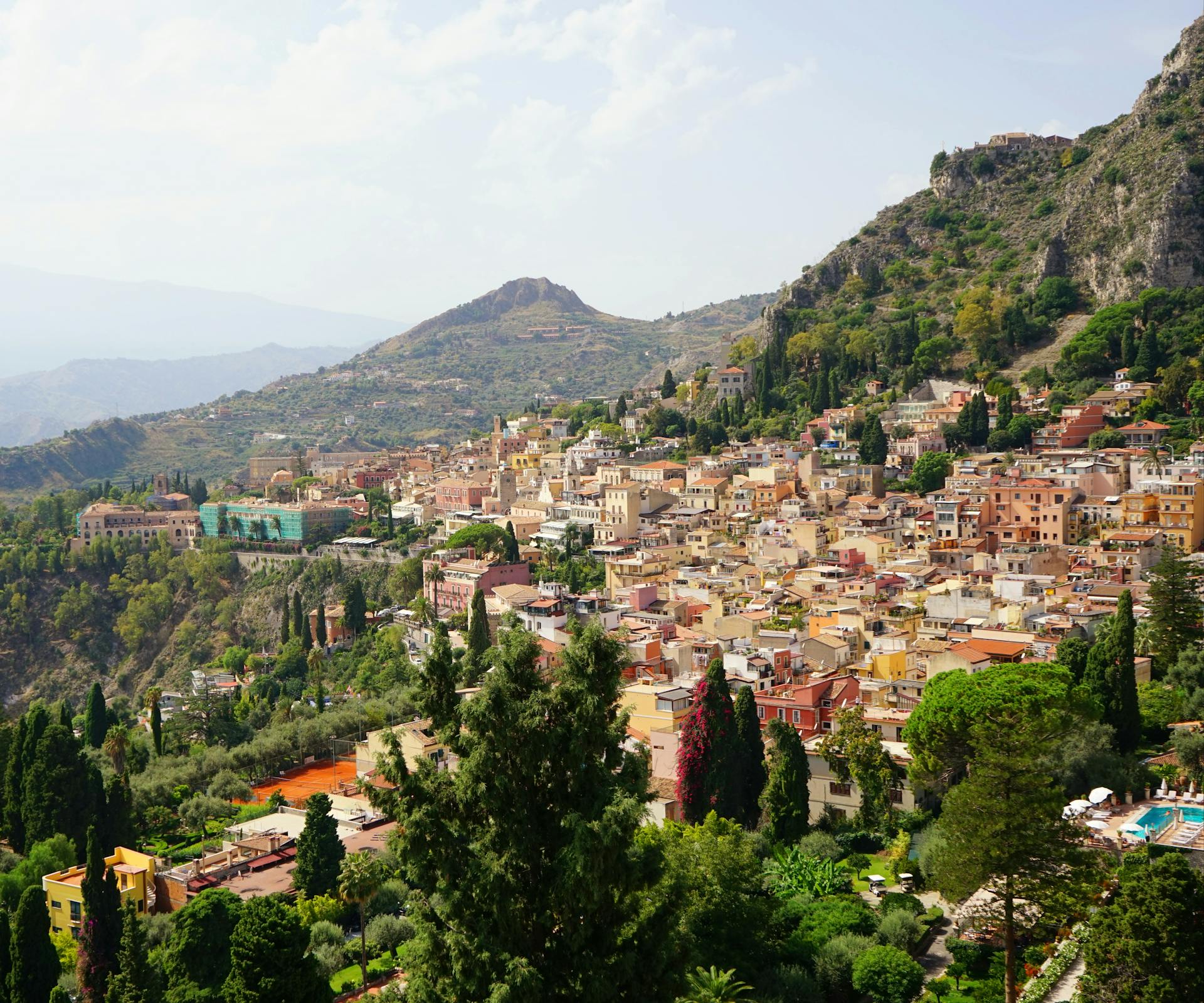
Many travellers arrive in Sicily expecting beaches and warm weather, and they certainly find both. But the island is much more layered than a simple coastal holiday. Inland hill towns sit above citrus groves, ancient Greek theatres overlook modern cities, and volcanic slopes produce some of Italy’s most distinctive wines.
Sicily is best experienced by moving around rather than staying in one place. Palermo’s historic streets, Mount Etna’s lava trails, and quieter towns along the northern coast all reveal different sides of the island. Exploring them together makes the journey feel more complete, linking food, history, and landscapes in ways that rarely feel separate.
Private Escapes Across the Island
Sicily is large enough that travellers often use a few different bases rather than staying in one city the whole time. Palermo works well for exploring the north-west, while towns like Taormina or Syracuse give access to the eastern coast. Renting a car makes it easier to link these areas together, especially when moving between smaller villages where trains and buses run less frequently.
Families should consider beautiful holiday rentals in Sicily, especially if they plan to stay several days in one region. Villas and restored countryside houses are common in areas such as the Val di Noto or the hills outside Cefalù, where spacious properties often come with terraces, gardens, and views across the surrounding countryside.
These properties often sit close to small towns where daily life still revolves around morning markets and evening walks through the main square. Staying somewhere like this allows travellers to explore coastal towns during the day and return inland in the evening, which quickly starts to feel like a more natural way to experience the island.
From Palermo, it’s an easy drive east along the A20 toward Cefalù. Travellers heading south often pass through Enna, the island’s highest provincial capital, where views stretch across central Sicily’s farmland.
Sampling Street Food Classics in Palermo
Palermo’s historic centre is where many travellers first encounter Sicily’s street food culture. The area between Via Vittorio Emanuele and Via Maqueda contains several of the city’s busiest markets, including Ballarò and Vucciria. These neighbourhoods have operated as trading districts for centuries, and the narrow lanes still fill with vendors selling fresh produce and cooked food throughout the day.
Ballarò is usually the best place to start. The market stretches through streets that run north from Corso Tukory toward the old city walls. Travellers walking through in the morning pass stalls preparing panelle, small chickpea fritters usually served inside soft bread rolls. Arancine appear almost everywhere, their rice shells filled with ragù or cheese before being fried.
From Ballarò, many people walk west toward Quattro Canti, the baroque crossroads that mark the centre of Palermo’s historic districts. Continuing a few streets south leads to the cathedral and Palazzo dei Normanni, both easy stops between market visits. Palermo’s street food is best explored on foot like this, moving gradually through neighbourhoods rather than seeking out individual stalls.
Guided Cultural Discovery of Ancient Ruins
Sicily holds some of the Mediterranean’s most important archaeological sites, and several of them sit far from the island’s main cities. Travelling between them becomes much easier with a structured itinerary, especially for visitors who want to see more than one region in a limited amount of time.
Many travellers count on private tours of Sicily to organise routes that connect major historical sites without long, complicated travel days. These tours often link locations such as the Valley of the Temples in Agrigento, the Greek theatre in Taormina, and the extensive ruins of Selinunte along the south-western coast. Guides usually explain how these settlements developed during different Greek and Roman periods, which adds context that can be difficult to grasp when exploring independently.
Agrigento’s archaeological park is one of the easiest sites to explore on foot. The Temple of Concordia stands along a ridge that once marked the edge of the ancient city walls. Walking the path between temples reveals how large the settlement once was. Travellers often continue east toward Piazza Armerina afterwards, where Roman mosaics inside Villa Romana del Casale show detailed hunting scenes and everyday life from nearly two thousand years ago.
Hiking the Volcanic Trails of Mount Etna
Mount Etna rises above eastern Sicily and shapes much of the surrounding landscape. From the city of Catania, the volcano is visible on clear days, its summit often covered in snow during winter. Travellers interested in hiking usually begin from the Rifugio Sapienza area on the southern side, reached by road from the town of Nicolosi.
Several trails lead across old lava flows and volcanic craters formed during previous eruptions. Some visitors take the cable car part of the way up before continuing on guided walks toward higher elevations. Conditions on the mountain change quickly, so most travellers hire local guides who understand which routes remain safe depending on current volcanic activity.
The lower slopes of Etna look surprisingly green. Vineyards and pistachio orchards grow in the fertile volcanic soil around villages such as Linguaglossa and Zafferana Etnea. Many travellers stop in these towns while driving around the mountain’s perimeter road. The contrast between cultivated farmland and black lava fields becomes especially clear when travelling from the eastern slopes toward the Alcantara Gorge further north.
Relaxing on the Golden Sands of Cefalù
Cefalù sits about an hour east of Palermo and often feels calmer than Sicily’s larger cities. The town curves around a wide bay where sandy beaches stretch beneath the rocky headland known as La Rocca. Travellers arriving by train step directly into the historic centre, where narrow streets run toward the waterfront.
Many visitors begin near Piazza Duomo, where the Norman cathedral dominates the square. The building dates back to the 12th century and still contains Byzantine mosaics behind the altar. From the cathedral, small streets lead downhill toward the old harbour and beach promenade.
Walking west along the seafront eventually reaches longer stretches of sand where locals spend most summer afternoons. Travellers who climb La Rocca above town gain a wider view of the coastline and rooftops below. The path begins behind Via Saraceni and winds past the ruins of an old temple before reaching the summit. After the climb, most head back down toward the beach.
Ready for Sicilian sunshine?
Travelling through Sicily rarely follows a single theme. One day might involve walking through ancient ruins in Agrigento, while the next begins with market stalls in Palermo or a trail across Mount Etna’s lava fields. Coastal towns like Cefalù follow a different pace, where mornings often start in historic squares before drifting toward the water.
What ties the island together isn’t one landmark or landscape but the variety between them. Moving between regions reveals how Greek history, Norman architecture, volcanic terrain, and everyday Sicilian life all intersect. For most travellers, the only real question is how much of the island they can fit into one trip.
Share this:
Like this: