Hunter Valley winery unveiled its new restaurant, Harkham, in July this year, and the menu has been a resounding success. Owner and winemaker Richie Harkham collaborated with friend and restaurateur Marco Ambrosino, and Harkham’s head chef Shaun Nash, to craft the menu. Standout dishes include fried olives, veal cotoletta, vodka rigatoni, woodfired pizzas, and Shaun’s family recipe tiramisu. Shaun has generously shared his Lasagne Bolognese recipe with us, so you can get a taste of Harkham at home!
Ingredients (serves 8)
From head chef Shaun Nash
To make the Bolognese
450ml olive oil
1x large brown onion, finely diced
1x celery stalk, finely diced
1x carrot, finely diced
2kg minced beef
250ml red wine
1x 500g tin of whole peeled tomato, blended
25g butter
Method
Add a third of the olive oil to a large pot and bring it to heat before adding in the diced onion, celery and carrot (sofrito). Sweat down sofrito until veg is soft, and once soft remove from the pot and set aside.
Add the rest of the olive oil and cook the beef mince until there is no liquid. Once the beef is cooked and the mince begins to catch to the bottom of your pan, add the sofrito back into the pot and then deglaze with red wine. Make sure to use your spatula to scrape any gnarly bits from the bottom of the pan (this adds flavour).
When the wine is cooked off, add the blended tomatoes and cook on low/med heat until the Bolognese is thick. To finish, season with salt and pepper to taste and stir in the butter.
To make the bechamel
50g butter
75g plain flour
1 litre milk
125g parmesan, grated
Method
In a saucepan over medium heat, melt the butter. Once melted, add the plain flour and whisk continuously for approximately two minutes (until the dough mixture starts smelling like freshly baked cookies!).
Next, add the milk and stir until the mixture resembles the consistency of custard. (I always start with cold milk, but others will suggest warm milk to speed up the process. I prefer the slower method to make sure I don’t over-reduce the bechamel and end up with a gluggy sauce). To finish, add the parmesan and stir until combined fully. Season with salt and pepper.
To assemble the lasagne
Your favourite lasagna sheets (at Harkham we handmake these, however you can find great premade lasagna sheets at your local grocery)
125g mozzarella, grated
125g parmesan, grated
½ bunch of basil
Method
Preheat your oven to 180C /350F (fan forced).
You will need a baking tray approximately 300mm x 160mm. On the bottom of the tray, add a small amount of the bolognese and bechamel (I put just enough bolognese to create a base then add bechamel and mix them to create a orangey/pink colour).
Next, add the first layer of lasagne sheets, taking care to not overlap them (If using dry sheets, gently soak them in warm water for a few seconds each before laying them in the lasagna).
The next layer will go as follows: Bolognese, Bechamel (same as the starting layer but creating a layer around 2cm thick) followed by ½ of the mozzarella and then some basil leaves ripped by hand and spread sparingly. Add the next layer of lasagne sheets.
Repeat the previous step to create the next layer (if you have extra bolognese you can repeat this step again).
For the top layer, spread the bechamel without bolognese over the pasta sheets, ensuring the sheets are completely covered to avoid them drying out in the cooking process. Cover with foil and bake in the oven for 30 minutes.
After 30 minutes, remove the foil and add the grated parmesan over the top. Bake for a further 10 minutes, or until the parmesan is melted and golden. You can eat it immediately, however for best results leave to rest for at least 30 minutes before serving.
Chef Tip – in truffle season, add shavings of fresh truffles for a decadent addition.
For reservations and more information, visit here.


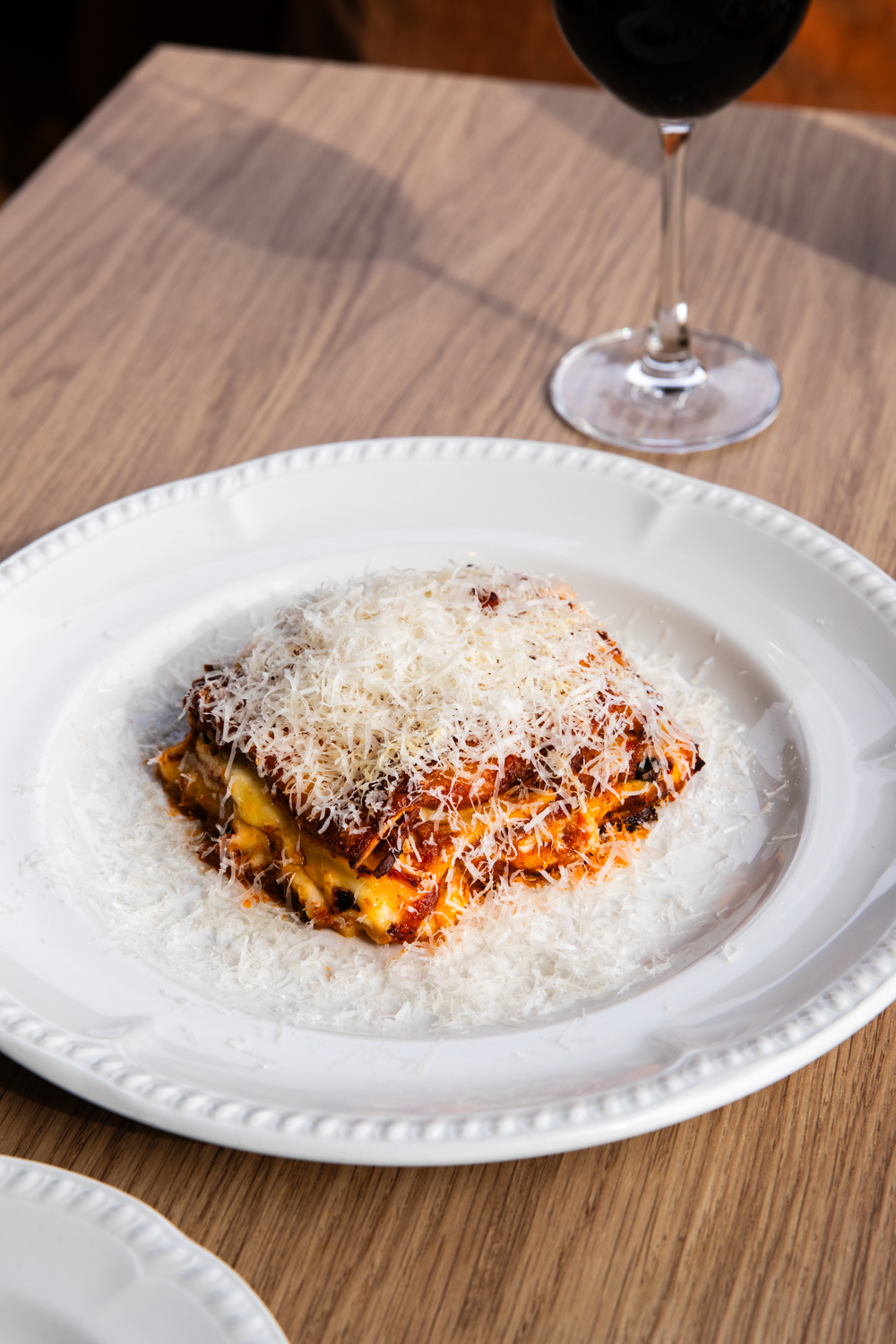
Hunter Valley winery unveiled its new restaurant, Harkham, in July this year, and the menu has been a resounding success. Owner and winemaker Richie Harkham collaborated with friend and restaurateur Marco Ambrosino, and Harkham’s head chef Shaun Nash, to craft the menu. Standout dishes include fried olives, veal cotoletta, vodka rigatoni, woodfired pizzas, and Shaun’s family recipe tiramisu. Shaun has generously shared his Lasagne Bolognese recipe with us, so you can get a taste of Harkham at home!
Ingredients (serves 8)
From head chef Shaun Nash
To make the Bolognese
Method
Add a third of the olive oil to a large pot and bring it to heat before adding in the diced onion, celery and carrot (sofrito). Sweat down sofrito until veg is soft, and once soft remove from the pot and set aside.
Add the rest of the olive oil and cook the beef mince until there is no liquid. Once the beef is cooked and the mince begins to catch to the bottom of your pan, add the sofrito back into the pot and then deglaze with red wine. Make sure to use your spatula to scrape any gnarly bits from the bottom of the pan (this adds flavour).
When the wine is cooked off, add the blended tomatoes and cook on low/med heat until the Bolognese is thick. To finish, season with salt and pepper to taste and stir in the butter.
To make the bechamel
Method
In a saucepan over medium heat, melt the butter. Once melted, add the plain flour and whisk continuously for approximately two minutes (until the dough mixture starts smelling like freshly baked cookies!).
Next, add the milk and stir until the mixture resembles the consistency of custard. (I always start with cold milk, but others will suggest warm milk to speed up the process. I prefer the slower method to make sure I don’t over-reduce the bechamel and end up with a gluggy sauce). To finish, add the parmesan and stir until combined fully. Season with salt and pepper.
To assemble the lasagne
Method
Preheat your oven to 180C /350F (fan forced).
You will need a baking tray approximately 300mm x 160mm. On the bottom of the tray, add a small amount of the bolognese and bechamel (I put just enough bolognese to create a base then add bechamel and mix them to create a orangey/pink colour).
Next, add the first layer of lasagne sheets, taking care to not overlap them (If using dry sheets, gently soak them in warm water for a few seconds each before laying them in the lasagna).
The next layer will go as follows: Bolognese, Bechamel (same as the starting layer but creating a layer around 2cm thick) followed by ½ of the mozzarella and then some basil leaves ripped by hand and spread sparingly. Add the next layer of lasagne sheets.
Repeat the previous step to create the next layer (if you have extra bolognese you can repeat this step again).
For the top layer, spread the bechamel without bolognese over the pasta sheets, ensuring the sheets are completely covered to avoid them drying out in the cooking process. Cover with foil and bake in the oven for 30 minutes.
After 30 minutes, remove the foil and add the grated parmesan over the top. Bake for a further 10 minutes, or until the parmesan is melted and golden. You can eat it immediately, however for best results leave to rest for at least 30 minutes before serving.
Chef Tip – in truffle season, add shavings of fresh truffles for a decadent addition.
For reservations and more information, visit here.
Share this:
Like this: